


July 15, 2025
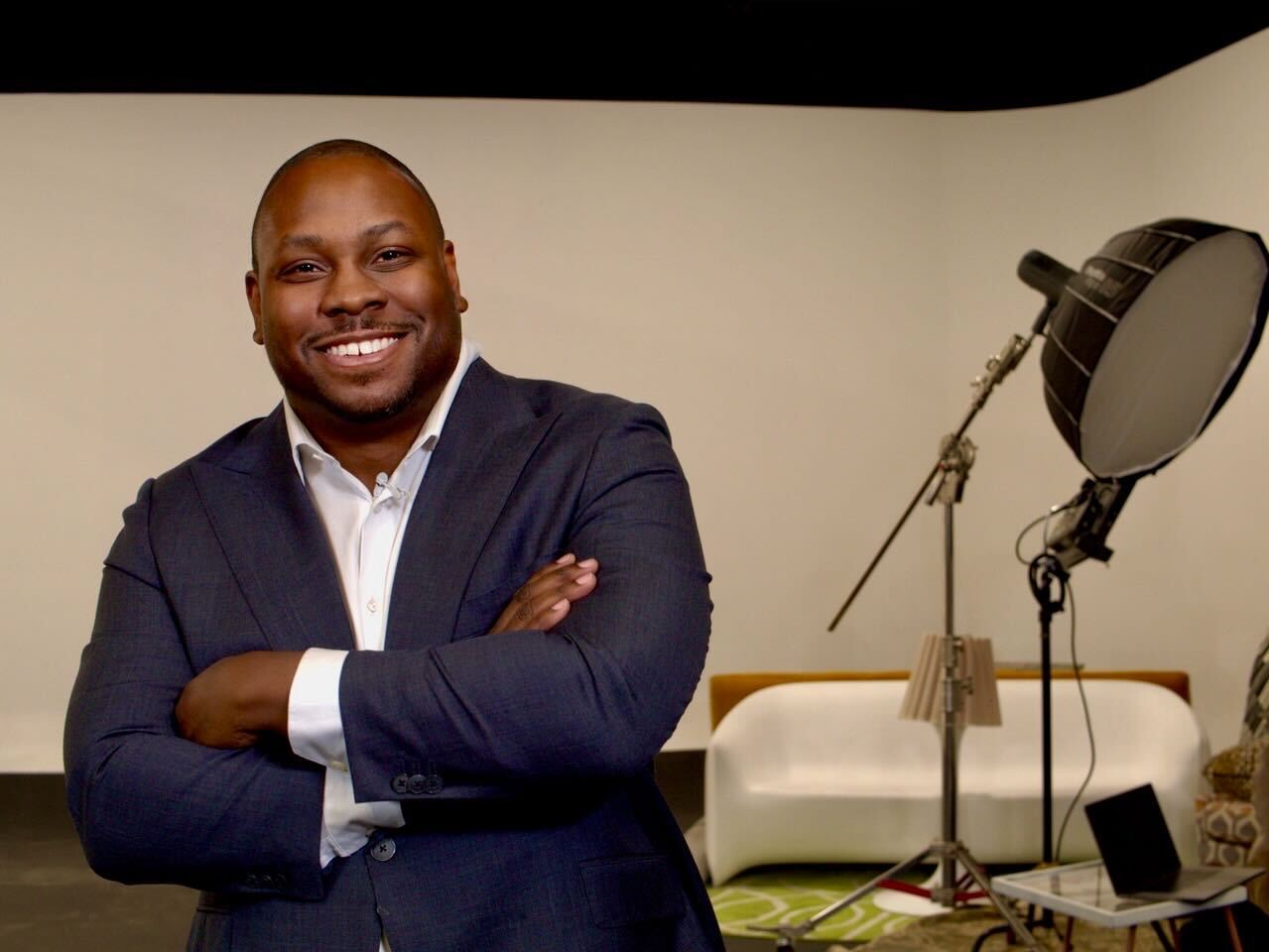
Black Fintech Founder Jon Gosier Is Changing the Game In Film And TV Finance
Film and TV financing has long been an exclusive club dominated by legacy institutions. But Jon Gosier is rewriting the script and doing it on his terms.
As founder and CEO of FilmHedge, a fintech platform that provides up to $25 million per production in private credit, Jon Gosier is opening new pathways for investors, especially those outside the Hollywood bubble, to share in one of the entertainment industry’s most profitable spaces. Since launching in 2020, FilmHedge has invested more than $200 million into film and TV productions, proving that innovation, access, and inclusion can thrive at the intersection of finance, entertainment, and technology.
BLACK ENTERPRISE sat down with Jon Gosier to explore how he’s de-risking investments in Hollywood, empowering underrepresented creatives, and shifting the power dynamic in a multibillion-dollar industry.
BE: What inspired you to launch FilmHedge, and how does it challenge traditional models of film and TV financing?
JON: In 2017, I had just sold a company. With more free time and new money, I wanted to explore something different. So, I invested in a $10 million sci-fi film called Skylines (2019).
In tech, it often takes 5 to 10 years to start a company, grow it, and successfully exit. But with this film, I got my money and earnings back in just six months. I couldn’t believe it. That experience made me ask: Why don’t more people finance film and television?
That question led to the creation of FilmHedge. Since then, we’ve raised over $350 million to make film and TV investing accessible to accredited investors and, most importantly, safe. Our team has financed more than 50 productions with an average budget of $15 million, achieving a 100% repayment rate with zero investor losses. Our partners earn between 15% to 20% on each deal.
BE: As a Black founder in fintech and entertainment, what barriers did you face entering this space, and how did you overcome them?
The first barrier is mental. A great entrepreneur is really a tireless problem solver. No matter your background—Black, white, Asian, anything—you will face obstacles. When I accepted Ernst & Young’s 2025 Entrepreneur of the Year Award in Georgia, I told the room, “Entrepreneurship is a mindset.”
The film and TV world is notoriously gatekept. The knowledge needed to succeed is rarely shared. I had to deconstruct everything by first investing my own money, then proving to institutional players —those with billions to allocate —that I knew how to protect their capital. Believe it or not, not losing money is often more important to them than making it.
BE: Many investors still view film as a high-risk investment. How does FilmHedge work to shift that perception?
Investors often treat film like they treat tech startups. They bet on a good idea and a charismatic founder and hope the rest falls into place. But film is closer to trade finance than tech.
Think of it this way: the movie is the product. The filmmaker is the manufacturer. Our job is to fund the production until the final product is delivered to a buyer such as Netflix, Amazon, or Sony. Once that happens, they pay us back. They take on the risk of whether it sells, not us.
So, the idea that film is always risky? It’s just a misunderstanding of how film finance works.
BE: Why did you choose to build FilmHedge in Atlanta instead of relocating to Hollywood or Silicon Valley?
Funny enough, in 2018, I almost moved to Santa Monica. I had even placed an offer on a house. But then I stepped back and looked at the landscape.
Hollywood has been at the top of the industry for over 100 years. Atlanta, on the other hand, where I grew up, was on the rise. More people are moving here. The economy is booming. The film and TV industry is expanding rapidly. And no one else was doing what I was planning in Atlanta.
It made perfect sense to stay. The city had momentum, and I wanted to be part of building something from the ground up.
BE: How does FilmHedge ensure equity and access for diverse filmmakers and producers?
Hollywood has never been known for equity. It’s long been controlled by gatekeepers with deeply embedded networks.
At FilmHedge, we’ve broken down those barriers by making our platform accessible to everyone. Any producer can contact us or submit a project through our website. And more importantly, our criteria are consistent, whether you’ve made a hundred movies or are just starting out.
We’re one of the only financing companies at this level that truly levels the playing field for diverse and emerging talent.
BE: With over $200 million directed to productions, what impact have you seen financially and culturally?
We’re proud of the impact we’ve had. Over 40% of our funded projects have been led by women producers, and more than 20% by Black producers. Many were first-time filmmakers, receiving an average of $5 million per project.
One recent example is The Dutchman, directed by Andre Gaines and starring Zazie Beetz, Aldis Hodge, and Kate Mara. The cast and crew were predominantly people of color.
We also push A-list productions to shoot in underserved areas. In 2024 alone, we financed 10 features, eight of which filmed in low-income communities using state economic development programs. That leads to local jobs, infrastructure boosts, and real change. Film finance isn’t just for celebrities. It can uplift entire neighborhoods.
BE: What advice do you have for aspiring Black entrepreneurs who want to sit at the intersection of tech, finance, and entertainment?
Learn to deconstruct systems, whether it’s business, law, media, or culture. Don’t just assume something is broken or stacked against you. Understand how it works first.
Once you grasp the mechanics, you can find your role and begin to map out a path for change. The people who win in this space aren’t always the loudest. They’re the ones who study the game before they make their move.
To learn more about Jon Gosier or FilmHedge, visit: www.Filmhedge.com
RELATED CONTENT: Nigerian Fintech Raenest Lands $11M Investment From QED To Advance Payment To Africa’s Remote Workers