


October 10, 2025
Upcoming Supreme Court Ruling May Let Republicans Gain 19 Additional House Seats
Both groups found a total of 27 Democratic seats would be up for grabs if the ruling comes before the midterms.
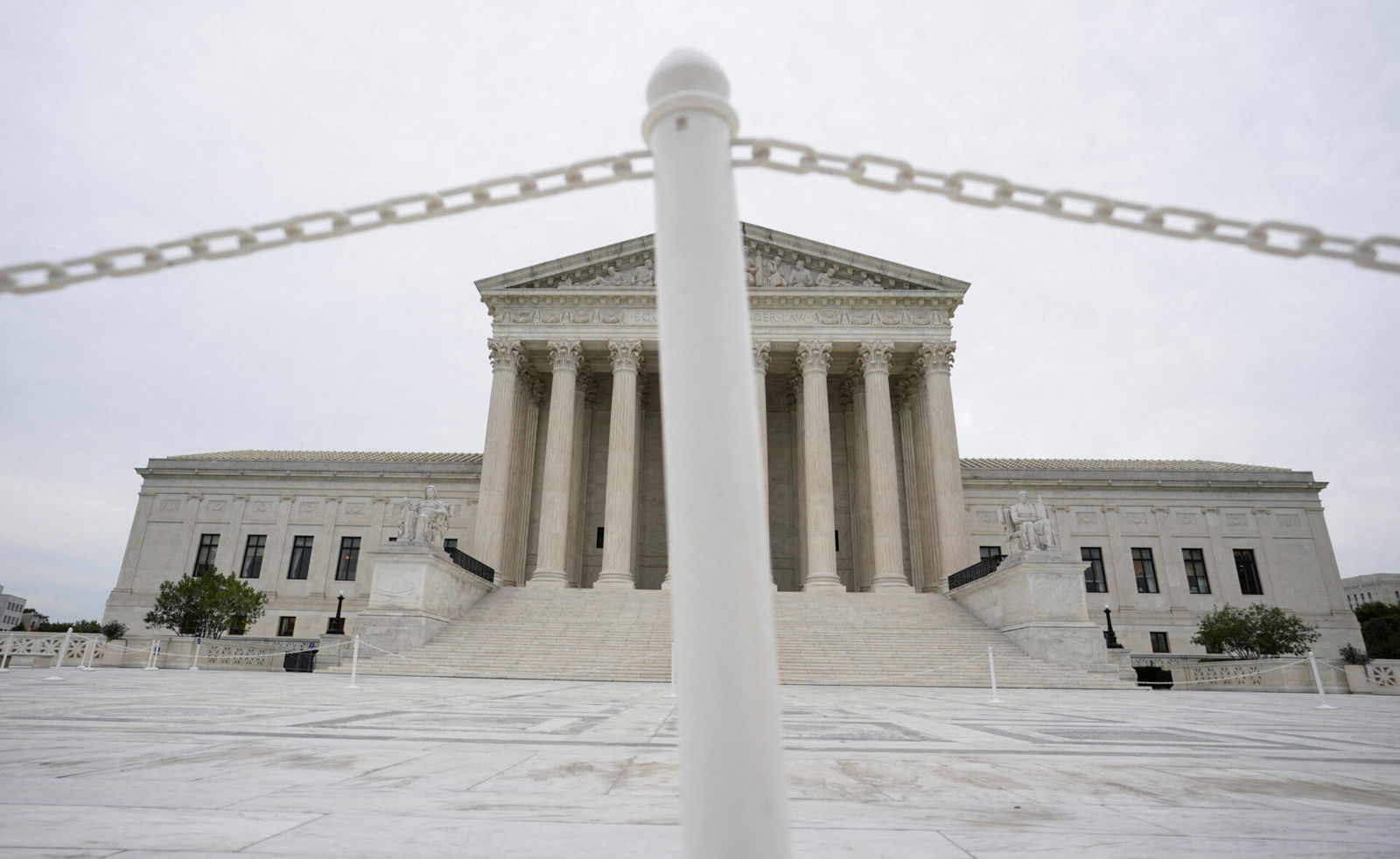
All eyes are on the Supreme Court as a critical ruling against the Voting Rights Act could put the Republican Party in power for years to come, in addition to giving them a leg up in their redistricting plans, Politico reports.
The case in question is Louisiana v. Callais, where two voting rights groups — Fair Fight Action and Black Voters Matter Fund — are sounding the alarm on major violations of the Voting Rights Act (VRA). The high court is scheduled to hear arguments on eliminating Section 2 of the legislation, a provision prohibiting racial gerrymandering when it downplays minority voting power. If the provision is terminated, Republicans would have the power to redraw up to 19 House seats to favor their party, a nightmare scenario for the Democratic Party and its voters.
Without the provision, roughly 30% of the Congressional Black Caucus (CBC) and 11% of the Congressional Hispanic Caucus could be redistricted out of their seats, according to data from the voting rights groups. While the Supreme Court is scheduled to hear the case, it is unlikely that a ruling will come before the 2026 midterm elections. Black Voters Matter Fund co-founder LaTosha Brown highlights how it’s not out of the question. The move could “clear the path for a one-party system where power serves the powerful and silences the people,” Brown said in a statement.
Both groups found that a total of 27 Democratic seats would be up for grabs if the ruling comes before the midterms.
Louisiana v. Callais came after the state redrew its lines following the 2020 census, so only one of its six districts gave Black voters an opportunity to elect candidates of their choice. Since the Black demographic made up roughly 35% of Louisiana’s population, Black voters sued, arguing that under Section 2 of VRA, the state was required to create a second majority-Black district.
The courts agreed, but the state seemingly found a way to draw a new map creating the required district while continuing to protect several of its Republican leaders, including Speaker of the House, Mike Johnson.
Ahead of arguments, attorneys general from 22 states have issued letters urging the Supreme Court to stand its ground on the Voting Rights Act, as the battle of redistricting is taking place across the country with the Trump administration in office.
According to River Bender, one AG, Illinois Attorney General Kwame Raoul put pressure on the justices to review a lower court decision that prevents civilians from suing to enforce the legislation. The group of law enforcers filed an amicus brief, which is defined as a legal document filed by a person who is not involved in a lawsuit but has a strong interest in the outcome of the case, in the Turtle Mountain Band of Chippewa Indians v. Howe case.
The case defends individuals’ right to sue to enforce Section 2 of the VRA, giving American voters the right to cast their vote without facing racial discrimination. “For decades, the Voting Rights Act has ensured that access to the ballot box has not been restricted or obstructed based on discrimination,” Raoul said.
“I am proud to join my fellow attorneys general to protect voters’ rights, as nothing is more fundamental to the preservation of our democracy than the right to vote.”
RELATED CONTENT: Justice Jackson Rips Supreme Court For Letting Trump Block $783M Research Funding