


April 7, 2026
Al Sharpton Plans Redevelopment Of Harlem’s Historic Faison Firehouse Theater As National Action Network’s New Home
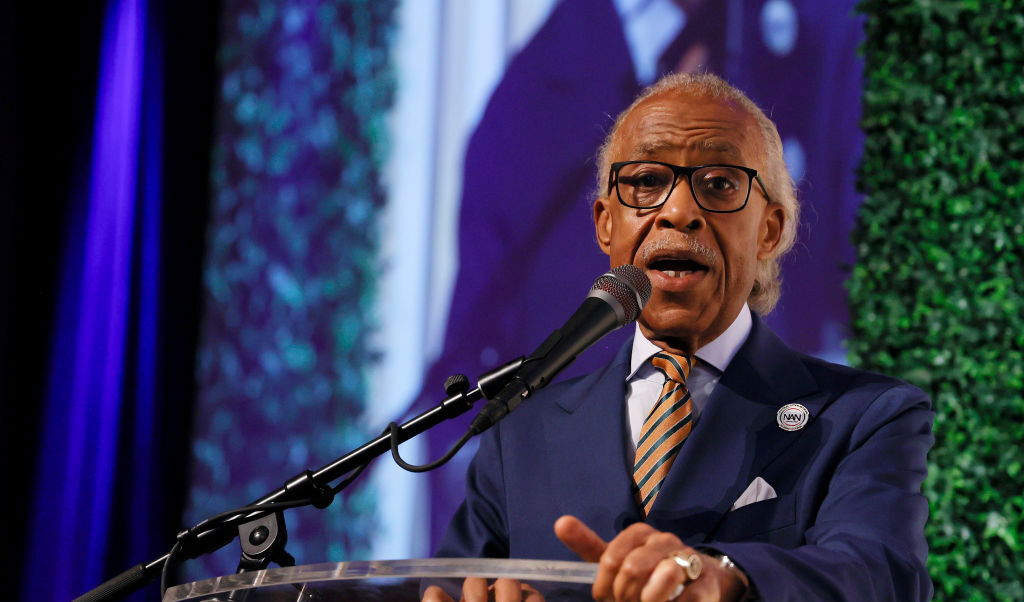
Rev. Al Sharpton has acquired a century-old building in Harlem to redevelop it as the new headquarters for the National Action Network.
Rev. Al Sharpton has acquired the Faison Firehouse Theater on Hancock Place in Harlem as part of a redevelopment effort to establish a new headquarters for his National Action Network.
The renowned civil rights leader, who recently spoke at the funeral of his longtime friend and mentor, Rev. Jesse Jackson, announced plans to relocate the National Action Network, the organization he founded in 1991, to the newly acquired Faison Firehouse Theater, which will be transformed into the House of Justice Rev. Jesse Jackson’s Workshop.
“I ain’t gonna be no more famous,” Sharpton told The New York Times. “The question is, what do I leave?”
Rev. Jesse Jackson’s connection to the project goes beyond its name. Sharpton’s civil rights organization, long based in a rented West 145th Street office that Jackson affectionately called the “House of Justice,” is now moving into a permanent home. Jackson’s son, Jesse Jackson Jr., said the shift to ownership reflects his father’s long friendship with Sharpton and his vision of securing lasting stability in the fight for justice.
“My father saw Reverend Sharpton as one of his best students,” Jackson Jr. said. “He called him disciple No. 1.”
The century-old building, originally designed by Howard Constable in 1909 as a firehouse, was later transformed into a community theater and residence by choreographer George Faison in 1999. In March 2025, Faison approached Sharpton about selling the property to a non-developer, leading to the deal. According to NAN Vice Chair Jennifer Jones Austin, the organization expects to invest between $5 million and $7 million in the purchase and renovations.
Sharpton said he envisions the space as a hub for arts and activism rooted in the spirit of the Harlem Renaissance. The project is also part of a broader effort to push back against gentrification in Harlem, where the Black population has steadily declined from about 77% in 2000 to roughly 50% in 2023, while Hispanic and white populations have grown.
“Harlem was the place of political power, and that’s been decimated,” Sharpton said. “I hope the House of Justice represents people that will print their roots and stay right there.”
Kevin McGruder, author of “Race and Real Estate: Conflict and Cooperation in Harlem, 1890–1920,” noted that while neighborhood change is natural, gentrification is different—especially when race plays a role, making it more than just a neutral market shift. Meanwhile, Stephen Wilder of the New York City Landmarks Preservation Commission and principal at Think Wilder Architecture in Harlem emphasized that developers must understand and respect a neighborhood’s history before pursuing new development.
“When you’re in a community, the question is how do you add without taking away,” Wilder said.
RELATED CONTENT: In The Spirit of Jesse Jackson, Obama And Sharpton Urge New Generation To Keep The Fight Alive