


April 2, 2026
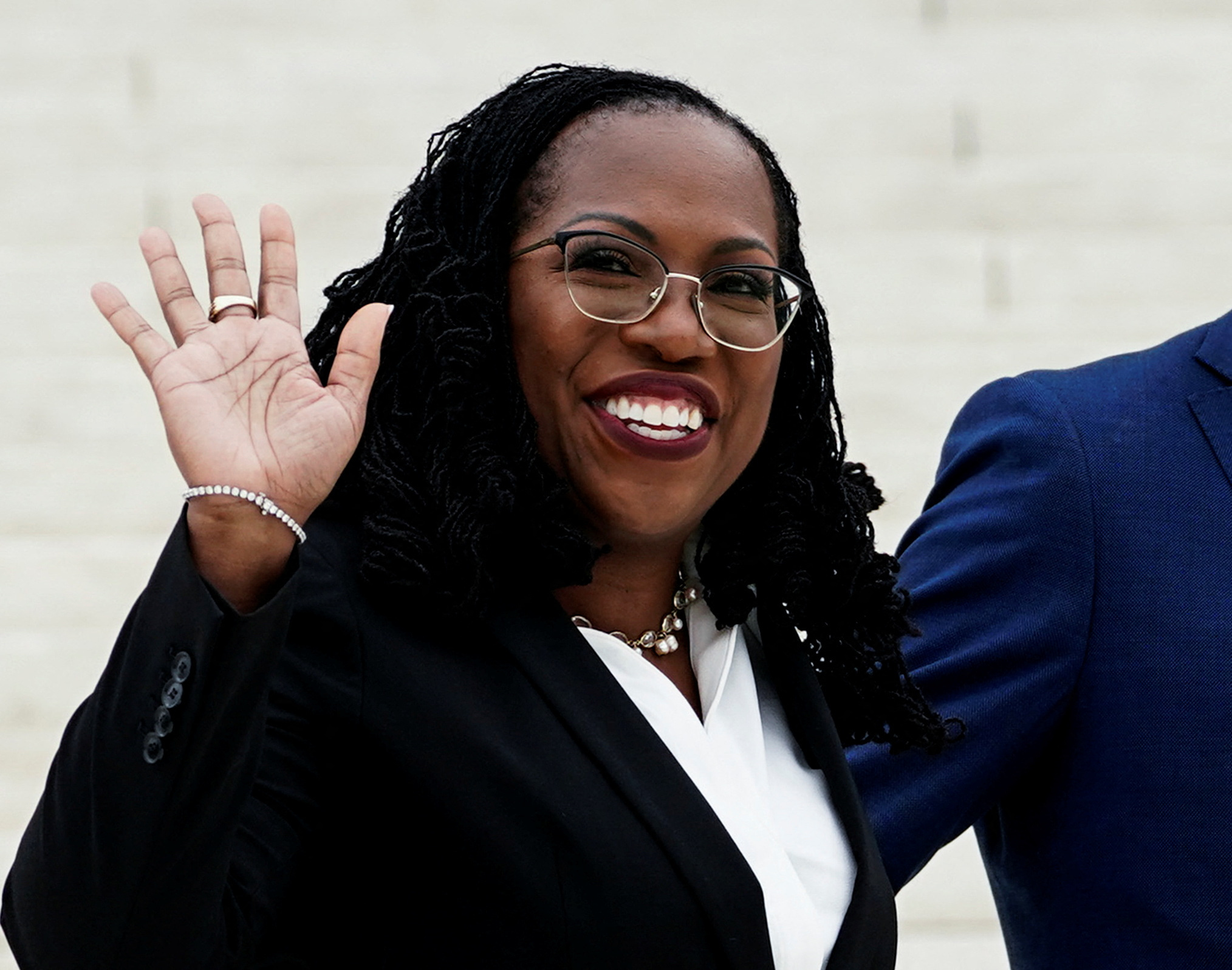
Justice Ketanji Brown Jackson Sets The Tone In Historic Case As Trump Seeks To End Birthright Citizenship
The first Black woman Justice challenged arguments by government Solicitor General D. John Sauer, who argued that the phrase "subject to the jurisdiction" applies only to children whose parents have "allegiance" to the U.S.
Justice Ketanji Brown Jackson is going viral for her arguments against President Donald Trump’s case to end birthright citizenship in the U.S.
Brown Jackson is one of three liberal justices and a majority of the court’s conservatives who raised doubts about the constitutionality of Trump’s executive order signed on day one of his second tenure. The order would limit American citizenship at birth for those born to U.S. citizens and legal permanent residents.
The first Black woman Justice challenged arguments by the government Solicitor General, D. John Sauer, who argued that the phrase “subject to the jurisdiction” applies only to children whose parents have “allegiance” to the U.S., which he claimed is determined by being “domiciled” in the country. Brown Jackson fought back. “How does this work? Are you suggesting when a baby is born people have to present documents? Is this happening in the delivery room? How are we determining when or whether a newborn child is a citizen of the US under your rule?” she asked.
When Sauer responded with verbiage from Social Security Administration documents about how Social Security numbers are curated, she reengaged by stating that’s not what the argument is about. “I’m talking about the particulars because now you say your rule turns on whether the person intended to stay in the United States,” she continued.
“Are we bringing pregnant women into depositions? What are we doing to figure this out?”
After Sauer referred back to the order “turning on lawfulness of status,” saying if a woman gives birth to a baby in the hospital right now, a birth certificate is received, but the justice cut him off to put a dent in his argument. “So there is apparently no opportunity then for the person to prove or say that they have intention to stay in the United States?” Once the solicitor said yes, Brown Jackson touched on it being “after the fact.”
Trump made history as the first sitting president to attend the high court’s arguments. He was seated in the front row of the public gallery along with White House Counsel David Warrington, Attorney General Pam Bondi, and Commerce Secretary Howard Lutnick, according to ABC News. While it’s unclear if any of the justices, including Justices Neil Gorsuch and Amy Coney Barrett, both Trump appointees, made eye contact with him, Chief Justice John Roberts made it clear that the arguments would not be light hearted, which he claims the administration is expecting, saying the government is using “narrow exceptions” to claim that a broader class of people should be ineligible for birthright citizenship.
While Brown Jackson’s comments were celebrated on social media, conservatives — mainly white men — decided to pick at one comment where she used an analogy comparing the issue to stealing a wallet in Japan. “Oh, good grief, come on now!” Florida Gov. Ron DeSantis said on X.
“Leave it to Justice Jackson to defend the suicide pact of birthright citizenship for illegals by not understanding the difference between territorial jurisdiction (obeying local laws), and political allegiance,” Turning Point USA’s Andrew Kolvet said.
RELATED CONTENT: Justice Ketanji Brown Jackson’s Surprising Harvard Drama Class Moment With Matt Damon