


March 29, 2026
Nick Cannon Comes Out As Trumpster; Calls Democratic Party Part Of The KKK
Cannon's remarks on Democrats, Republicans, and Trump have drawn backlash.
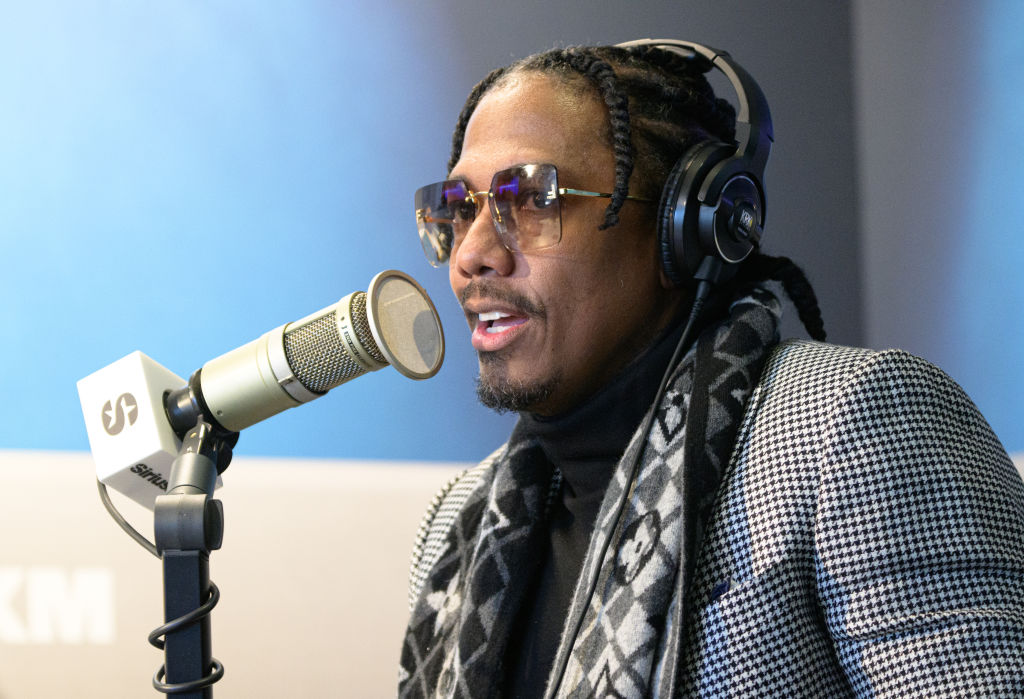
Entertainer Nick Cannon is drawing attention after sharing controversial views about U.S. political parties during a recent episode of his online talk show “Big Drive.” Speaking with guest Trump supporter Amber Rose, Cannon discussed her recent shift toward Republican affiliation and offered his own perspective on the nation’s political landscape. During the conversation, he referenced historical ties between political parties and race, stating, “People don’t know that the Democrats are the party of the KKK.” He also added, “People don’t know that the Republicans are the party that freed the slaves.”
As reported by Variety, Cannon appeared to agree with Rose’s assertion that Democrats “don’t care about people of color and the Republicans do,” responding, “I agree with you 100%.” Despite his comments, Cannon emphasized that he does not align himself strictly with either major party.
“I don’t subscribe to either party,” he said, invoking W. E. B. Du Bois. Quoting the scholar, Cannon added, “there’s no such thing as two parties. It’s just one evil party with two different names.”
The discussion also turned to the current administration under Donald Trump. Cannon expressed approval of Trump’s approach in his second term, using blunt language to describe the president as someone “cleaning house” and “doing what he said he was gonna do.” He further commented on U.S. policy with a metaphor, saying, “He’s like the club. He’s charging a $5 million bottle service fee to get into the country.”
Cannon’s remarks reference widely discussed historical points but simplify a complex political history. While factions within the Democratic Party were linked to the formation of the Ku Klux Klan in the years following the Civil War, historians generally do not characterize the entire party as uniformly supporting the group. Meanwhile, the Republican Party, founded in the mid-19th century by anti-slavery advocates, counted Abraham Lincoln among its early leaders.
Lincoln issued the Emancipation Proclamation in 1863, and the abolition of slavery was later solidified with the ratification of the 13th Amendment in 1865.
The episode has since circulated online, prompting renewed discussion about how historical narratives are interpreted in modern political discourse.
RELATED CONTENT: ‘Grieving Grandma’ Says She Doesn’t Wanna Hear ‘Nothing About That Racist Stuff’ During BHM Celebration