


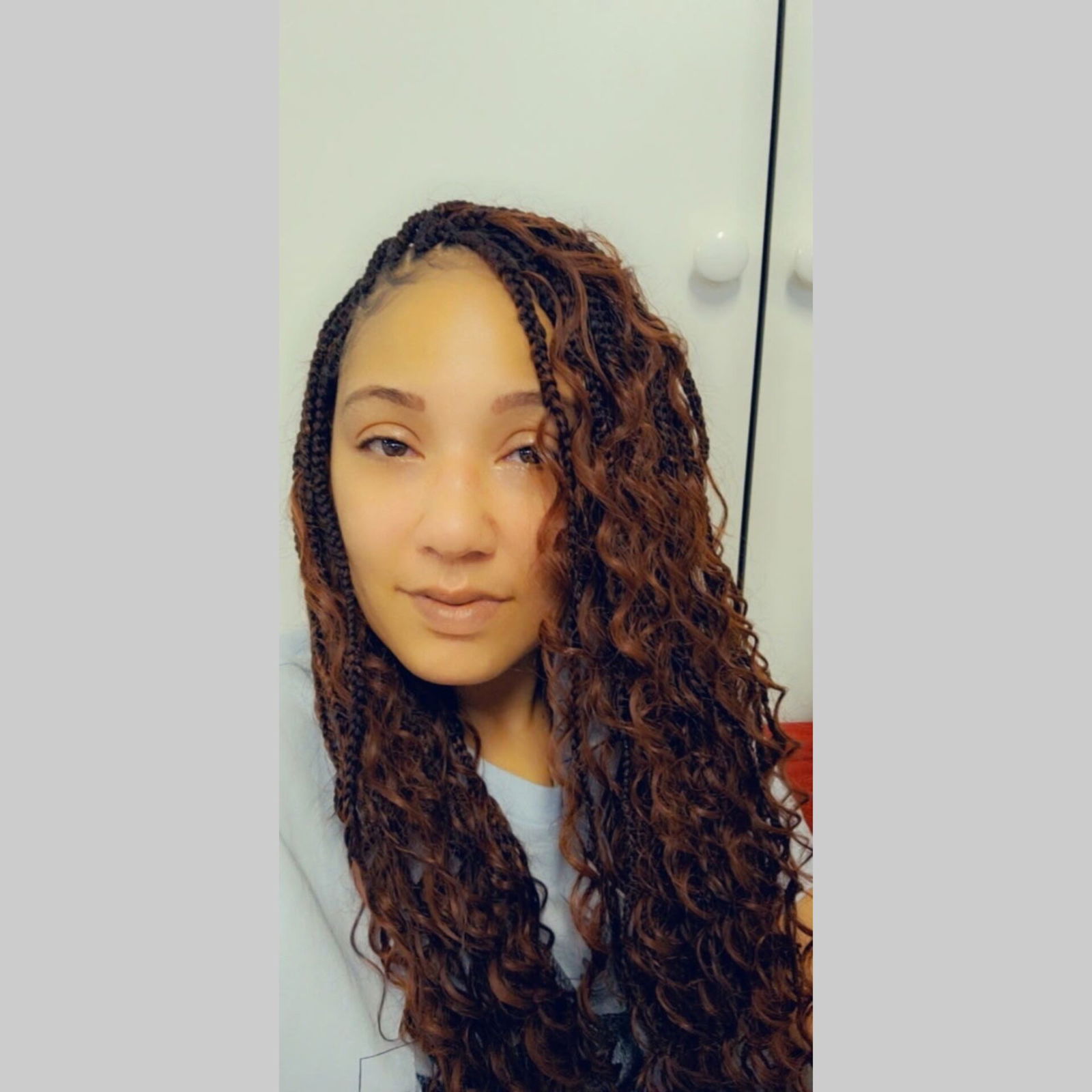
December 4, 2025
‘A Cause for Candice’: Roc Nation Rallies To Help Beloved Team Member Find Lifesaving Kidney Donor
Candice was diagnosed with Type 1 diabetes at 17.
For more than two decades, Candice Davis has been a steady presence within Jay-Z’s growing empire. She started at Baseline Studios in 2002, where she supported Roc Nation CEO Desiree Perez long before the company took its current shape. When the 40/40 Club opened in 2003, she transitioned to help run that operation and stayed until the pandemic shut its doors. In 2021, she joined Roc Nation’s office operations team full-time, bringing years of institutional knowledge and loyalty with her.
What many people didn’t know during that time was that her health had been deteriorating for years. Candice was diagnosed with Type 1 diabetes at 17.
“I went from a weight of about 160 pounds to 125 pounds within a matter of like, two months,” she recalls. “I was urinating all the time, constantly thirsty… I had no idea what was going on with me.”
When doctors explained the lifelong treatment ahead, she remembers thinking, “I’m not doing that.”
Candice didn’t begin regularly using an insulin pump and Dexcom sensor until she was 32.
“I saw an immediate change; my hemoglobin had dropped all the way to an 8,” she tells BLACK ENTERPRISE. “I wanted to kick myself for not having done it earlier.” But the years of damage were already there.
“Diabetes is not a game, it’s not to play with,” Candice warns. “It will seriously, seriously harm your body if you don’t control your levels.”
Over time, Candice’s condition became even more complicated. She’s experienced numbness in her feet, problems with her vision, ulcers, multiple broken bones, and infections. In the decades since her initial diagnosis, she’s endured more than 25 surgeries. In 2022, things took a turn for the worse.
“My kidney doctor told me, ‘Go to the hospital. Your creatinine is 3.9,’” Candice recalls. “By the time I got to the hospital, it was 5.9,” she says. After days of biopsies and exams, doctors told her, “Your kidneys—there’s nothing to be done about them.” She began undergoing peritoneal dialysis that November, but the worst was yet to come.
In February 2023, Candice was hospitalized for three weeks after falling in the bathroom and breaking her hip. Due to her kidney disease, Davis developed a brittle bone disorder known as renal osteodystrophy. Candice was discharged to a rehabilitation center to relearn how to walk. It was there that Candice’s world shifted again.
“They tell me that my husband died from a heart attack that morning,” Davis says. “I had been with him for 20 years. He was my rock—the glue to our entire family.” She adds, “I haven’t grieved properly because I’m so busy being sick… I still don’t know what life looks like without him.”
After suffering trauma on top of trauma, last year, Candice was placed on the transplant donor list, and she now desperately needs a new kidney to survive. Through every blow, she holds onto purpose. “I feel like I’m still supposed to be here. I haven’t given up,” she tells BE. “I’m gonna fight. I’ve always been a fighter.”
Inside Roc Nation, the people who’ve known Candice for 20 years didn’t hesitate when they learned she needed a kidney transplant. The company launched A Cause for Candice, a campaign designed to help her find a living donor and educate the public about the nationwide kidney shortage.
“Candice is a longtime and very beloved family member of Roc Nation,” says Dania Diaz, a representative of Team Roc, Roc Nation’s philanthropic arm. “She’s just been an instrumental part of our daily operations. She’s an incredible human being who’s exhibited incredible strength throughout all of her health challenges.”
Once the severity of her situation became clear, the company moved quickly. “I don’t think it was a difficult choice,” Diaz says. “We saw that there was a dire need to raise awareness. Every single second of the day matters.”
When Candice learned about the campaign, she struggled to hold back emotion. “It feels amazing,” Candice says. “I always expect people not to care, and it’s amazing when you find people that actually do.”
Candice’s situation isn’t unique. According to UNOS reports, nearly 90,000 people in the United States are waiting for a kidney transplant, and 11 people die every day waiting for a kidney.
Diaz says even she hadn’t understood the scale of the kidney crisis until walking this path with Candice.
“I wasn’t even aware that there was a shortage,” Diaz admits. She also wants people to know that living donation is not the impossibility many imagine.
“There’s so many people who have donated a kidney and are thriving today. I think there is this slight misconception that you need both kidneys to survive. But there are countless stories of people who have been thriving with just one kidney or people born with one kidney who are thriving.”
“It’s not so scary,” Diaz continues. “And you have a lot of power to help someone in need. This is a moment where you can.”
Candice’s fight isn’t happening in a vacuum. Across the country, Black families are carrying a disproportionate share of this burden. Black Americans make up just 13% of the population, yet they account for roughly a third of all people living with kidney failure — a staggering gap driven by diabetes, hypertension, and long-standing inequities in care. National health data shows that about 1 in 5 Black adults is living with chronic kidney disease, often without knowing it until the damage is advanced. For many, the road to dialysis or transplant starts the same way Candice’s did: years of managing diabetes without access to the tools, screenings, or consistent support that might have changed the outcome. Her story is personal, but the crisis she represents is widespread.
While Candice’s daughter volunteered to donate a kidney to her mother, she was ruled out because she is pre-diabetic, and physicians had concerns about their family’s medical history.
“They don’t usually take from people with complications on both sides of their family,” Candice explains.
Despite having an AB-positive blood type that would allow her to receive a transplant from donors of all types, Candice’s search is further complicated because she is listed as having what transplant teams call “100 percent antibodies.”
“I have to find somebody who doesn’t have any of the same antibodies that I have,” Davis explains. “Otherwise, I will fight off this kidney, and I will reject it.”
Candice’s dreams are simple: to live long enough to witness the milestones her husband won’t.
“I hope for a lot of things—mostly to do with my children. I want to see all of them have children. I want to see them get married. I just want to be able to be there because they no longer have their dad, and that was a big loss in their lives. Even though they’re all grown, I don’t want them to be orphans. I just want to be there for them first and foremost.”
She also wants to find a way to reach back. “I would love to start a support group and help other people—give them resources,” she said. “If someone cared enough to help me, I have no choice but to care enough for the other people still in this situation.”
Anyone moved by Candice’s story can begin the screening process at acauseforcandice.com. The campaign links directly to the Robert Wood Johnson Transplant Center, where potential donors can fill out the form and indicate they wish to be screened on behalf of Candice Davis.
The Paper Plane store (252 Lafayette Street, New York) is also helping raise awareness in-store by sharing Candice’s story and distributing information about becoming a living kidney donor.
“We’re doing all that we can,” Diaz emphasizes, and we’re hoping that by just raising awareness, we can find a match for Candice. And if it’s not a match for Candice, maybe it’s a match for somebody else. We all have the capacity to help one another and to give life to someone in need.”
RELATED CONTENT: 5 Tips for Managing Diabetes during National Diabetes Month