


November 18, 2026
HBCUs Have Proven Their Economic Value. Are We Investing Enough In Their Future?
HBCUs have helped shape American leadership, innovation, culture, and economic progress.
By Michele Ghee, Michelle Bailey, and Dorinda Walker
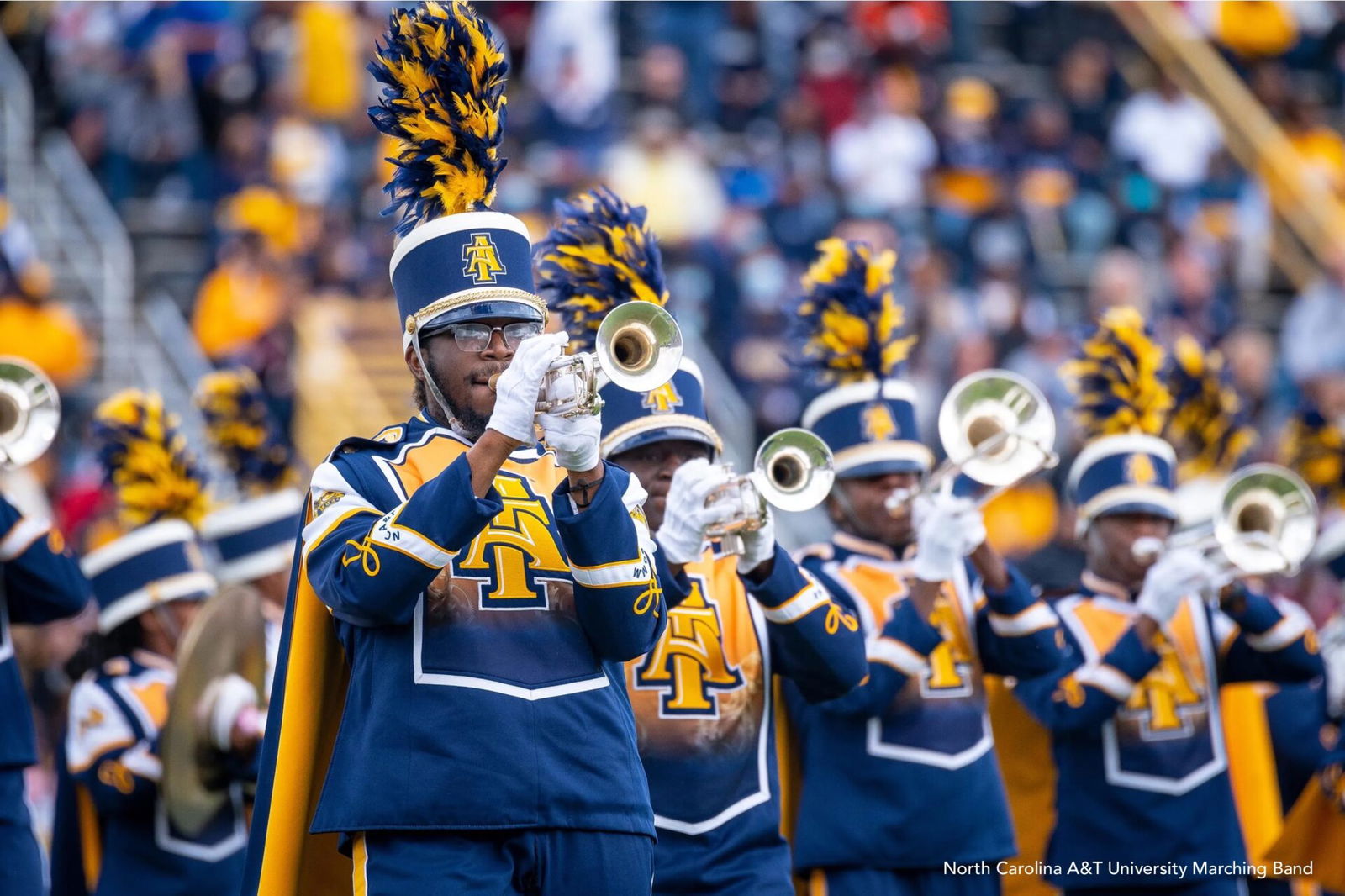
North Carolina A&T State University celebrated the 100th edition of its legendary Greatest Homecoming on Earth (GHOE), as thousands of alumni and supporters descended on Greensboro and filled hotels, restaurants, and local businesses. The university estimates that the event generates more than $50 million in economic activity.
Homecoming is an extraordinary example of the economic power of historically Black colleges and universities (HBCUs). But as we celebrate the dollars these institutions generate for their communities, we should ask a more consequential question: How much of that economic value is being reinvested in the institutions responsible for creating it?
According to UNCF’s 2024 economic impact study, HBCUs collectively generate $16.5 billion in annual economic impact and support more than 136,000 jobs. The study also estimates that the 2021 graduating class will earn $146 billion over their working lives, approximately $53 billion more than they could expect without their college credentials.
The first HBCU, Cheyney University of Pennsylvania, was founded in 1837, nearly 190 years ago, when educational opportunities for Black Americans were severely restricted. Since then, HBCUs have helped shape American leadership, innovation, culture, and economic progress. Yet many continue to face significant disparities in funding, endowments, facilities, and access to resources compared with predominantly white institutions.
A 2023 analysis by the U.S. Departments of Education and Agriculture found that historically Black land-grant universities were underfunded by about $12.6 billion between 1987 and 2020. The researchers compared their per-student state funding with that of predominantly white land-grant universities.
Consider North Carolina A&T, whose homecoming brings millions of dollars into the local economy each year. The analysis found that the university was underfunded by over $2 billion during that period, based on a comparison of state funding per student with North Carolina State University.
How can institutions that have contributed so much to America’s prosperity still face such substantial disadvantages?
Meaningful investments are being made. Corporations, foundations, philanthropists, alumni, and government institutions support scholarships, research, workforce development, and institutional advancement. Organizations such as UNCF and the Thurgood Marshall College Fund have spent decades mobilizing resources and creating opportunities. These contributions deserve recognition, and companies demonstrating genuine commitments to HBCUs deserve the support of the communities they serve.
But acknowledging progress should not prevent us from asking whether our collective investment is sufficient, particularly as the economic landscape changes at an unprecedented pace.
Artificial intelligence, automation, cybersecurity, and emerging technologies are transforming industries and creating new career paths. Are HBCU students receiving access to the advanced laboratories, research partnerships, technology infrastructure, and industry relationships available at better-resourced universities? Are we preparing them not only to participate in the digital economy but to become the innovators, entrepreneurs, and owners shaping its future?
We cannot celebrate HBCUs for producing generations of innovators while allowing a new technological divide to limit opportunities for the next generation.
The changing economics of college athletics present another challenge. As name, image, and likeness opportunities, revenue-sharing arrangements, and media rights reshape collegiate sports, institutions with larger athletic budgets and greater financial resources hold significant competitive advantages. HBCUs have produced generations of extraordinary athletes, yet financial disparities raise important questions about their ability to recruit, retain, and develop talent while creating comparable opportunities for student-athletes.
These are not simply questions about fairness. They are questions about competitiveness, institutional sustainability, and whether HBCUs are positioned to fully participate in tomorrow’s economic opportunities.
The answer cannot be limited to homecoming sponsorships or occasional scholarship announcements, valuable as those contributions may be. We need more multiyear partnerships that strengthen infrastructure, expand research capacity, build endowments, connect students to paid career opportunities, and support entrepreneurship. Corporate partners should work with university leadership to establish measurable goals that reflect each institution’s priorities.
The measure of corporate commitment should not simply be how much a company gives, but what its investment makes possible five or 10 years from now.
HBCUs must also be recognized as valuable business partners, not simply beneficiaries of corporate generosity. Their alumni networks, cultural influence, intellectual capital, and access to emerging talent offer genuine commercial value. Partnerships built around mutual benefit can create stronger, more enduring relationships than those driven primarily by philanthropy or marketing.
As three Black women whose careers span media, marketing, and executive leadership, we understand the importance of turning cultural influence into opportunity. Our collaboration builds on the vision of Michelle Bailey, a Spelman graduate and former BET executive who founded HBCU Honors in 2022 to celebrate the achievements of HBCU graduates. Together, we have grown that vision, drawing on our combined experience in media, marketing, and executive leadership. Today, we produce the special for BET and BET Her, and through the HBCU Honors Foundation, we are expanding into workforce development, hands-on media training, and partnerships that create opportunities for HBCU students and graduates.
Our experience reinforces an important lesson: No single organization, company, or institution can address the challenges facing HBCUs alone. There is room, and a need, for all of us to contribute by combining resources, relationships, and expertise to produce greater results.
This shared responsibility is reflected in the theme of our 2026 HBCU Honors celebration, If Not Us, Then Who? Our History. Our Stories. Our Legacy.
That question challenges corporations to examine the depth of their commitments, alumni to consider how they can contribute beyond homecoming, and philanthropists, investors, and public institutions to address the financial, infrastructure, and technology needs that will determine future competitiveness.
When HBCUs and their alums are recognized as creators of economic and cultural value, rather than simply recipients of investment, entirely new opportunities emerge.
Homecoming reminds us of the extraordinary loyalty, influence, and economic power surrounding HBCUs. But the true measure of our commitment will be what happens after the celebrations end, when the crowds return home, and the institutions continue preparing the next generation.
After nearly 190 years, HBCUs should not have to rely on their ability to accomplish extraordinary things with limited resources as proof of their value. They have already demonstrated what they contribute to America. The question now is whether we are prepared to invest at a level that reflects their importance and equips them for the future.
If not us, then who?
RELATED CONTENT: North Carolina HBCU Students March Miles To Vote After Campus Polling Sites Removed
