


Leslie A. Brun
COMPANY
Chairman & CEO, SARR Group, LLC.
BOARD
Broadridge Financial Solutions Inc.
Leslie A. Brun
COMPANY
Chairman & CEO, SARR Group, LLC.
BOARD
Broadridge Financial Solutions Inc.

Stacy Brown-Philpot
COMPANY
CFO of General Mills, Inc
BOARD
Electronic Arts Inc.

Thomas K. Brown
COMPANY
Retired Group Vice President, Global Purchasing, Ford Motor Co.
BOARD
3M Co. & Conagra Brands Inc.

Reginald J. Brown
COMPANY
Partner, Kirkland & Ellis
BOARD
Blackstone Inc.

Hugh M. Brown
COMPANY
Director Emeritus
BOARD
Brown & Brown Inc.
August 21, 2024
The expensive timepiece was designed by famed jeweler Jacob Arabo
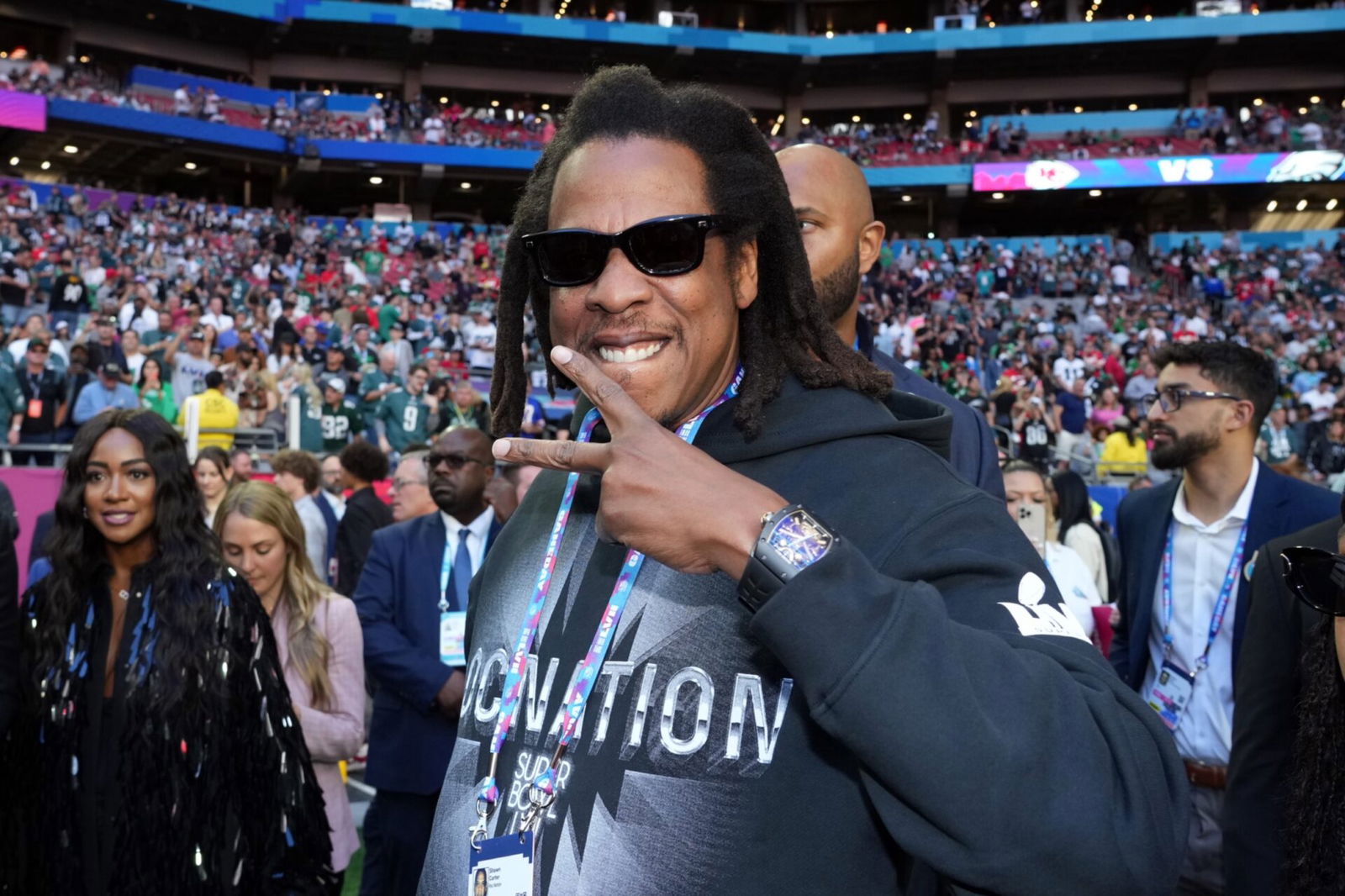
Brooklyn-bred businessman Jay-Z enjoys being the first and has accomplished another first. Reportedly, the “In My Lifetime” rapper owns an exclusive $340,000 Bugatti Tourbillon hyperwatch designed by famed jeweler Jacob Arabo.
Arabo posted a video showing Jay-Z rocking the timepiece on his wrist during the Fanatics Fest in New York City over the weekend (August 16-18).
“My dear friend @jayz was the first to own the five-time zone watch. Twenty-five years later, he’s the first to own the Bugatti tourbillon.”
View this post on Instagram
The jewelry designer, who has made custom pieces for many hip-hop recording artists and other celebrities over the years, gave an up-close look at the expensive timepiece on his Jacobandco Instagram page. It states that it mirrors the “architecture of Bugatti’s hypersports car.”
“The Bugatti Tourbillon by Jacob & Co. takes high-performance timekeeping to a new level. Mirroring the architecture of Bugatti’s hypersports car, this watch is an intricate blend of form and function, from its front grille-shaped case to the automaton engine block. The ultimate fusion of automotive and horological excellence.”
#Jacobandco #Inspiredbytheimpossible
View this post on Instagram
The Express Tribune reported that there were only 150 pieces made.
The billionaire was at the Jacob Javits Center for a reimagined version of the once-popular 40/40 club, in which he was a partner. The venue shut its doors last year in anticipation of moving to a new location. But this past weekend, the facsimile of the club served as a VIP area for an invite-only list of select athletes, celebrities, and Fanatics Sportsbook VIP customers who were in attendance.
The venue was home to celebrities, rappers, professional athletes, and esteemed individuals who visited the club, which combined sports, luxury, and entertainment. Fanatics recaptured the look and feel of the 40/40 Club, which opened in 2003.
RELATED CONTENT: Roc Nation Leads $300 Million Scholarship Initiative For Underprivileged Students
August 21, 2024
Reportedly the 23-year-old gymnast has no plans to return her bronze medal and Team USA continues the fight for its gymnastics star.
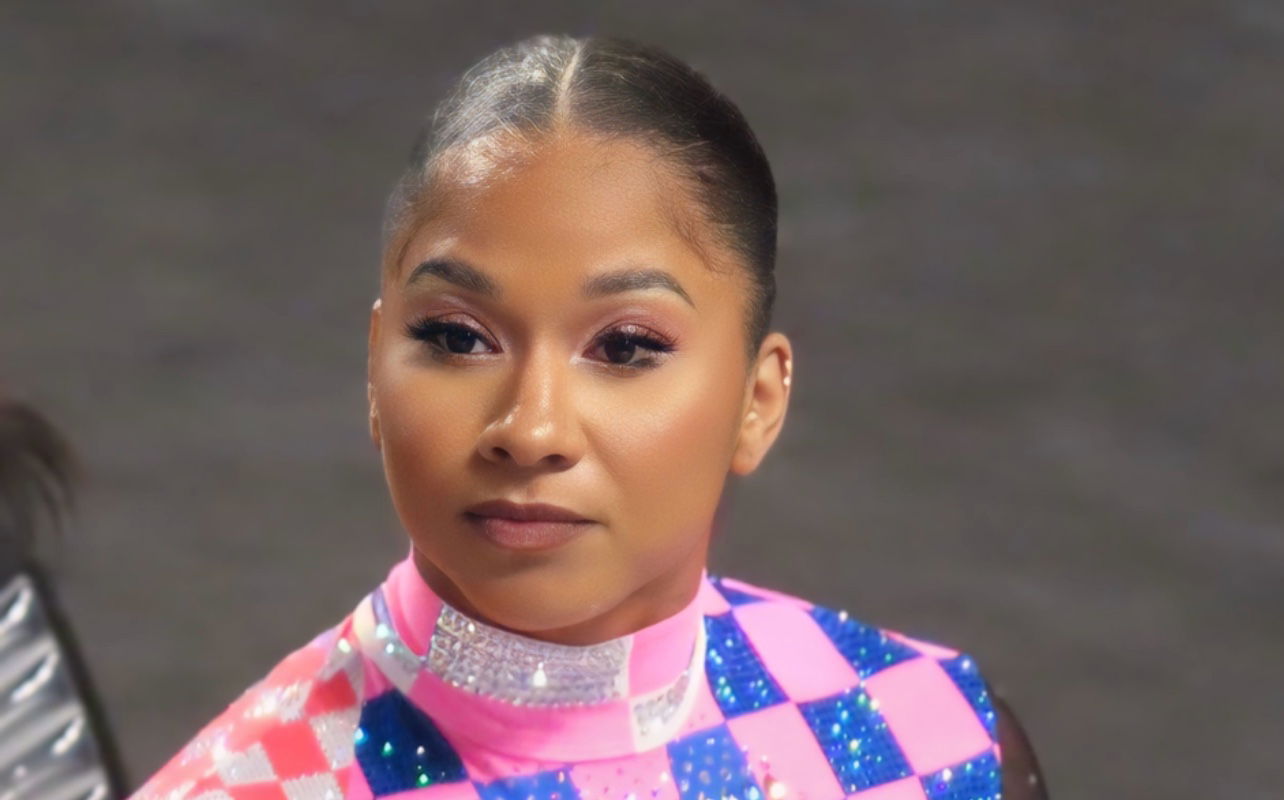
Olympic gymnast Jordan Chiles continues to hold onto her bronze medal as Team USA officials work to appeal “significant procedural errors” by the Court of Arbitration (CAS).
Chiles still has possession of her bronze medal following recent orders from CAS for the 23-year-old athlete to return the award due to a reversal of scores in the floor exercise at the 2024 Paris Olympics. According to USA Today, Chiles has no plans to return the medal despite clearance for Romania to award gymnast Ana Barbosu a bronze medal during a ceremony on Aug. 16. The International Olympic Committee stated: “While a challenge in the Swiss Federal Supreme Court is still possible, the CAS award is immediately enforceable, and Ms. Barbosu is entitled to receive the bronze medal.”
A video produced by U.S. officials showed that Chiles’ score was filed 47 seconds after her given score, which falls within the one-minute deadline. CAS recently claimed that it was filed four seconds too late. The U.S. Olympic & Paralympic Committee explained erroneous communications between Aug. 6-9, stating, “CAS sent crucial communications to erroneous email addresses at USOPC and USAG (USA Gymnastics), an error not corrected until August 9—three days after filing, two days past the deadline to submit objections, and less than 24 hours before the hearing. This deprived us of adequate time to respond meaningfully or gather the necessary evidence. We informed CAS of our objections immediately.”
CAS declined to reopen the case, and FIG, the International Gymnastics Federation, refused an offer from the U.S. and Romania to allow Chiles and Barbosu to obtain a bronze medal for the event.
As previously mentioned by BLACK ENTERPRISE, Chiles addressed the controversy on Instagram and told fans that she remains hopeful that justice will be done and the people in charge will make things right. Chiles was awarded the bronze medal after an inquiry boosted her score to 13.766, ahead of Barbosu in the gymnastics floor final. However, the Team USA gymnast’s score was booted back to 13.666, placing Barbosu in the bronze spot and prompting the CAS to strip Chiles of the medal.
RELATED CONTENT: Jordan Chiles’ Sister Weighs In On Olympic Medal Scandal: ‘Racism Is Real’

August 21, 2024
Dame Dash wants to sweeten the deal for his share of Roc-A-Fella Records by offering an original Roc-A-Fella chain.
Dame Dash wants to sweeten the deal to anyone willing to pay at least $10 million for his share of Roc-A-Fella Records by offering an original Roc-A-Fella chain from off his neck.
The former company CEO took to social media on Aug. 19 to post a video announcing his plans to gift the buyer of his Roc-A-Fella shares one of his personal chains boasting the former record label’s logo.
“As we all know, one-third of Roc-A-Fella Inc, which owns Reasonable Doubt, is for sale,” Dash tells the camera. “I’ve gotten a lot of calls, a lot of offers. I don’t know if people are stunting or not. We’ll see who shows up, but I definitely got some very healthy offers and I appreciate those.”
To anyone willing to auction on the bid with the right price, Dash will heighten the sale by offering up a signature Roc-A-Fella chain from his own collection.
“If someone’s trying to hate on the price or trying to devalue it, it would be because they want to buy it like a first right of refusal,” he said. “Anything over 10 million, I’m going to sweeten the pot. You get an original Roc-A-Fella chain from off my neck.”
Dash recalled how he was the only one on Roc-A-Fella who would personally gift people chains off his neck, as he did with Kanye West and Camron.
“If I don’t give you the chain, it’s not a legit Roc-A-Fella chain,” he said. “You get one of these. This is legit. This is the old school one from off my neck.”
Dash’s announcement comes amid recent claims that Jay-Z was attempting to devalue the price of the shares by having his attorneys file a legal notice informing potential bidders of his intent to retain master recordings for his debut album “Reasonable Doubt” regardless of any entity holding ownership of the album at that time.
At the time of the news, Dash took to social media to double down on his plans to sell his shares, declaring that bidders would not be bidding on a mere album copyright but ownership over one of hip-hop’s most legendary labels.
“They can say what they want, this sh*t is still for sale,” the Harlem native wrote in an Instagram caption over the Reasonable Doubt album cover. “You’re not buying a copyright; you’re buying a piece of a company ROC A FELLA INC.”
Dash’s public auction for his ownership stake in Roc-A-Fella Records is scheduled for Aug. 29 in New York City. This follows a court order requiring Dash to sell his stake in Roc-A-Fella Records to satisfy an $823,000 debt owed to movie producer Josh Weber. The debt stems from a copyright infringement and defamation judgment related to the 2016 film “Dear Frank.”
Jay-Z and Roc-A-Fella Records cofounder Kareem “Biggs” Burke tried to prevent Dash from selling his share, but their efforts were unsuccessful. As it stands, anyone who buys Dash’s stake in Roc-A-Fella will likely only be able to profit from proceeds generated by “Reasonable Doubt” for about five more years, after which ownership of the album will return to Jay-Z.
RELATED CONTENT: Dame Dash Claps Back After Steve Stoute Calls Out His ‘Antics’ That Severed Jay-Z Relationship
August 21, 2024
Think they should try again?
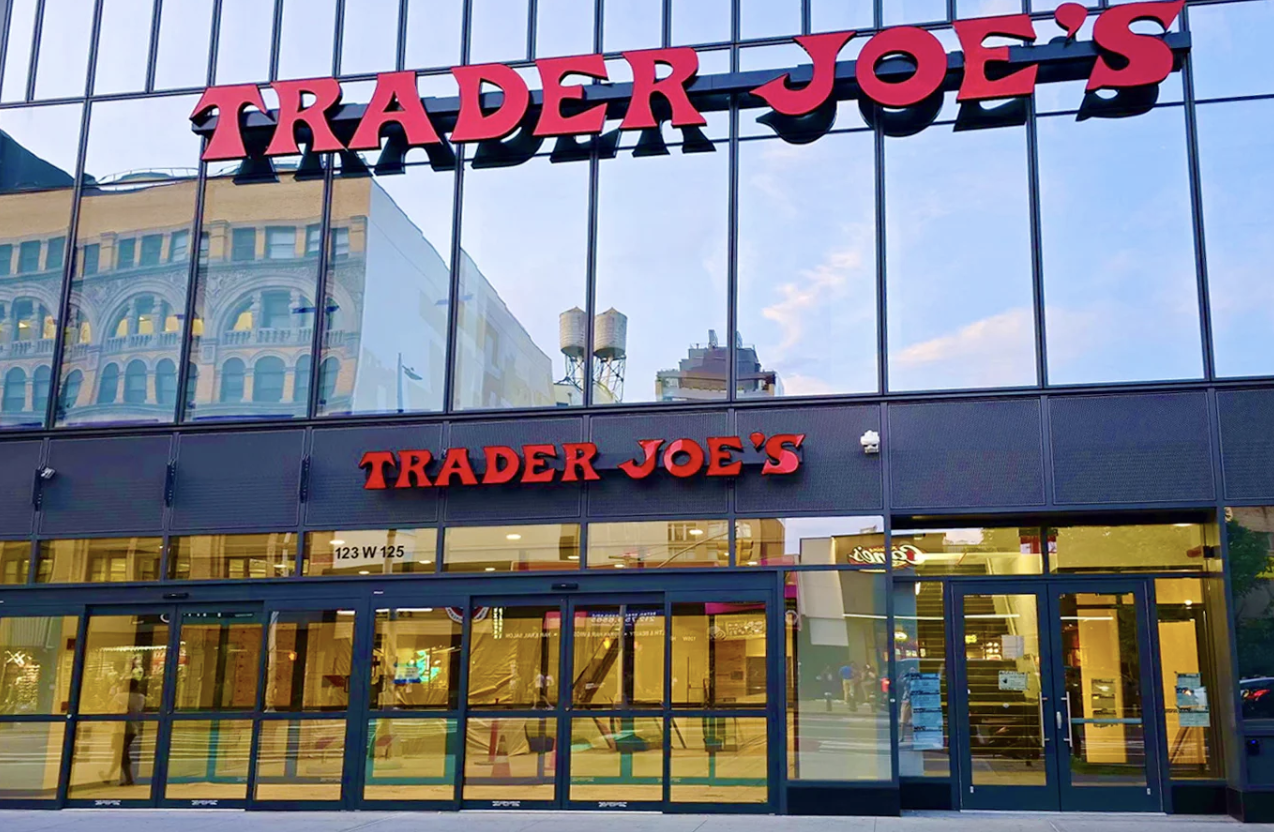
Today.com reports that the new Trader Joe’s supermarket in Harlem, New York, is facing controversy after shoppers have deemed the in-store graffiti unnecessary.
The colorful artwork went viral on social media, as viewers can see the graffiti posted at the store’s entrance. Opening on July 25 on 125th Street in the historically Black neighborhood and in the same building rumored to be the new headquarters of the National Urban League, shoppers didn’t seem too happy about the choice of artwork. “You can open a store in Harlem but no need to do all that,” @gnarlyheffner wrote on X.
The store manager, Tracy-Ann Reeves, defended the graffiti, saying she wanted the inside of the store to reflect the neighborhood surrounding it. “The signs and murals in the store are something that we really do pride ourselves on, to make sure that it is connecting with the community,” Reeves said.
“We spent a lot of time in Harlem just touring, looking at pieces at parks and wherever in the neighborhood.”
Customers have come from all over to take in the colorful decor, including depictions of the iconic Apollo Theater. However, the signage over the entrance received mixed reactions. “I think this is dope af. Kinda racist, but it’s a nice touch, lol,” @ethvnn said. One social media account accused the brand of gentrifying the neighborhood. At the same time, another compared the work to the controversial Paris Olympics performance by Australia’s Raygun, geared toward cultural appropriation, saying, “If that Australian breakdancing lady was a grocery store.”
According to PIX 11 News, a spokesperson for the grocery store spoke highly of the store’s opening in July 2024. Announcing a 100% donation of its unsold products to local nonprofits and community-based organizations, the company seemed excited about the future of the NYC-based location. “We’re honored and excited to be part of this community,” a spokesperson said. “We genuinely look forward to providing our customers with the best food and beverage values and a great customer experience.”
Some fans celebrated the artwork, like @soulljahhh, who wrote, “Is it bad that I kinda like it?” Another user named @SceneByAshlix checked those who were critical of the work. “They hire local artists for each and every store to manage their artwork and store signs. So, based on this being in Harlem, I’m not surprised. My Boston one has MBTA trains on the wall,” she wrote.
“Never been in a Trader Joe’s before?”
The incident isn’t the first time Trader Joe’s has been criticized for allegedly being tone-deaf. In 2020, a petition circulated to have the company rename product lines with culturally specific labels, like Trader José’s for its Mexican Food and Trader Ming’s, geared toward Asian cuisine.
August 21, 2024
The bundle, which features two of Beckham's favorite flavors ,White Cheddar and Hot & Spicy Cheez-Its, a homage to his idea presented in the video, went on sale online on Aug. 20 at 11am EST and will be available as long as supplies last.
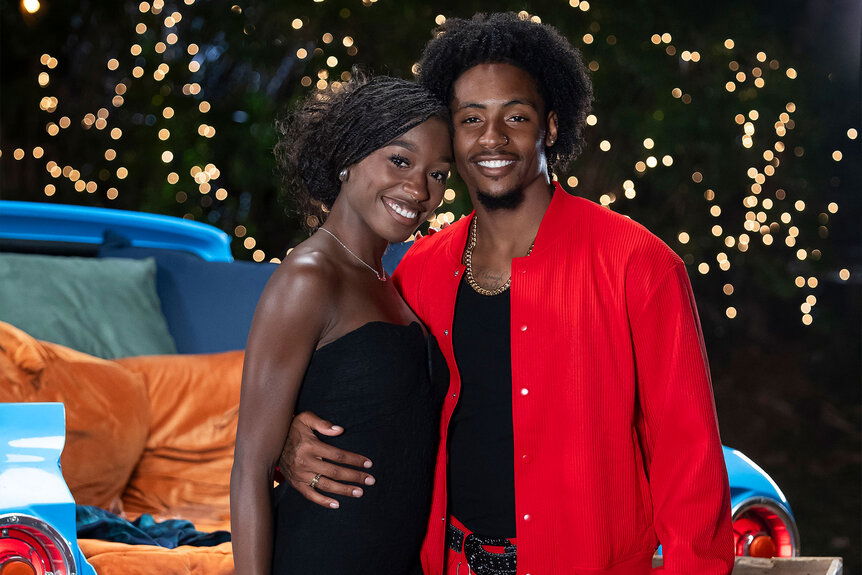
Kordell Beckham, the younger brother of NFL superstar Odell Beckham Jr., is riding high, fresh off winning the latest season of Love Island USA alongside his now-girlfriend, Serena Page, and securing a sponsorship deal with Cheez-It. Beckham has been trying to escape his big brother’s shadow, and now he will get the chance to live as his own man.
According to D Magazine, Beckham is on the cusp of realizing his dreams. As his best friend, Jay-Ron Tanner, told the outlet, “We’ve always talked about this, him blowing up and doing his thing, and it not revolving around his brother. It was just something that was destined to happen. He has too big of a personality for him not to be out in the world.”
Beckham had a chance to appear on Love Island as a 19-year-old in 2021, but his godmother, Karen Alford, advised him against it because he was still settling in Dallas. When the producers circled back a second time, Beckham jumped at the chance and now his life will never be the same.
“I was thinking to myself, because I like working, ‘What if I go back to [refueling planes] after [Love Island USA]?’ and then I realized I probably can’t do that,” Beckham mused. “Just imagine me in the vest, refueling the plane, and everyone is like, ‘Hey, is that Kordell?’”
According to TODAY, another of Beckham’s long-term dreams has come true: being sponsored by Cheez-It. After he and Page won the latest season of Love Island USA, Beckham pitched an idea to the company via a Tik-Tok video.
In the video, Beckham delivered his idea to the company, “I have a flavor that I’ve been thinking about that y’all could make, Spicy white cheddar.”
Cheez-It teased a potential partnership in the replies, “He’s even wearing the Cheez-It red.”
Fast-forward to Aug. 19, and the company announced it would collaborate with Beckham on a Kordeezy Cheesy Couple bundle promotion. The bundle, which features two of Beckham’s favorite flavors, White Cheddar and Hot & Spicy Cheez-Its, a homage to his idea presented in the video, went on sale online on Aug. 20 at 11 a.m. EST and will be available as long as supplies last.
Although Beckham is blowing up, he is also focused on cultivating his relationship with Page, who, ironically enough, lived close to Beckham when the two were growing up in Houston.
According to Page, Beckham has already met some of her family members in L.A. but missed out on some key meetings.
“I’ve been in L.A. for about a year and a half now, but my life is in Houston,” Page told Chron.com. “He’s met my mom, sister, and my niece in person [while in L.A.], but he didn’t get a chance to meet my dad and my brother, who are the two most important people.”
Beckham, meanwhile, reflected on just how quickly his life has changed since winning Love Island USA with Page, “It still hasn’t hit me yet. Everything is kind of normal but different.”
RELATED CONTENT: Ashanti And Nelly Ready To Share Their Love Story In New Reality TV Show