Chicago To End Selective High School Enrollment System, Emphasizing Neighborhood Schools
Students would be able to join their neighborhood high school automatically.
Chicago Mayor Brandon Johnson and the city school board may be making big changes by taking away selective enrollment and magnet schools, ABC 7 Chicagoreports. The change comes in the hopes of focusing on equity and building up existing neighborhood schools.
The city’s board voted to approve a resolution that supports neighborhood schools, moving away from the existing school choice system, in which students must be accepted into the enrollment schools, and some must travel long distances for their daily education.
Selective enrollment system hasn’t always been the most popular choice, beginning nearly 30 years ago to offer alternative education opportunities. Critics, including some board members, feel the district has pitted schools and students against each other and increased racial inequity it was created to solve. Supporters of selective enrollment argue that parents can choose better schools for their children if the schools in their district don’t meet their expectations or academic standards.
School Board Vice President Elizabeth Todd-Breland challenged the schools and residents to create a “strong, high-quality pathway from pre-K to high school.”
“It shouldn’t be a competition between schools; it should really be families, knowing that, ‘Hey, my child can walk to school and have a great option,'” Breland said, according to Daily Mail.
Board President Jianan Shi feels the community should guide and inform the plan, saying, “The goal is that we’re able to change the current competition model so that students are not pitted against one another, schools are not pitted against one another.”
Chicago is home to 11 high-ranking enrollment schools, including charter and magnet schools like Walter Payton Prep and Jones College Prep. In 2017, Chicago Public Schools set up a selective enrollment system wherein eighth graders could apply to a specific high school instead of enrolling in their neighborhood school. It worked: Data proved that 76% of students chose the higher-ranking schools over those in their neighborhood schools, as fellow students were just as academically driven.
Former Dallas D.A. Trailblazer Craig Watkins Passes Away At Age 56
In 2007, Watkins made history by becoming the first Black man elected as district attorney in Dallas County.
Craig Watkins, Dallas’ trailblazing first Black district attorney, renowned for his commitment to justice and efforts in exonerating wrongly convicted individuals, passed away Dec. 12. at the age of 56, BET reports.
His cause of death was not disclosed.
CBS News Texas released a statement from Dallas County Criminal District Attorney John Creuzot about Watkins’ passing: “I am saddened to learn of the passing of my former colleague Craig Watkins. Craig was bright and ambitious, and for his life to end so prematurely is a tragedy. However, he leaves behind a powerful legacy. He made history as the first elected African American district attorney in Texas. His fierce focus on the prosecution of child abuse cases and his creation of the first Conviction Integrity Unit in the nation are testaments to his vision and ability to effect change. Craig was perfectly human, and those who knew him are better for it. I am proud to have known him, to have worked with him, and to have been elected to the same office he held. He will be missed.”
In 2007, Watkins made history by shattering barriers, becoming the first Black man elected as district attorney in Dallas County, and is widely believed to be the first Black district attorney in Texas, as reported by NBC Dallas-Fort Worth. Some historians say William A. Price, elected county attorney in 1876, was the state’s first Black attorney and judge.
During his tenure, Watkins, a former public defender, established the Conviction Integrity Unit. This groundbreaking initiative scrutinized over 300 cases and played a pivotal role in securing the release of 25 wrongly convicted inmates. His dedication to justice and advocacy for the wrongfully imprisoned elevated him to a prominent national position in the fight for justice.
A Dallas native, Watkins was an alum of Prairie View A&M University, an HBCU He is survived by his wife, Tanya, and their three children.
Watkins’ legacy as a trailblazer in the legal field and a tireless advocate for justice has left an indelible mark on Dallas County and beyond. His pioneering work in the Conviction Integrity Unit and commitment to rectifying miscarriages of justice have inspired a new generation of legal professionals.
Shannon Sharpe Shares Dinner Date Advice For Women: Keep It Modest And Avoid The Seafood Tower
Shannon Sharpe: "I don’t believe you should go on the first date and order something that you wouldn’t order or pay for yourself."
When Shannon Sharpe was recently asked about the appropriate amount a man should spend on a first date, the 55-year-old emphasized practicality.
“I don’t believe you should go on the first date and order something that you wouldn’t order or pay for yourself,” Sharpe opined. He suggested starting modestly and gradually working up to more expensive items on subsequent dates, humorously questioning, “If we start out with Kobe or Wagyu, if we start out with a seafood tower, where the hell do we go from there?” as reported by Atlanta Black Star.
However, not all responses to Sharpe’s remarks were positive. Some critics on Complex’s platform expressed concerns about Sharpe’s age, with comments such as “Shannon is too old to be giving these takes” and “You are literally my dad’s age talking about some damn budget for a first date.” Others questioned Sharpe’s eligibility to provide dating advice as a single man.
The sports analyst has faced scrutiny for his dating preferences and standards before, notably expressing disinterest in dating Kim Kardashian due to both their busy lives. Sharpe once said he decided to end a relationship because of a partner passing gas.
His friend Chad Johnson has been trying to find Sharpe a life partner, so far to no avail. All of this has sparked public discussions about Sharpe’s dating life.
While Sharpe’s non-sports commentary resonates well on his podcasts “Nightcap” and “Club Shay Shay,” online reactions to this dating advice clip on Complex revealed a less receptive audience. Despite the criticism, Sharpe’s multifaceted career continues to make waves in sports media and beyond.
Sharpe, a Hall of Fame tight end, has secured the title of Complex Sports’ Most Entertaining Sports Media Personality, outshining notable figures like Stephen A. Smith, Skip Bayless, Charles Barkley, and Shaquille O’Neal. The honor recognizes his ability to blend sports, culture, and personality.
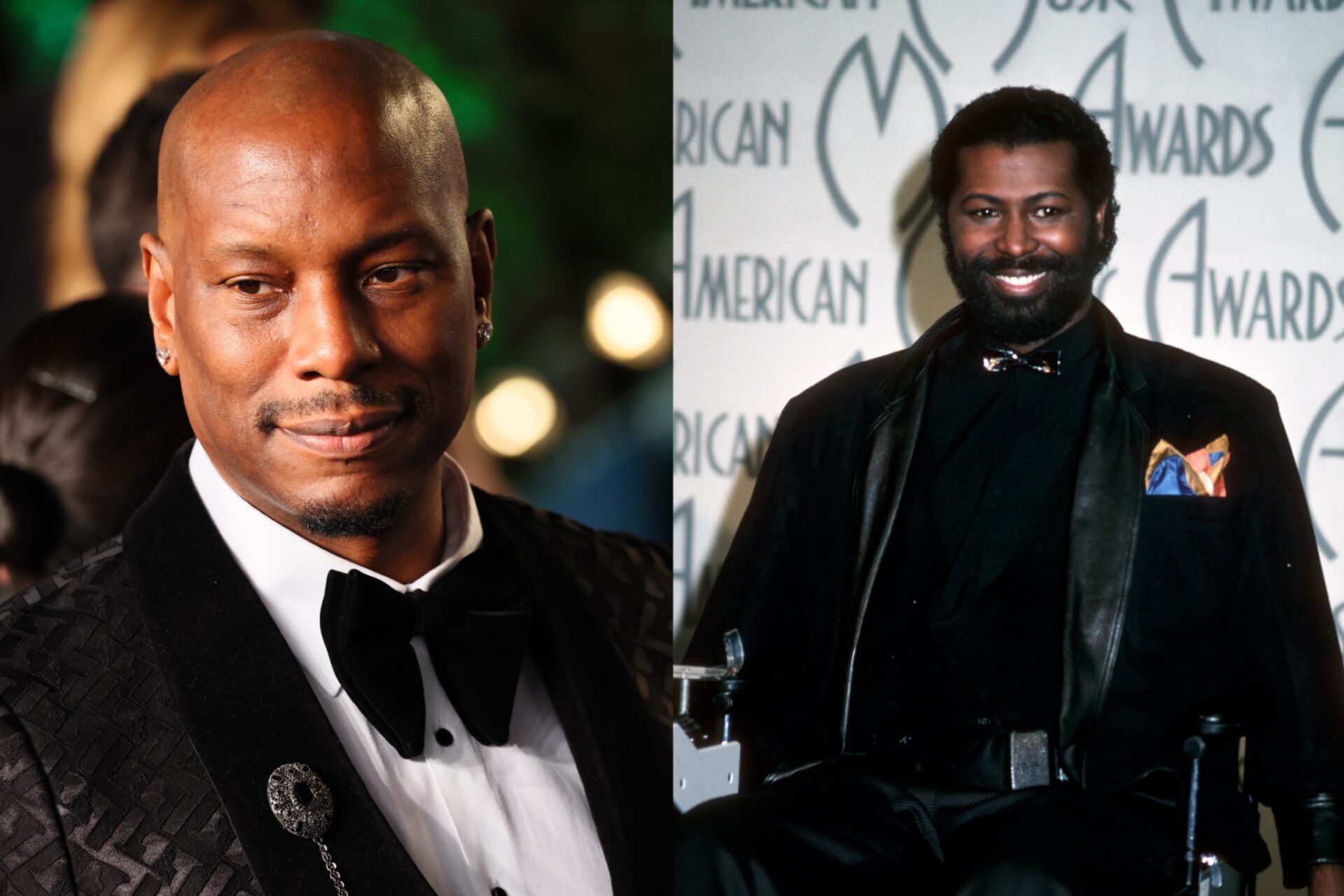
Tyrese Is A ‘Poor Businessman,’ According To Joan Pendergrass
The Pendergrass biopic has taken a turn as Joan Pendergrass, Teddy's widow, said actor Tyrese Gibson was incapable of bringing the proposed movie project to fruition.
The legal battle over the late singer Teddy Pendergrass’ biopic has taken a contentious turn as Joan Pendergrass, Teddy’s widow, criticized actor Tyrese Gibson, accusing him of being a “poor businessman” incapable of bringing the proposed movie project to fruition, RadarOnline.com reports. The accusations are part of an ongoing dispute between Gibson and Joan Pendergrass over the rights and production of the biopic.
Court documents obtained by RadarOnline.com reveal that Joan Pendergrass launched a scathing attack on Tyrese in her recent filing, urging the court to dismiss the actor’s lawsuit. Tyrese filed the lawsuit earlier this year, alleging that Joan had unfairly excluded him from the biopic after he’d invested a significant six-figure sum into the project.
According to Gibson’s lawsuit, his company, Voltron Entertainment, entered into a deal with Joan in 2011, granting her the rights to Teddy Pendergrass’ life story in exchange for Gibson’s financial investment in the project. Gibson claimed to have invested $450,000 over the past decade and said that Joan refused to extend the deal in 2022.
Joan Pendergrass countered Gibson’s claims, arguing that he had signed away his rights to her husband’s life story in a separate deal with Warner Bros. in 2019. She contended that the agreement between Voltron and Warner Bros. had superseded Gibson’s involvement, thereby sidelining his company from the project.
In the recent filing, Joan criticized Tyrese’s competence in managing the movie project, stating, “Voltron and Tyrese had proven incompetent at putting together a movie project about Teddy Pendergrass.” She also emphasized that Voltron had not exercised its option to purchase Teddy’s life rights and copyrights.
Joan also said that Tyrese’s association with the project was hindering its chances of success, claiming, “While [Tyrese] may be a talented actor and singer, he was a poor businessman and incapable of getting a movie made.”
She further detailed the events leading to the expiration of the deal with Warner Bros. in April 2022 and denied Tyrese’s claim that she had promised his continued involvement in the project. Joan expressed confidence that Voltron’s lawsuit would be revealed as “a meritless and vexatious abuse of the legal process” and demanded the immediate dismissal of the entire case.
Gibson has yet to respond to the latest developments in the ongoing legal dispute.
New York Man Found Dead In Virginia After Missing For 2 Months
Smith had traveled from New York and arrived in Spotsylvania on Oct. 28 to visit a female acquaintance.
A New York man who went missing two months ago was found dead in Spotsylvania, Virginia, with authorities investigating the circumstances leading to his disappearance and death. The Spotsylvania Sheriff’s Office confirmed that skeletal remains discovered on Nov. 16 were those of 33-year-old Terrence Smith, according to People.
Smith had traveled from New York and arrived in Spotsylvania on Oct. 28 to visit a female acquaintance. Concerns arose when he failed to return to New York, prompting his family to report him missing on Nov. 1. According to a press release from the sheriff’s office, Smith’s family grew worried, as his prolonged absence was out of character.
The investigation into Smith’s disappearance led detectives to his remains, located “not far from the home of the female acquaintance in the area of Timber Ridge Townhomes.” The sheriff’s office revealed that Smith’s bank account had also been emptied during his time in Virginia, adding another layer of complexity to the case, Pix11 reported.
“I just don’t understand what’s happening down there. We know the prime people involved,” said Michael Perry, Smith’s older brother, expressing the family’s bewilderment at the developments.
The Spotsylvania Sheriff’s Office is actively investigating the incident, and a cause of death has yet to be determined. The press release emphasized that detectives are diligently working on the case, leaving room for further updates.
The circumstances surrounding Smith’s disappearance and the subsequent discovery of his remains, coupled with his emptied bank account, have raised questions about the events leading to his tragic end. Authorities are expected to conduct a thorough examination to uncover the details and provide clarity for the grieving family.
The case underscores the challenges faced by law enforcement when investigating missing person cases, highlighting the need for a comprehensive inquiry into the circumstances surrounding Smith’s death.
Prisoners Sue Alabama Prison Labor System Over ‘Modern-Day Slavery’ Work Programs
Alabama takes 40% of its prisoners’ gross earnings in work-release jobs.
Alabama prisoners, both current and former, filed a class action lawsuit in federal court on Dec. 12 alleging that prison labor system programs equate to a “modern-day form of slavery,” HuffPost reports.
The lawsuit claims the amount of work performed in these programs is a violation of the U.S. and Alabama constitutions. Supported by the labor unions, the prisons accuse the state of profiting more than $450 million a year through coerced work, adding fast food companies and other corporations are benefitting from a “labor trafficking scheme.” Two labor groups, the Union of Southern Service Workers and the Retail, Wholesale and Department Store Union, are the plaintiffs, arguing that the state’s parole system purposely trapped Black prisoners into working jobs with little to no pay.
Under the program, Alabama takes 40% of the prisoners’ gross earnings in work-release jobs while the inmates are prone to other deductions just for transportation and uniform cleaning. In total, rates fall below the state’s minimum wage of $7.25 per hour. Prisoners working for state and local government agencies are only paid $2 per day, not too far off from the daily wage rate set for prisoners in 1927.
Janet Herold, attorney for the plaintiffs and legal director of the legal aid group Justice Catalyst Law, described the prison work programs as the “the modern reincarnation of the notorious convict-leasing system, replacing slavery after the Civil War.”
“We are not talking here today about a new Jim Crow,” Herold said. “We’re talking here about the old Jim Crow.”
Lakiera Walker, who was imprisoned from 2007 to 2023, said she was forced to work long, uncompensated hours after being threatened with “discipline.” Her duties included housekeeping, stripping floors, being a caregiver for mentally disabled or sick inmates, unloading chemical trucks, and working inside freezers, on top of working at Burger King — all for $2 a day. Walker said she was also subjected to sexual harassment by a supervising officer.
Walker remembers an officer telling her to “get up and go make us our 40 percent” when she was too sick to work. She said it was time to take a stand. “Those women need help. They really need a voice,” Walker said. “I knew I had to do something. I want justice for this forced labor.”
The defendants listed in the suit include the state’s Republican governor, Kay Ivey; attorney general Steve Marshall; and Alabama corrections and parole officials. Inmates want the state to abolish a “captive labor source” and pay current and past prisoners with damages.
According to the complaint, there were more than 1,300 incarcerated people enrolled in the work program as of September 2023.
Cam’ron Reveals That Jadakiss Was Originally Tapped To Co-Host ‘It Is What It Is’
After Ma$e was a guest, the chemistry between Cam and him just made sense for the Harlem natives to co-host the program together.
Two Harlem buddies with basketball dreams became successful in hip-hop instead of sports. But after a fallout and feud between the two, the bond has been mended as the two rappers turned broadcasters are having a successful run in the sports world.
Now that Cam’ron and Ma$e are true buddies again, it was revealed that the pairing almost didn’t happen, as Killa Cam wanted his co-host of “It Is What It Is” to be Jadakiss, of the hip-hop group The Lox.
Luckily, Jadakiss’s busy schedule changed the trajectory of the new sports show that Cam’ron brought to fruition, which led to the reunion of Killa Cam and Murder Ma$e. The two Harlem natives and childhood friends were part of the Harlem group Children of the Corn. The group was formed in the ’90s with Big L (who was signed as a solo artist to Epic Records before being killed), Herb McGruff (once an Uptown Records signee), and the late Bloodshed.
In a conversation with Complex, Cam’ron (Cameron Giles) explains how the two reconnected to do the sports show “It Is What It Is.”
“We reconciled maybe a little over a year ago,” said Cam’ron. “Mase actually helped me get my first record deal ever, and it was kind of my fault that we was beefing. I was going hard at him for years, pause, and saying a bunch of slick shit. So when we got cool again, I just wanted him to know that all that shit was dead for me.”
Once Cam’ron took responsibility for the feud he started with the man that essentially “put him on,” he felt he needed to gain the trust of his longtime friend turned adversary.
“I just wanted to gain his trust back because I don’t want him to think that I could flip out again. I’m a grown man now. I can look back because I’m old enough to say that’s maybe what I was going through because he just left and was like, fuck everybody—not fuck everybody, but he was following his path of what he needed to do, and I didn’t recognize that at the time,” Cam’ron explained.
He also revealed that Ma$e wasn’t even the co-host when he started the show. He had a plan to do it with Yonkers-based Jadakiss, who was a labelmate to his Harlem friend when both were on Bad Boy Records. But due to Jadakiss keeping a busy schedule with running businesses, it just didn’t happen.
“It was supposed to be me and Jadakiss, but Jada is busy as well. Jada got sh** to do, so he never came. He kept saying he’s gonna come, and it’s not his fault, but he’s busy as well. But that was my plan, to do this show with me and Kiss,” said Cam’ron.
He then decided he’d be the sole host and invited Ma$e on as a guest.
“One day, I was like, I’ll do this shit by myself. I’m gonna just have guests, and I had Mase as a guest. So when Mase came on as a guest, and we vibed, I was like, ‘That shit was dope. Come back every week. We could do this once a week.’ So he called me. He’s like, ‘Would you wanna be partners on this?'”
No Charges Filed Against Mississippi Police Officer Who Shot 11-Year-Old Boy
Aderrien was taken to the hospital and treated for a collapsed lung, fractured ribs, and a lacerated liver.
A Mississippi grand jury has determined that an officer will not be held liable after shooting and wounding an 11-year-old boy. Aderrien Murry was shot in the chest on May 20 by an Indianola police officer responding to the boy’s call about a domestic disturbance.
According to Aderrien’s mother, Nakula Murry, her son called police when her child’s father came to her home and started behaving erratically. Murry told CNN that Sgt. Greg Capers came to the door with his gun drawn and asked the house occupants to come outside. When the Aderrien attempted to walk outside, Capers shot him.
Aderrien was taken to the hospital and treated for a collapsed lung, fractured ribs, and a lacerated liver.
Capers was suspended without pay, pending an investigation.
Mississippi Attorney General Lynn Fitch released a statement Dec. 14 that said Capers would not be charged for the incident:
“The Office of the Attorney General completed its review into the May 20, 2023, incident involving an officer-involved shooting in Indianola, Mississippi, and presented it to the grand jury in Sunflower County yesterday. The grand jury reported that it found no criminal conduct on behalf of the officer involved.”
Attorney Carlos Moore, representing the Murry family, told NPR that he will continue to pursue legal action to ensure that his clients receive justice.
The Murry family has filed a $5 million federal lawsuit naming the city of Indianola and the two responding police officers as defendants. The lawsuit accuses the officers of gross negligence and reckless disregard, and accuses the city of failing to provide adequate training for their officers. The Murrys are also demanding that police bodycam footage be released to the public.
The judge overseeing the case did allow the family to view the footage last week but has prohibited it from being released to the public.
Credit cards combined with massive consumer spending are the cornerstone of the highly profitable credit card industry.
Originally published December 29, 2015
“Buy now, pay later” is the mantra that drives much of American holiday spending. Credit cards mixed with massive consumer spending are the cornerstone of the highly profitable credit card industry. Therefore it’s no surprise that banks continue to inundate consumers with credit card offers, especially during the shopping frenzy of the holiday season.
From the many varieties of Visa and MasterCard to Discover and American Express, credit cards are a common fixture in the wallets of millions of Americans. According to Forbes, “Federal Reserve credit card balances rose by $45 billion to a high of $1.03 trillion.” Credit card offers are mailbox staples, and — no surprise — the volume of unsolicited offers tends to increase the day after Thanksgiving.
Here’s some important information that will help you separate the good values from the rip-offs.
The Introductory Rate
The introductory rate, or “teaser rate,” expires after a designated period of time. Federal law requires introductory rates to remain in effect at least six months after sign-up. This rate is below market and typically applies only to balance transfers and cash advances, although it can also apply to purchases. Introductory rates are usually extremely low, ranging from 0% to 4% for up to 12 months. But be sure to read the fine print on when the initial rate will expire and what the percentage rate will be once the period ends.
Annual Percentage Rate: Fixed vs. Variable
If you don’t pay your balance in full by the due date, you’ll be charged interest on the remaining balance. How much interest you pay is determined by the annual percentage rate (APR) on the card.
If you pay the full balance on your credit card every month, you won’t have to pay any interest on your $0 balance and can ignore APRs. All credit cards have either a fixed or variable APR, determined largely by the “prime rate,” which is the interest rate commercial banks charge their most creditworthy customers. For example, if a bank is offering a credit card at “prime plus 4” and its prime rate is 5%, then the bank is essentially offering customers an 11% loan (4% + 5%).
A fixed APR locks in your rate so that it does not fluctuate with changes to the prime rate on which it is pegged. The variable APR, on the other hand, moves in step with the prime rate. If conditions are volatile and interest rates spike, the variable APR that originally enticed you can end up bearing little resemblance to what you actually pay. While it’s preferable to have a card with a fixed APR, these cards are few and far between. Currently, the average fixed APR is 13.1% and the average variable APR rate stood at 15.7%.
Cards for Bad Credit
Everyone deserves a second chance: That’s the reasoning behind credit cards targeting those with bad credit. Moreover, in today’s technologically driven world, it’s becoming increasingly difficult to function by only using cash, which makes a strong case for the ease and convenience of access to a credit card. Additionally, if you have bad credit but you rack up a good history with these types of cards, you can repair your damaged credit score.
In most cases, these types of credit cards are “secured,” which means users must first load money onto the card in order to access the credit via the card. Some companies offer “unsecured” credit cards with low credit limits and high interest rates. But be warned, these rates can be high—think at least 20 percent.
Rewards
Increasingly, credit cards are tied to charges for hotels, rental cars, air travel, grocery and gas purchases. The idea is that the more products and services you purchase, the more “points” you earn in return for free or discounted rewards, offering additional incentive to use the card again and again.
But beware: Many of these incentive-based cards come with high interest rates and big annual fees. However, if their interest rates aren’t excessive and there aren’t a lot of hidden restrictions or fees, reward cards can be a good deal, offering free hotel rooms, bonus rental car use, free airline tickets, and more. Nonetheless, make sure it’s worth your while by casting a discriminating eye on the agreement and the fine print. For most frequent flyer credit cards, for example, you’ll see high interest rates, blackout dates, and restrictions for the privilege of getting miles in return. It’s not worth it and tantamount to paying for overvalued stocks.
Evaluating the Key Areas
Know the interest rate and spend the time to compare fixed and variable APRs. If you think interest rates will remain stable, you might want to opt for the lower variable rate. But remember, that’s a risky choice. If interest rates go up, you lose and you’re stuck with the card. The good news is, thanks to the new credit card laws, card-issuing companies can’t raise rates on existing balances during the first year unless a prior promotional rate expired, the index on a variable index rate increased, or you were 60 days late in paying your bill. If your rate increase as a result of a late payment, the bank is required to restore it to its lower rate once you’ve made six consecutive monthly payments on time.
Be aware of your credit card’s annual fee, which can range from $15 to $300. Don’t agree to pay more than about $50. If possible, choose a card with no annual fee.
If you make a late payment, you will be charged a fee which could run you approximately $35. Avoid cards that impose over-the-limit charges and hidden fees for balance transfer and account termination. Some cards will notify you if you’ve gone over your limit without hitting your wallet with a penalty. Also, beware of fishy interest calculations. There are many ways a card issuer can calculate interest owed. One of the shadiest tricks is to use a late payment as a reason to jettison the interest-free period for new purchase transactions and then calculate the interest as far back as the original purchase date.
But the best way to safeguard against insidious fees is to be your own best advocate. Read the fine print on your credit card statement. If the contract allows the card company to get away with either of these schemes, cancel your card and find one that only charges interest from the date the new statement was produced.
Creating a personal brand that others recognize and trust is essential. Here are five things you can do to take your brand to the next level.
Originally Published Mar. 7, 2017
You probably already know it’s important to have a personal brand. Creating a personal brand that others recognize and trust is essential to success as a freelancer or as any other business owner.
Now, you’ve probably already built something of a personal brand. You probably have a branded website and all the requisite social media accounts. So what next? Here are five things you can do to take your brand to the next level.
Review Your Strengths
One of the best things you can do to keep working on your personal brand is to review your strengths. Periodically look at what you bring to the table.
Have you developed new strengths? What are your best qualities? Understanding your strengths will help you determine how to make the most of your brand. Plus, you can highlight those strengths and play them up.
Understand Your Value
Now that you know your strengths, you can put them to good use. Understand your value.
How do you fit into your industry? Do your strengths lend you the ability to provide value that others can’t? You need to be clear about that.
As you strengthen your brand, make sure you illustrate the value you bring to the table. You want others to know what you offer. Whether through a business proposition or freelancing, you want to make sure that you provide solid value and communicate that value.
Post Meaningfully on Social Media
You might have social media profiles, but are you doing anything meaningful with them? As you work to strengthen your personal brand, you must ensure that what you post online adds something to the conversation. Do you provide meaningful insights into your industry? Do you offer value? Do you share information others find useful?
These are important things to consider. If you take the time to craft thought-out online posts, you will have a better chance of creating a brand others value and want to follow.
Show Authenticity
Whether managing a business or offering great freelance content, you must be authentic. Your personal brand should reflect who you really are. Someone who meets you in person should feel as though the face you show online is compatible.
Be yourself. After a while, it becomes clear when you are fake, and that can show through. People like to feel like they know you, and you can create a brand that people identify with to increase your success.
Tweak as Needed
Just because you want to be authentic doesn’t mean you shouldn’t change. The key to a strong personal brand is the ability to adapt and tweak as needed.
Keep improving yourself. As you do so, your brand will improve as well. As you learn new skills and information, update your brand and value proposition. It’s a good way to stay up to date with the latest developments. You’ll remain relevant and continue to offer customers and clients the best value.
This article was written by Miranda Marquit and originally appeared on DUE.com.