The U.S. Department of Labor accuses Fayette Janitorial Services of having minors cleaning dangerous equipment, including head splitters and jaw pullers, at meat processing plants. The Department requested a federal court in Iowa to issue a temporary injunction against the company after finding children would work overnight shifts to satisfy sanitation contracts at meat and poultry companies.
Hiring occurred at slaughterhouses in the Midwest and Southeast. Allegedly, 15 children were hired to work at a Perdue Farms processing plant in Accomac, Virginia. A 14-year-old child was severely injured at a Seaboard Triumph Foods facility in Sioux City, Iowa. Other children also worked at the location. In a statement, Perdue alleges they terminated their contract with Fayette before the court filing.
“Underage labor has no place in our “business or our industry,” a spokesperson wrote. “Perdue has strong safeguards in place to ensure that all associates are legally eligible to work in our facilities—and we expect “the same of our vendors.”
In December 2023, a New York Times Magazine published a detailed report of kids cleaning blood, grease, and feathers from equipment with acid and pressure hoses. At a Perdue slaughterhouse in Virginia, a 14-year-old boy, who was one of thousands who crossed the border from Mexico or Central America, was mutilated while cleaning a conveyor belt at a deboning area.
This isn’t the first time Fayette has been in hot water. The company was cited in July 2022 by the Occupational Safety and Health Administration for failing to make sure employees followed proper procedure after a worker was sucked into a conveyor belt at a Gerber Poultry plant. The Labor Department also found more than two dozen child laborers worked at the same plant in October 2023.
Jessica Looman, administrator at the DOL’s Wage and Hour Division, said they are working with other federal agencies looking to conquer child labor exploitation nationwide. “Federal” laws were established decades ago to prevent employers from profiting from the employment of children in dangerous jobs, yet we continue to find employers exploiting children,” Looman said.
“Our actions to stop these violations will help ensure that more children are not hurt in the future.”
Is Being ‘Broke’ Just a Mindset? This TikToker Makes His Case
TikToker Jean-Luc explains why being "broke" is not something cash-strapped big spenders should take seriously.
A TikToker is going viral for his unique stance on financial strains. According to content creator Jean-Luc, being “broke” is more of a mental state than reality and shouldn’t force cash-strapped Americans from being big spenders.
Jean-Luc explained his controversial thinking regarding money while participating in an interview for another TikToker’s platform, Subway Takes. The interview, which takes place on a New York City subway, displayed the influencer sharing his financial circumstances and why he still chooses to live lavishly.
“Being broke is a mindset,” said Jean-Luc to the show’s host, Kareem Rahma. “If more people didn’t think that they were broke, they wouldn’t be.”
He continued, explaining the “abundance mindset” that rationalizes his spending habits.
“Honestly, I’m in $100,000 in credit card debt,” shared Jean-Luc. “But I’m going to St. Barths on Tuesday. I’m going to the Gucci store today….Dude, its an abundance mindset, the money will always come back…You don’t even need to be rich to act like it.”
This abundance mindset is the faith that money will come as needed, so stressing about one’s expensive choices is a waste of time. For the content creator, this rationale has proven to work in his favor thus far.
Jean-Luc is also part of a cohort of Black consumers driving the luxury sector. Despite the woes of inflation and a fluctuating economy, Black people have still accounted for 20% of luxury spending since 2019 and are on track to grow more. According to a Bain report detailed in Essence, this percentage will increase by 25% to 30% in 2025.
Despite these rising numbers, Black millennials are still heavily impacted by higher debt. Their non-mortgage debt is approximately $11,000 more than their white counterparts, as covered before on BLACK ENTERPRISE. However, this insistence on participating in luxury buying and maintaining this image may stem from discrimination, according to Tari Dagogo-Jack, an assistant marketing professor at the University of Georgia.
“If you feel like you’re under attack or a group that you belong to is, you will defend yourself by wanting to move closer to signifiers of that group,” explained Dagogo-Jack, reported Finurah in 2022. “We will often use brands to reimagine our self-identity that we want to convey to others.”
Regardless of the economic state, influencers like Jean-Luc indicate a growing trend toward “Keeping up with the Joneses” despite what one’s bank account may look like.
The National Trust for Historic Preservation awarded the church a $150,000 grant through the Preserving Black Churches program from the African American Cultural Heritage Action Fund. The funds will help the 111-year-old community staple with much-needed repairs, including a new steeple and windows. Church pastor Johnathan Hargrave said this would allow the church to continue to let its light shine.
“Beulah has been a beacon in our community for many years, and now we can continue to let our light shine by preserving this great historic establishment.”
Dating back to the late 1800s, Beulah has opened its doors to people from all walks of life, especially during the 1960s. Cultural Heritage Tourism Manager for Visit Natchez, Roscoe Barnes, said the church was known as a safe space for African Americans to discuss strategies for rallies and meetings at the height of the civil rights movement.
“Most of the meetings were held right here when they planned and put strategies together on how they were going to fight for civil rights and stand up against white supremacists,” Barnes said.
“This church stood up against the violence, and the people of this church stood up, and they spoke up, and they marched in spite of the threats.”
They got their chance in 1965 when the president of the Adams County Chapter of the NAACP, George Metcalfe, was almost killed when his car was bombed. Protests erupted in the streets, regardless of police orders restricting people from marching or setting up at Beulah due to a set curfew. People continued to gather as hundreds were arrested and taken to jail. “When the people look back and see those people, they see courage in the midst of fire,” Barnes said.
“They see strength, they see grace, they see determination and persistence. They see, ‘Hey, these are our people, so it should instill a sense of pride.'”
Beulah has a lot to be proud of. Being one of 31 churches approved out of over 500 churches that applied, the funds will provide much-needed tenderness, love, and care. Visitors, whom deacon Robert Morgan says are “slimmer and slimmer,” can see what the church has been through — from visible bullet holes in the windows to bricks cracking and shifting outside. Morgan looks at the grant as a blessing.
“The years have taken its toll, not only on the building but also on the congregation,” he said. “Getting this blessing in the form of a grant was from Almighty God.”
Grant funds are supposed to be distributed in a few weeks, with repairs beginning in a few months.
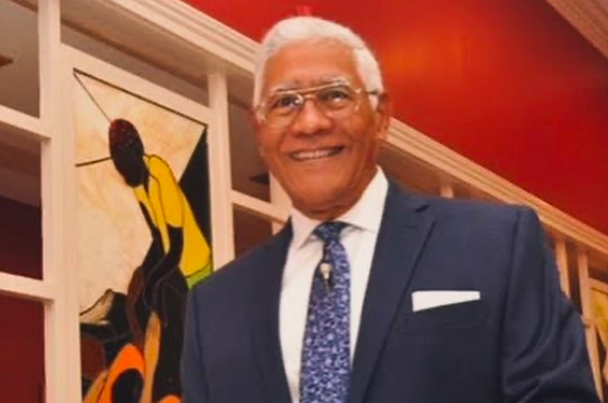
Edgar L. Chase III, Son Of New Orleans Restauranteurs Leah And Dooky Chase, Dies at 74
Edgar L. "Dooky" Chase, son of the legendary Dooky Chase's restaurant owners, has died at age 74.
Edgar L. “Dooky” Chase III, the son of New Orleans restaurant owners Leah and Edgar “Dooky” Chase Jr., has died at age 74. The patriarch and legacy of the entrepreneurial family was pronounced dead on Feb. 21.
Chase III was surrounded by relatives and his wife, Alva, as he died, and the family released a statement on the “passionate New Orleanian,” an attorney who worked to better his community, per WGNO.
“Dooky was a passionate New Orleanian that proudly served on numerous local, state, and regional boards focused on strengthening and improving our community and bringing people together,” the family expressed in the written announcement. “In addition to being a CPA and attorney, Dooky was a lifelong educator and university administrator who educated and mentored thousands of students and young professionals. He was a principled man, that was joyfully dedicated to being of service to others. Dooky was filled with passion and faith which was exhibited in his daily life and in his interactions with others. He believed in the power of love for mankind and was guided by the ideals of liberty.”
His parents’ famed restaurant, Dooky Chase’s, was a pivotal meeting place during the civil rights movement after its reimagining as a sit-down establishment by his mother, Leah. The restaurant still stands today as a family-owned business of Black American history, Creole cooking, and celebration of Black artists. Civic leaders, including Dr. Martin Luther King Jr. and Thurgood Marshall, visited the restaurant during their fight for racial equity, and in modern times by former President Barack Obama and other public figures.
New Orleans’ Mayor Latoya Cantrell also expressed her condolences toward the Chase family on the loss of their influential patriarch.
“Advocating for change on the local, state and regional levels, he always kept community at his core,” stated Mayor Cantrell on Chase III’s legacy. “As stated by his family, Dooky was ‘joyfully dedicated to being of service to others,’ which was demonstrated by his tireless dedication at the family-owned restaurants, as well as through his career in education and law. The contributions of the Chase family are felt across the world, and my deepest condolences go out to his wife Alva and the entire Chase family.”
Funeral services will be conducted on Feb. 29 in New Orleans, as the family requests that donations be made in lieu of flowers to The Edgar “Dooky” Jr. and Leah Chase Family Foundation in his honor.
Ohio Mom Of Abused 4-Year-Old Daughter Sentenced To Life In Prison
Tianna Robinson, a 28-year-old mother in Ohio, has been sentenced to life in prison for the fatal strangulation and beating of her 4-year-old daughter.
An Ohio mother of an abused 4-year-old girl, who died after being beaten and strangled to death, has been sentenced to life in prison. Tianna Robinson pleaded guilty to the April 2021 killing of her young daughter in Hamilton County.
According to TheCincinnati Enquirer, the 28-year-old was initially facing the death penalty for multiple charges, including felonious assault and endangering children. Robinson instead took a plea deal for an aggravated murder charge on Feb. 22, with the possibility of parole after 30 years. Her daughter, Nahla Miller, suffered from a broken arm and brain injury with the strangulation leading to her death, confirmed by Hamilton County Prosecutor Melissa Powers in a Facebook post.
The mother called the Springfield Township police following the violent act, to report that the 4-year-old passed out, despite later confessing she had punched and strangled her. After being admitted to a nearby hospital, doctors investigated the child’s body, noting burn marks and internal bleeding incurred from months of abuse, as well as malnutrition. Miller died after being on life-support for nine days.
According to the news outlet, prosecutors claimed that the 4-year-old was beaten to death after urinating on herself while Robinson and her boyfriend were out. While the trial was set to begin, Robinson had been previously diagnosed with major depressive disorder and post-traumatic stress disorder, leading to psychologists finding her unfit to take the stand four different times between 2021 and 2022. Her case continued after two years of treatments at psychiatric hospital Summit Behavioral Healthcare. Her boyfriend, Rensley Washington, was also sentenced to 12 months in prison after being convicted on two counts of obstruction of justice for claiming Miller fell off a scooter.
Powers released a statement to People about the “unthinkable crime” that broke her heart.
“This was a horrific and unthinkable crime,” shared the prosecutor. My heart breaks for Nahla just imagining what she was forced to endure. Given the current state of the law in Ohio, ensuring this defendant will be locked up for the rest of her life represents the best possible outcome we could hope for.”
Medical School’s First Black Graduate Makes History Again As First Black Medical Staff President
Dr. James D. Griffin, the first Black graduate of the University of Texas Southwestern’s medical school, was elected as the first Black president of the Medical Staff at Parkland Health.
Dr. James D. Griffin is the first Black graduate of the University of Texas Southwestern’s medical school to join the school’s faculty, as well as the chief of Anesthesiology at Parkland Health, a hospital located in Dallas, Texas. Griffin made even more history, recently he was elected as the first Black president of the medical staff at Parkland Health.
Griffin, as NBC DFW reported, shares a special connection with Parkland; he was born in the hospital’s segregated wing in 1958. In an interview with the outlet, Griffin reflected on that history and his parents, who he says pushed him to believe in himself, beyond the limits that society placed on Black people in the Jim Crow South. “To be born at Parkland in a time when my mother could not receive health care in any other hospital was important. At that time, Parkland’s maternity ward was segregated so the African American babies were born in one part of the hospital and everyone else was born somewhere else,” Griffin said.
Griffin continued, praising the values his parents instilled in him, “We never talked about what we couldn’t do. It was always based in faith on what was possible if we put our minds to it.”
In a press release from Parkland, Griffin connected his past and the past of his parents to his historic achievement, saying that it represented significant progress for the hospital and society in general. “Until I became a second grader, my parents couldn’t vote. So being elected by my peers connects me back to a point in time where people like me did not have a voice,” Dr. Griffin said. “In order to get here, I had to be voted in by a number of physicians who didn’t look like me. To me that paints a broad picture of where we have advanced in just one lifetime.”
Griffin’s remarkable career has stretched over 40 years, with him eventually becoming a distinguished teaching professor and the Vice-Chair of Anesthesiology and Pain Management at his alma mater. In 2021, Griffin was awarded the Leaders in Clinical Excellence Service Award from UTSW. Dr. Griffin reflected on his career and as the son of two school teachers, he has a deeply embedded passion for education, as he told Center Times Plus, “Service is in my genes. Teaching is in our blood, which is probably one reason I stayed on the faculty at UT Southwestern. Teaching in medicine is a never-ending quest to construct bridges over chasms of the unknown or misunderstood.”
Griffin continued, “We have a big gap in treatment outcomes of patients who come from under-resourced communities, because of limited access to health care,” said Dr. Griffin, before explaining that good healthcare is a public good. “I believe that when we provide adequate resources, good nutrition, adequate housing, and education, the community thrives, so we have an obligation to make sure we foster a balanced society for all.”
In his new capacity, Griffin will seek to create that balanced society through his efforts at the hospital, driven by a desire to help others. He added, “We can change this little part of our Earth, like Archimedes, who said, ‘Give me a place to stand and with a lever I will move the whole world.’”
U.S. Rep. Joins Fight Against Hair Discrimination In Texas Public Schools
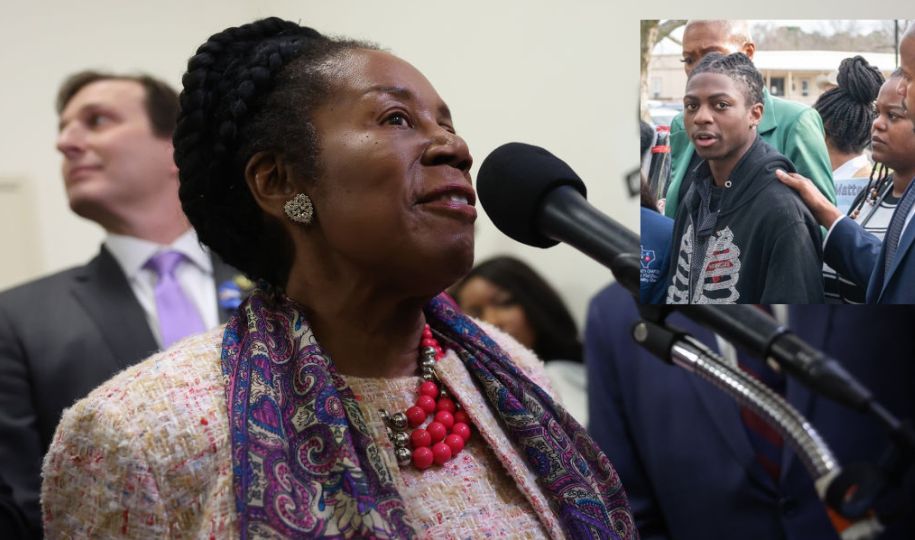
Rep. Sheila Jackson Lee joins fight against hair discrimination in Texas schools after a state court ruling validated a high-schooler's suspension for his locs.
U.S. Rep. Sheila Jackson Lee (D-TX) is joining the fight against alleged hair discrimination in Texas public schools. Jackson Lee is rallying behind a teen amid his ongoing battle with Barber Hills High School for wearing his hair in locs.
Rep. Jackson Lee spoke at a press conference on Feb. 23 to urge the Department of Education to investigate the matter of Darryl George, in footage shared by Fox 26. The 18-year-old student has faced suspension for his locs since the start of the school year in August. George has been forced into alternative school or in-school suspension after administrators informed him that his locs violate the school dress code. However, George and his family have argued that his punishment for having the natural Black hairstyle violates the Crown Act, which was legalized within the state in May 2023 to prohibit race-based hair discrimination.
“I never thought I’d be standing here in 2024 to fight this fight,” she stated. “The opinion to say that a teenage boy has to be isolated in a cubicle or a class and cannot interact [with other students] because he has [locs] that are way up on his head, not doing anything to disturb the respect he would have for his fellow students, for his teachers, for his activities that are needed. There’s nothing.”
The Texas lawmaker continued, noting that she is “stunned” that she has to rally behind the high-schooler to ensure he is not discriminated against.
“I am stunned, literally stunned, of a fight that I have to make for young Mr. George to be treated like a decent human being and be able to receive the education that the tax dollars of his parents and his family pay for every single day,” expressed the elected official.
Her support of George comes after a recent court ruling in favor of the Texas school district, saying it is not violating the Crown Act, stating the issue is with the length of the teen’s locs. In the wake of the news, the Barber Hills Independent School District’s Superintendent Greg Poole denounced the claim that racism was at play and that the CROWN Act is not a protector of “unlimited self-expression.”
“The CROWN Act does not give students unlimited self-expression,” shared Poole in a written statement detailed by the Houston Chronicle. “High expectations have helped make Barbers Hill ISD a state leader in all things and high school standards benefit all ethnicities… Falsely claiming racism is worse than racism and undermines efforts to address actions that violate constitutionally protected rights.”
Jackson Lee intends to seek justice on behalf of George, believing the issue violates Title VI of the Civil Rights Act of 1964 as the legal battle continues.
The Metropolitan Museum Of Art Is Having A Black Moment With The ‘Harlem Renaissance and Transatlantic Modernism’ Show
Curator Denise Muller revisits a major movement in American art and history for what may be the most celebrated exhibition the institution has seen
The Metropolitan Museum of Art revisits a major movement in American history and art with one of the most celebrated exhibitions the institution has seen. It has been 55 years since the Met showed Harlem on My Mind: Cultural Capital of Black America, 1900—1968, an exhibition on the Harlem Renaissance era, without a lick of Black art. This time around, on Feb. 25, with the help of the Ford Foundation, the Barrie A. and Deedee Wigmore Foundation, and Denise Littlefield Sobel, the Met redeems itself with The Harlem Renaissance and Transatlantic Modernism, curated by Denise Murrell, Merryl H. and James S. Tisch Curator at Large.
“This landmark exhibition celebrates the brilliant and talented artists behind the groundbreaking cultural movement we now know as the Harlem Renaissance,” Ford Foundation President Darren Walker said in a press statement.
“I thank the dedicated team at The Met and applaud Denise Murrell for her vision and thoughtful curation of this vibrant collection of paintings, sculptures, film, and photography that gives a powerful glimpse into the Black experience in the early 20th century.”
The Harlem Renaissance and Transatlantic Modernismis both an ode to philosopher Alain Locke and a reconstruction of his rejection of stereotypical Blackness that white America clung to in favor of the amplification of Black art and excellence and complexity—that is—Locke’s concept around The New Negro Renaissance. Akin to Locke, Murrell is interested in reviving the “autonomous Black self-expression” of the time. The show negotiates this concept with 160 works, including James Van Der Zee, Aaron Douglas, James Weldon Johnson, Charles S. Johnson, Langston Hughes, and not-so-well-known artist Laura Wheeler Waring.
BLACK ENTERPRISE caught up with Murrell to discuss her curation and Harlem Renaissance and Transatlantic Modernism. Aptly so, the show begins with portraiture of thinkers who were in conversation with one another and Locke’s philosophy — in particular — a portrait of Zora Neal Hurston, Murrell told BE.
“She’s not only a varied literature writer; the portrait is by Aaron Douglas, who is not only one of the leading Harlem Renaissance artists, and the loan of that portrait is from Fisk University. So, we wanted to stress the importance of loans from historical Black colleges and universities.”
Photo Credit: Anne-Marie Klein | Courtesy of Metropolitan Museum of Art
BLACK ENTERPRISE: Talk about your decision to include non-African Americans in this show about Black art and expression.
Denise Murrell: [Alain Locke] was open to the idea that the movement should be African American-led, but it was never exclusively African American. There were also West African and Caribbean writers and artists, and dancers and performers who were part of this … He believed that if an artist like Picasso was working with African aesthetics and was making modern, nonstereotypical portrayals of a Black French person or a Black Dutch person, or a Black British, then they’re all part of the same [movement]. As a curator trying to reconstruct the history to the extent that I have white European artist in the show, almost all of them were named by Alain Locke as European artists who he thought were worthy of admiration because they were doing the same thing in Europe making modern, dignified, portrayals of Black European subjects.
Archibald J. Motley, Black Belt, Harlem Courtesy of Metropolitan Museum of Art
Harlem Renaissance history is epic in proportion. The same goes for its art history. How were you able to narrow down the artists who would be exhibited?
It was a challenge, of course. I had very authoritative guidance. I had an advisory committee that included Mary Schmidt Campbell, who was the former president of Spelman College, but before that, she was director of the Studio Museum in Harlem and she was the curator of the Studio Museum show in 1987, which is the last New York City Museum show about the Harlem Renaissance. Then there were other scholars, Rick Powell, Bridget Cook, Emilie Boone, as well as various European scholars of Black Europe … and some of the period publications—looking at covers of Crisis, NAACP and Urban League’s publication, Harmon Foundation, and HBCUs.
Laura Wheeler Waring | Courtesy of Metropolitan Museum of Art
Many are not familiar with the work of Laura Wheeler Waring. What about this work earned your favor?
The most compelling thing was her work. I had come across a couple of portraits that were in the Smithsonian collection. I did a show five years at Columbia’s art gallery, and I have [Waring portraits] on view. A family member, Roberta Graves, came to see that show [Waring] is her great aunt. I happened to be in the galleries, and we met. [Roberta] had a whole portfolio of images of Laura Wheeler Waring — over 30 portraits that were in her private family collection, and her cousin Madeline Murphy Rabb also had portraits. Most of these portraits had never been published before. Some of them had not even been dated or named.
As an art historian, you’re always intrigued by this body of work that’s overlooked. I accepted [Roberta’s] invitation to come see these paintings in person, and I was just astounded and amazed at the virtuosity, her style, her capability to render Black people — mostly Black women — from all walks of life. I just felt the beauty and the dignity and the artistic virtuosity that I saw in these portraits that no one else had seen before merited bringing a half dozen of them into the exhibition.
James Van Der Zee, Luncheon Party, Harlem | Courtesy of Metropolitan Museum of Art
Who is this show for? Is this show accessible?
It is for everyone. We want as many people as possible to see the show. We want a diverse audience. We want to bring in younger generations. We want to reintroduce this material. We’re hosting lots of student groups from HBCUs to all public universities in New York City and the high schools and even junior high schools.
We want the art world to come and see this and to think about why the Harlem Renaissance is never heard of outside of the course on African American art when it should be part of the central narrative of American art history and of international modern art history. We want to have this material available for inclusion in future narratives about the history of art. We want to see the way that we, as an American culture, define ourselves as an American. Culture that includes these Black voices, who were central in that period, the 1920s through the forties.
How does it feel to be a Black and woman and purveyor of this body of work?
Right now, I feel a real sense of elation, even exhilaration, and also a sense of relief that we actually got this done at the level that we did get it done. I’ve been wanting to do the Harlem Renaissance show since I finished my Ph.D. at Columbia. I had some mention of the Harlem Renaissance when I had a whole section on it in my 2018 exhibition at Columbia, I feel very gratified that the Met gave me a base for doing that and gave me absolutely the top level of resources and talent and expertise for the design of the show.
I feel gratitude as well. I’m just appreciative. It has taken a village. Within the broader art world, the advisers, the 11 members of the advisory committee, as well as all of the museums, who gave us loans, the museums and the private collectors, colleagues, supporters, and the donors who funded The Ford Foundation, Denise Sobel and so many others, all of this was absolutely necessary to get the show done. I’m just really appreciative of all of that. I feel excited about the prospect that it will draw a large and diverse audience.
Harlem Renaissance and Transatlantic Modernism opens in New York Cityat The Metropolitan Museum of Art on Feb. 25 and runs through July 28, 2024. The exhibition can be viewed on the museum website and social media. For more information and additional programming, check out the Met online.
Trump Claims He And Black People Have Discrimination In Common
According to Trump, Black people also related to his mugshot.
Former President Donald Trump said during a recent black-tie event for Black conservatives in South Carolina that his legal troubles have endeared him to Black people.
As the Associated Press reports, the event was held in advance of the South Carolina Republican primary on Feb. 24.
“I got indicted for nothing, for something that is nothing,” Trump rambled. “And a lot of people said that’s why the Black people like me, because they have been hurt so badly and discriminated against, and they actually viewed me as I’m being discriminated against. It’s been pretty amazing but possibly, maybe, there’s something there.”
Trump also claimed that Black people are why his Atlanta mugshot became so popular with his supporters: “You know who embraced it more than anyone else? The Black population.”
Trump, who was accused of housing discrimination in 1973 alongside his father, Fred Trump, and Trump Management, claimed during his remarks that he knew Black people because they worked as construction workers at his properties. Trump would settle with the Justice Department after making a promise not to discriminate and later failing in his attempt to countersue the DOJ for making false statements.
During her run for President in 2016, as NPRreported, Hilary Clinton brought Trump’s discrimination suit back up. “Donald started his career, back in 1973, being sued by the Justice Department for racial discrimination—because he would not rent apartments in one of his developments to African Americans, and he made sure that the people who worked for him understood that was the policy.”
Nikki Haley, who faced her own backlash after she said that America has never been a racist country, saw Trump’s recent comments as “disgusting” before noting in her own speech in South Carolina,.
“That’s what happens when he goes off the teleprompter,” Haley said. “That’s the chaos that comes with Donald Trump.”
Black voters, meanwhile, told the AP that they did not believe that Trump would be wooing very many of them with his rhetoric or agenda.
Ebony McBath, a Columbia resident and transportation worker, told the outlet she would rather vote for Joe Biden “because Trump has his own agenda.” Meanwhile, Issac Williams Sr., a retired cook from Columbia, said that though he disliked both parties, Trump has “mobster tendencies” and that “he’s only out for himself.”
Black Conservatives, meanwhile, are aiming for more Black people to find Trump relatable.
Samuel Rivers Jr., a former Republican state senator for South Carolina, told the AP,
“In order for the Republican Party to win more of the African American community over, we’ll have to invest a lot of time and more money into really letting people know our platform, because the truth of the matter is a lot of them, they agree with our platform but they don’t associate that with the Republican Part,” Samuel Rivers, a former Republican state senator for South Carolina, told the AP.
Rivers added that Black voters see Republicans “in a negative way based on emotional triggers of racism that no longer exists.”
But Howard University Political Science Professor Clarence Lusane wrote in an op-ed reprinted by The Nation from the TomDispatch.com in October 2023, there is a reason why racists are flocking to the GOP.
“Time after time, key Republican figures have leaned into the ethos and ideological aims of white nationalism,” Lusane said. “It’s no wonder that America’s racists, including the KKK, have fallen in love with the modern Trumpublican version of the Republican Party.”
Lusane continued, “Once upon a time, of course, and for decades thereafter, the Klan was deeply linked to the Southern wing of the Democratic Party—the Dixiecrats, as they were then known—but began to switch to the GOP as presidential candidate Barry Goldwater and then presidents Richard Nixon (with his infamous “Southern strategy”) and Ronald Reagan exploited white feelings of resentment toward the civil rights movement and the national Democratic Party’s support for racial equality.”
Navy Federal Credit Union Pressured Over Alleged Discriminatory Mortgage Lending Practices
In January, legislators called on federal regulators to look deeper at the approval discrepancy of Navy Federal Credit Union after CNN conducted an investigation and found marked discriminatory lending practices.
Navy Federal Credit Union, the world’s largest credit union , is being accused of employing racially motivated lending practices.
As WAVYreported, the lawsuit was filed in December, but is receiving renewed attention thanks to a news conference from a team of attorneys, including Benjamin Crump, the renowned national civil rights attorney.
Navy Federal Credit Union is accused of approving white mortgage applicants at a much higher rate than Black and Latinx applicants. However, the bank said the disparity in approvals in 2022 does not consider the myriad factors that go into its approval process. It also touted its record of lending to Black people and its programs designed to aid fair lending practices.
Navy Federal Credit Union data revealed they denied African American home loan applications at a rate of 52%, Latino home loan applications at a rate of 44%, and White applicants at a rate of just 23%. We will continue to fight for those affected by this disparity in lending! pic.twitter.com/HHDcVXn3nn
MEDIA ALERT: @AttorneyCrump, Adam Levitt, and Hassan Zavareei will hold a news conference tomorrow at 11:30 a.m. ET to discuss the filing of a lawsuit on behalf of Black, Latino, and Native American plaintiffs who sought but were denied home loans with Navy Federal Credit Union. pic.twitter.com/vJwfzEUjv8
Bob Otondi, one of the plaintiffs in the lawsuit, is a Texas-based executive who said during a Feb. 22 news conference that the bank’s decision to reverse its initial approval of his mortgage is, in his view, based on his race.
“That flies in the face of everything that makes this country great,” Otondi says.
In January, legislators called on federal regulators to look deeper at the approval discrepancy of Navy Federal Credit Union aftera CNN investigation found marked discriminatory lending practices. Ten Democratic senators petitioned the Department of Housing and Urban Development and the Consumer Finance Protection Bureau via a letter to investigate the bank’s lending practices and see if the NFCU violated federal anti-discrimination laws.
“Navy Federal’s members have made countless sacrifices in their service to our country,” the senators wrote. “We must do all we can to ensure illegal barriers are not placed on their path to homeownership.”
The Congressional Black Caucus also wrote a letter to the bank, inquiring about setting up a meeting with its CEO as well as wanting both answers and additional data about their alleged racially discriminatory mortgage lending practices.
“Navy Federal should also disclose whether Black applicants were approved at higher interest rates or subject to less favorable terms compared to similarly situated White applicants,” the letter read in part. “We expect to be provided, at minimum, aggregate data from Navy Federal regarding credit scores or any other non-public variable that Navy Federal has suggested serves as an explanation for Navy Federal’s alarming racial approval gap.”
Andre M. Perry, the senior fellow at Brookings Metro, wrote in a December op-ed for MSNBC that although Navy Federal was being placed under scrutiny for its lending practices, that the entire financial industry needed to be held accountable for standard practices that enable and underpin the industry as a whole.
Perry likened the mortgage lending issue to the issue of discriminatory home or property appraisals, which similarly skew in favor of white homeowners; Perry followed this up by critiquing “race-neutral policies” and offered up a possible solution.
“…The best response would be from the industry as a whole in the form of new mortgage products and practices that replace the vestiges of our segregated past that are very much legal, accepted, and in everyday use.”