Kate Spade New York Expands Mental Health Partnership With Taraji P. Henson
Kate Spade New York's 2024 partnership with Henson includes a limited-edition capsule collection and third Wellness Pod at Bennett College.
Kate Spade New York is embarking on a multifaceted initiative as the brand deepens its partnership with award-winning actress Taraji P. Henson and her Boris Lawrence Henson Foundation (BLHF).
According to a press release, the partnership, beginning in February 2024 and timed to International Women’s Day, will include a limited-edition capsule collection featuring a green agate heart necklace and t-shirt symbolizing sisterhood and joy, one of the brand’s core values. The brand noted that 100% of North American sales will benefit the Boris Lawrence Henson Foundation.
Grounded in the belief that strong mental health underpins women and girls’ empowerment, Kate Spade will reinforce its commitment to helping customers cultivate joy throughout 2024.
“For over a decade, we’ve been providing women and girls with access to mental health resources, globally advocating and using our platform to help destigmatize mental health issues,” Kate Spade New York CEO and Brand President Liz Fraser said. “With a shared goal of destigmatizing the conversation around mental health and BLHF’S commitment to providing resources centered in cultural humility, we’re honored to continue our partnership with Taraji and the Boris Lawrence Henson Foundation.”
In 2024, the partners will launch a third Wellness Pod at North Carolina’s Bennett College, an all-women’s HBCU, advancing its goal of reaching 25,000 young women. The Pods provide free therapy, support spaces, unique programming like yoga and dance, and resources for issues like anxiety.
The partnership, rooted in destigmatizing mental health conversations, began in 2022 when Henson joined Kate Spade’s Social Impact Council. As previously covered by BLACK ENTERPRISE, it expanded in April 2023 with the launch of BLHF’s She Cares Wellness Pods at HBCUs like Alabama State to create accessible on-campus mental health resources. Hampton University in Virginia also took part in the “She Care Wellness Pods” program after the initiative landed on its campus in September 2023.
“Our teams connected on a fundamental, human level. When approaching a topic as personal as mental health, we know this work cannot be done alone. We need partners who share our commitment and have first-hand lived experience, much like we do,” Henson stated, according to the press release.
“She Care Wellness Pods” have been physically installed on campuses to offer female students free mental health therapy sessions, hangout spaces, rest spots, and resource workshops for anxiety, sleep deprivation, and insomnia. Certified practitioners also host unique programming like yoga, meditation, art and drama therapy, African dance, nutrition, and more.
Whoopi Goldberg Shades ‘The View’ Co-Hosts For Passing Notes On-Air, ‘I’m Just Trying To Do Our Job’
Whoopi Goldberg threw some subtle shade at two of her co-hosts on "The View" after they were caught passing notes during a live taping.
Whoopi Goldberg threw some subtle shade at two of her co-hosts on The View after they were caught passing notes during a live taping.
A clip shows the EGOT recipient trying to explain a story involving two co-workers who drove eight hours to a wedding they learned they weren’t invited to. However, in the middle of her explanation, she was distracted by Sunny Hostin and Joy Behar, who were laughing about their private conversation.
“You guys are passing notes on television?” co-host Alyssa Farah Griffin asked.
“I feel like I’m in church right now,” co-host Sara Haines added.
Goldberg was then prompted to ask Behar and Hostin to share their private note “with the rest of the class.”
Hostin continued to laugh while admitting her private conversations with Behar are usually “inappropriate,” to which Behar prompted her colleague not to “go any further, Sunny. Silence is golden right now.”
“I’m just trying to do our job,” Goldberg shot back.
The moment flustered Goldberg, who found it difficult to continue explaining the story. She prompted Behar to jump in and explain the details of the wedding story.
The small clash is nothing out of the norm for the ladies, who often make headlines for their onscreen clashes. Things got heated earlier this month during a discussion on race, as captured by EW.
Hostin challenged Griffin after Griffin said she didn’t think Americans are racist. “If you looked like me, you’d believe differently,” Hostin said.
“I think there’s a significant portion that are racist, and you can’t dismiss my lived experience when I say that there are a lot of racists in this country,” she explained.
“I just experienced my son [Gabriel] walking down the beach being called the N-word several times in Florida, so, don’t. You can’t say I believe that the vast majority of people aren’t racist. We don’t know that.”
Controversial Alabama Monument Law Amendment Stalls Following Protests
The Alabama Memorial Preservation Act, first filed in 2015, has long been criticized as a bill created to protect monuments that honor the Confederacy.
Sen. Gerald Allen (R-Cottondale) proposed the amendment to the law, which bans the relocation or removal of monuments that have stood for at least 40 years. According to the act, “no architecturally significant building, memorial building, memorial street, or monument located on public property and has been so situated for 40 or more years may be relocated, removed, altered, renamed, or otherwise disturbed.”
The Alabama Memorial Preservation Act, first filed in 2015, has long been criticized as a bill created to protect monuments that honor the Confederacy. In 2019, Jefferson County Judge Michael Graffeo agreed with those arguments as he ruled that, in part, due to the history of the City of Birmingham, the law violated the constitutional rights of the city’s citizens.
“A city has a right to speak for itself, to say what it wishes, and to select the views that it wants to express,” Graffeo said. He also stated that Birmingham “has had for many years an overwhelmingly African American population.” He said that it is “undisputed that an overwhelming majority of the body politic of the city is repulsed by the monument.”
Despite this ruling, in 2020, after a Confederate monument was defaced by protesters in the wake of the murder of George Floyd, Alabama Attorney General Steve Marshall cited the act and alluded to the $25,000 fine the law allows to be levied for moving or removing the monument. In a press release, Marshall wrote, “Should the City of Birmingham proceed with the removal of the monument in question, based upon multiple conversations I have had today, city leaders understand I will perform the duties assigned to me by the act to pursue a new civil complaint against the City. In the aftermath of last night’s violent outbreak, I have offered the City of Birmingham the support and resources of my office to restore peace to the City.”
The city did remove the monument in accordance with a promise made. In an interview with the Today show, Birmingham Mayor Randall Woodfin noted that it was important to him to push back against “revisionist history,” saying that taking the monument down allows the city to move forward.
Following the Feb. 20 hearing, it was revealed that Allen’s bill did not receive the votes necessary to advance it out of the committee as presently written. Sen. Chris Elliott, a Republican representing Baldwin County and the chair of the Senate County and Municipal Government Committee, postponed another vote on the bill.
Currently, the law allows for a local government waiver to be filed, which if not responded to within a 90-day time frame, will be granted. But Allen’s bill wants to make it so not only does the fine increase to $5,000 a day, but if the request is not responded to within 90 days, the request is denied, which has sparked concern from local residents.
David Gespass, an attorney, said, “At the very least, the committee should be required to explain why it’s denying an application that a government entity feels is necessary.”
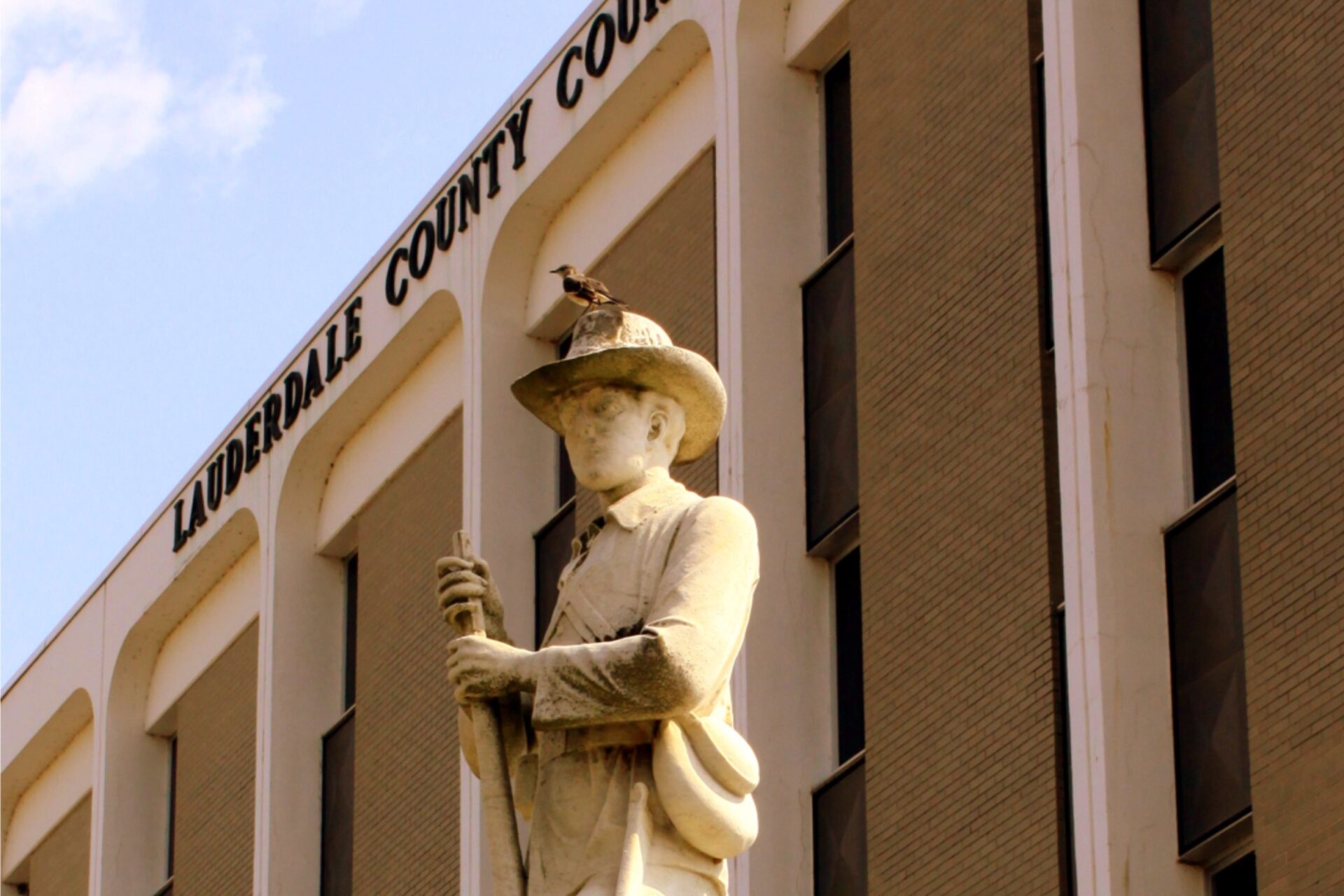
Camille Bennett, the founder and executive director of Project Say Something, which removed a Confederate monument from the Lauderdale County Courthouse in Florence, was the first person to raise concerns about the bill during public comments. Bennett said that although Allen told her that the bill also protects other monuments, like those honoring Dr. Martin Luther King Jr., she did not believe his argument. Bennett also said that her position on the monument has caused her to receive death threats. “That’s a false equivalency. Martin Luther King won a Nobel Peace Prize. There’s no reason to remove his name from anything.”
In addition to Bennett, members of the Senate County and Municipal Government Committee, like Sen. Linda Coleman-Madison, (D-Birmingham) also spoke up against the bill. Coleman-Madison argued that if the bill is going to exist, then history needs to be told in its full and complete context.
“I believe history should be told and you should tell the truth about it. The good, the bad, and the ugly.” Coleman-Madison continued, “That was a war against the United States, and this is something that we still want to uphold?”
Black Girls Rock! Awards Returning To TV After 5-Year Hiatus
The Black Girls Rock! Awards is ready to make a return to television following a five-year hiatus.
The Black Girls Rock! Awards is ready to make a return to television following a five-year hiatus.
This time, the award show aimed at celebrating Black women will move from BET to Lifetime and be recorded live at Atlanta’s Fox Theater on June 27 for an air date later this fall, The Hollywood Reporter reveals. The move to Atlanta will serve as a permanent “epicenter” for the annual ceremony, a press release states.
“In a momentous announcement, Atlanta, Georgia, has been declared the host city for the 2024 Black Girls Rock! Awards, marking a significant milestone as the city becomes the new epicenter for the world-renowned celebration,” the announcement shared.
This year’s event will go far beyond the award ceremony to include a series of events and celebrations throughout Atlanta, including The BGR! Expo, the annual BGR! Film Festival, The Black Cloud Tech Summit, and the BGFEST concert series.
With Atlanta serving as BGR!’s new hub, it aims to “further cement the city’s status as a cultural hub and celebrating the achievements and spirit of Black women globally,” the press release states.
Black Girls Rock! aired annually on BET from 2010 to 2019, celebrating “the outstanding contributions of trailblazers, entertainers, icons, community activists, pioneers, business moguls, thought leaders, and rising stars,” who are all Black women first and foremost. Past honorees include Angela Bassett, Regina King, Ciara, and H.E.R.
On Thursday, Feb. 22, Black Girls Rock! Founder Beverly Bond took to Instagram to highlight the award show’s significance while paying tribute to the 2010 M.A.D. Girl (Making A Difference) honoree Hydeia Broadbent who passed away on Tuesday, Feb. 20, at 39, following a life dedicated to serving as an HIV/AIDS activist.
“Hydia’s unwavering optimism and radiant spirit were a beacon of light, as seen in this clip, illuminating the paths of those around her even in the face of adversity. Her life and work embody the essence of what it means to truly ROCK!” she wrote.
“Rest well, Queen. Your legacy continues to inspire. 🙏🏾”
Top Exec From ‘Sherri’ And ‘Wendy Williams Show’ Found Dead Amid Investigation Into Missing Funds
A top executive who worked on "Sherri" and "The Wendy Williams Show" has been found dead amid a financial investigation at Sherri Shepherd's talk show.
A top executive who worked on “Sherri” and “The “Wendy Williams Show” has been found dead amid a financial investigation of Sherri Shepherd’s talk show.
Matt Uzzle was found dead in his Piermont, New York, on Tuesday, Feb. 13, from what police say appears to be suicide, “Page Six” reports. Uzzle, who served as executive-in-charge at Shepherd’s daytime talk show, was under investigation at the time of his death.
With a primary role of managing production and overseeing the budget at “Sherri,” Uzzle came under scrutiny following recent complaints involving issues with petty cash and the rent for the show’s Chelsea studio in NYC that had not been paid since September 2023.
The show’s parent company, Debmar-Mercury, became aware and launched an investigation.
“There was real concern among staff that the show was getting shut down. Debmar had to step in,” a source revealed.
When confronted about the show’s financial status, Uzzle claimed he “needed a couple of days to get his paperwork together.” After not hearing from him, police conducted a welfare check and found him dead inside his home.
Uzzle reportedly lived in a Piermont penthouse valued at $782,000. He was a 2016 daytime Emmy nominee for his work on “The Wendy Williams Show,” and also had credits on “The Montel Williams Show” and “Maury.”
Debmar-Mercury has since released a statement that avoided any details about Uzzle’s death.
“We have retained [law firm] Morgan Lewis to help us investigate the matter and, pending the outcome of that investigation, we’ll have no further comment,” wrote Debmar-Mercury.
The “Sherri” show inherited Uzzle from Wendy Williams’ former talk show after replacing “The Wendy Williams Show” in 2022. Shepherd’s show is filmed in the same studio as Williams’ former show, using a reconfigured set. Much of Williams’ crew followed Shepherd to the new production.
On Feb. 15, Shepherd included an on-air “in memoriam” tribute to Uzzle.
Actress Aunjanue Ellis-Taylor Criticizes ‘Sanitized’ Love Story In The Latest Adaptation of ‘The Color Purple’
“People can try to say the story is about sisterhood, but it's a story about Black lesbians. Period.”
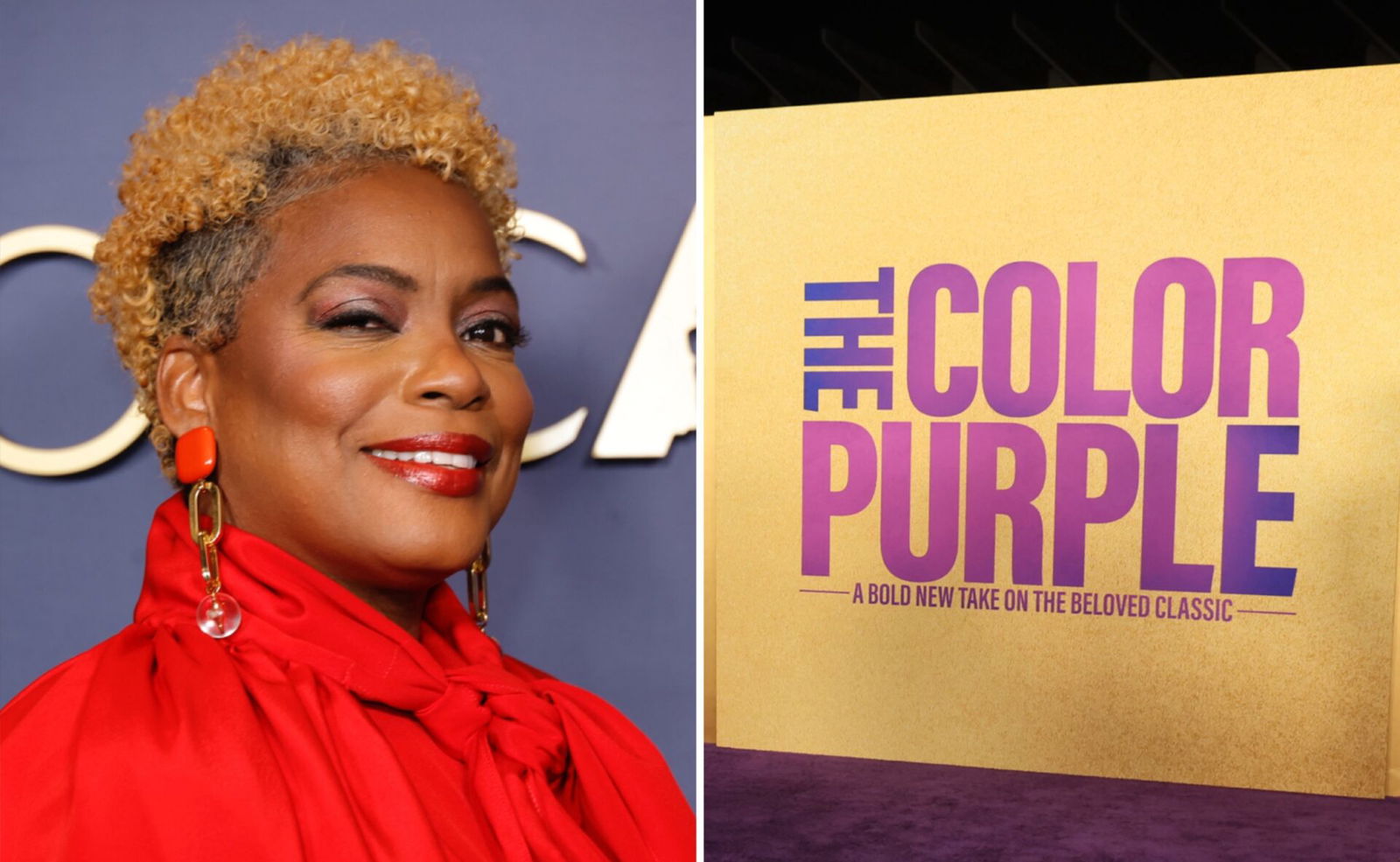
Aunjanue Ellis-Taylor, who played the role of Mama in the 2023 adaptation of The Color Purple, said she was dissatisfied with the way the film depicted the queer love affair between the film’s two main characters.
On Feb. 16, the acclaimed actress criticized filmmakers for “sanitizing” the romantic relationship between Celie and Shug Avery. Ellis-Taylor was discussing Alice Walker’s Pulitzer Prize-winning book The Color Purple, first adapted into a film in 1985, with BuzzFeed.
“The Color Purple is a book about Black lesbians. Whether the choice was made to focus on that or not in the cinematic iterations of The Color Purple, it’s still a movie about Black lesbians,” Ellis-Taylor said.
Celie, the story’s protagonist, is a woman who survives sexual and domestic abuse, mainly at the hands of her husband. Her life changes when she meets Shug Avery, her husband’s lover. Celie is instantly attracted to the other woman, and the pair eventually fall in love.
In the 1985 film adaptation of the book, Celie and Shug’s relationship is briefly implied in a scene where the women share a kiss. But there is no further reference to their romance. The recent version of The Color Purple depicts a more in-depth look into the relationship between Celie (portrayed by singer Fantasia Barrino) and Shug (portrayed by actress Taraji P. Henson). But Ellis-Taylor says it still doesn’t match Alice Walker’s version of the characters.
“Alice Walker wrote The Color Purple with intention because she was writing about herself. I just want that part of the book to be portrayed in the films with intention instead of being incidental. I want people to walk away from The Color Purple thinking, ‘I just saw a movie about Black lesbians.’ I don’t think that has happened,” she said.
Ellis-Taylor, who identifies as bisexual, said she would like to see more LGBTQ+ representation in Hollywood. She also told the outlet that she has plans to create a project about Fannie Lou Hamer for which she will highlight the queer activists who supported the activist.
Still That Guy! Allen Iverson Thinks He’d Have A Higher Scoring Average In Today’s NBA
Would Allen Iverson average more points in today's NBA? "The Answer" knows without a doubt.
Allen Iverson said if he played in today’s NBA, said he would definitely have a higher scoring average.
Iverson, the original A.I. before it was attributed to artificial intelligence, recently appeared on Shaquille O’Neal’s The Big Podcast with Shaq. When asked how much he thought he would average with the pace of today’s game, he responded, “10 more points” per game.
“If I averaged… I lost the scoring title to Kobe (Bryant) the year he averaged 35. I averaged 33,” Iverson said. “And I’m just thinking like if I was to play in this era, where it’s wide open. If I can average 33 in a season, I’m a just take it up to 43. I know 10 points more.”
“I agree with that,” Shaq said.
Allen Iverson says he would average 43 points in today’s NBA 👀
Iverson scored 30 points a game four times in his 14-year NBA career, and won the scoring title four times. The three-point shot is used much more than Iverson’s prime. If he were to thrive in today’s game, he’d need to improve that. He shot a mediocre 31 percent from downtown during his career.
Iverson, who played for the Philadelphia 76ers for most of his career, went back to the City of Brotherly Love last year to introduce a cannabis strain under former NBA player Al Harrington’s Viola brand. The Iverson ’01 references the season the Hampton, Virginia, native won his MVP (Most Valuable Player) Award.
That was the same season he led the 76ers to their last NBA Finals appearance. Although they lost to the Los Angeles Lakers team with the Hall of Fame duo of Shaquille O’Neal and Kobe Bryant, the first game the 76ers won was the only defeat the Lakers suffered in that playoff season.
BLACK HISTORY: Descendants Of Oklahoma’s 1st Landholding Black Children Owed Reparations
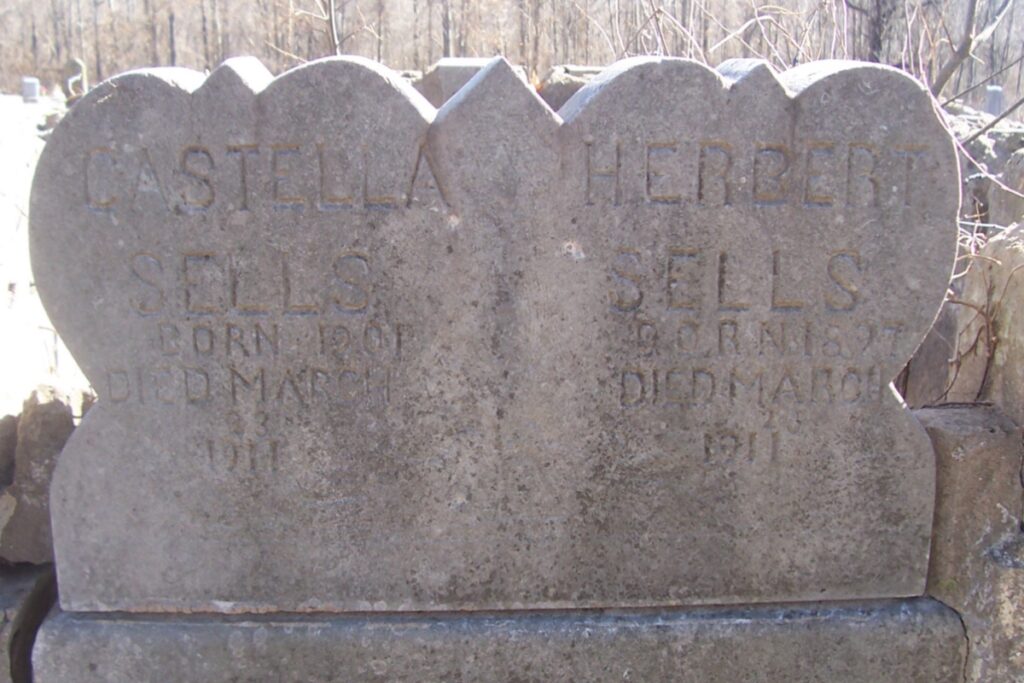
The headstone of young Herbert and CaStella Sells in Blackjack Cemetery stands as a poignant tribute to the muted pleas for justice, beckoning us to confront history and forge a path toward a more equitable future.
Gravesite of Herbert & CaStella Sells, Blackjack Cemetery in Taft, Oklahoma. Photograph courtesy of Kelvin Brown, 2008.
By Stacey Patton
I met a Black woman at a bustling tribal conference in Oklahoma a few months ago. We struck up a conversationabout the deep threads of Black history in Indian Territory, grappling with themes of slavery and Jim Crow, land ownership, and the topsy-turvy shifts brought on by the state’s early 20th-century oil boom—seismic changes that propelled some residents to sudden wealth overnight while leaving others as tragic victims.
As our conversation unfolded, she divulged a shocking truth about her own home. Fifteen years ago, upon inspecting the title history of her property, she uncovered that the initial owner of her land was a four-year-old Black child.
This had to be a mistake, right?
As an immediate assumption of error lingered in the air, I leaned in as if I was about to share a clandestine secret about a buried past.
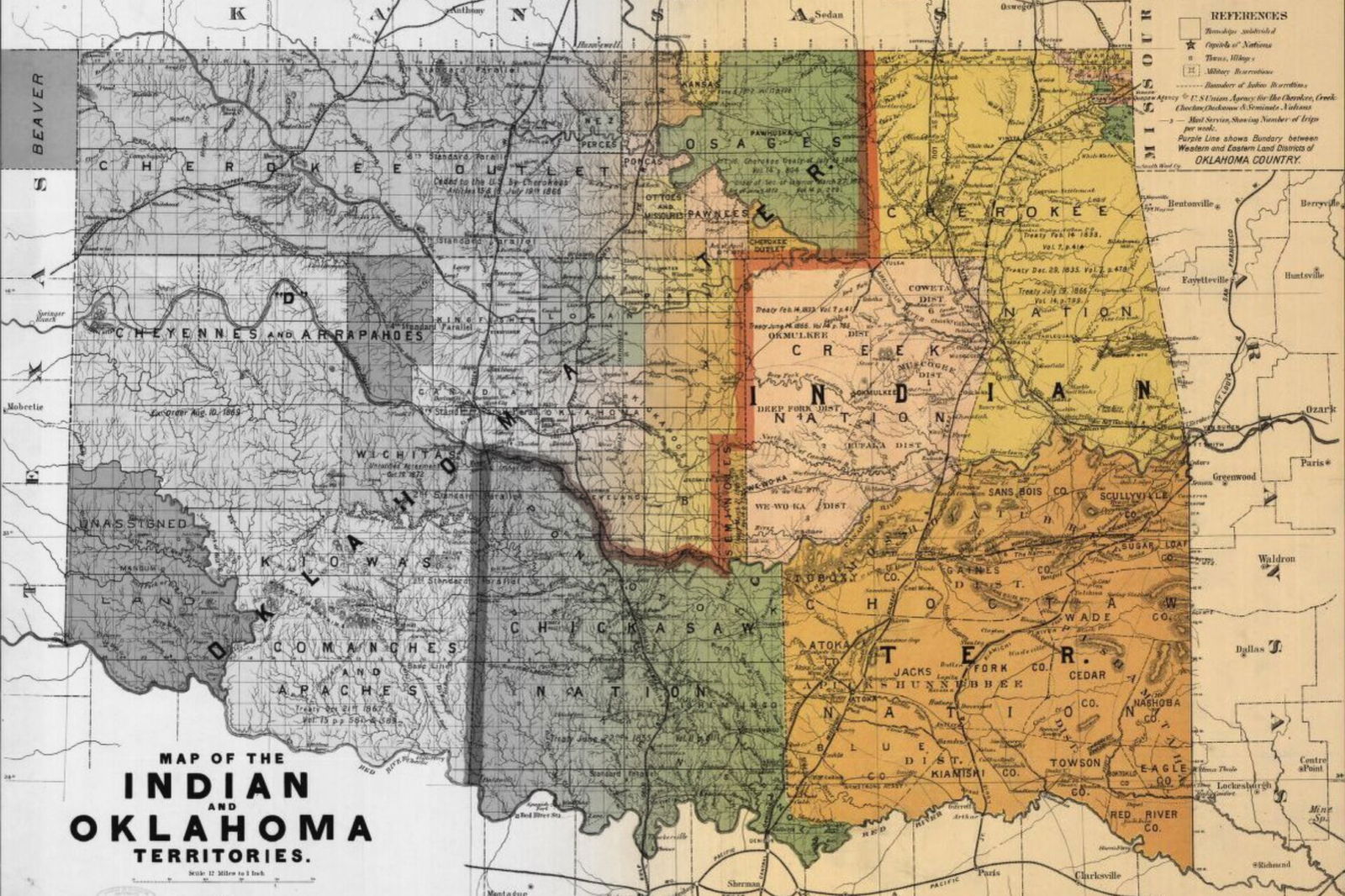
It wasn’t a mistake.That four-year-old child was among 5,000 Black children who owned 40-acre allotments of land outright, without mortgage or tax encumbrances, before Oklahoma became a state in 1907. That’s right, 5,000 Black children held hundreds of thousands of acres of land in Oklahoma. In the early 1900s, many of the former child slaves of The Five Civilized Tribes (Cherokee, Chickasaw, Choctaw, Creek, Seminole), which were forcibly relocated to Indian Territory (present-day Oklahoma) as part of the Indian Removal policy in the 1830s, were awarded 40-acre land allotments that were sometimes rich in oil and minerals. Born before statehood, these young Creek nationals lived in colored tribal towns of Muskogee County in the eastern portion of the state and came of age during Oklahoma’s first major oil boom, which lasted from just after statehood through 1930. Their tremendous wealth and land were systematically stolen by greedy white men.
With the help of county court officials, white men set out to disqualify Black parents as competent and to position themselves as legal custodians of Freedmen minors and their estates. These white guardians then exploited the estates of Black children through lucrative oil leases, personal purchases, real estate deals, and interest–free loans.When guardianship could not be secured, some resorted to marrying Freedmen minors, kidnapping them, or resorting to murder. The extent of this exploitation, decried at the time by Black journalists and academics like W.E.B. DuBois, has gone largely undocumented. A.J. Smitherman, editor of the Tulsa Star, wrote:“In Oklahoma we have thousands of wealthy Negro children whose incomes amount to from $500 to $8,000 a month. This money, of course, is handled by guardians appointed by the county courts of Oklahoma.” Only a small number of cases went to court, and so only a very small number of these have been fully investigated.
Image by Dr. Stacey Patton
Postcard ofthe Glenn Pool oil fields where the Sells children and other Creek Freedman minors owned land allotments.
A decade prior to statehood, Oklahoma had become the largest oil-producing region in the world with 40 million gallons being pumped out of the state each year. Between February 1914 and May 1920, The Crisis reported the cases of Dan Tucker, Sallie Hodge, Luther Manuel, Sarah Rector, the twins Edith and Edna Durant, and siblings Herbert and CaStella Sells whose lives were dramatically altered with the discovery of oil on their lands. These three boys and five girls had enormous incomes from oil revenues ranging from $500 to $50,000 a month at a time when 90% of Black people living in the United States were confined to a life of poverty in the South and the average annual income of American families in 1914 was just under $750 and $1,340 in 1920.
Let me tell you about what happened to Herbert and CaStella Sells. On the night of March 14, 1911, two Black men and a full-blooded Creek Indian arranged a secret meeting to discuss the final details of their plot to blow up two wealthy Black children living in the tiny all-Black town of Taft. The men, John C. Norwood, D.R. “Doc” Allen, and Sam Lowe, met at Ford’s Gin, a local watering hole not far from where 14-year-old Herbert Sells and his 10-year-old sister CaStella lived with their mother and stepfather on a spit of land in a four-room, 20-square-foot prairie house. The siblings owned several hundred acres of oil-producing land 39 miles away in Glenpool, a small town located about 20 minutes south of Tulsa—the self-proclaimed “oil capital of the world.” With production in Glenpool reaching over 43 million barrels in 1907 alone, Oklahoma became the nation’s leading oil producer by 1907 and held that distinction until the late 1920s.
Nineteen wells underneath the Sells children’s Glenpool allotments netted the pair nearly $2,000 a month in royalties in addition to fees paid to them by the Gypsy Oil Company (then a subsidiary of the Gulf Oil Corporation) which held a lease to drill on their property. The net value of their lands was $200,000 (worth millions today). For one prominent white land dealer, the Sells children were the only things standing in the way of his big payday. It would take two years of planning, multiple trips to Mexico, and thousands of dollars to pay an imposter and a group of accomplices to get rid of Herbert and CaStella with kerosene, powder, and seven sticks of dynamite.
That time came nine days later, on Thursday, March 23 at about two or three o’clock in the morning. As Doc Allen and Sam Lowe approached the home where the Sells children and their parents were sleeping, Norwood suddenly backed out without saying a word and ran off to his sister’s house about a half mile away. Undeterred, Doc Allen and Lowe continued as planned. First, they spread kerosene-soaked rags around the base of the tiny house and then placed the bucket of powder, coal oil, and dynamite directly underneath the children’s bedroom without waking the family’s dog. Sam Lowe lit the fuse. Moments later, the entire west side of the house blew to pieces, shaking the tiny town of less than 1,000 residents. The blast tore a large hole in the ground where the galvanized bucket was planted. A section of the house was hurled some 50 yards away into a local merchant’s yard and the dog’s burned carcass was buried under the southeast corner of the dining room.
Immediately following the explosion, the roof fell in and what remained of the house quickly caught fire. The children’s mother, Priscilla Mackey, and their stepfather, Zeb, escaped the flames unscathed. They had been sleeping in another section of the house separated from the children’s room by a thin partition. Herbert was killed instantly in the blast, but his sister was not so fortunate. A neighbor saw the parents, dressed in their nightclothes, hollering for help. As the couple tried digging through the burning shingles to save CaStella, neighbors rushed toward the flames.
CaStella’s legs were caught underneath the collapsed roof. The girl’s stepfather tried to pull her from underneath the hot, heavy timbers while other men worked to lift the roof, but the timbers were wedged so tightly together that the roof could not be moved. When the intense heat forced the men to give up, Priscilla tried to rush into the flames in a desperate attempt to rescue her last living child. A bystander grabbed the distraught mother and held her back from the flames while “neighbors and friends were compelled to stand impotently by and see the unfortunate girl screaming with agony die a horrible death in the flames,” the Muskogee Times-Democrat reported.
By daybreak, a posse of townsmen formed and launched a search for the murderers even though local, state, and federal authorities dispatched to the scene of the crime had no leads about possible perpetrators or a motive for the crime. Meanwhile, William Irvin, one of the conspirators who helped hatch the plot to kill the children, paid $3.26 for a first-class, one-way train ticket out of Taft. The ticket salesman, a porter, and a conductor would later testify that Irvin was the only white man seen boarding the Midland Valley train out of the all-Black town that day. Those witnesses also recalled that Irvin wore a black coat and vest, light shirt, dirty blue overalls, and a black crusher hat and carried a distinct brown leather grip.
Mug shotof William M. Irvin. December 12, 1911 (Courtesy of The Muskogee Times-Democrat)
On Friday morning, March 24, investigators had a few theories about the murders of the Sells children. The dynamiting was either a plot to murder the children’s stepfather or a conspiracy to kill the poor rich children to get possession of their property. The first news report on the incident from the Muskogee Times-Democrat focused on the children’s stepfather, “an intelligent negro,” with “plenty of bitter enemies.” Zeb Mackey had numerous shooting scrapes with other Black locals and had threatened to expose certain corrupt town officials for mismanagement of funds. “It is possible that these plotted to blow up the entire family,” the report stated. There were also accusations that Mackey was involved in the crime and that he hatched a plot to dynamite the house to get rid of his wife, Priscilla, and her children. The Muskogee Times-Democrat report also told readers that the Sells children owned valuable oil allotments each worth $100,000. Their guardian, former Muskogee Mayor Thomas H. Martin, had $20,000 invested in the first mortgages of the children’s properties. Though the children earned nearly $2,000 per month in oil royalties, Martin, as required by law, regularly paid their mother a monthly allowance of $75 for their care—less than 5% of their royalty earnings.
Flash forward to Sept. 11, 1911. Six accused men arrived at the Muskogee County District Court shackled together, their chains rattling and reverberating through the halls of the courtroom. Their trial dates were set for mid–September, the men lock-stepped out of the courtroom just as they arrived. Among the indicted were three Black men – Doc Allen, Jim Manuel, an ex-con once convicted of defrauding a Creek Freedman girl of her land, and Stout Ham, who lived less than one mile from the Sells children. In addition to William Irvin, the indictment also included two other well-to-do white men –John Coombs, and F.L. Martin. All five men were charged with “knowingly, willfully, unlawfully, purposely and feloniously, with malice aforethought, and without authority of the law, and with the premeditated design then and there to effect the deal of the said Herbert [and CaStella] Sells,” who suffered “mortal wounds” and “burns” which led to their deaths.
“BIGGEST MURDER CASE COMING UP,” blazed the headline of TheMuskogee Times-Democrat the next morning.
After deliberating for 16 hours, a jury found William Irvin guilty of murder and conspiracy and sentenced him to life and hard labor in the state penitentiary at McAlester. Charges against the wealthy oilman Coombs, Manuel, and Ham, whose roles in the murders were unclear in the surviving press accounts and trial transcripts) were all dropped. Prosecutors cited insufficient evidence and the potential expense to taxpayers if the state proceeded with three more trials that might be lost.Irvin appealed his conviction, but the Oklahoma Criminal Court of Appeals upheld his sentence in March 1915. His prison ledger indicates that he died at McAlester on May 19, 1916, from an unknown cause. After serving eight years of his life sentence, Doc Allen was paroled in December 1918 and pardoned in October 1926.
It is important to recall that Priscilla Mackey had set aside $5,000 through the probate court to pay for the trials of Doc Allen, Irvin, Martin, and Lowe. It is possible that those funds ran out after the first round of trials. The point is that when these two wealthy black children were viciously murdered, funds from their own estate were used to obtain some semblance of justice. Had there been no monies, it is safe to speculate that there might not have been such a political charade put on by local, state, and federal authorities to hunt down Irvin in Mexico, arrest five other men, and proceed with prosecutions and convictions.
This case was not about protecting the property and civil rights of two wealthy Black children. The trial itself was a spectacle and a political dodge; its function being to legitimize the new state’s power and legal apparatus and to show that it protected the rights of its citizens even as thousands of other land-owning children across the state continued to be exploited with the help of the probate court and unscrupulous leaders and businessmen. While Herbert and CaStella Sells suffered the worst possible fate of children who were unlucky enough to inherit oil-rich lands, Sarah Rector, Luther Manuel, Edith Durant, Dan Tucker, Sallie Hodge and others spent years caught in the middle of court battles between their parents and greedy men vying to be their guardians.
Land and oil created a different kind of Black childhood in Oklahoma that did not exist elsewhere in the country. Months after Oklahoma joined the Union, the new state legislature immediately enacted anti-Black laws that assisted in the wholesale robbery and murders of young people in various oil-producing counties. Following patterns already set by southern states, Jim Crow’s arrival ushered in voter disenfranchisement, segregated facilities, miscegenation laws, and lynching in addition to further loosening of federal protections of lands owned by Indians of the Five Civilized Tribes and their freedmen. The construction of a new kind of racial hierarchy severely altered the status of freeborn Blacks, former slaves of Indians, the first generation of slave descendants, people of mixed race, and “state Negroes” that migrated to the territory prior to 1907.
Ten-year-old Dan Tucker owned 160 acres of land producing 2,400 barrels of oil daily, bringing him a monthly income of $6,750 in royalties. Sallie Hodge held title to rich bottom farmland worth $600, in addition to $100,000 in cash and $50,000 in notes and mortgages. Luther Manuel, believed then to be the richest Black boy in the world with an income of $50,000 a month, owned land on top of a gusher in the heart of an oil field in Glen Pool.
Land allotment card belonging to Dan Tucker, certified by the United States Department of the Interior, December 20, 1905 (Courtesy of the Ft. Worth National Archives)
Edith Durant, who turned 18 in July of 1918, owned an oil well in Tulsa County and was to receive $150,000 in cash and title to land worth a million dollars, while her sister, Edna, owned $50,000 worth of oil-producing land nearby. By the time the twins reached their age of majority their estates significantly dwindled because their white guardian executed bad loans and other business deals with the authorization of the Muskogee County Probate Court.
The one-story prairie house in Taft, where Rector lived with her parents and her five siblings. (Courtesy of The American Magazine, 1915)
A copy of Sarah Rector’s application for a land allotment submitted to the Dept. of the Interior on March 24, 1906.
The application shows that Rector’s 160 acres of land appraised at $556.50. The wealthiest girl among the group of children was Sarah Rector, whose estimated income in 1914 from lands she owned in Glen Pool was $50,000 a month. Despite her wealth, Du Bois noted that the 10-year-old was one of six children living in “a shack with only one bed for the entire family.” Yellowed news articles, court transcripts, and interviews with living descendants of these children reveal a weary record of racial exploitation and kleptocracy assisted by the State of Oklahoma and the United States federal government.
A story about Sarah Rector’s wealth published in the Jan. 25, 1914, edition of The Washington Post.
The stories of Dan Tucker, Sallie Hodge, Luther Manuel, Sarah Rector, the twins Edith and Edna Durant, and siblings Herbert and CaStella in The Crisis, reveal how white guardians, attorneys, judges, banks, oil, and gas companies benefited financially from the estates of these children. The stories also demonstrate how local and state governments used the law and guardianships to re-establish Black children’s lives as disposable capital to be governed and exploited by whites.
Despite increased awareness of the destruction of Black towns, lynching, and land theft along with the investigative work of Black journalists and figures like W.E.B. DuBois into issues of race and class, one of the most extensive fraud schemes in American history remains largely uninvestigated and unreported. However, we have concrete evidence of how systemic racism has long hindered the accumulation and intergenerational transfer of wealth within Black communities. This is exemplified by tragic events like the destruction of Black Wall Street in the Tulsa Race Massacre of 1921, along with the enduring impact of Jim Crow policies such as underfunded education, discriminatory hiring, and “redlining” practices that denied Black people the opportunity to secure mortgages for home purchases. Suchexclusionary measures, intentionally cultivated in some regions, aimed to stifle Black prosperity, and prevent the building of intergenerational wealth.
As the movement for reparations continues to grow, the historical archives offer Oklahoma’s Freedmen descendants an opportunity to explore how legal systems were manipulated to facilitate the theft of land and wealth from Black children. It also invites Black people to discover their family history and gain insight into the lasting impact of past injustices on their present circumstances. Understanding the economic exploitation and manipulation endured by their ancestors is essential for these communities to assert their rights and grasp the historical roots of current economic disparities.
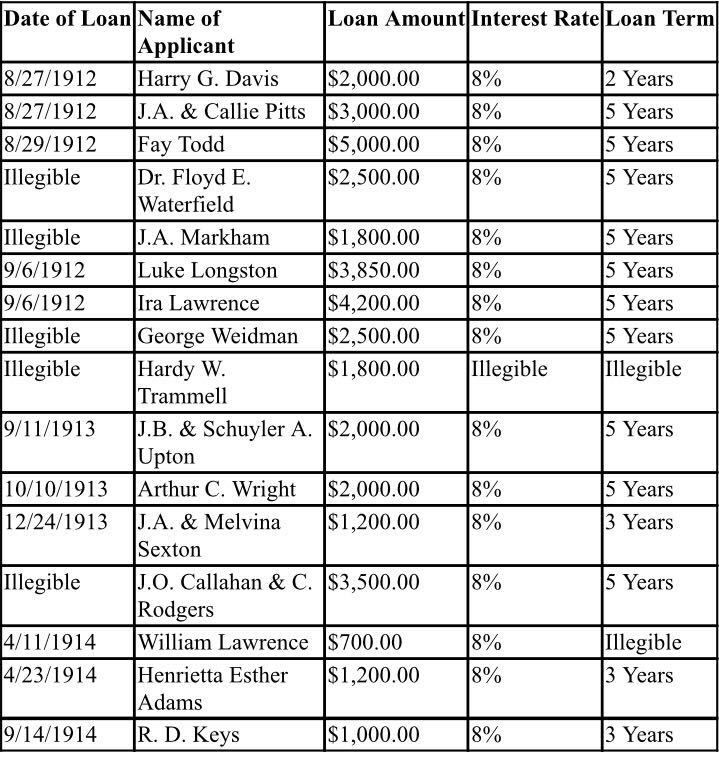
Shown above, are loans executed by Edith Durant’s guardian, R. Lee Hays.
Between August 1912 and September 1914, the Muskogee County Probate Court approved 16 loans to the individuals shown above with funds from Durant’s estate totaling $38,250. In the forgotten shadows of exploitation and injustice, the tragic saga of Herbert and CaStella Sells echoes through time, a sobering reminder of the systematic brutality and plunder endured by Black children who once owned vast acres of oil-rich land in Oklahoma. As we unearth these buried narratives, it’s not just a call for reparations but a demand for acknowledgment, an unearthing of truths that have long languished in obscurity.
The headstone of young Herbert and CaStella Sells in Blackjack Cemetery stands as a poignant tribute to the muted pleas for justice, beckoning us to confront history and forge a path toward a more equitable future.
Fox News Analyst Thinks Black Folk’s Love Sneakers Soooo Much, It’ll Make Us Jump, Skip And Run To Vote For Trump
The caucacity...
After former President Donald Trump spent Feb. 17 at the annual Sneaker Con in Philadelphia launching his sneaker line, one conservative analysts had an epiphany: Since Black people love sneakers, they will vote for Trump.
That was the viewpoint from Fox News’ Raymond Arroyo, who touched on how Trump’s presence at the event is taking Black voter support away from President Joe Biden. “Even the sneaker thing, very interesting. As you see, Black support is eroding from Joe Biden,” Arroyo said. “This is connecting with Black America because they love sneakers!”
The MAGA leader’s gold high-top “Never Surrender” sneakers sell for $399. The “Friends and Family” edition comes with Trump’s signature in a black box wrapped with gold paper. Arroyo thinks this is the golden ticket to securing the Black vote—especially in the inner city.
“So when you have Trump roll out a sneaker line, they’re like, wait a minute, this is cool,” he said.
“He’s reaching them on a level that defies and is above politics. The culture always trumps politics, and Trump understands culture like no politician I’ve ever seen.”
As Arroyo’s comments made it to social media, users couldn’t help but point out the racist rhetoric behind it. “He’s saying this with confidence. So sneakers elevated to the same level as the grape soda & watermelon trope,” @famekon wrote on X, the social media platform formerly known as Twitter.
He's saying this with confidence. So sneakers elevated to the same level as the grape soda & watermelon trope … pic.twitter.com/Z2T3J898AB
Another renamed the sneakers to something more appropriate. “Ain’t nobody buying the Jan. 6’s,” @DarrellvsRell tweeted.
At Sneaker Con, chants and boos drowned Trump out. “Sneakerheads, you’re sneakerheads, right? Does everybody in the room consider themselves a sneakerhead?” Trump said, according to ABC News. Some supporters wanted to make it known of their presence with anti-Biden cheers and USA chants, something Trump loved. “This is a slightly different audience than I’m used to, but I love this audience,” he said.
Perhaps the sneakers will help Trump climb out of debt. On Feb. 16, Judge Arthur Engoron ordered him to pay $354.9 million in penalties after being sued by New York Attorney General Letitia James for inflating his assets for more favorable business loans.
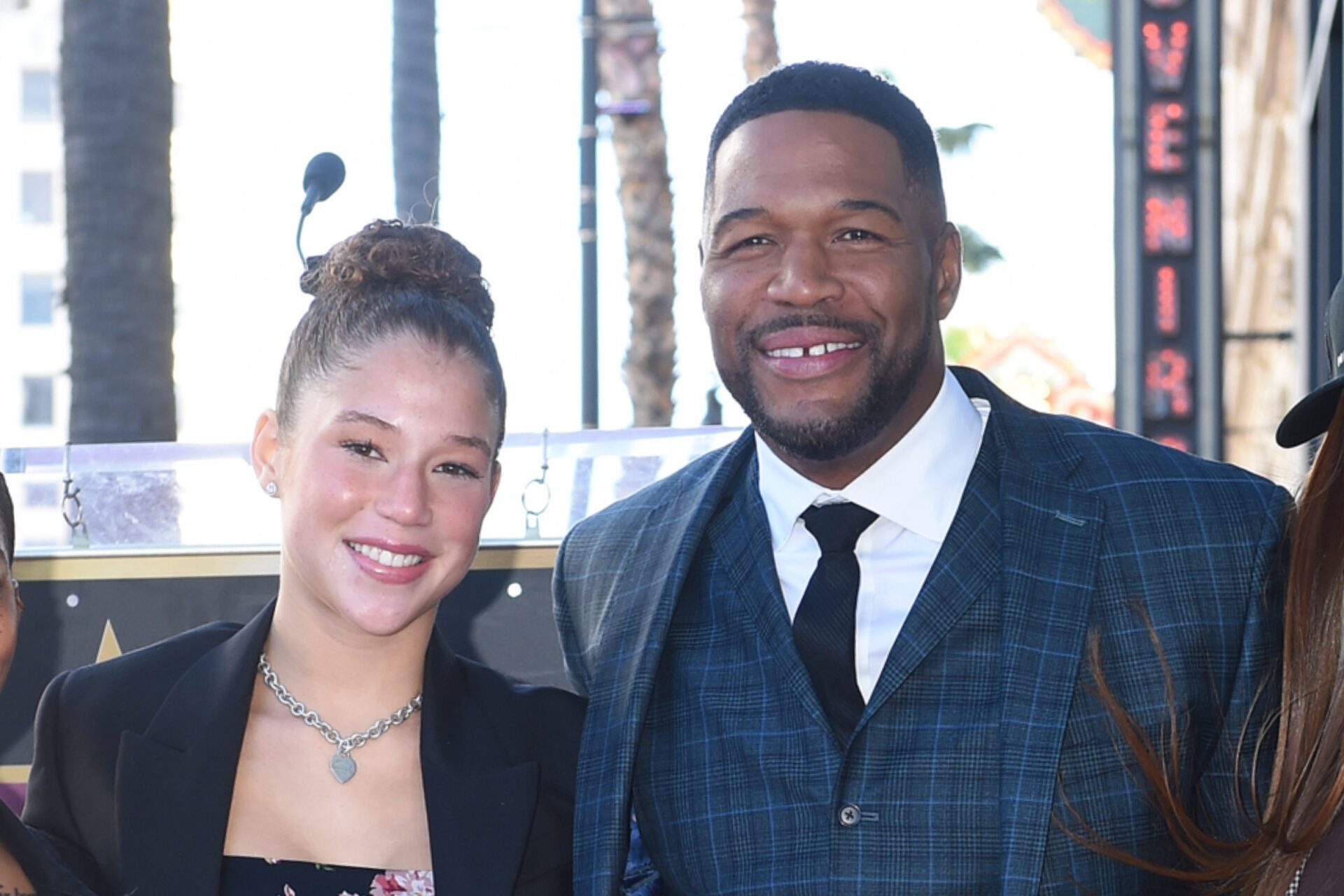
Michael Strahan Shares Daughter Isabella Suffered A Setback With Cancer Battle
We are praying for the Strahan family.
Earlier this year, NFL Hall of Famer Michael Strahan appeared with his daughter, Isabella, on Good Morning America and discussed his daughter’s diagnosis with a malignant brain tumor, known as medulloblastoma. Now, the co-anchor of the morning program revealed that the chemotherapy treatment his daughter has been getting has “been a little rough.”
According to People, Strahan remarked on Isabella’s health after a setback brought the 19-year-old back to the hospital, but he expressed hope that she would be home soon.
“The last three days have been a little rough because she had a fever that kind of comes and goes. I had to take her to the hospital and thought she’d come home a few hours later… It’s been three days, but hopefully, she’ll be home today.”
He admitted that there were some things they both knew would probably take place that wouldn’t predict a smooth movement toward her getting better, but he added that he is doing as well as one can expect for someone in his position, dealing with the diagnosis.
“It is tough to see her go through it, but I know she’s a tough young lady, and she’s going to make it through it,” he said.
As Isabella continues her journey to get through this and become better, she has been vlogging about her journey as she makes her way to fight brain cancer.
On January 11, she and her father opened up about her diagnosis of medulloblastoma. She was diagnosed in October 2023 in her freshman year at the University of Southern California. She told the Good Morning America audience that she was developing a fast-growing four-centimeter tumor in the back of her brain at the time.
On Oct. 27, doctors removed the tumor, and Isabella began a month of rehabilitation, while enduring several rounds of radiation treatment.
Isabella has a twin sister, Sophia, and they are the third and fourth children of Strahan. They are the children Strahan had with his second wife, Jean Muggli.