Whoopi Goldberg Criticizes Publishers Re-Editing Older Books to Avoid Offending Current Audiences
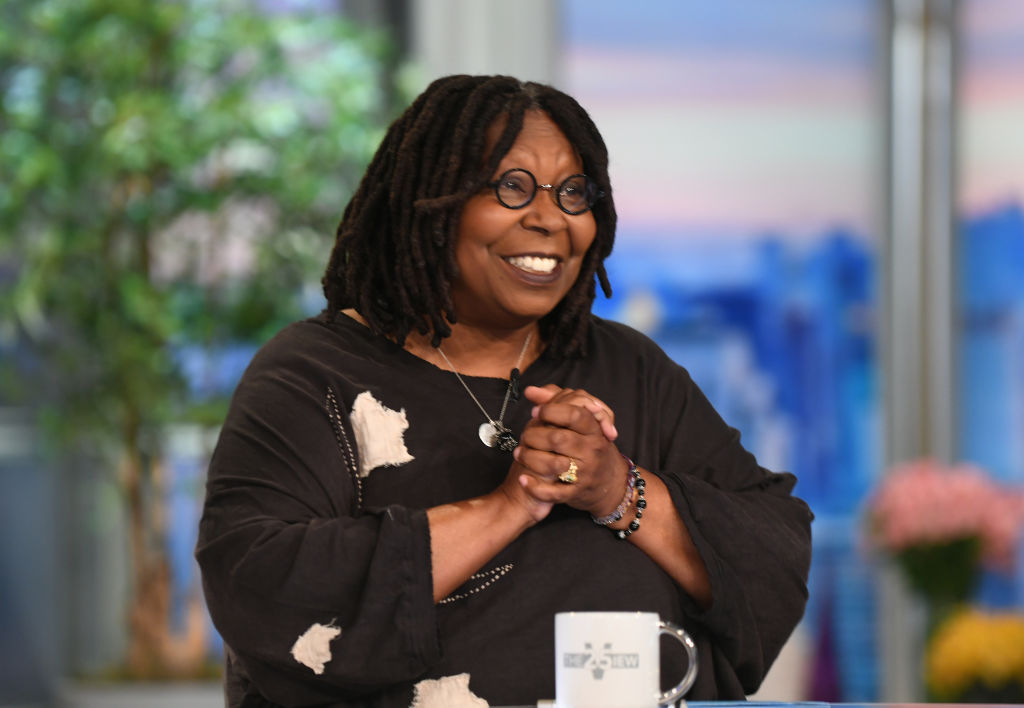
With the recent “rewriting” of books, one talk show host has blasted the efforts of those trying to rewrite history.
According to Fox News, Whoopi Goldberghas issues with people erasing initial work that may include racist words and overtones. This conversation focused on the recent re-editing of the author, Roald Dahl’s books, which contained language that was deemed offensive.
On a recent episode of The View, Goldberg stated that the re-editing of classic books should stay as is, and a disclaimer should be placed on it explaining that was how the language was when written. She said that “this is how kids learn.”
“Look, y’all got to stop this. Just put a disclaimer on it that says, listen, this book was written at this time, or put out the original and what y’all have done. Because kids should have the right to read how people thought so that they know how to make the change.”
Publishing house Puffin recently changed the content in some books by Dahl. His works included the titles Matilda, James and the Giant Peach, and Charlie and the Chocolate Factory. Words were rewritten because the language was deemed offensive.
Goldberg also mentioned they wanted to do that with Mark Twain’s books that used the n-word through his classic works.
“You know, they tried to do this with Mark Twain as well because they were so concerned the n-word was in the book. Well, that’s how they did it. That’s how it was. We don’t want people doing it today, and you don’t see it as much. That’s how people learn.
But one of Goldberg’s hosts, Sunny Hostin, disagreed with her other co-hosts. She gave an example of the recent James Bond book series edits.
“When you think about a book like James Bond, and I’m a huge James Bond fan, in his Live and Let Die book, in that novel, he visits Harlem and uses the n-word to describe almost every Black person he sees there. And in my view, the sensitivity of the edits now says ‘Black man,’ ‘Black woman,’ ‘Black person.’ I appreciate that. You don’t have to call me the n-word for me to understand my oppression. And I think when someone who is oppressed tells you that, you should listen,” Hostin stated.
Nordstrom Joins Forces with The Folklore Group, Continues Growing Assortment of Black-Owned Brands
Nordstrom and The Folklore Group are joining forces to bring the best in global fashion closer to the Nordstrom customer. Through The Folklore Connect platform, a first-of-its-kind e-commerce tool, Nordstrom will be better able to identify and engage with wholesale fashion and lifestyle brands founded by Black, Latinx, Asian, and other people of color, as well as brands located in emerging markets. Nordstrom will also invite its brand partners to join The Folklore Connect for increased visibility with others in the industry.
Nordstrom is one of the largest retailers to partner with The Folklore Group, and this partnership is one of many steps Nordstrom is taking in support of its commitment to build a more equitable marketplace and reduce barriers to access for diverse suppliers.
“Nordstrom has a long history of curating new and emerging brands to offer an ever evolving and relevant product assortment for our customers. They expect that we deliver a sense of inspiration and discovery with high-quality products from diverse brands,” said Brian Roberts, Vice President of Brand Programs at Nordstrom. “We are grateful for our partnership with The Folklore Group, which provides us with additional resources to discover and connect with new-to-Nordstrom brands in support of our ambitions to address marketplace equity.”
The Folklore Group launched in 2018 as the leading commerce company empowering diverse brands in emerging markets. In 2022, The Folklore Group launched The Folklore Connect to provide software for diverse and sustainable brands to manage and scale their wholesale businesses and retailers with a marketplace to discover and shop these brands that have historically been geographically or racially marginalized from connecting with global retailers. Currently, the expanding Connect platform has more than 100 brands including Ashya, Nalebe, and Vavvoune.
“As a lifelong Nordstrom customer, I have long admired and shopped their incredible curation of products, and I’m excited to be teaming up with the legacy retailer in their ongoing commitment to supplier diversity,” says Amira Rasool, Founder and CEO of The Folklore Group. “The Folklore Connect partnership with Nordstrom will now allow their incredible buying team to connect with even more diverse brands from around the world and give customers an experience to shop fantastic brands they could not easily access online or in stores.”
Nordstrom set ambitious goals to improve and diversify its product assortment. In 2020, the retailer committed to delivering $500 million in retail sales from brands owned, operated, or designed by Black and Latinx individuals by 2025. And in 2021, Nordstrom signed the Fifteen Percent Pledge, announcing a continued commitment to growing our purchases from businesses owned or founded by Black individuals tenfold by the end of 2030.
In 2022, Nordstrom made progress toward these goals, reaching $247 million in retail sales. Today, its customers can shop more than 250 brands in Black- and Latinx-owned and founded categories.
SoLo Celebrates Being First Black-Owned Fintech to Reach 1 Million Registered Users
SoLois excited to announce they’ve officially become the largest and first Black-owned personal finance platform to gain 1 million registered users with over 1.3 million downloads.
This unprecedented milestone continues to show a clear unmet need in the financial assistance market. Historically, a consumer base like SoLo’s has been overlooked, lacking options for accessing short term capital and meaningful returns. With the public benefit mission to right-bank 254 million underserved Americans, SoLo has attracted investment support from a variety of investors and funds, most notably Serena Williams’ fund, Serena Ventures.
Based in Los Angeles with nearly 100 employees, SoLo is finally bringing a fintech company to the market powered by the people. SoLo enables its members to borrow and lend to and from each other. Its lending members make a return, while its borrowing members gain transparent access to personal loans. SoLo has surpassed 600,000 loans funded and $300 million in transaction volume with 82% of its members being from underserved zip codes. Most Americans, 254 million to be exact, aren’t provided solutions to properly grow their wealth or access to personal loans when they need them. SoLo has advanced rapidly by offering a working solution where others have failed to grow without significant venture capital investment.
Reaching a million registered users is a significant milestone particularly because there’s never been a Black-owned financial service company or bank to have such success. Difficulty in regulation and discriminatory challenges in creating and scaling fintechs has made it nearly impossible for marginalized groups to create financial products for their communities. SoLo is a unique example of this success and is eager to continue scaling in business and impact. As the first to reach the scale of one million users, SoLo is at the forefront of regulatory innovation. SoLo recently announced three strategic additions to its legal and regulatory leadership team. Collin Schwartz has joined as General Counsel, Kyle George as the Head of Government & Regulatory Affairs, and Manny Alvarez as Advisor.
SoLo is supported by investors who understand the problem and are committed to the massive opportunity that SoLo brings to the market. Investors like Richelieu Dennis, formerly Sundial and now Essence Ventures and New Voices Fund, Kesha Cash from Impact America, the largest fund by an African American woman, Arlan Hamilton, Tim Weatherspoon and wife Kelly Rowland, and Serena Ventures to name a few.
“We are innovating and thriving where companies have failed,” said Rodney Williams, Co-Founder and President of SoLo. “Reaching this milestone is a testament to our members and a pivotal moment in our history where we have finally created a winning solution for the communities we represent. We are extremely appreciative of this moment and opportunity.”
“SoLo is transforming the lives of everyday Americans with democratized access to capital and returns that’s truly rooted in community. Community finance is working and SoLo is proof of that,” said Serena Williams, Managing Partner at Serena Ventures. “We are proud to stand behind SoLo as it continues growing at an incredible pace and focuses on giving underserved groups and individuals the tools they need to thrive financially.”
SoLo was founded by two best friends, Travis Holoway and Rodney WIlliams, as they both shared intimate experiences of friends and family needing access to short term loans where, in most cases, they had to go without. Travis and Rodney designed a solution that is providing short term access to capital and returns at a scale that has never been done. With only $14 million in equity funding, SoLo has emerged as the new financial service leader on track to deliver $1 billion back into underserved communities by Q1 ‘24.
*Claim is defined as a B2C personal finance banking solution, U.S.-based and Black-owned with registered users or downloads above 1M. Black-owned is defined as Black majority ownership.
The Million-Dollar Club: Zendaya Set To Earn $1 Million Per Episode On “Euphoria”
Is there anything Zendaya can’t do?
The two-time Emmy Award-winning actress is making headlines for reportedly re-negotiating her Euphoria contract. The Los Angeles Timesreports the 26-year-old will now earn $1 million per episode in the show’s new season.
The deal will make her one of the highest-paid television actors in Hollywood and probably the youngest.
Zendaya stars in the HBO Max hit show as Rue, a troubled teen who falls down the dark path of addiction after her father’s death. She also holds the title of executive producer for the show. Zendaya became the youngest to receive an Emmy nomination for producing at 25, followed by a historic win in 2020 for Outstanding Lead Actress in a Drama Series. With the show receiving mixed reviews because of depictions of youth drug use and more, she hopes the show does more than trigger people. “My greatest wish for Euphoria was that it could help heal people,” Zendaya said during her 2022 acceptance speech.
“I want you to know that anyone who has loved a Rue or feels like they are a Rue, I want you to know I’m so grateful for your stories, and I carry them with me, and I carry them with her.”
Actor payments have been a hot topic, especially for the hit show’s cast. Co-star Sydney Sweeney lit a fire during a profile piece for the Hollywood Reporter. “They don’t pay actors like they used to, and with streamers, you no longer get residuals,” Sweeney said, told by GQ. “The established stars still get paid, but I have to give 5 percent to my lawyer, 10 percent to my agents, 3 percent or something like that to my business manager. I have to pay my publicist every month, and that’s more than my mortgage.”
Hitting the $1 million mark makes the former Disney channel star the youngest, highest-paid Black female actor on television. She is in good company as Angela Bassett set a record for the highest-earning Black female actor on television, earning $450,000 per episode on FOX’s 9-1-1. Kerry Washington earned over $1 million an episode on Hulu’s Little Fires Everywhere.
Keke Palmer and Boyfriend Show Off First Child and The Memes Fly Over the ‘Civil Rights Marching’ Name
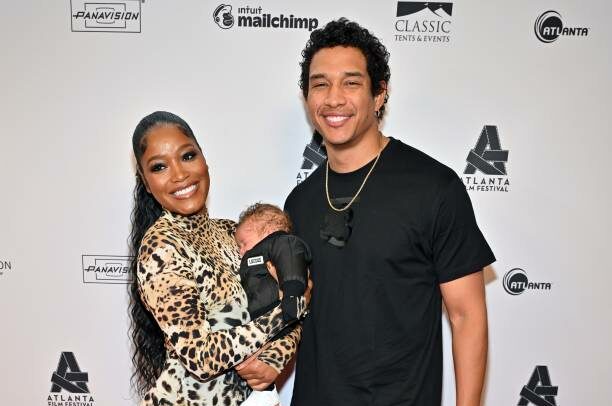
The world has welcomed the first child of Keke Palmer and Darius Jackson.
The actor posted the announcement of the birth of her baby boy, Leodis Andrellton Jackson to her Instagram account.
“LEODIS ANDRELLTON JACKSON, welcome to the world baby Leo.”
Palmer posted several photographs of her, her boyfriend, and the baby in consecutive slides on the Instagram post.
“Only 48hrs of being parents! ”
Her first picture showed a happy couple, eyes wide open driving in a vehicle.
“Darius always made me playlists when we first started dating, “Someone” by El Debarge was a favorite. We became each other’s someone and made a someone, look at God! ”
Palmer is heard singing the El Debarge song, Someone as she is seemingly expressing the joy of being with Jackson and the two of them creating a baby.
“The baby love Rolling Ray, cause purrr.”
This photo shows Palmer still in bed as Jackson is holding their newborn as they presumably are watching Bobby I Love u PURRR which features internet sensation, Rolling Ray on a laptop.
“I’m not hiding the world from my son, I’m hiding my son from the world.” Hahaha
This photo shows Jackson embracing Palmer as she lays on the bed holding Leodis in her arms.
“I’m just playing, my baby face is on this slide.”
This particular picture may serve as the first solo shot of Palmer’s son, Leodis as he appears to be sleeping.
“And this slide ❤️”
Self-explanatory pic of the baby.
Palmer ends the post by writing, “Born during Black History Month, with a name to match !
“LEODIS ANDRELLTON JACKSON, welcome to the world baby Leo.”
Earlier this month, Palmer stated in her podcast, Baby, this is Keke Palmer that the name they planned on giving their baby “gives Black American storyline.”
Last year, in December, she shocked the world when she announced that she was pregnant during her opening monologue on Saturday Night Live.
Slow, Steady, & Progressive: Investment Icon John W. Rogers Jr Develops First Black-Owned Mutual Fund
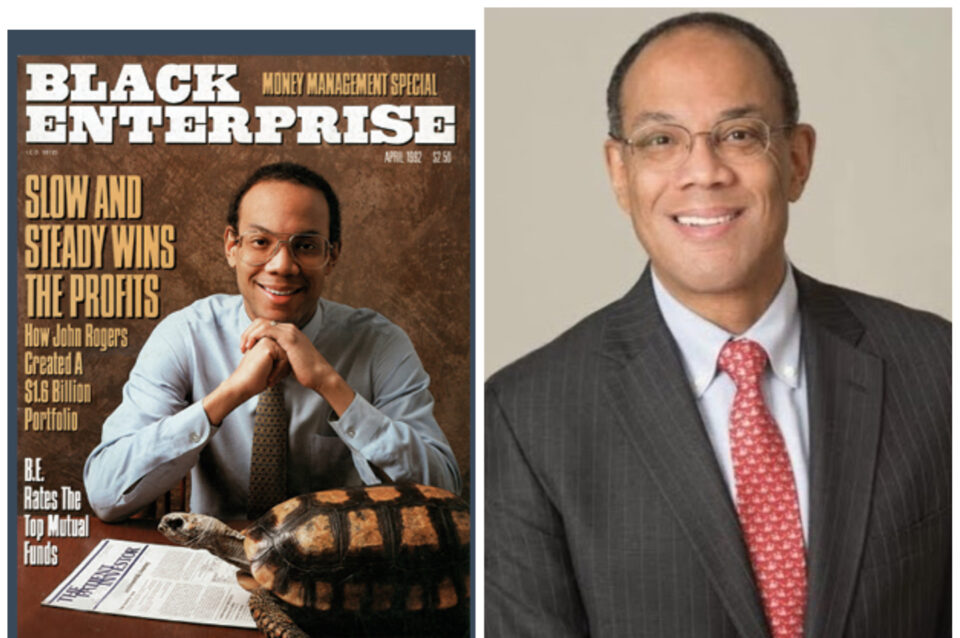
Considered an investment icon by BLACK ENTERPRISE,John W. Rogers Jr. created the first family of equity mutual funds managed by African Americans. He is also celebrated for leading a legacy fueled by his fight for diversity on corporate boards and better financial opportunities on behalf of Black firms.
As we look back at the world of Black business, Rogers’ monumental formula to architecting and achieving a $1.6 billion portfolio landed him No. 1 on the BE ASSET MANAGERS list with $11 billion in assets under management. He was also recognized at number 19 on our 40 “Titans: The Most Powerful African Americans in Business–and How They Shaped Our World” list.
A young stock-building lad turned investor
When it came down to shopping for Christmas and birthdays, Rogers’ sad had an unusual gift idea in mind: brand new stocks and a growing portfolio. By the age of 12, Rogers’ passion for investing had begun to take flight.
As a Princeton college student, Rogers saw his interest in equities grow while pursuing an AB in economics. On his path to wealth building, Rogers leveraged his passion for something greater.
The recent grad went on to work as a stockbroker at William Blair & Company over the two-and-a-half years after acquiring his degree. But it took three years for Rogers to act on a need to invest in undervalued, small-and medium-sized companies that showed a strong potential for growth.
In 1983, Rogers founded Ariel Capital Management, now Ariel Investments L.L.C., the first African American firm to develop a mutual fund: the Ariel Fund. With offices in New York and Sydney, the Chicago-based firm manages more than $16 billion in assets and offers investors six no-load mutual funds and nine separate accounts.
Rogers remains Ariel’s chairman, chief investment officer, and stock-picker, co-managing funds such as Ariel Appreciation Fund, Ariel Small Cap Value, Ariel Small Cap Value Concentrated, Ariel Small/Mid Cap Value, and Ariel Mid Cap Value.
The Ariel Fund, on the other hand, serves as Rogers’ $2.5 billion flagship. Launched in 1986, the fund reigned as the longest-running of its kind in Morningstar’s mid-cap value category.
Multi-billion dollar milestones and investments
In spite of the 1987 crash known as Black Monday, Ariel invested in cheap stocks, encouraged clients and brokers to jump on the wave, and outperformed with double-digit gains. The winnings took a hit during the 2008 financial crisis, and still managed to progress slow and steady.
In 2003, Ariel achieved an investment milestone when 17 major corporations selected the company’s mutual funds for its 401k plans, BLACK ENTERPRISE previously reported. The firm reported assets under management of more than $15 billion – the nation’s largest African American asset manager.
Today, Ariel solidifies its place in the future of Black wealth with its first foray into private equity in its four-decade history. The company announced the historic close of Project Black at $1.45 billion on the first day of Black History Month.
One of the largest first-time private equity funds of all time, Project Black seeks to close the racial wealth gap by creating minority-owned businesses of scale that can serve as Tier 1 suppliers to the Fortune 500.
(Twitter / @ArielInvests)
Acting on a responsibility
For close to 30 years, Rogers has dedicated his time to promoting financial literacy and wealth-building through investing, using the Ariel Education Initiative.
While research capabilities have since expanded, Rogers’ patient approach still anchors the firm today.
Beyond Ariel, Rogers advocates for diversity as co-founder of the Black Corporate Directors Conference, which which brings together scores of African American business leaders to focus on their role in corporate governance. But he discovered that too many “weren’t fighting for the civil rights agenda once in the boardroom.”
“Too often, we were just happy to be there. We were uncomfortable making the white leadership uncomfortable. So we sort of sat there and, in effect, gave cover for the status quo to stay the same,” Rogers previously told Derek Dingle, BLACK ENTERPRISE Sr. VP/Chief Content Officer.
Meanwhile, Rogers actively fights for Black firms to gain access to opportunities to manage corporate, pension fund, and endowment dollars. By requiring inclusivity among portfolio companies, Ariel has successfully diversified corporate board and leadership positions.
“We remind people that it takes courage to speak out to make a difference. We have a responsibility,” he added.
Allow us to reintroduce ourselves. After 40 slow and steady years, today we are unveiling our rebranded identity.
Beyond Ariel, Rogers is a member of the board of directors of McDonald’s, Exelon Corp, NIKE, The New York Times Company, Ryan Specialty Group Holdings and the Obama Foundation. He also serves as Vice Chair of the board of trustees of The University of Chicago.
Black Enterprise Titan John Rogers is the founder of Ariel Capital Management, now Ariel Investments, the first family of equity mutual funds managed by African Americans.
In 2017, Rogers represented exemplars among those found on the 2017 BLACK ENTERPRISE Registry of Corporate Directors, which included 292 board members from the S&P 500.
Rogers once said if BE 100s asset managers and other firms demand companies in which they invest “look like America and live up to values they say they care about, they will change.”
“Unfortunately, most money managers talk about profit margins and growth, and what’s happening with the stock price and valuation but not pressing that management team on those issues.”
On March 1, WeTravel – the leading integrated tech platform built to support multi-day travel booking and payments – is launching its We Travel For Women campaign through its Women+ in Travel Academy, celebrating the accomplishments and stories of 31 women in travel in honor of International Women’s Day and Women’s History Month.
Aligning with International Women’s Day’s mission to “get the world talking about why equal opportunities are no longer enough,” the We Travel For Women campaign will highlight 31 women in travel to further the business’s commitment through the Women+ in Travel Academy to use its educational platform to share women-created, women-written resources that champion better representation in travel.
Each woman – from founders of tour operators in Africa to office managers in Amsterdam and tour leaders in Latin America – will take to the Women+ in Travel Academy for one day during March to share their experiences as a woman in the industry, including celebrating their accomplishments.
“Last year, we launched within WeTravel’s newly-formed Academy a Women+ in Travel Academy with much-needed, often hard-to-find women-curated resources to support equity and representation in tourism,” said Shayna Zand, WeTravel’s head of partnerships. “While all year women share their stories in the Women in Travel Academy, this month our continued commitment to celebrate and support women in travel will include a feature a day of an inspiring woman, from tour leaders in Latin America to business owners in Africa, to celebrate their successes – and the broader impact these women are having on equity in travel.”
According to the World Tourism Organization, women account for 54% of employees in the tourism sector, but only 15% of women hold senior-management positions. Although women hold significantly fewer senior roles than men in tourism, the representation of women in senior-management roles in travel is higher than other global industries. This International Women’s Day, the focus on lessening the gender representation gap is attributed to focusing more on equity. Within every organization, intentional action must be taken to support females’ professional development.
As a business committed to equity within its organization and for its more than 3,000 global clients – including gender representation – WeTravel’s global business comprises 150 employees: more than 50% of whom identify as women, representing more than 40 nationalities, and 25% of whom are parents. In leadership, more than 50% of positions are held by identifying women, working from three continents.
The business’s platform supports hundreds of women-run, women-led tour operators and group travel organizers, which was the impetus to launch last year within its newly-created Women+ in Travel Academy. The Women+ in Travel Academy commissions pieces from identifying women in travel to publish as free resources to support better representation in travel. To date, the platform has provided free resources on subjects like: making travel safer for Black women, why free travel isn’t a perk for parents, supporting women entrepreneurs and tour leaders.
This Women’s History Month, support the 31 women sharing their stories in the Women+ in Travel Academy, here: https://resources.wetravel.com/women-in-travel. Each day, one article written by a woman in travel will go live on the site and WeTravel’s social media channels.
“We’re honored to be a vehicle for supporting these women and their ever-inspiring stories,” said Zand. “It’s our hope that reading these women’s stories will prove that, as an industry, more needs to be done for equity – and it needs to be done now.”
Icon Mann Reimagines African Diasporic Narratives with Salute to ‘The Woman King’ Director Gina Prince-Bythewood, ‘Sidney Poitier’ Director Reginald Hudlin, Director George Tillman Jr. and Uzodinma Iweala
Yesterday, ICON MANN (IM) unveiled their upcoming in-person events centered around this year’s awards season, where IM will celebrate the achievements and accomplishments of filmmakers Reginald Hudlin(Sidney Poitier, House Party, Boomerang),George Tillman Jr. (Soul Food, Men of Honor), Gina Prince-Bythewood (TheWoman King, Love & Basketball, The Old Guard), and The Africa Center’s Uzodinma Iweala, in addition to partnerships with the National Film Authority of Ghana, Uganda Communications Commission, and Morgan Stanley Smith Barney LLC.
ICON MANN returns to awards week with an expanded format to include film sessions with emerging media-driven African nations Ghana and Uganda on March 7 at the Fairmont Century Plaza, the new luxury hotel from the Accor Group. The forum, entitled “Africa 2 America,” places the African creative sector in Hollywood for the development of bilateral exchange. ICON MANN reteamed with Sony Pictures for the annual ICON MANN HONORS dinner, which will take place March 8at Waldorf Astoriain Beverly Hills. This season the theme is “Reimaging African Diasporic Narratives.” 2023 Honorees include Gina Prince-Bythewood, Reginald Hudlinand Uzodinma Iweala, CEO of the Africa Center NYC and NY Times Best-Selling Author of Beasts of No Nation.
“It’s a marvelous time to be Black and creative. We are griots, world builders, and originators of culture. There is great joy and cause for celebration in that as we reimagine African Diasporic narratives with the Africa 2 America delegation sessions and our ICON MANN Honors,” states Tamara N. Houston, Founder. “We know how imperative it is to amplify collective communities of wealth, wellness, and enterprise across professional sectors. Being intentional about our work and collaborations with media-driven African countries like Ghana and Uganda is foundational to being authentic storytellers and way makers.”
Private Events include:
Tuesday, February 28
ICON MANN + SONY PICTURES ENTERTAINMENT present “An Evening With George, The Miraculous Story of the Once and Future Heavyweight Champion of the World,” a fireside chat and film retrospective with Big George Foreman director, George Tillman Jr., moderated by Tom Rothman, Chairman & CEO of Sony Pictures’ Motion Picture Group.
Tuesday, March 7
ICON MANN’s Africa 2 America film market sessions partners officially with the National Film Authority of Ghana and Uganda Communications Commission.
Delegation leaders include:
Juliet Asante, CEO of the National Film Authority (NFA) representing Ghana
Irene Sewankambo, Executive Director of Uganda Communications Commission
Mukiza Robert, Director General of Uganda Investment Authority
Dr. Lilly Ajarova, CEO of the Ugandan Tourism Board
Wednesday, March 8
ICON MANN HONORS, a red-carpet media awards dinner in Beverly Hills at the Waldorf Astoria, salutes those who are “Reimaging African Diasporic Narratives” 2023 Honorees: Gina Prince-Bythewood (The Woman King), Reginald Hudlin (Sidney Poitier), and Uzodinma Iweala, CEO of the Africa Center NYC
Saturday, March 11
ICON WoMANN the inaugural all-female session, presented by Morgan Stanley Smith Barney LLC. An exclusive forum of sisterhood invested in financial and emotional wellness with Senior Level female executives, producers, directors, and actresses (inclusive of six MS Advisors)
Former Presentersand Attendees:Kevin Feig (President of Marvel Studios),Halle Berry, Kobe Bryant,Channing Dungey, David P. White (Federal Reserve Bank of San Francisco), Common, Quincy Jones, Barry Jenkins, Chadwick Boseman, Charles King, Derrick Johnson (CEO of NAACP), David Oyelowo, Djimon Hounsou, Don Cheadle, Hayma Washington (Television Academy, former President), Idris Elba, John Ridley, Kevin Hart, Leland Melvin (NASA), Lonnie Bunche (Smithsonian), Michael B. Jordan, Ndaba Mandela, Paris Barclay (DGA, former President), Ron Kirk (U.S. Ambassador), Ryan Coogler, Steve McQueen, Ted Sarandos (Netflix), and more.
For all information and the latest news, please follow ICON MANN on Instagram @Icon.Mann.
Homes Owned by Black Families Appreciated the Fastest During the Pandemic
Homes owned by Black families appreciated more than any others since the start of the pandemic, with the typical Black homeowner gaining nearly $84,000 in equity. Black Americans also made slight gains in homeownership rates, despite disproportionate job and income loss.
The gap between the typical Black-owned home’s value and the value of the typical U.S. home is now the smallest it’s been in more than two decades, according to a new analysis of data from Zillow and the Home Mortgage Disclosure Act.
“These gains are extremely important in terms of increasing wealth among the Black community, as homeowners of color are more likely to have the bulk of their household wealth tied up in their homes,” said Nicole Bachaud, senior economist at Zillow. “Due to years of redlining and other forms of systemic discrimination, housing disparities between Black and white families persist. Policies and interventions, like expanding access to credit, building more affordable homes, and finding new approaches to mitigate appraisal bias are keys to achieving housing equity.”
From February 2020 to January 2023,1 Black homeowners saw their home values increase 42.5%, compared to 38.2% for U.S. home values overall, and 37.8% for white-owned home values. Hispanic- and Asian-owned home values increased by 38.3% and 37%, respectively.
Home value appreciation among Black homeowners has outpaced all other races since 2014, and that trend accelerated at the start of the pandemic, further shrinking the home value gap. In February 2020, the typical Black-owned home was worth 17.3% less than the typical home overall. By January 2023, that gap closed to 14.8%, which is the closest Black-owned home values have been to overall values since at least the year 2000.
Among the 50 largest metros in the country, that home value gap has shrunk the most in Detroit — by 9 percentage points — since February 2020. Kansas City, Chicago, Cleveland, Milwaukee, and Louisville, among other markets, also saw large improvements, with the gap closing by more than 5 percentage points in that time.
Homeownership
In 2021, the latest available data from the U.S. Census Bureau, 44% of Black households owned their homes, compared with 73.3% of white households — a gap of more than 29 points.
According to the most recent U.S. Census Bureau data, Black homeownership increased 2 percentage points from 2019 to 2021, compared to 1.3% for the nation at large. Black women ages 45–54 and 75 and older saw the largest increase among Black homeowners during the pandemic, with 2.9 percentage points of growth. Black men ages 35–44 saw a 2.5 percentage-point jump in homeownership rate over that period, the second-largest increase in the group.
Still, for many Black Americans, barriers to accessing homeownership abound. Many markets with the highest appreciation in Black home values also have the highest mortgage denial rates for Black applicants, meaning the markets where Black homeowners have the best chance of improving their household wealth and gaining equity with homeowners overall are markets where it’s most difficult for Black mortgage applicants to actually become homeowners.
Pandemic-era Changes in Black Americans’ Housing Wealth
Metropolitan area*
Pandemic-era change in Black- owned home value vs. all homes’ value
(percentage points)
Typical
Black-owned
home value
Typical home value overall
Black home-
ownership
rate change, 2019–2021
Black home-
ownership
rate gap,
relative to
white
households,
as of 2021
(percentage points)
United States
-2.5
$280,925
$329,542
2.0 %
-29.3
Detroit, MI
-9
$138,574
$228,249
3.0 %
-34
Kansas City, MO
-8
$215,141
$276,889
3.3 %
-30.8
Chicago, IL
-6.9
$197,274
$289,469
2.5 %
-33.4
Cleveland, OH
-5.8
$131,011
$203,357
0.6 %
-38.3
Milwaukee, WI
-5.7
$193,825
$291,841
2.4 %
-41.5
Birmingham, AL
-5.6
$142,312
$236,630
6.8 %
-25.4
Buffalo, NY
-5.4
$143,705
$234,092
0.7 %
-37.5
Louisville–Jefferson County, KY
-5.2
$175,981
$238,520
2.8 %
-36.3
Oklahoma City, OK
-4.6
$178,587
$213,342
1.3 %
-33
Jacksonville, FL
-4.3
$286,527
$348,667
5.7 %
-24.1
Philadelphia, PA
-4.2
$251,014
$323,974
1.5 %
-26.2
Pittsburgh, PA
-4.2
$148,175
$194,489
6.2 %
-38
St. Louis, MO
-4.1
$144,377
$225,793
4.1 %
-35.8
Columbus, OH
-4.1
$229,721
$285,648
2.0 %
-37.6
Richmond, VA
-4
$310,539
$334,158
0.5 %
-26.4
Baltimore, MD
-3.5
$306,991
$352,931
0.4 %
-32.4
Memphis, TN
-3.3
$175,121
$226,846
1.8 %
-33
Indianapolis, IN
-3.2
$236,035
$257,620
1.0 %
-36.3
New York, NY
-2.7
$515,993
$574,074
2.1 %
-32.9
Atlanta, GA
-2.7
$312,955
$357,312
4.6 %
-25.3
Hartford, CT
-2
$251,188
$309,788
-0.1 %
-33.8
Tampa, FL
-1.9
$323,866
$360,578
1.4 %
-28.6
Cincinnati, OH
-1.9
$207,773
$252,129
2.3 %
-39.6
Houston, TX
-1.5
$252,508
$295,108
2.2 %
-31.8
Sacramento, CA
-1.3
$506,275
$538,042
0.2 %
-34.9
Charlotte, NC
-1.1
$305,422
$354,977
1.5 %
-30.4
Orlando, FL
-1.1
$334,894
$372,553
-0.5 %
-26.3
Raleigh, NC
-1.1
$358,981
$414,810
3.9 %
-28.9
Dallas–Fort Worth, TX
-1
$301,292
$359,743
1.2 %
-31.7
Providence, RI
-1
$385,681
$424,480
-2.1 %
-35.3
Boston, MA
-0.8
$506,924
$607,115
1.4 %
-33.4
San Antonio, TX
-0.8
$285,415
$287,206
3.8 %
-23.8
Virginia Beach, VA
-0.8
$299,921
$316,156
1.1 %
-31.1
Miami–Fort Lauderdale, FL
-0.7
$367,818
$442,044
3.0 %
-24.2
New Orleans, LA
-0.6
$202,036
$240,717
0.5 %
-27
Washington, DC
-0.5
$489,038
$521,347
0.9 %
-21.2
Phoenix, AZ
-0.5
$387,527
$429,775
5.4 %
-33.7
Austin, TX
-0.1
$390,391
$476,581
0.9 %
-24
San Jose, CA
0
$1,220,780
$1,358,777
-1.8 %
-38.5
Salt Lake City, UT
0
$513,061
$523,731
2.2 %
-47.3
Denver, CO
+0.1
$504,356
$568,272
-4.1 %
-29.8
Las Vegas, NV
+0.1
$383,782
$391,393
3.7 %
-33
Nashville, TN
+0.1
$368,530
$420,948
3.2 %
-29.2
Portland, OR
+0.5
$501,708
$523,272
1.4 %
-25.8
Los Angeles–Long Beach–Anaheim, CA
+0.6
$681,532
$841,462
-2.5 %
-25.1
Minneapolis–St. Paul, MN
-0.8
$303,390
$349,472
6.6 %
-45
Riverside, CA
+1.5
$529,626
$531,416
2.1 %
-26.3
Seattle, WA
+1.5
$573,551
$688,312
4.0 %
-33
San Diego, CA
+1.7
$652,147
$816,218
-0.3 %
-34
San Francisco, CA
+3.6
$826,439
$1,087,239
-0.9 %
-28.8
*Ranked by largest reduction in home value gap between Black-owned homes and the overall typical home in the region
‘In The Black’ Changing the Dominant Narrative in the Commercial Real Estate Industry
The expression “in the black” is commonly heard in the financial world, used to convey that a company is profitable, financially solvent, and not overburdened by debt.
But T. Dallas Smith uses the phrase in a different way in his new book, In The Black: Changing The Dominant Narrative In The Commercial Real Estate Industry. The CEO and founder of a groundbreaking African American-owned commercial real estate brokerage firm shows how he turned negatives into positives. Smith takes the reader on his journey of overcoming obstacles and breaking through and succeeding in a non-diverse industry.
Against the odds, Smith became the first Black broker at the Atlanta firm of Cushman & Wakefield, then built a successful career leading his own commercial real estate company. He dedicated the book “to everybody who’s ever thought about being in commercial real estate and everyone who ever thought they were not enough, couldn’t do it, didn’t come from the right place, didn’t have the right connections, who were told no, that they were too young, too black, too anything.”
His message is: “Please know that you can do whatever you want and that you are more than enough.”
Smith has lifted others as he has climbed – mentoring, hiring, and inspiring people of color to realize their full potential. Throughout his narrative, another long-term message is clear: there is still much work yet to be done in diversifying the commercial real estate industry. He says it’s time to hire, train, and mentor more Black brokers, and the book takes steps in that direction by introducing young Black men and women to a field they may not have previously considered.
In this book, readers will learn:
• How diversity is a key to unlocking unlimited possibilities in business
• Life lessons, such as choosing optimism over bitterness
• How personal relationships are the foundation of success and an enduring society