Icon Mann Reimagines African Diasporic Narratives with Salute to ‘The Woman King’ Director Gina Prince-Bythewood, ‘Sidney Poitier’ Director Reginald Hudlin, Director George Tillman Jr. and Uzodinma Iweala


Yesterday, ICON MANN (IM) unveiled their upcoming in-person events centered around this year’s awards season, where IM will celebrate the achievements and accomplishments of filmmakers Reginald Hudlin (Sidney Poitier, House Party, Boomerang), George Tillman Jr. (Soul Food, Men of Honor), Gina Prince-Bythewood (The Woman King, Love & Basketball, The Old Guard), and The Africa Center’s Uzodinma Iweala, in addition to partnerships with the National Film Authority of Ghana, Uganda Communications Commission, and Morgan Stanley Smith Barney LLC.

ICON MANN returns to awards week with an expanded format to include film sessions with emerging media-driven African nations Ghana and Uganda on March 7 at the Fairmont Century Plaza, the new luxury hotel from the Accor Group. The forum, entitled “Africa 2 America,” places the African creative sector in Hollywood for the development of bilateral exchange. ICON MANN reteamed with Sony Pictures for the annual ICON MANN HONORS dinner, which will take place March 8 at Waldorf Astoria in Beverly Hills. This season the theme is “Reimaging African Diasporic Narratives.” 2023 Honorees include Gina Prince-Bythewood, Reginald Hudlin and Uzodinma Iweala, CEO of the Africa Center NYC and NY Times Best-Selling Author of Beasts of No Nation.

“It’s a marvelous time to be Black and creative. We are griots, world builders, and originators of culture. There is great joy and cause for celebration in that as we reimagine African Diasporic narratives with the Africa 2 America delegation sessions and our ICON MANN Honors,” states Tamara N. Houston, Founder. “We know how imperative it is to amplify collective communities of wealth, wellness, and enterprise across professional sectors. Being intentional about our work and collaborations with media-driven African countries like Ghana and Uganda is foundational to being authentic storytellers and way makers.”

Private Events include:

Tuesday, February 28

  • ICON MANN + SONY PICTURES ENTERTAINMENT present “An Evening With George, The Miraculous Story of the Once and Future Heavyweight Champion of the World,” a fireside chat and film retrospective with Big George Foreman director, George Tillman Jr., moderated by Tom Rothman, Chairman & CEO of Sony Pictures’ Motion Picture Group.

Tuesday, March 7

  • ICON MANN’s Africa 2 America film market sessions partners officially with the National Film Authority of Ghana and Uganda Communications Commission.
  • Delegation leaders include:
    • Juliet Asante, CEO of the National Film Authority (NFA) representing Ghana
    • Irene Sewankambo, Executive Director of Uganda Communications Commission
    • Mukiza Robert, Director General of Uganda Investment Authority
    • Dr. Lilly Ajarova, CEO of the Ugandan Tourism Board

Wednesday, March 8

  • ICON MANN HONORS, a red-carpet media awards dinner in Beverly Hills at the Waldorf Astoria, salutes those who are “Reimaging African Diasporic Narratives” 2023 Honorees: Gina Prince-Bythewood (The Woman King), Reginald Hudlin (Sidney Poitier), and Uzodinma Iweala, CEO of the Africa Center NYC

Saturday, March 11

  • ICON WoMANN the inaugural all-female session, presented by Morgan Stanley Smith Barney LLC. An exclusive forum of sisterhood invested in financial and emotional wellness with Senior Level female executives, producers, directors, and actresses (inclusive of six MS Advisors)

Former Presenters and Attendees: Kevin Feig (President of Marvel Studios), Halle Berry, Kobe Bryant, Channing Dungey, David P. White (Federal Reserve Bank of San Francisco), Common, Quincy Jones, Barry Jenkins, Chadwick Boseman, Charles King, Derrick Johnson (CEO of NAACP), David Oyelowo, Djimon Hounsou, Don Cheadle, Hayma Washington (Television Academy, former President), Idris Elba, John Ridley, Kevin Hart, Leland Melvin (NASA), Lonnie Bunche (Smithsonian), Michael B. Jordan, Ndaba Mandela, Paris Barclay (DGA, former President), Ron Kirk (U.S. Ambassador), Ryan Coogler, Steve McQueen, Ted Sarandos (Netflix), and more.

For all information and the latest news, please follow ICON MANN on Instagram @Icon.Mann.

Home Equity, home

Homes Owned by Black Families Appreciated the Fastest During the Pandemic


Homes owned by Black families appreciated more than any others since the start of the pandemic, with the typical Black homeowner gaining nearly $84,000 in equity. Black Americans also made slight gains in homeownership rates, despite disproportionate job and income loss.

The gap between the typical Black-owned home’s value and the value of the typical U.S. home is now the smallest it’s been in more than two decades, according to a new analysis of data from Zillow and the Home Mortgage Disclosure Act.

“These gains are extremely important in terms of increasing wealth among the Black community, as homeowners of color are more likely to have the bulk of their household wealth tied up in their homes,” said Nicole Bachaud, senior economist at Zillow. “Due to years of redlining and other forms of systemic discrimination, housing disparities between Black and white families persist. Policies and interventions, like expanding access to credit, building more affordable homes, and finding new approaches to mitigate appraisal bias are keys to achieving housing equity.”

From February 2020 to January 2023,1 Black homeowners saw their home values increase 42.5%, compared to 38.2% for U.S. home values overall, and 37.8% for white-owned home values. Hispanic- and Asian-owned home values increased by 38.3% and 37%, respectively.

Home value appreciation among Black homeowners has outpaced all other races since 2014, and that trend accelerated at the start of the pandemic, further shrinking the home value gap. In February 2020, the typical Black-owned home was worth 17.3% less than the typical home overall. By January 2023, that gap closed to 14.8%, which is the closest Black-owned home values have been to overall values since at least the year 2000.

Among the 50 largest metros in the country, that home value gap has shrunk the most in Detroit — by 9 percentage points — since February 2020. Kansas City, Chicago, Cleveland, Milwaukee, and Louisville, among other markets, also saw large improvements, with the gap closing by more than 5 percentage points in that time.

Homeownership

In 2021, the latest available data from the U.S. Census Bureau, 44% of Black households owned their homes, compared with 73.3% of white households — a gap of more than 29 points.

According to the most recent U.S. Census Bureau data, Black homeownership increased 2 percentage points from 2019 to 2021, compared to 1.3% for the nation at large. Black women ages 45–54 and 75 and older saw the largest increase among Black homeowners during the pandemic, with 2.9 percentage points of growth. Black men ages 35–44 saw a 2.5 percentage-point jump in homeownership rate over that period, the second-largest increase in the group.

Still, for many Black Americans, barriers to accessing homeownership abound. Many markets with the highest appreciation in Black home values also have the highest mortgage denial rates for Black applicants, meaning the markets where Black homeowners have the best chance of improving their household wealth and gaining equity with homeowners overall are markets where it’s most difficult for Black mortgage applicants to actually become homeowners.


Pandemic-era Changes in Black Americans’ Housing Wealth

Metropolitan area*

Pandemic-era
change in Black-
owned home
value vs. all
homes’ value

(percentage
points)

Typical

Black-owned

home value

Typical 
home value
overall

Black home-

ownership

rate change,
2019–2021

Black home-

ownership

rate gap,

relative to

white

households,

as of 2021

(percentage points)

United States

-2.5

$280,925

$329,542

2.0 %

-29.3

Detroit, MI

-9

$138,574

$228,249

3.0 %

-34

Kansas City, MO

-8

$215,141

$276,889

3.3 %

-30.8

Chicago, IL

-6.9

$197,274

$289,469

2.5 %

-33.4

Cleveland, OH

-5.8

$131,011

$203,357

0.6 %

-38.3

Milwaukee, WI

-5.7

$193,825

$291,841

2.4 %

-41.5

Birmingham, AL

-5.6

$142,312

$236,630

6.8 %

-25.4

Buffalo, NY

-5.4

$143,705

$234,092

0.7 %

-37.5

Louisville–Jefferson County, KY

-5.2

$175,981

$238,520

2.8 %

-36.3

Oklahoma City, OK

-4.6

$178,587

$213,342

1.3 %

-33

Jacksonville, FL

-4.3

$286,527

$348,667

5.7 %

-24.1

Philadelphia, PA

-4.2

$251,014

$323,974

1.5 %

-26.2

Pittsburgh, PA

-4.2

$148,175

$194,489

6.2 %

-38

St. Louis, MO

-4.1

$144,377

$225,793

4.1 %

-35.8

Columbus, OH

-4.1

$229,721

$285,648

2.0 %

-37.6

Richmond, VA

-4

$310,539

$334,158

0.5 %

-26.4

Baltimore, MD

-3.5

$306,991

$352,931

0.4 %

-32.4

Memphis, TN

-3.3

$175,121

$226,846

1.8 %

-33

Indianapolis, IN

-3.2

$236,035

$257,620

1.0 %

-36.3

New York, NY

-2.7

$515,993

$574,074

2.1 %

-32.9

Atlanta, GA

-2.7

$312,955

$357,312

4.6 %

-25.3

Hartford, CT

-2

$251,188

$309,788

-0.1 %

-33.8

Tampa, FL

-1.9

$323,866

$360,578

1.4 %

-28.6

Cincinnati, OH

-1.9

$207,773

$252,129

2.3 %

-39.6

Houston, TX

-1.5

$252,508

$295,108

2.2 %

-31.8

Sacramento, CA

-1.3

$506,275

$538,042

0.2 %

-34.9

Charlotte, NC

-1.1

$305,422

$354,977

1.5 %

-30.4

Orlando, FL

-1.1

$334,894

$372,553

-0.5 %

-26.3

Raleigh, NC

-1.1

$358,981

$414,810

3.9 %

-28.9

Dallas–Fort Worth, TX

-1

$301,292

$359,743

1.2 %

-31.7

Providence, RI

-1

$385,681

$424,480

-2.1 %

-35.3

Boston, MA

-0.8

$506,924

$607,115

1.4 %

-33.4

San Antonio, TX

-0.8

$285,415

$287,206

3.8 %

-23.8

Virginia Beach, VA

-0.8

$299,921

$316,156

1.1 %

-31.1

Miami–Fort Lauderdale, FL

-0.7

$367,818

$442,044

3.0 %

-24.2

New Orleans, LA

-0.6

$202,036

$240,717

0.5 %

-27

Washington, DC

-0.5

$489,038

$521,347

0.9 %

-21.2

Phoenix, AZ

-0.5

$387,527

$429,775

5.4 %

-33.7

Austin, TX

-0.1

$390,391

$476,581

0.9 %

-24

San Jose, CA

0

$1,220,780

$1,358,777

-1.8 %

-38.5

Salt Lake City, UT

0

$513,061

$523,731

2.2 %

-47.3

Denver, CO

+0.1

$504,356

$568,272

-4.1 %

-29.8

Las Vegas, NV

+0.1

$383,782

$391,393

3.7 %

-33

Nashville, TN

+0.1

$368,530

$420,948

3.2 %

-29.2

Portland, OR

+0.5

$501,708

$523,272

1.4 %

-25.8

Los Angeles–Long Beach–Anaheim, CA

+0.6

$681,532

$841,462

-2.5 %

-25.1

Minneapolis–St. Paul, MN

-0.8

$303,390

$349,472

6.6 %

-45

Riverside, CA

+1.5

$529,626

$531,416

2.1 %

-26.3

Seattle, WA

+1.5

$573,551

$688,312

4.0 %

-33

San Diego, CA

+1.7

$652,147

$816,218

-0.3 %

-34

San Francisco, CA

+3.6

$826,439

$1,087,239

-0.9 %

-28.8

*Ranked by largest reduction in home value gap between Black-owned homes and the overall typical home in the region

Real Estate, Commercial real estate, building, business man

‘In The Black’ Changing the Dominant Narrative in the Commercial Real Estate Industry


The expression “in the black” is commonly heard in the financial world, used to convey that a company is profitable, financially solvent, and not overburdened by debt.

But T. Dallas Smith uses the phrase in a different way in his new book, In The Black: Changing The Dominant Narrative In The Commercial Real Estate Industry. The CEO and founder of a groundbreaking African American-owned commercial real estate brokerage firm shows how he turned negatives into positives. Smith takes the reader on his journey of overcoming obstacles and breaking through and succeeding in a non-diverse industry.

Against the odds, Smith became the first Black broker at the Atlanta firm of Cushman & Wakefield, then built a successful career leading his own commercial real estate company. He dedicated the book “to everybody who’s ever thought about being in commercial real estate and everyone who ever thought they were not enough, couldn’t do it, didn’t come from the right place, didn’t have the right connections, who were told no, that they were too young, too black, too anything.”

His message is: “Please know that you can do whatever you want and that you are more than enough.”

Smith has lifted others as he has climbed – mentoring, hiring, and inspiring people of color to realize their full potential. Throughout his narrative, another long-term message is clear: there is still much work yet to be done in diversifying the commercial real estate industry. He says it’s time to hire, train, and mentor more Black brokers, and the book takes steps in that direction by introducing young Black men and women to a field they may not have previously considered.

 In this book, readers will learn:

• How diversity is a key to unlocking unlimited possibilities in business

• Life lessons, such as choosing optimism over bitterness

• How personal relationships are the foundation of success and an enduring society

• The payoff of persistence and constant effort

• Authenticity is the only currency that matter

National Alliance for Black Business and MBDA Team Up on Historic Alliance to Develop Black Businesses

National Alliance for Black Business and MBDA Team Up on Historic Alliance to Develop Black Businesses


Aiming to enlarge business development and global competitiveness for Black businesses, the Minority Business Development Agency (MBDA) and the National Alliance for Black Business (NABB) are uniting on a new alliance to help achieve that effort.

Based on a news release, the U.S. Department of Commerce’s MBDA  and NABB signed a memorandum of understanding (MOU) on February 22 during the NABB’s first annual National Black Business Policy Conference in Washington, D.C. The NABB was co-founded by the National Business League (NBL) and the National Black Chamber of Commerce (NBCC). They represent a combined 153 years of combined service to Black businesses and are now collaborating to organize a unified national black economic agenda.

“This historic agreement between MBDA and the NABB will strengthen our collective mission to create a strong, equitable economy for all minority businesses and entrepreneurs,” stated Donald R. Cravins, Jr., the MBDA’s under secretary. “Both MBDA and the NABB have uplifted Black businesses in the decades since they were formed. But together under this agreement, we can break down more barriers, open new opportunities, and create greater access for even more minority entrepreneurs and founders to thrive.”

More than 100 distinguished Black business leaders, organizations, and corporate executives gathered with Cravins. Among them were NABB Co-founders Kenneth L. Harris, (NBL) and Charles H. DeBow, III (NBCC); Hon. Johnny Ford, founder and president of the World Conference of Mayors; Helena Hutton, senior director of strategic purchasing, supplier diversity and environmental sustainability, Cummins Inc., and member of the Billion Dollar Roundtable; Jane Reindorf-Attoh, CEO, JT International; and conference keynote speaker Terri L. Batch, Director of the U.S. Global Diversity Export Initiative, part of the U.S. Department of Commerce International Trade Administration.

“The alliance between the NABB and the U.S. Department of Commerce is a powerful collaboration to build Black economic equity through enterprise ownership and development,” stated Charles H. DeBow, III, president and CEO of the NBCC and co-founder of the NABB.

The MOU sets up a framework for the MBDA and the NABB to collaborate on efforts to boost the growth and global scaling of more than 3.2 million Black American businesses, with an estimated $141.1 billion in annual receipts, 1.3 million employees, and about $42.2 billion in annual payroll (2022 U.S. Census).

Part of the alliance calls for the MBDA and the NABB to share information and raise public awareness of each other’s programs and initiatives.

In 1969, the late Berkeley G. Burrell, the NBL’s 10th national president played an instrumental role in the founding and creation of the Office of Minority Business Enterprise (OMBE), today the MBDA. Burrell was vice president of the Advisory Council for Minority Enterprise and under his leadership, the NBL and OMBE initiated decades of Black business
participation in the public and private sectors.

“The MBDA was born out of the civil rights movement, as an intentional solution to curb the economic conditions experienced in the Black community that caused Black resistance, rebellion, and retribution in the streets,” stated Dr. Kenneth L. Harris, the NBL’s president and CEO,  and NABB co-founder. He added, “By continuing the legacy of Booker T. Washington, today we forge partnerships with aligned priorities to broker economic opportunities for Black businesses that are essential in the  global marketplace.”

Shemar Moore Takes Baby Girl to Honor His Late Mother: ‘Momma’s Dream is Now Reality’


Shemar Moore celebrated the arrival of his first child by taking his girlfriend and their infant daughter to pay respect to his late mother.

The Criminal Minds star posted a heartfelt tribute to Instagram earlier this month after taking his family to his mother’s gravesite on the three-year anniversary of her passing.

“Shemar, Jesiree, Frankie, and the spirit of Grandma Marilyn….. ❤️🕊️🥰,” he captioned the post.

“Mom’s dream was for me to become a father and give momma some grand babies… it took me a minute, but momma’s dream is now reality!!”


View this post on Instagram


A post shared by Shemar Moore (@shemarfmoore)

Moore, 52, touched on his successful career in television before praising his girlfriend, Jesiree Dizon, 39.

“I accomplished much and experienced the good, the Great, the light, and the dark… but this I couldnt do on my own… Jesiree Dizon, we came back into each others lives and found love again and created a magical lil human together… I’ll call her ‘My little miracle’ FRANKIE MOORE💕💕💕💕💕💕💕 Jez, I love you and am so grateful… Daddy Loves Frankie…,” he wrote.

The S.W.A.T. star ended his caption with a special message to his late mother. The last photo in his slide included a photo of his mother, Marilyn Joan Wilson-Moore.

“I love and miss you everyday Grandma Marilyn ❤️🕊️ RIP 2/8/20,” he wrote.

Fans, friends, and followers of the film and TV star poured into Moore by offering their support in the comments section.

“Mama Marilyn kissed that sweet baby before she even got here,” one fan wrote.

“No doubt Grandma Marilyn held baby Frankie before she came into this world,” added someone else.

“Congratulations! She is such a beautiful baby!” noted one fan. “It’s hard when you lose your mom before you have babies! No doubt she is so proud of you!”

Dizon has two children from previous relationships, People reported.

Zandra Flemister, First Black Woman Hired By U.S. Secret Service, Dies at 71

Zandra Flemister, First Black Woman Hired By U.S. Secret Service, Dies at 71


She lived a long life dedicated to serving her agency and her people despite facing racism and discrimination during her tenure at the Secret Service

Zandra Flemister, the first Black woman in the law enforcement agency, died Tuesdsay at age 71. According to The Washington Post, Flemister’s husband of 42 years, John Collinge, said the cause of death was respiratory failure related to her Alzheimer’s disease.

The Guardian reported that Flemister fought to be a trailblazer for other African American women. The Secret Service’s director Kimberly Cheatle described Flemister as that “trailblazer who “inspired a future generation of agents.”


View this post on Instagram


A post shared by U.S. Secret Service (@secretservice)

Flemister began her career with the Secret Service in 1974 guarding the families of presidents Gerald Ford and Jimmy Carter.

Flemister experienced various forms of discrimination and racism as a Black woman, facing continuous microaggressions, ultimatums, and hostile verbal comments, even from a fellow agent who once referred to her as a “prisoner” while they were on duty. Another colleague placed a photo of a gorilla on her identification, and she caught other white colleagues using the N-word. Flemister was also instructed by her supervisor to change her afro-style haircut in order to be considered for promotion.

The trailblazer transferred to the foreign service, where she was appointed as supervisor general in Pakistan. She later earned selection to the senior foreign service in 2006.

Flemister filed a lawsuit in 2000 alleging racial discrimination within the agency, writing that her race was why she wasn’t “allowed to have a successful career in the Secret Service.”

“My requests for transfers to career-enhancing squads [were] consistently denied, my credibility and competency constantly questioned, and [there was] the common use of racial epithets in my presence,” she wrote.

Unfortunately, Flemister’s battle with Alzheimer’s prohibited her from following through with the lawsuit. She retired in 2010 at age 59.

This App Helped A Black Freelancer Go From Living Paycheck To Paycheck To Living The Dream

This App Helped A Black Freelancer Go From Living Paycheck To Paycheck To Living The Dream


In this economy, most people are looking to make some extra cash. The beauty of living in a digital world is money is available by simply using your phone.

Just ask Alexander Samuel, who proves your bank account can expand if you put yourself out there. Like many others, Samuel told Business Insider he was living paycheck to paycheck in 2020 but was looking for a change. He stumbled across an app named TaskRabbit, an online platform that matches freelance workers with people who need help with everyday tasks. Samuel cashed in heavily by signing up with people looking for moving assistance. Soon, he noticed he was becoming more “financially stable.” “I was making enough — and more — to pay my bills and save over $10,000,” Samuel said. “I had never ever seen that type of money ever, nor could I believe it was really happening.”

In just two years, the 33-year-old has made over $100,000, all while only working 10 to 30 hours a week.

With corporations making headlines with significant layoffs, people are looking for the next best thing. Forbes reported 30 ways people are gaining financial freedom with side gigs over their regular 9-to-5s. Rita Ting-Hopper is a lawyer who founded Festi, a startup that helps people monetize their talents. The ideas have helped users earn more than $30,000. “We’ve learned that following your passion can lead to self-employment instead of unemployment,” Ting-Hopper says.

The freelance market is on fire right now. Results from an Upwork survey claim freelancing went up to 39% from 36% in 2021. Forty-six percent of millennials and 43% of Gen Z say they have freelanced.

The Bronx-based freelancer admits that freelancing with Taskrabbit can be physically taxing, but the reward is worth it. He gives one piece of advice: customer service comes first. “Always go above and beyond for a client,” Samuel said. “It separates you from the rest.” Some other popular forms of income include becoming a virtual assistant, taking surveys, doing online tutoring, and more.

Black Entrepreneur Awarded $25K at Canada’s Black Business Summit

Black Entrepreneur Awarded $25K at Canada’s Black Business Summit


Black leaders continue to empower their communities to build generational wealth.

Althea Therapy CEO and founder Micheline Khan is reaching new financial milestones for her company after winning the nationwide Black Pitch Contest. According to The Canadian Press, Khan was one of the five Black finalists from Canada seeking the $25,000 funding. After submitting an outline of her ideas, she won Canada’s Black Business Summit.

Althea Therapy helps people across the country get access to culturally-responsive mental health and wellness professionals, to reduce racial mental health disparities and destigmatize therapy for communities of colour,” according to the company website.


View this post on Instagram


A post shared by Althea Therapy (@altheatherapy)

The Black Pitch Contest grand prize was funded by the non-profit Black Entrepreneurs and Businesses of Canada Society.

According to the BEBC Society, the contest was created as an initiative to support Black entrepreneurs who may encounter being excluded from receiving loans, grants, or other business funding as a result of systemic barriers.

Contestants were not required to present a full business plan to support their pitch submissions. Candidates had to self-identify as Black, and submit a brief outline of their ideas via video format.

“I am incredibly grateful to the BEBC, the judges, and my fellow pitchers,” Khan said in a news release. “Opportunities like this don’t come along very often and I’m thankful to have access to the funds to grow and scale Althea Therapy to provide more culturally responsive resources to the community.”

“We are leaving the Black Business Summit inspired and equipped to change the game for Black business in Canada,” BEBC founder Jackee Kasandy said in congratulating Khan.

“We’re taking steps toward our goal: empowering the Black community to build generational wealth, aim higher, and dream bigger,” Kasandy added.

Khan was up against more than 100 other entrants.

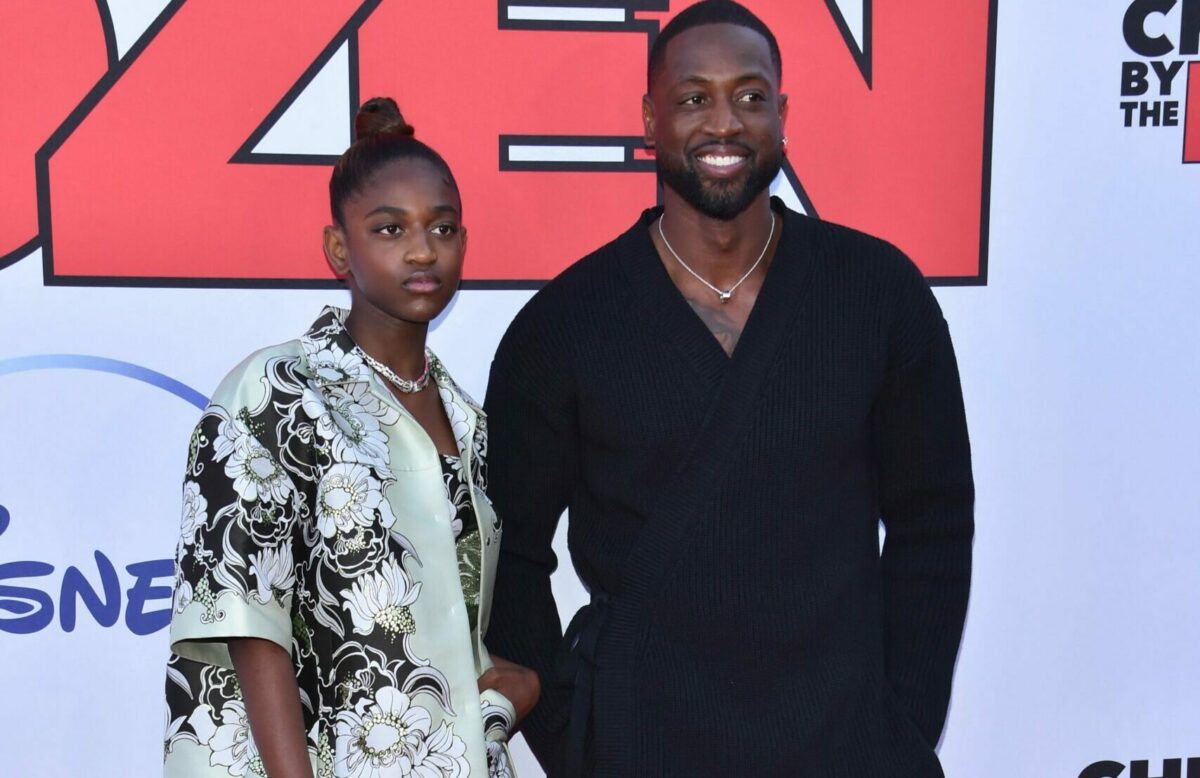
Dwyane Wade, Zaya Wade, basketball

Dwyane Wade Credits Zaya Wade in Impassioned NAACP Award Speech on LGBTQ+ Rights: ‘She’s Taught Us How to Lead’


Dwyane Wade and Gabrielle Union-Wade stole the show at the 54th annual NAACP Image Awards Saturday with their impassioned speech advocating for LGBTQ+ rights.

The couple took the stage to accept the President’s Award for their humanitarian and advocacy work for the LGBTQIA community. The award came one day after Wade’s daughter was legally granted the right to change her gender and name to Zaya Malachi Airamis Wade, Variety reported.

Wade thanked his daughter for her continued bravery in living her truth and helping raise awareness for the transgender community.

“As your father, all I’ve wanted to do was get it right,” he said. “I’ve sat back and watch how gracefully you’ve taken on a public public scrutiny.”

“And even though it’s not easy, I watched you walk out of that house every morning. As yourself. I admire how you’ve handled the ignorance in our world. I admire that you face every day. To say that your village is proud of you is an understatement.”

The NBA champion continued praising his daughter for helping to open his eyes and serve as the catalyst for his philanthropic work for LGBTQ+ rights.

“As your father, my job isn’t to create a version of myself or direct your future,” he added. “My role is to be a facilitator to your hopes, your wishes and your dreams.”

“Zaya, you’ve made me a better human just simply by being who you were born to be—a baby girl, Zaya Wade.

“So, baby, thank you for showing the world what courage looks like,” he said. “I’m proud that I was chosen to stand in place as your father and thank you so much NAACP for this incredible honor.”

Union-Wade went viral for her portion of the speech where she first thanked the NAACP for continuing to be “an organization that has led us through over a century of relentless challenge, pain, triumph, and change. And now stands with us again, at the foot of a very new era of activism, a new era that demands our collective answer to one simple question.”

The question served as the transition to the actress’s call for more support from the Black community toward the Black trans and LGBTQ+ community.

“Will we fight for some, or will we fight for all of our people?” Union-Wade asked.

“Let’s just name a couple hard truths,” she continued. “First, the intersection of Black rights and the rights of the LGBTQIA trans and gender non-conforming people continues to be rough—that’s a huge understatement. Even as we demand equality at the top of our lungs, we’ve consistently failed to extend our advocacy to protect some of our most vulnerable among us.”

The Being Mary Jane star made sure to touch on the grim realities for the Black trans community that is too often overlooked and ignored by mainstream media and the Black community.

“Black trans people are being targeted, terrorized and hunted in this country,” she said. “Every day everywhere. And there’s rarely a whisper about it.”

Union-Wade said her and Wayne’s advocacy work isn’t so much about being “activists” or “leaders,” but more about being “parents who love our children and will do whatever the hell we can to keep them seen and secure and safe.”

“This is a conversation worth having in ways that can actually build bridges,” she explained. “That don’t fan the flames of hatred or division. That don’t enable lawmakers or justice systems to look the other way when Black trans people are under attack. That don’t drive more young people to hate themselves or harm themselves. That don’t cost people their lives.”

In conclusion, Union-Wade said she remains “hopeful that we may witness a real shift in the fight for justice, the moment the movement makes room for everyone. Everyone.”

First Black Woman Deputy Secretary at USDA, Leaving Department


She has stewarded well in her position supporting Black landowners.

Jewel Bronaugh, the first Black women to be appointed as deputy secretary for the Department of Agriculture, is leaving the department on Tuesday, following a two-year tenure leading diversity efforts at the agency.

According to CNN, Bronaugh made the announcement leave last month. She said she wanted to leave to spend more time with family.

“I understood as a Black woman, coming into the role as deputy secretary, the weight that went with that,” Bronaugh told CNN. “The responsibility that went with that. The people who for years have not been able to get resources from USDA. The history that that has had on farmers and landowners and people who live in rural communities, I knew that I had a responsibility.”

During Bronaugh’s time at the department, she worked to provide relief for farmers and ranchers of color. She co-chaired an independent commission that examined the USDA policies and programs, led international agricultural trade missions in the United Kingdom and countries in East Africa, and helped create a chief diversity and inclusion office within the Office of the Secretary.

“When you look at the U.S. Department of Agriculture and you look at all of the actions we have suffered as Black people trying to get the programs that should have been available to everyone, to access them and feel that they were being implemented fairly–to actually have someone in the second position…really helping to oversee that and have a voice in places we don’t normally get a chance to be in, just to me, meant a lot,” said Shirley Sherrod, a member of the Equity Commission.

Bronaugh said getting the Equity Commission to go with a set of interim recommendations will provide the opportunity to examine discretion, authority, and address historical issues at the USDA.

Bronaugh was raised in Petersburg, Virginia, and earned her bachelor’s degree in education from James Madison University, before completing her master’s degree and doctorate in vocational education from Virginia Tech. She has also served as the first Black woman commissioner of the Virginia Department of Agriculture and Consumer Services.

Under secretary for rural development Xochitl Torres Small has been nominated to succeed Bronaugh, whom the USDA appointed as deputy secretary in May 2021.

×