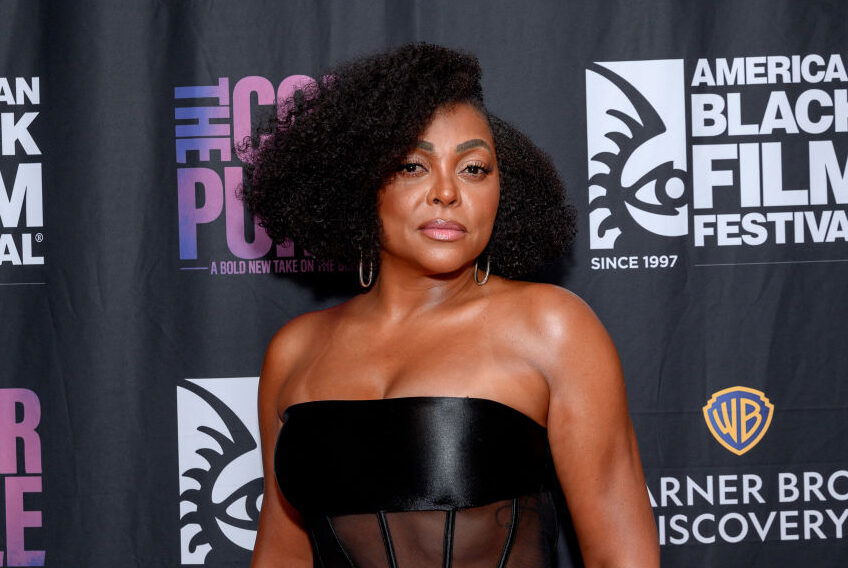
Jay-Z, Michelle Obama, Keke Palmer, Webby Awards

Jay-Z, Michelle Obama, Keke Palmer, And More To Be Celebrated At 2024 Webby Awards

Jay-Z, Michelle Obama, and Keke Palmer are among the list of honorees at the 2024 Webby Awards.


Jay-Z, Michelle Obama, and Keke Palmer are among the collection of A-Listers set to be honored at the 2024 Webby Awards.

On Wednesday, April 23, The International Academy of Digital Arts & Sciences (IADAS) announced the list of winners for the 28th Annual Webby Awards, which celebrates innovative cultural trailblazers, corporations, and groups molding today’s evolving digital landscape. Among the winners include Jay-Z, Jon Batiste, Laverne Cox, Michelle Obama, Megan Thee Stallion, and Snoop Dogg.

Four individuals will also receive special achievement awards including Shannon Sharpe, who will receive the Webby Advocate of the Year Award for his impact on sports commentary and success of his Club Shay Shay podcast, and Keke Palmer who will receive the coveted Webby Special Achievement Award for her work as an actress and businesswoman and innovation with Baby, This Is Keke Palmer and KeyTV.

“This year’s Webby Winners represent work at the cutting edge of creativity and innovation,” Claire Graves, President of the Webby Awards said.

“They are best-in-class creators, entrepreneurs and companies who are taking giant strides to make something entirely new to entertain, help or inform people through the Internet. We can’t wait to celebrate them at the Internet’s biggest night on Monday, May 13th.”

A slew of companies and brands will be celebrated at the annual award show including Apple, Barbie, GLAAD, The Kelly Clarkson Show, NASA, Netflix, Reddit, Shopify, Spotify, and many more. Others who will receive special achievement awards include Kara Swisher, who will receive the Webby Lifetime Achievement Award for her work as a veteran tech journalist and digital entrepreneur, and actress Julia Louis-Dreyfus who will receive the Webby Podcast of the Year Award for Wiser Than Me.

Winners of the 2024 Webbys were selected by IADAS members including musician and actor Tobe Nwigwe, image architect Law Roach, host of The Roxane Gay Agenda Roxane Gay, writer/director/actress Quinta Brunson, DJ and producer Questlove, as well as execs and leaders across the tech and content creation industry.

RELATED CONTENT: Are We Ready For A Black Daytime Soap Opera?

Johnny Gill, Bootsy Collins, And Hezekiah

Johnny Gill, Bootsy Collins, And Hezekiah Walker To Be Honored At 2024 Black Music Honors

Johnny Gill, Patrice Rushen, Bootsy Collins, and Hezekiah Walker to be celebrated at 2024 Black Music Honors.


The 9th annual Black Music Honors is continuing its legacy of celebrating urban music by honoring Johnny Gill, Patrice Rushen, Bootsy Collins, and Hezekiah Walker at this year’s ceremony.

Taking place at the Cobb Energy Performing Arts Centre in Atlanta on Saturday, May 18th, the 2024 Black Music Honors will include televised performances, speeches, and moments that highlight the finest of Black culture. Actress/singer LeToya Luckett and comedian DeRay Davis had so much fun co-hosting together last year that they’ll return to their mistress and master of ceremonies roles.

“For the past 9 years, Black Music Honors has surrounded and supported the amazing artists who have entertained millions,” founder and executive producer Don Jackson said.

“This year’s celebrants are trailblazers and deserve to be honored.”

Black Music Honors is known for giving flowers to Black entertainers who have paved lanes that may or may not have been recognized by major award shows. While Walker has received two Grammy awards for his work in gospel music and Collins won a Grammy in 2002 for Best Music Video, Gill and Rushen have been nominated multiple times but never won.

The televised special will film in May but won’t premiere until the following month in honor of Black Music Month. Viewers can catch the award show on the Stellar Network on Saturday, June 1 at 8 pm EST with a rebroadcast at 10 pm EST and national broadcast syndication June 8 – June 30 in tribute. Bounce TV will also air the show on Wednesday, June 19th (Juneteenth) at 9 pm EST.

“We are extremely proud to bring more visibility to these tremendous icons who have stayed the course from humble beginnings to careers that span decades,” Jackson added.

“Their lives and stories are part of the beautiful tapestry of Black music…which has impacted the globe.”

RELATED CONTENT: Megan Thee Stallion Awarded The Catalyst Of Change Award

Wole Coaxum, MoCaFi

Why This Former JPMorgan Exec Left The Corporate World To Provide Basic Income Payments To The Less Fortunate

We need more of this!


Wole Coaxum saw a need for change while working for one of the largest financial institutions in the world and wanted to add economic justice to the social justice agenda

The former banking executive left the corporate world behind to start Mobility Capital Finance (MoCaFi), a New York-based fintech with a goal of serving customers with no or limited access to banks. Its program allows individuals receiving a universal basic income (UBI) or guaranteed basic income (GBI) to receive financial coaching and resources. Without having to operate in cash or cash checks, customers can create a MoCaFi bank account that’s FDIC-insured. 

Coaxum was inspired by the social justice movements in the Black community and decided to create a pathway for economic equality in marginalized populations.

“Martin Luther King, Jr. talked about universal basic income and guaranteed basic income just before he passed away,” the CEO said. “And I feel that we as a company are very fortunate to be standing on the shoulders of others to bring these powerful ideas into the marketplace.”

MoCaFi opened in 2014 after the killing of Michael Brown, a teenager, by police in Ferguson, Missouri. To date, the company has launched both UBIs and GBIs in saturated cities, including Los Angeles, Atlanta, San Francisco, and more. Many are supported through MGI or Mayors for a Guaranteed Income, a network of advocating mayors who support guaranteed income for all Americans, according to their website.

“We’re finding that what we’re doing resonates with cities and counties,” he said. “They see the value of it.”

New York City Mayor Eric Adams is one mayor who understands the need for organizations like MoCaFi. The city partnered with them in February 2024 for a pilot program to provide asylum seekers with prepaid debit cards. While some New Yorkers like rapper 50 Cent were against the plan, according to CBS News, MoCaFi will distribute to 500 families with children to use exclusively at bodegas, supermarkets, grocery, and convenience stores. 

In a statement, Coaxum called the partnership “an honor” as he feels for those who are beginning to plant roots in the U.S.

City Hall officials described the program as a “more cost-effective technology pilot program to distribute prepaid immediate response cards to asylum seekers” compared to the current system, which saves the city $7.2 million a year.

While some leaders in red-leaning states oppose the financial support that MoCaFi provides, Coaxum says his company isn’t about political affiliation but finding a solution for all.

“We are facilitating payments in a way that reduces all the friction. We have a disbursement platform, and then we have a demand deposit account,” he says. “We can open up accounts for undocumented people. We can open up accounts for people regardless of their credit score. Now, they’ve got a pathway to economic stability.”

Giannis Antetokounmpo, Thanasis Antetokounmpo, Nike, Adidas, NBA, Basketball

Giannis Antetokounmpo Explains Why He Passed Adidas For Nike

After the sneaker company refused to sign his brother, Thanasis, Nike did.


Brotherly love kept Giannis Antetokounmpo from signing a sneaker deal with Adidas.

In a recent podcast, the “Greek Freak” admitted that due to Adidas not having a contract for his brother, Thanasis, he declined to sign and headed to Nike, which was glad to include his brother in a deal.

According to Bleacher Report, on a recent episode of The Thanalysis Show, older brother Giannis explained it all.

“He brought the contract and put it in front of me, and I’m like, ‘OK, great, where is my brother’s?'” Antetokounmpo said. “And he was like, ‘We’re not going to sign your brother’s today. You’re going to sign yours, and then we’re going to bring your brother in a week to sign his.’ And I was like, ‘Uh uh, no thank you.'”

When he met with the rep, knowing that his family needed money, he would have been willing to sign anything, but his brother needed to be included, and that was the only way that signature would have been attached to that contract.

Yet, when he took the same proposal to Nike, insisting that he and his brother were a package deal, the rep was on board with that plan.

“It was my turn to speak and I said that it’s important for me for it to be a family thing,” Antetokounmpo insisted. “When you take me, you take my family, my brother, my mom. And she was like, ‘Yeah, sure, whatever.’ After that, we’ve been with Nike, and she’s been by our side ever since.”

Giannis signed with Nike in 2013, when he was far from being a sure thing. Adidas’ loss has been Nike’s gain, as “The Greek Freak” has won an NBA championship, two NBA most valuable player awards, and has been the subject of best-selling book as well as a movie.

Ncuti Gatwa, International, Global

Ncuti Gatwa Discusses White Mediocrity, Expectations, Black Excellence

Gatwa, who has faced some backlash from “fans” of "Doctor Who" for just being a Black, queer man, pushed back against the idea that he is required to subscribe to Black Excellence in order to be appreciated.


Ncuti Gatwa, the first Black male doctor in the history of Doctor Who, the long-running British sci-fi television program, recently discussed his thoughts on the expectations that Black entertainers must be at least twice as good as mediocre white entertainers to receive acclaim.

Spoiler alert: Gatwa is not a fan of this arrangement. 

Gatwa, who has faced some backlash from “fans” of Doctor Who for just being a Black, queer man, pushed back against the idea that he is required to subscribe to the concept of Black Excellence in order to be appreciated in an interview with Attitude Magazine. 

“We’re trained to be like, ‘If I’m not exceptional, I won’t be loved.’ Certainly, I think that was my thing,” Gatwa told the outlet. “So, yeah, I think I’m just learning now like, ‘Oh, you are allowed to be loved.’ You don’t have to be excellent or aspire to that term, ‘Black excellence’. What the hell?”

https://twitter.com/Tardis_Central/status/1782420640193986891?t=3Rp3WgDg4r6dTyus21S2KA&s=19

Gatwa continued, “There’s so much white mediocrity that gets celebrated and Black people, we have to be absolutely flawless to get half of [that] anyway. So, I’m slowly training myself out of that and being like, ‘No sh*t. You deserve love just for existing.’ And that has taught me to be a lot more loving as well, in a weird way.”

Gatwa also discussed the connection of backlash directed at diverse castings of characters that used to be white and the “meltdown” that accompanies the backlash.

“The hate? It is kind of fascinating to me because there’s so much energy they’re putting into it. You are so angry over something so inconsequential that you can’t be an interesting person. You can’t have much in your life. I don’t have the time to do that. And so, I think they need to go find a hobby is one thing. But another thing is that we do see a shift happening in casting, in positions of power and in the status quo. I mean, not a fast shift; things could tip over the other way a little bit quicker, but you see people kind of malfunctioning because things are changing.”

In 2023, Gatwa told the Hollywood Reporter that his experience working on Sex Education prepared him to step out of that role and into the role of The Doctor. “Being on it (Sex Education) fast-tracked me into the downsides of this industry,” Gatwa said. “I remember being told by an executive producer that white people wouldn’t understand my character, Eric, which incensed me. There’s an entire show there for white people to understand.”

Gatwa also discussed his intersecting identities with Attitude. “I feel like I’ve kind of reached a place in my personal journey where I just am who I am, and that doesn’t have to change wherever I go. I just have to exist. And it’s a privilege to do so in my position because there’s many people that are in my intersections that don’t get a chance to just exist.

“Just because I’ve now been cast as Doctor Who, all problems of inequality are now fixed? Things don’t work like that. But yeah, now personally, I don’t feel like they’re in conflict with each other, but they can do for people and have done for me in the past. But I’m now just learning not to care what other people think. “

RELATED CONTENT: Viola Davis And Husband Team Up To Launch Inclusion-Focused Book Publishing Company That Tells ‘Stories That Matter’

Neighbors, Black-Owned, California

Tracie McMillan Maps Out How White People Benefit From Racism

McMillan's new book, "The White Bonus: Five Families and the Cash Value of Racism in America," traces how white people have been helped and harmed by the policies that punish Black people.


Tracie McMillan’s new book, The White Bonus: Five Families and the Cash Value of Racism in America, out now, traces how white people have been helped and harmed by policies that punished Black people. 

“The ‘White bonus’ is an estimate of the money a White person gets or saves because of White supremacy, public policies, or private practice,” she told CNN in an extensive interview. “For me, this was a really humbling exercise.”

McMillan continued, “I’ve been on food stamps and had a stranger live in the bedroom of my one-bedroom apartment to save rent through those periods. But at the end of the day, my family has spent about $146,000 to help me out since I left home. That’s money they’re not required to spend by the government. That’s extra money they have.”

Despite her relatively mild privilege, McMillan received advantages that Black people did not, which set her up for success due to her race. McMillan described the advantages her family used to create wealth, which were inaccessible to many Black people at the time. 

“As I dug into my family’s story, every time I started to peel back the layers, I thought, “Would grandpa have had the money if he wasn’t white?” Well, no. He became a banker around 1930, when across the whole United States, there were a quarter million bankers, and only 80 of them were Black. Then he bought a house with a racial covenant (a clause in many 20th-century property deeds that explicitly prohibited Black people from owning or occupying real estate).”

McMillan also described the American middle class as the fulcrum that leverages white advantages. “…As the project moved forward, it just became really clear to me that the middle class is really the fulcrum for White advantage in the U.S.,” she told CNN. “People in the middle class who were willing to talk to me understand how on the edge of falling into poverty they are.”

McMillan also discussed how the implementation of “colorblind” government programs were, in practice, discriminatory.

“Take the G.I. Bill (a post-World War II law that gave returning veterans free college, job training, and other benefits,)” McMillan said. “We created this benefit that, in practice, was only intended for white people. Maybe a few people of color were going to be able to access it, and it was written as if it was colorblind, but everybody understood it was going to be implemented in a way that would benefit White people and nobody else.”

McMillan also criticized how the whitewashing of American history does a disservice to the education system.

“White people today do not understand—because this history has been hidden from them by previous generations—that somebody in their family got something because they were white,” she said. “Historically, the U.S. has been a lot more honest about the fact that they are denying things to people because they are Black. But the inverse of that is also true. If you’re denying something to one group of people because of their skin color, you’re also, by default, giving it to the other group. White people do not have tools for that. This is the sort of stuff that, if we were teaching accurate history, would be part of the U.S. history curriculum, and it’s not.”

North Carolina, Kinston, comdemnation, Black homes

Study: Detroit’s Black Homeowner Values Increased By Nearly $3 Billion

Black homeowners in Detroit saw the value of their homes increase by $2.8 billion from 2014 to 2022, according to a new study.


According to a recent study by the University of Michigan Poverty Solutions, Black homeowners in Detroit saw the value of their homes increase by $2.8 billion from 2014-2022. These numbers drove the city’s overall increase in the overall value of owner-occupied homes from $4.2 billion in 2014 to $8.1 billion in 2022, a 94% increase. 

While the report’s numbers are positive in the context of Detroit’s recovery from its 2014 bankruptcy, the conclusion does caution that the increase in home values could prove problematic for renters and the potential for some homeowners to get priced out of neighborhoods. 

“This growth in housing wealth reflects positively on the efforts of multiple stakeholders to improve Detroit’s housing market and strengthen its neighborhoods since the bankruptcy, including initiatives to remove blight and rehabilitate distressed properties,” the report reads. “At the same time, many challenges remain, and more work needs to be done to boost homeownership demand and make neighborhoods more attractive locations for potential homebuyers.”

The report also notes that it is working with some limitations and assumptions due to the data that is available, but even so the report could be understating how much wealth has been created for homeowners through the rising values of their homes.

In a press conference, Detroit Mayor Mike Duggan praised the resilience of the residents who stayed.

“For decades, Detroit’s homeowners saw their family wealth evaporate as home values declined,” Duggan said, according to the Associated Press. “Now, those who stayed, most notably Black homeowners, have gained nearly $3 billion in new generational wealth because of our city’s neighborhoods comeback.” 

Duggan continued, “When I got sworn in 10 years ago there were 1,000 people a month leaving this city. People were bailing out on Detroit right and left. Those who stayed are $4 billion better off because they bet on the city of Detroit.”

Ken Scott, a former President of the Detroit Realtist Association and Detroit Association of Realtors as well as a HUD certified housing counselor, said in a press release that the study aligns with what has been discussed by Detroit’s realtors during the past few years. 

“There has been a huge shift for the better in Detroit’s home values, driven largely by the improvements being made in neighborhoods…Black owned homes are rising in value and Black families are gaining the most family wealth,” Scott said. “And while home values have risen dramatically, there is a lot of growth yet to come. Detroit homes are beautiful and dollar-for-dollar still a great value.”

Melvin Chuney, a Black homeowner, said at the press conference that he sees the turnaround.

“It’s amazing and it’s real,” Chuney said. “It’s way more valuable than 10 years ago. People are fighting to get into this neighborhood that people were walking away from just a few years ago.”

Cannabis Industry, Michigan

CEO-Worker Pay Gap Reflected In Cannabis Industry Salaries

Similar to other industries, the salaries received by marijuana company CEOs dwarfs what their store employees make.


April 20 is the unofficial holiday for marijuana, and although marijuana is enjoying a more mainstream profile, there are some stark pay disparities on display in the industry. Sales of cannabis are expected to hit $31 billion by the end of 2024, but the exponential growth comes with growing pains. 

“As an industry, we are struggling—we are in dire need of a regulatory overhaul to prevent more cannabis small business owners from closing their doors and laying off their workers,” Truman Bradley, executive director of the Marijuana Industry Group, told Business Insider in 2023. 

A year later, income equality has emerged. Similar to other industries, the pay of the CEOs of marijuana companies dwarfs the salaries of store employees. The average pay of a cannabis CEO in 2023 was $402,350.

Budtenders, the point-of-sale employees behind the counter at smoke shops and other dispensaries, take home an average of $42,000 a year. The farther down the company structure you get, the lower the pay; this is referred to as the CEO-worker pay gap, and studies suggest it is a bad omen for business.

In 2023, ESG Dive reported that an analysis of the CEO-worker pay gap at 100 S&P 500 corporations with the lowest median worker pay in 2022 by the Institute for Policy Studies revealed that the average CEO-to-worker pay ratio was 603 to 1

Likewise, the Economic Policy Institute found that wage disparity increased from 21 to 1 in 1965 to 344 to 1 in 2022. According to Sarah Anderson, the global economy policy director at the EPI, an organization between voters, workers, and shareholders could help alleviate some of the imbalances in pay.

In January, Sens. Bernie Sanders (I-VT), Elizabeth Warren (D-MA), Ed Markey (D-MA), and Chris Van Hollen (D-MD), alongside Reps. Barbara Lee (D-CA), and Rashida Tlaib (D-MI) introduced the Tax Excessive CEO Pay Act, which is aimed at addressing rampant pay inequality. The bill is structured to force CEOs whose pay is 50 to 100% more than their median employee salary to pay more in taxes. If, for some reason, the CEO is not the highest-paid employee, the executive with the largest paycheck would be used to evaluate the company’s pay inequality. 

“Millionaire and billionaire CEOs at massive corporations are cashing in larger and larger paychecks even as their workers —who make those profits possible—barely see their pay keep pace with rising costs,” Van Hollen said in a press release. “These obscene gaps are grossly unfair to workers and harmful to our economy as a whole.”

“Corporate greed is a disease that has long afflicted our country. CEOs are now making 400 times more than their average worker,” Tlaib said. “It’s disgraceful that corporations continue to rake in record profits by exploiting the labor of their workers. Working families deserve to live with human dignity…It’s time for the rich to pay their fair share.”

RELATED CONTENT: Cannabis Entrepreneur Faces Pushback From Maryland Lawmakers And Residents

Nikkolas Smith, artivism, art, illustrator, children's books, Disney

Nikkolas Smith Navigates ‘Artivism’ And Commerce

Nikkolas Smith finds a way to bring together personal expression, joy, and activism while finding commercial success in the process.


Nikkolas Smith is an engineer, artivist, and businessman.

Serving as a witness to the active and immediate fight for democracy, Palestinian genocide, and police brutality—by way of video—can be exhausting and defeating. Luckily, art exists as a balance, infusing light in dark places. Whatever medium chosen—music, television, books, pottery, or any other form of expression—art provides a soothing balm to harsh mental wounds. Other times, art serves as the medium in which people express displeasure at societal woes. 

Smith finds a way to combine personal expression, joy, and activism while finding commercial success in the process. He considers himself an “artivist,” a combination of activist and artist. In addition to designing famous Disney structures, Smith is a muralist and illustrator of children’s books, movie posters, and clothing lines.

BLACK ENTERPRISE spoke with Smith at the Disney Dreamers Academy, where he mentored 100 youth. His message was based on personal experience, as he championed dedication to your craft, consistency, and profit while maintaining integrity in your artivism. 

Smith started his creative journey after graduating from HBCU Hampton University. With his engineering degree in hand, he began his career as a Disney Imagineer. In this role, he was able to put his technical skills and hard-earned degree to use. 

While working for others, Smith never lost focus on his craft. To sharpen his skills and gain exposure, Smith began an Instagram sketch series. He created art for an older family friend, and it was the beginning of his journey to independent artivism.

Smith told BE how it all started: “I made a picture book cover of Simone Biles.”

He continues, “That art piece was shared by a lot of people on Facebook, and Barnes and Noble saw it and were like, can you turn this into a picture book in three weeks?”

He says his consistency in perfecting his craft and making it available to the public without fear of critique allowed him to be prepared to accept Barnes & Noble’s offer. Since this opportunity, Smith has illustrated over 10 children’s books, including I am Ruby Bridges, Artivist, and Black Panther: Wakanda Forever: The Courage to Dream.

“It started with my Sunday Sketch Series,” he says.

This series would lead to Smith stepping out of his Disney cocoon to pursue his artistry full-time. Though faith in his talent played a part in his transition, Smith tells BE that business acumen is necessary. He didn’t have the acumen at the time but credits his wife, Vanessa Crocini, for being “the brains” behind his success.

“I didn’t have a website. I didn’t know the value of my art. I needed someone. Some people need a team of people to do all that. I needed my wife.”

Trusting in his talent and wife has led Smith to heal “the broken bones of the world” through art. His mission is to educate and entertain. His work is bringing awareness to Palestine is a testament to his compassion and dedication.

When asked if he is afraid his commercial opportunities will be hindered by his activism, Smith says, “It is what it is. I’m not going to stop doing it. I will rock with the people who rock with justice for all.”

RELATED CONTENT: Disney Dreamers Talk Business And Philanthropy

left to right: Sue-Ellen Chitunya, Jessica L. Funches, Moira Griffin, Dahéli Hall, and Trevite Willis

 The Blackhouse Foundation Launches Producer Fellowship For Women With Starz #TakeTheLead

The Blackhouse Foundation and Starz #TakeTheLead have a new fellowship for Black female-identifying mid-career producers.


The Blackhouse Foundation launched a new fellowship with Starz #TakeTheLead that puts Black female producers at the forefront.

Announced on Monday, April 22, the new fellowship is aimed at amplifying female-identifying mid-career producers who work in episodic content creation, Deadline reports. The first-year participants include Sue-Ellen Chitunya, Jessica L. Funches, Moira Griffin, Dahéli Hall, and Trevite Willis.

The Blackhouse Foundation selected participants from its alumni network to take part in a rigorous three-day weekend of educational workshops, personal and professional mentorship and coaching, and meetings with key industry stakeholders.

“We’re thrilled to have found a partner in Starz that allows us to reimagine the year-long programs we’ve done in the past and streamline the experience with a smaller cohort,” The Blackhouse Foundation’s Executive Director, Jenean Glover said.

“The goal of the three-day intensive is to deliver personalized feedback and noteworthy direction, combined with the expertise of our facilitator, to prepare these candidates to enter an episodic room as non-writing or writing producers in the near future.”

As part of the fellowship, a new mentor/alumni interaction model will be implemented to support participants.

“We are excited to partner with The Blackhouse Foundation to help cultivate new talent and drive an increase in Black female producers, which is essential to our business as a network focused on women and underrepresented audiences,” Starz’s President of Original Programming, Kathryn Busby said.

“Our continued commitment to nurturing diverse voices and creating a more inclusive television landscape has resulted in industry-leading representation in front of and behind the camera and throughout our company.”

The new fellowship highlights The Blackhouse Foundation’s continued commitment to supporting Black creatives in film. It follows their curation of the 2023 Sundance Film Festival.

“We are truly excited to ignite our alumni engagement at The Blackhouse Foundation in service of Black storytellers,” Glover added. “Having served over 150 fellows, we are thrilled to announce this new, impactful program with our strategic partner, STARZ TakeTheLead.”

×