July 9 Is Now National Black Women’s Equal Pay Day
Senators Rev. Raphael Warnock (D-GA), Laphonza Butler (D-CA), and Cory Booker (D-NJ), along with Congresswoman Alma S. Adams, Ph.D. (D-NC), make sure an important subject doesn't go neglected.
Introduced as a resolution by U.S. Senators Rev. Raphael Warnock (D-GA), Laphonza Butler (D-CA), and Cory Booker (D-NJ), July 9 is now National Black Women’s Equal Pay Day in an effort to acknowledge the disparity in wages received by Black women across America. The day is reflective of how long into 2024 it would take for Black women to work to make what White and non-Hispanic men were paid in 2023.
The resolution was introduced in 2021 by Warnock, a longtime champion of equal pay and dignity to work, and Congresswoman Dr. Alma S. Adams (D-NC).
“There is no such thing as equality for some. Black women deserve the same opportunities to earn the same paycheck as their neighbors across the state and the country. I will always be an advocate and a champion for equal, fair pay for all people,” Warnock said in an official statement. “I’m honored to join Senator Butler, Senator Booker, and Rep. Adams in introducing this resolution to recognize Black Women’s Equal Pay Day and the many contributions Black women have made to this country and continue to make every single day.”
Set to be observed annually, National Black Women’s Equal Pay Day is used to help women arm one another with the knowledge and power to advocate for themselves for the pay that they deserve. The National Women’s Law Center reports that Black women are paid 69 cents for every dollar that their white counterparts make. That price was 45 cents for every dollar made in 1967.
“When we think about pay and equity, it has such a trickle effect on affordability of homeownership, investments, [and] the wealth gap,” said advocate Sara Taylor. “We’re going to have those difficult conversations, but our goal is that we leave here with strategies.”
During a July 9 event held in Rochester, New York, Taylor and other speakers helped to equip a group of women take inventory of their skills and values while teaching them ways to show up for themselves at work.
Throughout the day, attendees participated in various exercises centered around bringing awareness to the new day. At one point, women in attendance learned more about current legislation such as the Paycheck Fairness Act and the Bringing an End to Harassment by Enhancing Accountability and Rejecting Discrimination, or BE HEARD, in the Workplace Act.
Earlier this year, President Joe Biden proclaimed March 12 as National Equal Pay Day after it was launched in 1996 by the National Committee on Pay Equity. Similarly, the day was created to demonstrate wage inequities between women and men. However, National Black Women’s Equal Pay Day focuses solely on the pay disparities faced by African American women nationwide.
Cécred x BeyGood Student Scholarship Covers Georgia Beautician’s Tuition
Jacora Smart's tuition at Beaver Beauty Academy is covered as one of the first winners of the Cécred x BeyGood Student Scholarship.
At the Beaver Beauty Academy in Decatur, Georgia, Jacora Smart, 29, was stunned to learn she was among the inaugural recipients of the BeyGood student scholarship in collaboration with Cécred.
“It means everything to me,” Smart told USA Today. “I was shocked. But at the same time, I knew deep down that that was mine.” The Cécred and BeyGood student scholarships will cover Smart’s tuition at Beaver Beauty Academy, alleviating her financial concerns. Before applications opened, Beyoncé’s hairstylist and the lead Global stylist for Cécred, Neal Farinah, visited the academy along with Cécred’s Education Director, Dr. Kari Williams, to showcase products and engage with students. Smart included hair and makeup samples in her portfolio. “I just hit send and prayed for the best,” she said.
Post-graduation, Smart aims to become a licensed master cosmetologist and envisions creating a Black-focused beauty supply store. She envisions her business to reflect companies like Sephora and Ulta.
In April, BeyGood announced the winners, stating, “We’re dedicated to supporting hair stylists’ growth, as they’re crucial to our community…There’s a lot more GOOD to come!” Four other Beaver Beauty Academy students also received the BeyGood student scholarship: Christina Chatman, Curtissa Butts, Marcus Boatwright, and Sevaya Sayavong. The academy is one of five schools where Cécred and BeyGood established a scholarship program to assist with tuition and supplies.
The Cécred x BeyGood Fund, a $500,000 initiative, was introduced following Cécred’s February launch, according to BLACK ENTERPRISE. The fund distributed twenty-five $10,000 BeyGood student scholarships across five cosmetology schools, including Beaver Beauty Academy, and an equal number of grants to salon owners in need. In June, the second round of business grant winners was selected. Applications for these grants opened in May, further demonstrating the ongoing commitment of Cécred and the BeyGood student scholarship program to nurturing talent in the beauty industry.
Wealth Tips That Can Take You From Financial Despair To Millionaire
After going from welfare to millionaire by age 25, Alfred Nickson dedicated his career to educating thousands of African Americans about building wealth.
Originally Published May 8, 2021.
After going from welfare to millionaire by age 25, Alfred Nickson dedicated his career to educating thousands of African Americans about building wealth.
Now, the 31-year-old financial expert has mentored over 100 six-figure earners and retired his mom.
“Wherever you are at, be willing to swing the bat,” says Nickson during an interview with BLACK ENTERPRISE. “You can’t hit a home run if you don’t swing. For me, I put myself in a position to not only swing the bat, but I wanted to put people in a position to win as well. So, I put people on base.”
He continued, “When I swing the bat, it’s not just me hitting a home run. I’m hitting a grand slam. That means that everybody that was on base and in position was able to come home and get a taste of the success. I encourage everyone to swing the bat so that you can hit your home run, too.”
Nickson started exploring home-based businesses shortly after high school. The young entrepreneur made a total of $1,500 in his first three years of entrepreneurship. Despite his lack of funds and people telling him to consider getting a “real job” and go to school, he kept going.
During his fourth year of business, Nickson earned his first six figures by leveraging his passion for financial literacy. A couple of years later, Nickson hit the million-dollar mark.
For anyone seeking to put themselves in a better financial position this year, Nickson encourages people to step outside the box and do these three things.
Move From Welfare to Wealth By Starting With Assets
Knowledge is power. When you know where you stand financially, you can pinpoint exactly how much money you need to get where you want to go.
Nickson suggests creating a list of everything you own. This list represents your assets.
“This can be tangible items like a vehicle or jewelry to stocks, bonds, or life insurance policies,” says Nickson in an email. “Even one pair of gold earrings can be added to your assets and is better than no assets at all.”
Every month, Nickson meets with his team to get a better picture of his net worth. This number represents how much you own (assets) minus how much you owe (liabilities). It’s the magic number that wealthy individuals use to assess their financial health. Nickson also suggests having a good tax strategy so that you can keep more of the money you make.
Sign up for Life Insurance
After seeing so many people in his community rely on GoFundMe, Nickson decided to educate more people about life insurance.
“Choose between whole life or term life insurance,” says Nickson. “Term life has more value and generally costs less monthly. Both will give your loved ones up to millions of dollars when you die.”
In addition to life insurance, Nickson says that wills and trusts should also be part of your financial plan.
Earn Extra Money To Go From Welfare to Wealth
Nickson recommends starting a home-based business because the infrastructure is already there. He says that the barriers to entry are low and anyone can get started with as little as a few hundred dollars. The best part is that you can start making money right away.
In his first year, Nickson reached the six-figure mark. In the second year, he reached over half a million dollars. In his third year in the financial field, he made his first million dollars.
How do you get started on your path to a home-based business? Identify what you are passionate about.
“When you are passionate about something, you put your all into it,” says Nickson.
Disney Dreamers Academy Opens Applications For 2025 Class
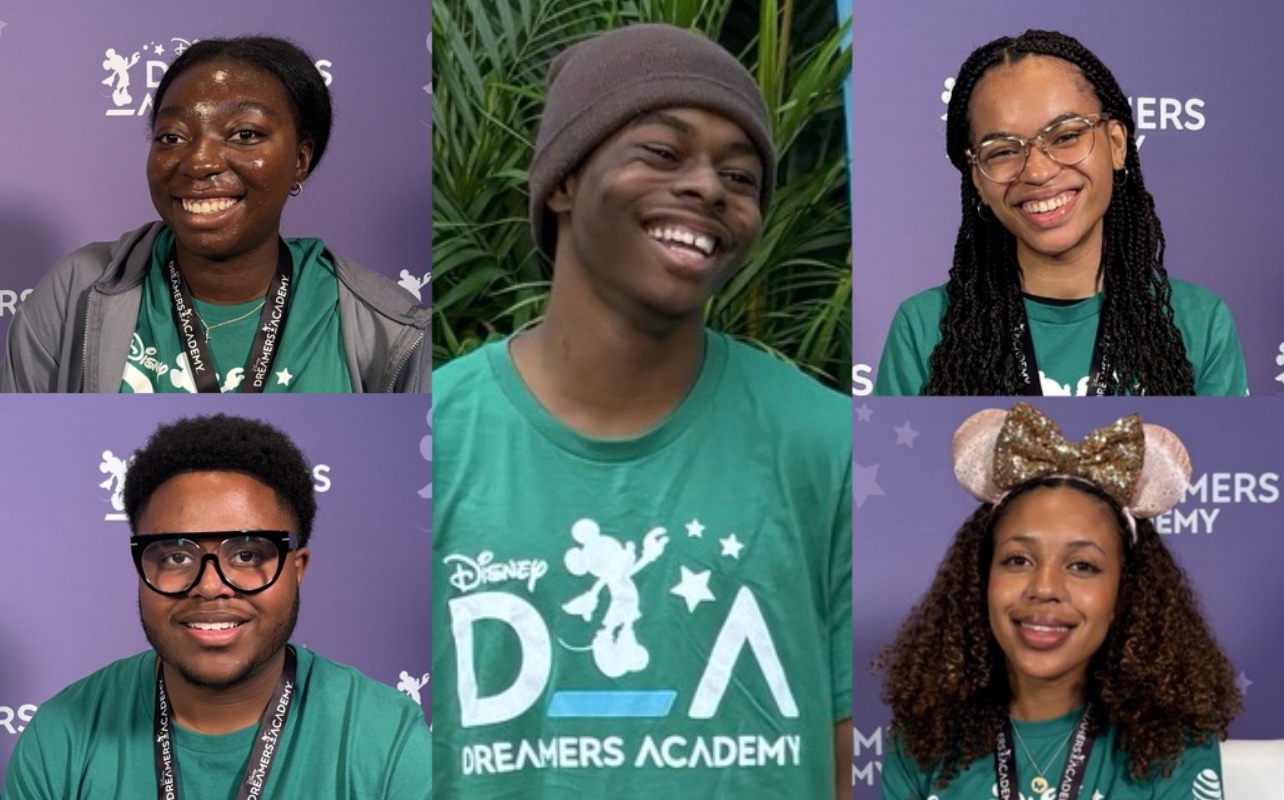
Only 100 aspiring leaders are chosen each year to participate in the highly coveted Disney Dreamers Academy. The career development program for high school students opened up applications for its 2025 cohort July 5. The chosen 100 will gather in the spring for a four-day event of professional development and inspiration.
Started through the legacy of the conglomerate’s founder, Walt Disney, the Disney Dreamers Academy champions teenagers from ages 13 to 19 to garner career tips and support as they flesh out their aspirations.
Selected attendees will be introduced to groundbreaking mentors across various fields, all present to connect with the Dreamers and help guide their goals. Workshops will be centered on helping establish career readiness and developing a wide-ranging skillset that makes them first-choice candidates for future positions. Practicing interviews, building a professional and creative network, and styling oneself for success are additional parts of the program. The dreamers come from diverse backgrounds, inspiring those of all identities to apply, whether they want to be doctors and scientists or artists and entrepreneurs.
The program aims to help attendees “harness the power” of their dreams, with guest speakers presenting ways to plan for their bright futures. Past speakers at the event include Marsai Martin, as the actress was the youngest person ever to produce a movie, at the age of 13. The entire experience challenges Dreamers to work toward their wildest ambitions and break down the fears that inhibit them. For those who recognize a young person’s potential in life, the ability to nominate a student is also available to grant them the prestigious opportunity.
As a special perk for the Dreamers, admission to Disney’s theme parks for attendees and their chaperones is included in the festivities. Disney encourages those who are optimistic and compassionate, with a positive mindset and intellectual curiosity, to apply. Applications are due on Oct. 31.
Community Leaders Discuss Arizona’s Erasure Of Black History
In an episode of Arizona Central's Valley 101 podcast, Pastor Warren Stewart, Chanel Powe, Anthony Pratcher II, and Jessica Salow discussed Arizona's erasure of Black history during a roundtable discussion.
Arizona community leaders allege that there has been a concerted effort to erase Black history and the contributions of Black Arizonians from the stories commonly told about the state. In 2022, Arizona State University Assistant Professor Meskerem Glegziabher published an essay explaining that history was primarily erased and forgotten.
According to Glegziabher’s essay, “Black people, African American and immigrant alike, are labeled as outsiders and largely excluded from narratives about the past, present and future of Arizona.”
In an interview conducted by Arizona State University, she discussed the erasure of Black historical sites in Arizona’s metropolitan cities. “Here in the Valley, more than half of the 175 historic properties identified by the city of Phoenix’s 2004 African American Historic Property Survey have been torn down.
Among the most notable are the Rice Hotel downtown and the former Booker T. Washington Hospital. The former was one of the only downtown accommodations that would serve African Americans and is listed in the 1940 “Negro Motorist Green Book.”
Glegziabher continued, “It was torn down along with several other businesses to build Chase Field. The latter was opened in 1921 by the city’s first Black physician, Dr. Wilson Hackett, and was the first hospital to serve African Americans in the city. That location is now an empty lot. While the demolition of these two properties may have been unrelated, their absence from the city’s geography serves the more extensive sanitation of the state’s history that excludes itself from national narratives of Jim Crow and racial segregation, which are often erroneously mapped onto a North-South binary.
According to Arizona Central, other community leaders in Arizona have picked up the conversation that Glegziabher brought to light. In an episode of the outlet’s Valley 101 podcast, Pastor Warren Stewart, a Phoenix pastor who was instrumental in making Martin Luther King Jr. Day a state holiday, Chanel Powe, an education, political, and equity consultant who moved to Arizona from Detroit, Anthony Pratcher II, an Arizona native and historian who teaches ethnic studies at Northern Arizona University, and Jessica Salow, an assistant archivist of Black collections at the ASU Library, discussed the issue in a roundtable discussion.
According to Stewart, “I would like to say two things. Number one, there’s a wealth of African-American history in this state before it even became a state. So, the history of Black people, people are going to stand in Arizona, and it’s a gold mine to be mined. But the other piece is I would suggest that because of systemic racism, white historians believe that white is the standard. So, therefore, Black, Brown, Red, or any other type of history doesn’t take priority because white history is the standard. I’m writing a piece right now, and the question I raise is, you may not be a white supremacist, but you are a white “standardist.” That’s the word I coined because you believe that white sets the standard, and that in itself is racist. So that gets to me, to the core of the problem of why this wealth of African-American history [is erased.]”
Powe, similar to Glegziabher, discussed the erasure of Black historical landmarks in her remarks.
“So the erasure of our history and contributions that African-Americans made to Arizona has been systemically oppressed by predominantly white and white thinking leaders that have no place or have no real gumption to really want to share and carry it out. I had no idea about Malinda Curtis. We just talked about that. The 70-foot-tall mural, the largest mural in downtown Phoenix, of a Black woman who lived here. I want to say maybe it was like the late 1800s or early 1900s, but because I took it upon myself to study the history of the Adams Hotel, there has always been a hotel on that corner.”
Powe continued, “I had an opportunity to learn that Malinda Curtis used to live in an alley a few years ago before it was demolished by the City of Phoenix. Her old hotel, [a] brick hotel, used to be right there in that alley. This woman was a pillar of her community. People came to her, and she helped others find places to stay.”
“But the only reason I learned about that was because of the tribute of the mural. It’s extremely difficult to find any information on Malinda, and I’m certain that it is more difficult for Black families who were born and raised generationally here in the state of Arizona.”
Pratcher II pointed to the erasure of figures like Richard E. Harris, one of the first Black historians and the first Black reporter hired by the Arizona Republic. “So I think of Richard Harris. Richard E. Harris is one of the first Black historians, right? But really, he’s the first Black reporter hired by The Republic. And he comes from a long legacy of Negro press, so he knows what he’s doing in this sort of sense. But his book, “The First 100 Years,” is really the touchstone for understanding Black Arizonan history. And it’s because he understands, as a journalist, what it means to be grounded in the community in that kind of way.”
Pratcher continued, “Like there has to be a relationship between the institutions and the communities that they’re a part of. I would argue that, as I was saying earlier, about the issue with land, right? It’s our institutions and our professional positions. I mean, when we think of the amount of state legislators we have, we have fewer now than we did in 1952.”
Salow pointed to the erasure of ASU’s first Black male graduate, Benton James.
“We have had Black graduates at ASU who have come through those doors for the last 100 years. We just celebrated in 2020 for the 100th anniversary of the first male Black graduate, Benton James, who graduated in 1924. He was a part of the Teachers College. He graduated from ASU, but nobody knows his history. It has been incredibly difficult for us to find anything about Benton James, not only in our ASU institutional repository but just in general about his movements.”
Salow continued, We’ve been lucky enough to find some things now, with the help of people in our state who are very dedicated to bringing to light the Black history of our state. But why is this history not here? Why are we, as institutions, not taking the time to just go into our own institutional archives and start really connecting the dots when it comes to Black history? As I said, I am doing the work to ensure that all of our Black graduates are Black alumni at ASU, has a story, has a place to tell their story of their time at ASU.”
Stewart closed the discussion on a hopeful note, saying that the other participants in the conversation left him feeling optimistic about the future of Arizona. “My two sisters here, my brother here. I’m almost 73 years of age, so I’m passing the baton. But even I accepted this invitation because I have hope. The very fact that you want to talk about this subject. And I’m here with my two talented, gifted sisters and brothers. Here they are. My hope. They are the future to bring change. And so I acknowledge the reality of the racist system. But I see, when I hear and see my brother and my two sisters here, I have hope.”
The plaintiffs agreed to dismiss the civil case after a federal judge in Atlanta ruled that “no action has taken place in this case since plaintiffs filed their complaint on October 24, 2023.”
The Georgia Board of Regents, overseer of the state’s three public HBCUs — Fort Valley State University, Albany State University, and Savannah State University — was listed on the complaint as a defendant, but claimed legal paperwork was never served.
Alumni of the HBCUs initiated the suit after claiming the board had a consistent pattern of redirecting resources geared towards the HBCUs for academic program enhancements to predominantly white schools (PWIs). The suit highlighted how buildings on HBCU campuses were of diminishing quality compared to those of PWIs and how the institutions were more dependent on state funding compared to others.
It was added that the absence of graduates from these HBCUs on the board was also concerning.
According to Clutch Points, the U.S. Secretary of Education, Miguel Cardona, sent a letter to governors of states with land-grant HBCUs after the suit was filed in October 2023. Two are Fort Valley and the University of Georgia (UGA). In the letter, state leaders learned Fort Valley State would have received an additional $603 million in state funding over the past 30 years if it matched per-student funding to that of UGA.
“Unacceptable funding inequities have forced many of our nation’s distinguished Historically Black Colleges and Universities to operate with inadequate resources and delay critical investments in everything from campus infrastructure to research and development to student support services,” the letter read.
“I am continually inspired by all that HBCUs have achieved despite having to punch above their weight. Our HBCUs graduate a huge share of our nation’s Black educators, doctors, engineers, judges, and lawyers. These institutions and the talented, diverse students they serve must have equitable funding in order to reach their full potential and continue driving innovation.”
Supporters of the lawsuit are vowing to continue to fight for significant funding for HBCUs despite the dismissal. The lawyer for the three alumni, John A. Moore, pushed for more research to be done.
“We always knew this case was going to take a lot of work and a long time to reach any conclusion, so we are remaining nimble in order to represent our clients zealously and to the best of our abilities,” Moore said.
“This case is still No. 1 on our docket, and we are in weekly consultations on the matter.”
A study done by the U.S. Department of Education and the Department of Agriculture compared funding for land-grant universities and found both Savannah State and Albany State are not classified as land-grant institutions. University System of Georgia Chancellor Dr. Sonny Perdue disputed the claims, describing it as “disappointingly reliant on an oversimplified ‘one size fits all’ analysis.”
He noted the University System prompted some funding cuts Fort Valley would have experienced over the past ten years due to a decrease in enrollment.
Atlanta School Board Appoints Bryan Johnson As New Superintendent
Bryan Johnson will take over as superintendent for Atlanta Public Schools.
The Atlanta Board of Education has unanimously voted for Bryan Johnson to become the superintendent of Atlanta Public Schools (APS). The board made the decision during a meeting on July 8.
The news comes after the board declared Johnson as its sole finalist in June, as reported by WSB-TV. Hailing from Tennessee, Bryan is the former superintendent of Hamilton County Schools, mainly located in Chattanooga. For his work in the county, he won the 2021 Superintendent of the Year award. He was also listed as “Superintendent to Watch.”
Of his appointment, he referenced his new city as a “destination job” as he begins this new opportunity.
“Atlanta is a destination job, and I look forward to working collaboratively with the Board to ensure our students are prepared for their future,” Johnson said. “The town halls afforded me an initial opportunity to hear about areas of opportunity directly from the community and staff.”
He continued, “We look forward to working with teachers, leaders, staff and our community as we lean into areas such as literacy, special education, math and college and career preparation to ensure our students graduate poised to thrive. Together, we will make Atlanta Public Schools one of the best urban school districts in the country.”
The search came as APS chose not to renew the contract of ex-superintendent Dr. Lisa Herring in 2023. The school system, once known for its 2009 cheating scandal, hopes to further improve as an urban district.
“This is an exciting day for APS as we welcome Dr. Johnson into our community,” stated ABOE Board Chairperson Erika Y. Mitchell. “I would like to thank my fellow board members for their dedication and persistence throughout the superintendent search process. I also want to extend my gratitude to Dr. Danielle Battle for her leadership and partnership as we transition to Dr. Bryan Johnson.”
Mitchell continued, stating that all parties “remain committed” to the student’s quality of education during this time.
She added, “After two weeks of community engagement, Dr. Johnson and the Board have had the opportunity to listen, learn, and understand what’s important to our parents, students, APS staff, and community stakeholders. We remain committed to prioritizing our students during this leadership transition.”
Johnson will officially begin leading APS on August 5. In the meantime, interim superintendent Dr. Danielle Battle will help him transition into the role.
Dr. Jatali Bellanton Uses Her Skill In Neuropsychology To Help Align Your Values With Your Pocketbook
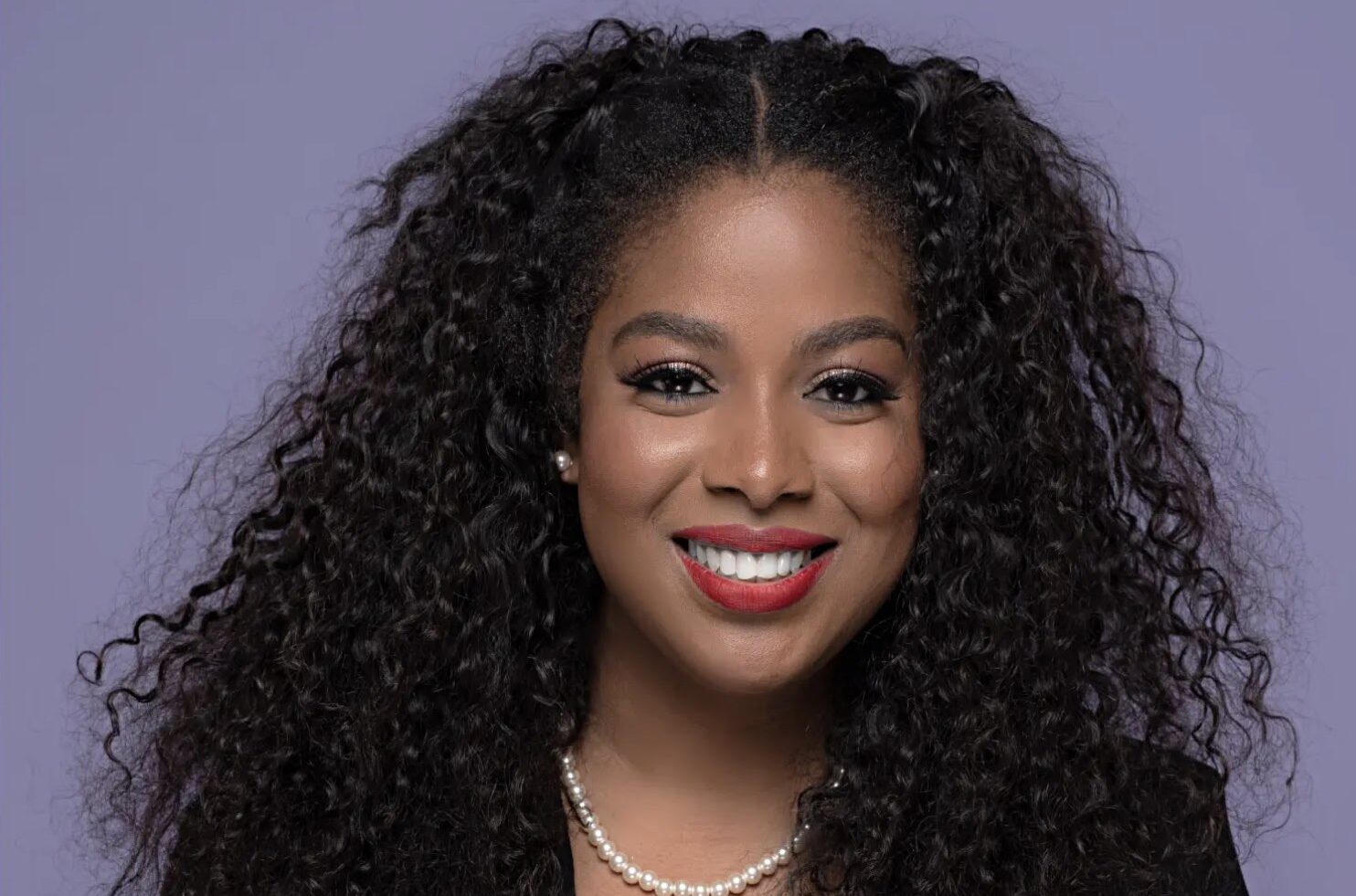
Dr. Jatali Bellanton is all about teaching the next generation to be financially savvy.
Dr. Jatali Bellanton is the neuropsychologist focusing on your brain and bank account.
At the intersections of mental health and financial literacy, Bellanton is transformingfuture generations‘ attitudes toward money. While balancing motherhood, Bellanton founded two nonprofits, Kids Who Bank and Brilliant Minds Unite. The organizations align with her lifelong mission to help people grow their pockets and achieve wellness.
The nonprofit CEO wants Black people to break the generational curses that prevent them from attaining financial empowerment. With origins in investment banking, Bellanton hopes to be part of the solution to close the racial wealth gap. Banking where your values are, she believes, is the first step.
Bellanton shared her insights with BLACK ENTERPRISE on what Black people should know about new-age currencies, angel investors, and becoming a multihyphenate with a cause.
What led you down this philanthropic path with your expertise in financial savviness? How are you ensuring other people, especially the youth, are financially ready to take on this world?
My origin is in investment banking and forensic accounting. [There,] I realized that many rich, affluent people were financially struggling with budgeting. [This included] a lot of the basics that I thought only Black and Brown people struggled with. That brought me to a space where I was like, how do we put a dent into this problem? And I just wanted to be part of the solution. Especially because I had people in my family who were really horrible with money, and I didn’t want to be a part of that. That’s a generational curse if anything, and I wanted to be more of a generational blessing. And so I also knew this was not what I wanted to push forward as a parent.
We know you are a “mompreneur,” even winning the 2019 New York State Mother of the Year Award. How has motherhood influenced your mission?
I know that tomorrow is not promised. And so, being a parent, whatever I know financially right now if I don’t teach my child, I might not have an opportunity to create a legacy for him. Whether it’s financial or emotional stability, he knows his mom loves him. He knows his mom was a hard-working person who ensured she had savings and a living trust. For him, a living trust will dictate how much is dripped out when, but it is also making sure that he understands why things are being created while understanding the world we live in when it comes to wealth.
From your perspective, why should Black people tap into new-age currencies, NFTs, crypto, and blockchain? Is it truly the future, and what should our community know?
Seeing how far, technologically, we’ve come and knowing that we’re just getting started, I tell people this all the time. If Bitcoin, Ethereum, and these particular coins were going to go anywhere, they would have gone already. But they have been around for 10-plus years now. This is not a phase or a fad. It’s something that the government is even talking about. So we should be paying attention because while we’re sitting there, there’s this next disbursement of wealth that we’re going to be missing potentially. And now, we see a new paradigm opening, which is the NFT, Metaverse, Blockchain, and crypto spaces.
We know there’s a huge racial wealth gap globally, especially in the US. You were on “Our America: In the Black” to discuss this issue and achieving financial empowerment. What do you believe is necessary to close it? What can we do ourselves to move the needle forward?
I think the first thing is banking where our values are and investing in companies with a social impact that can help us move forward. I feel like for so long, many of us were talking about divide and conquer. We really need to unite and conquer to bring our country to another level. When you’re investing, make sure that companies have the core values you believe in with campaigns that you feel will help us be better. Those are some of the significant things that I think we all need to pay attention to to get to the next level.
As an angel investor, can you speak to inclusion in this space? How do Black entrepreneurs find you and others like yourself?
Sometimes, I’m speaking at angel investor conferences. Or I go to a VC funding round or a TED summit, and these are the newest companies that will be out in the game. And so just being in the room is half the battle. We can’t say we want to do something, so we don’t go out and walk into the room. Sometimes, it’s also embracing the uncomfortable. If you make a certain amount of money, you may avoid paying for specific conferences. Sometimes we might have to pay to be in a room, and that’s OK because guess what? There are other people paying to be in a room. And that means they probably have a certain level of success or network.
What lessons are you instilling in your future-focused nonprofits, Kids Who Bank and Brilliant Minds Unite, to prepare them for success?
Well, the first thing I will say for both is that we have a profit and a nonprofit leg. And so, the biggest thing for me has been asset classes. Teaching them that if you live in a capitalist country, and you’re taught to be a capitalist, it is because capitalism is the base of it. And then, you should learn what it means to be a capitalist, right? How mighty is your dollar, crypto, or wealth, and how can it move the needle? It’s just having these conversations. That same conversation does not change whether you’re 80 years old or you’re six years old.
For those without a leg up or a support system, what advice can you give now to cultivate success tomorrow?
The biggest thing is just getting started. You don’t have to know everything, and you can’t read every book. You don’t have to go on every website; just get started and be careful. Don’t just invest because someone else is. And make sure you’re also banking in the right establishments. Or banking with ones that give you the best bang for your buck. Just ensuring that you take it one step at a time. Reaching out to people like myself or mentors can also help in your journey.