Florida Mother Allegedly Killed By Daughter’s Former Boyfriend
A 16-year-old teenager is facing murder charges after he shot his former girlfriend's mother after a failed relationship
A Florida teenager is facing murder charges after he allegedly shot his former girlfriend’s mother following a failed relationship with the victim’s daughter.
According to NBC Miami, the unidentified 16-year-old was charged with first-degree murder and possessing a firearm by a minor in the killing of 38-year-old Florida mother Eulalia Gonzalez. The alleged incident took place in Homestead, Florida, on June 27 outside of Gonzalez’s home. Homestead police said that the dead woman’s daughter broke up with the 16-year-old two months ago after a nine-month relationship between the two.
An arrest report states that Gonzalez was holding her infant daughter on her porch when the teenager came up to her and shot her in the face. He then left in a rideshare vehicle. The baby was not harmed, as a neighbor found Gonzalez facedown with a gunshot wound to her head and the child under her.
“The moment I saw her laying there, it really hit me hard,” said Gonzalez’s cousin Juanita Osorio. “I didn’t know what to do, I was frozen.”
According to the arrest report, the ex-boyfriend had been threatening the former girlfriend and contacting Gonzalez. After the daughter ended the relationship, he allegedly told her that she couldn’t be with anyone else if she weren’t with him. She identified the 16-year-old to police officers, and they took him into custody on July 1. He then confessed that he shot the mother and it was his intention to harm one of his former girlfriend’s family members to hurt her. He was later taken to Miami-Dade’s juvenile facility.
“Because the moment they broke up, he was obsessed with her, he didn’t want to let go of her,” Osorio said of the 16-year-old. “I guess maybe when he saw that people were taking care of her, he may have gotten jealous.”
A GoFundMe account has been started to raise funds to help the family. She reportedly had four children, the youngest whom was only a month old.
Refurbished Basketball Court Named After Dominique Wilkins Unveiled At Atlanta YMCA
'I’m super-excited to be a part of the Hawks and State Farm’s new Good Neighbor Club and help continue to impact the local youth at the Andrew and Walter Young Family YMCA.'
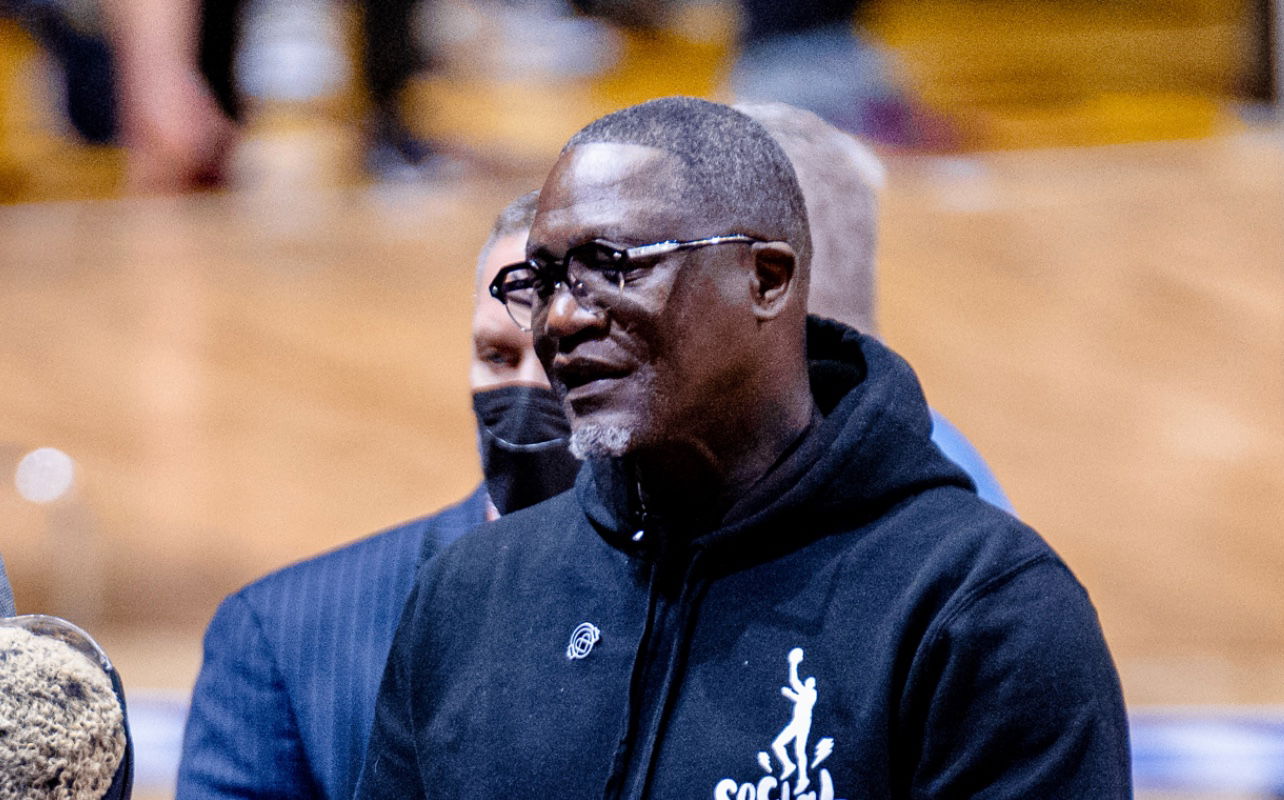
The “Human Highlight Film,” Dominique Wilkins was bestowed another honor in April when the Atlanta Hawks and State Farm Arena unveiled a refurbished basketball court named after the NBA legend at the newly renovated Good Neighbor Club at the Andrew and Walter Young Family YMCA in southwest Atlanta.
“I’m super excited to be a part of the Hawks and State Farm’s new Good Neighbor Club and help continue to impact the local youth at the Andrew and Walter Young Family YMCA,” said Wilkins in a written statement. “The Young Brothers have continued to serve our local community and understand the importance of uplifting the game of basketball. From the court dedication 15 years ago to now, it’s been amazing to see the legacy grow, and I’m excited to watch this Good Neighbor Club impact even more local youth.”
The Atlanta Hawks, Wilkins’ team for the bulk of his hall of fame NBA career, just released a video featuring Wilkins talking to Ambassador Andrew Young and his brother, Dr. Walter Young, at their eponymous YMCA. The gym has been instrumental as a place for high school kids, a center for voting, and a home for community impact.
Included in the recent renovation of the center are new backboards and hoops, an upgraded scoreboard, new wall pads, a partition replacement, lighting upgrades, and additional basketball equipment.
Guests the unveiling included YMCA of Metro Atlanta CEO Lauren Koontz and Atlanta Mayor Andre Dickens.
Wilkins recently announced his involvement in a real estate fund by a company named Roots that creates wealth for investors and renters. He is serving as an investor, spokesperson, and partner. The Atlanta Hawks legend is collaborating with Roots to get the word out that people in Atlanta who rent their properties can invest in the fund by paying their rent on time and taking good care of the property they are renting. This gives people not usually involved in investing the chance to do so.
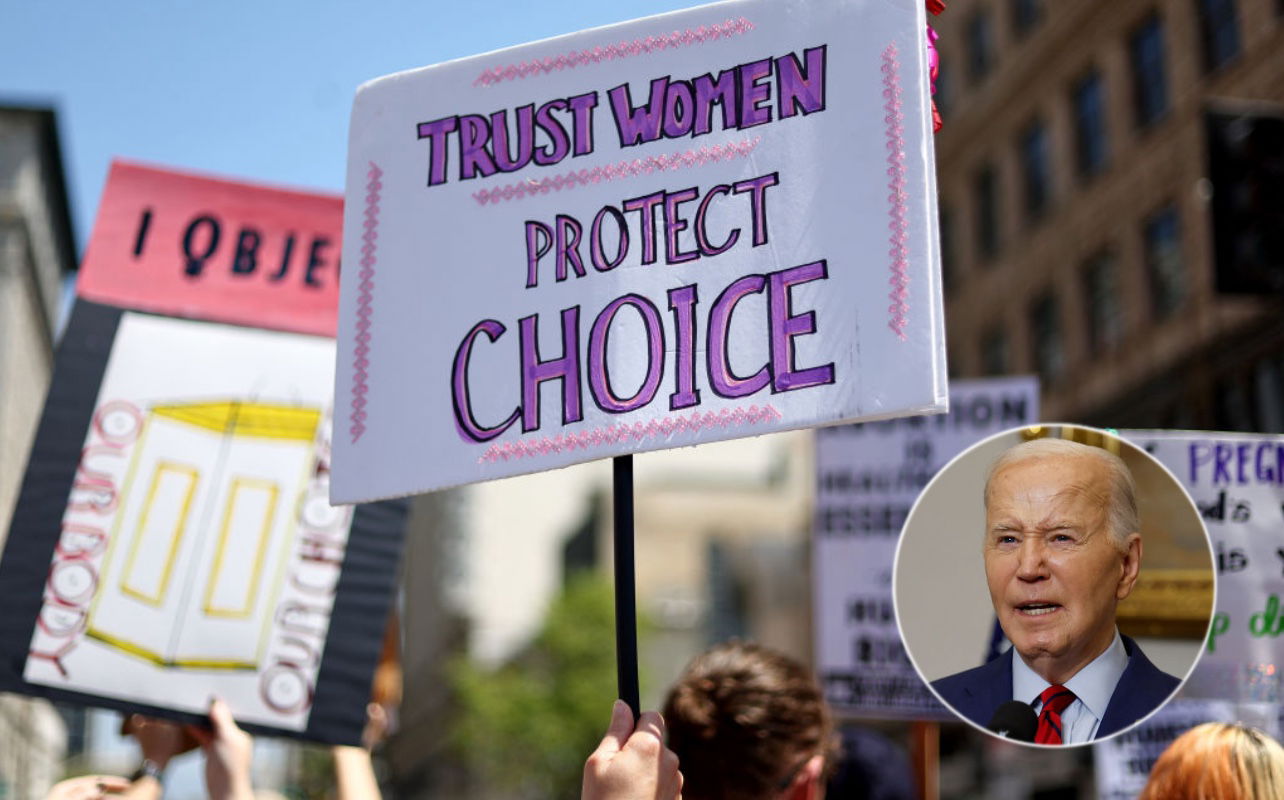
The sharp move of the administration is one of its latest efforts to build awareness surrounding a federal law from 1986 - Emergency Medical Treatment and Labor Act.
Health and Human Services Secretary Xavier Becerra and Centers for Medicare and Medicaid Services (CMS) Director Chiquita Brooks-LaSure sent a letter to doctor and hospital associations on July 2.
In the letter, both officials reminded hospitals they have the legal duty to provide stabilizing treatment — including abortions in some cases. “No pregnant woman or her family should have to even begin to worry that she could be denied the treatment she needs to stabilize her emergency medical condition in the emergency room,” the letter read.
“And yet, we have heard story after story describing the experiences of pregnant women presenting to hospital emergency departments with emergency medical conditions and being turned away because medical providers were uncertain about what treatment they were permitted to provide.”
Hospitals are to give stabilizing treatment to patients regardless of their ability to pay for those services. Hospitals that refuse to provide care or turn patients away could be subjected to federal investigations, fines, or loss of Medicare funding.
The formal warning comes just days after the Supreme Court moved to pass an appeal on Idaho’s strict abortion ban, causing one large hospital system to send some pregnant patients out of state by way of air transport to have treatment. The state ban criminalizes almost all abortions and prohibits doctors from performing an abortion even if the pregnancy is putting the patient’s health in grave danger.
The state of Texas is also under the microscope for its six-week abortion ban. However, enforcement is on hold, given a lower court ruling.
The law singled pregnant people out in 1989 after claims of hospitals refusing to care for uninsured women in labor. Thanks to Congress, EMTALA expanded to include pregnant people with contractions. After the Biden administration released the Reinforcement of EMTALA Obligation in 2021 — stating a doctor’s duty to provide stabilizing treatment “preempts any directly conflicting state law or mandate that might otherwise prohibit or prevent such treatment” — it did not specify on abortions. In July 2022, the law was amended to include stabilization abortion care if it is medically necessary.
Anti-abortion groups like the Texas Alliance for Life have already responded to the letter in defense of Idaho’s law, claiming the Biden administration “falsely suggests that Idaho and other state pro-life laws fail to protect women facing life-threatening emergencies during pregnancy.” “This is untrue,” the group said in a statement.
“All state pro-life laws provide an abortion exception for those rare but tragic circumstances in which a pregnancy poses a threat to a mother’s life, including circumstances when death is not imminent. Those include Texas and Idaho.” According to experts, regulations surrounding emergency room treatment since the Supreme Court overturned Roe v. Wade in 2021, allowing states to make their own abortion restriction laws. Since the ruling, 41 states have abortion bans with limited exceptions, including rape and incest. A total of 14 states have total bans.
Why Every Black Executive Needs A Coach (And Why Employers Should Pay for It)
Professional coaching has been as foreign to Black leaders as therapy traditionally has been for Black communities
By Catherine L. Wheeler
Professional coaching has been as foreign to Black leaders as therapy traditionally has been for Black communities. Its value can feel elusive.
As noted by one Black female professional, “Incorrectly perceived, coaching can present as another assignment to determine whether I have the expertise to meet a standard set, and I just don’t want that pressure anymore.”
Based on poor experiences, coaching can feel shallow for Black professionals, leaving much to be desired in terms of value and impact.
But think about the best performers in business and sports. What do they all have in common? Good coaches. There is wisdom in that, and I’m hopeful that in the ways Black culture has embraced other means of wellness like therapy, meditation, holistic medicine, coaching will be embraced as a way to stay mentally and emotionally fit in workspaces.
I have supported clients who have led $1 million transformations, clients who needed support creating strategic initiatives in a new role, clients who were ready to transition from their current role and discover their next, clients who wanted to upskill in their leadership. An effective coach assists you in discovering the impact you want to have and often leads you in creating the path toward it.
Black executive leaders I’ve worked with shared that coaching provides thought partnership, accountability, a framework for action, and varied perspectives in resolving personal and professional challenges.
For leaders and supporters of Black leaders, I invite you to approach the concept of coaching with thoughtfulness, reflection, and accountability. I urge you not to invest in coaching for your Black leaders as a favor to them in exchange for the oppressive workspaces they may have to exist and perform in. Workplaces that don’t make space for leaders to thrive should do the challenging work of uprooting harmful practices. For this, coaching isn’t the answer.
Unique Challenges of Black Leadership
Climbing the organizational ladder as a Black leader is a remarkable feat and rarely straightforward. In research conducted by Korn Ferry and the Executive Leadership Council, nearly 60% of Black executives who oversee major lines of business at Fortune 500 companies felt they had to work twice as hard—and accomplish twice as much—to be seen on the same level as their non-Black colleagues. More than a third of these Black leaders said they were assigned extremely tough projects no one else wanted to handle.
In 2020, there was a rise in the hiring and promotion of Black leaders, often in one-of-a-kind roles or roles responsible for organization-wide shifts or clean-up. These projects were often sold as “stretch assignments” for Black leaders to prove their abilities and gain trust and influence in the organization. Not surprisingly, the roles rarely came with the support, resources, or tools needed to navigate the reality of the situation.
Let’s face it: The psychological weight of being the first, one of the few, or the onlyBlack leader in a company can be immense. The pressure to perform quickly is often intensified, with less leeway for mistakes or a learning curve. Black leaders simply don’t have the same timeline to be successful as their white counterparts.
Just a few weeks ago, I had a conversation about the performance of a Black executive. Company leaders were concerned they had promoted him too quickly as his performance results were declining. I reminded them their anecdotal recollection may have been lacking, as his team’s numbers were down before he started his role. In fact, his proven ability to rebound low metrics was a reason they selected him for the job. This is a common narrative told about Black leadership failure, often with little to no factual evidence.
While promotions for Black leaders allow organizations to signal new commitments or a re-imagining of ideas, in reality, these challenging roles can become scapegoats for previous organizational decisions or provide cover for the responsible parties.
The intersectionality of race and gender further complicates the experience for Black women leaders. They often face a double burden of proving their competence while navigating micro-aggressions and biases that span from their attitudes to appearance.
Black leaders are continuously navigating the politics of being in a space where they have been invited but not fully welcomed, which can create new feelings of inadequacy or stress.
While the story of Black leadership is winding and nuanced, one factor rings true for many—all promotions are not created equal. And yet, neither is the support.
Coaching as a Catalyst for Success
Black professionals are the most under-coached workplace demographic.
According to Human Resources Professional Association (HRPA) and McKinsey and Company studies:
About 75% of white professionals reported having access to professional coaching or mentorship opportunities at some point in their careers.
In contrast, only about 45% of Black professionals reported similar access.
The studies showed significant differences based on race and gender:
White Men: Approximately 78% report having access to professional coaching.
White Women: Around 72% report having access to professional coaching.
Black Men: About 50% report having access to professional coaching.
Black Women: Approximately 40% report having access to professional coaching.
As a Black leader, I believe the benefits of a skilled coach, married with the context of our stories of resilience and excellence, can become a force in any workplace. More than a trusted confidant and thought partner, the accountability of a coach allows you to identify the blind spots not readily seen by friends, develop strategies for your success, and meet challenges with deep assurance of your philosophies and processes.
Deloitte’s 2021 study on Black leadership cited a robust support system as a key factor in Black leaders’ confidence. One goal of coaching is adding a formal layer of support to a support system where a leader feels seen and affirmed beyond the skills they offer.
Choosing the Right Coach
Finding the right coach is a personal journey that starts by reflecting on your needs. What areas of your leadership do you want to explore or refine? What challenges are you facing? What skills are second nature to you that you want to use more?
It’s critical to select someone with whom you can build trust, who is open to your experiences, and who can challenge you to meet the goals you have set for yourself. Research potential coaches by leveraging LinkedIn searches and groups. Seek those who have supported all levels of professionals across industries, as you may gain a wider perspective. Schedule consultations with at least three coaches to evaluate their style and approach.
Ask thoughtful questions during the consultations:
What is your coaching style, and what can I expect from our time together?
Who is your ideal client?
In my first 60 days, what should I be most focused on?
What does success look like for our coaching engagement?
How will you challenge me and support me in reaching my goals?
What client successes have made you most proud?
When evaluating fit, did the prospective coach ask thoughtful questions like:
What are your goals for coaching?
In what ways will you need to be challenged to think/show up differently?
What helps you be successful?
What challenges have you/could you face in reaching your goals?
In addition…did the approach of the coach resonate with you?
Did you like the coach’s approach to finding your path to success?
Did the coach share examples of success from other clients?
What to Expect from Coaching
After formalizing the relationship, the coaching process may involve an initial consultation. This is a chance to build rapport, define your objectives for coaching, and develop a collaborative path forward.
The coaching relationship is most effective with regular updates on progress, challenges, and strategies. Your coach will provide assessments of your goal progress and make real-time adjustments.
As an active participant, you should provide feedback to the coach on his/her method and impact.
The frequency and duration of coaching sessions vary depending on your goals and needs. If you’re working toward a specific deadline, you might meet weekly. For broader professional development, twice a month might be sufficient. Sessions often last between 60 and 90 minutes.
When and How to Ask Your Employer to Pay
There is no “best” time to engage in a coaching investment conversation. However, there are some effective approaches to consider: When initially hired into an organization, during negotiations, don’t hesitate to ask for coaching as part of your compensation package. This is a practical ask that can be tied to an expedited onboarding process, making you more effective in navigating the organization’s goals with urgency. If you’re already employed, it can be ideal to ask for coaching support during an annual review, when taking on a new project, or when receiving a promotion.
Here are a couple of sample scripts to use:
“I’m excited about this new opportunity and want to ensure my success. Is the organization willing to invest in a professional coach to support my transition and development?”
“I’m committed to taking my leadership to the next level, and working with a professional coach would be a valuable investment in the organization and me. Could this be added to the budget for my development?”
Remember, asking for a coach is not an “out-of-the-box” request. It is common practice for leaders to participate in development activities such as coaching and courses. From the organization’s perspective, investing in coaching can lead to increased retention, improved performance, and a stronger leadership pipeline. Professional coaching is a win-win!
Time to Invest in Yourself
In a world where Black leaders face unique barriers and expectations, professional coaching is a powerful tool for mental and emotional wellness in the workplace, as well as empowerment and professional advancement.
Coaching isn’t just about surviving an organization or meeting its goals. Instead, coaching can be a tool that allows you to explore a path toward your personal and professional aspirations while expediting your own desired impact within an organization.
Catherine L. Wheeler is the founder and chief people and culture strategist of Pivot One-Eighty, a culture change management organization for leaders and organizations navigating organizational shifts. With an upbringing shaped by a compassionate pastor and an ultra-efficient ex-Marine, Catherine brings a “people-first and data-driven” mindset to the work of organizational transformation. She believes organizations thrive when they prioritize both individual well-being and high performance, creating cultures where people genuinely want to be. Her goal? To make Mondays not suck.
Book: Race, Work, and Leadership: New Perspectives on the Black Experience by Laura Morgan Roberts, Anthony J. Mayo, and David A. Thomas; look for the essay, “The Glass Cliff: African American CEOs as Crisis Leaders”
Eritrea’s Biniam Girmay Cycles His Way To Becoming 1st Black African To Win Tour de France Stage
'To win a stage where all the best sprint specialists are present is unbelievable.'
History was made when Eritrea’s Biniam Girmay became the first Black African cyclist to win a Tour de France stage.
The Associated Press shared the history-making feat that took place on July 2, when Girmay crossed the finish line before competitors Fernando Gaviria and Arnaud De Lie. This comes two years after he became the first Black African to win a Grand Tour at the Giro d’Italia in Italy. It was a short-lived celebration as Girmay had to be taken to a local hospital for an eye injury he suffered when a champagne cork hit his eye during the podium celebration.
Reuters reported that the African rider helped give his Intermarche-Wanty team their first victory on the Tour.
“To be part of the Tour de France is already incredible. I was dreaming of taking part and now I can’t control my emotions,” Girmay said after the victory.
“With my first Tour last year, I acquired experience and I manage everything better. Winning today is unbelievable.
“To be honest, when I went to the Giro I knew I had the level to fight for the win but for the Tour I was thinking I would have to wait 2025, 2026. To win a stage where all the best sprint specialists are present is unbelievable.”
Girmay isn’t the first African to win a tour as two other African riders, Robbie Hunter in 2007 and Daryl Impey in 2019, of South Africa have previously won, but are both white.
In 2022, Girmay also became the first rider from a sub-Saharan country to win a single-day classic at the Gent-Wevelgem race.
“There is a whole continent that has been waiting for this,” said Aike Visbeek, the performance director for Girmay’s Intermarche-Wanty team.
“It’s been done now, and I hope it will open the floodgates for more riders from Africa. He’s an ambassador in every way.”
O.J. Simpson’s Appearance During ‘In Memoriam’ Segment Catches Some By Surprise At BET Awards
The former Buffalo Bills player died earlier this year after a brief battle with prostate cancer.
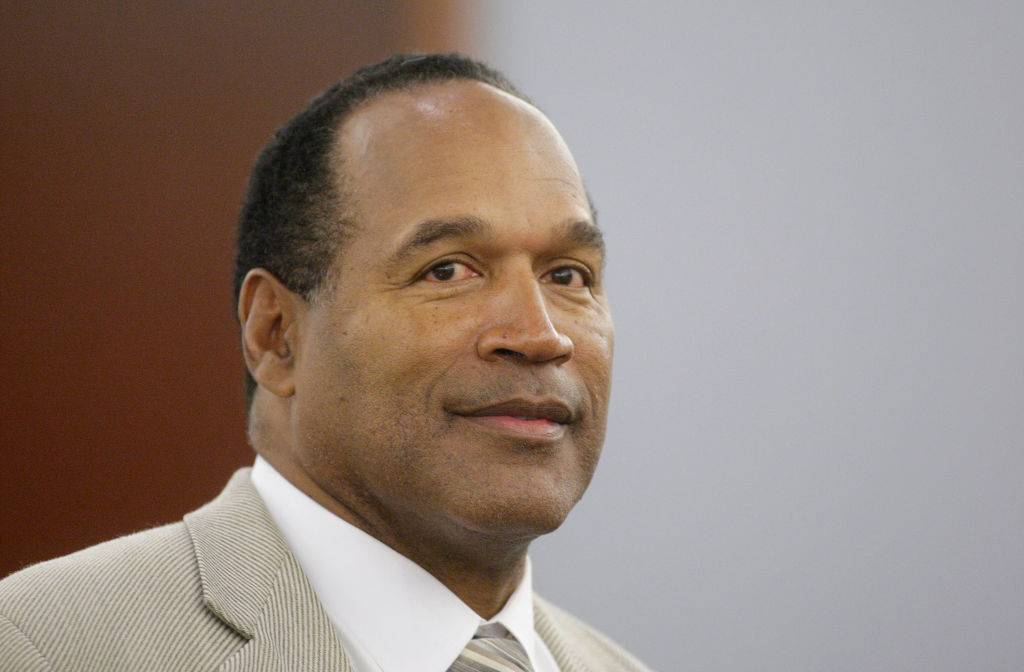
The BET Awards are renowned for capturing people’s attention with their show highlights. This year, according to The Hollywood Reporter, viewers were taken aback during a segment honoring notable figures who passed away in the past year. The segment unexpectedly included NFL Hall of Famer O.J. Simpson.
The “In Memoriam” portion of the show included recently deceased luminaries such as actors Bill Cobbs, Carl Weathers, Richard Roundtree, Maurice Hines, Ron Cephas Jones, and Louis Gossett Jr., recording artists Rudolph Isley, Irish Grinstead of the group 702, and Brother Marquis from 2 Live Crew, athlete Willie Mays, music executive Clarence Avant, and civil rights activist Dexter Scott King. When Simpson’s face appeared, the media outlet stated some “were a bit surprised.”
Fred Goldman, the father of Ronald Goldman who was killed along with Simpson’s former wife, Nicole, on that fateful night on June 12, 1994, was upset, according to TMZ. He told the outlet BET should issue an apology for acknowledging the football icon in the program.
“I think they shouldn’t include anyone of that caliber — a wife beater, murderer… can’t imagine why they would include someone like that.”
Nicole’s sister, Tanya Simpson, went further and stated that whoever included him in the memorial “should be fired.”
“It’s inappropriate to give an abuser and murderer recognition. Whoever thought of doing that owes every domestic violence victim an apology…and that’s including our family. And, they should be fired.”
The former Buffalo Bills player died after a brief battle with prostate cancer on April 10. After Nicole and Ronald were killed, O.J. was accused of killing both but was found not guilty in what was billed as the trial of the century. In a civil suit, the Goldman family sued the “It Is What It Is” featured guest and won a judgment of $33.5 million, which O.J. never satisfied.
Trump And Biden’s Records On HBCUs Fact-Checked Post-Debate
The candidates' statements about supporting HBCUs were examined by CNN’s fact checkers.
During the Presidential debate on June 27, hosted at CNN’s studio in Atlanta, both President Joe Biden and Donald Trump touted their records related to funding HBCUs. However, as the candidates’ statements were examined by CNN’s fact-checkers, they found that Trump’s statements regarding his support of HBCUs were more false than those of Biden.
As CNN reported, although Biden appeared to misstate his administration’s investment into HBCUs, the Biden-Harris Administration has provided $16 billion of investment into HBCUs since 2021, along with clear messaging that he supports the institutions.
In contrast, Trump’s support of HBCUs was often a mixed bag, as he would create initiatives like restoring year-round Pell Grants and the FUTURE Act, which provided HBCUs with $255 million in yearly funding. However, his public statements about HBCUs directly contradicted his actions. In 2017, Trump openly mused that federal funding for HBCUs was potentially unconstitutional, remarking that “It benefits schools on the basis of race.”
Lodriguez Murray, the senior vice president for Public Policy and Government Affairs at the United Negro College Fund, highlighted the historical underfunding of HBCUs since their establishment. Murray underscored the crucial link between Congress and HBCUs, noting that under the Biden-Harris Administration, funding for these institutions has nearly doubled, compared to the previous Trump Administration.
“Congress took the lead on putting the HBCU funding in those bills and passing them. The third COVID-19 bill, passed under President Biden, included as much funding for HBCUs as both of the first two Covid-19 bills under President Trump,” Murray told CNN.
In a July 2 column for NOLA.com, Walter Kimborogh, a former HBCU president, was much more critical of Trump’s record regarding HBCUs. “HBCU federal funding increased during the Trump years in office as they have pretty much under every administration (as the federal budget has also increased). But when you look at his budget requests for HBCU funding through the Department of Education, Trump proposed over $100 million in cuts to HBCU programs. The funding increases during the Trump administration were proposed and passed by the House and Senate due to HBCUs’ broad bipartisan support,” Kimborogh wrote.
Kimborogh served as the seventh president of Dillard University from 2012 to 2022, and was previously the president of Philander Smith College from 2004 to 2012.
Kimborogh continued, “When Trump recently said he funded the schools when no one else did or even thought about it, he told a blatant lie.” According to Kimborogh, Trump portrays the “heads of the schools” as coming to the White House every year to beg for money. And, a photo from 2017, showing Trump in the Oval Office with HBCU presidents, helps give Trump’s narratives plausibility. “But,” said Kimborogh, “as someone who was there, having led two HBCUs, worked at two others, and served in leadership with the United Negro College Fund, his stories are more accurately fairy tales.”
Valerie Vie Replaces Judge Booted Off The Bench, After Nightclub Arrest
The Georgia Supreme Court removed Probate Judge Christina Peterson from her position.
In the wake of Probate Judge Christina Peterson’s removal following her arrest outside an Atlanta nightclub, attorney Valerie Vie has stepped into the role of probate judge, reports the Atlanta Journal-Constitution. Vie, who secured the Democratic primary in May, will serve the remainder of Peterson’s term until Jan. 1, 2025. This decision, made by the Judicial Qualifications Commission, cited “systemic incompetence” and found 12 of the 30 counts serious enough to warrant disciplinary action, BLACK ENTERPRISE previously covered.
The Georgia Supreme Court’s decision to remove former probate judge Peterson was based on a pattern of judicial misconduct, as reported by the ABA Journal. This pattern included several “troubling” incidents, notably Peterson’s decision to sentence a woman to jail or a fine for listing an uncle instead of her estranged biological father on a marriage license application, despite the woman’s attempt to correct the error. The woman faced a 20-day jail sentence or a $500 fine.
Additionally, Peterson’s actions included summoning sheriff’s deputies for after-hours courthouse access, triggering a panic button over a tardy deputy, and allegedly attempting to use her position to influence a personal lawsuit against her homeowners’ association by proposing a special election in exchange for dropping the case. Throughout the ethics proceedings, Peterson’s testimony was criticized as “disingenuous, if not outright dishonest,” further solidifying the court’s decision to remove her from office.
Peterson, who broke barriers as Douglas County’s first Black female Democrat probate judge, saw her career derailed following her June 20 arrest outside the Red Martini Restaurant and Lounge on Peachtree Road. Footage from the incident showed the 38-year-old attempting to break up a fight between a woman and a man before an Atlanta officer approached Peterson and she allegedly struck him in the head.
The repercussions for Peterson extend beyond her current position, as she is now barred from holding any judicial office in Georgia for the next seven years. Despite this setback, her legal team remains hopeful. Attorney Marvin Arrington Jr. confidently stated that Peterson would be “completely exonerated,” characterizing her actions as those of a “good Samaritan” attempting to protect an assault victim.