Employers, Here Are 4 Reasons Remote Work Pays Off For You
The other shoe finally dropped on Twitter. Just days after new boss Elon Musk assumed control of the social media giant and laid off half of the staff, his next move was to order all employees to end remote work and start spending their 40 hours per week in the office instead.
It wasn’t an unexpected shift. In fact, job postings in the U.S., the U.K., India, and other locations are all showing fewer remote job postings than were available in early 2022.
However, it might benefit some companies to remain a bit more open-minded on the question of remote workers going forward. That’s because, despite the recent shift, there’s still a lot to be said about the benefits to employers for maintaining a healthy remote workforce.
Team Morale
Happy workers lead to a happy workplace — and remote work is extremely popular, especially in the wake of COVID shutdowns. Right now, about 2 out of 3 U.S. employees are working remotely for some portion of their work week — and almost 70% would prefer to be fully remote. And considering turnover is down 25% for companies that offer remote positions, it’s pretty clear where the hearts of most workers lie.
Better productivity
This one might seem counterintuitive, but the numbers back it up. Workers seem to maintain their productivity when they’re working on their own. In fact, 94% of employers in a recent survey said they felt productivity was either the same or even higher when employees were working from home. On average, those who work from home spend about 10 fewer minutes being unproductive than their office-bound colleagues and are almost 50% more productive.
Oh yeah, and how about this? Remote employees work about 10% longer too, almost 4 hours more each week. Not that employees encourage workers to work extra hours…but it doesn’t hurt when they do.
Savings
Here’s the big one, company managers and CEOs…with productivity up, remote workforces also save employers oodles of money on practically everything. From saving dollars on office space to fewer sick days to retaining employees longer, it’s estimated employers actually save about $11,000 a year on each remote worker.
Meanwhile, inflation is actually benefiting employers when it comes to their remote workers. While the U.S. inflation rate hovered around 9% during the summer of 2022, the Bureau of Labor Statistics found wage growth among remote employees was actually down 2% from 2020.
Better job match candidates
This one makes sense too. Before the explosion of remote work, companies were restricted to fielding candidates within easy commuting distance. Now, your job pool is the world. ZipRecruiter found their figures showed remote jobs got over 2.5 times the number of clicks as similar traditional job postings. That means businesses can also raise the bar on their job descriptions, asking for higher quality candidates to come out of their wider search population.
Ashanti and Family Speak Candidly On Domestic Abuse Her Sister Experienced With Ex-Fiancé
In the wake of Domestic Violence Awareness Month in October, singer Ashanti appeared on Red Table Talk with her mom and sister. They spoke openly about the abusive relationship her young sister escaped.
It was a family affair on an episode of Red Table Talk as Jada Pinkett-Smith, Adrienne Banfield Norris, and Willow Smith sat down for a candid discussion with Ashanti, her mom Tina, and younger sister Kenashia “Shia” Douglas about the abuse “Shia” suffered at the hands of her ex-fiance Windsor “Slow” Lubin.
In early October, Ashanti took to Instagram to share a revealing post highlighting her sister’s experience with abuse in honor of Domestic Violence Awareness Month.
“Words will never be able to express the amount of pain, fury and disgust I feel reliving these moments… but at the same time I am so proud of how strong, courageous, resilient and unbreakable you are,” Ashanti captioned the post. “My sister is a warrior!”
Speaking on Red Table Talk, Shia recalled her relationship with Lubin, known as “Slowbucks,” a music executive who ran an entertainment company and fashion line under the same name.
Shia said the physical abuse started after reconciling from a breakup. Lubin was under the impression that Shia might’ve started dating other men when they split.
“I took him back and he began to grow suspicious of what I was doing during our break,” Shia said
“He began to become very very jealous, very angry, even more controlling than he had already been.”
Shia said it wasn’t until Lubin hit her and shattered her teeth that she finally decided to end the relationship. The incident came after Shia suffered a miscarriage at four months due to the physical abuse.
“Not only did it get worse, he actually knocked my teeth out,” Shia revealed. “That was when I left. That was the straw that broke the camel’s back.”
Shia explained her shock and how she processed realizing the person that she loved “could hurt me to that extent.”
During the talk, Shia shared her road to recovery and healing and how she learned to love herself after spending so much of her life with her ex-fiancé. Ashanti’s family and the Smiths also touched on the stigmas Black women face with calling the cops on loved ones and not being considered a “snitch.”
‘GMA3’ Hosts T.J. Holmes and Amy Robach Embroiled in a Scandal After Seen Getting Handsy
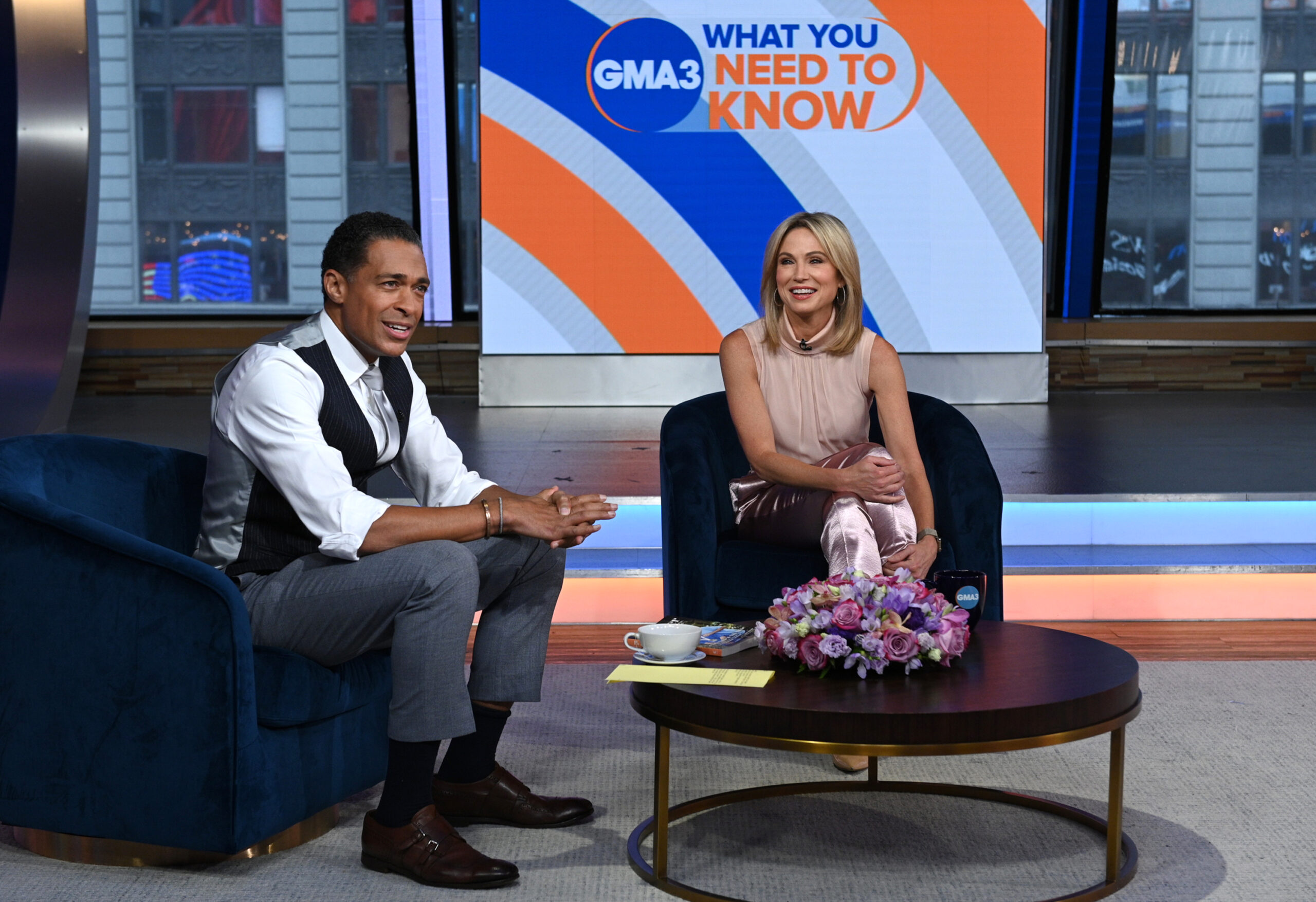
The hosts of GMA3: What You Need To KnowT.J. Holmes and Amy Robach are in hot water after rumors of an alleged romance surfaced, according to The Daily Mail.
The outlet published racy pictures of hosts together, including one photograph of Holmes feeling Robach’s bottom.
Both Holmes and Robach are married to other people.
Roach, 49, is married to Melrose Place actor Andrew Shue, and 45-year-old Holmes is married to attorney Marilee Fiebig.
However, according to the outlet, both couples have been separated from their spouses since August. Holmes and Robach have been working together since 2020. The two also traveled to London together to cover the Queen’s Diamond Jubilee for ABC back in June.
The outlet also published pictures of the two looking cozy at O’Donoghue’s Irish Bar in New York City and claimed they are involved in an extra-marital affair. Pictures were also published of Holmes and Robach visiting each other’s apartments as well as visiting a cottage in the Shawangunk Mountains just before Thanksgiving.
A video of Holmes getting handsy by grabbing Robach’s buttocks was published by the outlet as well. Other pictures captured the two holding hands in the backseat of a car.
Holmes hosted GMA3 alone on Nov. 30 but did not mention why his other co-hosts, Robach and Dr. Jennifer Ashton, were not on the air with him except to say that they were both “working today.”
According to Page Six, the two began the alleged affair back in March while training for the half-marathon in New York City. The outlet quoted a source as saying that Holmes and Robach kept their alleged romance secret for months.
“They have a very cozy relationship on air, but that is what is expected. But they were very careful behind the scenes to keep their affair secret. The producers at ‘GMA’ are shocked to hear they are having an affair.”
Both Holmes and Robach have disabled their Instagram pages.
‘You Forgot I Was A Seed,’ Meghan Markle Closes Out Podcast Finale With Cryptic Quote for Critics
Meghan Markle ended the inaugural season of her Archetypes podcast with a seemingly cryptic quote aimed at her critics and adversaries.
On Tuesday, the Duchess of Sussex released the final episode of the season for her Spotify podcast and ended the episode with a quote by Greek poet Dinos Christianopoulos, Daily Mailreports.
“What didn’t you do to bury me? But you forgot that I was a seed,” she said.
Throughout the season, Markle has only had women guests. But for the season finale, she invited three Hollywood bigwigs for the episode “Man-ifesting a Cultural Shift.” Serving as Markle’s guests were The Daily Show host Trevor Noah, movie director Judd Apatow, and Real Housewives executive producer and Bravo host Andy Cohen.
The Duchess described her guests as “very thoughtful men … who’ve been behind some of the most successful movies and TV shows but also who are part of cultural conversation in such an impactful way.”
When it came to having them on the season finale, Markle explained why she thought it would be “interesting to sit with some men, hear their thoughts and see what they think of archetypes?”
Closing out the show, Markle shared her pride in using her platform to exert her voice. Her words seemingly highlight her sense of freedom in the wake of traumatic experiences she has shared about living in London with her husband, Prince Harry, as part of the royal family.
“I feel seen, I had never considered that in using my voice, that I would feel seen, but I do,” Markle said.
“Many moons ago I heard a quote that I will share with you today because as we talk about labels, tropes, and boxes that some may try to squeeze you into and roles and stereotypes that are attributed to you that don’t quite fit the full person that you are, this [quote] is what I wanted to leave you with.”
She added. “To that point, my friend, keep growing and I’ll see you on the flip side. As ever, I’m Meghan.”
Group Of Black Pastors Hold Candlelight Vigil For Walmart Shooting Victims
A group of Black pastors held a candlelight vigil to honor the victims who were shot and killed inside the Walmart in Chesapeake, Virginia, on Nov. 22, according to the Associated Press.
The Chesapeake Coalition of Black Pastors held the candlelight vigil at the Mount Chesapeake church on Nov. 27.
A tall purple candle was lit for each victim during the 90-minute vigil that included music, tears, and prayer. Forty-three-year-old Lorenzo Gamble, 16-year-old Fernando “Jesus” Chavez-Barron, Tyneka Johnson, 22, 52-year-old Kellie Pyle, Brian Pendleton, 38, and 70-year-old Randy Blevins died after being shot by their co-worker, Andre Bing. The other six victims of the shooting who survived were also honored.
Gamble’s mother, Linda Gamble, was in attendance with her husband, Alonzo Gamble. Mrs. Gamble spoke at the vigil and said she couldn’t eat because she missed her son so much.
“It’s been really hard because I never, ever in a million years thought it would be my baby,” she said. “He’s gone, but he will always be in my heart.”
Bishop Kim Brown of Mount Lebanon Baptist Church noted the importance of supporting and listening to the victims’ families.
“The reality is it was important to send a message that we are one. We got to stand unified,” she said. “The worst thing you can say to any of those families is ‘I know what you are going through.’ The only thing you can do is listen. Cry with them; try to be there.”
Sen. Mamie Locke (D) was in attendance and said the community came together to support the victims’ familiess as they grieve.
“We cannot know your pain of waiting to hear about your loved ones or even understand the horror of the phone call when it came,” said Locke. “But what we can do is come together as a community and provide a shoulder to lean on.”
The city also held a candlelight vigil on Nov. 28 at Chesapeake City Park.
Synchrony’s DEI Agenda: Applying Data to Drive Workplace Equity and Funding for Black Founders
Two significant components mark the diversity, equity, and inclusion efforts of consumer financial services giant Synchrony: Elevation of more diverse leaders, including Black executives, to senior management through intentional, data-driven initiatives and the advancement of innovative, game-changing Black startups via strategic investments.
Companies that put teeth behind their workplace equity efforts—versus those that just talk about it—gain favor with employees. In fact, roughly 80% of workers in a recent survey prefer employers that highly regard DEI. Accomplishing that level of satisfaction is not an easy task for scores of corporations when it is hard to enhance what has not been measured. However, Synchrony has made internal progress by using data to help overcome such barriers.
Simultaneously, the company is advancing equity externally by investing in underserved businesses owned by Blacks, women, and other minorities. In fact, it has committed $15 million to venture capital firms led by diverse investment teams.
Data analysis is a game changer for DEI
Before elaborating on the data, Michael Matthews, Synchrony’s chief diversity, inclusion and corporate responsibility officer, told Black Enterprise in a recent interview on DEI outcomes, “just the way that you think about it and the way that you elevate it makes a difference to your success.”
Matthews talked about how Synchrony had always “leaned into diversity” and had a strong, inclusive culture. But he admitted that Synchrony was not closely examining deeper levels of its own data until about three years ago when he became CDO, and George Floyd’s death became a catalyst for change. So, he examined Synchrony’s diversity efforts to determine what was really under the numbers. One of his questions: “How many of Synchrony’s employees at the VP level and above were Black or Hispanic?”
Using quantitative analysis across three years to unpack the composition of its diverse representation, Matthews completed an in-depth review with the company’s leadership team and board of directors.
“What we found was we look pretty good, but based on what we thought about our culture, we were pretty stagnant over the years,” he concedes. “We hadn’t been moving the needle, and I thought the hypothesis was that we weren’t leaning in enough in certain areas of opportunity to actually make the difference.”
So, in 2020, the company launched Advancing Diverse Talent, a data analytics initiative that helps pinpoint gaps and opportunities in hiring, retention, and promotion. For the past two years, Matthews says the focus has been on Black and Hispanic talent at the vice president level and higher. His philosophy: “What does not get measured, does not get changed.”
In examining data on a quarterly and annual basis with the CEO and business leaders, Matthews says he found it is vital for Synchrony to “increase opportunities, make sure that we have people who are prepared [and] make additional efforts to ensure that we find people in those demographics to compete and actually win the jobs.”
Matthews explained another critical element is accountability. He stresses that diversity metrics are “tied to our annual bonus for all leaders of the company. So, if you’re not showing year-over-year improvement in the ADT categories, then your bonus will be impacted.”
Providing diverse startups with funding in a challenging market
Beyond the workplace, Synchrony has also prioritized equity investments to support underserved founders. For example, Zeal Capital Partners was among four venture capital firms that received funding as part of a $15 million commitment in May 2020 to support the company’s efforts to close the venture capital gap.
Jeff Lamour, senior vice president and head of Synchrony Ventures, shared the importance of investing in diverse VCs like Washington, D.C.-based Zeal Capital Partners, led by founder and managing partner Nasir Qadree. For one, the capital from Synchrony provides the lifeblood to Black startups that continue to be woefully underfunded. Qadree notes that just 1.3% of venture capital today is managed by women and people of color. “Close to $70 trillion of alpha is left on the table when we are not proactively sourcing and investing in women and BIPOC entrepreneurs.”
Jeff Lamour, Senior Vice President and Head of Synchrony Ventures, spoke at Money20/20, the largest global fintech event in October 2022. Jeff served on the advisory board of Money20/20’s AMPLIFY program, which aims to move the dial on inequalities within financial services, providing participants access and opportunity within the industry.
Lamour also maintains that at Synchrony’s core, it’s about more than just writing checks. “It’s a great opportunity to support funds (like Zeal Capital) and partner with them in a much more material way,” Lamour said.
Through its financing model, Qadree asserts the Synchrony team is sending a powerful message that there must be systems-level change to ensure there’s more investment in Black-led venture funds and those allocating the limited partner capital into those vehicles. Qadree also values investing partners like Synchrony that go beyond providing capital, sharing their know-how around recruitment, governance, end-user experience, and sales strategy.
Nasir Qadree is the Founder and Managing Partner of Zeal Capital Partners, which invests in diverse management teams reimagining the building blocks of wealth, from education to employment to financial health, that turbocharge economic mobility.
So, what type of companies do Synchrony Ventures look at when it makes investments? Lamour says it invests in entrepreneurs and VC funds with great ideas, driving innovation in markets aligned with the company’s growth strategy, mission, and values. Bottom line: Synchrony Ventures embraces companies it can work with, help bring to scale, and make an industrywide impact.
Zeal Capital is the type of firm that fits the bill. The self-professed “champion of inclusive investing,” the firm also seeks entrepreneurs that “dream big” and focus on building next-generation financial technology and “future of work” businesses, according to its website. Other criteria for investment: strong management teams with “exceptional leadership with diverse skill sets and backgrounds” and partnering with US-based companies “seeking pre-seed, seed, or Series A investments with $200,000 or more in annual revenue.”
In essence, Synchrony Venture and its portfolio of VCs like Zeal Capital want to advance diverse firms that create an impact for under-resourced communities and businesses. Asserts Lamour: “it’s critically important for us to be engaging with [diverse early stage] founders that we know are going to be able to manage through challenging times, manage through the pivots that are required as an entrepreneur.”
Takeoff’s Brother, YRN Lingo Posts Heartfelt Tribute to Slain Recording Artist
The death of Migos group member Takeoffhas had such an effect that his presence is sorely missed. The wave of acknowledgments continues to flow as his younger brother, Lingo Mufasa, who goes by the moniker YRN Lingo, is the latest to post a tribute to him on social media.
Earlier this week, YRN Lingo posted a heartfelt message to his brother as he, his family, countless friends, and industry associates continue to mourn his senseless killing in Houston.
“Dear Take, I don’t know where to begin, I honestly still can’t believe it. My big brother, my right hand man, my other half, my literal twin. The one I could call upon anytime no matter what time, weather, situation you were in. You always made sure the family was straight, even when I didn’t need anything, you always gave me something.”
The younger sibling then reminisces on times pre-Migos fame when his brother would tell him that once he made it, Lingo could ask him for “anything, I mean anything” and he’d supply it to him. Shoes, clothes, and “most importantly” games.
“I hate that I have to move on with my life without you physically here, I wish I could just stop time and wait, but I know that can’t happen. It’s a lot of things I’m going to miss about you, I could name them but it would be a full list, and that would take forever. I looked up to you more than anyone on this earth and I will never stop looking up to you. I’ll carry your name until the day I die.”
In the very thoughtful and lengthy post, he states that he will miss Takeoff calling on him, teaching him life lessons, and making sure that he comprehended whatever it was he’d talk to him about. Even when watching movies, when he wasn’t paying attention, he’d pause the flick and make sure he paid attention to what was happening.
YRN Lingo also included older photos of him and his brother throughout the years, starting when they were young boys.
According to TMZ, the killing of Takeoff transpired last month at the 810 Billiards & Bowling Houston bowling alley. Takeoff was there with his uncle, Quavo, née Quavious Keyate Marshall, celebrating the birthday of Jas Prince on the night of the tragedy.
Pusha T Expresses Disappointment in Ye: ‘There is no Room for Bigotry or Hate Speech’
Every day for nearly two months, Ye, the fashion designer formerly known as Kanye West, has been covered in many media outlets due to his behavior, comments, and activities. Through this particular journey which has seen him lose millions, business relationships, and friends, no one who is currently still close to him has really said anything, at least not publicly.
That has changed.
According to The Los Angeles Times, Clipse rapper Pusha T, who made some noise within the hip-hop scene with his brother, Malice (now No Malice) many years ago, has broken his silence on Ye’s current behavior.
The recording artist, whose real name is Terrence Thornton, was once signed as an artist on Ye’s label before accepting the position of president of the G.O.O.D. Music imprint in 2015. As a frequent collaborator and defender of Ye, he recently expressed “disappointment” with his friend after Ye’s recent string of antisemitic statements.
“It’s definitely affected me. It’s been disappointing,” Pusha T told the Times. “As a Black man in America, there is no room for bigotry or hate speech. So yeah. It’s been very disappointing, let’s talk straight.”
Earlier this year, Pusha T released the final album under his Def Jam contract. The production duties for that project, It’s Almost Dry, were split between the two producers he has been associated with throughout his recording career: Pharrell Williams and Ye. The album was recently nominated for a GRAMMY Award.
Pusha T also discussed his relationship with Ye when it comes to creative freedom.
“Writing and recording with Ye is a very special thing for me. We actually have a lot of the same taste, we love just barred-out rap. He would tell me things like, ‘Man, you just be the extreme version of yourself. And I’m gonna be the extreme version of myself.’
“Creatively, Ye has meant freedom to me. A lot of times, people would try to get me to change certain things about my process, change certain things about me lyrically, change certain things about the content. He never has been like that. He always saw me for who I was and knew how to take it to the next level.”
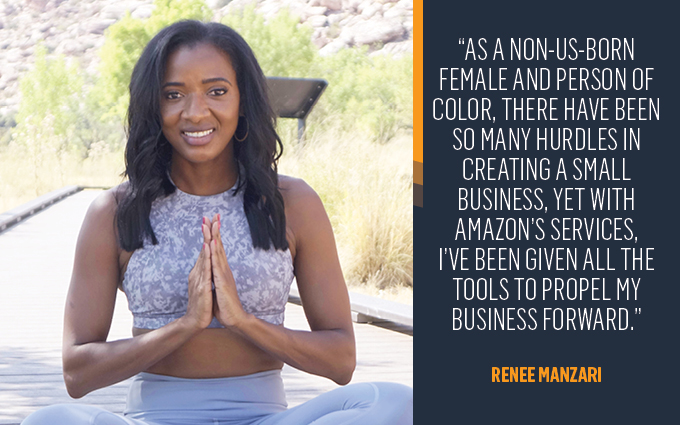
As an entrepreneur, Renee Manzari married her love of the ocean with an enduring passion for yoga. While growing up in Jamaica, she witnessed the devastating effects of the ongoing plastic pollution crisis on ocean life, such as plants and animals.
Manzari made it a priority to help protect the Earth and address climate change by launching Livity Yoga in 2020. Her sustainable yoga business sells a stainless-steel insulated water bottle, a cork yoga mat, and cotton yoga straps for stretching.
To develop her products, she conducted extensive research, discovering that cork could be used as a biodegradable and recyclable material to make most of her goods. The cork yoga mat accounts for 70% of Livity Yoga’s total sales. The mat is durable, easily absorbs sweat and provides a no-slip grip. “It (cork) is not only a great sustainable material, but high performing for seasoned Yogis.”
Moreover, Livity Yoga uses plastic-free packaging and intentionally works with eco-conscious manufacturers and recyclers who develop items through a sustainable production process.
Manzari, Livity Yoga’s founder and CEO, tells BLACK ENTERPRISE that her firm is a member of 1% for the Planet. As such, Livity Yoga donates 1% of its annual sales to the nonprofit, whose mission is protecting the oceans and environment globally.
Trading Investment Banking For Health
Based in the Baltimore, Maryland area, the business emerged after Manzari left a career in investment banking and started doing yoga to maintain a healthier lifestyle. She realized that most yoga products she used were made of plastic, which was against her mission to protect the environment. “I felt I needed to make some changes in the yoga industry, so launching the business was something personal for me.”
However, launching Livity Yoga was no walk on the beach for Manzari. Her greatest obstacles included raising startup capital and dealing with supply chain disruptions. She initially self-funded her business by investing $50,000 of personal savings. She continues operations through reinvestment of profits.
Facing The Challenges of The Pandemic
After launching her small business during the COVID-19 pandemic, Manzari says she had to contend with delayed cork shipments from Portugal, leaving Livity without products to sell during 2020. As a result, Manzari was forced to pivot, focusing on increasing the business’s social media presence to boost brand awareness and engage in philanthropic initiatives. She says the business overcame supply chain issues through the diversification of raw materials manufacturers in North America and Europe.
Further, Manzari emphasized that Amazon was a critical sales channel during the pandemic for her business as it provided an extensive access to customers who flocked to online shopping.
In January 2021, the business gained inventory and had $40,000 in sales that year, Manzari says. In 2022, she expects $80,000 in revenue. She says the two-fold gain comes from expanding into the B2B space and selling mats to yoga studios and boutiques. Manzari also plans to add meditation props, yoga apparel, and other accessories to expand her product selection in 2023. Her aspiration behind Livity Yoga: Become the first brand within its industry to offer circular products. “We envision building out the rest of the yoga category to tackle all-around waste, offering products that are made to last, broken down easily and reused, converting trash to treasure.”
Benefits of the Amazon Partnership
Livity Yoga continues to grow due to its partnership with Amazon. Once Manzari decided to start selling in Amazon’s store in October 2021, Livity Yoga expanded to new customer bases and markets. For instance, she says participating in Amazon Prime Day 2022 boosted sales by 500% over average sales.
At the same time, Manzari took part in Amazon’s Black Business Accelerator (BBA). It has offered capital access, strategic guidance, and marketing support, among other services, to help Black-owned businesses with physical, consumer products scale up and maximize sales in Amazon’s store. She used a $5,000 grant from the retailer to rebrand her business’s Amazon storefront and created a brand video to optimize ad listings.
With Amazon, Manzari says, she has an audience to “show the world not only our products but our purpose as well. It’s been really rewarding seeing not only the purchases come through but seeing the positive reviews from people who love using our products on a daily basis. And that’s exactly what my goal always was, to give people products they can feel good about using.”
This year, Manzari’s cork yoga mat was selected as one of Hilary Duff’s Amazon Small Business Prime Day picks and featured in Ayesha Curry’s curated Small Business Gift Guide for the holiday season. And Livity Yoga was nominated in 2022 for the Beyond Plastic Award by BeyondPlastic.net, which honors companies that develop plastic alternative products or efforts.
Asserts Manzari: “This is very ambitious, but if we continue expanding into different markets, we believe we can become a $20 million company within the next 10 years if we increase B2B sales and get outside investor funding.”
Will Smith: ‘I Was Going Through Something that Night’ When Assaulting Chris Rock at the Oscars
Will Smith has a movie, Emancipation, premiering this week and has been on a press run.
What’s been on many people’s minds has been what the former rapper-turned-actor was thinking about on that fateful night when he assaulted Chris Rock with a smack heard around the globe at the Academy Awards Show in March.
On a recent episode of The Daily Show with Trevor Noah, he expressed that he had “rage” when he disrespected Rock that night on live television.
For possibly the first time since the infamous slap, Smith went into detail about the incident after admitting that the emotions that preceded his actions were not justified.
He opened up about his inappropriate and unprecedented behavior.
“That was a horrific night, as you can imagine. Um, you know there’s many nuances and complexities to it. But at the end of the day, I just — I lost it, you know?” he admits.
He brings up many examples in everyday life that can make people lose their cool. Loss of a job, death in the family, a spouse getting cheated on, etc. He mentions those occurrences to admit that he, too, was going through something that particular night.
“I was going through something that night, you know? And not that that justifies my behavior at all,” he said.
“We just gotta be nice to each other, man. It’s hard. I guess the thing that was most painful for me, is I took my heart and made it hard for other people. I understood the idea when they say hurt people hurt people.”
Noah also comes to his defense, saying to Smith, “I think I speak for a lot of people when I say that I don’t want that to define you. I don’t think it should define you. I don’t think that any one of us in life deserves to be defined by our one f**k-up.”
Recently, Smith stated in an interview that he “understands” if people aren’t “ready” to see his latest movie due to his behavior that night on the Oscars stage.
During an interview with Fox 5 DC reporter Kevin McCarthy, posted on the reporter’s Instagram account, Smith voiced concern that the team who worked on the film would be penalized because of his actions this past spring.
“I completely understand that…if…someone is not ready, I would absolutely respect that and allow them their space to not be ready…My deepest hope is that my actions don’t penalize my team.”