

AI Jobs Cover
Chief AI Officer
AI Architect
AI Architect
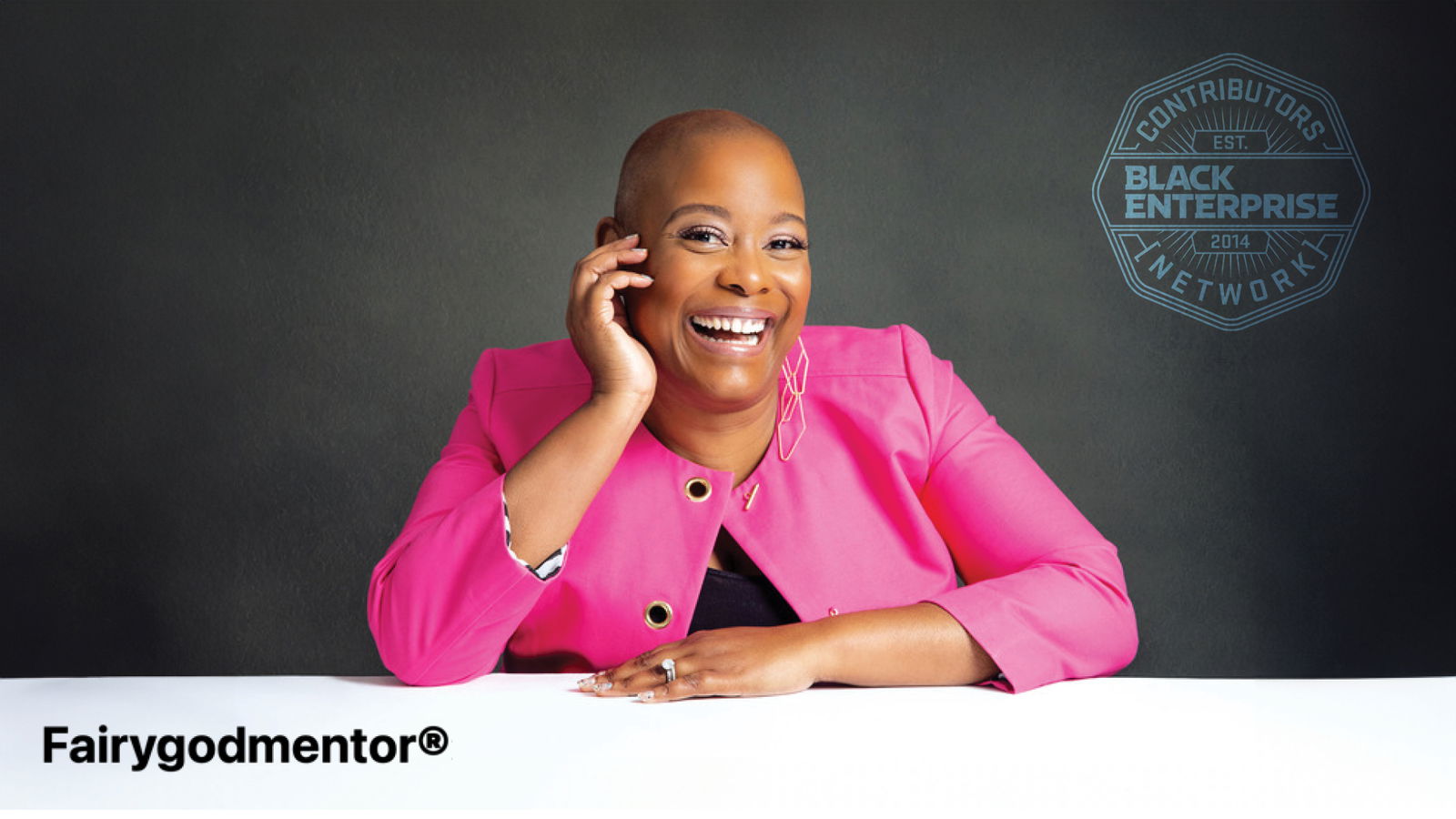
Joyel Crawford, fairygodmentor, contributor
(Photo: Kirten White Photography/BE)

Ask Your Fairygodmentor®: How To Tell If You’re Being Quietly Sidelined At Work

Not all career setbacks are super obvious


Dear Fairygodmentor®

I’m not being laid off—but I’m also not being promoted, challenged, or included like I used to be. I feel invisible. Am I overthinking this, or am I being quietly sidelined?
—Stuck in the Middle

Dear Stuck in the Middle,

Not all career setbacks are super obvious, complete with a meeting invite and a severance package. You’re in the in-between grief of work. This is career limbo, where there’s no clear feedback, and you’re not really clear about what your future holds. Sometimes the loudest message that a workplace can send you is silence. 

Let’s just call it what it is: The Quiet Sidelining Phenomenon

This workplace behavior is not due to the recent layoffs you may have survived, nor to any performance issues (because you have been meeting and exceeding expectations like a rockstar). It’s that slow, insidious removal from visibility, opportunity, and influence. You’re not wrong for feeling like something is off. I’m sure that you’re feeling confused, doubting yourself at every turn, and hustling hard to the point of overwork to “earn” your visibility back. 

The Signs You’re Not Imagining It (A Reality Check Without Panic) 

Here are some red flags to look out for:

• Others are being given stretch assignments or promotions around you

• Feedback you’ve received (if you’re even getting it anymore) has become vague, inconsistent, or just plain nonexistent

• You’re busy but not advancing

Being busy isn’t the same as being invested in. If you feel like your Career Growth Well has run dry, it’s time for you to be proactive and take action.

Before You Spiral Out of Control, Do a Power Audit

You need to reclaim your power. Ask the following questions to ground yourself:

• What’s actually changed versus what feels different?

• Who controls access to opportunity in your organization?

• When was the last time you clearly advocated for yourself? 

The reason I’m asking you to reflect on these Power Audit questions is that silence from leadership doesn’t always mean rejection. But it does require some interpretation on your end.

Next Steps to Take Action and Reclaim Your Power

1. Initiate a Career Clarity Conversation

You are in the driver’s seat of your career. If your car is stalled out on the road or you need help with directions, refer to your GPS (your manager). Some impactful questions to ask:

• “I’d love to understand how you see me here over the next 6-12 months.”

• “What would career advancement look like for someone in my role?”

• “Where should I be focusing to stay aligned with the team’s priorities?”

The key to remember is that you’re not asking for permission, you’re gathering feedback. Feedback is merely data. This is a time to find clarity and alignment. I would also advise you to bring your receipts to this clarity conversation. If your manager calls any of your performance into question, you can show your accomplishments to support any data you receive that’s not aligned with the reality of your output.

2. Re-Establish Visibility Strategically

Down with hustle culture! Contrary to some folks’ belief, you can increase your visibility whether you’re inside or outside of the concrete walls of an office building. I highly suggest that you have 1-on-1 meetings with your manager to keep them regularly up to date on your progress. This will ensure that you’re not just working harder, you’re working louder and smarter. You can’t just do the work and hope that everyone figures it out through osmosis. Put yourself out there for stretch assignments that are aligned with your goals and the company’s priorities. Reconnect with the decision makers. Don’t keep those 1-on-1 conversations just for your direct manager; skip a level or two. You may find a mentor or sponsor in these connections. I still keep in touch with my skip-level sponsors regularly, 20 years later.  

3. Stop Waiting for Validation That May Never Come

If you’ve taken steps to show your value, stayed in constant contact with your manager about priorities, and you’re still stuck in Neutral, you may want to think about moving on. As my late father used to tell me, “When they stop promoting you, it’s time to leave.” You might want to consider moving internally within the organization or exploring external opportunities. If your environment can’t see your value, it may not be designed to help you grow it, either.

4. Build Your Exit Strategies Without Panic

Get your “career house” in order. Update that DIG (Damn I’m Good) folder. Create a Career Scenario log that captures all your stories and situations, providing hiring managers with results-based data on how your past performance could predict future behavior. Reconnect NOW with your network before you’re actively looking for work. Keep your connections warm. And it doesn’t hurt to explore your options before the urgency to leave hits you, or when you’re forced to leave.

5. Shift Your Mindset

As En Vogue used to sing, “Free Your Mind! And the rest will follow!” It’s time for you to shift from “What’s wrong with me?!” to “What is this environment showing me?” It’s time to reclaim your power. Your career isn’t happening to you. You need to take the wheel and get in that driver’s seat. You’re not stuck, my friend. You’re being informed.

If they’ve gone radio silent on your growth, that’s not your cue to shrink; that’s your cue to strive for clarity.   

You got this!

Yours truly,

Your Fairygodmentor®

About Joyel Crawford:

Joyel Crawford is an award-winning career and leadership development professional and founder of Crawford Leadership Strategies, a consultancy that empowers results-driven leaders through coaching, training, and facilitation. She’s the best-selling author of Show Your Ask: Using Your Voice to Advocate for Yourself and Your Career.

Have a question for Your Fairygodmentor®?

Submit your career and leadership questions, whether it’s about navigating a micromanager, setting boundaries, negotiating for a raise, or handling burnout. Ask Your Fairygodmentor® today!

Malcolm X, Quotes
Photo credit: Marion S. Trikosko, Public domain

The Enduring Fire: Revisiting Malcolm X’s Vision For Black Liberation On What Would Have Been His 101st Birthday

On what would have been his 100th birthday, we remember a man whose evolving vision of self-determination and liberation remains a powerful and necessary voice in our ongoing pursuit of a more just and equitable world.


Born Malcolm Little on May 19, 1925, the man who would evolve into the globally influential Malcolm X and later El-Hajj Malik El-Shabazz remains a pivotal figure in the ongoing pursuit of Black liberation. 

As we land on what would have been his 101st birthday, his incisive critique of systemic racism and his unwavering call for self-determination strike with profound urgency in today’s deeply divided racial landscape.

From a childhood scarred by the overt white supremacy that resulted in the burning of his family’s Michigan home (and the suspected Klan murder of his father, Earl Little) to his transformative engagement with the Nation of Islam (NOI) and his eventual embrace of Sunni Islam, Malcolm’s journey offers enduring insights for a world still grappling with the pervasive realities of racial injustice.

Malcolm’s early years were a stark testament to the virulent racism embedded within American society. The Little family’s eviction from their Lansing home due to a discriminatory restrictive covenant and the authorities’ indifference to the arson that destroyed their dwelling laid bare the systemic devaluation of Black lives. These foundational traumas, compounded by the state’s subsequent removal of the children following his mother Louise’s descent into mental illness, forged within young Malcolm a keen awareness of racial oppression.

His time incarcerated, commencing in 1946, became an unexpected catalyst for intellectual growth. Under the influence of a fellow inmate known as “Bimbi,” Malcolm embarked on a rigorous program of self-education. During this period, his newfound brother introduced him to the teachings of Elijah Muhammad and the NOI. Shedding the surname “Little,” which he viewed as a vestige of slavery, he adopted “X,” symbolizing the lost ancestral name and the forging of a new identity rooted in Black consciousness. Initially dismayed by the NOI’s limited growth, with a nationwide membership of around 400, Malcolm spearheaded an intensive recruitment drive with Elijah Muhammad’s blessing, leading to a significant surge in membership.

As a charismatic minister and the national voice of the NOI, Malcolm X articulated a powerful challenge to the prevailing racial order. His potent oratory, advocating for Black self-defense “by any means necessary,” contrasted sharply with the nonviolent strategies of the mainstream Civil Rights Movement. 

The NOI’s rapid expansion, reaching approximately 40,000 members under his influence and supporting 49 temples, demonstrated the power of his message to many Black Americans who felt marginalized and excluded from the promises of equality. The establishment of Muhammad Speaks, the NOI’s newspaper, further disseminated his uncompromising critique of white supremacy.

However, Malcolm’s intellectual and spiritual evolution continued. His transformative pilgrimage to Mecca in 1964 marked a profound shift in his understanding of race and Islam. Witnessing Muslims of diverse backgrounds worshipping harmoniously led him to embrace Sunni Islam and adopt the name El-Hajj Malik El-Shabazz. 

Simultaneously, he founded the Muslim Mosque, Inc. (MMI) in March 1964, a religious organization grounded in traditional Islam, and the secular Organization of Afro-American Unity (OAAU) in June 1964, advocating for Pan-Africanism and Black self-determination, drawing inspiration from the unified political voice of the Organization of African Unity (OAU).

Malcolm’s ideological evolution did not dilute his commitment to Black liberation but broadened its scope. He began to frame the struggle for racial justice in the United States within a global context of anti-colonialism and human rights. His efforts to bring the grievances of African Americans before the United Nations reflected this expanded worldview. As he stated after his Hajj, he witnessed in Mecca “pilgrims of all colors from all parts of this earth displaying a spirit of unity and brotherhood like I’ve never seen before.”

The experience informed his belief that a “bloodless revolution” in America was possible.

Today, nearly six decades after his assassination on February 21, 1965, Malcolm X’s legacy carries a renewed and vital significance. In an era marked by persistent and often stark racial disparities, his demand for genuine equality and self-determination reverberates with pressing urgency. For instance, data from the Bureau of Justice Statistics in 2021 indicated that Black individuals accounted for approximately 33% of the incarcerated population in state and federal prisons, despite making up only about 13.6% of the U.S. population. This stark overrepresentation underscores the systemic issues Malcolm so vehemently critiqued.

Furthermore, the ongoing national conversations surrounding racial bias in policing, as evidenced by numerous high-profile cases, echo Malcolm’s condemnation of police brutality following the assault on Johnson Hinton in 1957. His assertion of the right to self-defense in the face of state-sanctioned violence finds contemporary force in movements advocating for police reform and accountability.

The debates surrounding the teaching of Black history and the pushback against initiatives promoting diversity, equity and inclusion highlight the continued relevance of Malcolm’s insistence on historical truth and the need for Black-led institutions, a key tenet of the OAAU. His emphasis on education as a means of empowerment and the importance of African Americans controlling their own narratives remain crucial elements in the fight against systemic racism. As he articulated at the OAAU founding conference, rejecting pejorative terms and embracing self-defined identities are essential for genuine progress.

The increasing awareness of global Black solidarity and the interconnectedness of struggles against oppression worldwide also aligns with the Pan-African vision of the OAAU. Malcolm’s understanding that the fight for Black liberation in America was intrinsically linked to the liberation struggles on the African continent continues to empower contemporary movements advocating for racial justice on a global scale.

Malcolm X’s enduring legacy lies in his intellectual courage, unwavering commitment to justice, and capacity for transformative growth. He was a leader who challenged not only the external forces of oppression but also the internal limitations imposed by systemic racism. 

On what would have been his 101st birthday, we remember a man whose evolving vision of self-determination and liberation remains a powerful and necessary voice in our ongoing pursuit of a more just and equitable world.

Inshallah.

RELATED CONTENT: SHOCKING VERDICT: Memphis Cops Found ‘Not Guilty’ In Tyre Nichols Beating

discrimination
phot credit: Getty Images

OpEd: Strong Black Woman Or Silently Suffering? The Cost Of Emotional Suppression

How do Black women begin to break free from the "Strong Black Woman" persona?


By Antania “Nia” Priester

The doctors told me my heart was broken.

Not metaphorically. Not emotionally. Physically.

I was lying in a hospital bed after experiencing severe chest pain when they explained I had developed Broken Heart Syndrome, Takotsubo cardiomyopathy, a condition triggered by intense emotional stress. In that moment, everything slowed down. I was grieving the loss of my brother, carrying layers of unprocessed pain from betrayal in my marriage, and sitting beside someone who had contributed to that emotional turmoil.

And yet, up until that moment, I had still been showing up. Still smiling. Still functioning.

Still being “strong.” That is the reality for so many Black women.

This experience is not just personal; it reflects a broader truth. Black women are conditioned by society and culture to endure pain in ways that are rarely acknowledged. Research continues to show disparities in how Black women’s pain is perceived and treated, particularly in healthcare settings. If our physical pain is often minimized, it raises a critical question: what happens to our emotional and mental health?

As cultural critic bell hooks writes in All About Love, “Rarely, if ever, are any of us healed in isolation. Healing is an act of communion.” Yet many Black women are expected to carry their pain quietly, without the support that healing requires.

From the outside, I appeared strong. I continued to show up for others, maintain responsibilities, and present a composed version of myself. But internally, I was struggling with what is often called functional depression, continuing to perform while silently unraveling. I experienced panic attacks, deep exhaustion, dread, forgetfulness, and loneliness. Even when I voiced that I wasn’t OK, my truth was often dismissed and replaced with reminders of my strength.

The “Strong Black Woman” identity, while celebrated, comes at a cost. It demands emotional suppression, self-sacrifice, and constant resilience. Over time, this leads to chronic stress, physical illness, and emotional burnout. Dr. Joy DeGruy’s work on Post Traumatic Slave Syndrome highlights how generational trauma has shaped coping mechanisms such as over-functioning and emotional suppression within the Black community. These patterns were rooted in survival, but survival is not the same as healing.

My turning point came when I realized that being functional did not mean I was healthy. I had to choose myself, not the version of me others relied on, but the version of me that needed care.

So how do Black women begin to break free?

It starts with naming the conditioning. Emotional suppression is not just an individual issue; it is cultural and generational. Recognizing this allows us to release self-blame and begin to understand our patterns.

It requires redefining strength. Strength is not silent suffering. True strength is setting boundaries, acknowledging when we are not OK, and choosing ourselves without guilt. It demands that we practice rest as resistance.

For Black women, rest is not indulgent; it is necessary. It disrupts cycles of overwork and survival mode that have been normalized for generations. It calls for rebuilding community. Healing requires safe spaces where vulnerability is honored, not dismissed. Community should be a place where we can be seen fully, not where we feel pressure to perform strength. And it involves stepping out of emotional prison intentionally. Healing is not about getting over what we have experienced. It is about moving forward without abandoning ourselves in the process.

This conversation cannot be limited to moments when public figures share their stories. Every day, Black women are navigating emotional burdens that often go unseen. This dialogue must be ongoing, in our homes, communities, and systems.

For generations, Black women have been praised for how much we can carry but rarely asked what it is costing us. I was praised for being strong while my body was shutting down. I had to decide whether to remain who I was conditioned to be or become who I needed to be to survive.

I chose myself.

And maybe it’s time more of us do the same.

Because strength should not feel like suffering.

And healing should not feel like isolation.

RELATED CONTENT: Experts Say The ‘Sticky Floor’ Phenomenon Is Trapping Women In Low-Wage Jobs

Haiti, france, reparation, Haitians, Haitian Heritage Month
(Photo: Manuel Augusto Moreno/Getty Images)

Haitian Flag Day: 5 Haitian-Owned Brands And Organizations To Support

The Haitian flag is one of the most powerful symbols of freedom and independence in the Americas.


The Haitian flag is one of the most powerful symbols of freedom and independence in the Americas. Originally sewn on May 18, 1803, by Catherine Flon, with guidance from her godfather, Haitian revolutionary leader Jean-Jacques Dessalines, this flag was created during the fight against French colonial rule by removing the white stripe from the French tricolor and joining the blue and red sections together.
When Haiti became the first independent Black republic in 1804 after the Haitian Revolution, the flag came to represent resistance, pride, and self-determination. Today, it remains a deeply meaningful emblem of Haitian identity, resilience, and the enduring spirit of a people who fought successfully against slavery and colonialism.

As we celebrate Haitian Flag Day on May 18, 2026, BLACK ENTERPRISE has highlighted five Haitian-owned brands to support.

Kreyòl Essence

Offering products ranging from skincare to haircare sourced directly from Haiti, the website states: “Every purchase supports farmers, women, and communities that create Kreyòl Essence Products.”

Vinshēk

Creating clothing that tells stories, Vinshēk’s website states, “Each drop is rooted in a specific moment in history, exploring culture, resistance, identity, and evolution through design. Whether revisiting the revolutionary spirit of the 1960s, Haitian Revolution of 1804, or honoring the elegance of a forgotten era, our garments serve as living archives, made to be worn, remembered, and felt.”

KO Kitchen/ Haitian KO Kitchen

Knockout Kitchen is a Haitian culinary and cultural platform founded by Chef Kerline Ordeus. Rooted in heritage and shaped by community, its work centers food as memory, care, and connection while offering Haitian cooking experiences, spices, take-away meals & more.


CCCC Haiti/ Cazale Community and Cultural Center

The Cazale Community and Cultural Center is a nonprofit organization dedicated to transforming the lives of young people in Haiti, founded by Haitian businesswoman Soledad DesRuisseaux when she moved from Haiti to New York in 1981. From there, she decided to take a leap of faith and open an after-school center in Cazale, Haiti, with the hope of having a safe space with electricity where students in the town could come and do their homework, read, and play.

Nouka Jewelry

NOUKA jewelry was founded to connect through jewelry passed down through generations. Its website states, “NOUKA was born from a quiet realization that grew too loud to ignore. Across Haiti’s diaspora, there is a deep longing for connection. Many of us carry stories shaped by migration, separation, and becoming someone new in unfamiliar places. We aimed to change that.”

RELATED CONTENT: SAK PASE? New York City Declares July 26 As Haitian Konpa Day

casting, Black actors and actresses, Project Casting
(Photo: Pavel Danilyuk/Pexels)

Black Actors Needed For Upcoming TV And Film Roles In Los Angeles

Project Casting is inviting Black actors on the West Coast to apply for upcoming TV, film, and entertainment opportunities.


Originally published on BlackNews.com.

Jonathan Browne, the founder and CEO of Project Casting, has announced a massive casting search focused on helping Black actors in Los Angeles connect with more opportunities in television, film, and entertainment. The initiative is designed to make it easier for Black performers to get discovered, apply for roles, and take the next step in their acting careers through Project Casting’s entertainment jobs platform.

Black actors in the Los Angeles area can now create or log in to their Project Casting account to apply for upcoming casting calls, acting auditions, TV projects, film opportunities, and other entertainment roles seeking diverse and authentic talent.

“Project Casting was built to help people find opportunity,” said Browne. “As a Black founder in the entertainment industry, I understand how important representation is both on-screen and behind the scenes. We want to help Black actors in Los Angeles get discovered, get seen, and connect with real opportunities that can help move their careers forward.”

This casting search is part of Project Casting’s larger mission to make the entertainment industry more accessible, inclusive, and open to talented performers from all backgrounds.

Casting Opportunity Details

Who: Black/ African American actors
Location: Los Angeles, California
Project Type: TV, Film, and Entertainment
Opportunity: Auditions and casting calls for upcoming projects
Platform: Project Casting

Actors interested in being considered can join today by visiting ProjectCasting.com/login.

About
Project Casting is a leading entertainment jobs platform that helps actors, models, content creators, and production professionals find casting calls, acting auditions, production jobs, and career-building opportunities. Project Casting is committed to helping talent discover real opportunities and build meaningful careers in the entertainment industry.

RELATED CONTENT: Black Actors Need Creator-Owned Pipelines, Not Just Visibility