Starbucks Debuts Cup Collection For Black History Month
Starbucks has released new designs in celebration of Black History Month.
Starbucks is celebrating Black History Month with its a collection of cups from artist Damon Brown.
Brown’s work is part of the coffee chain’s Artists Collaboration Series which “celebrates the unique stories of artists from all over the world.” While diverse artists have utilize their creatvity to amplify events such as Pride Month, this year marks the first designs for the Black community.
Brown, whose artistic name is Creative Lou, inserted the colors significant to the Black community in his depiction of Black people. Remaining true to Starbucks’ brand while promoting pops of sky blue and cream, these designs are a highlight of Black community members taking the main focus, especially in a contemporary fashion.
“An intentional play on the classic color palette of red, black and green that you may typically see represented in Black art or during Black History Month—to make it more modern and purposeful,” explained Brown on his creation.
Brown first worked on a mural for a Starbucks location in Seattle. His work was also featured in a poster commemorating the coffee shops 50th anniversary, bringing back the siren logo. This working relationship is especially important to Brown, who hopes the designs will spark a long lasting joy in customers.
“My goal for this collection was for it not to feel that it’s one month only—but taking it farther and giving you something more artistic that can be enjoyed and celebrated beyond February—when it should be every day for us.”
The latest cold cups and tumblers will be available across Starbucks locations in the U.S. and Canada starting Jan. 30. Meanwhile, the coffee giant continues to support Black organizations, such as the NAACP and African American Mayors Association.
Black Firm Aims To Add $1B In Managed Assets With ‘Intrinsic Value Investing’ Approach
Channing Capital Management regularly makes the BLACK ENTERPRISE Asset Managers list.
Having a clear understanding of a company’s investment value, forming partnerships, and expanding its client base—Channing Capital Management is applying those strategies to help fuel current and long-term growth. The Black-owned, Chicago-based boutique investment management firm is projecting assets under management will hit $5 billion in 2025, up from just over $4 billion last December. The firm also predicts a 20% gain in revenue this year. (No dollar figures were disclosed.)
Founded by Rodney Herenton and Wendell Mackey in 2003, Channing has blossomed from an initial $70 million in seed assets. Channing, which in January 2024 celebrated its 20th anniversary of landing its first client, has regularly made the BLACKENTERPRISE Asset Managers list.
Now, the firm is positioning itself for sustained growth. It expects revenue growth this year will come from a continued emphasis on its research-intensive intrinsic value investing strategies led by small-cap investing and expanding its subsidiaries, Channing Global Advisors and Channing Alternatives LLC.
BE connected with Herenton and Mackey via email to discuss their firm’s growth prospects.
“We are energized as we look at the next twenty years of growth,” Herenton said. “From the day we launched, we were determined to build a firm focused on delivering exceptional value to our clients through a strategy grounded in intrinsic value investing.”
Mackey agreed, adding that approach has helped the firm navigate market fluctuations and yield success for its clients. As co-founders and co-CEOs, Herenton and Mackey complement each other. Herenton, a Memphis native, and Mackey, who has Chicago roots, are utilizing their talents to excel in one of the nation’s most competitive and volatile industries.
Generally, intrinsic value has been described as what a company is worth based on its fundamental business and other metrics. Legendary investor Warren Buffett supposedly uses the investment method.
At Channing, Herenton oversees business development and business strategy. Mackey is the firm’s chief investment officer and lead portfolio manager of its flagship small-cap strategy.
Their efforts over the past two decades have helped Channing establish key partnerships with notable and reputable institutional investors. That includes working with large state, county and city pension funds, Fortune 500 corporations, endowments, foundations, unions, wealth management platforms, and family offices.
Channing intends to use its intrinsic value investing style to fuel growth over the next 20 years, Last October, the firm reported it made a powerful strategic move by launching Channing Alternatives, which fosters growth by making investments in asset classes non-correlated to public equity markets.
Channing reports its inaugural strategic ally, Preserver Partners, is among the industry’s rare African-American woman-owned hedge funds. “Preserver, through its collaboration with Channing, is strategically positioned to further amplify its growth in alternative investment strategies to meet burgeoning market demand,” Mackey says.
In 2017, Channing helped establish Channing Global Advisors, a provider of emerging-markets and international equity strategies to institutional clients. That business reportedly had assets over $500 million last December, making it poised to play a substantial role in driving Channing’s overall growth.
Still the main challenge for Channing is to continue to expand its customer base, where most of the firm’s clients are public and corporate pension funds.
“We want to bring in new clients from different areas like 401(k) plans, endowments and foundations, and individual investors,” Herenton said. “To tackle this challenge, we’re focusing on promoting our new investment options, like the small-cap value mutual fund we introduced in the last 48 months. This will give these investors a chance to use and benefit from our strategies.”
Blacks Debate Over Reparations: Pushback, Skepticism, And Calls For Action
Only 14% of Black people in a recent poll believe that there will be action on reparations in our lifetime.
According to a poll conducted in spring 2023 by the Washington Post, only 14% of Black people who responded believe that there will be action on reparations in our lifetime, despite 75% of those same people believing that America has a responsibility to address reparations.
The skepticism seems to be based in the fact that there has been little action taken on reparations. However, some, like Trevor Smith, the head of the Reparations Advocacy Lab, caution that this skepticism may actually be detrimental.
“If Black folks don’t believe that reparations are possible, then no other community, either other people of color or white people, will really get on board with this,” Smith told The Washington Post.
Polling numbers from California express that Asian, Latinos, and whites believe there should be no reparations for Black Americans.
However, Black residents like Aziza Kamara-Amimi want to see action on reparations sooner rather than later. At a meeting about the reparations proposal in California, Kamara-Amimi made it clear that she believes the time for action is now. “We have been talking about this for years, people have been fighting for this for years,” Kamara-Amimi said. “And still all we are doing is talking and talking, and I don’t see any real progress being made. What’s the real solution?”
In San Francisco, there had been a task force set up, which is distinct from efforts from the state, and the task force recommended a broad package of incentives for Black San Franciscans, including $5 million in direct payments to residents of the city. After initially backing the plan, San Francisco Mayor London Breed created a $4 million fund for the program in order to create an office of reparations in the city.
But Breed, who is Black, eliminated the office, citing budget concerns and the program’s place on her list of priorities. Breed also indicated in a statement that she believes reparations is an issue that should be solved by the federal government.
This belief is fairly common among scholars who have long advocated for reparations, scholars like William “Sandy” Darity and A. Kirsten Mullen, authors of From Here To Equality: Reparations for Black Americans in the Twenty-First Century.
Darity, an economist at Duke University, told CNBC that in order to minimize the risk of exacerbated inflation, payments totaling $14 trillion should be spread over 10 years.
Some are still focused on local reparations. In New York, a committee was created for the study of reparations in June 2023 after the state legislature passed a bill. Following six months of sustained political pressure, New York’s Gov. Kathy Hochul signed the bill into law.
In 2023, Rep. Cori Bush (D-MO) introduced HR 414, the first time the United States’ treatment of its Black citizens from enslavement to Jim Crow and beyond entered the congressional record. Bush’s resolution also extended a call for more to be done on the state and local levels.
Bush’s bill as well as one earlier re-introduced by California Democrat Barbara Lee, which calls for establishing a United States Commission on Truth, Racial Healing and Transformation are designed to be companion pieces to HR 40, the Commission to Study and Develop Reparation Proposals for African Americans Act.
HR 40 is an evergreen bill introduced by John Conyers in 1989 and is re-introduced each year. According to ABC News, Bush knew her bill likely wouldn’t get a vote, but said her aim was to build momentum for ongoing reparations attempts across the country.
Study: Most Black Americans Feel News Media Don’t Cover Issues Relevant To Them
A new study by the Pew Research Center has revealed that only 4 out of 10 Black Americans believe the news adequately covers issues important to them.
According to a new study, less than half of Black Americans believe news outlets are doing their job in speaking on topics specifically relevant to the community.
The Pew Research Center unveiled its findings that 4 out of 10 Black participants, from the sample of 4,752 in the study, expressed their approval in the news coverage. The majority surveyed were unhappy with the prioritization of news coverage seemingly away from their interests.
Asian and Hispanic participants felt similarly—38% and 37%, respectively—but 54% of white adults surveyed felt the news represents issues they care about most.
Of the issues Black people are most invested in, health care and medicine ranked the highest, with 66% of individuals listing the topic as “extremely or very important.” However, regarding how accessible this information is, 62% said the topic was widely addressed in news media. However, that left a nearly 40% margin of respondents who believe that information tailored to the Black community is not readily accessible.
Black respondents wanted news outlets to better dissect topics such as the wealth gap and other economic issues, including housing and employment. Additional issues included crime, as well as criminal justice, but also stories that feature Black people in a more “positive light.” In a September 2023 study, 63% of Black respondents determined the news surrounding their racial group was geared more toward the negative.
Considering this perception on their media portrayal, the inclusion of positive storytelling that dismantles stereotypes is of heightened importance to the demographic.
With presidential campaigns will under way, these insights could determine what issues will be of primary focus for the candidates, particularly for incumbents Joe Biden and Kamala Harris as they campaign for the Black electorate to turn out the vote a second time.
Six of these cities are on the East Coast, while the others are in California.
If you hate having to sit in traffic as you commute to work, then you need to stay away from several cities on the East Coast and some in California.
According to Business Insider, out of the 10 cities with the longest commute to work, six of them land along the East Coast, with the remaining four being in California. Based on data from the U.S. Census Bureau, commuters in East Stroudsburg, Pennsylvania, tend to take approximately 36.2 minutes to get to their work destination. And that’s only one way.
As one may expect, the New York City metro area is right behind the Pennsylvania city. Commuters traveling to work in the New York-Newark-Jersey City area should expect to spend just under 36 minutes (35.8) to get to their place of employment. Stockton, California, follows the NYC area, with people arriving at work in 33.9 minutes.
Rounding out the remaining cities on the list are:
The Riverside-San Bernardino-Ontario, Calif., area at 32.6 minutes
Washington-Arlington-Alexandria, D.C.-Va.-Md.-W. Va., at 32.3 minutes
Yuba City, Calif., was tied at the fifth spot with 32.3 minutes
Poughkeepsie-Newburgh-Middletown, N.Y., at 32.1 minutes
Vallejo, Calif., at 31.5 minutes
Atlanta-Sandy Springs-Alpharetta, Ga., at 30.9 minutes
Bridgeport-Stamford-Norwalk, Conn., at 30.8 minutes
There are many other metropolitan areas where commuters must travel about 30 minutes to get to work. Those places are Chicago, Naperville-Elgin, Ill., San Francisco-Oakland-Berkeley, Boston-Cambridge-Newton, and Houston-The Woodlands-Sugar Land, Texas.
The city with the shortest commute time is Great Falls, Montana. People who travel to work in that city get there in 15.4 minutes on average. In the Lewiston, Idaho area, commuters expect to arrive in 16 minutes, while commuters living in Manhattan, Kansas, and Casper, Wyoming, could get to their job in 16.2 minutes.
The article also noted that according to a November 2023 Gallup poll, 27% of workers do their jobs remotely, while 52% utilize the hybrid model of working remotely and going to the office.
New York Times Called Out For Omitting Black Businesses In Detroit Lions Playoff Boost Report
It is disappointing that a Detroit institution had to be reminded by its readers that Black businesses exist, but perhaps that is owed to the overwhelming whiteness of the Detroit metro area in general.
Phil Lewis, Black Twitter’s go-to source for news aggregation and a reporter for Huffington Post,pushed back on TheNew York Times‘ omission of Black businesses in Detroit in its report about Detroit businesses receiving a boost due to the Detroit Lions playoff run.
In his newsletter, “What I’m Reading,” Lewis reported that Chimika Harris, a manager at Cutter’s Bar & Grill, was interviewed by the Times for its report, only to have her comments omitted.
Detroit, which is affectionately referred to as the Blackest city in America, has a 77% Black population, so people noticed when its Black restaurant scene was ignored by TheNew York Times in favor of white-run establishments.
Ken Coleman, a senior reporter at Detroit nonprofit news outlet Michigan Advance and a historian of the city, posted on Facebook, “Detroit is 77% Black. 57% of the NFL is Black. Not one African-American-owned business mentioned in this New York Times piece. Wow!” Harris responded underneath Coleman’s post, writing, “I’m very disappointed to hear this The NYTimes did a interview with me for this on Friday.”
Detroit is 77% Black. 57% of @NFL is Black. Not one African-American-owned business mentioned in this @nytimes piece.https://t.co/rQDtKMTNa2
New from me: The New York Times ran a story on how local businesses in Detroit are enjoying the Lions' success — without mentioning any Black-owned businesseshttps://t.co/zaYkNq4BlX
Lewis interviewed Dennis Archer Jr., owner of Central Kitchen + Bar, who expressed his disappointment with the narrative that overlooks Black Detroit’s contribution to the economic impact of the Lions playoff run. “Because the city is majority African-American, because of the history of how the city became that way, and because of the number of strong purveyors here, it’s unfortunate when we are not equally represented in the narrative because we are such a strong part of the foundation, the backbone, and story here,” Archer said.
Archer was referencing the Great Migration, a period from 1916 to 1970 when many Black individuals moved from the South to the North in search of better opportunities and to escape racial violence under Jim Crow laws. Emily Fisher, in a Detroitisit op-ed, highlighted the allure of higher-paying jobs in Detroit at the time, like at Ford Motor Company, which offered $5 a week compared to the average $5-a-month income for Black Americans. Herb Boyd’s book Black Detroit notes the significant population increase in cities like New York and Detroit during this period, with the Motor City experiencing a remarkable 611% surge and becoming a symbol of economic promise and opportunity for African Americans.
Black individuals who fled the Jim Crow South encountered a different but still discriminatory environment upon their arrival in northern cities. Instances like the 1967 Race Riots in Detroit highlighted the harsh realities faced by Black communities.
In 2021, Detroit was named the most segregated city in the country, in large part due to the disproportionate distribution of white people in the Detroit metro area. In that area, despite Detroit’s overall population being 78% Black, only 23% of the population in the Detroit metro area was Black. The metro area remains disproportionately white. And it seems that this is where TheNew York Times focused its story, thus excluding Black-owned businesses in other parts of the city.
Kenny Valentino, who owns District Seventy8, a restaurant/lounge establishment, said of theexclusion, “With all the revitalization in Detroit, the small, minority, Black-owned businesses are always left out. It does not surprise me.”
The Detroit Free Press, after also being criticized for only including one Black establishment in its own report on Detroit businesses receiving a boon from the Lions playoff run, ran another piece emphasizing the impact on Black Detroit businesses. At the behest of Starex Smith, who runs The Hungry Black Man, a platform dedicated to reviews of Black-owned establishments, the Free Press sent a reporter out on a bar crawl of several Black-owned restaurants.
Advanced Leadership Institute And Carnegie Mellon University Unveil 2024 Executive Leadership Academy Cohort
This program is exclusively for Black executives and managers.
The Advanced Leadership Institute introduced its sixth annual Executive Leadership Academy Cohort as part of its 2024 Executive Leadership Academy Kick-Off Program and Reception on Jan. 26 at Carnegie Mellon University Tepper School of Business.
As TribLive reports, Carnegie Mellon University created the program in conjunction with the institute to create an incubation space for Black leadership in Pittsburgh. The president/CEO of the Advanced Leadership Institute, Evan Frazier, told the outlet that he views it as a celebration of progress.
“Letting the leaders in the room and across the region know that there is support here in the community, and we are really counting on them to grow and move to do great things in Pittsburgh,” Frazier noted. “I’ve seen shifts in people being more connected within Pittsburgh, a greater sense of belonging. And in the past, people felt so isolated. It makes such a difference when you know there are other leaders like yourself, diverse leaders, Black leaders that are out there, doing great things,” Frazier said, “and there are also others out there that might have the same struggles. The empowerment of being able to know and build relationships and have that level of support is amazing.”
In a press release, Isabelle Bajeux-Besnainou, a dean and the Richard P. Simmons Professor of Finance at Carnegie Mellon University Tepper School of Business, emphasized the university‘s excitement at continuing to assist in the growth of Pittsburgh’s Black leadership. “We are honored to serve as TALI’s academic partner. The past six years have been very gratifying for us as we play a pivotal role in enhancing the leadership skills of TALI’s program participants,” said Bajeux-Besnainou. “I’m looking forward to this sixth year and have no doubt that the 2024 Executive Leadership Academy cohort will learn transformational strategies to impact their personal and professional development.”
The university describes the program’s aim: “The Advanced Leadership Institute has a vision to dramatically improve the regional presence of African Americans in executive leadership roles, helping to create a more diverse, inclusive, and prosperous community.”
The program also does not hide the fact that this program is exclusively for Black executives and managers. Several sections on its website, including a bold header at the top, proclaim the program’s intentions: “Our programs support Black professionals at various levels of leadership.”
According to the press release, the Advanced Leadership Institute seeks to “cultivate Black executive leadership to strengthen companies, institutions, and communities.”
In addition to the educational partnership of Carnegie Mellon University, the program is supported by a multitude of corporate sponsors and stakeholders, including: BNY Mellon Foundation of Southwestern Pennsylvania, Highmark Foundation, and Richard King Mellon Foundation; the Henry L. Hillman Foundation and Highmark, BNY Mellon, Eden Hall Foundation, and The Heinz Endowments; Giant Eagle, Highmark Health, PNC, and UPMC; American Eagle Outfitters, Bank of America, Buchanan Ingersoll & Rooney PC, CNX, Covestro, Dollar Bank, Duquesne Light Company, FedEx Ground, FHLBank Pittsburgh, Golub Capital, Koppers, PPG, and Wabtec Corporation and the Pittsburgh Legal Diversity and Inclusion Coalition.
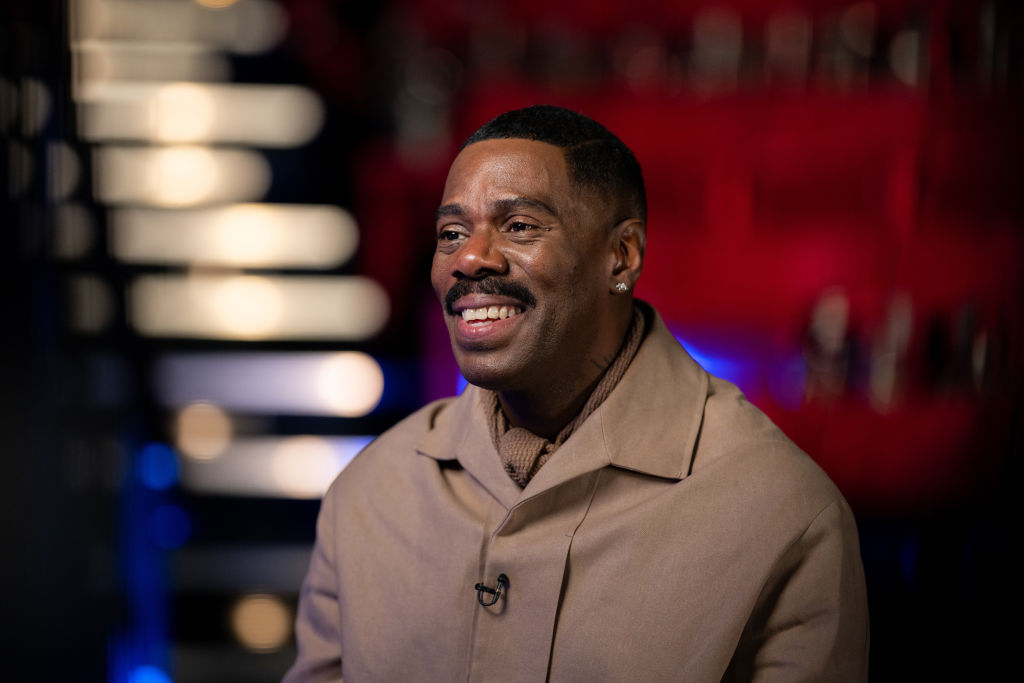
Colman Domingo Set To Portray Two Iconic Figures In Upcoming Biopics
The Best Actor Oscar nominee will play the roles of Michael Jackson's father and Nat King Cole.
If you haven’t heard of or seen actor Colman Domingo, chances are you will see a lot of him in the near future.
According to Variety, he is about to portray not one but two legendary men in two upcoming biopics. We’re about to see Domingo as the patriarch of the Jackson family, Joe Jackson, in Michael, directed by Antoine Fuqua. The movie will focus on the “King of Pop,” Michael Jackson.
“I’m excited to be a part of a film that explores both the complicated soul of the legendary Michael Jackson as well as his impact on music and culture as a global icon,” said Domingo. “Not only am I fortunate to have a rich, complex, and flawed character to portray in Joe Jackson, but I also have a front-row seat for Jaafar’s incredible transformation.”
Domingo was referring to Michael’s nephew Jaafar Jackson (son of Jermaine Jackson), who will be portraying the musical icon in the film.
The actor also has a role we hope will be “Unforgettable”: portraying Nat King Cole in a project in which he will also be making his directorial debut. He revealed the tidbit while appearing on the media outlet’s “Variety Awards Circuit Podcast.”
“I’ve been working on it quietly for a few years. It’s something I’m looking forward to putting together with some great partners,” he said.
Domingo previously co-wrote the play “Lights Out: Nat ‘King’ Cole” with Patricia McGregor and also tackled the role of the music icon at Los Angeles’ Geffen Playhouse.
These news items come after it was revealed that the actor was nominated for a Best Actor Academy Award for portraying yet another important figure in civil rights: Bayard Rustin, in the Netflix movie Rustin. Domingo has also received Golden Globe, BAFTA, Critics Choice, and SAG nominations for his work. He recently played “Mister” in the movie musical The Color Purple.
The African American Mayors Association Urges Extension Of Affordable Connectivity Program Funding
The organization is requesting that Congress continue funding for the Affordable Connectivity Program.
The African American Mayors Association (AAMA) has urged congressional leaders to extend funding for the Affordable Connectivity Program (ACP), which provides high-speed internet service to low-income households nationwide. The coalition issued a statement on Jan. 25.
“We need Congress to act now to extend the ACP,” the letter reads. “If Congress does not act, ACP funding will be exhausted by this April, leaving millions of students and families without access to the Internet. The ACP empowers low-income communities. Access to broadband equips low-income families to compete for better-paying jobs, take advantage of remote work, and more. It is particularly important for communities of color, who have historically been left behind in the digital revolution.”
AAMA President and Mount Vernon, NY, Mayor Shawyn Patterson-Howard, spoke about the importance of the ACP on the association’s site. “In today’s interconnected world, affordable high-speed internet is as essential as electricity was a century ago,” she said. “It is the gateway, a vital bridge to the resources that shape our lives – education, healthcare, and economic growth. For millions, particularly in our Black and brown communities, the ACP is not just a program but a promise of opportunity. As its funding teeters on the edge, we stand together as mayors, calling on Congress with urgency and resolve to renew and sustain this fundamental pillar of a modern society.”
The AAMA seeks an additional $7 billion to ensure the program’s continuation.
Since its inception, the ACP has afforded high-speed internet access to more than 20 million low-income families and has positively impacted the lives of communities of color disproportionately affected by these conditions. According to Get Internet, for an individual to qualify for the program, they or their child must be enrolled in a government program such as Medicaid, SNAP, WIC, etc. Eligibility is also determined by household income.
Florida Man Accused Of Massive Prescription Scheme In Multistate Operation
Devin Magarian, 21, is accused of masterminding a scheme to prescribe thousands of prescriptions for controlled substances by hacking a portal used by doctors.
A 21-year-old Florida man is accused of masterminding a scheme to prescribe thousands of prescriptions for controlled substances by hacking a portal used by doctors. As Patch reports, Nassau County, New York, authorities say the scope of Devin Magarian’s operation supersedes any they have previously seen. Though from Florida, Magarian was arrested in New York.
“This is one the most complex and technologically sophisticated drug operations we’ve ever witnessed,” Nassau County District Attorney Anne Donnelly told Patch. “We learned that Devin Anthony Magarian and his associates are part of a wide-ranging conspiracy in which they surreptitiously commandeered the e-prescribing credentials of doctors. The defendant and his associates then used those compromised accounts to issue and fill tens of thousands of prescriptions for narcotics and other controlled substances in Nassau County and multiple states.”
According to prosecutors, Magarian’s scheme compromised the e-prescribing logins of doctors across the United States. They allege that he primarily used the platforms to issue fraudulent prescriptions for oxycodone, a highly addictive pain reliever, as well as promethazine with codeine, a cough syrup typically combined with soft drinks to create the recreational drug drink “lean.”
Magarian is accused of using runners to pick up the prescriptions in multiple states, using fake names, and targeting both chain and small pharmacies. If convicted, he faces up to 20 years in prison. The Associated Press reports that he is facing 19 criminal charges, which include illegally selling a controlled substance and illegally diverting prescription medication.
Magarian’s attorney, Douglas Rankin, sent an email to the AP stating his confidence in his client. “My client is 21 years old with no criminal record,” Rankin wrote. “This is a rush to judgment, and I fully expect that my client will be fully exonerated.”
Authorities accused Magarian and his associates of “living a lavish lifestyle” using the scheme to pay for courtside seats at NBA games, luxury cars, trips to strip clubs, and often going out to steakhouses.
After a Long Island, New York, pharmacist tipped off law enforcement about a potentially fraudulent prescription, which originated from out of state in February, authorities became aware of Magarian’s scheme. According to the allegations, Magarian created fake patient information, sending the false prescriptions to pharmacies in Massachusetts, New Hampshire, Florida, Georgia, Texas, and North and South Carolina. Magarian allegedly used the messaging app Telegram to send instructions to his customers and then collected their payments through cryptocurrency platforms and other digital payment services.
Following a yearlong investigation, Magarian was arrested and charged on Jan. 26.
According to WFTV, the scheme fell apart when a 22-year-old man arrived at a pharmacy to pick up a prescription written for a 50-year-old man. Magarian was arrested in New York while in the area to reportedly collect a payment of $14,000 for a prescription of 630 Oxycodone pills. Donnelly said at a press conference in New York that authorities were mystified about how Magarian accomplished his scheme.
“He was able to somehow compromise the cellphone, get in and get the e-prescribing credential of the doctor,” Donnelly said. “He would then credit a fraudulent e-prescribing account using real credentials.” Magarian will be detained in Long Island until his next court-ordered appearance on Feb. 5.