New York City Attorney Shot and Robbed While Taking Pictures on Vacation in Chile
A family in Staten Island is wondering what happened to a loved one who was traveling in Chile and was initially reported missing and before being discovered dead.
According to ABC 7 News, the family of New York City attorney, Eric Garvin, is searching for answers.
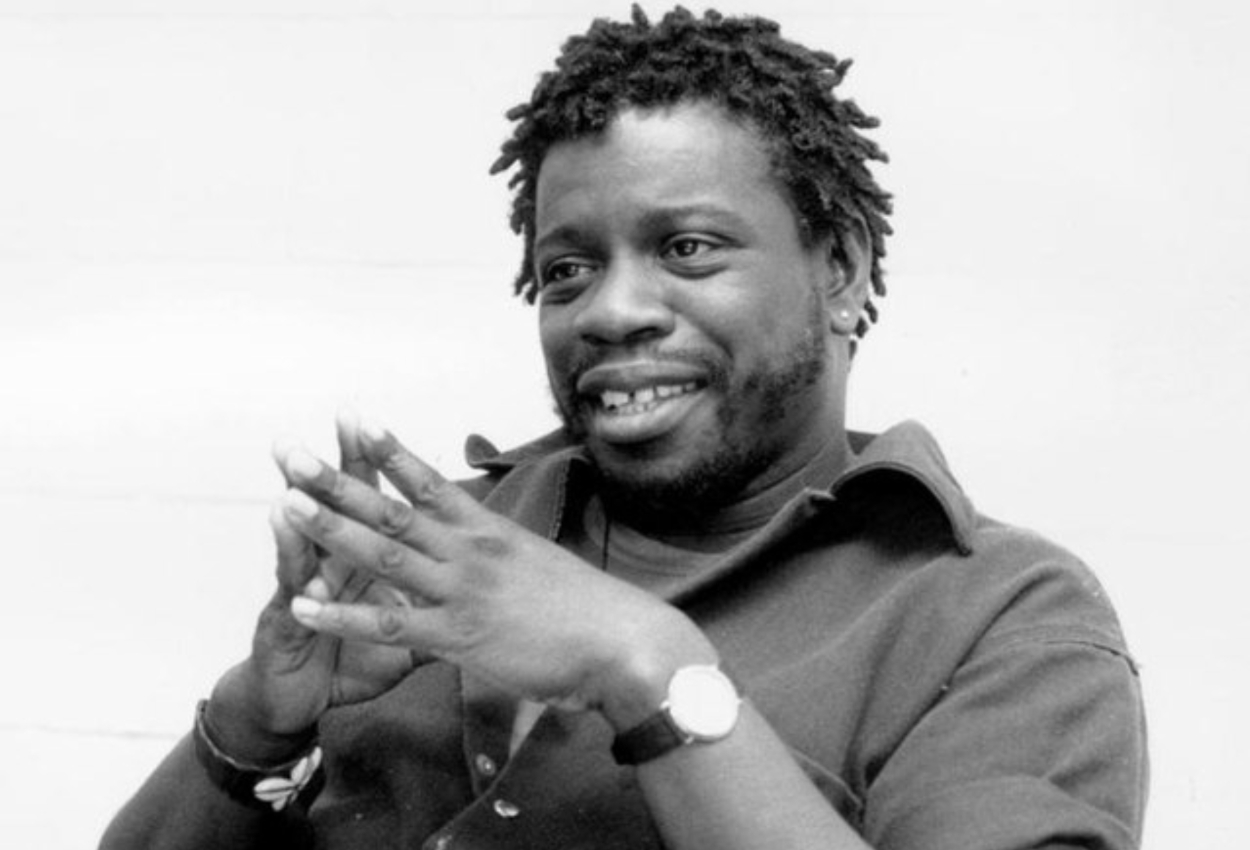
The 38-year-old was shot three times and killed on Jan. 14 while taking photographs in the capital city of Santiago. His father, Eric D. Garvin posted the sad news on his Facebook account last week.
He told family and friends that he and his wife were informed that after Eric went missing, they found out a week later that he was discovered in a hospital morgue. He was shot as he was being robbed by several men.
“As I write this post, my heart and Anna’s heart are very heavy. This is the darkest chapter of our lives because we are living every parent’s worst nightmare.
“Our son, Eric Eugene Garvin went missing in Santiago, Chile on Saturday, Jan 14th in the evening. He was doing what he loved to do, which was travel aboard [sic]. He’s likely been to more than 40 Countries. Eric was 38 years old. On Saturday, January 21st my wife Anna and I received tragic news from Chile. Our son was finally found by the Santiago Police in a hospital morgue.
“Preliminary reports suggest that as my son went out to dinner in downtown Santiago, he was shot multiple times while being robbed by 3-4 guys. My son was alone.”
Garvin told the media outlet that his son was taking pictures when three men grabbed him, took his phone, and then shot him three times. He died at the scene.
“What they told us is my son was innocently walking down the street, paused for a moment, took a snapshot of a building in a drug-infested area,” Garvin said.
“And immediately following that, three gentlemen came across the street grabbed my son and stole his phone and shot him three times and he died there on the scene.”
Eric’s sister, Naomi Garvin, gave an update on her Facebook page stating that she and their father will be leaving Santiago and expected to return to the States on Feb. 2 with her brother’s body. The funeral service is planned for Feb. 10 in Fort Washington, MD.
TikTok Pays Homage To Black Creators With First-Ever Visionary Voices List
TikTok is starting Black History Month in a major way.
The social media platform announced the first-ever Visionary Voices list, according to information sent to BLACK ENTERPRISE. The list highlights some of TikTok’s favorite Black creators who are making their mark numerous spaces like beauty, food, music, dance, and activism. Food critic Keith Lee, rapper Ice Spice, and fashion designer Brandon Blackwood made the list.
The list celebrates 15 TikTok users and over different categories such as creators, industry disruptors and small business owners. Familiar faces highlighted include Kelon, or “Terri Joe,” as his followers call him. The Houston native’s daily live shows gives laughs on FYPs for days.
Summer Lucille, owner of Juicy Body Goddess in Charlotte, North Carolina, also made the list for her encouraging words for plus-size customers looking for confidence. Her videos went viral several times with her signature welcoming phrase, Welcome to Juicy Body Goddess where you have to be two-something to do something.”
The Black History Month celebration doesn’t stop with the list. TikTok is highlighting all the Black joy with other initiatives. “#BlackMusic—The Sounds that Move Culture” will embrace the impact Black musicians have on music, culture, and TikTok. During February, new playlists will be curated in collaboration with SiriusXM Radio, including Gospel, Black Boy Joy, The Blueprint, RapGirlies, and Newcomers.
Other initiatives adapted by TikTok will be “#BlackTikTok LIVE—Join the Celebration,” “#BlackTikTok—In-App Hub,” and “Showcasing Black Creativity LIVE from TikTok LIVE.” Be sure to follow the hashtag #BlackTikTok and the handle, @BlackTikTok.
Follow the other influencers who are now Visionary Voices:
3 Michigan Men Missing After Canceled Hip-Hop Performance
A hip-hop performance was scheduled to take place in Detroit last month, but the show was canceled and three of the rappers who were on the bill have mysteriously disappeared.
According to The New York Post, Detroit police say three rappers, who all knew each other have not been seen their performance at a local club was canceled due to equipment failure. The rappers, Armani Kelly, Dante Wicker, and Montoya Givens, were supposed to perform January 21 at the Lounge 31, according to Michael McGinnis, commander of major crimes for Detroit police.
The three men reportedly met in prison. None of the men have been seen or heard from since that night.
“We just have a whole lot of unanswered questions that we’re trying to find the answer to,” McGinnis told reporters on Monday. “The fact that the three of them are missing together is very concerning and very alarming for us.”
Kelly reportedly left his home in Oscoda, Michigan, on January 21 at approximately 11 a.m. in a gray Chevrolet Equinox, based on the National Missing and Unidentified Persons System database. He arrived in Detroit, about 200 miles south of Oscoda, around 5 p.m. and called members of his family to inform them that the performance had been canceled.
Kelly’s mother, Lorrie Kemp, said her son picked up the other two men before the concert.
Kemp filed a report the morning after their show was canceled and she tracked down his truck using the tracking service. The vehicle was pinned to an apartment complex in Warren, roughly 15 miles north of Detroit. She went to the area and started handing out flyers on Gratiot Street where Lounge 31 was located.
Multiple agencies have joined in the search. “…We don’t know that they’re victims,” McGinnis said. “We want to find them and get them home to their loved ones.”
Chad Johnson Admits Saving 80 Percent of His Salary By Wearing Fake Jewelry and Flying Spirit Airlines
With a high percentage of professional football players going bankrupt after their playing days are over, one popular former NFL player stated that he was able to save at least 80% of his earnings from when he was playing football.
Former NFL wide receiver, Chad “Ochocinco” Johnson revealed on a recent podcast that he was careful with his spending and it allowed him to save between 80 and 83% of his NFL salary.
While appearing on NFL Hall-of-Famer Shannon Sharpe‘s podcast, Club Shay Shay, the former Cincinnati Bengal also divulged that he wore fake jewelry and doesn’t fly in a private plane, he’ll take Spirit Airlines in a heartbeat.
“Fly private? I ain’t flying private,” the flashy former player, who retired in 2012 expressed.
“Put me on Spirit. Exit row. Window seat. That’s all I need. As long as I get from point A to point B. I don’t need private.”
Johnson also explained to Sharpe how the illusion of wearing expensive jewelry worked – although his were fake. Women were always impressed with him because of who he was and/or what he was reported as making during his playing career.
“We talk about jewelry and watches and chains. I never bought real anything when I was playing. Never. What was the point? I went to Claire’s. For what? What am I doing it for? The women are going to deal with you anyway, because of who you are, and then the other women, who are really doing their homework done Googled how much you making already. Why am I buying a 50-thousand dollar watch, 80-thousand dollar watch?”
Johnson also told Sharpe that he saved money by staying at the Cincinnati Bengals training facility for the first two years he played for the team. Against the advice of others, he decided to forgo purchasing a house or renting a condo.
“I stayed at the stadium for the first two years because I ain’t want to spend no money. Why you telling me go rent a house, go buy a house, go rent a condo when everything I need is right here in the facility at Paul Brown? Showers, cafeteria, TV, couch, gaming system — what’s the point?”
Bill Powell: First African American To Launch His Own Inclusive Golf Course For All People
For this Black entrepreneur, taking a few swings at his passion landed him right in the hole to heading his own establishment.
The late Bill Powell was an African American businessman who designed Clearview Golf Club, the first integrated golf course to cater to African Americans.
The pioneering golf course owner found his passion in golf at the early age of nine. When he returned from serving in World War II, the army veteran set out to play golf on a public course, but was denied because he was Black.
Being turned away from exercising his passion for golf, due to racial segregation, inspired the pioneer to create his own golf course where golfers of all colors would be welcomed to play.
In an interview with The New York Times in 2010, Powell discussed his ventures towards creating the golf course.
“It’s distasteful when you get turned down,” Powell said. “You have a little pride. You say the hell with them. You say I’m not going to badger. I’m not going to beg them. So I said I’ll just build a golf course.”
Reportedly, the entrepreneur was denied in his first attempt to get a bank loan to launch his plans for the golf course. However, the racial segregation was not going to keep him from accomplishing his goal, ands he solidified financial support from two Black physicians inaddition to a loan from a brother.
“I did not want other people who wanted to play the game of golf to have to suffer the indignities that I had,” Powell said in an acceptance speech, according to The New York Times.
Powell was able to purchase 78 acres of land and he went to work alongside his wife, Marcella, building the course by hand.
Clearview Golf Course, which officially opened in April 1948, included nine holes and multiple fence posts.
Despite vandalism and encountering people who were angry about the establishment, the golf course remained open, eventually expanded to 130 acres with 18 holes by 1978, becoming a national landmark in 2001.
In 2009, Powell was awarded the PGA Distinguished Service Award by the Professional Golfers Association.
Powell passed away at the age of 93, and the golf course remains in full service, managed by Larry and Renee Powell.
The Buffalo Bills star joined forces with The American Heart Association to launch a campaign to increase CPR awareness and education.
The 24-year-old, who received life-saving CPR on the field after suffering a cardiac arrest during a game in January, announced the “3 For Heart CPR Challenge” from his Twitter account.
“As you know, CPR saved my life earlier this year on the field. And CPR could easily save your life or someone you love,” Hamlin said.
“That’s why I’m proud to announce that I’m partnering with the American Heart Association and kicking off Damar Hamlin’s three for heart CPR challenge. And of course, this one has three steps.”
“Step one, got to heart.org/3 to watch a short video to learn hands only CPR. Step two, donate to the AHA to fund CPR awareness and education and step three, challenge three friends to do the same.”
The Buffalo Bills launched the initiative by challenging two “GOATS” of U.S. sports – NBA star LeBron James and NFL quarterback Tom Brady – as well as the Former First Lady, Michelle Obama.
Hamlin spoke publicly on Saturday for the first time since he collapsed after making a tackle in the first quarter of the Bills-Bengals game on January 2.
Doctors and trainers gave Hamlin CPR on the field and he was rushed out of the stadium in an ambulance, leaving players, coaches, fans, and those watching on TV in shock and unsure whether he was alive.
Medical officials said he suffered a cardiac arrest, meaning his heart abruptly stopped beating. The game was postponed and ultimately canceled.
Girl Power: Creators Cast Lizzo In ‘The Proud Family: Louder and Prouder’ Season 1
They wanted someone who stood for “empowerment.”
Creators of The Proud Family: Louder and Prouder” cast Grammy Award-winning artist Lizzo to appear in the series’ first season because they were devoted to her “message of empowerment.”
According to Insider, Lizzo was chosen to play herself in the fifth episode of season one.
Lizzo made her appearance as an invited performer at Oscar Proud’s Snackland theme park. Rather than executing her performance, the singer motivates the lead character, Penny Proud, to embrace her singing talent by encouraging her to perform on stage.
Series creators Bruce W. Smith and Ralph Farquhar shared their perspectives on guest stars who cameo as themselves and casting stars to portray completely different roles.
“It’s easier for us to have folks play characters because then if we wrote [a part] for Lizzo and Lizzo said no then now we got to rewrite this whole damn thing,” Farquhar said. “But sometimes — I’ll just use Lizzo as an example — we just loved her whole message of empowerment, [and to] be yourself. And so that was critical.”
“So it wasn’t just Lizzo, it’s what Lizzo stands for that we wanted in the piece.”
As the popular series heads into its second season, fans will see other Black celebrities like singer and actress Keke Palmer, who has been cast as a main character.
As previously reported by BLACK ENTERPRISE, Palmer debuted as Maya Leibowitz-Jenkins, a neighbor and friend of Penny.
“Keke called me up when she read the announcement and said, ‘No way are you doing this show without me,’” Farquhar said. “So we had to.”
The Proud Family fans can also expect to see celebrities like Normani, Chance TheRapper, and Leslie Odom Jr. in upcoming episodes for the new season.
Tupac Shukur’s Setpfather Mutulu Shakur Details Life After Prison
When Mutulu Shakur applied for compassionate release back in 2020, a judge said that Shakur was not close enough to death. At the time, the Black Liberation elder was 70 years old and had spent nearly half his life in federal prison.
Shakur was sick with hypertension, Type 2 diabetes, glaucoma, and the aftereffects of a 2013 stroke while in solitary confinement. He also faced high risks for severe COVID-19 complications. The cancer in his bone marrow, though, was not yet killing him fast enough. It was understood to be terminal, but chemotherapy treatment had been successful in keeping it at bay.
Well, after a long battle with the court system and 35 years in prison, Shakur was released from prison on December 16, 2022.
In an exclusive interview with NBC News, Shakur detailed life post-incarceration.
“I’m so happy to be free,” Shakur said. “I fought hard every day that I was incarcerated. I have a lot to do, hoping that society gives me another swing at it. But my life is an example of what could happen. I am very hopeful.”
He said that he is being well taken care of as he spends his final days with family in Los Angeles. “I am receiving excellent care in two categories—Western oncology and holistic natural therapies. I don’t take this freedom for granted.”
Shakur, who served 36 years out of the 60 he was sentenced, said he’s happy to see his family thrive.
“It’s been a great, great day, in 38 years of life, that I have had an opportunity to hug and nestle with my six children and three grandchildren. I am so proud of them, that they have survived and are presently in good physical and, more importantly, mental strength in light of what my life has caused them. They’re very productive citizens that have not been tainted by the politics of my issues.”
Shakur was a member of the Black nationalist organization Republic of New Afrika, which worked closely with Black Panther Party members and New Left activists. He was convicted of racketeering conspiracy charges, alongside several Black liberationists and leftist allies, for his involvement in the 1981 robbery of an armored truck during which a guard and two police officers were killed. He was also convicted for aiding in the prison escape of Assata Shakur.
He has taken responsibility for his crimes and repeatedly expressed remorse for the lives lost and pain caused.
Shakur’s co-defendant, Kathy Boudin, a member of the radical Weather Underground of the 1960s and ’70s was freed in September 2003. While incarcerated, Boudin got a master’s degree in adult education and literacy from Norwich College. Five years after her release, she earned a doctorate from Teachers College at Columbia University. Post-prison, her work focused on present and former inmates, especially women, helping them get parole and preparing them for life on the outside, down to fundamentals like how to comport oneself in job interviews. She was also a founder of the Center for Justice at Columbia, exploring the social consequences of mass incarceration.
As for his other co-defendants, Judith Clark was paroled in 2019; David Gilbert, the driver of the U-Haul truck in the robberies, had his 75-years-to-life sentence commuted to time served of 40 years in August 2021; Sekou Odinga, aka Nathanael Burns, was released in 2009; Samuel Brown, aka Solomon Bouines, is serving 75 years to life, will be eligible for parole in 2056.
Mayweather and the Zeus Network Announce Exclusive Partnership For Exhibition Fight
Floyd Mayweather, one of the greatest boxers of all time, has announced an exclusive partnership with The Zeus Network for his upcoming exhibition fight against Aaron “the Joker” Chalmers on Feb. 25, 2023. The bout will be available exclusively for streaming and Pay-Per-View on The Zeus Network. Pre-sales for the fight begin Feb. 1.
The partnership between Mayweather and The Zeus Network will bring the highly-anticipated exhibition fight to the O2 Arena in London, where fans can witness Mayweather’s signature style and power in the ring.
“I am excited to partner with The Zeus Network for my exhibition fight,” shares Mayweather. “I know they will help bring the event to a wider audience and I can’t wait to get back in the ring and put on a great show for the fans.”
The Zeus Network will have exclusive distribution rights to the event and will work closely with Mayweather and High Roller Entertainment to promote and market the fight across all available media channels.
Founder and CEO of The Zeus Network Lemuel Plummer, shares, “We are thrilled to be working with Floyd Mayweather for this exhibition fight, his talent and skill in the ring are unmatched, and we can’t wait to bring this event to our Zeus fans around the world.”
“We are thrilled to announce that we have secured the exclusive global distribution rights for this exhibition fight. This is a major move for us and demonstrates our commitment to providing the highest quality content to our global viewers. We can’t wait for fight night,” shares,” Executive Producer Daryl Farmer.
Floyd Joy Mayweather Jr. is an American boxing promoter and former professional boxer. He c\owns a team in the NASCAR Cup Series named The Money Team Racing. As a professional boxer, he competed between 1996 and 2017, retiring with an undefeated record and winning 15 major world championships from super featherweight to light middleweight.
“Working with The Zeus Network is a great partnership opportunity and I’m excited to be associated with young Black businessmen such as myself and cannot wait to see what the future holds,” shares Money Team Executive James McNair.
John H. Johnson’s Enduring Lessons on Growing Black Businesses
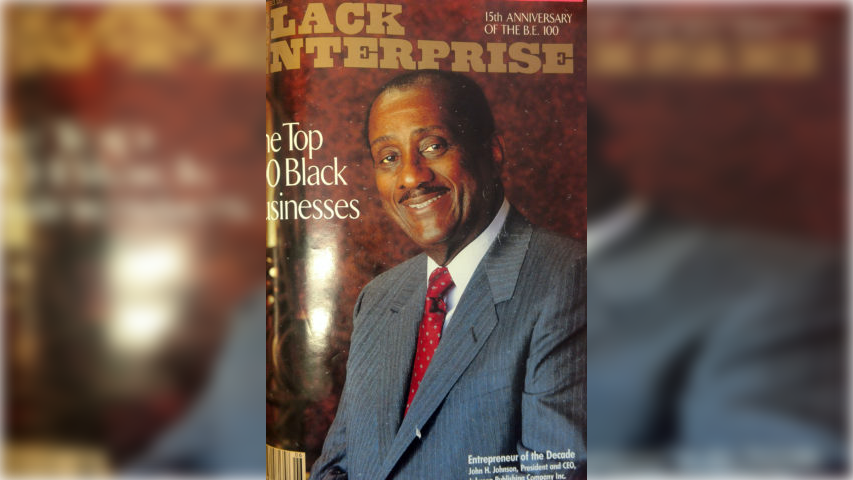
1987: John H. Johnson is named the first BE Entrepreneur of the Decade, having built Johnson Publishing Co. Inc., producers of Ebony, Jet, and Fashion Fair cosmetics into an international powerhouse.
On occasion, I have been asked which interviews have been among my favorites during my tenure at BLACK ENTERPRISE. Without equivocation, the one that has brought great pride was my three-hour session with BE‘s first Entrepreneur of the Decade in our June 1987 issue: the iconic John Harold Johnson, founder, chairman, and publisher and CEO of Johnson Publishing Co. Inc. His enduring example continues to inspire legions of black entrepreneurs to this day.
As an eager young man, Johnson got his start when his mother used her furniture as collateral for a $500 loan to start his first publication, Negro Digest, in 1942, which served as the launching pad for him to create the largest African American publishing company in the world. Seemingly, there wasn’t a single African American household in late 20th century America in which you could not find a copy of Ebony or Jet on the coffee table. And to share the impact his publications had, one can point to a powerful example that predates his inclusion on the BE 100s by roughly two decades that BE shared in our October 2005 tribute on this legendary force:
In September 1955, Johnson made a decision that forever shook the world. Not one to vacillate on any issue, he revealed to millions the mutilated corpse of Emmett Till, a Chicago youngster who had been bludgeoned and shot in Mississippi for reportedly whistling at a white woman. Readers found the heinous example of Jim Crow-brutality on the pages of Jet, Johnson’s 4-year-old weekly news digest. Shortly thereafter, other black publications followed Jet’s lead in publishing the photos. It galvanized clusters of African Americans nationwide to protest such senseless acts of violence. In one bold move, the determined 37-year-old publisher helped launch the civil rights movement.
That was but one example of Johnson’s power. For six decades, he made full use of his wealth and influence to shape American history, while using his publications—primarily Jet and his flagship, Ebony—to cover the battle for civil rights and chronicle every major event that depicted the trials and triumphs of African Americans.
By 1987, when we fittingly honored him on the 15th anniversary of our rankings of the nation’s largest black businesses at a gala in downtown Manhattan, this rugged individualist had built an empire that touched the lives of millions through publications, radio stations, television programs, haircare and cosmetic products, and fashion shows. He also owned Supreme Life Insurance Co., his former employer and one of the nation’s largest black financial services firms listed on the BE INSURANCE COMPANIES list. In addition to his collection of enterprises, Johnson held a 20% stake in another iconic BE 100s company: Essence Communications Inc., publisher of the black women’s magazine Essence.
How did he do it? It took sweat, intellect, and moxie. When the company first appeared on our list in 1973, JPC grossed $23.1 million. In 1987, it had grown to an enterprise that grossed $173.5 million and employed 1,800 people. Despite its size and stature, it was still very much a family-owned business: His wife, Eunice, among other areas, ran the Fashion Fair cosmetics line, and his daughter, Linda Johnson Rice, rose through the ranks to eventually take its helm.
To give you a sense of the acumen, philosophies, reflections and prescience of a business leader that we ranked No. 1 on BE‘s list of 40 Business Titans Who Shaped the World, I share excerpts of the interview I conducted 30 years ago. You’ll find that his perspectives is still relevant to black entrepreneurs today.
On running his business empire:I tend to be cautiously optimistic and I never get overconfident. I run scared every business day and use every legal means necessary to survive and grow.
On his mother’s influence: My mother had the greatest influence on my life. She gave me hope that one day, somehow, I would triumph. She gave me patience, which is absolutely necessary in business.
On how entrepreneurs should grow their businesses:I think it is very important not to look too far ahead. I always advise young people to dream small things, because small things can be achieved, and once you achieve a small dream and make a small success, it gives you confidence to go on to the next step.
On acquiring capital:I have never let the inability to get capital keep me from growing and surviving. I thought of all kinds of unique ways to survive. In the early days, when I could not get financing from a bank, I sold lifetime subscriptions for $100 each. Now that in effect is like selling stock except you don’t go through the Securities and Exchange Commission. White advertisers would not advertise with Ebony in the beginning and Ebony’s very survival was dependent on advertising so I started a group of mail-order companies and advertised in my own magazine. I sold anything I could to get enough capital to keep Ebony going and I used the first $50,000 I made as a down payment on my first major building.
On the value of diversification:I’ve created a kind of mini conglomerate in which each entity helps the other. I’ve developed Fashion Fair Cosmetics, which I advertise in the magazines. I’ve revitalized my haircare business to create another product line to advertise with myself and replace revenues I once received from haircare manufacturers. And I will continue advertising in my own catalog company. I’ve gone into radio broadcasting; I’ve started a syndicated weekly TV show called Ebony/Jet Showcase that is in approximately in 80 markets. And, if for any reason I don’t have adequate advertising to fill up all commercial slots then I can advertise my beauty products, my own radio station, or my TV show.
On targeting businesses to the black community:Every minority group that has succeeded in this country has used its own people as a power base. The Italians sold fruit from wagons. The Jews sold garments to each other in the garment district. The Koreans and Vietnamese have come in and taken businesses in the black community. We need the experience of selling to each other, then we can acquire companies to sell to everyone.
On management: I believe in hands-on, hands-in, hands-wrapped-around management in which you delegate freely and check on people every day. The most important thing a manager can learn is the ability to analyze a situation and quickly think his way out of it.
On getting black professionals to start ventures in black communities: Blacks have watched their colleagues go through training programs and manage line divisions while they are pushed off into community relations, personnel and similar staff areas. These young people who have not moved up are beginning to recognize that they’re never going to move up and that the only salvation for them is to control their own destiny and learn not to depend on the whims and attitudes of the corporate culture.
On the prospect of taking JPC public: I can’t see that because I have served on the board of public companies and you spend too much time worrying about takeovers. I sleep well at night as long as I can do more business, pay my bills, meet my payroll and not worry about someone taking me over. As a matter of fact, in my own way I tried to go public in thebeginning but no one would invest in me. So when I finally made it in a private way, I said the hell with them.
On being named one of America’s toughest bosses: It’s a fact. I’m tough but I’m fair. You have to understand what tough means. Tough does not mean insulting people. Tough means that you hold people accountable.
On black businesses gaining government financing:I think the federal government ought to be concerned with the welfare of all its citizens; it fosters white capitalism, so why shouldn’t it foster black capitalism? You’d be surprised to learn how many white businesses and corporations receive subsidies from the government. Almost every major corporation in this country has a lobby in Washington. They are there to influence government to pass rules, regulations, and laws that foster, develop, and encourage capitalism that is essentially white capitalism…I think that the government should be in the vanguard of urging corporations to make capital available to minority businesses, and in cases where it does not succeed it should take responsibility for the loans itself.
On creating black venture capital firms: We need more well-trained, sharp, intelligent people going into business. And I think we need to go out to the marketplace more and secure capital from individual investors who will take a chance on viable ventures. When Supreme Life started in 1921, it took them two years to raise $100,000 from 5,000 people. These people pledged their homes, their businesses and insurance policies to raise enough money to buy stock. If these black businessmen were daring and bold enough to raise $100,000 in 1921, why couldn’t a group of intelligent young black MBAs or entrepreneurs raise that amount now to start a business?
On business people who inspired him: In a broad sense I admire any black man who succeeds. There are so many obstacles throughout life that I am surprised that black businessmen have done as well as they have. I guess I am inspired by every black man who meets payroll, every black man who continues to overcome barriers and beat the odds.