UPSCALE DAY NYC
UPSCALE DAY NYC

Freepik Becomes Magnific, Signaling the Rise of the ‘No-Collar’ Creative Economy

The newly minted AI platform held an exclusive demo for digital creators


​UPSCALE DAY NYC didn’t feel like a typical tech demo; it felt more like a quiet revolution.

Held in lower Manhattan, the one-day event focused on combining creative advertising with emerging technology and included creators, technologists, and storytellers shaping modern brand storytelling. It was hosted by the company formerly known as Freepik, which announced last month that it has now become Magnific, a new AI-powered creative platform that allows users to generate images, videos, and audio using AI tools. Magnific also empowers users with professional workflows, collaborative tools, and a library of more than 250 million stock assets.

For a select group of creatives, Magnific’s “hub” revealed itself as more than a suite of tools. It was a reimagining of how ideas move—from thought to execution—in a world where speed, scale, and imagination are no longer limited by technical skill.

What is Magnific? (Formerly Freepik)

According to a press release shared with BLACK ENTERPRISE, the rebrand from Freepik to Magnific marks a decisive break from the company’s origins as a stock image platform. What began in 2010 as a search engine for design assets has evolved into a full-stack AI creative ecosystem spanning image generation, video, audio, 3D, and collaborative workflows. Today, Magnific states that it has more than one million paying subscribers, over 250 enterprise clients, and over $200 million in annual recurring revenue.

The Rise of the “No-Collar” Economy

In a statement, Magnific CEO Joaquín Cuenca Abela described the company’s shift as a pivot away from fragmented tools to a more integrated creative infrastructure. He also talked about the traditional creative roles vs the “no-collar economy.”

“The Industrial Revolution created the blue-collar economy. The digital revolution created the white-collar economy,” said Cuenca Abela in a press release. “The creatives, the dreamers, are about to become more powerful than anyone expected. That’s the no-collar economy. And it’s already underway.”

According to company data, 72% of new users identify as beginners, underscoring how AI is flattening the learning curve and democratizing access to high-level creative production.

At the event, that democratization was on full display. You didn’t need to be a trained designer or editor. You just needed vision—and the willingness to experiment. In this new paradigm, taste matters as much as technical ability — or maybe more.

RELATED CONTENT: New Responsible Influence Certification Program Aims To Build Transparency In The Creator Economy

Zoom, layoffs, videoconferencing
Photo by MART PRODUCTION/Pexels

Zoom Grants Solopreneurs With $150,000 Cash Grants

Zoom is giving away $150K to entrepreneurs in light of the new wave of solo founders


The American dream is evolving from corner offices and corporate ladders to laptops, flexibility, and one-person powerhouses building empires from scratch. In a move that feels both timely and telling, Zoom is placing a $150,000 bet on that shift.

The video communications giant announced it will award $30,000 each to five standout solo founders as part of its inaugural Zoom Solopreneur 50, a new initiative spotlighting innovative one-person businesses across the country. All five winners will also receive access to the company’s network of experts and technology resources.

The initiative reflects a shift away from big teams, offices, and valuations, and instead, it celebrates individuals who are rewriting the rules of success while building sustainable businesses without employees or financial backing.

What is the Zoom Solopreneur 50 Grant?

“The Solopreneur 50 is our way of recognizing that shift early,” said Kimberly Storin, Zoom’s chief marketing officer, according to Fortune. “It highlights a new class of builders who are redefining what a company looks like and proving that ambition today is shaped more by focus and capability than by size.”

The “Rise of the Solopreneur” 

More and more people are opting out of traditional work pathways for a career fueled by technology, accelerated by AI, and rooted in autonomy. According to the U.S. Chamber of Commerce, more than 33 million Americans are self-employed, while 82% of them operate with zero employees. Nearly 3,000 applicants from over 400 cities across 48 states applied to be part of the Solopreneur 50, signaling just how widespread the solo founder movement has become. The largest share of applicants came from consulting and service-based businesses, followed by health, wellness, and social impact sectors.

The five selected grant recipients were chosen by an independent panel of academics and business leaders who evaluated candidates based on the originality of their idea, demonstrated growth and sustainability, customer and community impact, alignment between values and business practices, and influence within their field.

Meet Two of the Grant Recipients

Among the grant winners are Michael Odokara-Okigbo, the founder of NKENNEAi, an AI-driven platform for African language translation worldwide, and Cierra Gross, founder of Worklution, Inc., a workplace documentation pool being used by more than 22,000 employees. Both said they would use the grant to scale their businesses.

“As a solo entrepreneur who is completely bootstrapped, I’m building without a large team or safety net,” Gross told Inc., “so this recognition affirms that the work I’m doing is not only needed, but impactful. It also creates more visibility for the mission behind my work, which is to provide people with information and tools they need to advance their careers and improve their lives.”

RELATED CONTENT: Atlanta Organizations Can Win Grants To Participate In World Cup Festivities

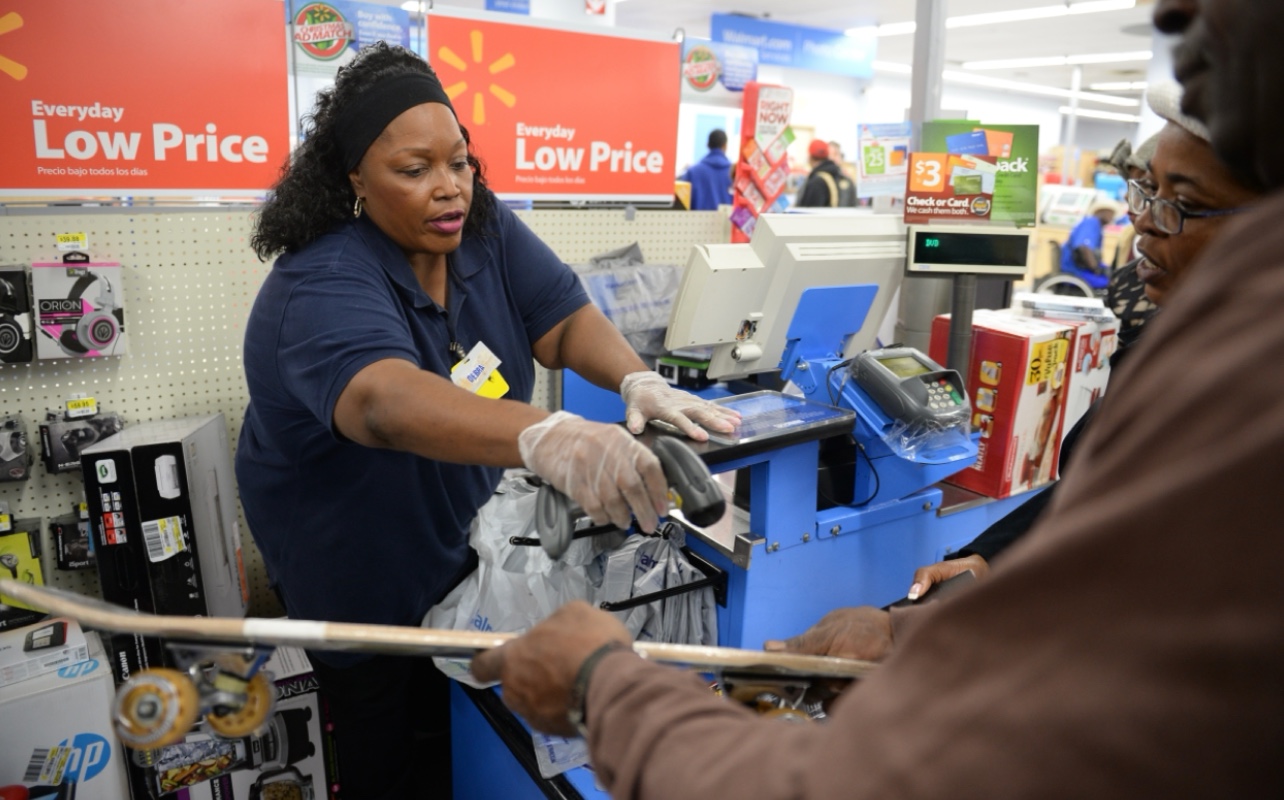
Walmart, self-checkout, Costco, Target
(Photo credit should read ROBYN BECK/AFP via Getty Images)

Retailers Are Rolling Back Self-Checkout Kiosks

Three primary factors are said to have changed the minds of retail executives in regard to self-checkout.


The era of the “unpaid cashier” may be coming to an end as retail giants Walmart, Target, and Costco roll back self-checkout kiosks.

Self-checkout kiosks experienced an aggressive expansion in the last decade; however, the retail industry is shifting back toward traditional, staffed checkout lanes, The New York Post reported. The change marks a significant admission by major corporations that the self-service experiment has failed to deliver on its promised efficiency, instead creating friction for customers and significant financial losses for the companies.

Three primary factors are said to have changed retail executives’ minds about self-checkout. A critical driver is the increase in inventory loss. Self-checkout lanes have become a major source of product loss or shrinkage. Retailers found that without a human eyes-on approach, “mis-scans” of high-value items were costing billions annually.

Despite the goal of speed, “unexpected item in the bagging area” alerts and technical glitches have led to longer lines and greater consumer stress. A 2026 consumer sentiment survey revealed that shoppers increasingly feel they are being “forced to work” for the stores they patronize without receiving a discount for their labor. For membership-based retailers like Costco, self-checkout lanes were creating loopholes that allowed non-members to bypass verification protocols. By returning to manned lanes, Costco can more effectively ensure that only paying members are utilizing the warehouse benefits.

https://twitter.com/GigaBeers/status/2049881449323725261

While the trend is industry-wide, each retailer is implementing the rollback differently. In 2024, Target introduced a “10 items or fewer” limit on remaining self-checkout kiosks to maintain speed for small purchases while pushing larger carts to staffed registers, according to CBS News.

Walmart is removing kiosks entirely in select test markets (including several in the Midwest and Northeast), replacing them with “full-service” lanes to improve the experience, the Irish Star reported. This move toward “human-centric” service in the retail sector mirrors a global trend of reassessing automated systems in favor of community and reliability. 

RELATED CONTENT: Study: More Customers Giving Themselves 5-Finger Discount At Self-Checkout

Virginia, African Landing Memorial, First Enslaved Africans
photo credit: pexels

Philadelphia To Observe ‘Ona Judge Day’ May 21

Ona Judge was formerly enslaved by George and Martha Washington.


The Philadelphia City Council has officially designated May 21 as “Ona Judge Day,” a historic resolution aimed at honoring one of the most significant figures of resistance to slavery in the city’s history.

The resolution was introduced to commemorate the life and daring escape of Ona Judge, a formerly enslaved woman. Philadelphia City Council members understood the importance of recognizing her life as the resolution was introduced and passed, unanimously on the same day, The Philadelphia Tribune reported.

“It’s an opportunity to demonstrate the strength of a woman in that time period — the courage and the fact that people took agency over their own lives,” said Avenging the Ancestors Coalition member Rosalyn McPherson. “These weren’t just menial servants here. These were people who had goals and aspirations.”

The resolution encourages local schools and cultural institutions to utilize May 21 as a day of learning.

Key themes of the designation include:

  • Historical Accuracy: Highlighting the reality of the “President’s House” and the presence of enslaved people within the halls of early American power.
  • The Power of Agency: Celebrating Judge’s strategic planning and her refusal to return to bondage, even when offered “freedom” upon Martha Washington’s eventual death.
  • Legacy of Resilience: Connecting Judge’s narrative to the broader history of the Underground Railroad and Black resistance in the North.

On May 21, 1796, while the Washingtons were eating dinner at the President’s House in Philadelphia, Judge walked out of the mansion and boarded a ship to Portsmouth, New Hampshire. She successfully liberated herself despite the Washingtons’ lifelong efforts to recapture her. McPherson, spoke to the outlet about the importance of honoring Judge.

The designation of Ona Judge Day serves as a formal recognition of the systemic injustices inherent in the nation’s founding and the individual bravery required to confront them. Judge’s story is particularly poignant in Philadelphia, as she exploited the state’s “Gradual Abolition Act” of 1780. The act dictated that enslaved people brought into Pennsylvania by non-residents for more than six months were eligible for freedom. To circumvent this, Washington famously rotated his enslaved staff out of the state every six months. A practice Judge eventually escaped. 

RELATED CONTENT: Virginia Dedicates $9M African Landing Memorial To Honor First Enslaved Africans

Palace Of Auburn Hills Michigan, Vinnie Johnson, Piston Automotive
Ian121289S, CC BY-SA 3.0 <https://creativecommons.org/licenses/by-sa/3.0>, via Wikimedia Commons

Former Detroit Pistons Vinnie Johnson Expands Auto Business At Site Of Old NBA Stomping Ground

'We're pretty excited about it.'


Former Detroit Pistons guard Vinnie Johnson is bringing business to the site where he won two NBA Championships, The Palace of Auburn Hills.

According to Click on Detroit, Johnson is expanding his automotive business, “Piston Automotive,” a BE 100s company, to the site of the Pistons’ former home. The former player toured the new facility on April 28, meeting with staff and other executives.

His company will operate out of a General Motors-owned building, which will support GM Orion Assembly operations. They will supply components for the Chevrolet Silverado, GMC Sierra, and Cadillac Escalade. The site should create approximately 400 jobs in the area and covers an area about the size of 120 basketball courts. The new plant will heavily utilize automation, and production should start in early 2027.

From playing basketball to building vehicles in the same spot he won back-to-back NBA titles (1989-1990) has special meaning for the player once called “The Microwave.” 

“I’ve been planning this since I retired, and we’ve been able to build this business over $3 billion and create jobs throughout the country,” Johnson told Click on Detroit. “We’re pretty excited about it.”

Johnson’s former Pistons teammate, James “Buddha” Edwards, is also with the company. He was also amazed at where the company is, tracing back to his NBA days at The Palace.

“It’s kind of crazy. And good things are going to happen here.”

Johnson was a key reserve player coming off the bench as the sixth man for the Detroit Pistons during the team’s championship runs of 1989 and 1990. He contributed to the team’s success by relieving a starter and providing the necessary spark when needed. While playing in Game 5 of the NBA Finals in 1990, Johnson made a dramatic 14-foot shot with 0.7 seconds left on the clock to beat the Portland Trail Blazers 92-90 to help the Pistons repeat as NBA champions.

unc, University of North Carolina, 3-year degrees
CramBetter.com, CC BY 4.0 <https://creativecommons.org/licenses/by/4.0>, via Wikimedia Commons

UNC And Other Universities Shift Toward 3-Year Degrees

By condensing the traditional timeline, UNC hopes to reduce student debt and increase the accessibility


In a major shift for higher education in the Southeast, the University of North Carolina (UNC) System is moving forward with a pilot program to offer accelerated three-year bachelor’s degree programs.

The initiative, approved by the UNC Board of Governors on April 27, aims to address growing concerns about the rising cost of college and the time it takes for students to enter the workforce. By condensing the traditional four-year timeline, the system hopes to reduce student debt and increase access to higher education across the state’s 16 public universities, the Triangle Business Journal reported.

Unlike previous accelerated programs that relied heavily on students entering college with significant Advanced Placement (AP) credits, the new UNC model is designed as a “structured pathway” to streamline the curriculum. Participating campuses will re-evaluate general education requirements and major-specific courses to eliminate redundancies without sacrificing academic rigor. System officials estimate that graduating one year early could save students and their families up to 25% in tuition and fees.

The program will initially launch as a pilot at select institutions within the system, including UNC Greensboro, UNC Asheville, and Appalachian State University. Each campus will select specific majors—likely those with high workforce demand, such as Business, Communications, and select Social Sciences—to test the feasibility of the condensed format.

Proponents of the plan, including UNC System President Peter Hans, argue that “college should not be a one-size-fits-all time commitment.” Critics, however, have raised questions about whether the accelerated pace might lead to student burnout or a reduction in the “co-curricular” experiences—such as internships and study abroad programs—that often occur during a traditional senior year.

The UNC System’s move is part of a much larger seismic shift in American higher education. As of early 2026, the U.S. Department of Education notes that nearly 60 colleges and universities across the United States have officially launched or announced three-year bachelor’s degree options. This nationwide movement, spearheaded by the “College in 3” initiative, includes a diverse range of institutions from private liberal arts colleges to large public systems.

These schools are responding to pressure to prove the value of a degree amid rising tuition. By reducing the time to earn a degree, these nearly 60 institutions are prioritizing efficiency and workforce readiness for a new generation of students.

RELATED CONTENT: TSU And Meharry College Offering Full Ride To Young Black Men Interested In Medical Field

microsoft
Mike Mozart, CC BY 2.0 <https://creativecommons.org/licenses/by/2.0>, via Wikimedia Commons

Big Tech Buyouts: Strategic Staff Reductions and The Shift To Capital Investment

These programs allow the employer to reset its balance sheet


The tech industry is currently navigating a fundamental shift in how it manages headcount. After 92,000 layoffs across the sector this year, major players like Meta and Microsoft are moving away from involuntary terminations. Instead, they are utilizing voluntary separation programs to reduce staff numbers while simultaneously increasing their infrastructure budgets.

On Thursday, Meta confirmed a 10% reduction in its workforce, affecting approximately 8,000 employees. Unlike in previous cycles, this reduction is paired with a freeze on 6,000 open roles, reflecting a broader trend in which the industry is prioritizing physical assets over the expansion of human teams.

The Mechanics of Voluntary Separation

Microsoft is currently implementing its first-ever buyout program specifically for experienced tech workers. The eligibility criteria are based on the “Rule of 70,” where an employee’s age and years of service must meet that threshold. This targeted approach allows Microsoft to reduce its U.S. workforce by roughly 8,500 people.

“The voluntary exit option gives the employer the ability to say, ‘it’s not about the fact that we don’t think you’re doing a good job… I’m going to incentivize you to do that because we need to cut some staff,” said Domenique Camacho Moran, an employment law partner at Farrell Fritz.

By utilizing a buyout, Microsoft can reduce payroll costs for its most expensive roles without the administrative and legal complexities inherent in performance-based layoffs.

Capital Expenditure and Operational Efficiency

The financial motivation for these cuts is clear. Microsoft expects to reach $145 billion in capital expenditure this fiscal year. This is part of a larger $700 billion spending wave across the industry as firms race to build out new technical infrastructure.

Camacho Moran notes that these companies have determined they can maintain operations with fewer people. The goal is to move toward a leaner model where the remaining tech workers are strictly aligned with high-priority infrastructure projects.

“What they’re trying to do is make sure that they work more leanly and efficiently,” Camacho Moran said. “They have figured out that the people they have are the people who are doing jobs they need, maybe at prices that are too high.”

Incentivized Departures and “Ramping Off”

The transparency regarding these programs varies by company. While some frame the buyout as an act of corporate support, others use it as a tool to address performance issues. Last year, Google offered a voluntary separation package that explicitly invited underperforming employees to exit the company.

In a memo reported by CNBC, Google Senior Vice President Nick Fox stated, “If you’re excited about your work… and performing well, I really (really!) hope you don’t take this! On the other hand, this VEP offers a supportive exit path for those of you who don’t feel aligned with our strategy.”

The Future for Tech Workers

For tech workers eligible for these packages, the choice is often between accepting a guaranteed payment now and facing the uncertainty of future restructuring. These programs allow the employer to reset its balance sheet while giving employees a window to transition to new roles on their own terms.

As Microsoft Chief People Officer Amy Coleman wrote to employees, “Our hope is that this program gives those eligible the choice to take that next step on their own terms, with generous company support.”

As the industry continues this $700 billion infrastructure pivot, the use of buyouts is likely to become a standard operating procedure for companies looking to swap labor costs for capital investment.

RELATED CONTENT: Microsoft Investigates Widespread 365 Outage Impacting Outlook And Teams In North America

Pinky Cole, Slutty Vegan, Franchise
(Photo: Paras Griffin/Getty Images for ESSENCE)

Pinky Cole’s Former CFO Indicted on Theft, Forgery, and Money Laundering Charges

The State of Georgia has indicted the former Bar Vegan CFO Aaron Mattison for allegedly stealing more than $87,000 from the company


The former chief financial officer of renowned restaurateur and Slutty Vegan founder Aisha “Pinky” Cole Hayes is facing criminal charges in Georgia involving her now-closed restaurant, Bar Vegan.

According to court filings recently obtained by The Neighborhood Talk, Cole’s former CFO, Aaron Mattison, was indicted in August on multiple counts, including theft by taking, first-degree forgery, and money laundering. Prosecutors allege Mattison orchestrated a series of unauthorized financial transactions while overseeing the company’s finances between 2021 and 2022.

Authorities claim Mattison created fraudulent financial documents that appeared to be approved by Bar Vegan, which he then used to execute an $87,300 wire transfer for personal gain. In addition, prosecutors allege he withdrew company funds in repeated $600 increments—totaling more than $24,999—over several months and moved the money through multiple accounts in what investigators describe as a laundering scheme.

Mattison’s indictment comes years after Bar Vegan faced a lawsuit in July 2022 from a former employee alleging unpaid minimum wages, overtime violations, and withheld tips. The case was settled in early 2023 for tens of thousands of dollars.

Bar Vegan, an Atlanta-based restaurant that was once part of Cole Hayes’ plant-based empire, officially closed its doors on May 5, 2025. With Mattison now facing potential prison time, the case raises ongoing questions about financial oversight, accountability, and the pressures of rapid entrepreneurial growth.

Cole Hayes has not been charged in connection with Mattison’s indictment. She previously denied intentionally withholding wages, citing operational challenges tied to rapid business expansion at the time.

The developments also come after Cole filed for Chapter 11 bankruptcy in March 2026, citing liabilities estimated between $1.3 million and $1.4 million.

×