100 Black Entrepreneurs, Biden, Harris, Funeral, Minnesota House Speaker Melissa Hortman,,Marcyliena H. Morgan
(Photo: DIGIcal/Getty Images)

We Show Up For The Funeral, Who Shows Up After?

The funeral is not the finish line.


By Kelly Edmondson

In Black communities, we have always known how to show up for the funeral. The question we’re not asking loudly enough is: who shows up after?

I know this grief intimately. As a trauma nurse, a certified grief counselor, and a nurse executive, I have spent my career sitting with people in the hardest moments of their lives. And on Jan. 3, 2023, I became one of them, when I lost my son, Darius.

What I know clinically, I now know in my body.

Grief is not an event. It is a long, nonlinear process that our systems, our workplaces, and even our communities are not built to hold.

The Weight of Being Strong

Black Americans carry a particular burden when it comes to grief. Culturally, there is deep value placed on resilience, on holding it together, on not letting them see you break. That strength is real. It was earned through generations of surviving what should have broken anyone. But strength was never meant to be a substitute for healing.

Research shows that Black Americans are less likely to seek mental health support after loss, not because the need is not there, but because of stigma, distrust of systems that have historically failed us, financial barriers, and a cultural script that says grief should be private and brief. The church holds some of it. The family holds some of it. But the professional and systemic infrastructure to support sustained grief is largely absent.

And then Monday comes, and the bereaved person is expected to perform normally at work as if something fundamental has not changed inside them. Because in most workplaces, it’s a must.

The Policy Gap Is Personal

There is no federal law in the United States requiring bereavement leave, paid or unpaid. Only five states, California, Oregon, Illinois, Colorado, and Maryland, have codified any bereavement protections for private sector workers. For the rest of the country, what a grieving employee receives depends entirely at the discretion of their employer.

The typical employer offers three to five days. Three to five days isn’t support. It’s a deadline. Three to five days to bury someone you loved, manage their affairs, hold your family together, and return to full productivity. Research from Grieve Leave found that 94% of grieving employees report difficulty concentrating at work after loss, and 78% do not feel supported by their workplace. These numbers are not surprising to anyone who has lived it.

For Black employees, this gap is compounded. Grief in our community often carries additional weight: the specific trauma of sudden or violent loss, the administrative burden of settling an estate with limited legal and financial resources, the reality that taking unpaid leave is not an option for many working families. The policy gap is not race-neutral and it becomes most visible in the workplace. It lands harder on people who already have less margin.

Research published in the journal Sociology in 2024 documented what bereaved employees already know: that workplace bereavement policies are typically based on a linear model of grief that fails to account for its ongoing, nonlinear reality. They tend to measure loss by closeness of relationship, granting leave for a spouse but not a best friend of 20 years, a grandmother who raised you but not a mentor who shaped your career. Loss does not work that way.

Unaddressed grief does not stay home. It shows up in absenteeism, in reduced productivity, in turnover, and in the quiet erosion of workplace culture that no engagement survey fully captures.

What Sustained Support Actually Looks Like

Grief is not a two-week problem. For most people, the hardest moments come weeks and months after the loss, when the adrenaline fades, the community disperses, and the anniversaries and birthdays begin to surface. What bereaved employees need is not just time immediately after the death. They need a workplace culture that acknowledges grief as a long arc.

Employers who want to do better can start with a few concrete changes. Flexible and floating bereavement leave, available across a defined window rather than only in the days immediately after death, allows employees to take time when they most need it. Broader definitions of family that include chosen family, extended kin, and non-legal relationships reflect the actual shape of Black family structures. Manager training that normalizes grief conversations, not as a one-time check-in but as an ongoing practice, builds the culture that policy alone cannot.

Healthcare systems can do more as well. Grief-informed care means training physicians and care teams to recognize and address the psychological and physical toll of bereavement, not just in the immediate aftermath, but in the months and years that follow. Community institutions, including churches, nonprofits, and HBCUs, are already filling gaps that the formal system has left open. That work deserves recognition, resources, and partnerships rather than being treated as a last resort.

The Conversation We Need to Have

We are a community that knows how to love people in crisis. The repast, the prayer circle, the practical help when it is needed most, this is who we are. But love without infrastructure is not enough, and infrastructure without cultural honesty is incomplete.

We must talk about grief the way we talk about other public health issues, openly, collectively, and with the understanding that silence does not protect us. We must demand more from the workplaces and healthcare systems that employ and serve us. And we must extend the same grace to grieving people that we show so beautifully in the days after loss, not just for the first week, but for the long road after.

The funeral is not the finish line. It is the beginning of something that our communities, our employers, and our institutions need to be present for. The question is whether we’re willing to stay once the world moves on.

Kelly Edmondson, MSN, MBA, RN, NEA-BC, CGC, is a nurse executive, certified grief counselor, trauma nurse, and bereaved mother based in Orlando, Florida. She is the founder of Timely Presence, a bereavement support service built around meaningful connection during the first year of loss. Her work has been featured in TIME. Learn more at thetimelypresence.com.

RELATED CONTENT: Black-Owned Funeral Home Partners With Genealogist to Preserve Black History By Means of Funeral Programs


Tierre Hummons, synth city, Ai
Courtesy of Tierre Hummons

22-Year-Old Black Creator Launches ‘Synth City,’ An AI-Powered Animated Series From His Laptop

The project is about more than technology


Originally published on BlackNews.

While major studios debate how artificial intelligence will reshape Hollywood, 22-year-old Tierre Hummons has already built his own cinematic animated series called Synth City, which delivers studio-level quality without studio-level funding. The series is produced using AI, original music, self-built systems, and an independent distribution strategy — establishing a scalable blueprint for Black ownership in entertainment.

A recent graduate of the University of Cincinnati, Hummons says the project is about more than technology. It is about ownership and infrastructure.

At its core, Synth City follows Caden, a talented college music producer attempting to leave the drug economy behind while being pulled back in by a local artist-turned-dealer who depends on his beats. The series does not glamorize street life. Instead, it explores the economic pressure, psychological tension, and survival decisions many young creatives face while trying to build legitimate careers.

The show reframes a rarely examined truth in hip-hop culture: the producer is the architect. While artists command the spotlight, producers build the sonic foundations that shape global music.

Synth City centers the strategist behind the sound — highlighting the ambition, sacrifice, and moral crossroads that come with chasing success from underserved environments.

Hummons leveraged AI not as a shortcut, but as a production equalizer — dramatically reducing overhead while maintaining full creative control. By combining animation tools, AI-assisted rendering, original scoring, and direct-to-audience digital rollout, he created a vertically controlled system without outside investors, licensing deals, or creative compromise.

The series continues expanding its cultural footprint. National recording artist Jhonni Blaze is set to appear in upcoming episodes, marking a significant crossover between independent animation and established music talent. Hummons has also collaborated with Diamond of Crime Mob, known for the cultural anthem ‘Knuck If You Buck,’ reinforcing the show’s authentic connection to hip-hop culture.

In an era when Black creatives often generate culture without retaining ownership, Synth City represents a different model:

• Creator-owned intellectual property
• AI-powered cost efficiency
• Independent digital distribution
• Long-term franchise scalability

Rather than waiting to be funded or selected by gatekeepers, Hummons built his own ecosystem — demonstrating how emerging technology can shift leverage back to creators. As artificial intelligence continues to disrupt the media landscape, Synth City stands as an early example of how Black innovators can lead the next wave of entertainment production — on their own terms.

RELATED CONTENT: Nanny 2.0: Melania Trump Wants To Swap Teachers For Algorithms With AI Robots

gas prices
Photo by Brandon Bell/Getty Images

8 Actions To Help Save Money On Gas As Prices Continue To Soar

Combining errands into one trip and driving safely are among ways to help reduce gasoline spending.


Likely to soon reach their highest level in four years, $4-a-gallon gasoline prices are imminent.

The national average was around $3.98 a gallon as of March 27, according to the American Automobile Association (AAA). That was up from about $3.91 a week ago and around $2.98 a month ago. The price has climbed 83 cents since a year ago, when it was roughly $3.15.

Analysts attribute the surge largely to the U.S..-Israeli war on Iran, fueling rising global oil and gas prices this month. U.S. consumers, including Black Americans, are now being forced to endure the extra hardship when struggling with inflation, and managing money is already difficult.

Exacerbating matters, a fresh report from GasBuddy projects the U.S. average for a gallon of gas could reach $4 as soon as next week. That reportedly would mark the first time the cost has risen to that level since 2022, when Russia invaded Ukraine.

Patrick De Haan, head of petroleum analysis at GasBuddy, said, “There are few signs of stabilization so far, as global oil prices continue to climb and early indications suggest consumers may begin to pull back in response to the rapid pace of increases.”

However, the uplifting news is that BLACK ENTERPRISE is here to provide many ways to help drivers offset the impact of losing money rapidly while cutting gasoline spending:

Combine errands: Merge these tasks into a single trip to reduce driving time.

Check out gas apps: Consider using AAA, Gas Guru, and GasBuddy to find lower gas prices near where you live.

Use cash instead of plastic: Observers suggest paying with cash rather than a credit card at the gas pump. They claim you can save money doing that. Be aware that some gas stations might levy a fee for using a credit card.

Avoid premium gas: Research shows this higher-octane gasoline is not essential or beneficial for most cars. As such, do not spend extra cash to buy that grade.

Explore fuel rewards programs: Several grocery stores and national gas stations offer gasoline discounts for patrons. Try to find one near you. And be sure to link your purchases to the same account regularly.

Drive cautiously: Don’t drive aggressively, as that can trim gas mileage by 15% to 40%, data shows. Accelerating rapidly and braking suddenly can lead to accidents and cause vehicle deterioration.

Reduce driving: This can be done by carpooling, walking, biking, or using public transportation. Another option is working more from home if that’s an available option.

Maintain good vehicle maintenance: This can enhance fuel economy and peak engine performance, helping trim gas usage. Viable maintenance tasks, such as maintaining proper tire pressure, replacing air filters, and using recommended oil grades, can be beneficial.

RELATED CONTENT: Oil Surges Past $110 After Iran Retaliates By Striking World’s Largest Liquefied Natural Gas Facility

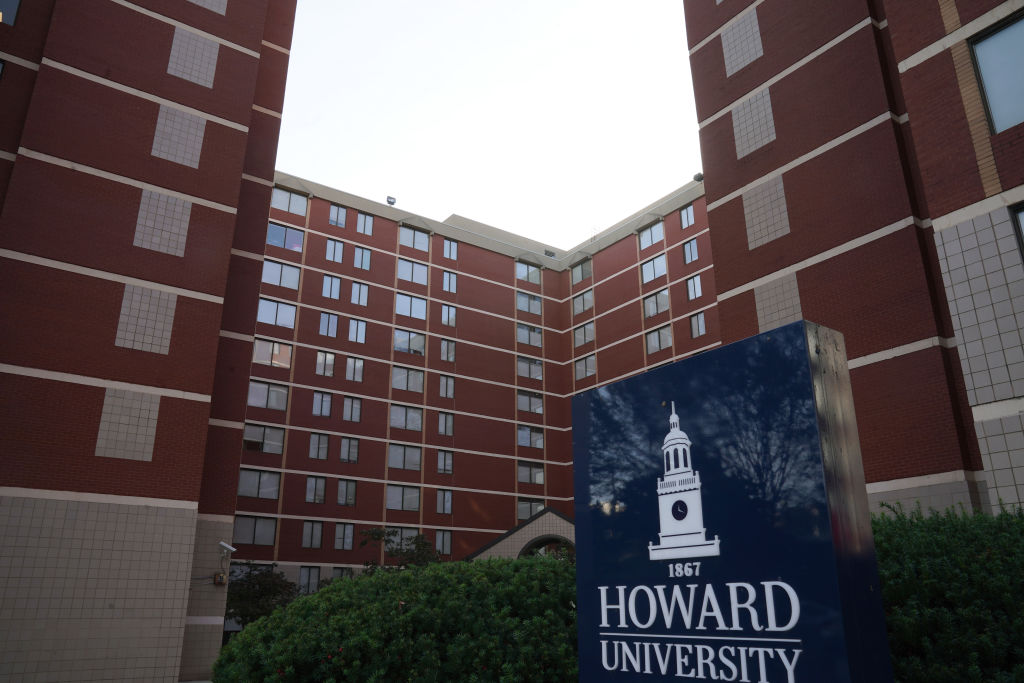
Howard University Student, car crash
(Photo: Michael Robinson Chavez/The Washington Post via Getty Images)

New Study Reveals HBCU Attendance Ties To Better Brain Health Throughout Lifetime

The study is uncovering the potential long-term health benefits of attending an HBCU.


A new study has revealed the long-term health benefits of attending a historically Black college or university.

The study, published in February in Jama Network Open, suggested that students in a culturally affirming academic environment often fare better decades later. According to The Guardian, nearly 2,000 Black adults participated in the study, with 35% of survey respondents attending an HBCU between 1940 and 1980.

The study’s findings concluded that where one matriculated through college had a holistic impact on their general well-being. During that 40-year period, significant policy changes shifted academia for all age levels in the United States.

These political frameworks included the 1952 Brown v Board of Education and the 1964 Civil Rights Act. Both pieces of legislation transformed racial dynamics in U.S. schools, leaving Black students with more educational options than ever before.

However, these scholastic choices reportedly had varying effects on one’s mental, emotional, and even physical health. The study’s results found that Black students at HBCUs maintained better memory and cognitive function than their Black peers at predominantly white institutions (PWIs).

“HBCU attendees had better cognition across all three of those different time periods,” explained Dr. Marilyn Thomas, an assistant professor of medicine at the University of California, San Francisco.

However, the early-life factors that divided HBCU and PWI attendees also varied greatly. HBCU scholars often grew up in functional homes where their mothers had college educations.

“Participants who attended HBCUs were more likely, for example, to have mothers or female caregivers who had a college education,” added Thomas. “They were also more likely to have reported being shown affection when they were growing up, love and affection.”

Thomas’ previous research explored correlations between one’s experiences with racism and their overall health condition. This study contributes to a growing phenomenon that HBCU alums, subjected to fewer instances of racism, have lower stress levels due to their school environment. While other studies have focused on how the length of one’s education affects cognitive function, this study launched a new conversation about how culturally affirming institutions also play a role.

“What’s really important about this finding is that it suggests that, yes, culturally affirming spaces actually can help promote and protect cognitive health,” she continued “It’s even more than that because it doesn’t just demonstrate that it’s protective against cognitive health, but the benefits to this exposure last well beyond graduation -– these are people at mean age 62. These benefits are long-lasting.”

The findings remain especially crucial in the age of anti-DEI legislation. Now, students may face similar instances of isolation and lack of cultural empowerment as the Trump administration cracks down on DEI programming at colleges and universities. While the study only introduces the concept that HBCU attendance promotes better health outcomes, it ingrains the importance of uplifting such institutions for students of color.

“But what this [study] does is it shows us actually when you do create environments where socially marginalized people feel more welcome or feel more affirmed, they live healthier lives.”

RELATED CONTENT: Cardi B’s ‘Am I The Drama’ Album Rollout Heads To Class At Howard University

Barry Sanders
Photo courtesy of Amgen.

From NFL Hall of Fame to Heart Health Advocate

The NFL Hall of Famer is now a spokesperson for Amgen and an advocate for heart health.


Barry Sanders Opens Up About Heart Attack Risks

Barry Sanders is best known for outrunning opponents on the football field as one of the best running backs in the history of the National Football League (NFL). But in the summer of 2024, while on a recruiting trip with his son, Barry felt discomfort in his chest, drove himself to the hospital, and soon learned of a condition he could not outrun: a heart attack.

The NFL Hall of Famer is now a spokesperson for Amgen and an advocate for heart health. He spoke with BLACK ENTERPRISE about the risk factors Americans should look for—particularly LDL-C or “bad” cholesterol—as well as Amgen’s documentary The Making of a Heart Attack.

“We’ve been getting the word out for the last year or so, and it’s an important message to get out, Sanders told BLACK ENTERPRISE of his partnership with Amgen. “It’s obviously something that’s very near and dear to my heart, so to speak. And so, you know, now is the right time.”

A Near-Fatal Wake-up Call on Father’s Day

It was Father’s Day 2024. Barry had woken up with a “slight burning feeling” in his chest. He shrugged it off as heartburn.

He got up to pace around the room, thinking he could walk it off. As the symptoms persisted throughout the day, he drove himself to the emergency room, where doctors began performing tests.

“And that’s when they realized actually what it was that, you know, when the doctor said ‘heart attack’…. I just could not believe those words, you know, just because I thought I was in pretty good shape, that I was doing a lot of things right, you know, and so that was a big surprise to me.”

The wake-up call was surprising to the father of four sons, who was—and still is—known for dodging players much larger than he was on the football field as a legendary running back with the Detroit Lions. His doctors have since put him on a plan to lower his cholesterol and maintain an active, healthy lifestyle.

He teamed up with Amgen-–one of the world’s largest biopharmaceutical companies—as a spokesperson, and to serve in a leading role in a documentary called “The Making of a Heart Attack,” which follows the story of five individuals—including Sanders–in their own unique story and battle with heart attack and stroke.

The common thread for all five? “I don’t think any of us had the initial thought that we were having a heart attack,” Sanders said. “We didn’t realize that that’s actually what was taking place. And that’s the thing that’s kind of crazy; it’s not uncommon.”

Risk Factors for Heart Attack and Stroke

According to the American Heart Association, high cholesterol usually has no symptoms. LDL cholesterol is often called “bad” cholesterol, because it can build up in your arteries and narrow them over time; thus, increasing your risk for heart attack and stroke. Amgen states that “more than 40% of adults in the U.S. with high LDL-C don’t know their levels are elevated.

Tara Robinson, CEO of the Black Heart Association, is featured in the documentary “The Making of a Heart Attack.” She spoke with BLACK ENTERPRISE in 2024 about suffering three heart attacks in one week at age 40.

“That led me to start advocating and volunteering and that led me to start my own nonprofit when I saw that the gap was not being filled; that we needed to have up close and personal relationships with our community on our health,” Robinson said of The Black Heart Association, a nonprofit co-founded with her husband, Fredrick, focused on the overall improvement of health outcomes in communities of color.

An alarming statistic from the Centers for Disease Control and Prevention Foundation states that Black women suffer from higher rates of heart disease, coronary disease, and stroke deaths in comparison to white women in the United States. Robinson knows this all too well.

“I’m the strong Black woman,” Robinson told BLACK ENTERPRISE. “I think I’m the poster child for it. That’s definitely part of why I had my heart attacks because I internalized stress so much.”

Stress is a risk factor—Sanders noted—in addition to diet, heredity, and LDL-C; thus, he urges the need to have regular check-ups with your doctor.

Life-saving Advice from a Lions Legend

Even after his abrupt retirement from the NFL in 1999, Sanders chose to stay in the Motor City, where he says “there’s so much development and activity and positive things going on around the city of Detroit,” that he’s excited to still live there and be involved in various business ventures.

Sanders currently has matters of the heart at the top of his mind, but he’s a lifetime football fan as well as an undisputable legend. So, when it comes to the Lions having a chance at competing in the Super Bowl? He’s optimistic.

“Absolutely, I think we still have a great nucleus of players that are in their prime. And you look at how tight that division race was last year with all the teams, you know, having nine wins and the (Chicago) Bears having 11 wins in our division. There’s so much great parity in our division, but also just around the whole league. And I think that we’re still close. I think we still have the players needed,” he told BLACK ENTERPRISE. “I don’t think there are very many teams in the NFC that are better than the Lions. And so, to answer your question, I absolutely believe that the Detroit Lions have a playoff and Super Bowl push in them. No question.”

So, whether you’re rooting for the Lions, the Carolina Panthers, or you’re a part of the Buffalo Bills Mafia, Sanders’s advice holds true across the board for all Americans:

“My message is just being proactive; that everyone out there is important to someone and that this is an extremely important health conversation to have,” he said. “We want to make room for heart attack and stroke conversations with doctors and lowering that bad cholesterol.”

Learn more about this topic and find resources to test your LDL-C at  https://www.attackheartdisease.com/documentary. Also, catch Sanders in a special interview with BLACK ENTERPRISE on BLACK ENTERPRISE’s streaming platforms.

RELATED CONTENT: Shaw University Hires Lamar Manigo To Lead Football Program

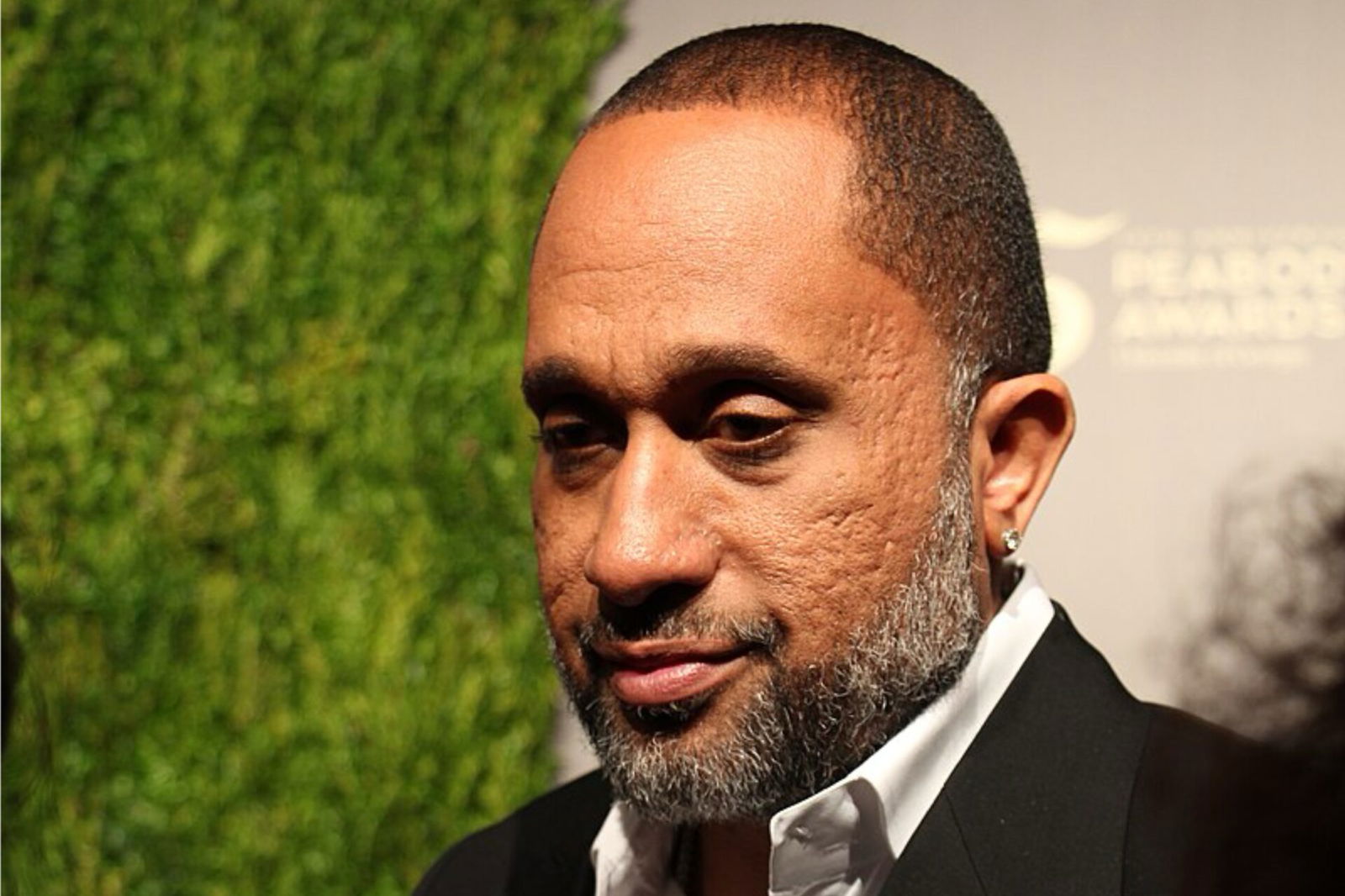
Kenya Barris
(Photo: Peabody Awards/via Wikimedia Commons)

Kenya Barris Launches REVOLT Labs, A Platform Built For Creators

This launch is intended to help creators develop original concepts into intellectual property that can expand across media


Written By Lillien Cirrino

On March 19, Emmy Award-winning producer, writer, and director Kenya Barris launched REVOLT Labs, a new platform designed for creators, with Offscript Worldwide acting as the parent company. Through the partnership, Barris has been named vice chair of REVOLT Labs.

This launch is intended to help creators develop original concepts into intellectual property that can expand across media—whether television, film, digital platforms, or live experiences. Detavio Samuels, CEO of REVOLT and Offscript Worldwide, said in a press release that the company “was built to partner with creators as business builders, not just talent.” He believes Barris’s leadership will help reinforce this focus, as Barris has demonstrated an ability to scale creative talent beyond a single sector.

REVOLT, founded in 2013, is a multimedia platform focused on hip-hop culture, news, and entertainment, reaching more than 50 million millennial and Gen Z users across digital and live platforms; while Offscript Worldwide operates a network of creator-owned brands, including REVOLT, REVOLT Sports, Rap-Up, 440 Artists, 3BLACKDOT, and Six Zeros.

“REVOLT already had the foundation,” Barris said in a press release. “My role is to help build the bridge from where creators start to where their ideas can ultimately go. I’m excited to work with these creators to further build their platforms and businesses into thriving, sustainable empires.”

Barris is widely known for creating Black-ish, which grew into a successful franchise with the spinoffs Grown-ish and Mixed-ish. His work has earned multiple Emmy nominations and awards and is credited with reshaping modern television by bringing culturally distinct perspectives into the mainstream. His experience developing franchise-driven content aligns with this new platform’s goal of helping creators turn ideas into long-term enterprises.

In his new role, Barris will help shape the creative direction of REVOLT Labs while mentoring creators and supporting their project developments as they become sustainable media businesses.

RELATED CONTENT: Former Podcaster On Revolt Network Weighs In On Diddy Indictment ‘It Feels Like Vindication’

Remote Work, Work from home, laptop, beach
(Photo: Getty Images)

Black Women Redefining Leadership And Ownership As Millennial and Gen Z CEOs

They are the models of innovation


During Women’s History Month, which celebrates women’s lasting contributions to various sectors, Black millennial and Gen Z women CEOs are transforming the future of American business. These two demographics of CEOs lead organizations in media and fintech, wellness, and STEM sectors, combining cultural competence with economic planning. They are the fearsome models of innovation in both digital and physical markets, inspiring young women to follow in their footsteps. 

Morgan DeBaun

Morgan DeBaun started Blavity Inc. in 2014 after recognizing a lack of culturally relevant digital media for Black millennials. She developed Blavity into a multibrand platform, covering news, lifestyle, and tech content. Blavity operates from the U.S. while maintaining a worldwide digital audience and reaches millions every month through its brands AfroTech, Home & Texture, Travel Noire, and 21Ninety. 

Trinity Mouzon Wofford

In 2017, Trinity Mouzon Wofford started Golde at 23 to make wellness accessible to contemporary youth. The bootstrap startup that began with Golde has grown into a national brand that now sells its products through Target and Sephora. Her company emerged from personal health experiences to transform the traditionally exclusive wellness industry by creating accessible and inclusive products for young, diverse consumers.

Sheena Allen

Sheena Allen established CapWay to tackle the systemic obstacles that stop underbanked communities from using financial services. The rapid expansion of fintech enabled CapWay to develop its mobile-first platform, which serves people who typically lack access to traditional banking services. The digital banking field includes one of its youngest women leaders, Sheena Allen, who uses technology to connect wealth and access gaps.

Alicia Scott

Alicia Scott created Range Beauty after experiencing eczema and acne in the fashion and beauty industries to serve consumers with sensitive, melanin-rich skin. Range Beauty operates within the clean beauty movement by combining skincare and makeup to deliver inclusive solutions that mainstream cosmetics companies typically neglect. Her work directly addresses industry gaps that exist in product formulation and representation.

Dia Simms

Dia Simms serves as CEO of Lobos 1707, which is a premium tequila and mezcal brand active in the global spirits market. Through her experience in brand strategy and executive leadership, Simms integrates cultural storytelling and inclusive ownership into an industry that used to be exclusive. Her leadership demonstrates the growing diversification patterns in luxury consumer goods.

Aisha Bowe 

Aisha Bowe, a former NASA aerospace engineer, established STEMBoard to provide engineering and data analytics solutions to governments and the private sector. The company started as a small business but developed into a multimillion-dollar enterprise while supporting STEM education initiatives such as LINGO. Her work focuses on creating pathways and increasing representation for underrepresented talent in science and technology.

RELATED CONTENT: Bozoma Saint John, Angela Rye, Jotaka Eaddy, and More Honored at the Black Enterprise Women of Power Summit

Kandi Burruss, Divorce, Todd Tucker
KANDI & THE GANG -- Premiere Event -- Pictured: (l-r) Todd Tucker, Kandi Burruss -- (Photo by: Marcus Ingram/Bravo/NBCU Photo Bank via Getty Images)

Kandi Burruss To Pay Todd Tucker $426K Lump Sum As Part Of Divorce Settlement

Kandi Burruss agreed to pay Todd Tucker a six-figure lump sum as part of their divorce settlement.


Kandi Burruss wasted no time finalizing her divorce from Todd Tucker, agreeing to a six-figure lump sum and shared custody of their two children as part of the settlement.

Details of Burruss and Tucker’s divorce settlement, revealed March 25, show the singer-songwriter agreed to pay Tucker $426,000 with no child or spousal support, TMZ reports. The “Real Housewives of Atlanta” stars will share joint legal and physical custody of their children, son Ace, born in 2016, and daughter Blaze, born in 2019.

As part of the shared custody arrangement, Burruss will hold the children’s passports, though Tucker can request them in advance for international travel. As public figures, they must also obtain each other’s written consent before involving their children in any filmed or public-facing projects.

According to the filing, the two must maintain open communication and jointly decide on matters involving their children’s health, education, and overall well-being. If they can’t agree, Burruss has final say on non-emergency healthcare and education, while Tucker has authority over new extracurricular activities.

As for their assets, both are walking away with their share. Burruss will keep her 2022 Bentley SUV, Cadillac Escalade, Ford F-250, Porsche Cayenne, and a 1963 Chevrolet Camaro, while Tucker will retain a 2020 Mercedes G-Wagon, 2020 Porsche 911, 2023 Range Rover, 1973 Ford Bronco, 1963 Lincoln, and a Ford Transit van.

Elsewhere, the pair will split their credit card reward points. Tucker also agreed to pay Burruss $38,000 to cover the balance on their 2025–2026 Atlanta Hawks season tickets, which she will keep.

As for real estate, the exes agreed to sell their shared food truck, while details on other properties were redacted in the filing. Tucker also agreed to vacate Burruss’s guest house within 15 days of signing the parenting agreement. The move follows Burruss’ claim that he was squatting there, while Tucker maintained he moved in after being asked to leave their main home.

The settlement comes four months after Burruss publicly filed for divorce on Nov. 21, 2025, ending her 11-year marriage to Tucker. The couple began dating in 2011 and married in 2014, blending their families—each with a daughter from a previous relationship—before welcoming a son and daughter together.

RELATED CONTENT: Kandi Burruss Raves About Broadway Return In ‘& Juliet’ Amid Divorce Proceedings

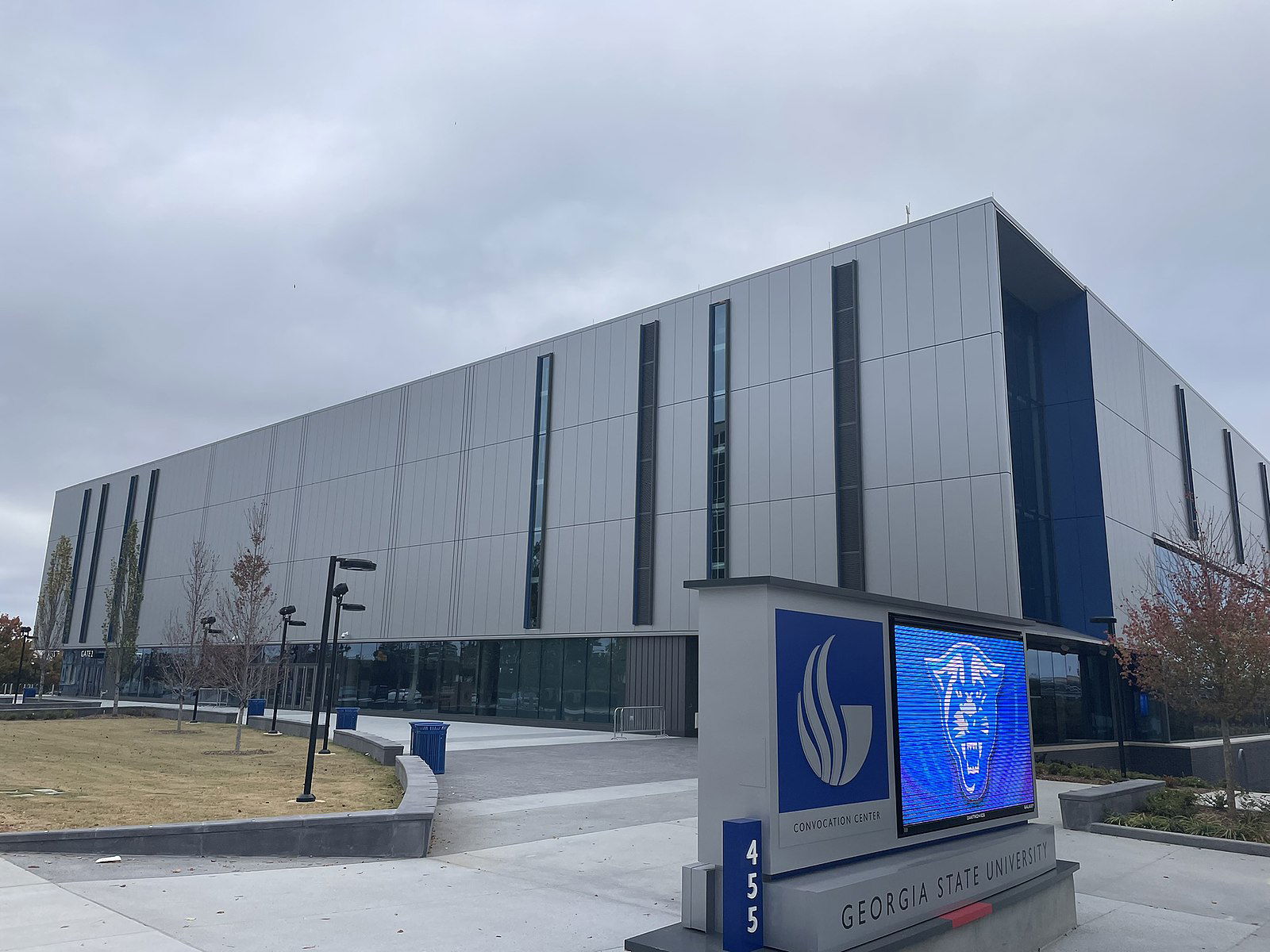
Georgia State University
Georgia State University Convention Center. (Via Wikimedia Commons)

Ex-Georgia State Employee Says College Fired Her For Working Slow Due to Cancer Treatments

Cindy Hawthorne says her rights were violated after the University fired her over her cancer treatment.


A former Georgia State University employee has sued the school over claims she was fired for slow work due to her cancer treatments.

Just three weeks after Cindy Hawthorne began her duties at Georgia State as a civil rights compliance investigator, her doctor gave her the heartbreaking news of a cancer diagnosis. She immediately told her supervisors at the college, who expressed initial support for her treatment program.

They authorized special accommodations for her to work from home and gave her deadline extensions as she entered chemotherapy. In reciprocating this good faith, she told WSB-TV that she even postponed surgery to stay on top of her work responsibilities.

However, things took a turn as she suffered complications from her chemotherapy and radiation treatments. While trying to juggle work and her fluctuating health, Hawthorne asked for another extension. Her management’s response took a different approach than before.

Instead of showing empathy for her plight, her directors at GSU allegedly implemented a 90-day performance improvement plan. Alongside a new hire to the team, Hawthorne began to feel pushed out of her position.

As a civil rights investigator, she oversaw that the school upheld students’ and staff’s rights. She held the job for less than a year, being terminated in October.

“I was just thrown away and lied to, to make it feel like it was my fault,” said Hawthorne.

Now, she is seeking retribution for what she feels was a wrongful firing. She has filed a complaint with the EEOC, hoping to get justice for her ordeal.

Her lawyer, Artur Davis, emphasized that Hawthorne made extra accommodations to prove her dedication to the job. After being pushed to the wayside, she now seeks a legal claim to validate her feelings.

“This is a woman who delayed having surgery because she wanted to make sure the work got done in her organization,” explained Davis. That’s someone that’s more than pulling her weight.”

RELATED CONTENT: Georgia’s First Secondary School For Black People Preserves The Past And Embraces The Future

WNBA, 2024 Season, Basketball, DICK BARNETT, BIG3
(Photo: Barry Gossage/NBAE via Getty Images)

LSU Women’s Basketball Team Breaks NCAA Record With 16th 100 Point Game This Season

The team also became the second team to start the tournament with consecutive 50-point victories.


The Louisiana State University (LSU) women’s basketball team achieved a record-breaking feat during this year’s NCAA Tournament, becoming the first team to score at least 100 points in 16 games in a season.

As the No. 2 Tigers advanced to the Sweet Sixteen with a 101-47 win over Texas Tech, they broke the record they recently tied in the first round of the tournament when they beat Jacksonville in another blowout win, 116-58.

https://twitter.com/espnW/status/2035828081361838254

According to USA Today, the team overtook the record held by Long Beach State University, which accomplished the feat almost 40 years ago with 15 100-point games during the 1986-87 season. The Tigers also made their mark in the record books with another feat, becoming the second team to start the tournament with consecutive 50-point victories.

“Obviously, as a basketball player, and just like a little girl growing up watching basketball, it’s everybody’s dream to have their names in the history books,” junior guard Mikaylah Williams said after the school accomplished the feats. “So, it’s truly a good feeling and a blessing to even be able to do this.”

Four players greatly contributed by scoring in double figures. Williams and Flau’jae Johnson each poured in 24 points, while Kate Koval and Amiya Joyner both had double-doubles (10 points and 10 rebounds), and Amiya Joyner (11 points and 11 rebounds).

According to the school, it will be the team’s fourth straight season in the Sweet Sixteen. Their next game takes place on Sunday, March 29, when they face the No. 3 seed Duke Raiders at the Pete Maravich Assembly Center. LSU is now 29-5 on the season.

LSU head coach Kim Mulkey, acknowledging the record, made it clear they have a goal in mind.

“I don’t think one thing about it,” Mulkey said. “That is not something that, when I’m in my rocking chair, I’m gonna tell the grandkids, ‘You know what we did one year?’ I’ll forget it, but I won’t forget those national championships, those conference championships.”

RELATED CONTENT: LSU’s Divine 9-Hosted Annual Homecoming Step Show Was An Ode To Black Culture

×