Mary J. Blige Recalls Fashion Boutiques ‘Rejecting’ Her, Misa Hylton From Purchasing Clothes
Mary J. Blige can remember the days when fashion boutiques were "rejecting" her business.
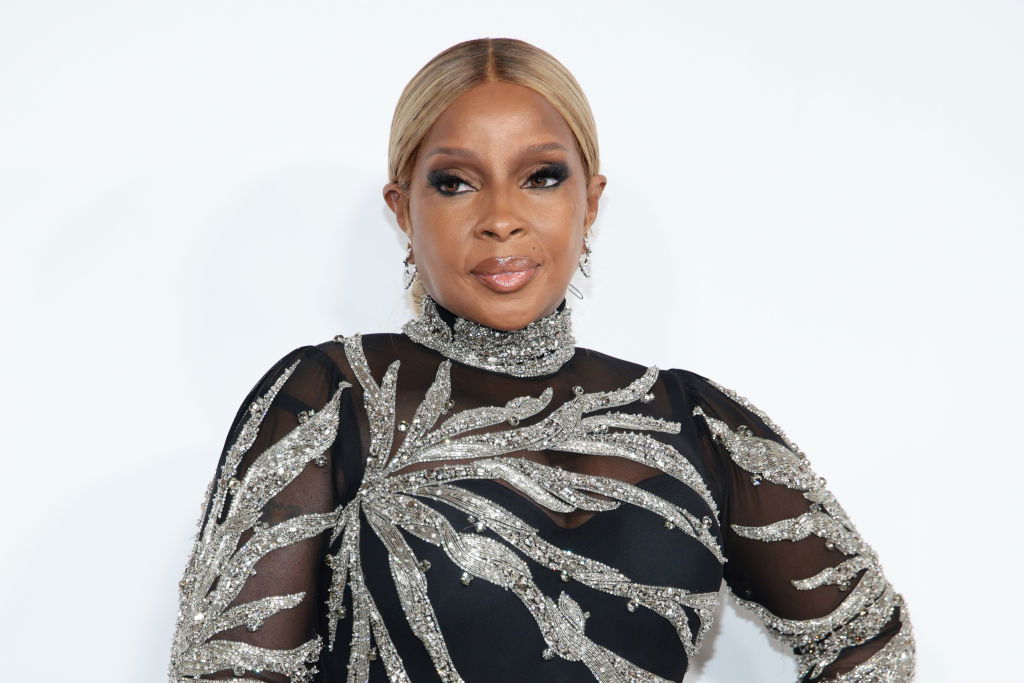
Mary J. Blige can boast luxury boot partnerships with Giuseppe Zanotti. But the music icon remembers the days when fashion boutiques were “rejecting” her business.
The Rock and Roll Hall of Famer and her longtime stylist, Misa Hylton, appear in the new Hulu documentary In Vogue: The 90s. In episode 5, titled “Hip Hop Takes Fashion,” Blige and Hylton recall the mistreatment and dismissals they experienced when they were starting their careers. They recall the time they went to a shopping boutique in the early ’90s and weren’t accepted.
“We went to a boutique, and we were shopping,” Hylton explains, as captured by People. “When it’s time to pay, the sales associate keeps telling us. ‘The card’s declining.’ They keep trying.”
“We call the credit card company. The card’s not declining. It’s actually not even being rung. Like, ‘Oh, OK. You don’t want us to buy these items.’ It’s because we were young and we were Black, and they could not figure out how we were spending this much money. They didn’t even realize who Mary J. Blige was yet, and so you see how luxury fashion brands didn’t really value us or didn’t respect us. They didn’t see their brands on us.”
“They were rejecting us,” Blige added. “They were treating us like little street kids. They didn’t want to — they probably didn’t want to take our business. They weren’t treating us the way they treat us now. Absolutely not.”
Blige has since gone on to sell millions of records, win nine Grammy Awards, be inducted into the Rock and Roll Hall of Fame, and secure partnerships for her luxury boots, which sold out in just one day. Another episode of the documentary features Mary J. Blige and Missy Elliott reflecting on their iconic 1998 Vogue fashion shoot with Lil’ Kim.
“It took a lot to be able to get into Vogue,” Elliott says. “The strength of showing three Black women in this particular article — that was a huge deal.”
Others featured in the documentary include Tommy Hilfiger, Naomi Campbell, and longtime Vogue editor-in-chief Anna Wintour. In Vogue: The ’90s is now streaming on Hulu.
Celebrate ‘Me Period Day’ With Black Women’s Health Imperative
BWHI introduces "Me Period Day" for Black mothers and daughters to engage in open conversations about their bodies and periods.
It’s National Daughter’s Day, and as part of the celebration, the Black Women’s Health Imperative (BWHI) has launched “Me Period Day,” a safe space for Black mothers and caregivers to have open conversations about menstruation with their daughters.
Sept. 25, 2024, marks the inaugural celebration of Me Period Day as BWHI celebrates its Anniversary Week. According to BWHI, Me Period Day is a moment for youth to “connect with their bodies, establish healthy habits, and become powerful advocates for their own health.”
The organization stated that with nearly 1 in 4 women in the U.S. struggling to afford period products, it’s important to use this national day of action to advocate for menstrual equity. “Our goal is to ensure that everyone, regardless of background, has access to affordable period products and the information they need to live healthier lives,” the organization said.
Black women dedicated to protecting Black women and girls created the Black Women’s Health Imperative in 1983 to advance the health and wellness of their community. The nonprofit organization works to decrease health disparities for Black women through initiatives like Me Period Day and its “Black Women Vote: 2024 Health Policy Voters Guide,’ which BLACK ENTERPRISE previously mentioned, released this month to help Black women understand policies and issues regarding their health, ahead of this year’s election.
BWHI encourages women and girls to participate in the Sept. 25 celebration by using the hashtags #NationalDaughtersDay and #MePeriod to spread empowerment and share stories that promote healthy habits for the body and health advocacy. Use the Me Period Day image frames throughout the day to win a year’s supply of period products.
BWHI also invites the public to join a virtual “Me Period” documentary screening and explore conversations on navigating menstruation, breaking barriers, and mother-daughter bonding. The film features celebrity mothers Sheryl Lee Ralph and Tabitha Brown, who sit down with their daughters to discuss periods and the body. “Women bleed every month, but somewhere in my head, I didn’t think it would happen to me,” Brown says in the trailer as she shares the couch with her daughter and reflects on the moment her period started. Ralph says she was with her dad and brothers when it happened. “She’s just becoming a woman,” she remembers her father confirming to her brothers that she wasn’t “dying.”
Watch the Sept. 25 virtual screening at 7:00 PM EST by creating a free Kinema account and purchasing a $10 ticket to support BWHI. Start conversations with your mothers, daughters, and state representatives using BWHI’s advocacy tool kit.
Nordstrom x Harlem’s Fashion Row Releases Collection Celebrating The Black Community’s Economic Power
The Nordstrom by Harlem's Fashion Row collection comes just in time for the summer-to-fall transition.
Nordstrom launched its first-ever collaboration with Harlem’s Fashion Row, which serves as “a celebration of Black consumers‘ cultural and economic power,” says HFR Founder & CEO Brandice Daniel.
The Nordstrom by Harlem’s Fashion Row partnership comes just as trendsetters prepare their wardrobes for the summer-to-fall transition with pieces highlighting Black culture’s enduring influence in fashion. The partnership highlights three Black-owned brands: House of Aama, Harbison, and Megan Renee, who all showcase their grandiose skillset through designs and techniques tailored to amplifying Black contributions to fashion.
Aama’s signature feminine aesthetic is enhanced by distinctive tailoring influenced by African Diaspora Dandy culture, while Harbison’s designs pay tribute to his mother, a working-class, resourceful woman he describes as navigating society with remarkable poise. He was also inspired by Simon Maris’s “Portrait of a Young Black Woman” (1890). Megan Renee’s pieces highlight the founder, Megan Smith’s, dedication to representing strong, bold womanhood through pieces including silky button-ups, faux leather tiered skirts, and finely structured suits.
“I built my brand around my love of strong suits and blazers, and I feel like the piece really captures not only who I am but the woman I am dressing,” Smith tellsPop Sugar. “It’s bold, strong, but still feminine. I played with the fit and proportions that really speak to a woman’s body and it feels very fresh and chic.”
After Smith participated in the agency’s annual Fashion Show and Style Awards in 2023, collaborating with HFR again for its Nordstrom partnership was an easy decision.
“Retail placement has been at the forefront of initiatives for my brand, and I knew this opportunity would open so many doors,” Smith says. “Working with Harlem’s Fashion Row is always seamless, and since connecting and working together, I’ve started to feel like they are family now.”
The collection offers an inclusive size range from XXS to 2XL—equivalent to sizes 00 to 18 for women and S to 2XL for men—and prices starting at just $45. Nordstrom by Harlem’s Fashion Row is available on Nordstrom’s website and in 20 stores nationwide, including the New York flagship location.
Are ICHRA Plans The Key To Cutting Rising Healthcare Costs For Employers And Employees?
Through the ICHRA plans, employees receive a set amount from employers each month to be used toward their plan of choice on the individual insurance market.
Some employers have begun adopting a new way for employees to save money on healthcare costs. This new individual coverage health reimbursement arrangement, or ICHRA plans option, gives them the cash and option to choose the best plan for their household and has slowly begun deploying at workplaces nationwide.
Through the ICHRA plans, employees receive a set amount from employers each month to be used toward their plan of choice on the individual insurance market. According to employers, the plan gives workers more control over their health spending and, in some cases, helps them save money, too, NPR reports.
“The [traditional group] health insurance cornerstone from 60 years ago has outlived its usefulness,” said Headwater Ventures’ Matt Miller. The company is responsible for investing in ICHRA administrator Venteur. “The goal is to ensure people have coverage, detaching it from the employment construct and making it portable.”
60% of women aged 19-64 rely on employer-sponsored health insurance. But are traditional group plans really tailored to their needs? Enter ICHRA: the customizable solution empowering women to choose coverage that fits THEIR priorities. pic.twitter.com/ZnvXUhofu0
One employer among the first to adopt the ICHRA concept for its employees was Lycoming College, a small, nationally ranked liberal arts school located in Williamsport, Pennsylvania. The goal is to help cut down healthcare spending costs for not only the institution but also its workers.
Employers have the option of offering this health reimbursement plan to various classes of employees, while group plans may be available to others based on determining factors like geography, salaried vs. hourly pay, and full-time vs. part-time status.
When Lycoming College faced a 60% premium increase thanks to members with high claims, the school had no choice but to look for other healthcare options for its employees.
According to the institution’s associate vice president for human resources and compliance, the school ultimately offered ICHRA plans to all employees working at least 30 hours a week.
Within its first year of offering the ICHRA benefit, Lycoming College saved $1.4 million in healthcare costs, with employees saving an average of $1,200 per person in premiums. Hagan admits that the people in the finance department “really like” the new plan.
“From a cost standpoint, people tend to be pretty happy with it, and people really like having a choice of plans,” said Hagan, although she admits that they have run into problems with the plan’s administration. She notes that some employees’ coverage had to be reinstated after it was lost temporarily. However, Hagan revealed that “those problems have been largely resolved” since swapping out plan administrators this year.
On the other hand, the outlet also reports that several companies that tested out ICRHA plans for employees ultimately decided to return to group coverage options.
Some employers note that this type of coverage can be a hassle to manage because instead of paying one group health plan premium, they now may be responsible for payouts to dozens of individual health insurers. Moreover, experts noted that for employees who have never had to shop for a healthcare plan on their own, the process can be pretty tedious and requires more assistance from employers to make the right decision.
Other concerns include health insurance specialists’ concerns that the plans aren’t the best option for consumers or the individual insurance market. They cite that despite rules preventing employers from offering ICHRA plans to workers who may be sicker or more expensive to cover than others, employers with “relatively unhealthy workforces” may still find the coverage to be more appealing.
“It’s a big disrupter, like 401(k)s,” said Mark Mixer, board chair of the HRA Council and CEO of HealthOne Alliance in Dalton, Georgia. Still, it’s not for everyone. “It’s simply another tool that employers should consider. When it fits, do it.”
According to the HRA Council, ICHRA coverage is currently offered to roughly only 500,000 people among the estimated 165 million individuals with employer-sponsored coverage.
Montana Absentee Online Voting System Temporarily Shuts Down After Kamala Harris Left Off Ballot
A voter reported there was no option to vote for Vice President Kamala Harris and her running mate, Minnesota Gov. Tim Walz.
It’s been a rocky start to the election season. The state of Montana was forced to shut down its electronic absentee voter system after it went live on Sept. 20, 2024, when a voter reported there was no option to vote for Vice President Kamala Harris and her running mate, Minnesota Gov. Tim Walz.
According to the Daily Inter Lake, a Montana voter in the United Kingdom first reported the issue after noticing he couldn’t cast his ballot for Harris on the online system. Montana voter Max Himsl stated he only saw Republican Donald Trump and Independent Robert F. Kennedy, Jr., on the ballot. He reported the discrepancy to the Flathead County Election Department in Kalispell.
“I’m upset my democratic process was interrupted,” Himsl told the outlet.
Montana’s Electronic Absentee System allows eligible voters to cast their ballots online 45 days before Election Day. The mistake was reportedly limited to the electronic absentee system.
Secretary of State Christi Jacobson took down the Electronic Absentee System out of an abundance of caution.
“Our team and the vendor quickly investigated and found that only a few voters may have been impacted,” the Secretary of State’s Office told the international outlet in a statement.
A spokesperson for the Secretary of State’s office toldNewsweek, “On Friday morning, our office received a report of a ballot not displaying properly for a UOCAVA voter –- which defines eligible military and overseas citizens.
The spokesperson adds, “As mentioned, the system was taken offline in the morning for troubleshooting with the vendor, and it was back online in the afternoon. The potentially impacted UOCAVA voter who submitted a ballot has since been contacted, and no further action is required. Vice President Kamala Harris and all certified candidates appear on Montana’s ballots.”
Detroit Workers Still Concerned Despite Michigan Raising Minimum Wage
Detroit workers fear that the marginal increases will still leave them unable to afford daily expenses.
While Michigan plans to raise the minimum wage by a few dollars, workers in Detroit remain concerned about the cost of living.
The state expects to raise its current wage rate from $10.33 to $12.48. However, those making this amount fear it will still not be enough to combat inflation and the growing living costs. WXYZ, an ABC-affiliated news outlet in Detroit, spoke to workers about what the increase truly means for them. Many of them work multiple jobs to keep themselves afloat.
“I think it could be helpful, as long as we don’t get any more inflation behind it,” said a metro Detroit employee, Howard Hughes.
The exact increase remains unknown, but it is expected to be officialized by Nov. 1. However, workers will not see the change reflected in their paychecks until Feb. 21. Fortunately, the plan also includes annual raises, going as high as $14.97 by 2028. The resolution aims to keep the state’s workforce intact.
Despite supporting the increased pay, another worker believes it “isn’t even enough” only to work one job.
The man, Spud Williams, added, “Even minimum wage, with everything going up, isn’t enough.”
Alan Brikho, a deli owner in the city, says the money would not impact much as rising costs persist. He already raised the pay for his employees and says better wages are necessary for the best staff.
“Prices probably would go up because, at the end of the day, the business margins don’t change,” explained Alan Brikho, who owns Front Page Deli within the Oak Park neighborhood of the city. “In order to get better talent, better employees, you have to pay a little extra because everyone was competing for that same employee.”
The federal minimum wage remains at $7.25, with states like Michigan adopting higher rates to cushion living standards. However, Detroit workers fear that the marginal increases will still leave them unable to afford daily expenses. While inflation steadily cools down, workers’ concerns signify that more is still needed for the minimum to suffice.
Floyd Mayweather Purchases Avi & Co Hue Watch Collection For $1M
The retired boxer became the first person to own all four watches in the Avi & Co Hue collection.
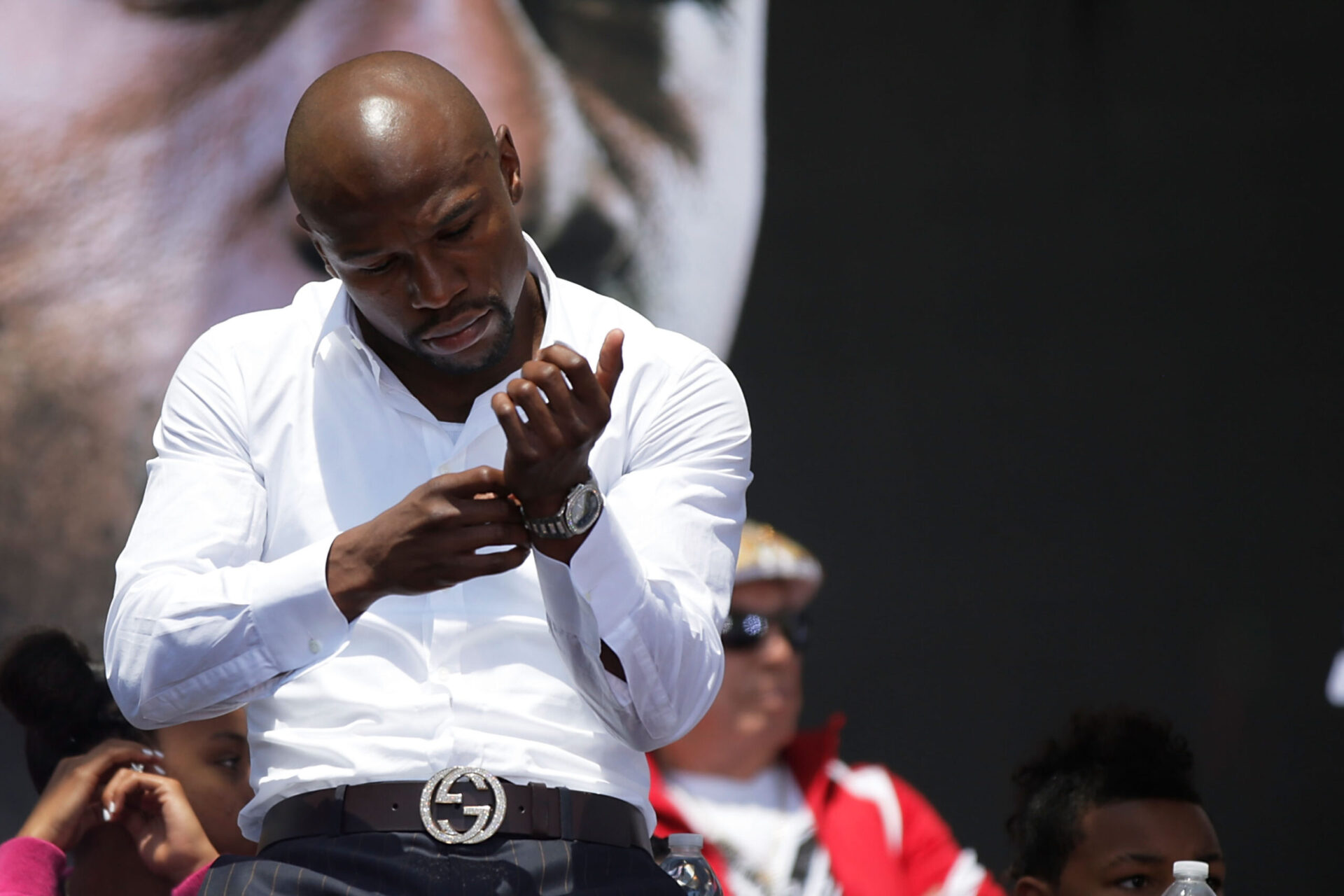
With a nickname like “Money Floyd,” the expectation of making expensive purchases comes with the moniker. Retired undefeated boxer Floyd Mayweather held up his bargain when he reportedly purchased four luxury timepieces for one million dollars.
Mayweather posted a video showing off the very expensive watches to his social media account. He became the first person to own all four watches in the Avi & Co Hue collection.
“When the craftsmanship at @aviandco is this impeccable, choosing just one watch wasn’t an option… so I bought all four from the exclusive ‘Hue Collection.’ This is the kind of quality you can only get from a jeweler who’s available 24/7, where the service is as priceless as the jewels. A special thanks to @Forbes for consistently recognizing me and others in such a positive light—always a class act.”
Mayweather referenced a Forbes article on him and the collection. According to the article, the undefeated boxer already owned seven Avi & Co. watches. Mayweather stated that after buying several custom pieces from him, they became friends, and he was a supporter. After seeing the four watches, each available for $250,000, he couldn’t choose just one, so he bought all four for a cool million.
“It’s hard to choose one watch; they are all exceptional timepieces. I am proud of Avi and support him. He is my friend, and if I want to hang out with him, I can. You can’t do that with the owner of Rolex or AP (Audemars Piguet).”
The Hue Pink Ice was unveiled in July. The timepiece is set with 945 natural pink sapphires weighing 110 carats. The other colors, blue, green, and red, have the same number of stones, with the blue having 108 carats of sapphires, the Green having 115 carats of tsavorites, and the red having 105 carats of rubies.
Russell Westbrook Cuts Ribbon To Newly Expanded Westbrook Academy
The Denver Nuggets player returned to South Los Angeles with his wife, Nina todo the honors
Newly signed Denver Nuggets point guard Russell Westbrook was in California to celebrate the grand reopening of the newly expanded Westbrook Academy campus.
According to Fox Los Angeles, the Long Beach native returned to South Los Angeles on Sept. 23 to cut the ribbon to the campus with his wife, Nina. The school is located in South Gate and is home to over 400 middle and high school students from the area. Westbrook Academy was launched in partnership with the L.A. Promise Fund.
Russell Westbrook and the L.A. Promise Fund celebrated the grand re-opening of the Westbrook Academy today in South Los Angeles. The facility is expected to serve over 400 middle and high school students.
“Having grown up in Los Angeles, knowing the resources I didn’t have. And having an opportunity to partner with L.A. Promise to bring something like this to South LA for their kids, for their families…what’s most important is education,” Westbrook stated.
The school was initially launched in 2021 under the ‘Why Not?’ moniker and was slated to operate on a community school model. Many of the resources are connected to the school, students, and their families to ensure their comprehensive well-being. Students are offered the right support in the areas of career exposure like internships and dual enrollment community college classes; wellness programs to promote mental health, nutrition, and physical health; college advising through field trips, test prep, and application assistance; and robust enrichment programs in athletics, Science, Technology, Math and Engineering, and leadership cultivation.
It was an accomplishment for the former LA Clippers player to open the middle and high school to help the students in the area.
“I’m LA to the core, and I want to represent LA wherever I go,” Westbrook said. “To me, legacy is what you leave behind, not just for my family, but for the people you touch along the way, along your journey. And God has blessed me with this opportunity and platform to be able to do so. And I want to help as many people as possible.”
401(K) Matching: The ‘Free Money’ Benefit Every Employee Should Know About
Certified financial planner and co-founder of the Atlanta-based company, Collective Wealth Partners, Kamila Elliott calls a 401(K) match “one of the rare guarantees on an investment that we have.”
Financial advisors say that reviewing your options if your employer offers 401(K) matching is a simple way to expand your investment portfolio.
Often referred to as “free money” by advisors, a 401(K) match is when your job deposits money into your 401 (K) account to reflect any contributions you’ve made from your compensation, such as bonuses and salary, according to Fidelity Investments.
In a new report from CNBC, experts say learning about your employer’s 401(k) matching policies is one of the simplest ways to get “free money” or more bang for your buck at the workplace.
Simply put, an employer will make a matching contribution to a worker’s retirement savings up to a cap, thanks to 401(K) matching. So, if a worker places 3% or more of their annual salary into a 401(K) plan, their employer may add 3% to their employee’s account. With a dollar-for-dollar match of up to 3%, the investor can double their money, which, per the report, is the same as a 100% profit.
Kamila Elliott, a certified financial planner and co-founder of the Atlanta-based company Collective Wealth Partners, calls a 401(K) match “one of the rare guarantees on an investment that we have” when it comes to making smart money moves.
“If you were in Vegas and every time you put $1 in [the slot machine], you got $2 out, you’d probably be sitting at that slot machine for a mighty long time,” said Elliott, who is also a member of CNBC’s Advisor Council.
In a 2023 survey conducted by the Plan Sponsor Council of America, it was found that roughly 80% of 401(K) plans across the nation offer a matching contribution. However, employers must ultimately determine what percentage they will match for their employees. This amount can be factored into various formulas and does not look the same for each company.
One of the most common methods employers adopt is a 50-cent match for every dollar a worker puts in their 401(K) account. Per the PCSA, if a worker saves 6% of their pay, the company’s matching formula adds another 3% to their account, leaving them with a total investment of 9%.
“Where else can you get a guaranteed return of more than 50% on an investment? Nowhere,” said a 401(K) administrator, money manager, and investment advisor group, Vanguard.
While the investment seems like an easy win for employees, it is important to note that many employer “vesting schedules” or policies determine whether workers will receive the full benefits of a 401(K) match.
For example, some vesting schedules employers employ require employees to stay at a company for a set amount of time before they can claim ownership of the money in the account.
The PCSA reports that roughly 60% of companies require workers to have a tenure at the job that lasts anywhere from two to six years before they are allowed to leave and take the money contributed by both them and the employers with them. If they go before the allotted period, employees risk losing some, if not all, of their matches.
For the remaining estimated 40% of employers who do not require tenure, they have “immediate vesting” or no limitation to accessing the money matched by their employers in their 401(K) account.
Homecoming Cancelled After White Students At Oklahoma High School Spew Racist Vitriol
According to Karlos Hill, the regents professor of African and African American Studies in the University of Oklahoma’s Clara Luper Department, racism has been normalized by political leaders, both inside and outside of Oklahoma.
According to The Oklahoman, some experts, including Oklahoma State Sen. Mary Boren, said the incident reflects a need for education, dialogue, and DEI programs.
We unequivocally condemn the act displayed by the students in Tishomingo. Racial slurs have no place here and should be met with criticism and penalties. Proper education about the black history of this country is important to combat hateful rhetoric. https://t.co/2136g8ntWv
Brandon Moreland, the Tishomingo Public Schools superintendent, issued a statement declaring that racism and discrimination have no place at the school.
“Racism and discrimination, in any form, will never be tolerated or accepted on our campus and is not reflective of the values of our students, school, or community,” Moreland said in the statement.
According to Karlos Hill, the regents professor of African and African American Studies in the University of Oklahoma’s Clara Luper Department, racism has been normalized by political leaders, both inside and outside of Oklahoma.
“People feel free, or more free than they ever have in recent memory, to do and to say things that are racist. That’s really disturbing and scary,” Hill told The Oklahoman.
Hill continued, saying that racism is a national problem, not a local one. “Racism and bigotry are part of our culture. It’s a part of our politics. We would wish it were not, but it just is,” Hill said. “It’s not so much about Tishomingo. It’s not so much about Oklahoma. It’s really about our American culture and our American political culture, and the ways in which social media, the internet, television, all of those things have created the kind of culture that we have where blatant racial imagery is increasing.”
According to the press release, the incident involved “a small number of high school students who made a deplorable decision by displaying a disrespectful and very inappropriate racial slur while on campus.”
Sen. Boren, a Democrat, said in her statement that the actions of the radical right have created a climate ripe for racial hostility.
“This is clearly unacceptable in every way, and yet six young men felt safe and comfortable to carry out their ‘extremely poor decision.’ These kinds of behaviors expose school districts to lawsuits for failing to keep the school free of racial hostility that disrupts the learning of students.” Sen Boren wrote. “Diversity, Equity, and Inclusion (DEI) programs are designed to help students to consider the perspectives of people who are impacted by their decisions. DEI is simply good manners for work and school and is aimed at teaching Oklahomans how to treat one another with dignity and respect –- lessons we all need to learn and relearn. Especially since so many of us claim to live by the Golden Rule: Treat Others the Way You Want to Be Treated.”
Boren continued, “It is impossible to know how others would like to be treated unless you learn how to set aside your own limited experience and bias to consider their view. Unfortunately, the radical right has banned DEI in Oklahoma schools and has removed a helpful way to teach important lessons about race relations in America.”
Hill seemed to agree with the latter portion of Sen. Boren’s statement as he told The Oklahoman, “You can’t address something you can’t talk about. You can’t address something that you’re in denial of. Rural America isn’t the only place where slavery existed,” Hill said. “It isn’t the only place where lynchings occurred. Our racist history occurred everywhere in this country.”
“If you got a school district down there or a school down there that is teaching these boys in a way that would cause them to think that this behavior is OK, that’s a problem,” Allen-Bey said.
Allen-Bey continued, “I don’t know these boys, so I don’t know if there is some deep-seated hatred for Black people in them or if they just thought this was a joke. But I do think that something has to be done.”
Allen-Bey also tied the incident to the inability of teachers to talk about race and racism in the classroom. “If you’re not making a conscious effort to properly educate those students about the history of America…then you have these kind of insensitive incidents. So it does concern me.”