Mother Of Flo Rida’s Son Agrees To Settle Lawsuit For $40M After Son Fell From Apartment Building


Earlier this year, on Mar. 4, Zohar Dillard, the 6-year-old son of recording artist Tramar Lacel Dillard or Flo Rida, fell from an apartment where he and his mother, Alexis Adams, lived. The fall left the boy with pelvic fractures, left metatarsal fractures, grade three liver laceration, internal bleeding, and a collapsed lung.

Adams has sued a construction company, a window installation company, and the residential apartment building and has set a price that it will take to settle the lawsuit.

According to TMZ, Adams is willing to settle the lawsuit against the companies for $40 million. She has accused them of being responsible for her son’s fall from the Jersey City building. In her claim, she stated that they installed “incorrect-sized guards” on the windows, allegedly causing her son to fall out of the apartment window.

Based on legal paperwork filed in court, Adams says she will settle for $20 million from one set of defendants and $20 million from another.

Adams filed the lawsuit in March, alleging that the building had “windows that posed a hazardous condition,” which allowed her son to fall onto the concrete pavement.

“As a single mom to a special needs child, this feels like a nightmare. My heart is broken into a million pieces,” Adams said in a written statement. “I am devastated, angry, and struggling to come to terms with the fact that my only child has suffered severe injuries due to willful negligence of our landlord and others involved in failing to take necessary safety measures.”

Flo Rida also released a statement after the accident, thanking those who sent him well wishes for his son.

“Great day, thank you to everyone who reached out with their concerns and prayers for my son.”

The attorney for Adams, Steven Haddad, stated Dillard had fallen at least 50 feet, and doctors were surprised that he survived the fall.

RELATED CONTENT: Flo Rida’s 6-Year-Old Son in ICU After Falling From Apartment Window Three Weeks Ago

condoms, California,BILL 541, Governor Gavin Newsom, high school, Senate Bill 541

California Governor Nixes Bill Offering Free Condoms To High School Students


California Gov. Gavin Newsom recently axed a bill that provides condoms to high school students for free, the Associated Press reports.

Newsom shut the legislation down, arguing that supporting the proposed law was too expensive, with a budget deficit of over $30 billion. The bill—known as Senate Bill 541—would have mandated all public schools to make free condoms available for students starting from ninth through 12th grade. An additional requirement would allow access to condoms for grades seven through 12 as part of an educational or public health program. For retailers, Senate Bill 541 would make it illegal to refuse condom sales to youth.

While the Democratic governor saw the good in the proposed law, he said the state needs to be more disciplined on what they spend as the bill would add close to $20 billion in costs to the state budget. “With our state facing continuing economic risk and revenue uncertainty, it is important to remain disciplined when considering bills with significant fiscal implications, such as this measure,” Newsom said.

“This bill would create an unfunded mandate to public schools that should be considered in the annual budget process,” Newsom explained. Lawmakers estimated the bill would have had a price tag in the low millions every year, with close to 1.9 million high school students enrolled in over 4,000 schools in 2022, according to the California Department of Education.

Newsom has been on a roll, vetoing bills that addressed numerous measures. In early October 2023, Senate Bill 58 and Senate Bill 90 were looked over. Bill 58 would have decriminalized the possession and use of certain hallucinogens, and Bill 90 was designed to limit the price of insulin, according to USA Today. But one law did get the green light as part of the Golden State’s plan to eliminate the use of fossil fuels by 2035. The new law requires any new bus purchased or contracted by school districts to be zero-emission.

RELATED CONTENT: This Black-Owned Condom Company Led By a Morehouse Grad, Leverages Instagram To Teach Sexual Wellness

Black Professor Reveals That California Community Colleges Don’t Teach Black History Even For History Majors

Black Professor Reveals That California Community Colleges Don’t Teach Black History Even For History Majors


*Originally Published By Blacknews.com


Nationwide
— Manu Ampim, a tenured professor of History and Africana Studies at Contra Costa College in San Pablo, California, has revealed that the California Community College system, the largest educational system in the U.S. serving more than 1.8 million students, has omitted Africa in its curricula. He says that only 2 of the 116 colleges (1.7%) offer a required course on African history for students obtaining an Associate of Arts Degree. Students majoring in History are required to take U.S. history and Western civilization courses, but African history courses are omitted from the curriculum throughout the state.

San Diego City College is one of only two California community colleges that has a required course on African history, and the campus requires students majoring in Black Studies to complete Black Studies 145A or 145B. Contra Costa College in San Pablo is the only California campus that requires completing an African history course for both History and African American Studies majors, and its “History of African Civilizations” course (Afram 210) is the only class in the state that focuses exclusively on ancient Africa, without covering modern slavery.

Not only are courses on Africa rare in California but there is also a scarcity of U.S. textbooks on African civilizations. The few existing books typically emphasize the modern issues of slavery, colonization, and the 20th-century independence movement, while minimizing the African civilizations before the continent’s recent decline since the 16th century.

In his new book, A History of African Civilizations (revised 2nd edition), Manu Ampim, covers African civilizations and the myriad of contributions from these various ancient civilizations, including in fields such as writing, medicine, mathematics, architecture, solar calendar, and social organization. The book has the same title as the course he teaches at CCC each semester. It was originally a course reader, but Ampim explains that he “converted the reader into a retail book and expanded the second edition for the general public, my students, and other professors.”

Ampim’s book is based on his first-hand research in two dozen countries over the past 34 years. He emphasizes the importance of studying ancient African civilizations at the apex of their influence, and explains that “these pre-colonial civilizations give us a glimpse into the African past before the advent of slavery, colonization, and foreigners who derailed African development.”

Ampim states in Unit 3 that it was not until the 20th century that African Studies was viewed as a subject worthy of academic study. In 1922, for example, scholar William Leo Hansberry created the first “African Civilization section” of the History Department at Howard University. However, Hansberry was ridiculed by his peers who claimed that he was focusing on a subject not worthy of scholarly attention. After Hansberry and historian Dr. Carter Woodson led the way, various Black scholars in the mid- and late-20th century wrote pioneering books on African civilizations, but these works are now decades old and do not meet the curriculum requirement that textbooks for transferable courses must be published within the past 7 years.

The California college courses on Africa, including the four-year universities, are rare due to disinterest, lack of faculty training, and a scarcity of scholarly textbooks. Ampim’s book fills this void and presents detailed information on ancient Africa, beginning with the origins of humanity, and the bulk of the book focuses on civilizations throughout the African continent. The first advanced civilization discussed is Ancient Kush, with its political capital in current-day Sudan, and Ampim describes Kush as “the oldest of Africa’s classical civilizations.” The front cover shows a bust of the Kushite King Taharqa, who was the greatest builder in Kush’s long history.

Other professors have adopted the book to supplement their classroom instruction beginning this fall semester. It is distributed by Advancing The Research. A History of African Civilizations ($29.95), 216 pp. ISBN: 978-1-733652-2-3

About the Author
Manu Ampim has published three books and numerous scholarly articles on his extensive field research. He is noted for his first-hand research on African civilizations in 24 countries, and his seminars which train various people on first-hand research methods in Africana Studies. He is the Chair of the History, Anthropology, and Geography Department at Contra Costa College, where he teaches about 300 students a year.

For press inquiries, contact Quinton Crawford at 510-878-7279 or info@AdvancingTheResearch.org

Autism Study Launches Video Campaign to Attract More African Americans

Autism Study Launches Video Campaign to Attract More African Americans


*Originally Published By Blacknews.com

Nationwide — SPARK, the largest study of autism families across the United States, hopes a new video campaign helps the research initiative capture the attention of more Black and African American individuals and families. SPARK contends that autism research is more powerful when children and families from varying racial and ethnic groups are fully represented. Since launching nationally in April 2016, SPARK has enrolled more than 120,000 individuals with autism spectrum disorder (ASD) – 80% autistic children and 20% autistic adults. So far, more than 15,000 African American and Black autistic individuals and families – roughly 12.5% – participate in SPARK.

We have a good number of African Americans and Black autistic individuals and families involved in SPARK, but we really want to capture as many people as possible to get that richness and diversity we need to fully have the chance to uncover the secrets to a condition that has implications for a lot of other people,” says Dr. Wendy Chung, Director of Clinical Research at the Simons Foundation Autism Research Initiative and principal investigator of the SPARK study. “We hope that hearing some of the personal stories of our participants will inspire others to join our efforts so we can move toward equal representation and provide everyone with an equal chance to have a happy, healthy, and productive life.”

In the first of two videos, single father Rico Winston shares his story of how his son, Isra’El, was diagnosed with autism at 2-years-old. Through his own research, he found his way to SPARK, and now he and SPARK are committed to improving Isra’El’s life. He provides five tips on how a dad can help his child with autism. See his video here: Rico Winston’s Five Tips.

The second video highlights Darnell Newsum, mother of two adults with ASD and one of the parents of autistic children and autistic adults among the SPARK staff. She focuses on her youngest child, her daughter, and shares how her journey to SPARK continues to enrich her family’s life. See her video here: Darnell Newsum Journey

About
SPARK is a national online autism research initiative that connects people who have a professional diagnosis of autism and their biological family members with research opportunities to advance our understanding of autism. SPARK’s goal is to not only better understand autism, but also accelerate the development of new treatments and supports. SPARK has partnered with 31 clinical sites across the country, as well as autism organizations, service providers, and key influencers to help educate the public about SPARK and to recruit participants. Through these strategic partnerships, SPARK hopes to reach and engage a diverse and large number of individuals and families that are affected by autism.

black-owned brands, swimwear

Black Leisure Travel May Skyrocket In 2023


According to MMGY Global’s “The Black Traveler: Insights, Opportunities & Priorities” report, not only do Black Americans spend a lot on leisure travel, but seeing Black people represented in the advertising associated with a destination increases the likelihood that Black people from the United States will go there. 

In 2019, Black Americans spent an estimated $109 billion on leisure travel, accounting for around 13% of all travelers. Though those numbers are pre-pandemic, travel is expected to rebound in 2023 and could see a boost due to one group in particular.

Essence reports that Black Travel Summit has announced Nov. 11 as National Black Travel Day, chosen to honor Captain Barrington Irving, the first and only Black person to fly a solo global mission.

Black Travel Summit will host a conference from Oct. 20-22 at Miami’s Hyatt Centric Brickell. According to its website, the event features panel discussions with travel industry leaders, workshops, activities highlighting Black Miami, and an opportunity to connect with those driving diversity within the travel industry. Hyatt’s Director of Global Diversity, Equity and Inclusion Ronisha Goodwin told Essence.

“We are proud to continue our collaboration with Black Travel Summit and celebrate National Black Travel Day. This day is a testament to our ongoing commitment to uplifting Black voices, forging meaningful connections and paving the way for a more inclusive travel industry.” 

According to Travel Pulse, Black travelers wield considerable influence on the leisure travel industry. Black people who are interested in traveling as an extension of their interests in Black culture and history tend to spend more on their trips compared to others. Felicia Fencl, CEO of First Choice Travel Group, told the outlet,

“When asked what has drawn them to want to visit those countries, (African countries like Kenya and Ghana) the replies are almost always the same. They want to immerse themselves in the experiences that make them feel good about their heritage. They are seeking authentic interactions with the people and the land.”

Another travel agent, Belvin Baldwin II, CEO of Showtime Travel, said his clients “are not only looking for cultural activities but bucket-list items. The pandemic has taught us that time waits for no one and they are making those dream vacations a reality now.”

Black travel plans, Baldwin added, are even more aggressive than they had been in 2019. His clients are looking to book multiple bucket list trips in one year, which could mean Black leisure travel dollars eclipse the high water mark they set in 2019. 

RELATED CONTENT: Empowering Black Travel Entrepreneurs: Embracing Automation For Business Growth And Unforgettable Journeys With SquadTrip

tulsa massacre

Tulsa Race Massacre Survivor Hughes Van Ellis, 102, Dies


Hughes Van Ellis, one of the last three known survivors from the 1921 Tulsa Race Massacre, died Oct. 9 at 102, 2 News Oklahoma reports. 

Van Ellis was a baby when the tragedy occurred but the event had devastating consequences that lasted his entire lifetime.

Two days of arson left Black Wall Street destroyed and dozens of Black people killed. The attack financially ruined Van Ellis’ family, which took years to recover. “We lost so much. I believe if all this hadn’t happened when I was a child they would’ve been better in life,” he told the news organization. 

During WWII, Van Ellis joined the U.S. army, serving alongside British soldiers. His deployment was marred with discrimination.

“In the service you had a white fountain to drink out of, you had a Black fountain,” he said. “Then you had a restroom. They had one stool for the Black guys and five, six stools for the other side,” he said. “It makes you feel bad. It just makes you feel so bad, you know? But you are in the service so you have to do your duty. So, you have to live with it.”

In May 2021, Van Ellis along with his sister Viola Fletcher, 109, who also survived the arson spree testified before Congress about the lasting repercussions of the Tulsa Race Massacre.

“The Tulsa Race Massacre isn’t a footnote in a history book for us,” he said. “We live with it every day and the thought of what Greenwood was and what it could have been. We aren’t just black-and-white pictures on a screen, we are flesh and blood. I was there when it happened, I’m still here. My sister was there when it happened, she’s still here. 

“We’re not asking for a handout,” he added. “All we are asking for is for a chance to be treated like a first-class citizen who truly is a beneficiary of the promise that this is a land where there is ‘liberty and justice for all.’ We are asking for justice for a lifetime of ongoing harm. Harm that was caused by the Massacre.” 

Van Ellis’ legacy lives on through his family and older sister, who will continue their fight for reparations with the Justice for Greenwood team.

RELATED CONTENT: Oklahoma Superintendent Ryan Walters Faces Backlash After Tulsa Massacre Remarks

ageism, Carla Smith, Atlanta, lawsuit

Former Director of IT Sues City of Atlanta For Age Discrimination


An ex-official for the City of Atlanta has filed a lawsuit against the governing entity for age discrimination and retaliation.

Former Director of Information Technology Carla Smith alleges she was systemically forced out due to old age. In a complaint made to the Equal Employment Opportunity Commission in September, Smith claims that a younger supervisor fired her after she raised concerns about ageism in the workplace, which is against federal law. The 53-year-old woman reported to a newly promoted manager, who was under 40 at the time.

According to WSB-TV, she alleged in her complaint that her newly appointed manager directed her to fire an older employee for no real reason. After taking the matter to human resources, the former director of IT claimed that her boss retaliated against her by demoting her and terminating her from the role she had held since 2019.

In Smith’s recap of what occurred after she contacted human resources, she detailed how she was let go after returning from a vacation.

“I was allowed to maintain my current role for a period of time until I took a vacation,” shared the former official. “When I took a vacation and I came back, I was told I was being terminated. It was traumatic, to say the least. I feel as if, like I said, I’m just one of millions of middle-aged professionals [who] really just want to do our jobs. I know that the treatment, I feel, was unfair. I also think that treatment was illegal.”

Amid the federal investigation prompted by the EEOC, the supervisor in question resigned from her position, which Smith claims authenticates her story.

Ageism is especially harmful to Black people in the workforce, as it is prevalent at all stages of one’s career. While Black employees in the entry-level stages have to work “twice as hard” as their white counterparts to prove themselves, they are marginalized once again when they reach an older age, per The Washington Post. This discriminatory practice extends beyond the professional realm, leading to wealth gaps between families of differing races and, thus, the quality of their livelihoods.

While the City of Atlanta has refused comment on the matter, Smith’s attorney remains firm that they are rightful in their legal action and hopes justice will prevail.

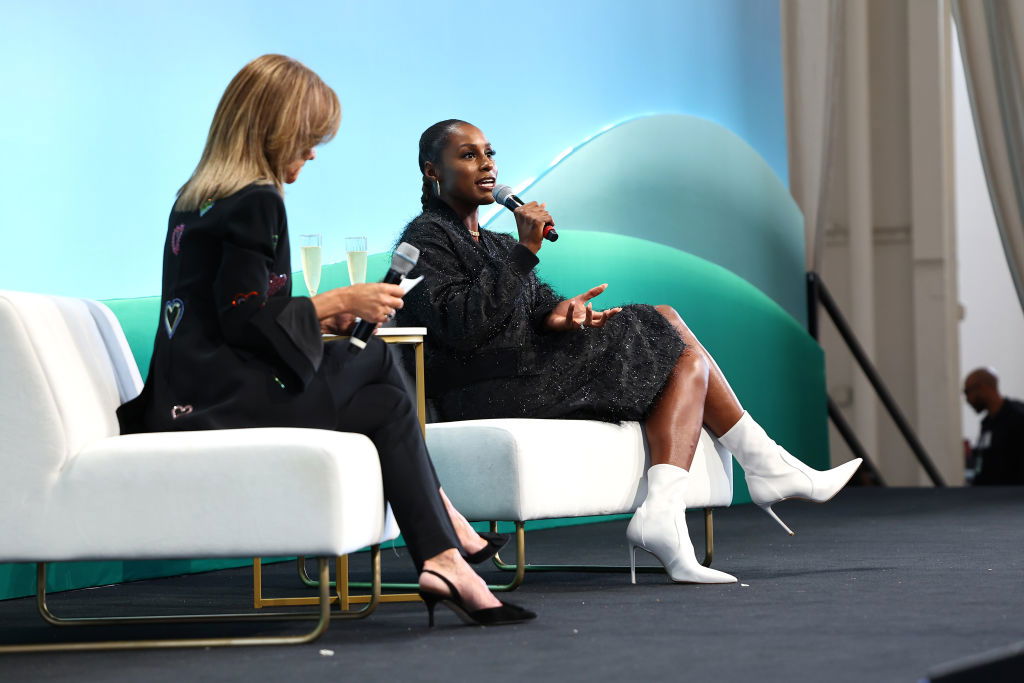
Culture Con, Issa Rae, Glenda McNeal, name,

CultureCon Moderator Got The Business After Flubbing Issa Rae’s Name On Panel


Issa Rae’s fans corrected a moderator at CultureCon who botched the starlet’s name during her panel interview.

On Oct. 7, the issue arose when the moderator, Glenda McNeal, mispronounced Issa’s name as “Ih-suh” instead of “Ee-sah.” McNeal’s mispronunciation of Issa’s name irked several members of the audience, and they set the AMEX exec straight. Their immediate shouts of the actual saying threw the moderator and Issa off track of their conversation. Issa spoke about her journey and the success of her business, Color Creative.

However, their insistence led to the American Express executive correcting herself, pronouncing Issa’s name correctly and apologizing to her promptly afterward. Amid the crowd getting louder, McNeal lightly urged the audience to “calm down,” letting them know that she was “part of the community” before things got too hectic.

Issa, sitting next to her, was also surprised by the outburst from attendees, laughing alongside the McNeal as they attempted to get the discussion back on track.

“And it’s okay to be vulnerable and don’t get it right all the time,” McNeal stated in the footage obtained by the tabloid. “That’s my life. That is my life, and you should embrace it.”

In the Black community, a reclamation of one’s name, whether of an African origin or derived from their parent’s minds, is a growing trend as individuals speak up to be referred to correctly. Fans of the multifaceted entertainers ensured that Issa’s name was pronounced loud, proud, and, most importantly, accurate.

Despite the hiccup, the conversation went as planned, with the “Insecure” creator sharing insight into making diverse spaces in Hollywood.


Tasha K Still ‘On Hook’ For $4 Million Debt Owed To Cardi


Meghann Cuniff, known on Black Twitter as Meg Thee Reporter, is breaking down the latest update regarding Tasha K’s substantial debt to Cardi B.

In an X thread, Cuniff detailed how the blogger still must pay the $4 million to the “Bongos” artist. The judge ruled that declaring bankruptcy won’t absolve the vlogger from writing those checks. In June, Tasha K filed for Chapter 11 bankruptcy in Florida, requesting to pay out 22 quarterly installments of $220,000, but to no avail, per Complex.

The journalist explained in continued posts of the nuances within the case, stating that the current dispute is over $500,000 owed in punitive damages from Tasha K’s company, Kebe Studios. While this has not been officially enacted, according to Cardi’s team, the defendant is not contesting the amount.

As for why the damages are so high, Cuniff explained that the original lawsuit filed by the rapper’s attorneys displayed that the blogger was “obsessed” with disparaging Cardi’s character through her platform.

However, according to the legal reporter, the case issue is more about whether the jury will agree that the large sum fits the crime.

Cuniff, who considered the lawsuit to be a “slam dunk” for the Bronx native, shared that Tasha K’s dismissal of the serious allegations over her gossip led to her current predicament of owing millions to Cardi. As the legal dispute currently stands, the typical last line of defense to get rid of debts is no longer available for Tasha K and her troubling headlines.

As for the unresolved payout of $500,000 from the content creator’s business, a pretrial conference has been set for Jan. 9 as Tasha K will see whether she owes Cardi more money.

Drake, Toronto, multiple sclerosis.

Drake Promises To Cover Fan’s Medical Bills For MS On Last Tour Stop In Toronto


Drake will do “whatever it takes” for his fans.

In a heartwarming moment in the middle of his concert in Toronto on Oct. 6, the Canadian rapper promised a fan with multiple sclerosis that he would cover her medical bills for treatment.

The Grammy-winning artist spotted the fan who revealed that she suffers from the disease. After stopping the concert, he proclaimed his intentions to help the woman get the care she needs, as revealed in footage shared by Complex in an X post.

“I’m a pay whatever it takes to get you get the best help in the world. I promise you that,” Drake said.

Drake’s main producer, Noah “40” Shebib, also has MS. Drake made a special shoutout to him during the moment, letting her know that he will try to get the two in contact.

“You know, my brother’ 40′ is one of the strongest people on Earth, and he fights through a lot of things,” shared Drake in the vulnerable scene. “Maybe y’all can have a conversation.”

Multiple sclerosis is a chronic disease that impacts the central nervous system. The nerve damage caused by the deterioration of the protective coverings can lead to vision loss, pain, and impaired coordination. Over the years, the “unpredictable” illness can also lead to losing the ability to perform basic movements, such as speaking or walking, according to Johns Hopkins Medicine.

Drake continued to show love, inviting the fan back for his second show in the “6” for the following night. Drake has also been open about his health struggles recently, even taking a break from music.

The philanthropic 36-year-old rapper has been in a very giving spirit across his “Its All A Blur” tour, often gifting female concertgoers Birkin and Chanel bags. With this most recent promise, he is expanding his exorbitant gifts to ones that could save a life.

×