Yes We Do! Shaq Cites ‘Black People Don’t Like Pretzels’ as Reason He Sold His Auntie Anne’s Business
Basketball legend and NBA Hall of Famer Shaquille O’Nealhas managed to explore some pretty significant business ventures off the court.
However, when it came to one of his deals with Auntie Anne’s, the 15-time NBA All-Star did not quite think that move was a slam dunk.
In an interview last year on the “Earn Your Leisure” podcast, Shaq gave an unusual reason why he decided to let go of his Auntie Anne’s stores.
“You know we love pizza. I sold my Auntie Anne’s. Because Black people don’t like pretzels that much. So I had to switch it up,” he said.
It’s unclear if the NBA Hall of Famer still owns all 17 of his Auntie Anne’s franchise stores across the U.S. that were reportedly in his portfolio.
The interviewer claimed that (Black) people eat cinnamon pretzels, but Shaq quickly rejected that statement during the on-stage banter, as he referenced only basing his business decisions on logic and rationale, not emotions.
Shaq has ventured into a variety of spaces that include Auntie Anne’s, a Krispy Kreme franchise, Five Guys restaurants, a movie theater, and several Papa John’s branches.
He even has a burger place named after him called Shaquille’sin Los Angeles.
In an interview with journalistGraham Bensinger, Shaq shared a conversation he had with his agent, and his biggest business mistake: turning down Starbucks due to a similar sentiment.
“’Howard Schultz wants to do business with you,’ And I’m like, ‘Coffee?’ Because growing up, in my household, I’d never seen a Black person drink coffee. ‘Black people don’t drink coffee, sir. I don’t think it’s going to work.’ And you should have seen his face,” Shaq recalled.
Despite seeing a Starbucks on almost every corner in major cities, he reflects back to the situation as a business lesson and what comes with making tough decisions.
Morehouse College Takes Top Prize at Black Enterprise’s HBCU Hackathon
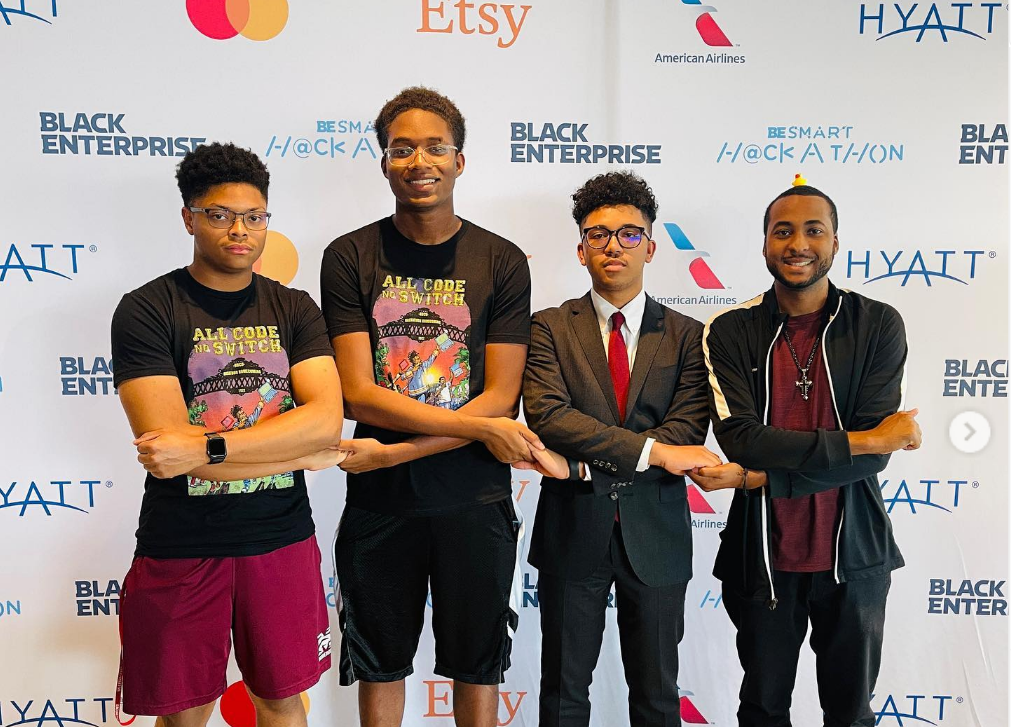
The 7th Annual BE Smart Hackathon, hosted by BLACK ENTERPRISE and American Airlines, has come to a close, showcasing a multitude of prize-winning teams representing the “best of the best” in tech among HBCUs across the country.
The three-member team from Atlanta-based Morehouse College scored first place in the hotly-contested final round. Its innovative luggage tag app giving customers ease and affordability when checking baggage, impressed the BE Smart panel of judges composed of top executives from American and DXC Technology, among other tech companies.
The second and third-place winners came from Alabama A&M — Binary Beast for its rewards app and Team Tai for its innovative enhancement of AA’s Advantage program.
Held at AA’s spectacular Dallas-based campus, the event, produced under the theme: “Homecoming 2022: All Code, No Switch,” offered a highly-competitive field of 23 teams from 19 HBCUs. There were 111 students—the largest number to compete in the hack.
In addition to American Airlines, the host sponsor for the past four years, Hyatt also invested in the event as presenting sponsor, representing its first-time involvement with the event.
“Let me acknowledge our partner American Airlines for opening this magnificent venue and, equally important, its continued investment in Black tech and commitment to creating new and expansive opportunities for the brilliant talent coming out of our nation’s HBCUs,” Earl “Butch” Graves, Jr., CEO of Black Enterprise, says of the airline that has hired 65 Hackathon participants over the past four years. “We also appreciate Hyatt for its collaboration and engagement.”
Other sponsors included DXC Technology, Etsy, Mastercard, Now and Later, Rap Snacks and Teradata.
In winning the competition, each member of the Morehouse team reached 100,000 AA Advantage miles and two hotel night stays at a Hyatt hotel of the individual’s chosen designation. Moreover, Tram Morehouse will gain the coveted opportunity to present its winning concept to Hyatt’s Chief Information Officer at the company’s Chicago headquarters.
The Morehouse hackers were overwhelmed by their victory—especially given that they only had three team members while most schools had five people in each group.
Elijah Truitt, an 18-year-old computer science junior, says he and his comrades were initially shaken by losing a team member before the competition. “We came together to focus,” he says. “I learned that sometimes you have to do things [you didn’t expect] to do and that sometimes you have to accept that some things will happen that you didn’t plan.”
For example, Truitt was not the original choice to give the presentation at the final judging but stepped up to help his team score the win. Other members of the team were Kevin Drew and Trent Gaylord.
Beyond the intense 24-hour hack, students gained the opportunity to learn new, innovative approaches and make connections with some of the leading professionals in the tech space.
“This has been an amazing experience,” says Asa Rogers, who studies computer science and cybersecurity at Alabama A&M.
“I’ll be prepared to do so much more when I get back to school and during internships.”
Even with the display of proficient technical prowess, many HBCU students contend with barriers to entering the field. Challenges persist despite the 2021 Congressional Bipartisan HBCU Caucus that these institutions contribute nearly $15 billion to the US economy and produce 42% of Black engineers and 47% of Black female engineers, respectively.
At the event, Black Enterprise held the Town Hall, “HBCUs: Developing Top Tech Talent,” featuring academicians from North Carolina A&T and Jackson State University as well as senior executives from American Airlines and Hyatt to identify ways to bolster Black student retention in STEM programs; strengthening HBCU-Corporate partnerships; and parity on the recruitment and elevation of Black talent.
All agreed that such platforms as the BE Smart Hackathon would help increase the flow of the pipeline of HBCU grads into promising STEM careers.
BLACK ENTERPRISE and American Airlines expect the event to be even bigger and better next year.
“We reserve the highest praise and appreciation for our participating historically Black institutions of higher learning. It bears reflection that HBCUs are the nation’s most undervalued resource. Year after year, these schools produce leaders and game-changers in every field.”
Tomias Davis, AA’s Development Program for Technology Director and one of the driving forces behind the BE Hackathon, told the scores of competitors: “You are all winners…You all exhibit HBCU excellence.”
Here are the first and second-place Hackathon winners:
Morehouse College
Elijah Truitt
Kevin Drew
Trent Gaylord
Second Place: Alabama A&M (Binary Beast)
Members:
Lyric Sampson
Da’Quandalon Daniel
Asa Rogers
Eyerusalem Girma
DeTavein Walker
Third Place: Alabama A&M (Tai)
Olasubomi Olawepo
Shemaiah Mbetwa
Mphande Phiri
Opeyeoluwa Olanipekun
Alabama A&M (Tai)Thanks
For more coverage and video footage on BE Smart Hackathon, visit the BLACK ENTERPRISEInstagram social media channel.
You Won’t Find A Lower Price Than This Koofr Cloud Storage Deal
Of the many advances the computer world has experienced over time, the capacity for expanded storage would probably rank near the top. While it’s made lives easier for just about everyone, it hasn’t completely solved the storage issue.
The capacity for more memory ultimately means you’re able to load up your devices with more apps, files and the like. Before long, you’ll find yourself dumping some of those treasured files to make space for others as your seemingly endless capacity reaches its limit. and your devices begin to lag in performance.
Koofr Cloud Storage solves your storage-related issues.
Koofr is the only cloud storage service platform that doesn’t track its users. It’s accessible via mobile devices, WebDay and the web. And it offers connectivity options that allow you to sync your Dropbox, Google Drive, Amazon and OneDrive accounts.
Koofr has been rated 5 stars by more than 400 users. Tech publications G2 and Capterra rate it 4.6 stars. TechRadar gives it a 4-star rating in its review.
Anyone who deals with multiple files on their devices is well-familiar with duplicates. Koofr’s duplicate finder is a great solution in that it helps eliminate the issue by locating and eliminating any duplicate files. There’s also no limit on files, so you can upload, access, and share them with minimal effort.
Updates to Koofr are provided for the duration of your subscription. So you don’t have to worry about not having the latest version. The software can also be installed on an unlimited amount of devices.
Koofr offers superior cloud storage along with a first-class user experience. Purchase this exclusive Deal Days offer today and leave storage limits in the past.
The software is a resume matchmaking database that connects public policy recruiters to CBCI-vetted talent, according to a press release. The resume matchmaking platform’s inclusion of customizable algorithms such as years of experience, certifications, skill sets, and preferences, and the exclusion of variables such as race, gender, and zip code that may introduce bias and have historically been used to exclude talented professionals.
The CBCI-vetted talent pool is aggregated from partners such as the CBCI Bootcamp and ACT Workshop alumni, Greater Washington Area Chapter, Women’s Division of the National Bar Association, Congressional Black Associates, The UDC David A. Clarke School of Law, Howard University School of Law, George Washington University Law School, the Senate Black Legislative Staff Caucus, and more.
Among the organizations committed to utilizing the software to make key hires are National Political Parties and the House of Representatives.
Vanessa Griddine, executive director of CBCI, explains “The Congressional Black Caucus Institute has a storied history of educating the next generation of political leaders.”
“We are now going beyond training and research and responding with a tangible, tech-enabled solution that solves the pervasive diversity issues in public policy.”
“As we implore citizens to demand change in their communities, we are leading the charge.”
The platform, powered by matchplicity™, is a first-of-its-kind enterprise software addressing diversity in public policy recruitment and complements years of research by organizations like Bloomberg Government, Jobs for The Future and The Joint Center.
Black Woman Appointed As CEO of Higher Ed’s Leading Data Integration and EdTech Company
AMSimpkins & Associates has announced the appointment of Laqwacia Simpkins as Chief Executive Officer. Prior to this, she was Vice President of Infrastructure and Operations with AMSA.
Laqwacia, who previously worked at DH Security Solutions in Atlanta, GA, joined the AM Simpkins team in 2015. While the organization’s founder, Maurice Simpkins, saw early success as an independent consultant in the higher education industry, Laqwacia was responsible for much of the transition to AMSimpkins & Associates.
Applying her prior start-up knowledge, Laqwacia expanded the existing business model, leading to the eventual launch of the AMSA Connect platform. Her focus on competitive intelligence, business development, and operations revitalized the AMSA brand.Identifying new opportunities and forming strategic partnerships in the Higher Education market, Laqwacia led AMSA’s new chapter of growth and success with more than twenty new clients in the first year.
Through her strategic vision and alignment with former NFL linebacker and AMSA founder, Maurice Simpkins, the organization has prioritized its education integrations formalizing partnerships with EdTech firms such as Coursedog, Unimarket, and Transact Payments(Cashnet). This allowed him to focus more on platform growth, as Laqwacia continued to build the company’s client and partnership portfolio.
With AMSA’s steady growth and increased success, Laqwacia will look to expand the team to help support her vision. Nebi Hailermariam, Director, Software Development with AMSA since 2016, will assume the role of Chief Technology Officer. Under the direction of Maurice Simpkins, Nebi will lead the AMSA Connect platform for all client features and operations.
Additionally, Jason Cox, who formerly led sales for EdTech startup CampusLogics, will step into the role of National Sales Manager. Ro Levy, with AMSA since early 2018, is now the Project Manager Lead for Partnership Engagements, and AMSA’s newest team member, Shahab Shahabi, will lead Project Management for Internal and Client Deployment.
Maurice’s NFL football experience has always influenced the culture of A.M. Simpkins & Associates. Speaking of the new appointment, Laqwacia said, “The AMSA Team is excited to have a new Head Coach to lead them during this Super Bowl-winning season. This is an exciting time for AMSA and Laqwacia has been primed for this role. There is no greater time to have her lead the company and I’m personally proud that our daughters will get to see her embody the role that we hope they all aspire to someday.”
Q&A WITH LAQWACIA SIMPKINS ABOUT THE NEW CEO POSITION:
Where do you see the company being in the next five years?
My overall goal is to increase our national presence and to make a positive and lasting impact in Higher Ed with innovation and automation. Through leveraging our experience and forming strategic partnerships, my hope is to position AMSA to become a trusted advisor and advocate for institutions that are seeking to automate manual processes and improve data integrity and business processes on campus. We are a minority-owned and led data integrations provider for Higher Ed Institutions, with over 250 years of Higher Ed experience in both functional and technical fields, AMSA is poised for success. This last year has been full of growth. Since we released our first IRM platform, AMSA Connect, it has taken Higher Ed by storm.
– Attaining talented, diverse, and motivated people:
The right people in the right roles are pivotal to creating long-term value. It takes significant investment to build a winning talent engine from attraction and recruitment through development and retention.
– Establishing clear values alive in the organization:
Values provide meaningful power and focus. When you’re truly living your core values, they come up in daily conversations across the company. We believe in cultivating a culture where employees strive to embody our core values and feel appreciated.
– Building strong strategic partnerships:
Strategic Partnerships can be powerful levers to drive tremendous growth. Not only can partnerships improve customer experience, it has also opened access to the partners’ respective audiences, leveraging a unique value proposition to drive new customer acquisition. Success through strategic partnerships is achieved when organizations tackle the appropriate business objective with partners that have aligned values and complementary capabilities and assets.
What is your leadership style? I would describe my leadership style as a balance between coaching and servitude. As a former State Track and field medalist athlete in high school, these two leadership styles came naturally. The same methodologies I learned from my father coaching me to scholarship to University of Utah for hurdles, have created the discipline and work ethic I have today.
Another contributing factor that plays a key role in leadership style is serving others. As a child I had many chances to learn about servitude through participating in various service activities whether it was spending time with the elderly at group homes, volunteering at the Big Brother Big Sister program, or helping neighbors with yard work. No matter the task, we were always willing to lend a hand.
These principles create the environment we have fostered here at A.M.Simpkins and Associates. We take pride in serving one another to make sure our employees are happy and have a purpose. I only hope to continue to build on that while holding true to our core values: integrity, honesty, innovation, and professionalism.
Give me one word that describes you the best? I am a creative. Whether it’s business strategy, creating new streams of revenue, or scaling for new business, this is where my creativity shines. As an entrepreneur, we face a multitude of challenges that we must learn to overcome or adapt. Creative thinking has allowed me to develop new or innovative ideas and challenge norms or old ways of thinking. Creativity has also helped me market our businesses’ products, services, and other offerings that differentiate us from their competitors.
One of the things I have taken great pride in is designing our new website to fit the AMSA brand after the release of the AMSA Connect platform. As AMSA has increased our industry footprint by attending more Higher Education conferences, I have enjoyed designing our booths and associated marketing campaigns.
What is the biggest challenge you anticipate? Time. When you love what you do and are living the life you want to live, there seems to never be enough time in the day.
Black Businesses, Entrepreneurs In Arizona are Fighting To Stay Afloat
“The State of Black Arizona,” a nonprofit organization, released a report earlier this summer showing more than 50% of Black businesses in the Copper State are struggling.
According to the report, the reasons Black businesses in Arizona are hurting include many of the same factors Black entrepreneurs across the country are dealing with. A lack of access to capital, low levels of personal wealth, and racial disparities in obtaining credit and more.
Additionally, the report said Black entrepreneurs have the lowest opportunity share among races in the U.S., meaning they’re more likely to start businesses out of necessity rather than an opportunity to make more money.
That could be why Black businesses skyrocketed during the COVID-19 pandemic when Black people were the first to be laid off. The report also quoted Brookings Metro data, saying if Black businesses reached parity with the U.S. population, there would be 4,945 additional businesses in Metro Phoenix and an additional 132,000 jobs in the Arizona capital.
In addition to financial issues, the report cited networking, management education, business expertise, and marketing as challenges facing Black business owners.
Fernanda Sayles, the owner of FernDiggidy Sweets & Treats in Phoenix, started the business in 2015 while working at a doctor’s office, using her home kitchen.
“I didn’t have a lot of money at all to start my business,” Sayles told Tuscon.com. “I’ve left a couple of jobs to work my business full time, but of course, the bills kept coming, so I had to go back to work” at a doctor’s office.
Sayles added she was forced to start small and slowly grow her business through personal contacts and face-to-face meetings with other entrepreneurs and the local Black community, which embraced her business.
“I would go to local barbershops all over the Valley to get the word out, and they welcomed me in, supported me, and told everyone they could about my business,” she recalled. “The community was my backbone, from the barbershops to friends and even complete strangers.”
Black entrepreneurs across the U.S. grow their businesses beginning with people they know and using word of mouth to promote their products and services. Black entrepreneurs have also used social media as free advertising to reach new customers.
Teniqua Broughton, the executive director of the Black State of Arizona, told Tuscon.com, “disparities in personal wealth, and building proper, equitable generational wealth, which have been historically taken away,” from Black men and women are among the reasons why Black-owned businesses account for just 2.4% of US businesses despite a 30% increase in Black entrepreneurs from pre-pandemic levels.
Former NFL Defensive Back Chinedum Ndukwe Finds Success After the Whistle
The next time you watch an NFL game, pay attention. Every Sunday gladiator on your screen will leave the game and have to answer the question “What’s next?” For most, it is a daunting prospect.
Chinedum Ndukwe, a Notre Dame graduate who played five seasons in the NFL, is fortunate. He founded a successful real estate development firm in Cincinnati, Kingsley + Co., that he feels is making a difference.
BLACK ENTERPRISE: How did you find your passions beyond football?
Chinedum Ndukwe: I have two amazing parents who are both entrepreneurs. A lot of pro athletes don’t have that two-parent household. I was very fortunate to find very good mentors who really showed me how to do it the right way and to invest the right way.
What was the best lesson you got from one of those mentors?
The best advice I got early is, “Hey, if you don’t understand it, then don’t do it.” But then motivate yourself to learn it, so you can do it.
People are, like, did you get into crypto? And I’m like, “No.” I’m still trying to understand how the whole thing works. It’s no different than me trying to go out and do a deal in a space that I haven’t done before. For example, when I first started investing in real estate, I bought a two-family house because I understood it and then I bought more multi-family properties because I got it. When I ventured into the hotel space, I strategically partnered with a very, very experienced hotel developer and operator. And I spent a lot of time learning and understanding. Now I own one of the only minority-owned, Black-owned hotels in the city of Cincinnati.
What advice do you have for people looking to start their own business?
You’ve really got to understand the risk and you’ve really got to calculate that. Then, at that point, you have to look at your personal wherewithal. Is that the appetite of risk you’re able to take on at this point in your life, at this point in your career? The art of going through that exercise, really calculating is this something that really is good for me and my family, is something that I don’t think people do enough.
Chinedum Ndukwe at work. (Photo: Peggy McHale Joseph Photography)
You mentioned before about the thrill of playing football. Does anything in business come close to that?
Our group focuses on urban redevelopment and on underutilized properties that are kind of hiding in plain sight. You go around [the city where you live] and you’ve probably seen a building that you’ve probably passed thousands of times. And you’re like, “God, this building just looks [terrible]. Why is the property not developed?” We take it a step further and we continue to dig.
What gets me excited is we go the extra mile to figure out a way to create value. And that value is created by distressed properties that have a complicated title or really got a ton of hair on them. They’re properties in great locations, but they just have challenges that the majority of the bigger development firms don’t have the patience to work on; the smaller firms maybe don’t have the time to work on them. When we get to a point where we have a purchase agreement and then close and then a shovel is in the ground—I mean, it’s one of the best feelings.
What is important for your readers to understand is you really need to find something that you’re truly passionate about and you’re curious about. Make sure your profession is your passion. I mean, as cheesy as that is, there is a lot to it. Because you will invest that time. You will try to seek out those answers. And, for me, it’s fulfilling.
The news seems to change every day about whether it’s advisable to sell a home, buy a home. What’s your take?
Regardless of what’s going on in the market, there are buying opportunities and selling opportunities—good and bad. The last thing you want to do right now is overpay. The last thing you want to do right now with the rising interest rates is to be locked into something that you’re not passionate enough about. I would encourage people before they make that purchase to really understand what’s the history of this property. Is that its all-time high or is there room to appreciate? If you’re not a real estate agent, find a good Realtor who understands the market, who can give you a little bit of direction. Conversely, if you’re considering selling your property, link up with someone that understands what some of those comps are.
Whether it’s real estate investing or home ownership, the idea of owning land oftentimes has been out of reach for many people. I would just encourage people to explore the value of real estate ownership and the value of creating wealth through real estate. My eyes were open to it at an early age.
Something that I want to continue to leave with young people is that you can own land. You can own an investment property, but more important, you can own your own home and really seek out those tools that are available to get that pathway to home ownership. I think it’s something that we can’t talk enough about. As an African American in my thirties, I’m doing my best to try to impart that on people of color, to let them understand, hey, it is possible to be a homeowner. It is possible to be a landlord. That is a viable route. You can be a real estate developer one day. That doesn’t happen overnight. It’s taken me close to 15 years to really get in a good rhythm and I’m still learning every single day. But you start with that first class. You start doing research on what it takes. Then you start seeking out people you may have a relationship with to learn more.
Alabama Man Out on Bond For Domestic Violence Allegedly Poured Boiling Hot Water Down Baby’s Throat
An Alabama man, Eugene Lamont Sneed, 23, is being accused of a violent and heinous act on his defenseless 1-year-old child.
Sneed was reportedly out on bond for a 2020 charge for domestic violence, FOX 17 reports. While out, he allegedly poured boiling hot water down his baby girl’s throat on Sunday.
Niktoria Lett shares the 1-year-old child named Royalty, with Sneed.
(Screenshot/video/YouTube)
On Sunday, Lett reportedly left the child with her father but returned to find the baby’s mangled, unrecognizable face, citing that it was “all messed up,” according FOX 10 reports.
“I get in the apartment and my whole my, my baby face is just messed up,” Lett explained. “Her whole head, her left shoulder is just like ooh!”
She continues, “I couldn’t even stand to look at her. I couldn’t even keep calm. I couldn’t even maintain my body for real, for real. So we rushed her to the hospital, and from there, her injuries just started worsening,” Lett said. “Her lungs critical, everything critical. That’s how they know it was done purposely,” Lett said.
“They said it was an intentional thing that he did. Justice for Royalty! That’s all we want, that’s all we want.”
Baby Royalty is fighting for her life, according to her mom.
“19% of her head is burnt up, like all this is gone,” Lett said. “And my baby just in the hospital fighting for her life.”
The accused was charged with aggravated child abuse for causing substantial internal injuries and facial burns to 1-year-old Royalty and booked on Friday. His bond was denied and he is awaiting arraignment Oct. 17.
Black people in the U.S. endure the weight of racism, systemic oppression, and social injustices day in and day out. On top of that socioeconomic disparities, provider bias, and inequality of care are common barriers to mental health support for Black people. Never mind the fact that 17.3% of mental health illnesses in the U.S. each year are experienced by non-Hispanic Black or African Americans, according to the National Alliance on Mental Health.
While the stigma of mental health still exists in the Black community, many individuals and organizations are working to dismantle it.
Here are 26 Black mental health resources in recognition of World Mental Health Day—and yes, you can return to this list whenever you need.
Bad Bitches Have Bad Days Too
Megan Thee Stallion’s new website provides resources for mental health help.
Black Virtual Wellness Directory
A directory of virtual Black therapists, doulas, yoga teachers, mediators and much more.
Black Emotional and Mental Health Collective (BEAM)
The group aims at removing the barriers that Black people experience getting access to or staying connected with emotional healthcare and healing through education, training, advocacy and the creative arts.
Black Men Heal
The platform provides limited and selective free mental health service opportunities for Black men.
Black Mental Health Alliance
Provides information, resources, and a “Find a Therapist” locator to connect with a culturally competent mental health professional. Contact the Black Mental Health Alliance at (410) 338-2642.
Black Mental Wellness
Access evidence-based information and resources about mental health and behavioral health topics from a Black perspective, as well as training opportunities for students and professionals.
Black Women’s Health Imperative
The organization advances health equity and social justice for Black women through policy, advocacy, education, research and leadership development.
Boris Lawrence Henson Foundation (BLHF)
BLHF launched the COVID-19 Free Virtual Therapy Support Campaign to raise money for mental health services provided by licensed clinicians in its network. Individuals with life-changing stressors and anxiety related to the coronavirus will have the cost for up to five (5) individual sessions defrayed on a first come, first serve basis until all funds are committed or exhausted.
Brother You’re on My Mind
An initiative launched by Omega Psi Phi Fraternity, Inc. and the National Institute on Minority Health and Health Disparities (NIMHD) to raise awareness of the mental health challenges associated with depression and stress that affect Black men and families. The website offers an online toolkit that provides Omega Psi Phi Fraternity chapters with the materials needed to educate fellow fraternity brothers and community members on depression and stress in Black men.
Ebony’s Mental Health Resources by State
A list of Black-owned and focused mental health resources by state as compiled by Ebony magazine.
Melanin and Mental Health
Connects individuals with culturally competent clinicians committed to serving the mental health needs of Black and Latinx/Hispanic communities. Promotes the growth and healing of diverse communities through its website, online directory, and events.
Provides information on promoting mental health and developing positive coping mechanisms through a podcast, online magazine, and online discussion groups.
POC Online Classroom
Contains readings on the importance of self care, mental health care, and healing for people of color and within activist movements.
Sista Afya
The organization provides mental wellness education, resource connection, and community support for Black women.
Therapy for Black Girls
An online space dedicated to encouraging the mental wellness of Black women and girls. Offers listing of mental health professionals across the country who provide high quality, culturally competent services to Black women and girls, an informational podcast, and an online support community.
The SIWE Project
A non-profit dedicated to promoting mental health awareness throughout the global Black community.
The Steve Fund
An organization focused on supporting the mental health and emotional well-being of young people of color.
Black Emotional and Mental Health (BEAM)
BEAM is a training, movement building, and grant making organization dedicated to the healing, wellness, and liberation of Black communities. BEAM envisions a world where there are no barriers to Black Healing.
The Boris Lawrence Henson Foundation
The foundation is changing the perception of mental illness in the African-American community by encouraging people to get the help they need; focuses on stigma/self-stigma reduction and building trust between Black people and the mental health field.
Therapy for Black Girls
An online space encouraging the mental wellness of Black women and girls; referral tool to find a therapist in your area
The Loveland Foundation
The foundation provides financial assistance to Black women and girls seeking therapy.
Therapy for Black Men
Primarily a therapist directory for Black men seeking therapy; includes some resources and stories.
Dr. Ebony’s My Therapy Cards
A self-exploration card deck created by a Black woman psychologist for other women of color; created with the intention of helping other women of color grow and elevate in the areas of emotional and mental health.
Innopsych
InnoPsych‘s mission is to bring healing to communities of color by changing the face and feel of therapy. They strive to make therapists of color more visible in the community by creating a path to wellness-themed business ownership; to make it faster (and easier) for people of color to match with a therapist of color; and to create a major shift in how communities of color (or POCs) view therapy.
Safe Black Space
Safe Black Space is the umbrella under which various services are offered to address people of African ancestry’s individual and community reactions to cultural and racial trauma.
Questions to ask your mental health professional to make sure your feelings are heard and respected
Did my provider communicate effectively with me?
Is my provider willing to integrate my beliefs, practices, identity, and cultural background into my treatment plan?
Did I feel like I was treated with respect and dignity?
Do I feel like my provider understands and relates well with me?
Please note: The resources included here are not endorsed by NAMI, and NAMI is not responsible for the content of or service provided by any of these resources.
Tensions Run High After Alabama State Coach Snubs Deion Sanders’ Embrace After Loss to Jackson State
Concerns quickly grew among the college football sports community after an awkward exchange was made at center field between Jackson State Head Coach Deion Sandersand Alabama Head Coach Eddie Robinson Jr.
Robinson shook the NFL Hall of Famer’s hand but wanted no part of embracing him in a coach hug after his team’s loss to Jackson State, 26-12 at Alabama State’s homecoming game Saturday.
The exchange left Sanders in disbelief as he walked off the field with his security detail.
— Shannonnn sharpes burner (@shannonsharpeee) October 8, 2022
Robinson later explained that Sanders had made disrespectful comments leading up to their match-up earlier in the week.
He also alleged Sanders walked through Alabama State’s offensive warm-ups in one of the end zones as opposed to taking Jackson State’s route to the sideline and attempted to run up the scoreboard in the final minute of the game instead of the team taking a knee.
“I’m going to always be respectful and respect the game,” Robinson said in his post-conference interview paying homage to SWAC conference coaches.
But many reacted to Robinson’s comment, “He ain’t SWAC. I’m SWAC, he ain’t SWAC” which was a direct shot at Sanders.
Robinson continued his press conference interview by stating, “He’s in the conference, doing a great job, can’t knock that, got a great team, his son should be up for the Heisman Trophy, I love Shedeur, great player, I love what he’s doing for the conference. … But you’re not going to come here and disrespect me and my team and my school and then want a bro hug. Shake my hand and get the hell off.”
Sanders defended his pregame routine, stating he always ran around the field before NFL games and arrived too late to greet Robinson before kickoff.
But the NFL veteran did not take too lightly towards Robinson’s comment that he didn’t reflect the SWAC conference.
“I’m not one to come back the next day and you going to pick up the phone and you going to apologize and we straight,” Sanders said during his post game interview.
In 2021, Sanders led Jackson State to 12 consecutive SWAC wins and a league title while bringing national attention to the HBCU football team.