Twin Spirits: Plies and Kirk Franklin Vow to Help Florida Residents After Hurricane Ian

Twin Spirits: Plies and Kirk Franklin Vow to Help Florida Residents After Hurricane Ian


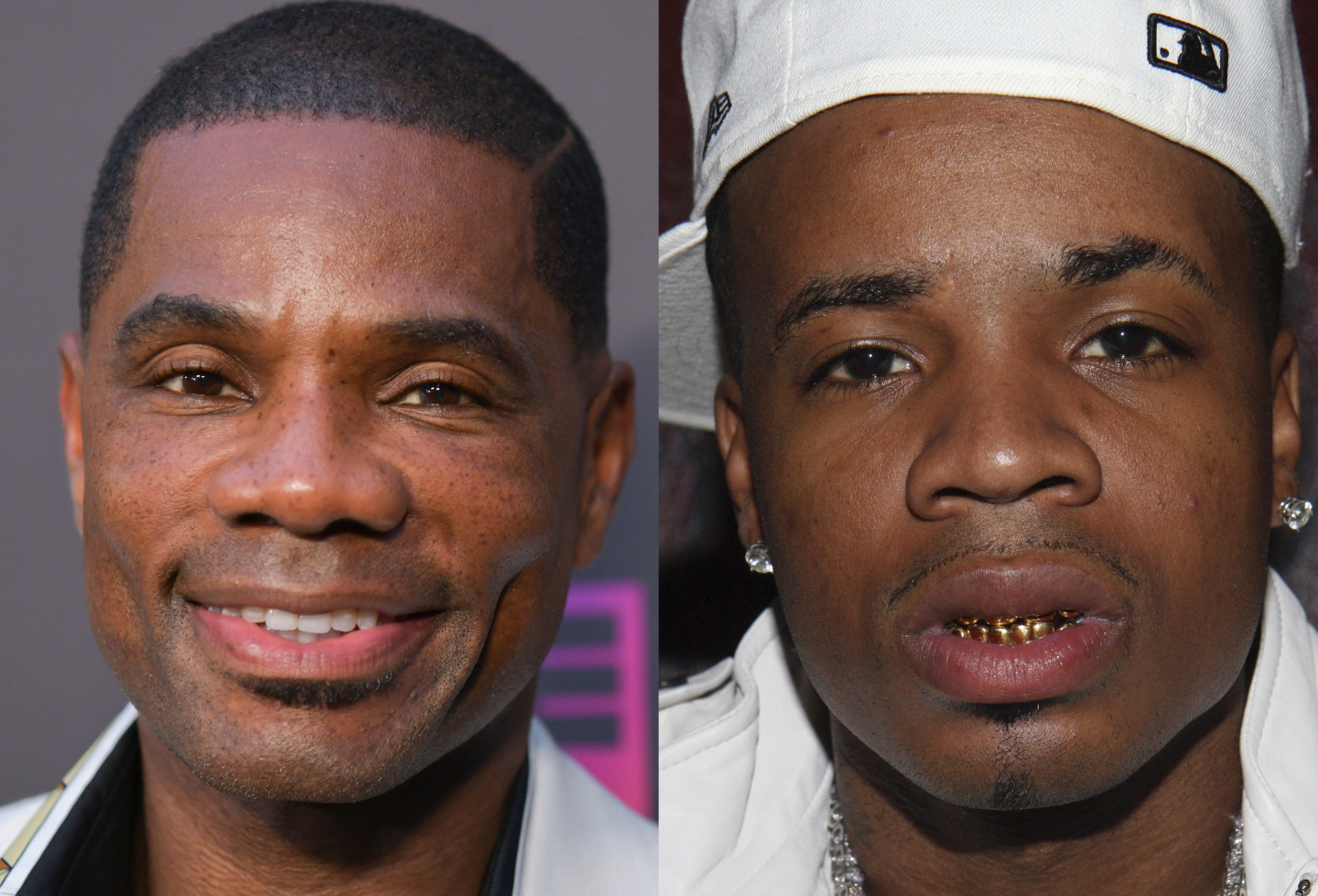
Gospel star Kirk Franklin and rapper Plies are well aware of how much people think they resemble each other. In response, the duo has teamed up to help the people of Florida.

Franklin recently explained how he and Plies are teaming up to help Florida victims of Hurricane Ian while addressing the “rumors” claiming the two might be related. During a sit-down with Angela Yee, Franklin jokingly addressed the hilarious claims by calling Plies on FaceTime.

“I am not he, and he is not I,” Franklin said while on FaceTime with Plies.

He panned the phone toward the camera to show a smiling Plies who asked, “What’s up?”

“Time to clear the rumors,” Franklin captioned the video clip.


View this post on Instagram


A post shared by Kirk Franklin (@kirkfranklin)

Franklin also revealed that the two lookalikes are teaming up to help with the aftermath of Hurricane Ian.

“I’ve been trying to reach out to you for the longest,” Franklin told Plies during their call. “Listen, man, we’re going to do something for Florida, right?”

Once Plies agreed, Franklin informed the public about the upcoming good deeds they’ll be bringing to Plies’ home state.

“So me and my twin, we’re coming to Florida and we gon’ help the people,” Franklin said.

“Help’s coming from the Franklin boys,” Franklin said with a laugh.

Hurricane Ian ripped through Florida’s Gulf Coast last week, causing major damage and leaving many families and homeowners with nothing. The death toll continues to rise as rescue crews going door to door in search of survivors report more deaths, CNN reports.

As of Tuesday, at least 109 people in the United States were reported killed by the hurricane, with 105 of those deaths in Florida and 55 of them in Lee County. Hurricane Ian also claimed the lives of four people in North Carolina.

As BLACK ENTERPRISE previously reported, Black residents in Fort Myers Florida feel forgotten about saying authorities have failed to help them. Residents say authorities are dragging their feet to aid a historically African American neighborhood.


Nonprofit Occupies Old Victoria’s Secret Storefront in Indianapolis Mall to Create Space for Black Businesses

Nonprofit Occupies Old Victoria’s Secret Storefront in Indianapolis Mall to Create Space for Black Businesses


Dollars are being circulated back into the Black community as Black businesses unite under one storefront.

On the second floor of Circle Centre Mall in downtown Indianapolis, the SHE.Xperience occupies the old Victoria’s Secret storefront. It has become a space to display 12 Black-owned businesses that offer accessories, beauty products, home décor, candles, clothing, and more.

According to Fox 59, the nonprofit, created by Katina Washington, runs off partnerships, donations, and grants. In addition, tools like business coaching, capital, and mental health support are offered to participating vendors.

Opening up the opportunity for Black businesses to have visible access to more shoppers supports the SHE.Xperience brand’s mission to provide venues for businesses to increase their customer reach and revenue. Black business owners connected to the platform learn strong business practices, build relationships, and, most importantly, circulate their dollars within the Black community.

The company’s vision is “to connect every Black, female-owned small business owner with the people and tools needed to create, grow, and sustain thriving businesses,” the website states.

“SHE.Xperience is cooperative economics in action,” said Washington.

Koqóvel Cosmetics & Skincare, is one of the Black-owned business that resides in the storefront. Shoppers are greeted inside by owner Angel Fant‘s display of quality beauty enhancement products for women.

“My brand is around motivating and developing women through confidence. We want women to feel beautiful inside and out,” Fant said, according to Fox 59. The cosmetics professional shared that her business is thriving thanks to Washington’s support and connections.

Fox 59 reported  the concept is a spinoff of Washington’s SHE. Event Indy, an annual expo held at the Indiana State Fairgrounds. Black businesses in attendance were provided resources, exposure, and a space to run their sales.

“Businesses are able to come in for three, six, nine months, or however long they feel that they need to get their business in a position to thrive,” said Washington.

“Every business that is here, and especially some of the businesses who have been here from the beginning, I’ve seen all of them scale.”

Although businesses are offered to stay as long as they need, the goal is to build them to stand strongly on their own outside of the SHE.Xperience.

Viral Video Shows Black Student in Michigan Manhandled by Police and Accused of Carrying Fake ID

Viral Video Shows Black Student in Michigan Manhandled by Police and Accused of Carrying Fake ID


A video showing a Black college student being accosted by police officers on his school’s campus is upsetting many on social media who believe the young male was racially profiled.

Oakland University in Rochester, Michigan, is under fire after a video posted by Be Black With No Chaser showed a confrontation between a Black student and two police officers who accused the student of showing a fake ID.

“Imagine being racially profiled on campus of your school for 3 days in a row,” C.J. Lawrence wrote in the tweet.

“That’s what happened to This young brother at Oakland University (Detroit/Auburn hills) after being accosted by the police & being forced to show his ID only to then be accused of it being a Fake ID.”

The video shows one officer grabbing the Black student’s hands as the student remains adamant that he did nothing wrong. The young man recording the incident can be heard challenging the officers and asking why they’re going after the Black student.

“Why are you grabbing him? Let him go,” the witness repeatedly asks while the officer is seen grabbing the Black student on camera.

The officer grabbing the student then claims the Black male has been “hitting” him in the arm “the entire time.”

“You’ve been grabbing him,” the witness says. “You gonna let him go?”

The student continues pleading his case while the officer maintains his grip.

“He’s grabbing me putting his hands on me!” The student exclaims, adding, “I ain’t do nothing to him!”

Eventually, officers allowed the student to go into his backpack and retrieve his identification. Once he does, he questions the officers’ initial claims of him carrying a fake ID.

“Tell me if this is fake or not,” the student says. But, the officer insists on seeing another ID.

“That’s his only ID,” the witness recording the incident says.

“Open up your wallet, let me see all of them,” the officer demands.

The student pulls out a series of cards and throws them on the ground. Ultimately, the student walked away from the officers without facing charges or detainment.

The student threatened to sue the school for what his friend said was a case of racial profiling. Many on social media expressed their displeasure with the footage.

“I get nervous to even watch these bc I don’t want it to end with the cop pulling a gun,” one person said.

“They need to be FIRED asap,” added someone else.

Oakland University has yet to respond to the now-viral incident.

Boyfriend Suspected of Dismembering NYC Woman Allowed Other Girlfriend to Use Her EBT Card

Boyfriend Suspected of Dismembering NYC Woman Allowed Other Girlfriend to Use Her EBT Card


More gruesome discoveries are coming to light as police investigate the murder and dismembering of Dasia Johnson in Brooklyn, New York.

Investigators are still searching for the five women and one man captured on surveillance cameras leaving the apartment of Johnson, the 22-year-old woman whose murder was discovered after authorities located her dismembered remains inside a suitcase in her East New York apartment last month.

Johnson’s boyfriend, identified as Justin Williams, is a lead suspect in the murder and was detained by police over the weekend on an active arrest warrant unrelated to Johnson’s case, People reports. Johnson had an active restraining order against her boyfriend when her dismembered remains were found inside a suitcase.

Amid the ongoing investigation, authorities believe Johnson was also victimized by Williams’ other girlfriend, who used Johnson’s benefits card after her death, The Daily News reports. It’s unclear if the girlfriend is facing criminal charges or what was purchased with the EBT card.

Police released photos of five women and one man who “are being sought as witnesses in connection” to the gruesome Brooklyn murder. All six are said to have been inside Johnson’s Brooklyn apartment at the time of her death.

“Blood everywhere, pints of blood,” neighbor Stephanie Harris said at the time. “It was nasty. “You can imagine what happened to her. You know she fought for her life.”

Neighbors also recall the abuse they witnessed Williams putting Johnson and other residents through, NY Post reports. One neighbor recalled seeing Williams leave Johnson bruised and battered in the past — and even threatened one resident’s young daughter.

Johnson’s family blames building security for not doing more to protect her from Williams. He was arrested in March for violating the restraining order by showing up at her apartment to pick up some of his belongings.

On Sept. 21, worried relatives called to ask building security guards to conduct a wellness check after they hadn’t heard from Johnson. Williams prevented the guards from entering the apartment when they came to check.

The workers returned to the home after seeing the boyfriend and another male leave the apartment carrying what they think was evidence. After entering the apartment, they found Johnson’s remains and called the police.

Pulitzer Prize-winning Playwright Charles Fuller Dies at 83

Pulitzer Prize-winning Playwright Charles Fuller Dies at 83


Pulitzer Prize-winning playwright Charles Fuller, well-known for A Soldier’s Play, died Monday at 83.

Fuller died of natural causes in Toronto, his wife, Claire Prieto-Fuller, told the Associated Press.

The Philadelphia native and army veteran was very vocal on how social institutions can perpetuate racism and expressed that through his work.

His son, David Fuller, took to Facebook to announce his father’s passing.

“It’s with a heavy heart that I inform you of the passing of my Dad, Charles Fuller this morning. Please keep my family in prayer. This one really stings.. Please, to all family and friends, reach out and spend as much time as possible with your family, that is paramount. Peace and blessings to all!!”

In A Soldier’s Play, Fuller’s tale used a military setting in the search for the murderer of a Black sergeant on an Army base in Louisiana during World War II.

It quickly became popular in the Black military community, addressing the racism that many experienced during that time.

The play won Fuller the Pulitzer Prize for drama and earned him a $1,000 prize in 1982.

He was only the second Black playwright to receive the drama prize, according to the New York Times in 2020.

In 1984, Fuller’s play turned into an Oscar-nominated best picture, A Soldier’s Story, in which Fuller wrote the screenplay and received an Oscar nomination.

The film starred actor Denzel Washington and featured Philadelphia native and singer Patti LaBelle.

The play would later make its New York City debut on Broadway in 2020-2021 with David Alan Grier and Blair Underwood earning seven Tony nominations, including best play revival.

The play’s run on Broadway was shortened, however, by the COVID-19 pandemic.

Grier took to Twitter to issue a statement to express his condolences and honor to be a part of his work.


Fuller attended Villanova University from 1956 to 1958 before joining the Army in 1959, where he served in Japan and South Korea.

He later left the military in 1962 and studied at La Salle University, where he would earn a Doctor of Fine Arts degree.

Fuller is survived by his wife, son, a daughter-in-law, four grandchildren, and three great-grandchildren.

Howard University College of Medicine Announces its First Black Woman Dean

Howard University College of Medicine Announces its First Black Woman Dean


Howard University College of Medicine has appointed the school’s first Black woman dean in its 154-year history.

Andrea A. Hayes Dixon, M.D., FACS, FAAP will succeed Hugh Mighty, M.D., MBA, FACOG, who served as dean of the College of Medicine since 2015.

In 2021, Hayes Dixon became the first woman chair of the Department of Surgery at Howard University. She will now oversee all aspects of academic and administrative affairs for the College of Medicine.

This move has increased the number of women serving as academic deans at Howard University to 11.

“I am overjoyed to have the honor of announcing that for the first time in the college’s 154-year history, a Black woman will serve as the dean of the Howard University College of Medicine,” Howard University President Dr. Wayne A. I. Frederick said in a statement to Afro News. “If you look at the data on women’s leadership in medicine, it shows there is still much progress to be made.”

In 2004, Hayes Dixon became the first African-American woman in the nation to become a board-certified pediatric surgeon. Two years later, she became the first surgeon in the world to perform a high-risk, life-saving procedure in teens with rare forms of abdominal cancer.

In a statement, Hayes Dixon said, “I am truly honored and humbled to lead the outstanding Howard University College of Medicine. The responsibility of educating the nation’s next generation of leaders in medicine is an enormous responsibility that I take very seriously. I am excited to engender allies and friends to join me in the journey of moving Howard forward.”

Hayes Dixon previously served as the surgeon-in-chief and division chief of pediatric surgery at the University of North Carolina (UNC) Children’s Hospital was a professor of pediatric surgery and surgical oncology at UNC.

According to 2021 data by the Association of American Medical Colleges, only 22% of medical school deans in the nation are women.

Black-Owned BOWA Construction First Minority Business Co-Partner to Build Chicago High Rise

Black-Owned BOWA Construction First Minority Business Co-Partner to Build Chicago High Rise


Chicago Developer Related Midwest has chosen the Black-owned construction firm BOWA Construction as a co-partner to build its next high-rise apartment building, making it the first Black-owned business in the Windy City to construct a high-rise.

The Real Deal reports BOWA will build 900 Randolph, a 43-story high-rise in the Fulton Market section of Chicago. The building is expected to have 300 residential units ranging from studios to three-bedroom apartments. The 547,000-square foot building is being designed by Morris Adjmi Architects.

“With a small footprint, deep setbacks, and a podium that matches the height of the existing streetwall, 900 Randolph maximizes light and air at the street level and preserves the pedestrian experience along Randolph Row and Peoria Street,” Morris Adjmi Architects writes on its website.

“The addition of sidewalk planters and vegetation along Peoria, and the landscaped roof atop the podium, add much-needed green space to the neighborhood while also reducing the building’s carbon footprint.”

BOWA Construction was founded in 2009 by President and CEO Nosa Ehimwenman and has completed more than 250 projects in healthcare, aviation, higher education, sports, and K-12 education. In 2020, BOWA became the first minority-owned contractor in Illinois to be awarded a major airport construction contract in Chicago.

BOWA, which has completed about $400 million in construction projects since 2017, will co-manage the project with Related Midwest’s in-house construction brand, LR Contracting. The two companies have worked together before on the Taylor Street Library and the Roosevelt Square Housing Development.

“We are thrilled to bring this transformative project to Fulton Market, where it will set a new standard for Chicago’s residential market by creating the highest quality housing for all Chicagoans,” Curt Bailey, president of Related Midwest, said in a statement, according to PR Newswire. “With its elegant design and innovative approach to mixed-income development, this is a building for Chicago’s future.”

In addition to BOWA Construction, 900 Randolph will women-owned and minority-owned businesses as subcontractors.

Black Entrepreneur Wants To Raise $1.5 Billion For Black Businesses

Black Entrepreneur Wants To Raise $1.5 Billion For Black Businesses


Crowdfunding has become a popular practice in funding new business ventures.

Sharifah Hardie, founder of Support My Black Business, has created this crowdfunding platform to assist Black businesses with generating funding to keep their doors open.

According to a press release, Hardie wants $1.5 billion across the platform.

“During a global pandemic 41% of Black businesses closed across the county. That’s nearly half a million businesses that are gone. They are no longer operating, and we didn’t have that many Black businesses to begin with,“ Hardie said.

The business consultant recognized how the pandemic globally affected Black businesses in a way that has caused many to still rebuild due to random COVID outbreaks and more competition..

“I knew I had to do something. I had no idea what I needed to do,” Hardie said. “Then I watched a video online about these three Black sisters who owned an ice cream shop. Their business was struggling. They were getting ready to go under. They went to their father and asked him what to do. Their father encouraged them to create a GoFundMe page.

“They listened to their father, raised nearly $30,000.00 and are still in business to this day. I knew then that if it could work for those sisters, it could work for more sisters and brothers across America and Support My Black Business was born,” she said.

Hardie’s crowdfunding platform is an effort to encourage people to advance the Black community. Business owners can launch a campaign, tell their own unique story, and start the fundraising process through the Support My Black Business platform. Donations are directly dispersed to the business owner.

Hardie is no stranger to creating platforms in support of building the Black community.

As previously mentioned in BLACK ENTERPRISE, Hardie launched her Black Guest List platform in January to provide media outlets immediate access to Black influencers, thought leaders, politicians, business professionals, authors, entertainers, and artists interested in media opportunities.

Family, Debt free

Black Entrepreneurs Being Held Back by Financial and Racial Barriers, Widening Racial Wealth Gap


Black entrepreneurship saw significant growth during the COVID-19 pandemic, increasing 30% from pre-pandemic levels. However, just 2% of U.S. businesses are Black-owned.

CNN reports that the lack of Black-owned businesses plays a big part in widening the racial wealth gap. According to a 2019 Federal Reserve Survey of Consumer Finances (SCF), Black Americans comprise 16% of the U.S. population but hold less than 3% of overall wealth. In contrast, white Americanscomprisep 68% of the U.S. population and hold 87% of overall wealth.

The difference results from decades of systemic racism in the banking and finance industries, making it difficult for Black entrepreneurs to grow. Many face inadequate support, including credit, startup costs, loans, and more.

“The issue is not starting the business, but being able to keep the businesses afloat, being able to help the businesses grow and scale over time,” Brandon Andrews, co-founder of Gauge, an AI-enabled mobile market research platform, told CNN.

According to a panel of experts who spoke at a recent event co-sponsored by the Most Influential People of African Descent (MIPAD) and CNN Business, systemic issues make it difficult for Black small businesses and startups that don’t have the money up-front to fund a business.

Alfa Demmellash, the CEO of Rising Tide Capital, a nonprofit that teaches business skills to underserved minority and Black entrepreneurs, says another issue is that large banks and lenders typically focus on the return on investment—something they need to start viewing differently.

“We don’t just need a handful of successful millionaire-billionaire entrepreneurs,” Demmellash said.

“Communities of color are actually enabling communities. We saw this during the pandemic. It’s like if you are sitting at home and you needed that food to be brought to you, who’s cooking the food? Who’s driving that truck? Who’s bringing it to your home? Who’s cleaning your home? Who’s taking care of sanitation? It’s literally our livelihoods.”

“They’re the essential workers and they’re essential entrepreneurs. They create culture. They create livelihoods….[But they] are invisible and are never invested in because that’s not seen as having great [investor] return.”

The laws are skewed so that Blacks and minorities can’t invest in their communities. The U.S. Securities and Exchange Commission requires an accredited investor in an early-stage company to have a net worth of more than $1 million and an income of more than $200,000 for individuals (or $300,000 for couples) in each of the previous two years along with an expectation that their income will be the same through the next year.

That makes it impossible for Blacks and minorities with even $100,000 in savings to invest in a local store or business. As a result, they can’t put money back into their communities, which further widens the racial wealth gap.

100 Years Later, Black-Owned Electric Company Continues To Serve Chicagoland

100 Years Later, Black-Owned Electric Company Continues To Serve Chicagoland


Taylor Electric Company has officially entered its 100th year carrying on a family legacy that began with an ambitious two-man operation.

Since its inception in 1922, Taylor Electric Company has proudly catered to the electrical needs of Chicagoland. Now, fourth-generation descendants are leading the charge of maintaining a multi-million-dollar corporation with more than 100 employees.

President and CEO Kendra Dinkins and Karen Michele Dinkins, vice President and COO, are the great-granddaughters of Sam Taylor, the founding mastermind behind the now Black woman-owned Taylor Electric Company.

“Sometimes we don’t realize how big of an impact it is in a world even from the beginning wasn’t set up for us to succeed, and we were able to make it this far,” the company’s chief executive told the Chicago Defender.

“Some employees have generations that were brought up working at Taylor Electric. We are a family,” she declared.

Located on the south side of Chicago, Taylor Electric Company has partnered with and serviced notable landmarks including Navy Pier, Guaranteed Rate Field, Soldier Field, and Northerly Island.

The Taylors’ Rich Entrepreneurial History

As a Black man in the early 1900s, it was no easy feat for Sam Taylor to establish the first Black electrical union after the IBEW Local 134 denied him membership. He had no apprenticeship, but still had a reputation for upholding his commitment to completing quality work.

Later, he received support from Oscar Stanton De Priest, the first African American elected to Congress in the 20th century. Sam passed the company to his son, Rufus Taylor, in 1969.

The family’s third-generation leadership was appointed to Martha Taylor after her father, Rufus Taylor, died in 1995. Jessie Dinkins’ son, Kenneth Dinkins, became Vice President and COO.

It was in 2015 when Kendra, who had a previous career in teaching, began her charge.

“My dad asked me to come and work the books temporarily in 2007 and I’ve been here ever since,” she recalled, according to Powering Chicago. “I started off as the bookkeeper right before the recession hit, and our office had to shrink at the time because of the economic downturn. I started taking on more and more roles as a result and ended up controlling the manpower, working with the estimators and project managers, and with the customers.”

Giving Back To Chicago

According to Kendra Dinkins, it is important that the Taylor Electric Company channels its “staying power” to help to provide resources and job opportunities for the community.

“Connecting with other black businesses sets an example. When kids around the neighborhood see people who look like them, it will inspire them in the future to own and run a business,” she said, per the Chicago Defender.

For more information about Taylor Electric Company, go to taylorelectricco.com.

×