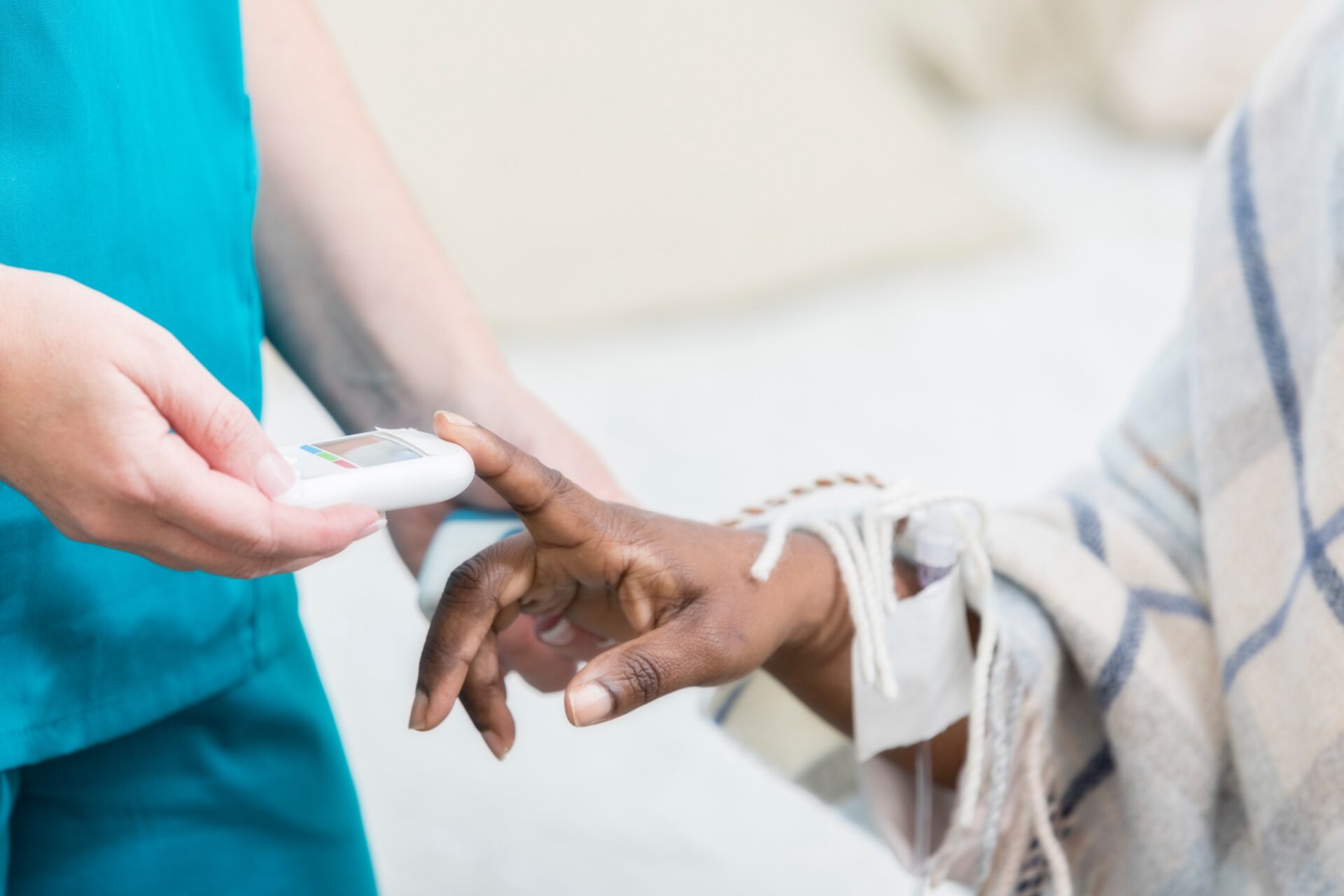
Black Women Have Worse IVF Outcomes: New Study Uncovers Possible Culprits
Researchers at the University of Pennsylvania analyzed data from thousands of patients from various racial backgrounds to better understand IVF outcomes in Black patients.
For two decades, fertility specialists have tried to understand why Black women experience lower live‑birth rates from in vitro fertilization (IVF) than their white counterparts.
Researchers point to two main factors: higher rates of fibroids among Black women, which can disrupt embryo implantation, and differences in how their bodies may respond to IVF stimulation medications.
In a recent study, published in Fertilityand Sterility, the researchers analyzed more than 246,000 ovarian stimulation cycles, 7% of which were in Black women, to compare how women of different racial or ethnic groups responded to IVF treatments.
The analysis found that Black women responded slightly better than people of other racial or ethnic groups to ovarian stimulation drugs, and their eggs produced high-quality embryos. This was after the researchers adjusted for participants’ age at retrieval, body mass index, hormone levels, and infertility diagnoses, using data collected between 2017 and 2019 by the Society for Assisted Reproductive Technology, a U.S. professional organization that tracks IVF outcomes from fertility clinics.
However, the study showed that Black women still had a lower live birth rate. Their birth rate was about 45%, compared to approximately 60% for white women.
“There’s clearly something happening that’s a roadblock to getting to the ultimate goal of bringing home a baby,” Iris Tien-Lynn Lee, an ob-gyn at the University of Pennsylvania, told Scientific American.
“I think it’s an issue with implementation,” the lead author of the study said.
The exact cause remains unknown, but researchers note that potential culprits could be the higher rates of uterine fibroids and greater exposure to environmental contaminants, which other studies have shown are more common in Black populations.
Tarun Jain, a professor of obstetrics and gynecology at Northwestern University Feinberg School of Medicine, emphasizes that the information in these studies is valuable because it can help address how Black patients are treated in the healthcare system. “Black women in healthcare experience worse outcomes in general, whether it’s maternal mortality, infertility treatment, or preterm birth,” Jain told Scientific American.
Trump Calls Country That Voted Him In ‘Stupid’ After Birthright Citizenship Arguments in Supreme Court
“We are the only Country in the World STUPID enough to allow ‘Birthright’ Citizenship!” Trump wrote on Truth Social.
On April 1, President Donald Trump expressed his grievances on his Truth Social App after things didn’t quite go his way after attending oral arguments at the Supreme Court in a case surrounding his executive order to end birthright citizenship, calling the United States “stupid,” ABC News reports.
“We are the only Country in the World STUPID enough to allow ‘Birthright’ Citizenship!” he wrote.
But he is wrong. Data from the Pew Research Center found that 32 other countries, mostly in the Western Hemisphere, have similar laws in place that guarantee citizenship to children born in the country.
Trump’s thoughts came after he appeared at the high court to hear arguments from Solicitor General John Sauer, who presented on behalf of the government. While cameras were not permitted in the courtroom, reports reveal that Trump wore a red tie and blue suit and sat in the front row of the public gallery with White House Counsel David Warrington, Attorney General Pam Bondi, and Commerce Secretary Howard Lutnick.
He seemed to be attentive and expressionless as his historic presence—the first sitting president to sit in on Supreme Court hearings—in the chamber was not publicly announced or acknowledged by any of the justices.
Several key justices seemed reluctant to upend birthright citizenship, which has long been understood to mean that almost anyone born on U.S. soil is automatically a citizen. The Trump administration argues that the principle has been misinterpreted. The administration is asking the justices to uphold his executive order, signed on day one of his second term, to eliminate birthright citizenship under an interpretation of the 14th Amendment and requiring parents to prove their legal status before citizenship is granted to their children.
Chief Justice John Roberts seemed unimpressed with. “The examples you give to support that strike me as very quirky,” Roberts said against the government, according to The Hill.
Outside of Truth Social, Trump expressed his shock in public after seemingly not getting his way from the people he put in position. “Republicans, judges and justices, they always wanna show that they’re independent. ‘I don’t care if Trump appointed me, I don’t care. It doesn’t make any difference to me. I’m voting against him.’ Cause they want to show their independence,” he said in a video posted to X.
Memphis Grizzlies’ Brandon Clarke Arrested For Speeding, Drug Possession
"I’m aware of the report, but don’t have any comments," Grizzlies coach Tuomas Iisalo said.
Memphis Grizzlies forward Brandon Clarke was arrested Wednesday, April, 1 in Arkansas after being accused of speeding and possessing drugs.
According to The Associated Press, the forward, who has been injured for most of the 2025-26 season, was charged with improper passing, possession of a controlled substance, fleeing, exceeding the speed limit, and trafficking a controlled substance.
Clarke, 29, was booked on Wednesday afternoon, as listed on the website of the Cross County Sheriff’s Office.
“I’m aware of the report, but don’t have any comments,” Grizzlies coach Tuomas Iisalo said before the team played the New York Knicks.
The Commercial Appealreported that Clarke, who was drafted by the Grizzlies in 2019, has been shut down for the season due to a knee injury that happened last season. He also suffered a right calf strain in December and has played in only two games this season, after the team notified its fans of his injury status.
On March 24, the team announced that he would not play any remaining games while he rehabs the injury. As a member of the Grizzlies, Clarke has averaged 10.2 points and 5.5 rebounds a game in his seven seasons. Due to injuries, he has only been available for 72 games over the past three seasons.
In a social media post, the team stated that “recent imaging indicated that additional healing is required prior to clearance for high-intensity court work,” regarding Clarke’s road to recovery from his injury.
Coral Springs Vice Mayor Nancy Metayer Bowen Found Dead In Home, Husband Charged
Stephen Bowen, 40, was booked on charges of premeditated murder and tampering with or fabricating physical evidence.
Nancy Metayer Bowen, the vice mayor of Coral Springs, Florida, was shot and killed in her home. Her husband, Stephen Bowen, is a suspect, Florida Politics reports.
The city leader died after an apparent domestic violence incident on April 1. Bowen was apprehended after attempting to flee.
Police became involved after a friend of Metayer Bowen couldn’t reach her. After reaching Stephen Bowen, who “sounded suspicious,” the friend decided to call the police. Coral Springs Police Chief Brad Mock said officers followed up with a wellness check around 10 a.m. After Metayer Bowen was found dead, authorities put a call out for Bowen.
According to NBC Miami, Bowen, 40, was wearing a long-sleeved shirt, athletic shorts and sneakers during his arrest. He was booked on charges of premeditated murder and tampering with or fabricating physical evidence.
Once the news hit social media, an outpouring of condolences poured in, along with comments and videos about the work of Metayer Bowen, a Haitian-American with an impressive resume.
“Heartbroken to learn of the tragic loss of Vice Mayor Nancy Metayer Bowen. Praying for her family, loved ones, and the Coral Springs community during this devastating time,” Florida Rep. Byron Donalds wrote on X.
“May justice be swift, and may her memory be a blessing.”
Heartbroken to learn of the tragic loss of Vice Mayor Nancy Metayer Bowen. Praying for her family, loved ones, and the Coral Springs community during this devastating time. May justice be swift, and may her memory be a blessing.
Principal Rosheika Y. H. Rolle of Broward County Public Schools posted a video of Metayer Bowen having some fun on a school playground while supporting students. “My heartfelt condolences to our Vice Mayor Nancy Metayer Bowen’s family. A wonderful leader who always supported the @HuntElementary community—your impact will never be forgotten,” she wrote.
My heartfelt condolences to our Vice Mayor Nancy Metayer Bowen family. A wonderful leader who always supported the @HuntElementary community—your impact will never be forgotten. 💙 pic.twitter.com/bFiwpG19km
— Rosheika Y. H. Rolle (@RolleRosheika) April 1, 2026
“Two years with the amazing Stephen Bowen,” she wrote on Instagram about her husband in 2024. “Cheers to love, growth, and building a beautiful life together.”
She worked diligently in the public sector, particularly on the rights of Haitian Americans, and worked on Haiti relief for roughly two years before taking a job with the Broward County government as a program manager with the county’s Junior Sustainability Stewards Program. When Vice President JD Vance started to spread lies about Haitian immigrants eating pets in Ohio, she was one of the first elected officials to publicly criticize him.
Florida Democratic Party Chair Nikki Fried reflected on speaking to the young politician “just days ago” and having a moment at the party’s Leadership Summit, “never imagining it would be one of our last moments together.”
A ‘Little’ Art Show Opens With A Big Bang At Atlanta’s Zucot Gallery
”Little” places emphasis on the “impact and presence” of smallness
Zucot Gallery, the foremost African American gallery in Atlanta, opened its doors March 20 for Little, “a group exhibition featuring 12 artists and a curated selection of smaller works.” Yes, Little is an exhibition of artwork on the smaller side, featuring several artists who typically produce works that scale much larger in size (and price). Take, for instance, Jamaal Barber, who often renders prints at four feet long …
—or Honey Pierre, whose mixed media art typically towers over seven- to-eight feet high.
“Big Mama,” a 30×22 mixed media piece by Pierre that is featured in the show—and composed of acrylic paint, oil pastel, and glitter on paper—would be considered little compared to the normal scale of her artwork. However, those dimensions aren’t really little at all, nor are a significant number of works hung in the exhibition. The size and price points across the gang of works vary.
The Little exhibition is ambitious. The art show comes at a time when art might be considered quite the luxury, considering the U.S. economy is currently fickle. Black Americans, in particular, are experiencing a 7.7 percent unemployment rate, the highest among racial groups, according to recently released data from the U.S. Bureau of Labor Statistics.
According to Zucot, the show places emphasis on the “impact and presence” that smallness can sometimes emit—and is aligned with art lovers looking to get their feet wet as first time buyers, veteran collectors looking to snag yet another piece, and buyers who want accessible artwork.
“It fills the gap for a lot of interest,” Onaje Henderson, co-owner of Zucot gallery, shared. “I think that it is a way to say, ‘no matter what’s thrown at us, we’re going to create a way, figure out a way, to make things relevant for the times.’”
As a person whose consumption of art is at copious levels, I wanted to be overwhelmed with an abundance of art. I anticipated a smorgasbord of actual little artworks from as many artists as possible, eating up all the white space in Zucot gallery, much like you’d experience in the Louvre.
Perhaps I’m a junkie.
Nonetheless, the show’s start is successful. The turnout was exceptional with collectors engaging upward of 50 “Little” art works on view and available for sale from 12 artists, including Charly Palmer, Georgette Baker, Richard Clark, Aaron F. Henderson, Shanneil Clarke, Honey Pierre, Jordan Toombs, George Galbreath, Marryam Moma, Jamaal Barber, Petie Parker, and Nathan Addley.
Palmer, the most prominent artist of the bunch, had 11 acrylic on canvas pieces in the show that showed off his painting prowess and line work. Each piece centered Black figures: some against backgrounds with fanciful details and others against geographical settings.
The sum of them were on par with the archetypal style the artist is known for. That is, Palmer’s artistic treatment of Black people is identifiable through deeply pigmented blacks and browns and every now and then, he gon’ drop some bold text to drive home the message. Images from Palmer’s Martha’s Vineyard series were standouts from the others. Stencil is a recurring element in Palmer’s work that signifies joy, and pairs well with paintings that express Black people living their Black lives, unbothered, in Black space.
In this grouping of paintings—they are free. “Masterpiece on the Bluff,” “The Inkwell,” and “Mama and We,” are palatable —in that a little Black boy building sandmen from grains of sand; a Black family perched on beach towels and soaking up sunrays; a top-heavy mama and her Black chi’rren, standing in the shallow parts of the ocean water, under a stenciled sky, posing for a photograph feels good and Black. It’s giving Black whimsy in a place where most Black people cannot identify but in ways many Black folks can.
Palmer’s subjects feel real, like people you may cross paths with on a regular basis like a neighbor, a family member, or perhaps someone you might encounter flipping the pages of a family photo album. Thematically, his work places its subjects in nostalgic settings. And as of late, Palmer has boldly placed Black bodies in-your-face and in the imagination subsisting in dreamscapes. Which makes the paintings for this show curious. The selection feels safe.
E. Richard Clark’s watercolor on paper pieces outfitted a wall on the second floor of the gallery. Much like Palmer’s paintings, Clark’s show pieces are a throwback to the familiar. Clark, an 82-year-old painter, invites viewers into a pastoral space. Images from his quilt series, specifically “Quiltmaker Series #20” and “Work Clothes,” are reminiscent of a time and place where Black women lost themselves in the rigors of rural labor and poverty.
Clark places these women against the backdrop of an open field and open sky. Though they are central figures they are not centrally positioned. Clark places them on the right side of their respective settings, giving way to quilt work hanging from clotheslines in the distance. The shared space is balanced. The image is crisp, clear. and picturesque.
The woman in “Quiltmaker” appears proud but hardened by hardship. Her gaze is so piercing that one might feel shame for looking and want to avert one’s eyes. The elderly woman, sitting in “Work Clothes,” has longing and indifference painted across her face. In the words of Fannie Lou Hamer, she appears “sick and tired of being sick and tired” as she rests against a cabin. The log cabin quilts that are embedded in Clark’s paintings are a distinctive nod to the women quilters of Gee’s Bend, who know all too well about hardship and manual labor for survival, and finding themselves through the art of quilt making. Just as quilts were salvation for the mighty Pettway and Bendolph women of Gee’s Bend, the vitality of Clark’s quilts redeems the hopelessness depicted in the work.
An antithetical vibe to Clark’s work is found in Aaron Henderson’s iteration of Moko Jumbies, created with gouache on paper. The Jumbie figures pop out from the grassy field, body of clouds, and color-washed backgrounds they are set against. Call it praxis and protest on paint. Originating in central Africa and adapted into Caribbean culture, the skillful stilt dancers represent liberation, resistance, resilience and good vibes. The translation of Moko Jumbie is “healer and spirit.”
Henderson’s color palette of lime, yellow, purple, blues, and magenta is consistent across these specific works.
Henderson turns up the hue on these Jumbie pieces, bringing vibrancy and movement that is synonymous with the history and projection of Jumbies to his paintings, “I’m Here for You,” “High Frequency,” and “Moving & Shaking.”
“Festival Day in Afrolantica” and Henderson’s other Jazz pieces are equally rich with color. Because of this, Henderson’s images are alive, spirited, performative and restorative.
Likewise, collagist Marryam Moma’s Wunderland Noir series added a much-welcome dab of whimsy. Moma’s Little works, “Not Like Us” and “La Vie En Rose,” a set of ink drawings laser-etched on white porcelain plates, shown in pure white 12×12 frames. “Not Like Us” bears twin figures that somewhat resemble the artist. Black and gold leaves on thinly etched vines are wreathed across the plate and framed by small gold-toned clock gears. The latter piece also bears a resemblance to its creator. The figure in the drawing sits in an armchair, legs crossed, wearing a tiered robe, enveloped in opulence: a bouquet of roses and floral wallpaper; a stack of books at its feet. A framed photograph of a man donning a kufi is next to her. Moma’s fine line work, attention to detail and design are successful—right down to the perception of wood flooring, the baseboard and the matting of the picture frame in the drawing.
The visuals prompt wonder/wunder in the viewer: What is the subject pondering? Who is the person pictured in the frame? Is it dad? A gentleman caller? Did someone send roses? Who? There’s a lot going on, yet on the plate and in the drawing a complete story is told; one that is elevated but not exaggerated.
A plethora of Petie Parker pieces were on display. The negative paintings are a departure from most of the other gallery offerings that exude tertiary color. Paintings “Butter-Fly” and “Vantage Point,” feature young Black children highlighted, shaded, and outlined in greyscale, along with their respective environment. The “Butter-Fly” series depicts a young girl wearing a pair of boxing gloves with wings on her back; floating against foliage. A boy donning a textured ‘fro is perched—on the fence. The sky above and behind him blurred.
The line work in “Hood Trampoline,” which is at the gallery, though not in the show, exposes a detailed apartment building with a playground situated in front of it. A haze of trees and faint fencing delineates the background from a scene with specter-like figures who sit on the sidelines, as a more prominent figure is captured midair, mid-black flip above a mattress resting on the ground.
A negative painting approach works well for Parker’s paintings. He owns this style, and it is pretty much the artist’s signature. The greyscale is applied efficiently in each image. It does just enough to give the viewer clarity and context. In an Instagram caption, Parker describes himself as a “storyteller,” a “narrative artist.” These works are proof. Each line, blur, contrast, and heavily coated dab of black acrylic paint co-signs that notion.
At first glance, Parker’s acrylic-on-wood pieces are arresting, like Black-on-Black crime. You want to look away, but cannot resist looking. From afar, the paintings appear dark and daunting, particularly against the crisp white gallery walls. However, they are quite the opposite of gloom and doom. Much like Kerry James Marshall’s “A Portrait of the Artist as a Shadow of His Former Self (1980),” these rather dark paintings with dark figures elevate blackness. They are dark in hue, but this draws attention to them—and Parker’s titles do matter.
I am reminded of Deniece Williams’ bittersweet ballad “Black Butterfly”:
Morning light
Silken dream take flight
As the darkness gives way to the dawn
You’ve survived…
I can’t escape the harsh reality that many young Black girls (and boys) must thrive in, nor the loss of innocence they face at such tender ages. The corners that young girls must box their way out of and the decisions young boys must ponder are nothing to sneeze at. Black youth carry a heavy weight.
In her very optimistic song, Williams sings:
Black butterfly
Sail across the waters
Tell your sons and daughters
What the struggle brings
Black butterfly
Set the skies on fire
Rise up even higher
So the ageless winds of time
Can catch your wings
It appears that Parker has the same hope for them, in that he wants them to fly high, to float like butterflies, to remain innocent and free.
Federal Court Blocks Trump Administration’s Childcare Funding Freeze
The lawsuit is ongoing, but the ruling restores more than $10 billion in federal funding already approved by Congress for childcare providers and families.
The American Federation of State, County and Municipal Employees (AFSCME), Service Employees International (SEIU), and the Main Street Alliance are among the unions that filed the lawsuit. Together, these unions represent millions of people in occupations that serve people, including nurses and childcare providers. Small businesses also joined in.
The lawsuit was in direct response to Trump’s boasting about how his administration terminated federal grants in retribution because the recipients were in “blue states.”
“The court’s decision to block the administration’s illegal funding freeze is a major victory for providers, families, and the children they serve,” AFSCME President Lee Saunders said in a statement. “The AFSCME members who provide essential child care services in these communities can now focus on what they do best: helping children learn and thrive.”
Trump ‘Targeted’ Blue States In Childcare, Freezing Funding, Lawsuit Claims
In January, the Trump administration halted funding to programs in California, Colorado, Illinois, Minnesota, and New York. The lawsuit challenged the funding freeze under the Administrative Procedure Act and the First Amendment. Plaintiffs argue the freeze was imposed without the required legal process. They also claimed the freeze lacked lawful authority and was driven by political motives.
AFSCME members provided testimony in the case, explaining the impact on families and employees of child care centers if the centers were closed due to the funding freeze.
The lawsuit is ongoing, but Tuesday’s ruling means that federal funding already approved by Congress will resume supporting childcare providers and families.
“For small businesses, child care isn’t a side issue; it’s essential infrastructure,” said Richard Trent, executive director of Main Street Alliance. “When this funding is frozen, our employees can’t find or afford care, parents are forced to cut hours or leave jobs, and local businesses lose the stable workforce they depend on.”
Trump Administration Labels Women’s Retreats As ‘Discriminatory’
The administration is suing a Coca-Cola distributor in New Hampshire alleging it discriminated against male employees by hosting a women-only networking event in 2024.
In the Trump administration’s latest lawsuit, the message is clear: women’s retreats are a form of discrimination.
The administration is suing a Coca-Cola distributor in New Hampshire for discriminating against male employees by hosting a women-only networking event in September 2024.
Coca-Cola Beverages Northwest Inc., a Japanese-owned distributor of Coca-Cola and other soda products, hosted a networking event for 250 women employees in Connecticut between Sept. 10 and 11, 2024. The theme was “Embrace Your Authenticity.”
“Everyone could just kind of be free and talk about their struggles,” an unnamed employee told The Washington Post. “It’s very empowering for women to get in the same room.”
“The unlawful employment practices complained of above were done with malice or reckless indifference to the federally protected rights of male employees,” the EEOC wrote in its complaint.
According to the EEOC, Coca-Cola Beverage Northeast Inc. damaged male employees by not offering the same opportunities that women received. However, the company is pushing back on these claims.
“Coca-Cola Beverages Northeast finds it disappointing that the EEOC did not conduct a full investigation,” Peter Bennett, a lawyer representing the company, told The Independent in a statement. “We look forward to having our day in open court when we can tell the full story and expect to be vindicated.”
Despite the lawsuit, white males continue to dominate in the workplace. White men secured 55% of new S&P 500 board seats in 2025, marking the first majority since 2017, the Los Angeles Times reported. Recruiters told the publication that the efforts to diversify these top roles are not a top priority amid the Trump administration’s fight against diversity, equity, and inclusion practices.
The Antetokounmpo Brothers Become First 3 Siblings On Same NBA Roster
The youngest brother scored three points in a win against the Dallas Mavericks.
For the first time ever, the Milwaukee Bucks had three siblings playing on the same NBA roster. Alex Antetokounmpo, the 24-year-old brother of superstar Giannis and Thanasis, entered Tuesday night’s game against the Dallas Mavericks and scored his first points in the NBA.
According to Sports Illustrated, Alex, the youngest of the Antetokounmpo brothers, hit three foul shots in joining his older brothers in the history book.
Alex has been with the Bucks organization since signing a two-way contract earlier this season. Although his future NBA Hall of Fame brother, Giannis, was in the arena and did not play due to injury, that did not stop him from obtaining the game ball to present to Alex after the game ended. .
While standing in street clothes on the sideline, Giannis walked toward the court to retrieve the basketball so his brother could have a memento.
“It’s really cool,” Bucks head coach Doc Rivers said after the game. “Giannis told me his hands were sweating. I thought that was hilarious. … Giannis grabbed my hands and said ‘My hands are sweating. I’m so nervous right now for my brother.’ To see him make the free throws and play—listen, three family members in the NBA, that’s a pretty cool moment for him.”
The Bucks beat the Mavericks, 123 to 99.
This season has seen a few historical family feats in the NBA. Los Angeles Lakers teammates LeBron James and his son, Bronny, who entered the history books last season as the first father-and-son duo to play on the same team, made history as the first father-son tandem to record an assist in a game last month.
Meanwhile, when the Golden State Warriors signed Seth Curry, he joined his future Hall of Fame brother, sharpshooter Stephen, on the roster, joining the Antetokounmpo brothers as having siblings on the same roster.
Former FAMU Cheerleader Makes HBCU History With Induction Into Cheerleading Hall Of Fame
The former HBCU cheerleader continues to showcase leadership on the sidelines of professional football.
A former FAMU cheerleader will make HBCU history in the Cheerleading Hall of Fame.
Dr. Chato B. Hendrix has been selected among four other inductees into the 2026 National Football Cheerleaders Alumni Organization Hall of Fame. NFL Cheer Alumni posted the accolade detailing her legacy in the sport.
“Her mission has always extended beyond talent. Chato intentionally creates spaces where cheerleaders feel celebrated as they pursue both their purpose (career) and their passion (dance),” wrote the NFL Cheer Alumni page. “She has built a culture rooted in confidence, leadership development, and social-emotional intelligence. One of the squad’s defining cultural words–Spinergy– captures the positive spirit and energy she champions: a fusion of strength, spirit, synergy, and sustained excellence.”
Hendrix always had a knack for cheerleading. She used her performance ability and love of team sports throughout college at Florida A&M University. After cheering for the Rattlers, she continued her journey through professional sports while furthering her education at another HBCU.
As she matriculated through Clark Atlanta University, Hendrix joined the Atlanta Falcons cheerleaders in 1998. She became a vocal leader on the squad, earning its Community Service Award while leading as a two-year Line Captain. After retiring her pom-poms, she has served as a director for the NFL cheerleading program for the past 22 seasons. Now, her leadership and impact on the sidelines of the field have also resulted in her latest honor.
As an esteemed mentor and Ph.D degree-holder, Hendrix exemplifies excellence and upliftment, values also pivotal to her beloved sport and HBCUs. In her continued role with the Falcons, she choreographs appearances and performances for their overarching cheer community. While a beacon of positivity and achievement, the current high school counselor continues to fly high in every avenue of her service.
“Thank you to this dynamic group,” Hendrix wrote on social media, as reported byHBCU Gameday. ” I am deeply humbled and grateful for this cheermazing honor. I’ve truly been blessed to do what I love.”
New AI-Powered Camera Makes Diabetes Detection More Accessible
The implementation of AI cameras represents a significant evolution in "point-of-care" diagnostics.
Diabetic screening capabilities are advancing as artificial intelligence cameras that detect diabetes are coming to local health clinics and primary care offices.
The new AI-powered cameras are specifically designed to bypass the need for traditional, expensive ophthalmology visits. The AI Fundus Camera, which was initially placed in the Cleveland Clinic, allows primary care clinics to detect early signs of diabetic retinopathy. The disease is the leading cause of blindness in working-age adults. Scans can detect the signs of diabetic retinopathy in as little as 30 seconds.
Patients will be evaluated using a high-resolution retinal imaging paired with an autonomous artificial intelligence algorithm, Open Data Science reported. With the placement of the AI-powered screenings directly in local pharmacies and community health centers, medical providers are significantly increasing early intervention rates and helping to prevent irreversible vision loss.
The implementation of AI cameras represents a significant evolution in “point-of-care” diagnostics. Traditionally, patients suspected of having diabetic complications faced months of waiting for a specialist. The time barrier disproportionately affects low-income families and those in rural areas due to time and logistical constraints. The new system eliminates many of these hurdles and provides immediate, on-site results.
In a press release, Sumit Sharma, M.D., a vitreoretinal surgeon at the Cole Eye Institute, spoke about the efficiency of the Fundus Camera.
“Improving the convenience of screenings means we may catch more disease in more patients, and also catch it earlier, even while asymptomatic,” Sharma said. “A lot of times, the patients who have the most severe disease are those who have the least access to care or the most difficulty getting to appointments. Screening patients on the same day as another visit can remove this barrier.”
The autonomous nature of the software means that specialized eye doctors do not need to be physically present to interpret the images. The AI provides a “referral-warranted” or “no-referral-warranted” result instantly. This streamlined process has already led to a documented 40% increase in screening compliance among high-risk populations, one of the manufacturers. Populations that have previously cited lack of transportation or time as a reason for skipping annual eye exams are gaining access to potentially life-altering diagnostics.