‘Bernie Mac Show’ Former Child Stars Receive Backlash for Joining OnlyFans
Social media users are minding grown women’s business again.
The social media trolls are coming after former child stars Camille Winbush and Dee Dee Davis of The Bernie Mac Show after learning of their participation on the adult platform OnlyFans.
According to the Neighborhood Talk, photos of Winbush and Davis were leaked on social media of the the two showing a little more skin than their fans were used to seeing from them, causing mixed reactions.
“NOT BABY GIRL!!!!!,” one user commented about Davis using the platform.
“Can’t be mad that people expected more of y’all … but whenever I guess it just shows that celebrities aren’t so different than the average chick around the corner,” another wrote.
Other fans understood the separation between their child roles and present stage as grown women.
“I think people get their characters confused with the fact that they are grown. It’s their lives,” a user commented.
“Leave them grown women alone !!! The only way you know they are on there is if you on there too 🤣🤣🤣,” another chimed in.
Winbush took to her Twitter to clap back at the haters minding her business.
“The trolls are hungry again so here’s some food for thought- I’ve never been arrested, never been on drugs, don’t have any baby daddies,” she tweeted. “I pay all my taxes, I drink water and mind the business that pays me.”
“If the most scandalous thing strangers can say about me is that I took some sexy pics as an adult and made a couple mil in less than 2yrs, I think I’m doing alright as a human in today’s society,” she wrote.
While the show aired, Winbush, who is now 33 years old, played the role of Vanessa, Mac’s elder niece, while Davis, who is 26, played Bryana “Baby Girl” Thomkins, Mac’s younger niece and youngest child who was a half-sister to Vanessa.
Jennifer McClellan Becomes First Black Woman Elected to Congress in Virginia
After a close special election, The HillreportedJennifer McClellan declared victory as the first Black woman in Congress to represent the 4th Congressional District in Virginia.
With her region spanning from Richmond to the North Carolina border, McClellan defeated Republican opponent, Leon Benjamin, becoming a favorite for her party. She took the seat after Rep. Donald McEachin passed away last November, and won the party’s primary for the seat back in December with 84% of the votes.
McClellan acknowledged the importance of her historic win and recognized what can happen when people work together.
“When we come together and we care more about doing the work and solving the problems than the soundbites and the show, we can help people,” McClellan said, according to CNN.
“We will make this commonwealth and this country a better place for everyone.”
McClellan’s resume speaks for itself.
The Hill reported she was first elected to Virginia’s House of Delegates in 2006 and was later elected to the state Senate in 2017. In 2021, she put her name in for governor of Virginia, however, she came in third place behind Delegate Jennifer Carroll Foy and 2021 nominee and former Gov. Terry McAuliffe.
McClellan’s victory adds to a record number of women in Congress, especially women of color. According to data from the the Center for American Women and Politics at Rutgers University, the 50-year-old’s election set a new record for the number of Black women in Congress.
The Petersburg native had some political heavy hitters in her corner, like former House Speaker, Nancy Pelosi (D-CA) and James Clyburn (D-SC). The mother of two is looking to bring important issues such as climate change and gun reform to the floor during her term. CNN reported McClellan supported a bill signed by then-Democratic Gov. Ralph Northam to pull back on restrictions on abortion rights in 2020.
She told CNN that the best way to get things done is to simply listen.
“I learned two things. One, you really need to listen and understand why people believe what they believe, where they are coming from,” McClellan said. “And when you do that, sometimes you’ll find common ground.”
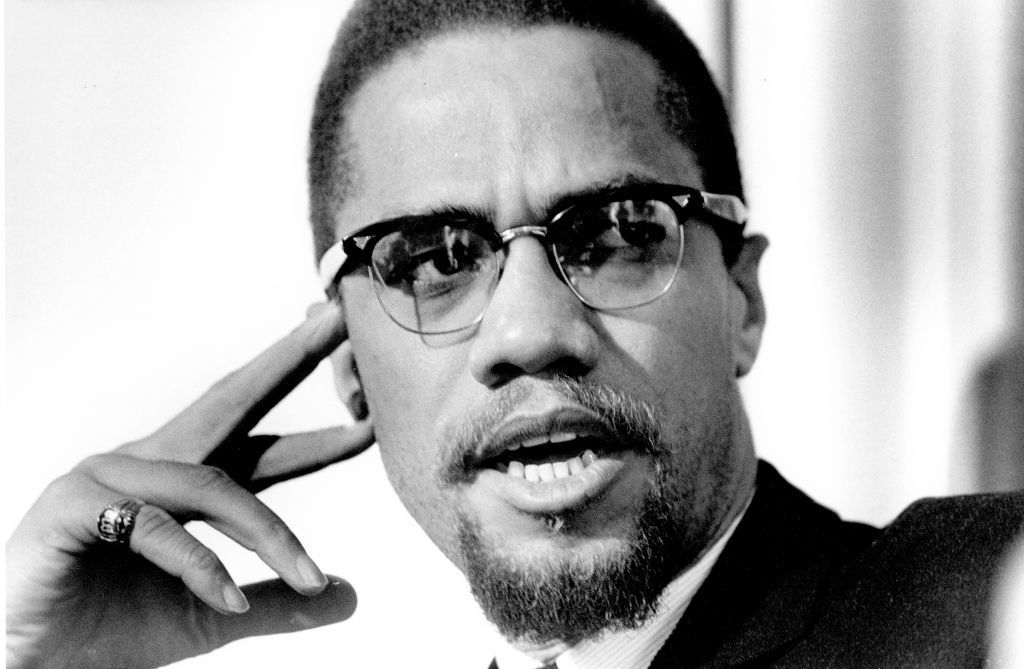
Daughters of Malcolm X Announce Plans to File $100M Lawsuit Against the NYPD, CIA and FBI For Allegedly Hiding Evidence After the Assassination
Civil rights activist Malcolm X‘s family members notified the City of New York and other entities that they would file a lawsuit alleging knowledge of evidence kept from the family after he was killed in a Manhattan ballroom in 1965.
The Nebraska-born activist, born Malcolm Little, was assassinated at the Audobon Ballroom in Manhattan on Feb. 21 at 39. They announced the lawsuit on the anniversary of his death.
According to CBS News, family members of the assassinated leader and their attorney, Benjamin Crump, announced plans to file a lawsuit against the New York City Police Department and several government agencies. The family claims that they intentionally hid evidence directly related to the murder.
Qubilah Shabazz and Ilyasah Shabazz, two of Malcolm X’s daughters, appeared with Crump at a press conference announcing their intention to sue the city of New York, the state of New York, the NYPD, the district attorney’s office, and various federal law enforcement agencies, including the FBI and the CIA.
As a basis for filing the lawsuit, Crump referenced the two men exonerated for the killing of Malcolm X two years ago. Muhammad Aziz and Khalil Islam were awarded a $36 million lawsuit settlement in October 2021.
At the press conference, which took place at the site where Malcolm X was killed (now The Malcolm X and Dr. Betty Shabazz Memorial and Education Center), Crump said, “The rhetorical question is this: if the government compensated the two gentlemen that were wrongfully convicted for the assassination of Malcolm X with tens of millions of dollars, then what is to be the compensation for the daughters who suffered the most from the assassination of Malcolm X?
“We intend to have vigorous litigation of this matter, to have discovery, to be able to take depositions of the individuals who are still alive, 58 years later, to make sure that some measure of justice can be given to Malcolm X’s daughters.”
“The truth of what happened and who was involved has always been critical.”
An Off-Duty Police Officer in Chicago Yells Out, ‘I’ll Kill You!’ Before Killing Man Who Grabbed Her Gun
A video has just been released that shows an off-duty Chicago police officer shouting, “I’ll kill you,” right before making good on her threat before fatally shooting a man.
According to NBC Chicago, a police officer who was not identified struggled with 39-year-old Leevon Smith before discharging her off-duty weapon and killing him. The incident took place last month on Jan. 18.
The surveillance footage was released last week by the Civilian Office of Police Accountability. The video shows that Smith had been arguing with a group of people in the 1300 block of West 90th Street.
The police officer, who was off duty, then left the apartment building where the incident occurred. She had diffused a situation between Smith and the other people and urged everyone to “calm down.” The people Smith had a dispute with eventually left, but Smith stayed around and spoke with the police officer for over a minute.
As she heads toward the apartment building, the video shows Smith reaching for her weapon, initiating the deadly struggle.
The police officer yells, “I’ll kill you,” before she fires two shots.
“You got me. You got me,” Smith responds after being hit.
She says, “I told your dumba** I’d kill you,” as she fires the third and final shot.
“Baby, I’m sorry,” Smith says. “I’m sorry; I don’t want to die.”
A statement was released by Chicago’s Civilian Office of Police Accountability (COPA).
“On January 18, 2023, the Chicago Police Department (CPD) notified COPA of an officer–involved shooting. Based on preliminary information, the incident began when an off–duty officer approached four subjects who appeared to be in an altercation in the 1300 block ofWest 90th Street.
“Three of the subjects eventually departed and walked west bound on 90th Street. One subject remained and continued to engage with the off–duty officer. As the off–duty officer began to walk away, the subject grabbed her from behind and reached for her weapon, which resulted in a physical struggle. As both parties fell to the ground, the off–duty officer’s weapon discharged, striking the subject, who later succumbed to his injuries.”
The day before Smith died, felony charges against him were approved by Cook County prosecutors. He faced counts of attempted robbery and aggravated battery.
Earlier this month, Smith’s estate filed a $10 million lawsuit against the city and the unidentified police officer on Feb. 3.
A Moment in Black History: Earl Graves Sr. and Magic Johnson Close $60M Deal to Create Largest Black Pepsi Franchise
1990: BE Publisher Graves and Earvin “Magic” Johnson partner with Pepsi-Cola to establish Pepsi-Cola of Washington, D.C. L.P., creating the nation’s largest minority-controlled Pepsi bottling franchise.
It was an all-star joint venture between the founder and publisher of the nation’s pre-eminent black business publication; an NBA superstar with entrepreneurial aspirations; and one of the world’s largest beverage giants. When BLACK ENTERPRISE‘s Earl G. Graves Sr. and Magic Johnson completed the $60 million transaction to own a Pepsi franchise in July 1990, their achievement became the deal-making choice of a new generation; growth through partnership and acquisition. For good reason: Graves and Johnson’s milestone added some new fizz to the BE 100s as the new entity, Pepsi-Cola of Washington, DC L.P., ranked No. 19 with $44 million in revenues upon its debut on the BE INDUSTRIAL/SERVICE 100 in June 1992. (To make the BE 100s rankings, a new company with at least 51% black ownership must be in operation for a full calendar year.)
As you would expect, BE had the inside scoop on the evolution of this sweet deal. Here’s the edited October 1990 account as reported by writer Fred Martin:
For Earl G. Graves, Sr. the road to acquiring a soft drink franchise began not in a plush corner office but 35,000 feet in the air.
In January 1988, the 53-year-old Graves was traveling by plane en route to a speaking engagement when he struck up a conversation with his seatmate, a senior-level Pepsi-Cola executive, After both men exchanged routine pleasantries, Graves showed him a copy of BE. After familiarizing himself with the magazine, the soft drink manager told Graves that Pepsi had been looking to do business with a prominent black businessman. Two years later, Craig E. Weatherup, then-president and CEO of Pepsi-Cola Co.—not the executive on the plane—announced creation of the largest-minority-controlled Pepsi-Cola franchise in the country.
In a move exemplifying the growth of African American business at the time, Graves and Earvin “Magic” Johnson, the Los Angeles Lakers veteran, officially entered the $40 billion soft drink business by teaming up to purchase Pepsi-Cola of Washington D.C., a Forestville, Maryland sales distribution facility serving the District of Columbia and a small area of Prince Georges County, Maryland. The $60 million deal marked only the second time in 20 years that Pepsi had brought new ownership to its franchise network. At the time, the only other black-owned Pepsi franchise was a Houghton, Michigan-based enterprise owned by Dr. William Harvey, president of Hampton University.
“This is a unique venture,” said Weatherup, “one that we’ve been discussing and evaluating over two years. Earl and Earvin bring more to it than just their knowledge and their expertise. They bring their experience. Their stature and the unique position they occupy as role models for the black community.”
Graves and Johnson, CEO and executive vice president, respectively, were responsible for the new company’s operations, strategic planning and general management. Pepsi-Cola was a limited partner in the venture. Graves remained BE‘s publisher while he spent a significant amount of time in the Washington metro running his franchise. In terms of the partnership, Graves owned more than 65% while Johnson held more than a 30% stake and both had the right of first refusal for other purchases. Pepsi remained a limited partner and its equity stake could change, opening up possibility for a greater share of the operation for Graves and Johnson.
The plant, which sat on a 6.1-acre plot, had about 160 employees, its own sales staff and a fleet of trucks. It distributed soft drink brands such as Pepsi, Diet Pepsi, Mountain Dew, Mandarin Orange Slice and Mug Root. Key accounts included the White House, the U.S. Capitol and Air Force One.
The idea of buying a franchise was nothing new to Graves. For several years he investigated several potential candidates and chose the Pepsi franchise, which sold 4.3 million cans of soda annually, because the company had market presence, solid leadership and spent $325 million with minority vendors between 1982 and 1992.
Sealing the deal was not easy. The “tough but fair” negotiations, which began in 1988, continued right up until the announcement in July 1992. During the lengthy talks, the principals got to know each other well. “When I would receive telephone calls at 6:30 a.m. on Sundays,” recalls Weatherup. “My wife would say, ‘It must be Earl.’
Finding the right partner is also key to any successful joint venture. Graves knew he had his man in Magic Johnson, the 30-year-old three-time NBA Most Valuable Player. Johnson was a man with resources of his own and a stellar reputation o—and off—the court. Johnson’s association with the Pepsi trademark was a major plus since he had great appeal in black and white communities.
Graves and Johnson met in 1988 at New York City’s 21 Club to talk business. “I was looking for someone who was mature and committed to making this business venture a success,” Graves said. The two hit it off and shook hands on the deal. Two years later the franchise deal was done. For Johnson, he was eager to work with the publisher: “This is an opportunity to learn some business magic from Earl Graves.”
Pepsi-Cola of Washington, DC was BE 100s leader for several years until Pepsi-Cola engaged in buybacks of its bottling operations. In 1999, Graves sold a majority stake in the franchise. But he still maintained a strong relationship with the soft drink giant, which served as a title sponsor for the popular Black Enterprise/Pepsi Golf & Tennis Challenge—an event that brought African American movers and shakers together for recreation and power networking—over two decades. Graves held a prominent position on the company’s minority business advisory board and served as general partner of Egoli Beverages L. P., a short-lived Pepsi-Cola franchise in South Africa.
As for Johnson, he often cites Graves as one of his mentors. Since the franchise’s formation, his business career has been effervescent. Through partnerships with powerful brands such as AMC Theaters, Starbucks, TGI Friday’s and L.A. Dodgers, the prolific entrepreneur he has built a diversified commercial empire over the past 25 years. These successful ventures, in turn, have made Johnson an MVP in business.
LVRN Appoints Grammy-Winning Producer Bryan-Michael Cox as Senior, A&R, and Executive Producer
Leading Atlanta-based hip-hop and R&B record label Love Renaissance (LVRN) appointed Grammy-winning producer and songwriter Bryan-Michael Coxas Senior Vice President, A&R, and Executive Producer.
In his new role, B. Cox will focus on breaking new talent as well as further developing the label’s current superstar roster of Summer Walker, 6LACK, Alex Vaughn, and more. Additionally, he will executively produce all in-house projects, guaranteeing paramount quality on every release.
“A&R has become a lost art in this new generation of music because of the gap in relationship between A&R, the artist and the label. Bryan-Michael Cox is a respected and accomplished producer and executive, and he’s the perfect addition to our team to help continue in bridging that gap. Bryan not only speaks the same language as the artist, but he also shares the same values as LVRN. We are on an unwavering mission to disrupt and redefine the rules of the music industry while also preserving the quality and integrity of the music. When I think of someone who handles music with care, I think of Bryan and we’re excited to welcome him home to Atlanta and LVRN,” says Justice Baiden, LVRN Co-Founder.
“The time is right for this union because what LVRN has been able to do culturally is incredible. The commitment to the full picture of artist development is something that this business has been missing. From the single selections to album track listing to the roll outs, each artist has been launched uniquely with care. Justice pays attention to detail and he has great understanding of what hit records should sound like without compromising the artists creativity and identity. I have a great track record of being able to bond with artists, get the best out of them, and, of course, being able to create or identify hit records. This is a perfect fit,” said Cox.
A producer for the likes of Usher, Mariah Carey, Mary J. Blige, Justin Bieber, and more, B. Cox has won nine Grammys and has earned 38 number one records. In 2009, he was inducted into the Georgia Music Hall of Fame. In addition, he won the SESAC Songwriter of the Year award for eight years in a row and was given the SESAC Icon Award in 2022. He has truly earned his place as a Billboard Top 5 Producer and Songwriter of the Decade (2000-2010), with a total of 200 million records sold worldwide.
In recent news, Matt Pincus, Co-Founder and CEO of MUSIC, made a significant investment in LVRN, raising over $25 million. Pincus also joined the label’s Board of Directors, which is chaired by LVRN President, Tunde Balogun. His investment – which values the company at over $100 million – will provide growth capital to build capacity in LVRN’s existing businesses, as well as unlock strategic expansion opportunities.
This Black Founder Stayed True to His Triple ‘Win’ Strategy to Build a $1 Billion Business
Wemimo Abbey’s journey to co-founding billion-dollar fintech company Esusu, the leading platform for renter financial health that supports low-to-moderate-income households in the U.S., began in Lagos, Nigeria.
Abbey was raised by his mother and two sisters after his father passed away when he was just two years old. Then, in 2009, his mother’s staunch belief in the value of education brought him to the “magical place called America” for college, from his 80-degree hometown to 22-degree Minnesota.
But it was far from an easy transition.
In need of a loan to fund her son’s schooling, Abbey’s mother walked into one of the largest financial institutions in the U.S. — and was turned away because she didn’t have a credit score. Not only was she forced to borrow money from a predatory lender at a 400% interest rate, but she also had to borrow from church members and pawn her husband’s wedding ring.
“No matter where you come from, the color of your skin and your financial identity shouldn’t determine where you end up in the wealthiest nation in the world — and dare I say anywhere in the world,” Abbey told Entrepreneur.
That conviction led Abbey and his co-founder Samir Goel to launch Esusu in 2018. The goal was to offer a path to building credit for those who might not have the option otherwise — and that’s exactly what Abbey and Goel have done with their company, which reports rent payments to major credit bureaus to help renters raise their scores, and owners and property managers maximize returns.
“We really believe in this idea of justice capitalism: We can do good and do well.”
Homeownership is the largest driver of wealth in the U.S., Abbey said, and the legacy of Jim Crow and redlining have left people of color at a distinct disadvantage.
Today, that history contributes to a significant racial wealth gap in the U.S. The divide between the wealthiest and lowest-income families in the U.S. more than doubled from 1989 to 2016, by which point the median wealth of white households was $171,000 — 10 times that of Black households ($17,100) and eight times that of Hispanic households ($20,600), according to Pew Research Center analysis of data from the Federal Reserve Board’s Survey of Consumer Finances.
With Esusu, Abbey strives to dismantle a system that has failed millions of Americans.
“We need to find ways where we can create a win-win-win construct across the board,” Abbey says. “We really believe in this idea of justice capitalism: We can do good and do well — and it’s by no means mutually exclusive.”
Esusu adheres to a “do no harm approach.” The platform captures on-time rental data and reports it to consumer revenue agencies, but it only reports positive rental data. Renters enrolled with Esusu can also opt-out at any time.
But Esusu’s desire to bridge the racial wealth gap goes even a step further: renters can tap into a zero-interest rent-relief fund.
“It’s this win-win-win construct,” Abbey explains. “It’s a win for the renter because they can establish their credit score or build their credit score and not go through what my mother and I went through when we came to this country, and during a tough time, [renters also] get access to zero-interest rent relief. The landlord can also get paid instead of evicting the renter. And the last win is for society — to prevent eviction and homelessness.”
Esusu is valued at $1 billion. Abbey acknowledged that the premise of the company’s existence is “very in your face” and that its investor demographics reflect that: Roughly 75% of Esusu’s investors are women or people of color, he said.
“Because we’re talking about addressing the [racial wealth] gap, those are the kind of investors we attract,” Abbey says. “My co-founder and I spoke with 326 investors and received multiple ‘nos’ across the board because some of the traditional folk just didn’t want to get behind an idea that’s going to bridge the gap — it sort of sounds [like a] nonprofit to some people. But we fundamentally believe that the rising tide lifts all boats.”
“We need to give credit where credit is due so everyone’s on the same page.”
“Representation is not liberation,” Abbey says. “Representation is currency. You, as a founder, have the currency to fundamentally impact the world in a positive way.”
Esusu’s positive impact has already been significant. The company works with more than 50% of the largest property owners and operators in the U.S., which translates to more than four million rental units. Esusu is “immensely grateful” for its current partnerships, but it’s “still early days,” and Abbey has his sights set on the nearly 50 million rental units across the U.S.
As the fintech company grows, it must continue to meet U.S. compliance and regulatory standards. “There are a lot of compliance and regulatory challenges,” Abbey admitted, but Esusu has managed to navigate the “constellation” of thousands of rules and regulations to ensure rent reporting happens.
It’s a stringent process, but Abbey “applauds regulators across the country” for their due diligence. What’s more, Esusu has gained powerful traction with government-sponsored entities including Fannie Mae and Freddie Mac.
“We collaborate with them,” Abbey explained, “and they’ve essentially created incentives to make sure sponsors and lenders within their network are pushing this agenda of rental reports to reflect on the consumer credit score.”
Additionally, Abbey noted that support for rent payments counting towards credit scores has crossed party lines: the bipartisan Credit and Inclusion Act of 2021 allows for the reporting of information related to a consumer’s performance in making payments either under a lease agreement for a residence or pursuant to a contract for a utility or telecommunications service.
“This policy is probably one of the only bipartisan issues we have in Washington, D.C. today, and it’s simple,” Abbey said. “When you pay your mortgage, you get credit for it, and when you pay your rent, you should also get credit for it. We need to give credit where credit is due so everyone’s on the same page.”
This article was republished with permission from Entrepreneur.com.
Nick Cannon Reacts to Exes Mariah Carey & Kim Kardashian Teaming Up on TikTok
Nick Cannon is reacting after his exes, Mariah Carey and Kim Kardashian,teamed up for a family-friendly TikTok with their daughters.
Monroe, Carey’s 11-year-old daughter with Nick, appeared alongside Kardashian’s 9-year-old daughter with Kanye West, North West, for a dancing TikTok video that featured their famous moms.
“It’s a wrap! But never for us!” Kim and North captioned the post.
In the video, the two celebrity kids danced to Carey’s 2009 song “It’s A Wrap.”
While the video was innocent, the irony in Mariah and Kim K’s team up is adult in nature, considering their shared romantic pasts with Nick Cannon. Carey and Cannon were married for six years and share their 11-year-old twins Monroe and Moroccan. Cannon dated Kim Kardashian back in 2006, two years before he married the Grammy-winning singer.
Once the TikTok made its rounds across social media, fans noticed the comments Cannon left on two different blog pages.
“Nick Cannon has been falsely commenting that he ‘wrote’ and ‘produced’ it’s a wrap, meanwhile he is not listed in ANY of the credits for that song… ,” a Mariah fan page tweeted out, along with screenshots of Cannon’s claims.
The Wild ‘n Out creator, he wants everyone to know he supports the TikTok with his two exes, especially since they’re dancing to a song he has writing credits on.
“Epic!!! Not to mention I produced and co-wrote the song!!!” Cannon quipped.
But when looking at the screenshot of the song’s writing credits, “It’s A Wrap” was written by Mariah Carey and Barry White. Nick Cannon’s name is nowhere to be found.
At least his two exes are getting along and his daughter is making friends with Kim and Kanye’s daughter. It’s a Hollywood family affair.
Kahawa 1893 Coffee Brand Founder Strikes a $350K Deal on ABC’s ‘Shark Tank
Margaret Nyamumbo has been added to the list of Black women reeling in deals on ABC’s Shark Tank.
The founder of the coffee brand, Kahawa 1893, recently scored a deal with British entrepreneur Emma Grede,according to The Star, for $350,000 for eight percent of her company.
The Kenyan native started her company in 2017 with a mission to “pay homage to Kenya’s coffee history and support African women farmers, as stated on the company’s website. The Harvard graduate took to Twitter to make the announcement, saying “We did it! We got a deal” with a shark emoji.
Nyamumbo impressed the sharks with her story of how she grew up on her grandfather’s coffee farm. She noticed the lack of compensation for coffee farmers, which launched her business journey in the food and beverage industry. “90 percent of the labour and coffee come from women but so many are not compensated because they do not own the land that’s why I created a new way to compensate the coffee farmers,” she said, as The Starreported. “We are very proud of the coffee that grows on our soil, unfortunately, farmers don’t always make enough for the delicious coffee that they produce.”
Her impressive deal is an addition to her company’s story. BLACK ENTERPRISEreported last year that Kahawa 1893 became the first Black woman-owned coffee brand sold at Trader Joe’s. The New York-based brand is being sold at 200 retail stores within the U.S. A press release making the announcement said Trader Joe purchases will help farmers in Kenya. “When a consumer buys coffee at Trader Joe’s, they can scan a QR code and send a tip to a farmer’s e-wallet who will receive that money directly,” Nyamumbo wrote.
“Kahawa 1893 matches all tips to double the impact.”
Black Farmers’ Arrest Brings Light to Racist Harassment from Neighbors
Black farmers are calling for justice.
Following their arrest in Colorado, Black farmers, Courtney and Nicole Mallery have sparked conversations concerning the alleged mistreatment and harassment of Black farmers across the country from white neighbors.
According to recent social media posts, Black Twitter released several statements regarding the incident in a collective effort to bring light to the situation.
Black family, farmers in Colorado. I’ve been terrorized by the white majority. And the media is ignoring the stories, this is not the first time in 100 years ago they were doing it. Run them out of town so they can take the land .#BlackTwitter.https://t.co/NXbNQ4CEri
The issue is nothing new to society, as a recent study published in the American Economic Association’s Papers and Proceedings journal, showed that Black farmers in the United States lost around $326 billion worth of land in the 20th century, which contributed to the racial wealth gap in the U.S. The loss was a result of discriminatory USDA lending policies and other factors.
“Wealth and land is one way in this country that you’re able to grow opportunity for your family,” said Dr. Dania Francis, lead author of the study.
The study found that Black farmers owned over 16 million acres of land in 1910, decreasing to 4.7 million acres by 2017.
The Black Farmer Fund testified last year in a New York State hearing stating that Black NY farmers saw a total net cash farm income of -$906, compared to the $42,875 of their white counterparts.
As previously reported by BLACK ENTERPRISE, the Mallerys, were arrested earlier this month on felony stalking charges even after previously accusing deputies and neighbors of ongoing harassment and stalking on several accounts.
The couple and another neighbor collectively filed over 20 restraining orders on their neighbors who allegedly attacked their property through acts of vandalism and animal mutilations.
Several actions have been implemented towards closing the racial wealth gap in regards to farming.
President Joe Biden entered his presidency campaign with a goal to bring equity to farming, creating an Equity Commission through the Agriculture Department. Congress approved a large debt relief program.
A GoFundMe page has been created for supporters to donate to Black farmers through the Freedom Acres Ranch.