Meet Fani Willis, Who Is Conducting One of Three Investigations Against Donald Trump
Fani Willis, Atlanta’s district attorney, has remained steadfast in investigating former PresidentDonald Trump.
Willis is the first Black woman to be named Fulton County district attorney. The Howard University and Emory University graduate is best known for prosecuting the Atlanta Public Schools cheating scandal, which led to jail time for nine of the 11 educators involved.
USA Todayreported on her first day in the position, she was still unpacking her boxes while considering the legal implications of a phone call between the former president and Georgia’s Chief Elections Officer Brad Raffensperger that was leaked on Youtube. During the call, which was made Jan. 2, Trump pressed Raffensperger to “find” more votes to overturn Joe Biden’s win in the state.
“I knew an investigation may be warranted on day one…the literal physical day I walked into the office,” Willis told USA Today in a recent interview. Willis added Trump’s phone call was “enough to raise eyebrows and even cause grave concern that it was already necessary to at least preliminarily look at other facts.”
Last month Willis sent a letter to Fulton County Superior Court Chief Judge Christopher Brasher asking him to impanel a special grand jury, writing her office “received information indicating a reasonable probability that the State of Georgia’s administration of elections in 2020, including the State’s election of the President of the United States, was subject to possible criminal disruptions.”
Basher granted Willis the grand jury.
The investigation into Trump has led to Willis receiving death threats. After a firebomb was thrown into Fulton County Commissioner Marvin Arrington‘s office and Trump calling for the protests of prosecutors trying to lock him up, Willis requested federal protection for her and her staff, but added the threats and incidents do nothing to change her mind about the investigation.
“I don’t care. It doesn’t bother me, I don’t lose one hour of sleep over it,” Willis told the FOX 5 I-Team.
‘”The rhetoric quite frankly, almost 95% of the time is racist in nature and I want to make sure we stay safe.”
Willis is one of three investigations into the former President and one of two being conducted by a Black woman. New York Attorney General Letitia James is also conducting an investigation into Trump and his organization.
Joesph H. Rainey, First Black Congressman In U.S. History, Honored At U.S. Capitol
Joseph H. Rainey (1832-1887), who was born into slavery but worked his way to become the first Black congressman in U.S. history, was honored at the U.S. Capitol last week, CBS News reported.
At the ceremony, held earlier this month, room H-150 in the Capitol where Rainey frequently worked, was dedicated to the congressman. A plaque describing Rainey and his career was placed at the entrance. Speaker of the House Nancy Pelosi was joined by Minority Whip Steve Scalise, Congresswoman Joyce Beatty (D-OH), and Congressman Tom Rice (R-SC.).
Rainey was elected on Dec. 12, 1870, after winning a special election. During his time in office, Rainey fought for the rights of his constituents, the freedmen, Chinese railroad workers, and Native Americans.
“Study the history. Know their history,” Rep. Jim Clyburn told CBS News, noting that when he was elected in 1992, he was only the ninth Black American from South Carolina elected to Congress.
“The problem is there are 95 years between No. 8 and No. 9,” said Clyburn, the Majority Whip and third-most powerful member of Congress. “Anything that’s happened before can happen again. Jim Crow happened once and it can happen again. Study the history.”
Rainey has a remarkable story that is not well known. He became a free man when his father, who worked as a barber, bought his family’s freedom with his savings. When the Civil War started, Confederate soldiers in South Carolina put Rainey to work. However, he escaped to Bermuda, where slavery was abolished. Rainey’s wife soon joined him and the two stayed until the end of the war.
Rainey came back to the United States determined to help his newly freed people and entered politics. Last year, the U.S. House unanimously approved legislation to rename a post office in Rainey’s hometown of Georgetown S.C. after him.
After leaving politics, Rainey spent two years as a federal agent for the U.S, Treasury Department for internal review. Rainey retired in 1886 and returned to his home state of South Carolina. At the age of 55, he contracted malaria and died less than a year later.
The Washington Post reports that Boyd passed away on Feb. 12 due to pancreatic cancer, according to her friend and power of attorney, Veta Goler. She was an associate professor and writer-in-residence at the University of Georgia’s Grady College of Journalism, where she taught magazine writing, arts reviewing, and narrative nonfiction.
Boyd was born in 1963 in Atlanta. She earned a bachelor’s degree from the Medill School of Journalism at Northwestern University in 1985 and an MFA in Creative Nonfiction Writing from Goucher College in 1999.
A distinguished journalist and cultural critic, Boyd spent nearly two decades as a reporter and arts editor at The Atlanta Journal-Constitution. Her articles and essays have appeared in numerous anthologies, magazines, and newspapers such as Essence, The Washington Post, The Los Angeles Times, Creative Nonfiction, African American Review, and more.
Her journalistic excellence led to her founding of EightRock, a groundbreaking journal of Black arts and culture, in 1990. In 1992, she co-founded HealthQuest, the first nationally distributed magazine focusing on African American health.
Simon & Schuster
Among her many achievements, Boyd became well-known for her five-years worth of gathered research about Zora Neale Hurston’s life.Released in 2003, the Wrapped in Rainbows: The Life of Zora Neale Hurston was hailed by Alice Walker as “magnificent” and “extraordinary” and received wide critical acclaim from various outlets.
In recognition of her laudable research, she received the Georgia Author of the Year Award in nonfiction as well as an American Library Association Notable Book Award.
“Valerie Boyd was one of the best people ever to live, which she did as a free being,” Alice Walker said in a statement issued through Simon & Schuster.
“Even though the illness was stalking her the past several years, she accompanied me in gathering, transcribing, and editing my journals. … This was a major feat, a huge act of love and solidarity, of sisterhood, of soul generosity and shared joy, for which she will be remembered.”
Louisville Student Activist Arrested For Attempted Murder, Firing Shots At Mayoral Candidate
A Louisville civil rights activist was charged and arrested in connection with the attempted shooting of a mayoral candidate in Kentucky.
Local authorities took 21-year-old Quintez Brown into custody for walking into the Louisville office of Craig Greenberg on Monday and firing several shots with a 9mm Glock handgun, the Courier-Journal reports. His charges include attempted murder and four counts of wanton endangerment.
According to The Journal, the University of Louisville student was arrested carrying a loaded magazine in his pocket. He was also carrying a drawstring bag containing a handgun, gun case, and additional magazines, the police report stated. Surveillance video from the Butchertown Market building captured the suspect’s clothes, which matched those of Brown’s.
At the time of the shooting, Greenberg and four members of his staff were at a meeting in his campaign office, but no one was harmed.
While Greenberg has not commented on the arrest, he told WRDB, “All of us are blessed, and I’m blessed to be standing here today with you. Despite one bullet coming so close that it grazed my sweater and my shirt, no one was physically harmed, and we are extraordinarily grateful for our safety,” Greenberg said. “We are shaken but safe.”
The police have not identified any motives associated with the case. Brown pleaded not guilty, while his bail is set at $100,000.
Brown, an MLK scholar and former intern at The Journal, recently announced he was running as an independent candidate for Metro Council District 5, as per WRDB. He has been an active member of the Black Lives Matter Louisville chapter and the University of Louisville’s Youth Violence Prevention Research Center. He is well-known in the community for his vocal efforts against police brutality.
Michael Clevenger/The Courier-Journal
A professor at the University, Ricky Jones, spoke to The Journal praising Brown as “one of the most brilliant kids I’ve ever encountered.”
“He seemed like a kid out of his time, who was misplaced; like he actually belonged to a different generation with his level of consciousness and concern,” Jones said. “I’d place him in the top five students that I’ve taught in my 26 years at this school.”
After a sudden disappearance last year, Brown was found on a park bench in New York 11 days later. His attorney, Rob Eggert, argues that the shooting is a “mental health case.”
Brown’s family released a statement at the time regarding his homecoming. “We are asking for privacy and would appreciate everyone’s patience and support while we tend to the most immediate need, which is Quintez’s physical, mental and spiritual health,” the statement from Cecilia Brown and Jacobe Daughterty said.
Kanye West Apologizes, Takes ‘Accountability’ For ‘Harassing’ Kim Kardashian
Kanye West has seemingly doused the flames of gaslighting his ex-wife, Kim Kardashian, by apologizing and removing a series of harassing and insensitive social media posts from Instagram.
Ye has now vowed to take “accountability” for the incendiary statements toward Kardashian and her current beau, Pete Davidson, who he issued a thinly veiled threat. West also mocked Davidson with a fight-type poster, implying that war was on the horizon for the Saturday Night Live comedian who has become quite cozy with the whole Kardashian clan.
Seemingly after an epiphany—but more likely after someone pulled him to the side—Ye scrubbed his Instagram and posted a more sensible message admitting to the error of his harassing ways and vowing to do better.
The unconventional artist said,
“I’ve learned that using all caps makes people feel like I’m screaming at them. I’m working on my communication. I can benefit from a team of creative professionals, organizers, mobilizers and community leaders. Thank everybody for supporting me. I know sharing screen shots was jarring and came off as harassing Kim. I take accountability. I’m still learning in real time. I don’t have all the answers. To be good leader is to be a good listener.”
People reported that two hours after posting the above message, Ye showed an image of a roadside billboard stating, “Stop telling fathers they should have fought harder to see their children & start asking mothers why he had to fight at all.”
As customary with Ye, he then deleted the post.
Here’s a brief rundown on the activities the music producer has done over the span of a few days:
In erratic fashion, Ye had been sending and posting private, now-deleted texts between him and his ex-wife vowing to “be back together” even though Kardashian has carved out a new path to peace.
According to a recent Instagram post, the “Heartless” rapper is seriously yearning to be back with Kardashian and their children.
Also, in a since-deleted Valentine’s Day Instagram post, Ye insisted he does not have beef with his estranged wife, and he does have “faith” that they will, once again, be together.
“I DON’T HAVE BEEF WITH KIM I LOVE MY FAMILY SO STOP THAT NARRATIVE. I’M NOT GIVING UP ON MY FAMILY…. I HAVE FAITH THAT WE’LL BE BACK TOGETHER”
Yahoo also reported that Ye had a truckload of roses delivered to Kardashian on Valentine’s Day.
Ye took aim at Davidson in several ways, including posting a picture and making unsolicited comments about his tattoo of former first lady Hillary Clinton. He also posted a fight night poster of him and Davidson, whom he referred to as “Skete.”
In a series of private texts, Kardashian pleaded with Ye to stop posting the exchanges, which he refused to do and continued to out her.
It had been reported that Ye and actress Julia Fox are no longer an item but “remain good friends.”
52% of Americans Declare Being Dishonest About Spending is Cheating
According to one financial education firm, trailing behind infidelity, money problems are the second largest cause of divorce.
Money problems are among the top findings from Ramsey Solutions. Roughly one-third of people who say they argued with their spouse about money report they hid a purchase because they knew their partner would disagree with it.
Now, a new survey shows that most Americans in earnest relationships want truthfulness from their mate. Yet, a startling number don’t walk the talk when it comes to money. In fact, some “52% of people in long-term relationships or marriages believe that secret spending or lying about money is a form of cheating.”
With credit cards being the worst, checking and savings accounts were cited as the most common accounts concealed from a partner.
“And 48% of individuals in marriages executed buys they hide from their partners. The survey revealed too 41% of women use a personal card or account to hide purchases versus 30% of men. Some 25% of women choose to hold back purchases by not telling them, in contrast to 17% of men. And 56% of men hide purchases as opposed to 43% of women.”
The survey noted having joint access to financial accounts can make it harder to cover up purchases, though marriage does not assure account sharing.
“Half of respondents in marriages reported sharing all financial accounts, and another 35% said they share some accounts. Some 15% of those in marriages reported they keep all accounts separate.”
The Ascent is a Motley Fool service reviews financial products, including credit cards, savings accounts, and mortgages, to help people make informed money matter decisions. The Motley Fool dispersed a survey to 1,500 Americans aged 18 and up who are married or in a long-term relationship this year in late January. The survey included 134 Black respondents, making up roughly 9% of all respondents.
Jack Caporal, a research analyst with The Ascent, told BLACK ENTERPRISE that Black respondents were more likely to have a hidden financial account than non-Black respondents. Two-thirds of Black respondents reported having some type of secret financial account compared to 35% of non-Black respondents.
He added Black respondents were more likely to make secret purchases. Some 57% of Black respondents said they make such a purchase at least once a year versus 48% of non-Black respondents.
“There’s no one reason as to why this is the case,” Caporal says.
“Some people may not trust their partner with access to their accounts. Others may want a means to spend without having to justify it to their partner. Some may want to hide debt from their partner.”
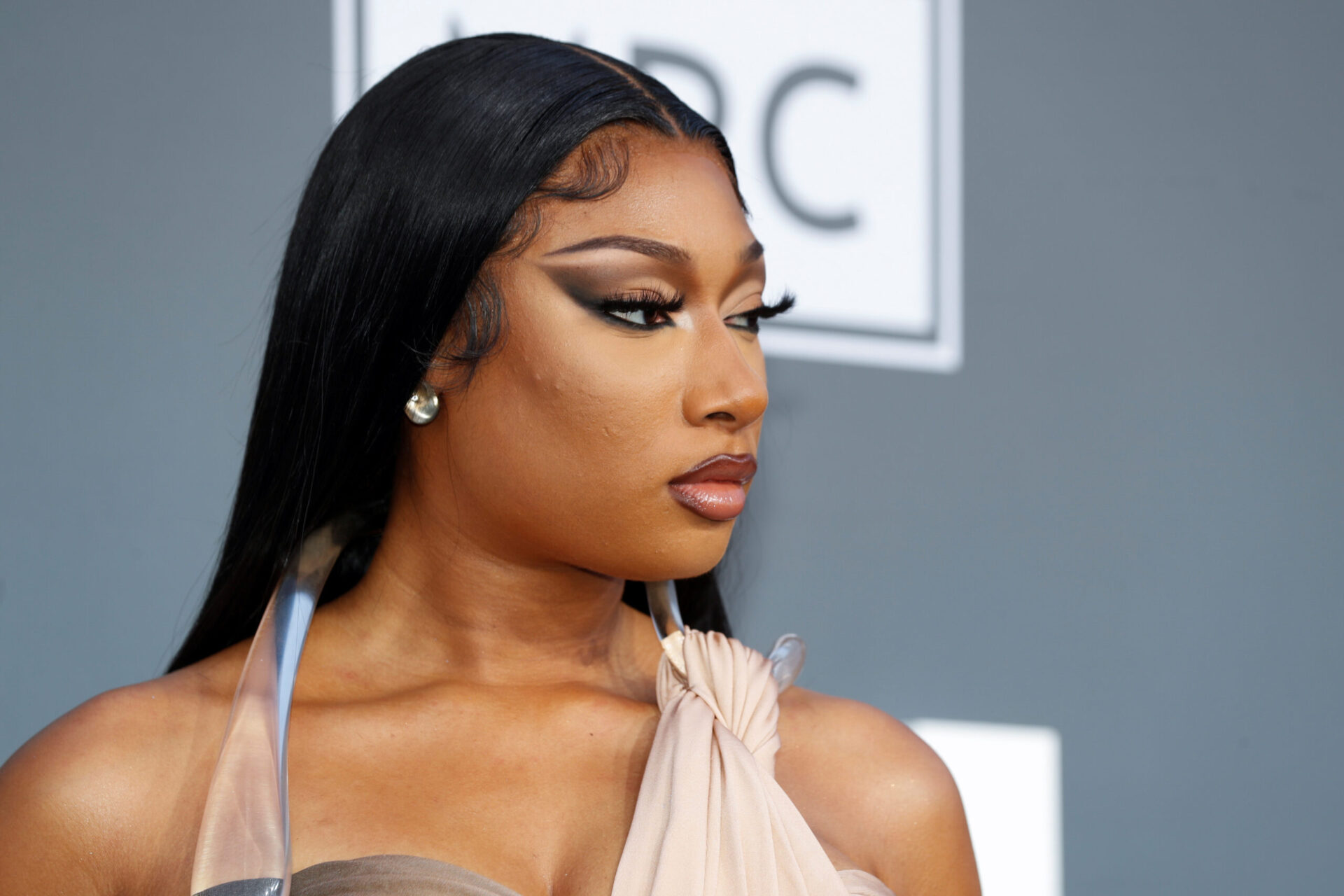
Paying Homage to Her Late Parents, Megan Thee Stallion Launches Pete and Thomas Foundation On Her Birthday
Megan Thee Stallion just celebrated her birthday, and she officially announced the launch of the Pete and Thomas Foundation on the same day.
On her 27th birthday, Megan took to social media to let the world know about the Pete and Thomas Foundation, named after her parents, Holly Thomas & Joseph Pete Jr.
“In celebration of my birthday, I’m honored to introduce the Pete and Thomas Foundation. @PeteThomasFDN is a non-profit organization focused on uplifting and assisting women, children, senior citizens and underserved communities in Houston, Texas and across the world. My parents raised me to help others and give back, and I’m incredibly proud to launch this foundation in their memory. Follow @PeteThomasFDN for more ❤️”
The foundation focuses on education, health and wellness, and housing.
The Pete & Thomas Foundation’s educational emphasis will provide scholarships, school supplies, and resources to support students who are in high-need communities. In terms of health and wellness, it will support cancer care, mental health, and food insecurity in the community. The housing component plans to address housing issues for senior citizens, single mothers, and families affected by financial emergencies and natural disasters.
The rapper is no stranger to giving back. As recently as December, upon graduating with a college degree from Texas Southern University in Houston, she set up a college fund to help other students achieve their college education goals.
In January, Megan Thee Stallion and Issa Raewere among the celebrities whose tweets appeared in their hometown locations in eight cities around North America.
In gratitude for the celebrities’ participation, Twitter will donate $1 million to charities of their choice, including the Boys and Girls Club, Destination Crenshaw, The 3-D Foundation, and UNICEF Canada.
More information about The Pete & Thomas Foundation can be found at this link.
North Carolina College Student’s Independent Study Helped Free His Childhood Friend From Maryland Prison
A North Carolina college student turned an independent advocacy study into a life-changing battle for his childhood friend to be released from prison 12 years early.
Maryland natives Brandon Harris and Sura Sohna grew up together in Annapolis, attending the same elementary and middle schools.
By 12, Sohna’s troubles with the law began after he was arrested for stealing a bike. By 2018, he was facing 15 years in prison after being charged as an adult with first-degree burglary and an additional burglary, ABC News reports.
In 2020, the two young men reconnected through letter exchanges. Harris was particularly interested in the prison conditions in the wake of the COVID-19 pandemic. Harris, a student at Davidson College in North Carolina, wanted to explore the structural challenges and generational struggles that caused his friend to lead a different life than he did. His interaction with Sohna inspired an independent study, then changed its trajectory from advocacy to convincing a judge to reconsider Sohna’s sentence.
“I said I want to do a project called ‘Telling the Stories of the Ignored or Forgotten,'” Harris told ABC News. “And Sura was someone who I consider to be ignored and forgotten by society.”
Sohna told the news outlet how much he endured at a young age, having lived through homelessness, public housing woes, violence, police brutality, and drugs.
“I feel like I was dealt a bad hand, but I knew right from wrong, and I made bad decisions,” Sohna said.
With the help of a professor at Davidson, Harris interviewed the victims of Sohna’s crimes, arresting officers and prosecutors, as well as Sohna and his family. His efforts led him to organize a presentation with his findings, which also allowed Sohna to tell his story and participants to ask questions. Sohna participated from prison on Zoom after Harris received approval from Maryland Gov. Larry Hogan.
In December 2021, Sohna’s attorneys filed a request for a hearing to reconsider his sentence. Last Tuesday, Harris and Sohna participated in the hearing, making their respected case about Sohna’s progress.
Sohna was released on Feb. 8.
Having been given a second chance, Sohna said he plans to complete his GED, which he began in prison. He also aspires to pursue his passions in film production, photography, and acting in college.
“I’m thankful and blessed. And I’m glad to have this opportunity,” Sohna said after his release.
Harris, who was originally a pre-med student at Davidson College, is now planning to go to law school.
Nearly 300 Dead Bodies Left in Open Parking Garage Turned Makeshift Morgue In Maryland
The Maryland Office of the Chief Medical Examiner has turned a parking garage into a makeshift morgue to deal with a significant backlog of bodies.
According to a WMAR report, more than 200 bodies await autopsy, and the number keeps growing.
The backlog is holding up funeral services, criminal investigations, and prosecutions. Maryland Chief Medical Examiner Victor Weedn told the Washington Post he expected the state’s backlog to hit 300 by the end of the month.
Because they were running out of space, the Maryland Department of Health converted a parking garage in downtown Baltimore, which is responsible for investigating violent and suspicious deaths, including all deaths unattended by a physician.
“The bodies are piling up and decaying right in front of everyone’s eyes,” Patrick Moran, president of AFSCME Council 3, which members include autopsy assistants and forensic investigators. “Bodies are decomposing, and that’s not the way to treat those that have lost their lives and families who are looking for closure.”
The Maryland Department of Health blamed the backlog on high vacancies and increased drug overdoses and shooting deaths, but another significant reason is a staffing shortage. Moran said in a press conference that three positions have been open for more than a year, five medical examiners have retired or resigned over the last two years, and three more are expected to retire soon.
“We need them to recruit more people to do the job,” Moran said at the presser. “They need to look at what resources people need to do the job, the salary they need to do the job and take action.”
The situation isn’t isolated to Maryland. New Hampshire, Georgia, New Mexico, and even New York City are dealing with autopsy backlogs. Those states cite the same issues as Maryland, including staffing issues, increased deaths due to the COVID-19 pandemic, violence, and drugs.
Weedn has asked the federal government to deploy its disaster mortuary response team to the state. The team includes medical examiners and forensic specialists who handle mass fatalities tied to terrorist attacks, such as 9/11, and natural disasters, including Hurricane Katrina.
A spokesperson from the Department of Health and Human Services told the Post it would send five fatality management experts to support the Maryland Office of the Chief Medical Examiner. It will also send personnel to New Mexico.
These Black Hollywood Stars Embodied Excellence — And We Should Honor Them
With the Oscars just around the corner, BLACK ENTERPRISE celebrates Black History Month with special recognition of historical Black figures and Hollywood stars for their outstanding achievements.
This collection presents Black Hollywood storytellers, filmmakers, actors, and actresses who have pushed boundaries and diversified industries on big and small screens.
Oscar Micheaux
The bold and fearless Oscar Micheaux was born in rural Illinois when movies hardly existed. But by 1919, he made his first film, “The Homesteader” (1919). Micheaux dealt with sensitive issues that other directors were afraid to confront. Micheaux was not just the first major Black filmmaker, but he was also the first to have a film shown in a theater with a white audience. Micheaux had several “firsts” in his life. The first Black filmmaker, successful homesteader, and best-selling author created 44 films between 1919 and 1948, such as “Within Our Gates” (1920), an unapologetic confrontation of racial violence.
Some uphold Micheaux as paving the road for Black-centered storytelling in the film industry. Micheaux used his filmmaking to expose the racial injustices African Americans faced at the beginning of the 20th century. He was one of the few Black independent filmmakers using a multiracial cast. In addition to empowering African Americans and breaking stereotypes, Micheaux’s work also influenced other filmmakers. Film pioneers such as Spike Lee, John Singleton and Melvin Van Peebles, have often credited Micheaux as one of their most significant influences. Black history month cannot be celebrated without mentioning his name.
Hattie McDaniel
Hattie McDaniel blazed a trail for African Americans as the first to win an Oscar Award. She won Best Supporting Actress in 1940 for her role as Mammy in “Gone with the Wind.” Living and working during the height of Jim Crow, McDaniel was segregated from the rest of the cast during the award ceremony and wasn’t even allowed to watch the film premiere. She struggled to break out of “Mammy” roles that reinforced Black stereotypes throughout her career. Although she acted in over 300 films, she was only credited for 83.
McDaniel’s legacy is better recognized today despite these overt obstacles to her success. She has two stars on the Hollywood Walk of Fame and became part of the Black Filmmakers Hall of Fame in 1975. She is also recognized as the first Black woman singer/songwriter to have performed on the radio. The child of formerly enslaved parents, her continued participation in film and radio marked a radical shift in racial inclusion in the American film industry.
Sidney Poitier
From rejections to rejecting several projects he found demeaning, actor, director and activist Sidney Poitier portrayed Black men with the dignity that exists beyond the screen. Having struggled with the injustices of Jim Crow, he was a founding member of the Committee for the Negro in the Arts while he began his acting career with the American Negro Theater. In 1964, he became the first Black person to win an Oscar for Best Actor for his stunning portrayal of Homer Smith in “Lilies of the Field.“ Despite the political landscape of the time, he broke down barriers to demand his voice be heard as an actor, director, and author. Most importantly, Poitier refused to play roles he found demeaning despite the limitations that would put on his career. In 2009, Poitier received the Presidential Medal of Freedom from former President Barack Obama, who lauded the actor’s steady bearing and said he “entertained, but he also brought people together.”
Spike Lee
A director, producer, screenwriter, actor and professor, Spike Lee, is well recognized for his work in film. Lee was born Shelton Jackson Lee in Atlanta, Georgia, on Mar. 20, 1957, but raised in Brooklyn, New York. He attended Morehouse College for his undergraduate degree and later graduated from New York University Film School in 1982. In 1986, Lee gained recognition for “She’s Gotta Have It.” Despite shooting it in two weeks and spending $175,000, the film grossed over $7 million at the box office, making it one of the most profitable films of 1986. Since 1979, Lee’s 40 Acres and a Mule Filmworks has produced more than 35 films.
He is considered one of the most prominent Black filmmakers in American history. His films challenge the status quo, confront racism and contest the ideas of racial equality. Thirty years after he starred in “Do the Right Thing,” Lee finally won his first Oscar in 2019.
Denzel Washington
His mother prayed, and God answered. Denzel Washington received a prophecy from an anonymous customer at his mother’s beauty salon: “You will speak to millions. You will do great things.” Today, we know this to be true. Washington is celebrated as the most Oscar-nominated Black actor globally. He has received nine nominations since 1988, including a win for Best Actor and a win for Best Supporting Actor for his roles as Alonzo Harris in “Training Day” and as Private Trip in “Glory.” Many people may not know that the award-winning actor and director has been actively involved in philanthropic work throughout his distinguished career, donating to several organizations and raising millions for the Smithsonian National Museum of African American History & Culture.
Halle Berry
Halle Berry’s career went from runway model to role model. In the 1980s, she won the Miss Teen America and Miss Ohio USA pageants and was runner-up in Miss USA. She then became the first Black woman to enter Miss World, demanding that Black beauty be given equal representation on the global stage. From modeling, Berry went into acting, working hard to create a stellar career in a wide range of blockbuster movies. Her perseverance shot her into the position of the highest-paid actress in Hollywood in the 2000s.
Berry became the first woman to receive an Oscar for Best Actress in 2002 for her role as Leticia Musgrove in “Monster’s Ball.” She has used her status and platform to fuel her activism, fighting for many issues like Obama’s presidential campaign and women’s rights. To this day, she is the only Black woman to have received the Oscar for Best Actress, a reminder of the barriers that Black women continue to face in the industry.
Shonda Rhimes
Shonda Rhimes had always been a storyteller — and a good one at that, earning her B.A. from Dartmouth and graduating with an M.A. from USC at the top of her class. After working on films with stars such as Halle Berry, Rhimes took her talents to television. She was the first African American woman to create and produce a Top 10 network series. Since the 2000s, her shows have dominated television, including widely popular hits such as “Grey’s Anatomy,” “Scandal,” “How to Get Away with Murder,” and “Bridgerton.” She has been praised for her strong female characters and her racially diverse casts, championing the representation of Black and other people of color. Today, she is considered one of the most influential people in television, giving a massive platform to the diversity she successfully brings to the screen.
Tyler Perry
Tyler Perry boasts a prolific career as a director, producer, actor, screenwriter, playwright, author and more. He stops at nothing to make sure his voice is heard. But he doesn’t just fight for his voice to be heard; he consistently works to uplift his Black peers. For example, he collaborated with Oprah Winfrey to promote “Precious,” making sure that the film was widely acknowledged for the crucial story it told. In 2015, he solidified his commitment to Black Hollywood by becoming the first African American to own a major film production studio: the Tyler Perry Studios in Georgia. He uses his resources to prioritize creations that speak directly to Black audiences.
Geoffrey Fletcher
Mandatory Credit: Photo by Evan Agostini/Invision/AP/REX/Shutterstock (9313111hz)
Geoffrey Fletcher attends the National Board of Review Awards Gala at Cipriani 42nd Street, in New York
2018 National Board of Review Awards Gala, New York, USA – 09 Jan 2018Geoffrey Fletcher started his career armed with a simple video camera, shooting his first films as a child at home. He attended Harvard and NYU’s Tisch Graduate Film Program, earning apprenticeships with such film legends as Spike Lee and Martin Scorsese. In 2010, he became the first African American to win an Academy Award for Best Screenplay for “Precious.” This adaptation of the novel “Push” confronted the severe challenges at the intersection of race, gender, poverty and abuse. Although such stories are unfortunately a reality, Fletcher’s story was unique for the attention it received. It is rare for films to effectively humanize a Black, poor, obese and abused female protagonist. Today, Fletcher continues to give back to society through his films and as a professor at Columbia University.
Steve McQueen
VENICE, ITALY – SEPTEMBER 04: Director Steve McQueen attends the “Shame” premiere during the 68th Venice Film Festival at Palazzo del Cinema on September 4, 2011 in Venice, Italy. (Photo by Pascal Le Segretain/Getty Images)
Growing up in the UK as a dyslexic adolescent with a lazy eye, Steve Rodney McQueen’s teachers expected little of his intellectual and creative abilities. He was placed on a track for manual laborers, but that didn’t deter him from pursuing a highly acclaimed career in the arts. Besides creating many unique and politically charged art installations, he was interested in film and attended NYU’s film school. In 2013, McQueen became the first Black director and producer to win Best Picture for “12 Years A Slave.” His film is considered a rebuttal to the romanticized version of history depicted in “Gone with the Wind.” McQueen insisted the slave period be recognized for the massacre that it was. His film depicts many of the horrific realities of the era, centering on the experiences of Black people. It received 315 nominations and 145 wins across award shows, demanding greater visibility for this all-too-often neglected part of American history.
Viola Davis
Viola Davis (Image: Brian Bowen Smith)
Viola Davis would not let anything prevent her from claiming her title as one of the country’s most talented actors. The New York Times certainly agrees, ranking her the 9th best actor in the 21st century. But her journey was not easy. Davis’ early life was marked by extreme poverty and hardship. Having experienced oppression firsthand, Davis was involved in civil rights activism from an early age. She persevered in school and was soon recognized for her exceptional talent and the hard work she invested in cultivating it. Her early success in the theater gave her access to Julliard and an extraordinary career as an actress and producer.
Today, Davis claims the highest number of Academy Award nominations among Black actresses. She successfully won the award for Best Supporting Actress in 2016 for her role as Rose Maxson in the film “Fences.” Outside of the Oscars, she has a whopping 309 nominations and 139 awards for her impressive career. Her many accolades confirm to young Black women that there is a place for them on the big screen.
Cheryl Boone Isaacs
Starting in publicity in the 1970s, it wasn’t long before Cheryl Boone Isaacs worked her way into leadership roles. She thrived in executive positions in many of Hollywood’s major production studios, such as Columbia Pictures, Paramount Pictures and New Line Cinema. Her expertise and experience helped her become the first African American to serve as president of the Academy of Motion Picture Arts and Sciences. She was elected for two, two-year terms in 2013 and 2015. In such an influential leadership role, Isaacs was praised for her ongoing work to improve racial and gender diversity during her tenure at the Academy. For example, she made significant improvements to the Academy’s mentorship and student programs and its scientific and technical council. In 2015, she launched A2020: an ambitious five-year plan to make the industry more equitable so that everyone’s voice can be heard on the big screen.
Barry Jenkins
In 2017, Barry Jenkins’ “Moonlight“ transformed the Academy Awards. From a family torn apart by death, abandonment and drug addiction, Jenkins overcame the most challenging circumstances to pursue his passion for film. His career is marked by his commitment to his values, rejecting Hollywood’s sugarcoating tendencies in favor of centering on society’s most neglected communities. He became the first African American nominated for Best Picture, Best Director and Best Screenplay for his outstanding work. He successfully won the award for Best Screenplay, while the film went on to win seven additional Academy Awards and dozens more nominations and wins from other award shows. Many consider “Moonlight“ a profound and intimate reflection on identity at the intersection of race, poverty and sexual orientation.
Ruth Carter
Ruth Carter shows us there are myriad ways to tell a story — going above and beyond to tell a story through her costumes, integrating cultural motifs, functionality and beauty to convey characters’ identities and history. She is the creator of the beautiful, unique and meaningful costumes of the blockbuster “Black Panther,” incorporating Maasai and Ndebele dress elements into the Afro-futurist superhero story through intensive research and traveling to various African countries. She became the first African American to win an Academy Award for Best Costume Design for this work, although she is responsible for the stunning wardrobes of over 40 other films. She was also nominated for Spike Lee’s “Malcolm X” and Stephen Spielberg’s “Amistad.”
Charles D. King
Charles King, a former partner/agent with William Morris Endeavor, has a knack for recognizing talent and a vision to empower and support people of color and diverse storytellers.
“I wanted to tell stories about and from people of color, so I built my own media company called MACRO,” he says. King was part of the all-Black producing team for “Judas and the Black Messiah,” starring LaKeith Stanfield and Daniel Kaluuya, about the murder of Fred Hampton, the head of the Chicago chapter of the Black Panther Party. He worked on developing the script, worked on the set and was instrumental in the film’s release and marketing. At Lionsgate, King helped Tyler Perry secure a deal for his award-winning debut film, “Diary of a Mad Black Woman.”
He says “the goal is not just to build a brand that will last for generations. It’s about creating opportunities, too, as well as enhancing culture. It makes our world a better place.” MACRO has produced and/or financed 13 feature films and earned 15 Academy Award nominations with three wins.