‘March On Washington 2026: Defend the Vote’ Planned For Aug. 28
Rev. Al Sharpton, Martin Luther King III, and other civil rights leaders and labor groups plan to protest what they describe as an attack on the Black vote.
Led by Rev. Al Sharpton, civil rights groups announced the “March on Washington 2026: Defend the Vote,” which will take place on Aug. 28 to mark the 63rd anniversary of the historic 1963 march. Sharpton’s National Action Network is organizing the effort in partnership with Martin Luther King III, Arndrea Waters King, the Drum Major Institute, and a coalition of civil rights, labor, faith, and community organizations, reports Reuters.
The announcement comes months after a U.S. Supreme Court ruling that narrowed key protections under Section 2 of the Voting Rights Act, a decision organizers say threatens Black political representation and weakens longstanding safeguards against racial discrimination in voting.
“Defending the vote means defending the foundation of our democracy,” Martin Luther King III said in a statement, according to NBC News. “Sixty-three years after my father stood at the Lincoln Memorial, we are called to march again, not only in remembrance, but in action.”
The coalition includes prominent organizations such as the NAACP, National Urban League, National Council of Negro Women, League of United Latin American Citizens (LULAC), the American Federation of Teachers, the American Federation of Government Employees, and the Working Families Party. Members of Congress, including Congressional Black Caucus Chair Rep. Yvette Clarke (D-N.Y.), are also expected to participate.
Organizers say the march is intended to honor the legacy of the original March on Washington while drawing attention to ongoing debates over voting access and representation ahead of the 2026 midterm elections.
The 1963 March on Washington for Jobs and Freedom drew approximately 250,000 people and helped galvanize support for the Civil Rights Act of 1964 and the Voting Rights Act of 1965. Organizers of this year’s march say they hope the gathering will similarly inspire public engagement around protecting voting access and democratic participation.
Baby Boomers’ Low Retirement Shortfalls Could Put Their Millennials Kids’ Finances In A Chokehold
Financial planners say the trend is forcing many adult children to prepare for the possibility of helping aging parents while also saving for their own futures.
Millennials who have spent years building retirement and savings may face an unexpected financial challenge as more baby boomers retire without enough money to support themselves, according to Business Insider.
Financial planners say the trend is forcing many adult children to prepare for the possibility of helping aging parents while also saving for their own futures.
The issue is unfolding across the United States as rising housing costs, healthcare expenses, and longer life expectancies place additional pressure on retirees with limited savings. Although baby boomers collectively hold a significant share of the nation’s wealth, retirement preparedness varies widely, leaving many families vulnerable to unexpected financial obligations.
The report stated that only about 40% of baby boomers are financially prepared for retirement. The Employee Benefit Research Institute has also found that many Americans remain at risk of falling short of retirement income needs, particularly when long-term care costs are factored in.
For some millennials, that concern has already become personal.
“I’m terrified that I’ll have to support my mom,” Brandon, a millennial father, told the outlet while describing his concerns about balancing his own family’s financial goals with his mother’s uncertain retirement.
Experts say those situations are likely to become more common as millennials juggle mortgages, child care expenses, student loan payments, and retirement contributions while also navigating parents’ financial needs.
According to the outlet, research indicates Black and Hispanic families often experience a greater economic impact because caregiving responsibilities frequently begin earlier and require larger financial sacrifices. Women are also more likely to reduce work hours or leave the workforce to care for aging relatives, limiting future earnings and retirement savings.
Financial advisers recommend discussing retirement assets, estate plans, long-term care options, and healthcare costs before a crisis occurs. Early planning, they say, can help families better understand available resources, reduce financial uncertainty, and avoid making costly decisions under pressure.
Martin University’s Closure Leaves Former Students Fighting To Finish Degrees
The Indianapolis university's closure disrupted degree programs, eliminated jobs, and left many searching for financial and academic stability.
More than six months after Martin University permanently closed on Dec. 31, 2025, former students and employees say they are still working to recover from the collapse of Indiana’s only predominantly Black institution of higher education. The closure of the Indianapolis university disrupted degree programs, eliminated jobs, and left many searching for financial and academic stability, according to The Indianapolis Star.
Martin University’s Board of Trustees voted to cease operations after determining the institution could no longer overcome years of financial challenges, declining enrollment, and mounting debt. The university announced the decision in late 2025, saying it lacked the resources necessary to continue serving students. According to the board, officials began coordinating teach-out agreements with other colleges while preparing to wind down operations and liquidate assets to address outstanding obligations.
Former students told the outlet that the closure forced them to reconsider graduation plans as they attempted to transfer credits and secure financial aid through new institutions. Several said the unexpected shutdown created additional financial burdens and delayed their educational goals.
“I’ve just been trying to survive,” one former employee told the newspaper while describing the months following the university’s closure.
Another former student said the experience left them feeling as though they had to “start over” after investing years toward earning a degree.
Founded in 1977, Martin University was created to expand access to higher education for adult learners, low-income students, and historically underserved communities in Indianapolis. Federal education data show enrollment declined from nearly 1,000 students in 2010 to about 223 students by 2023, reflecting years of shrinking attendance that contributed to the institution’s financial struggles.
In its closure announcement, the university’s trustees pledged to assist students through the transition.
“Our work now is to ensure that Martin’s legacy of access, faith, resilience, and opportunity does not disappear,” the board said.
“We will wind down operations with dignity, transparency, and compassion. We will continue to advocate for the educational future of our students.”
Former students continue to transfer to partner institutions while university leaders oversee the remaining closure process and resolution of the school’s financial obligations.
ON THIS DAY: July 15 Marks The Birth Of Banking Pioneer
Walker was a visionary entrepreneur
Maggie Lena Walker was born July 15, 1964. Walker was a visionary entrepreneur, civil rights advocate, and community organizer in Richmond, Virginia. Honored by the National Women’s History Museum, she is celebrated as the first African American woman to charter and serve as president of a U.S. bank, using financial empowerment to champion civil rights.
Costco Benefits And Employee Retention Make It Possible For Hourly Workers To Become Millionaires
An Arizona Costco cashier built more than $1 million in retirement savings
A longtime Costco cashier is proving that even everyday workers can become millionaires.
Tony Barzar, 60, has spent nearly four decades with the warehouse retailer, growing his retirement savings to more than $1 million while working an hourly job in Tucson, Arizona. Today, he earns $32.90 an hour, owns a three-bedroom home with a pool, and has traveled to Europe twice—all thanks to decades of steady employment, disciplined investing, and Costco’s employee benefits, reports Moneywise.
Barzar began working for Costco’s predecessor, Price Club, in 1986, collecting shopping carts in a parking lot for $5.85 an hour. When the company transitioned to a 401(K) retirement plan in 1993, he began contributing a portion of every paycheck to the account. His strategy was simple: keep contributing as his wages increased and let compound growth do the heavy lifting.
Looking back on his financial journey, Barzar admitted he never imagined where his career would lead.
“I didn’t think me and my family would reach where we sit now,” Barzar told The Wall Street Journal.
Although he’s financially able to stop working, retirement isn’t on his immediate agenda.
“I could retire. But what would I do? Costco has been good to me,” he said.
Barzar credits more than his paycheck for his financial security. After his wife was diagnosed with stage 3 brain cancer, Costco’s health insurance covered the full cost of her three brain surgeries—a benefit Moneywise described as “so comprehensive” that it eliminated what could have been devastating medical expenses.
His experience isn’t unique. According to Costco Chief Financial Officer Gary Millerchip, “many thousands” of the retailer’s U.S. hourly employees now have more than $1 million in their 401(k) accounts, reports Yahoo Finance.
Costco has long differentiated itself by paying above-average wages and rewarding employee longevity. The company recently raised its top hourly wage to $32.90, increased annual bonuses, and added another week of paid vacation for employees with at least 30 years of service. The retailer believes retaining experienced workers costs less than constantly hiring and training new employees—a philosophy Moneywise says “runs counter to most of the retail industry.
U.S. Postal Service Raises Forever Stamp Price To 82 Cents
Americans will pay more to send letters by USPS.
Americans will pay more to send letters after the U.S. Postal Service implemented new mailing rates July 12, increasing the price of a First-Class Mail Forever stamp from 78 cents to 82 cents following approval by the USPS Postal Regulatory Commission, Reuters reports.
The nationwide rate changes are part of the agency’s effort to improve its long-term financial position and support ongoing operational investments.
The new pricing affects several mailing products. Domestic postcards now cost 65 cents, up from 61 cents, while international letters and postcards increased from $1.70 to $1.75. The cost of mailing a one-ounce metered First-Class letter also rose to 78 cents.
In announcing the changes, USPS said the updated prices are intended to keep the agency on a path toward financial sustainability while continuing to modernize its nationwide delivery network through its Delivering for America 10-year plan.
“These price adjustments are needed to achieve the financial stability sought by the organization’s Delivering for America 10-year plan,” the Postal Service said in its announcement.
The Postal Service has said its pricing strategy reflects rising operating costs and declining mail volumes while helping fund investments in processing facilities, transportation, and delivery operations. USPS receives revenue primarily from the sale of postage, products, and shipping services rather than taxpayer funding for its routine operations.
The latest increase continues a trend of postage hikes in recent years. When Forever stamps debuted in 2007, they sold for 41 cents. Despite the higher price, stamps purchased before July 12 remain valid for mailing a standard one-ounce First-Class letter because Forever stamps retain their full postal value regardless of future rate increases.
USPS has maintained that, even with the latest increase, U.S. postage rates remain among the most affordable of comparable postal systems worldwide. Agency officials said the updated rates are intended to help preserve reliable mail service while supporting the Postal Service’s long-term financial recovery.
‘The Steam Bar,’ Judy Koloko’s Black British-Owned Brand Makes A Splash Across The Pond
The Steam Bar became the first Black British-owned company accepted into Sephora’s Accelerate program.
This spring, The Steam Bar Founder and CEO Judy Kolokotraveled to Atlanta to celebrate the brand’s recent addition to Sephora at The Dirty Tea, a Black woman-owned tea room. The British-Nigerian entrepreneur launched her brand after making the tough decision to leave behind a thriving career in fashion to pursue her vision of launching a premium haircare brand.
Who is Judy Koloko?
Already accomplished in the fashion industry, Koloko left behind a career that included dinners with Karl Lagerfeld and relationships with influential figures such as Anna Wintour and Miuccia Prada.
“In my mid-40s, I pivoted,” Koloko explained during the launch event. “I had an amazing career. I’ve traveled the world. I gave it all up because I thought this is going to be bigger than all that. And this has got more purpose for me.”
It was actually Koloko’s travels for work that helped inspire her vision for The Steam Bar. On many of her journeys, she found it difficult to find Black haircare products. Unable to find what she was looking for, Koloko began making plans to create her own line of products.
“I literally walked into Selfridges with just my laptop and said, ‘I’ve got this idea,” Koloko recalled. After sitting down and explaining her vision — quality haircare that didn’t just treat hair but also focused on scalp health — the department store determined it would be the birthplace of The Steam Bar brand. “They said, ‘Please don’t go and see Harrods, we want you to launch exclusively with us.”
Koloko says executives at Selfridges told her that they’d not seen a proposition like hers in years. The brand first launched exclusively in Selfridges at the end of 2023.
“And that’s how this all came to be,” Koloko said. “I won a spot in the Sephora Accelerate Program in January 2025.”
So, What is The Steam Bar?
The Steam Bar became the first Black British-owned company accepted into Sephora’s Accelerate program. Following the program’s completion in June 2025, Sephora invited the brand to join its assortment. The brand launched in April online, with six products: a clarifying shampoo for oily scalp and buildup, created specifically with curly hair in mind; a scalp and hair hydrating conditioner for dry, curly hair; a scalp microbiome balance serum for thinning hair; a detox scalp mask; a satin bonnet; and the brand’s crown jewel, a microwaveable steam cap that is currently sold out online.
With Sephora providing a foothold in the U.S. market, Koloko has already set her sights on Atlanta, a city she views as both a cultural epicenter for Black hair and a natural home for The Steam Bar’s experiential retail concept.
“Atlanta has always been the hub for Black hair,” Koloko said. “I think the people here deserve what we’re creating. Our experiences are insane. When The Steam Bar experience was in Selfridges, I had people messaging me saying, ‘I have had amazing haircare experiences in my life, but this exceeded anything that I have ever imagined.’ It’s not just about the amazing haircare treatment; it’s the service, it’s about the education, it’s about being part of the community, and ultimately, it’s about feeling good about yourself.”
That sense of self-confidence is a vital part of The Steam Bar’s brand ethos. The vibrant green and gold packaging is not only an ode to Koloko’s Nigerian roots. Each product also bears the brand’s signature tagline: What Lies Beneath. While the mantra is fitting because the products are specifically designed for scalp care, Koloko revealed that the message also carries a deeper meaning.
“It’s not about your hijab, your wig, your protective hair covering your scalp, whatever it is you’re putting on your scalp; it should go deeper than that,” Koloko, who is a proud wig wearer, declared. “What lies beneath should be, ‘Who am I? What is my purpose? What is my calling?’ What this mission is about is us loving ourselves, honoring our crown.”
A Glimpse Into Judy Koloko’s Life
In addition to her goal of helping to inspire self-confidence in others, Koloko says she was also inspired by her children. The mother of two said she is driven to leave a legacy for her son, currently in college (“on scholarship,” she notes proudly) and her daughter, now 31. When her daughter was only 9 months old, she suffered a fall that triggered a brain bleed and spent three months in intensive care. Her daughter lives with cerebral palsy, blindness, and epilepsy, but her strength and determination have proven to be another source of motivation for Koloko.
“She’s blind, and she’s epileptic, but she is a gladiator,” Koloko said. “She is the reason I am the woman I am today. My ultimate mission is actually to build a care home, which will be her legacy. Everything that’s happening here today is actually for a bigger cause. It’s really about creating something for people who have no voice.”
Koloko tasted success throughout her corporate career, but she says she’s never felt so fulfilled as she has in the last seven years, while building The Steam Bar.
“The Steam Bar is my calling, and it’s more because I know if I make this as big as I believe, then it will impact the people that really care. I’ve built something that’s all about people being seen, people deserving and people belonging somewhere, but having a child with such complex needs, I know that this mission is actually bigger than that.”
UNC $1M Endowment Goes To Howard University After School Requests Anti-DEI Compliance For Eligibility
The scholarship honors Dr. Leroy W. Upperman, one of Wilmington, North Carolina's first Black physicians
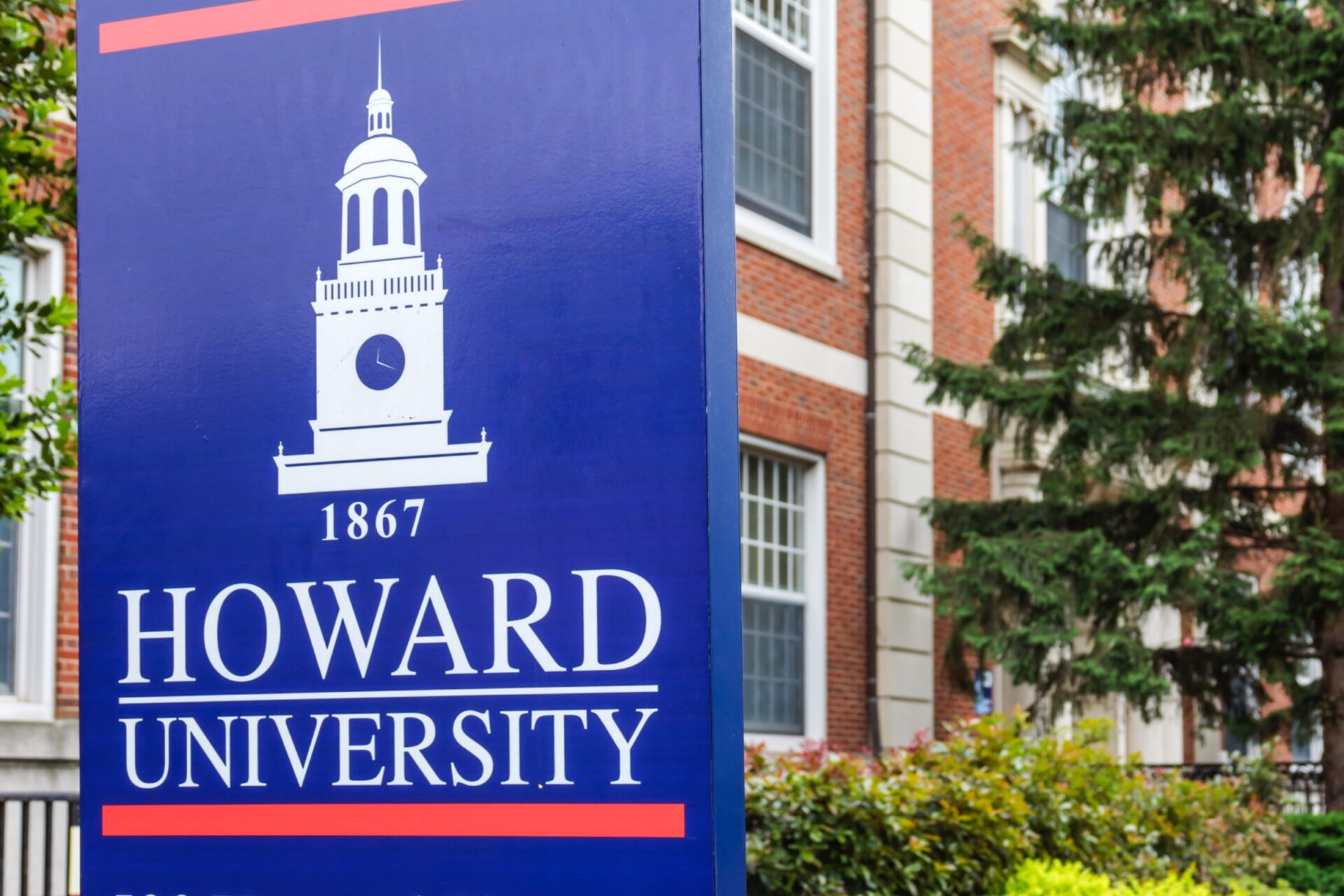
Howard University is expected to receive a nearly $1 million scholarship endowment after the family behind the fund decided to move it from the University of North Carolina at Wilmington, rather than revise eligibility language to comply with the University of North Carolina System’s equality policy, HBCU Gameday reports.
The scholarship honors Dr. Leroy W. Upperman, one of Wilmington, North Carolina’s first Black physicians and a graduate of Howard University Medical School. For nearly three decades, the endowment has supported students at UNC Wilmington. The fund distributes about $40,000 in scholarships each year and is valued at approximately $1 million.
“My father wanted to leave something that would reflect the Upperman name as well as do something to give back to the community that had supported him over the years,” Upperman Smith told WHQR Public Media.
According to WHQR, the family instead chose Howard University, where Dr. Upperman earned his medical degree, as the scholarship’s future home. Upperman Smith said preserving her father’s original intent outweighed modifying the endowment’s language to satisfy the new requirements.
The dispute stems from the UNC System’s Equality Within the University of North Carolina policy, which replaced the system’s previous diversity and inclusion policy in May 2024. The policy requires campuses to ensure that scholarships and other university programs comply with updated guidance on institutional neutrality and nondiscrimination.
UNC Wilmington said three students currently receiving the Upperman Scholarship will continue receiving financial support until they graduate, but no additional recipients will be selected under the existing endowment.
Eddie Stuart, the university’s vice chancellor for university advancement, said the institution has worked with donors to revise scholarship language while honoring their philanthropic goals and remains in discussions with the Upperman family.
If the transfer is finalized, Howard University will administer the scholarship going forward, allowing the endowment to continue operating under the donor family’s original vision.
photo by Navy Mass Communication Specialist 3rd Class Kellie Bliss) UNCLASSIFIED – Cleared for public release. For additional information contact JTF Guantanamo www.jtfgtmo.southcom.mil
Sailors Who Suffer From Razor Bumps Could Get Booted From The U.S. Navy
An estimated 60% of Black men experience the shaving-related skin condition.
Sailors with chronic shaving-related medical conditions will no longer be eligible for permanent shaving waivers under a new U.S. Navy policy that gives affected service members up to one year to complete treatment before they could face administrative separation, Stars and Stripes reports.
The guidance, issued by the Navy on July 8, implements a broader Defense Department directive requiring uniform grooming standards across the military while limiting long-term medical exemptions for facial hair.
Under the policy, sailors diagnosed with shaving-related skin conditions, including pseudofolliculitis barbae, commonly known as razor bumps, must notify their chain of command and undergo evaluation by a military medical provider. Commanding officers may authorize temporary shaving waivers for up to 90 days at a time while treatment is underway. Those waivers may be renewed, but only for a maximum of one year.
If a sailor remains unable to comply with the Navy’s grooming requirements after that period, the service will consider the condition permanent and incompatible with military standards.
“The operational success of the U.S. Navy demands the readiness of all sailors,” the Navy wrote in its guidance. “Mission accomplishment hinges on stringent compliance with standards and ensuring that implementing policies are clear, unambiguous, and compliant with law and regulation.” The memo adds that grooming requirements help ensure the safe use of protective equipment across operational environments.
The updated rules also prohibit temporary medical shaving waivers for recruits and individuals entering or reentering military service. However, mustaches remain authorized, and certain Navy special operations personnel may still wear beards in mission-specific circumstances, though they must shave before deployments involving chemical, biological, radiological, or nuclear threats.
Pseudofolliculitis barbae occurs when shaved hairs grow back into the skin, causing inflammation, pain, and scarring. The condition disproportionately affects Black men, with the American Osteopathic College of Dermatology estimating that up to 60% experience symptoms.
The Navy’s directive follows a 2025 Defense Department policy championed by Defense Secretary Pete Hegseth that curtailed most permanent medical shaving accommodations across the armed forces as part of an effort to reinforce readiness and consistent appearance standards.
On This Day: July 14 Introduced Us To Black Women In Stem And Pan-African Research
Revisiting 250 Years of Blackness in America
July 14 is significant in that it celebrates an innovator and a major moment in Black American history.
Sarah E. Goode
We can’t talk about Black women in STEM without mentioning Sarah E. Goode, who pioneered a path for Black women in industrial design, engineering, and creative entrepreneurship. Goode is the first African American woman to receive a United States patent, granted on July 14, 1885.
The Schomburg Center for Research in Black Culture
The Schomburg Center opens in Harlem, New York, on July 14, 1925. Arturo Schomburg’s collection of African American artifacts is acquired by and housed as part of the New York Public Library.