Texas Grocery Store Employee Fatally Shot After Customer’s Shotgun Discharges In The Backseat
A Linden, Texas, grocery store employee was killed after doing a good deed.
Larry Lawrence, an employee of Crump’s Food Center, was walking a customer to their car on Sept. 22 when a shotgun in the backseat went off, killing him, KSLA News 12 reported. Witnesses said they saw Lawrence helping the customer put groceries in the car’s back seat around 3:30 p.m., with a dog present. A .22 rifle reportedly discharged, hitting the victim in the chest.
Police and paramedics were immediately called as passersby tried to resuscitate him. Once medical professionals arrived, they took over with life-saving maneuvers. However, Lawrence was pronounced dead at the helipad site. According to Linden Police Chief David Dulude, the incident seemed accidental, but the investigation is ongoing.
“It is unclear of the means of the discharge at this time,” Dulude said.
The grocery store released a statement on their Facebook page, calling the incident a tragedy. “We lost a fine young man,” the statement partially read. “We ask for prayers for this young man’s family.”
Chris & Debbie Spencer, the store’s owners, created a GoFundMe page for donations towards funeral expenses and a memorial fund. To date, close to $9,000 has been raised for its$20,000 goal, and they have personally donated $5,000 towards the fund.
“The Lawrence and Crump’s Food Center families have been touched by the outpouring of sympathy and support since this tragic event occurred,” the Spencers wrote. “Many folks have asked how they can support the Lawrence family during this difficult time.”
Black Victims of Secret Government Cold War Testing Fighting For Compensation In St. Louis
Black victims of secret government testing near the Pruitt-Igoe housing projects are seeking compensation.
The Associated Pressreported that St. Louis, MO residents subjected to the contamination of the Pruitt-Igoe housing projects in the 1950s and 60s feel the government should pay. The report stated that the U.S. Army used blowers on top of buildings and the backs of station wagons to spray a carcinogen into the air close to the Pruitt-Igoe housing projects, which were comprised of primarily Black residents.
While Congress insists the zinc cadmium sulfide was harmless, residents who experienced the chaos say otherwise.
“I remember what we thought was smoke rising out of the chimneys. Then there were machines on top of the buildings spewing this mist.”
Phillips, now 73, and Chester Deanes founded Pruitt-Igoe Historical Accounting, Compensation, and Truth Seeking (PHACTS). They are leading the efforts to seek payment, along with health studies, that could uncover if the government’s secret testing caused premature deaths and sickness of unsuspecting Pruitt-Igoe residents.
In collaboration with The Missouri Independent and nonprofit newsroom MuckRock, an AP report uncovered documents showing the government and companies behind both the nuclear bomb production and atomic waste storage sites in surrounding areas were well aware of the health risks but simply ignored them.
Some believe it was the nuclear waste that caused the death of family members and lingering health problems.
Soon after the report was released, according to ABC News, Sen. Josh Hawley (R-MO) issued legislation to expand the existing compensation program for exposed victims. The amendment was endorsed by the Senate and was voted on. In August, President Biden said he is “prepared to help in making sure that those folks are taken care of.”
Army documents described the testing area as “a densely populated slum district” with many impoverished residents. Deanes believes that is the reason why the area was chosen.
“That’s why they did it. They have been experimenting on those living on the edge since I’ve known America,” Deanes said. “And, of course, they could get away with it because they didn’t tell anyone.”
Both Phillips and Deanes lost family members due to illnesses and have suffered themselves. Phillips’ mother died from cancer, while his sister suffered from convulsions doctors couldn’t understand. Deanes’ brother died from heart failure, and Phillips lost hearing in one ear because of a benign tumor.
Dock Worker At The Center Of The Montgomery Riverboat Brawl Speaks For The First Time
Dameion Pickett, the dockworker who threw his hat up like a Bat signal during the Montgomery Riverboat Brawl, was interviewed on Sept. 25 by Good Morning America‘s Robin Roberts.
Pickett told Roberts that he was shocked by the brawl and had expected a normal “peaceful” day at work.
“I didn’t expect this to happen at work today. I was just expecting another peaceful, nice cruise.”
Pickett said that his main concern was for the safety of the passengers on his boat, the Harriott II, and those on the boat of the group that eventually ended up attacking Pickett for doing his job. Roshien “Rahrah” Carlton came over to assist his friend and co-worker, and he said that by asking what was going on, he was told by one of the belligerent men on the dock, “Who the F you think you are?”
Carlton also revealed that “a lot of racial slurs was going on.”
EXCLUSIVE: “I went to work to work, not to be in a fight or get jumped on.”
The infamous fight began once the that ferry Carlton and Pickett were responsible for helping to bring in finally docked. A man seen brandishing a chair like it was the WWE Attitude Era was charged with disorderly conduct, but his name was not shared during the interview. The four others charged were white: Mary and Allen Todd, Zachary Shipman, and Richard Roberts. All four were charged with misdemeanor assault, and when asked about the events, they all told ABC News they had no comment, according to Roberts.
Pickett said he has minor injuries from the incident, that he’s still sore and has some “bumps and bruises,” but shared that he’s still here “by the grace of God.”
After the interview concluded, Roberts noted to her co-anchors that she was impressed by Pickett’s dedication to ensuring that people were safely docked in the harbor. Roberts also shared that Pickett worked his way up to a deckhand from the kitchen, saying that the man is proud of the work that he has done during his time at the company.
Fat Joe Returns To Bronx To Donate Over $100K In Clothes To Students
Fat Joe has not forgotten returned to the Bronx, his hometown, to donate over $100,000 in clothing to kids for the current school year.
According to ABC 7 NY, the rapper headed back to his neighborhood and donated items such as sweatsuits, tracksuits, t-shirts, shorts, and sneakers on Sept. 2 as he hosted a back-to-school clothing drive at The Eagle Academy for Young Men.
He made the same gesture at I.S. 219 New Venture School and at the elementary school he attended as a youngster, P.S. 146 Edward Collins.
The artist is well-known for his generosity. In June 2022, the “Lean Back” rapper teamed up with Pepsi Stronger Together and Gamesa Cookies for a national scholarship search, which rewarded four students with $25,000 scholarships toward an education in music and arts.
“What we’re telling them is that you can become successful, but you don’t have to leave where you’re from. You can be in your community, and you can also inspire the youth because every now and then, all they need is a little push. They need a little inspiration,” Fat Joe told ABC7 at the Eagle Academy.
The emcee assured the kids that the clothing they received would keep them looking correct after the school day ended..
Jamir Dickens, the Eagle Academy’s dean said, “I’m going to be able to really emphasize the importance of working hard, and you get rewarded for the hard work that you put in, so I’m excited that they got to participate in this today and I’m even more excited that every student got to have something today.”
“It takes dedication, and if you apply that in the future, you’ll become successful at whatever you want to do,” Joe said. “It’s only right for me who has been blessed in my life, me and my partners at UpNYC, my sneaker store, we said, ‘Let’s give back to the community. Let’s give back to the young people and let them know that they are stars of the future.”
Linda Goler-Blount Talks 40 Years Of Saving Lives Through Black Women’s Health Imperative And 40 More Years To Come
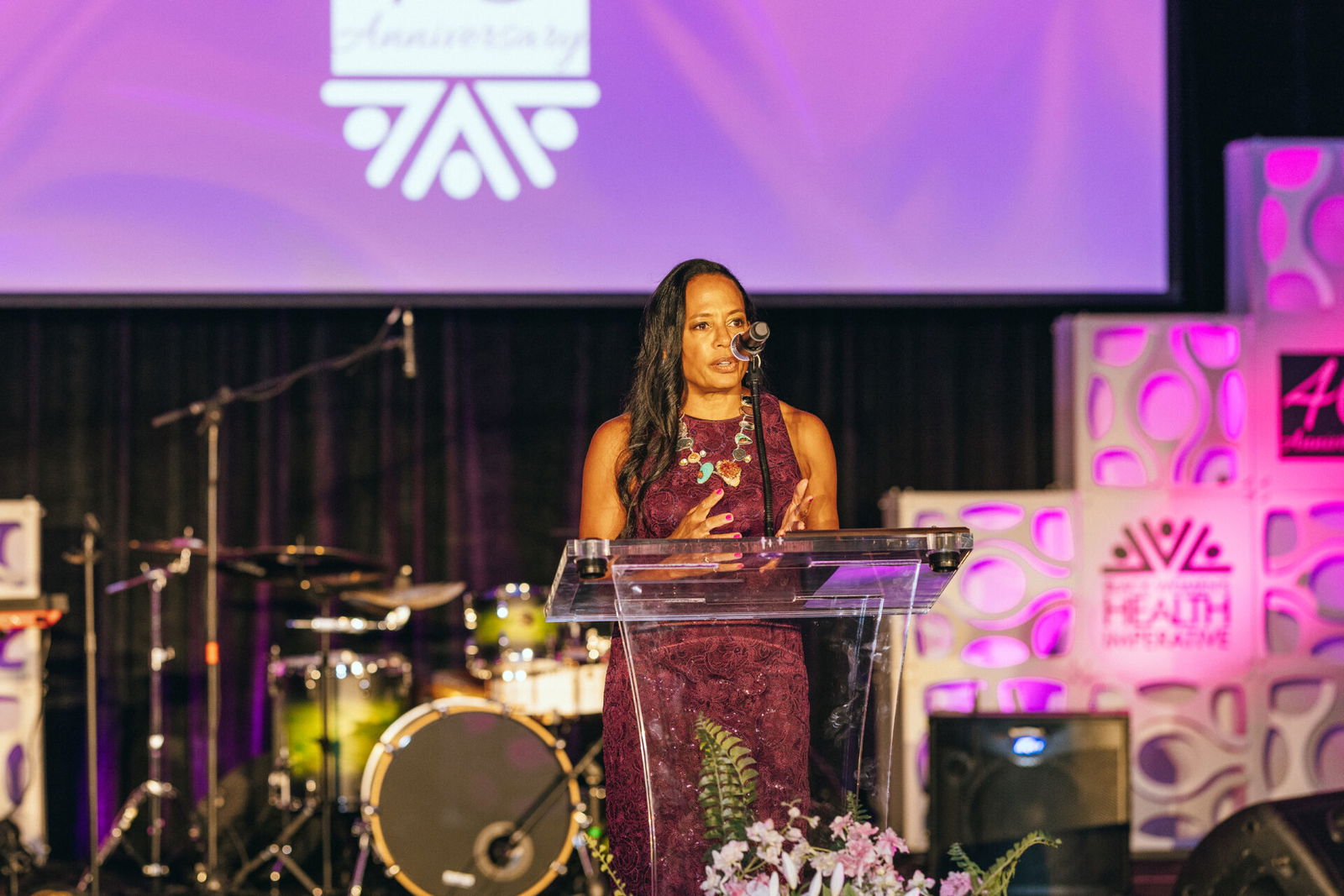
The Black Women’s Health Imperative (BWHI) started its celebration 40 years on Sept. 22 in the spirit of “Loving Black women deep down in its soul,” Dr. Mae Jones, chief operating officer of BWHI, said in her opening remarks for the event. The anniversary of BWHI’s initial conference was June 24-26, 1983.
The national nonprofit organization has been at the forefront of healthcare advocacy for Black women since its humble beginnings at Spelman College, where the first BWHI conference (then-National Black Women’s Health Project) took root in 1983. Roughly 200 attendees were expected to show up and participate in panels and workshops around Black women’s health issues — but an unexpected 2,000 participants descended on the all-women’s college campus, proving there was a need for advocacy and an interest around Black women’s health and policy.
Founder Byllye Avery led the charge. Avery set out to “address the massive challenges of racial and gender-based health disparities affecting Black women” and ultimately created the “magic” BWHI has accomplished over the last four decades.
BWHI’s Homecoming Celebration will touch down in five cities and feature Sarah Jake Roberts and Sheryl Lee Ralph. The 40th anniversary came full circle at Spelman. It kicked off with a State of Black Women Symposium that featured Pulitzer Prize-winner Nikole Hannah-Jones and BLACK ENTERPRISE‘s own former executive editor Caroline Clarke.
BE caught up with Linda Goler-Blount, the Black Women’s Health Imperative’s president and CEO, to discuss the importance of the organization’s past, present — and following 40 years into the future.
BLACK ENTERPRISE:Linda, you stand at the helm of such an amazing organization now in its 40th year. That’s a terrific feat, particularly around things that benefit Black women.
What does that truly feel like?
Linda Goler-Blount: It feels like an incredible privilege. You know, there are many talented, qualified people out there, and ten years ago, the board picked me. They picked my vision. They picked my passion, and that’s not lost on me. Many people could have done this job, but the board selected me. So, I don’t take it lightly.
I see what the privilege is, I see it in the faces of Black women on the street, in the offices and in the airport where I spend a lot of time.
I know [Black women] need an organization who’s there for them, who’s gonna make sure they have access to information, services. They’re included in research so that when we talk about evidence-based medicine, they’re part of that evidence.
It fills my heart with incredible love and joy because somebody needs to work for us. That’s my job, and I get to do that.
That’s such a commitment, and 40 years of work speaks to the commitment. A few things that hit home and struck a chord are that Black Women’s Health Imperative is for Black women and Black women – and what you said about us not needing more research.
If Black women don’t need more research, what is needed?
You know, we don’t need more research because we already know what the issues are. We don’t need to study health disparities anymore. We know what causes health disparities. And we know what will solve health disparities. We know its political will. We know its policies. We know it’s putting resources where they belong. That means changing people’s behavior.
Right now, the way the system is organized – it benefits the people who created the system, but we need that system to change – and we can make that change.
We can vote, we can run for office, but we can also work in the policy field, which is what we’re doing.
Maternal mortality: we hear those statistics all the time about how bad maternal mortality is every day. The government has quality measures for certain healthcare issues. If providers don’t meet those quality measures, they don’t get reimbursed. So, we have to work at the policy level as well.
We have to work at the community level, but we have to change policy because, honestly, we can’t count on providers doing things because they’re the right thing to do.
I was unaware of the Black Women’s Health Imperative until two years ago. Where can women tap into BWHI? It’s important to know about resources as much as it is to access them.
Well, they should go to BWHI.org and sign up to get on our newsletter. We keep people up to date on the policy changes in our policy work and everything that we’re doing right.
We were instrumental in getting the PALS Act passed, which is Protecting Access to Lifesaving Screening. They wanted to raise the age to check for cancer to 50, but [BWHI] said no.
But also, as things happen in the moment, [BWHI] is on Instagram, Twitter, X,
We can direct women to the information they need in the moment so that they always have what they need to make the best decision for themselves.
We love to see it. So, finally, the past 40 years have been amazing. What can we expect for the next 40 years?
It has been amazing. I’m really excited about the next 40 because now we get to move into a new realm of data, data science, analytics, artificial intelligence, precision medicine, all of which have to include Black women, not only as patients but as the developers, the coders, the creators.
What we have to look forward to is the next 40 years of medicine and public health, economics, education, climate, all of that, including our input and taking into consideration our lived experiences.
Whatever policies or practices that come out of this include us and are for us and are something that we can rely on and that we can work with.
Celia Cruz Honored As The First Afro-Latina To Be On A U.S. Coin
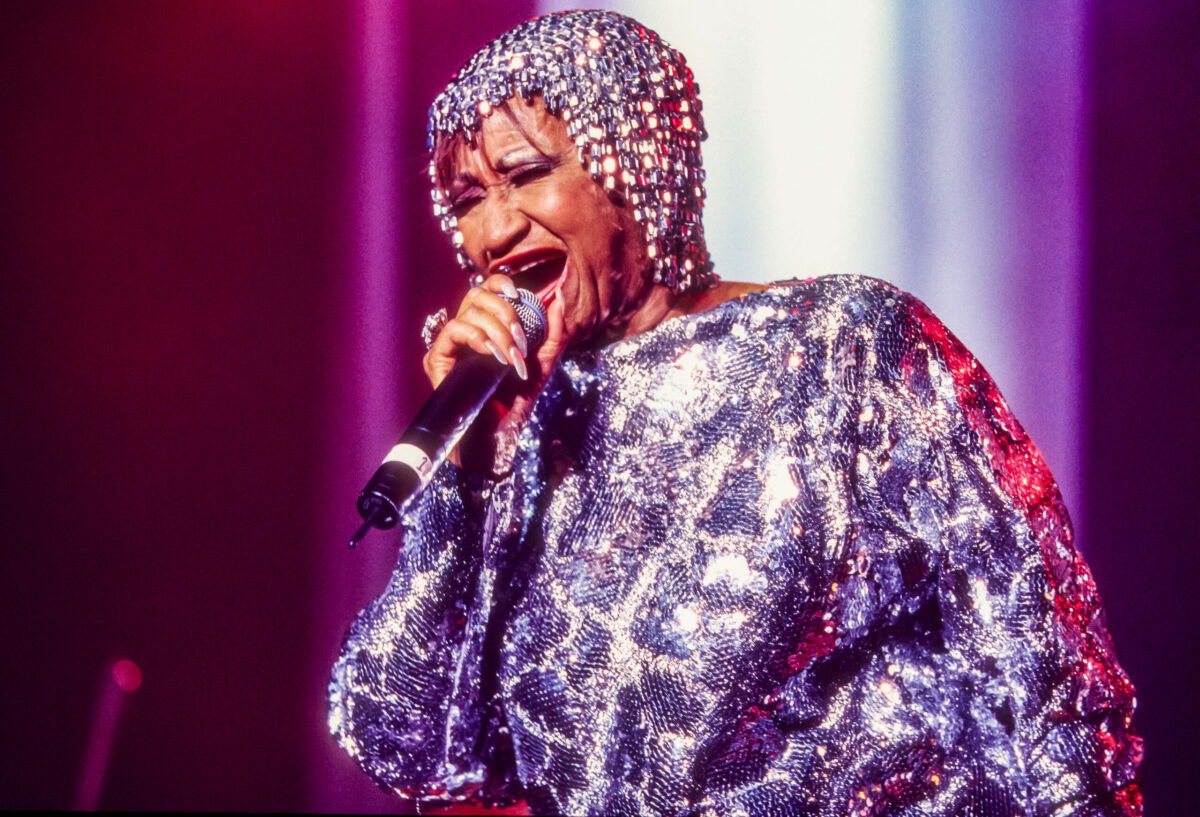
The “Queen of Salsa” is being honored in a historic way. Celia Cruz, an acclaimed Latin musical artist, has been selected to be featured on the U.S. coin as part of the American Women Quarters series and will be the first Afro-Latina woman to do so.
An international sensation, Cruz gained recognition for the crossover ability of her Spanish-language songs that became global hits. Her storied career features multiple Grammy and Latin Grammy awards and the National Medal of Arts granted to her by the U.S. Congress in 1994.
The icon is of Black and Cuban ancestry, born in the island country before moving to the United States while her career took off. According to NBC News, her many historic feats include being the first Afro-Cuban to sing in Spanish on U.S. television and to perform at Carnegie Hall.
A fashion icon in her own right, the collection of dresses she wore to performances was highly coveted, as the Smithsonian American Art Museum has preserved 30% of the more than a hundred dresses to be maintained and displayed through its care. Her stage presence included extravagant clothing and numerous wigs to keep up with her energetic voice. She is also being honored with a Barbie doll.
The multifaceted legend died at 77 due to complications from cancer and was laid to rest in The Bronx, New York. A year before her passing, she received her final Grammy Award for Best Salsa Album in recognition of her last project, Regalo del Alma.
Her legacy remains prominent, with her star on the Hollywood Walk of Fame still beloved, and her dedication to education in the arts fulfilled at the Celia Cruz Bronx High School Of Music in New York City.
Cruz’s representation of Black people of Latin descent will be physically solidified through this honor, as her coin will symbolize a marginalized identity uplifted and championed through her platform. Her coin is set to be released for public viewing and collection in 2024.
Medicaid Programs Are Now Providing Dental Care, Some Dentists Push Back
The government is finally doing something about the expensive cost of good dental care.
ABC reports that six states have expanded their Medicaid programs to provide dental coverage for adults. The federal and state insurance programs for those who aren’t financially stable have only been required to cover dental insurance for children.
But now things are changing. Hawaii, Kentucky, Michigan, Maryland, and New Hampshire are the latest states to begin or expand their dental coverage. Tennessee also adopted the program, spending close to $75 million annually.
While this is very good news for those lacking proper dental care, there is still a dilemma facing those states: finding dentists to work with them. Several states have dentists who refuse to treat Medicaid patients.
In some instances, HBCUs have come to the rescue. Patients like Carlton Clemons, 67, found refuge at Meharry Medical College School of Dentistry in Nashville. Clemons had experienced severe pain from a rotting wisdom tooth, but thanks to the Medicaid program and Meharry, he’s feeling much better. “Man, I thought I had made it to heaven because the pain was over,” Clemons said.
“When they did pull it out, I was so happy. I was so glad. Everything just changed after that.”
Other states, such as Texas, Alabama, Mississippi, Utah, and Louisiana, only offer limited benefits, according to Arkansas Democrat Gazette. Eligibility protocols are causing a problem, as many beneficiaries have been removed from Medicaid after eligibility reviews took place, which was prohibited during the pandemic. There is also the matter of getting more dentists to be certified under Medicaid, which could take up to four months.
In the meantime, states already on board have dished out big checks to make sure their residents’ grills are healthy and shine bright. New Hampshire is spending over $33 million over 12 months so its 88,000 Medicaid recipients can keep smiling. Kansas provided dental care to almost 137,000 Medicaid recipients for $3.5 million in 2022 and $1.2 million in 2023. Advocates are happy, too, as a Texas A&M University study showed that the program saves states money.
Treatment for preventable dental issues accounts for nearly 3% of emergency room visits at a price tag of $2 billion a year.
The First Black-Owned Credit Monitoring Company Aims To Prevent Identity Theft
Quintel Sumrall teaches financial skills, leveling up credit scores, and is making history one business at a time.
Move over! Credit Coach Q, a seasoned credit repair expert and YouTube educator, is a prime example that there is more space for everyone in the financial technology sector. He intentionally pours time and energy into lending and teaching the skills he needed to turn his financial situation around for the better. In 2019, the pioneering entrepreneur launched the nation’s first Black-owned cloud-based credit repair software for consumers, Credit Dispute Cloud.
Today, Sumrall is lifting off with the first Black-owned credit monitoring company, dubbed ISeeCredit.com.
From sharing personal loan tips to his secret method of deleting anything from your credit report, testimonials from far and wide prove how much Sumrall’s programs have helped people pay down collections, prevent identity theft, and feel confident applying what he has offered.
“We want to empower individuals to take control of their financial health and provide them with the tools they need to safeguard their identity,” Sumrall stated in a press release.
From 2019 to 2020, the COVID-19-induced recession witnessed the median income of lower-income households decrease by 3.0% and the median income of middle-income families drop by 2.1%. Black adults were more likely to have used credit cards, loans, or borrowed money to cover rent, gas, and food costs. However, new studies indicate that 46% of Black adults have been denied in their application for credit versus 22% of white adults, BLACK ENTERPRISE previously reported.
The Credit Dispute Cloud aims to dismantle the poor credit skills and habits he believes are passed down intergenerationally. Starting at $39.99 a month, the platform offers a simple four-step, four-month dispute process to help clients repair credit scores with each of the three credit-reporting bureaus.
Other perks include:
24-hour, secure portal access
Over 600 custom dispute letter templates developed by experienced attorneys
Remove all unwanted inquiries from the three credit bureaus
According to a 2022 survey by the Identity Theft Resource Center and the Black Researchers Collective, the impact of identity crimes on Black communities across the nation is significant. Huge percentages of their annual income are going to a thief. The findings also showed that only 50% of Black victims report what they lose to law enforcement.
16% of victims reported losing between $5,000 to $9,999
26% said they lost between $1,000 and $4,999
22% were swindled out of $500 to $999
ISeeCredit aims to change the wave of financial illiteracy by helping clients “understand the pulse of their credit scores,” per the release. Leveraging state-of-the-art technology, ISeeCredit prioritizes customer protection in the age of identity theft by providing:
Up to $1M ID Theft Insurance
Monthly report and score refreshes
Daily credit monitoring services
“Our goal is to make financial security and credit protection a reality for every American, regardless of their background or income level,” Sumrall said.
First Black Woman-Owned Pest Control Product To Be Sold In Home Depot
Meet Robiar Smith, a native of Southside Chicago and the CEO of R.B. Premium Products, which produces the popular bug spray product called Bug Strike. Her product is the first and only Black woman-owned pest control product to grace the shelves of Home Depot stores.
Growing up, Smith’s parents instilled in her the value of education and hard work. She followed their advice, earning multiple Business and Information Technology degrees while climbing the corporate ladder. However, in 2015, she felt the need for more. In 2016, she decided to enter the pest control industry after the encouragement of her father, Michael Benton, who had been a pest control technician in Chicago for decades. She took the extermination exam and passed it after a few attempts. She then founded R.B. Pest Solutions, and her passion for pest control ignited.
“When we started the company, and we’d go out on jobs, people were surprised to see me actually doing the work,” she told the Chicago Defender.
Over seven years, R.B. Pest Solutions has become the fastest-growing pest control company in the Midwest, securing government, city, commercial, restaurant, and facilities contracts. They’re expanding beyond Chicago into Indiana and planning a third location in the city.
Moreover, she launched R.B. Premium Products, including a bug spray called “Bug Strike,” now available at Home Depot. This achievement made her the only Black woman-owned product on Home Depot’s shelves, and it even gained recognition at the BET Awards.
For Smith, this partnership with Home Depot is more than just business; it’s about leaving a legacy and inspiring young Black girls from urban areas. She’s also passing on her knowledge to her daughters, ensuring that they can continue to nurture the business.
Despite challenges in a male-dominated industry, Smith’s determination to create a seat at the table has inspired others. She’s proud to support her community by partnering with local vendors and businesses, creating opportunities for them to thrive.
“The representation drives me, and as a result, these accolades confirm that I’m doing God’s work. They let me know I’m doing the right thing, she said.
Learn more about their products and services via their official website at TheRBPremiumProducts.com
Michael Beach Is Transparent About Pain And Post-Surgery Recovery
Michael Beach has kept his friends, fans, and followers updated on his health following a surgery that had the actor in pain.
The Soul Food star took to Instagram on Sunday, September 24 to let the public know he’s doing much better after posting a series of alarming videos about the extreme pain he was experiencing in his left wrist. Beach says he is “fine and doing well” after receiving a swarm of calls, texts, and DMs of concern for his health.
“My pain is just minimal. I’m still taking medication for my recovery,” he shared in a video post.
After having three bones removed from his left wrist, the ER star said he will have more “flexibility” once he fully recovers and can return to lifting weights in the gym.
The positive update came after Beach alarmed many when he took to Instagram last week to reveal the surgery he was set to undergo to an area that was giving him problems for years.
“Over the last couple of years it’s become too painful and risky (injury wise/my wrist) to perform them,” he wrote in a lengthy caption over a throwback workout video.
“But next week MAY change things for my future ability to workout safely, pain free and in a variety of fun ways.”
He followed that video up with one revealing his surgery date and the reason behind the operation. According to Beach, the pain in his wrist has been impacting his workout sessions, and as an gym junkie, it was a problem that needed to be fixed.
“It’s making my everyday life much more difficult than it needs to or should be,” he wrote in a separate post.
The Waiting to Exhale star went on to share a few post-operation videos showing how disillusioned he was following anesthesia and the surgery as well as the excruciating pain that was preventing him from sleeping at night.
The self-described “gym rat” is on the mend and stars like Jeremy Renner, Omari Hardwick, and his Soul Food co-star Nia Long sent their love and prayers.