Chicago, Mayor, Brandon Johnson, national guard, Trump,

Chicago Mayor Brandon Johnson Signs Executive Order Aimed At Limiting Federal Troops

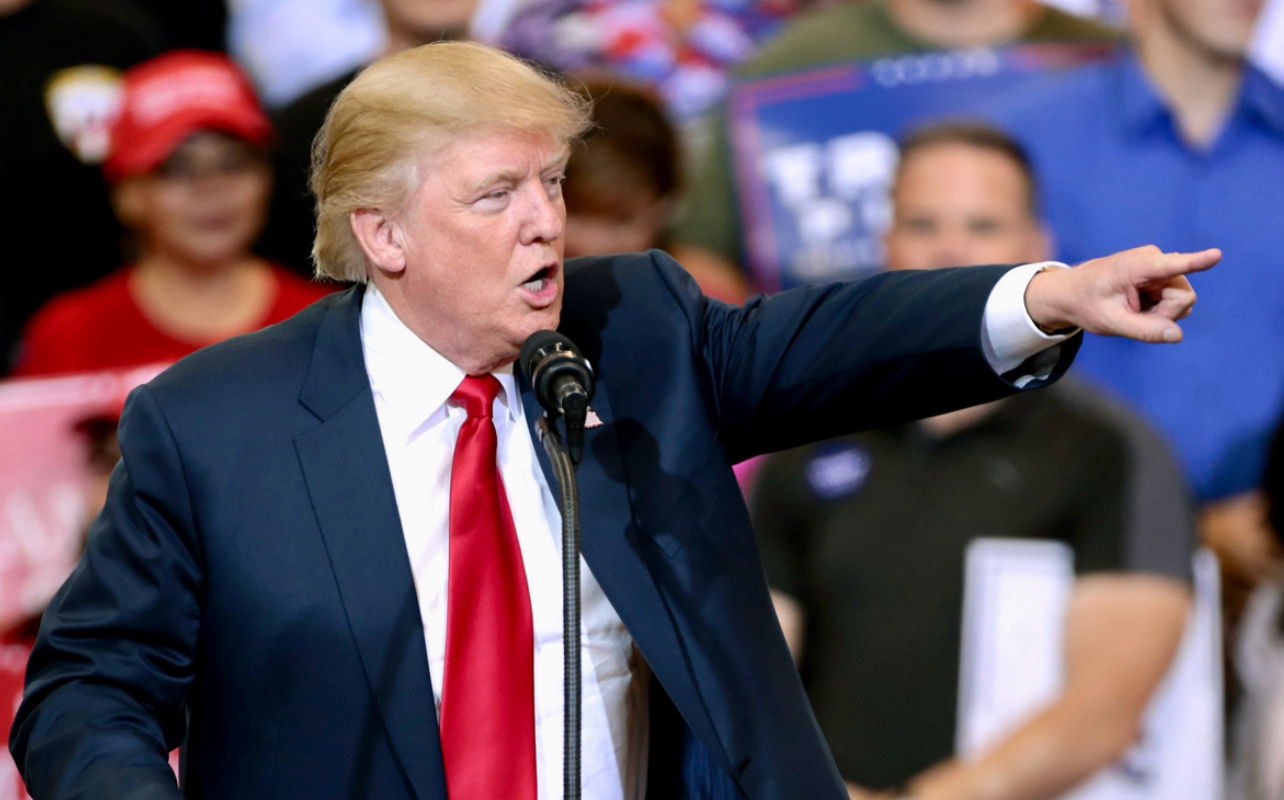
Both Mayor Johnson and Illinois Gov. JB Pritzker have presented a united front in resisting Trump's overtures about crime in Chicago.


On Aug. 29, Chicago Mayor Brandon Johnson signed an executive order, titled “Protecting Chicago Initiative,” which is concerned with limiting any federal troops in the city to designated municipal policing roles and keeping Chicago’s citizens informed about any new deployments as well as their rights in the event of the federal government attempting to replicate what it is currently doing in Washington, D.C.

According to The Chicago Sun-Times, Naval Station Great Lakes, located near Chicago’s North Side is expected to be used as a staging ground for federal agents, but according to their sources, it is likely to be used as a command center but will not house any of those agents. Per the information Johnson has received, he expects troops to begin arriving in the city by Sept. 5.

Pursuant to the order, if the federal agents do stray from the same guidelines as the city’s police force, Johnson will enact legal action such as stripping the federal agents of their masks, making them wear body cameras at all times during any engagements with citizens, requiring them to wear identifiable items like badges and uniforms, and pulling the support of the Chicago Police Department from federal or military units present in the city.

“I do not take this executive action lightly,” Johnson told reporters. “I would’ve preferred to work more collaboratively to pass legislation…but unfortunately we do not have the luxury of time. We have received credible reports that we have days, not weeks, before our city sees some kind of militarized activity by the federal government.”

Both Mayor Johnson and Illinois Gov. JB Pritzker have presented a united front in resisting Trump’s overtures about crime in Chicago — widely considered a racist dog whistle — considering crime in the city, as it has nationally, has been declining.

Despite this, Julian Davis Mortenson, a constitutional law scholar at the University of Michigan, explained that although Johnson’s executive order was “well thought out,” he has questions about the ability of a local government to hold federal troops to account.

“It’s [legally] important in that it insists state and local law enforcement are independent,” Mortenson told the outlet. “Assuming the law enforcement operation is valid and there’s not some limitation to the scope of the federal authority … I don’t think a state government’s suit seeking to impose municipal law on how law enforcement conducts their operations would do very well.”

Despite the questions from Mortenson, Johnson presented himself as a figure who is willing to take on an increasingly authoritarian and fascist federal government, telling reporters, “This executive order makes it emphatically clear this president is not going to come in and deputize our police department. We do not want to see tanks in our streets. We do not want families ripped apart….And I don’t take orders from the federal government.”

Esiah Campos — a Lake County commissioner, working in concert with one of the aims to unmask federal agents, also called on state lawmakers to ban the practice statewide as well as mayors in Lake County to stand by their commitment not to help ICE harass their constituents.

“It hurts to see the base I drilled out of to house ICE and Homeland Security agents to terrorize our people. This is not a time for platitudes. Now is a time for action,” Campos said at an Aug. 29 press conference held in North Chicago’s Veterans Memorial Park.

RELATED CONTENT: Trump: ‘African-American Ladies Are Saying, ‘Please, President Trump, Come To Chicago,’ Clean Up Crime. Black Women: ‘We Didn’t Invite You’

Enterprise, EEOC, Equal Employment Opportunity Commission, Age discrimination

Beyond The Long Weekend: Labor Acknowledgments Repair What’s Been Broken

In a nation designed and built by slaves, Labor Day marks the long struggle to move closer to fair and equitable wages for all of America’s workers.


Written by Dr. Marcus Anthony Hunter

Every September, Americans congregate and fellowship in honor of workers’ contributions and the victories of the Labor movement, including workplace safety, the right to organize, and the eight-hour workday. In a nation designed and built by slaves, Labor Day marks the long struggle to move closer to fair and equitable wages for all of America’s workers. As the dialogue and possibilities of reparations for slavery grow, national holidays are a genuine opportunity to reflect on our shared history and how we can heal the soul of our nation. This Labor Day presents us with an opportunity pregnant with meaningful reparative possibilities through a simple yet profound act: establishing labor acknowledgements alongside the land acknowledgements that have become increasingly common at public events and gatherings. Just as we have land acknowledgments that honor Indigenous communities as the original stewards of the land that is now the United States, it is equally important to introduce labor acknowledgments that honor Black laborers who built this nation with their literal blood, sweat, and tears.

Mapping the blueprint for Black labor rights

The nation was in a pivotal moment in 1894 when Labor Day was established as a federal holiday. Coming just three decades from slavery’s abolishment, Labor Day represented a key American paradox: Even as the holiday served to uplift and recognize workers’ dignity and rights, Black workers were systematically excluded from labor unions and benefits through Jim Crow laws, systemic racism, sharecropping systems, and other exclusionary labor practices. As the nation grappled with embracing and fully enfranchising four million formerly enslaved people and their descendants, it also decided to publicly honor the labor of some but not all Americans. Labor rights were hard fought following Reconstruction, when racists engaged in tactics such as sharecropping, convict leasing, sunset towns, and violence. These oppressive tools were designed to undermine Black self-sufficiency.

Many corporations today misinterpret taxation and paying employees livable wages as threats to their freedoms, akin to how wealthy people in the Confederate states viewed Emancipation. For instance, when Georgia seceded from the Union in 1861, state officials described enslaved people as capital, proclaiming that the Union had outlawed $3 billion of their “property.”

The connection between American labor and slavery runs deeper than historical timing. Slavery was America’s preferred labor system, generating enormous national and international wealth and prosperity through the systemic exploitation of Black labor. Forced and enslaved Black labor contributed to the construction of key landmark structures across the nation, from the White House and Capitol building to military forts, presidents’ homes, and the actual wall on Wall Street. Black people played an unwilling role in the establishment of New York City’s lucrative banking and insurance sectors, as they were viewed merely as assets. These landmarks serve as tangible reminders of a painful history we can begin to grapple with as a country through public labor acknowledgements.

Americans benefited not only from Black people’s physical labor but also from their mental and emotional labor in the fields of science, technology, and academia. Many of their contributions went largely unrecognized, discredited, or uncompensated. They also labored in kitchens, creating the sights, sounds, and traditions that have shaped American culture.

History books and other records often overlook Black people’s resistance and labor rights advocacy. The Caulkers Association, formed following a labor strike in 1838, was an early Black union movement that improved working conditions for caulkers in Baltimore. In 1869, the Colored National Labor Union was formed in response to the National Labor Union’s failure to recognize it, thereby improving conditions for its members.

In 1881, formerly enslaved Black women in Atlanta organized the Washerwomen Strike to demand fair wages and better treatment from their employers. Their small group grew to 3,000 participants, underscoring the importance of organizing at any level. The Brotherhood of Sleeping Car Porters was formed in 1925 and also achieved positive outcomes.

Many protective labor laws today stem from Black-led movements, including parts of the Civil Rights Act of 1964 and one of its enforcement arms, the Equal Employment Opportunity Commission.

From Memphis to Philadelphia: The Struggle Continues

The legacy of exclusion and struggle continues. Consider recent events: Sanitation workers in Philadelphia recently celebrated a remarkable victory after a week-long strike for better wages. Municipal jobs have historically provided one of the few pathways for Black blue-collar workers in the city to achieve economic stability. Their struggle – buttressed by union representation — highlights the persistent racial dynamics in the American economy, echoing the Memphis sanitation strike where Dr. Martin Luther King Jr. made his final stand.

As Labor Day approaches, we should honor the determination of workers, including those operating within the legacy of shared humanity, dignity, and equity. Dr. King’s last campaign was notably in Memphis, where he stood in solidarity with sanitation workers demanding safer working conditions and respect. This is where his work ended, but it’s also where much of ours began.

Today’s workforce reflects the legacy of slavery. Current economic disparities have roots in enduring attitudes about Black labor, as some did not recognize the humanity of people of African descent. While not in bondage, Black people today receive compensation that remains inequitable and disproportionate to their contributions. Black workers remain overrepresented in essential but undervalued occupations, from food service to healthcare support, receiving compensation incommensurate with their contributions. We cannot solve problems that we do not name. Accepting a truth is a critical step toward reconciliation, creating an equitable society, and making full reparations a reality.

Why we need labor acknowledgements

The enslaved people who built much of America’s early wealth and institutions were workers too, though they were denied every protection and dignity Labor Day represents.

Unlike other, more contentious forms of repair, such as the necessity of direct cash payments, labor acknowledgements are free. Labor acknowledgements should reflect genuine respect for those who came before us and an appreciation for honest history. A carefully planned statement to be recited before meetings, presentations, or community events helps build the momentum to fight for a fairer and equitable society. Before crafting a statement, it’s imperative to conduct thorough research to gather accurate information about the space. Connect with community members or descendants of local laborers to gain valuable insights.

Acknowledgments can offer an opportunity to recognize our shared history and emphasize a collective responsibility to forge a better future. However, allyship is often weakened by divide-and-conquer strategies that discourage solidarity among multiracial coalitions. This dynamic persists, as some employers instill divisions among their employees, particularly among union organizers. 

A labor acknowledgement should not be treated as a quick performance or mere formality. Rather, labor acknowledgements are a public occasion to honor and remember that those before us persevered despite incredible challenges that threatened their freedom and lives. We owe them our reverence. Whether attending holiday celebrations or pausing to rest, I hope we recognize the countless Black people whose stolen or exploited labor has been foundational to our nation’s economy and culture. Enslaved Africans, sharecroppers, imprisoned people, and Black women toiled in homes outside of their own. Their determination to thrive, not just survive, is a message we can carry with us this Labor Day and each one thereafter.

Dr. Marcus Anthony Hunter is the author of “Radical Reparations: Healing the Soul of a Nation.” He is the Scott Waugh Endowed Chair in the Division of the Social Sciences at the University of California at Los Angeles, and a professor in the departments of Sociology & African American Studies.

RELATED CONTENT: As Gig Workers Face Decreased Profits, Questions Over Financial Protection Arise

West Indian Day Parade, Brooklyn, Labor Day

The West Indian Day Parade Expects Over 1 Million To Celebrate In Brooklyn This Labor Day Weekend

The event is celebrating its 58th year.


In Brooklyn, the West Indian American Day Parade provides the right excitement during Labor Day weekend.

The celebration of Caribbean culture has taken place throughout the streets of the borough since 1969. Complete with colorful floats and vibrant costumes, it allows Brooklynites and those in the Metro NY area to spiritually travel to the Caribbean islands.

As music, dance, and fellowship flood the streets, the parade offers enjoyment for all over the Labor Day weekend. On Sept. 1, the party will begin on Eastern Parkway from 10 a.m. to 6 p.m., flowing down Utica Avenue to Grand Army Plaza.

Under its theme “Vive le Carnival,” the celebratory customs of multiple groups will be featured during the federal holiday. Before the main event of NY Carnival Week, early risers can take part in the Brooklyn version of J’Ouvert. Originating in Trinidad and Tobago, the event marks the start of the Carnival season with cultural music such as soca and calypso.

Native Caribbean and Carnival enthusiasts were able to participate in multiple celebrations throughout the weekend at the Brooklyn Museum. Things kicked off Friday with the Soca Music Festival, with the Panorama steel drum competition and family-friendly Junior Carnival occurring the following day. Ultimate Fete, a rum and music celebration, will commence that Sunday to prep weekenders for the final event.

“There’s no other rush than Labor Day Monday, at least for me,” said Curtis Nelson, executive director of parade costume-maker and community group Sesame Flyers International, to the Gothamist. “The music, the food, the excitement, the freedom that our costumed folks feel when they put on these wonderful costumes and are able to express themselves. … I’m just lost for words.”

While the energy is high, the NYPD also remains on high alert to make sure the festivities go smoothly. According to The New York Post, NYPD Commissioner Jessica Tisch confirmed that the largest deployment of officers this year will cover the events.

While the news of heightened police presence may concern some attendees, Tisch emphasized their mission to keep the celebration safe from any gun violence or harmful activity.

“This must remain a celebration, not an occasion marred by guns or disorder. This weekend is meant to highlight culture, music, and Caribbean pride, and it should not be overshadowed by headlines about bloodshed or chaos,” explained Tisch alongside NYC Mayor Eric Adams.

The West Indian American Day parade has also leaned more corporate in recent years, with rising costs to put on floats and costumes eating away at its authenticity. Despite the issues, the parade expects over 1 million to flock to Brooklyn for the growing festival.

RELATED CONTENT: 8 Caribbean-Inspired Carnivals To Visit In The U.S.


Man, Conviction, Racist Threats, Pregnant Black Woman

Man Gets New Conviction Of 27 Years For Making Racist Threats Against Pregnant Black Woman

Prosecutors appealed the man's original conviction of five years.


Following a successful appeal by prosecutors, a California man received a sentence of 27 years to life for making racist threats against a pregnant Black woman.

Initially, Tyson Mayfield took a plea deal in 2019 to receive a five-year sentence, as reported by ABC News. However, prosecutors at the Orange County District Attorney’s office found the 49-year-old’s deal too light given the severity and racist motive of his threats.

The prosecutors then sought to appeal his sentence, leading to Mayfield’s retrial with the new inclusion of a hate crime.

“Over the last six years, we have fought and fought and fought for justice in this case,” District Attorney Todd Spitzer said in a statement. “Justice was finally served today against a man who spent decades hating others, and now he will spend decades behind bars where he belongs.”

Mayfield had threatened the expecting woman at a bus stop in Fullerton, California, in 2018. The woman, who was eight months pregnant at the time, resorted to using pepper spray on the man while running away.

Mayfield has attacked innocent bystanders in racially-fueled incidents before. Also having a swastika tattoo, the man had a previous conviction for punching a man as he yelled racist slurs at him.

The judge over his initial trial granted him a lighter sentence due to no weapon being used or injury caused to the woman. However, advocates and prosecutors found the five-year sentence unwarranted given his criminal history, prompting an appeal. In 2020, a three-judge panel ruled that the sentence was an “abuse of discretion,” paving the way for a retrial.

“By virtue of his prior offenses, respondent has shown he is fully willing and able to inflict great physical harm on his victims, and there is nothing to suggest he would not have done so again in this case,” the panel wrote, according to the Associated Press.

Now, the man will remain in prison for a much longer stint due to his actions.

RELATED CONTENT: Racist Arrested After Attacking Mentally Disabled Man With Knife

Naomi Asaka, Coco Gauff, US open

As Naomi Osaka And Coco Gauff Prep For Rematch, Black Women Take Center Court At US Open

Black women players continuing to take the main stage at the US Open.


With the US Open captivating New York and the global sports world, one thing everyone seems to be serving up is Black Girl Magic.

As former US Open champs and sisterly rivals Naomi Osaka and Coco Gauff prepare to face each other yet again on Sept. 1, Black women have taken center court at the tennis competition. The moment also comes as the US Open paid tribute to Althea Gibson, one of the first Black women to break the color barriers in tennis.

A two-week celebration, marked “75 Years of Breaking Barriers,” highlighted Gibson’s enduring legacy for Black women tennis players. The honor included a performance by the marching band of Gibson’s alma mater, Florida A&M University, as well as short films narrated by Venus Williams.

Following in Gibson’s footsteps, major Black women tennis players have entered the tournament, including Gauff, Osaka, Williams, and Taylor Townsend. Rightfully so, they are reclaiming their crowns as legends and formidable opponents, while stopping any misogynoir in its tracks.

Townsend made headlines after checking opponent Jelena Ostapenko, who made offensive comments toward her after being defeated. Her fellow Black players also stuck up for her, with Osaka noting at a press conference that Ostapenko’s comments were “one of the worst” remarks you could say to a Black player.

The solidarity among Black female athletes continued, with the tournament catching a sweet moment between Gauff and all-time gymnast Simone Biles. The two champions hyped each other up as fans of one another, with Biles telling Gauff that she has been “popping off” with her multiple wins.

Black women have dominated the sport for decades, with original competitors like Gibson and the Williams sisters paving the way. The eldest Williams, Venus, kept the momentum going as she competed while serving her own looks. While Williams competed in the doubles category, she came out swinging with a custom ERL fit with an accompanying fur racket bag.

Unapologetically Black, stylish, and serving, the ultimate Black girl tennis showcase will take place Sept. 1 between Gauff and Osaka. The Round 4 match-up will see both women competing against one another since their 2019 appearance at the US Open. However, despite being on opposing sides, the two remain in support of one another as they both fight for the singles title.

RELATED CONTENT: Taylor Townsend Tells Jelena Ostapenko To ‘Learn How To Take A Loss’ After Being Told She ‘Has No Class’

DJ Enuff, Hot 97, Funkmaster Flex

DJ Enuff Fired Amid Funkmaster Flex’s Slot Shuffle; Rappers Flock To Hot 97 In Support

Fat Joe and DJ Khaled headed to 'the building' in disbelief over the news.


With DJ Enuff out at Hot 97, and Funkmaster Flex announcing his new time slot, rappers headed to the station in disbelief about his firing.

The legendary DJ helped turn tables and blast hip-hop through the airwaves of Hot 97. The DJ, whose real name is Ephrem Louis Lopez, Sr., made a post thanking his fans for “27 unforgettable years” as he approached his last day on Aug. 29.

“Today is my last day on Hot 97, but the music, memories, culture will keep living on,” shared the radio personality. “From early mornings to mid-days to afternoons & late-nights every moment behind them turntables has been a blessing. To all the listeners, the callers, the artist, the fans, you made it all matter. This chapter may be closing, but the journey continues. Make sure you tap in with me for my next adventure. With all my heart, thank you for riding with me.”

However, fans and A-list supporters alike were shocked at the news that his slot would scrapped as Funkmaster gained a new five-hour slot with the station. As the switch-up made headlines, Fat Joe and DJ Khaled pulled up to the Hot 97 station.

Fat Joe told TMZ reporters on the scene that his phone was in a frenzy following the “sad” news.

“It’s actually sad. I don’t know the politics of it, but the man been on here since 98.7 KISS. He been on Hot 97 for 27 years.”

He added, “They called me up last night…Camilo called me and said, ‘Yo, DJ, Enuff is on the radio at 12 it is his last day.’ So we just came through to support. I really don’t know politics behind anything that happened.”

Fat Joe also mentioned Funkmaster Flex’s own announcement of the “end of an era” for his current slot at Hot 97. The original host of the station’s rap program will keep spinning, but fans will also miss the man who once deejayed for the Notorious B.I.G.

Fat Joe and DJ Enuff go back decades, as both became household names in the hip-hop and rap music culture. Khaled was also in the building as they tipped off a phenomenal run from the iconic DJ.

Nessa Nitty, New York DJ and wife of Colin Kaepernick, will now spin as the lead-up to Flex, holding it down from 1 p.m. to 5 p.m. The new schedule left no room for DJ Enuff to take part in the programming.

While the changes mark a new era for Hot97, hip-hop enthusiasts remember the “OG” lineup that made New York radio a hub for rap.

RELATED CONTENT: Funkmaster Flex Announces Major Change At Hot 97

LSU, law school dean

First Black Law School Dean At LSU Steps Down, Claims She Is Being Discriminated Against

Alena Allen claims she was a victim of gender and racial discrimination over the end of her leadership tenure.


The first Black Law School Dean at Louisiana State University has announced that she will step down from the role against her wishes.

Alena Allen made history in 2023 as the first Black person and woman to lead the LSU Paul M. Hebert Law Center. The Louisiana Illuminator reported that Allen will continue teaching at the Baton Rouge school as a full-time faculty member. The University announced the end of her leadership tenure in an internal email sent Aug. 29.

However, Allen claims that she was a victim of racial and gender discrimination that forced her to leave her position. According to NOLA, Allen’s attorney asserted that she did not agree to resign despite LSU leadership announcing the decision. Now, she may pursue legal action over alleged whistleblower retaliation.

She says she was prompted to leave after questioning “irregularities” in the LSU law school’s finances. However, when she tried to address the budget gaps, which occurred before her appointment, Allen believed LSU leaders shifted the blame onto her. Allen’s attorney further claims that the LSU Board of Supervisors “engaged in systematic discrimination and retaliatory conduct” against the education leader.

“I am the first woman and the first person of color to serve as the permanent dean of the Paul M. Hebert Law Center. That fact is not incidental—it is central to what follows,” Allen wrote in a response to auditors. “I find it deeply troubling, and frankly difficult to ignore, that I appear to be held to a standard far more exacting than that applied to my white, overwhelmingly male predecessors. It was they who oversaw and entrenched the very practices I have since questioned and begun to reform.”

After Allen requested an investigation into the racial and gender discrimination, she met with LSU leaders to a shocking development. At the meeting, they told her that the Law School would go in a “different direction” without her leadership.

The news comes as several Black administrators at LSU previously announced their departures, including the University’s first Black president, William Tate. Tate left his position on June 30 to become the president of Rutgers University.

Allen will lead the Law School until the end of the spring 2026 semester. In the meantime, Interim LSU Provost Troy Blanchard shared that a national search for her replacement will take place.

RELATED CONTENT: Shaq Wants To Invest In New LSU Arena To Support Alma Mater And Baton Rouge

sade, billboard charts

Bay Area Rapper LaRussell Makes Millions Letting Fans Name Their Price

LaRussell's trajectory could resemble the paths of artists Houston artist Lil Flip, Chicago's Chance The Rapper, and Mississippi's Big K.R.I.T., who all utilized the independent route to gain the attention of major labels.


Rising Bay Area rap artist LaRussell is a throwback to the days of independent artists selling their own pressed CDs out the back of their trunks, he utilizes community support to both circumvent and supplement a lack of a major label deal, much like the independent Houston artists who once claimed their lack of a major label deal was both a badge of honor and evidence of their ability to get it out the mud before eventually cashing out and signing a record distribution deal.

Although, unlike those artists, he does not hide the fact that he wants the relative security that comes with a major label deal with bravado, his creativity, like that of the artists who came before him, was born of the same necessity: To get where he wants to go, he still has to make money.

To that end, the rapper and his team have crafted a strategy that fits well with his aims, concert tickets, physical media and other items are offered to the public on a sliding scale in auction style bids that start as low as $1 and increases from that point as much as consumers want to pay, similar in concept to popular pay what you want hosting sites for mixtapes.

In addition, potential collaborators can submit bids directly to him; however, LaRussell reserves the right to reject any bid that is less than his standard fee of $500 for a verse. As NBC News noted, his policy is to spend no more than 15 minutes composing his verse, so the rapid-fire approach can add up quickly, depending on how fast the tracks come together.

“You cultivate a completely different experience,” LaRussell told the outlet ahead of a recent performance. “I have every age there (at his shows) from 1 to 100. Granny not coming out at 10 p.m., and you don’t want the little homies out at 10 p.m. I wasn’t independent because I didn’t want to sign and I didn’t like the labels. I was independent because I didn’t have no other option.”

LaRussell saw what the late Nipsey Hussle was able to achieve using his own model, wherein the rapper charged $100 for 1,000 copies of his album in 2013, pocketing approximately $100,000 more or less overnight. However, he wasn’t necessarily comfortable asking folks to come off $100 for an album, so he made some adjustments to Nipsey’s strategy.

“I didn’t know a bunch of people who had $100 to spend on an album, so I was like, ‘I’m going to let them pay me anything,’ because I got zero dollars. So if they give me $1, I am up. It really helped me build the base and establish the infrastructure.”

More recently, he launched his own version of Nipsey’s initiative where instead of charging $100 for an album or a mixtape, LaRussell decided to give his fans a more intimate look at his show, which includes a cozy show at a smaller venue, unlimited access to future backyard shows, a tour of his childhood home, and other perks, which he dubbed the “Backyard Show Experience.”

As a result, LaRussell nearly duplicated Nipsey’s feat, selling 67 of those tickets, resulting in a $67,000 influx of cash in addition to his standard fees for a show.

What’s more, since he is still independent, he doesn’t have to wrangle and wrest control of his masters or other publishing rights from a major label, an arrangement that infamously infuriated the late Prince so much that he changed his legal name to a symbol and released an album under the moniker “The Artist Formerly Known As Prince.”

Although he recognizes the freedom in his path, LaRussell is also cognizant of the risks that come with doing things with no real safety net.

“There’s a different roller coaster when you’re independent because you’re constantly taking risks for a reward that you see in your head that may not be something that looks completely tangible yet, but you have to just go with what you feel,” the rapper told the outlet.

LaRussell’s likely trajectory could resemble the paths of Houston artist Lil Flip as well as more recent acts like Chicago’s Chance The Rapper and Mississippi’s Big K.R.I.T., who all utilized the independent route to gain the attention of major labels.

Some, like K.R.I.T., who has addressed the problems of major label meddling, have since gone from being on a roster at a major label back to independence, where the art is the focus and not fulfilling a set number of albums to satisfy a record deal.

As Lexington, Kentucky’s Devine Carama, a regional performer who has been an independent artist for the past 20 years, pointed out to the outlet, what K.R.I.T. ultimately figured out on his path could be the North Star for an artist like LaRussell.

The key, Carama told NBC News, is to focus on building a fanbase “that loves and supports you — not just your music, but you.”

He continued, “I don’t see how it’s possible to be a hip-hop artist and not be connected to the community that you come from and somehow using the culture to give back.”

RELATED CONTENT: LaRussell Is Revolutionizing The Music Industry With His ‘Pay What You Want’ Approach

farmer's market,DC

Black And Forth Farmers Market Places Spotlight On D.C. Black-Owned Businesses

Angel Gregorio, owner of The Spice Suite, conceived the open-air marketplace after buying the property that became Black and Forth.


As reports circulate about Washington, D.C., Mayor Muriel Bowser’s Trump-friendly response to the federal government’s presence in the city, a nearby strip mall continues to serve as a hub for Black businesses and residents.

According to D.C. News Now, a farmer’s market blooms on the second and fourth Sunday of each month at the city’s Black and Forth strip mall, serving as a host to vendors, Mid-Atlantic farmers, and food artisans.

Angel Gregorio, who also owns The Spice Suite, told the outlet that she came up with the idea for the open-air marketplace after her experience buying the commercial property that she turned into Black and Forth.

“I noticed the lack of representation of Black farmers at the markets locally, so I decided to create a free space for Black farmers to show up and sell their produce, invest in their community and kind of have a bi-weekly block party,” Gregorio said.

She continued, “It’s so many things that we do well and that we do for the community. So many things that we do is free that it’s also difficult for the community not to show up for us because we are pouring so much into the community.”

As BLACK ENTERPRISE previously reported, Gregorio purchased a 7,500-square-foot lot in 2023, which she christened Black and Forth, and houses her aforementioned business as well as multiple other shops.

The name, as Gregorio told Dcist, is derived from her own term for dealing with various Black-owned businesses in the city.

“It was just this catchy, cool name that I created for how I describe my process of going back-and-forth with Black business owners,” Gregorio told the outlet. “And now it is the name of a shopping center—a strip mall —that I own in D.C. So I feel good about that and I’m grateful to be in the space.”

She continued, “We have a lot of conversation about affordable housing, but we don’t talk enough about making commercial space affordable for Black women. And so since no one is talking about it, I’m just going to do it and let people talk about it.”

Her purchase of the lot, which was facilitated at least in part by a program instituted by Mayor Bowser which was aimed at increasing the amount of Black women business owners in the city, came about following reports from several Black farmers that in 2020, one of Washington D.C.’s largest farmers markets and its parent company, Freshfarm denied Black farmers and food artisans spots at Dupont Circle, its most profitable farmer’s market.

Instead of resigning to dealing with the microaggressions of Freshfarm, a year after this scandal rocked the city’s Black farm-to-table community, Gregorio reportedly became the initial recipient of a $750,000 grant from D.C.’s Commercial Property Acquisition Fund, the brainchild of City Councilman Kenyan McDuffie.

According to McDuffie, that grant was intended to be the first building block for equity and inclusion in the city’s financial system as it relates to Black entrepreneurs.

“We’re going to keep making these sorts of investments, so we can do the sorts of transformational things that allow our Black and brown entrepreneurs not only to be great business people [but] to build wealth that they can pass on for generations to come,” he said at the ribbon cutting for Gregorio’s strip mall in 2023.

Gregorio agreed, noting at the ceremony that she wanted Black and Forth to serve as a model for what is possible in D.C.

“The goal of this space is to build community. I want this to become the model. I want to be able to consult for free and talk to other people on how to do this in your city, in your quadrant, so this becomes the standard of how we care for each other and how we show up for community.”

RELATED CONTENT: ‘Spice Girl’, Popular Owner of D.C.’s Spice Suite Buys the Block — Owns $1M Strip Mall for Black-owned Businesses

Kim Scott, Cleveland, City Planner, Felony Theft, Falsifying Documents

Wichita Civil Rights Activist Sues City For $1.8B, Claims Humiliation And Retaliation Over Reparations Push

Mary Dean, a civil rights activist and a resident of Wichita, Kansas, is suing the city over their decision to disband its Diversity, Inclusion, and Civil Rights Board.


Mary Dean, a civil rights activist and a resident of Wichita, Kansas, is suing the city over its decision to disband its Diversity, Inclusion, and Civil Rights Board, as well as what the lawsuit describes as a public humiliation stemming from her unceremonious removal from a city council meeting where she advocated for a reparations ordinance.

According to The Wichita Eagle, Dean has pushed the city to adopt an ordinance on reparations for years, but her efforts were thwarted when the board was suspended earlier this year amid concerns about any ordinance it might implement with respect to race and gender.

According to the federal lawsuit, “Ms. Dean was publicly humiliated in front of City officials and members of the public, silenced from exercising her constitutional right to petition her government. As a result, Ms. Dean has suffered emotional distress, reputational harm, and loss of two years of her life’s work advocating for racial equality in Wichita.”

Furthermore, Dean’s lawsuit names Wichita Mayor Lily Wu, City Manager Robert Layton, City Attorney Jennifer Magana, and other city council members who voted to suspend the board.

Dean is also alleging in her lawsuit that the city violated her civil rights as well as the Fourteenth Amendment due to the city council’s decision not to consider the ordinance she has championed.

“By ordering her removal from chambers, Defendants deprived her of liberty without due process of law and silenced her right to petition the government,” the suit states.

In an interview with the outlet, Dean, who is suing the city and the named defendants for $1,842,482,472, a figure she declined to provide specifics on, implored Black people in Wichita to stand up and take action.

“I just wish and pray that Black people in Wichita would stand up for themselves and become more empowered and engaged in the issues that have impacted them for decades in this city,” Dean said.

According to KWCH, in July, after the city voted to suspend the board, Layton said the move was spurred by the federal government’s crackdown on diversity, equity, and inclusion initiatives, which could cost the city approximately $100 million if the federal government decides to pull funding.

“There is the possibility that a portion of that [$100 million] could be suspended or put in advance, and then that would force us to respond to any complaints or claims filed by the federal government,” Layton said in a city council meeting that month.

In addition, according to Board Chair Tabitha Lehman, all of the board’s work at the time was under review by the city’s legal department.

“I would say that that was part of our discussion as a board, acknowledging that that’s the position the City is in. That was why things needed to be under legal review, because of these grant funds being on the line.”

As KAKE also reported in July, the city council decision reflects similar choices being considered across the country, but as the 4-3 council vote underscored, not everyone was on board with the decision to scrap the Diversity, Inclusion, and Civil Rights Board.

Councilmember Brandon Johnson opened his statement to the outlet with a textbook definition of fascism, criticism of the federal government, and concern for constitutional violations.

“Without elaborating, whether you agree with my inference or not, you undoubtedly know exactly what and whom I’m referring to. That alone speaks volumes. The executive branch of the United States government continues to push the boundaries of settled law and the Constitution, infringing upon our God given rights simply because the current occupant disagrees,” Johnson said.

He continued, contextualizing what’s at stake for the residents of the city if that $100 million in funding is lost.

“We’ve got $100 million at risk. If Wichita doesn’t have $100 million, we’re going to have a lot of holes in what we provide all the way from transportation to housing to roads.”

As this situation and others like it continues to make clear, the Trump administration’s war on diversity, equity, and inclusion programs have painted rural and smaller towns into a corner, which Jill Habig, the founder and CEO of the Public Rights Project, asserted in her comments regarding a federal lawsuit joined by at least 60 local governments which alleges that the grant conditions issued by the Trump administration constitute an unlawful abuse of power.

“Communities shouldn’t have to lose critical services because of the Trump administration’s political agenda. These federal funding conditions aim to strip billions of dollars from local governments working to help people thrive. Public Rights Project is proud to represent a growing coalition of cities and counties across the country that are fighting back against this unlawful abuse of power,” Habig said in a press release.

RELATED CONTENT: Report: Blacks Could Face Elevated Risks If Trump’s Anti-Equity Agenda Persists

×