Stephen Curry Passes Michael Jordan With Latest Scoring Record
Curry, 37, is still putting up impressive numbers.
NBA champion and future Hall of Famer Stephen Curry has added another accolade to his long career yesterday, surpassing Michael Jordan for the most 40-plus-point games after age 30.
According to NBA.com, the prolific sharpshooter scored 48 points against the Portland Trailblazers. It wasn’t enough the Golden State Warriors, to the Blazers, 136-131.
It was the 45th time Curry has reached that level, according to Sports Illustrated. And it was the 75th time that the “Baby-Faced Assassin” has done that in his career, which is ninth all-time. The leader: Wilt Chamberlain who did that a whopping 271 times.
Curry hit a season-high 12 3-pointers in the game, coming close to tying his league record of 14.
Draymond Green contributed to the historic night by adding his name to the Warriors’ record books. When he made a steal in the third quarter, he became the franchise’s third player to have 1,200 steals. He is behind Hall of Famer Chris Mullin’s 1,360 steals and substantially behind the team leader, Curry, who has registered 1,574 steals in his illustrious career.
In the Warriors’ previous game on Dec. 12, Curry took over Jordan’s record for the most 35-point games after turning 30 years old, but it was not enough to beat the Minnesota Timberwolves, who won 127-120. Curry scored 39 points and six 3-pointers during the game.
Although Curry, 37, has missed nine games this season, he still leads the team in scoring by averaging 29.6 points a game and has made 48.4% of his shots and connecting on 41.2% of his 3-point shots. He has 3.9 assists per game, while getting 1.9 steals and 3.7 rebounds per game.
The Warriors next face the Phoenix Suns on Dec. 18 in Phoenix, before hosting them in San Francisco on Dec. 20. The Warriors are currently 13-14.
Trouble Trey: Trey Songz Faces New Legal Trouble Over Alleged NYC Nightclub Assault
The newest incident adds to the list of the singer's legal problems.
Trey Songz may have another legal battle on his hands.
The incident occurred in the early hours of Dec. 14 at the Dramma nightclub in New York City, when, according to Hot 97, the 41-year-old R&B singer, allegedly hit an employee.
According to reports, Trey Songz, whose real name is Tremaine Neverson, became “needlessly irate” after a Mira employee told him the club was closing around 4 a.m. The exchange prompted Songz to allegedly punch the worker.
Police promptly arrested Songz on an assault charge, with a separate second-degree mischief charge from another unrelated incident. Earlier that evening, Songz reportedly damaged property totaling roughly $1,500 during an incident at Mira, leading to his second charge.
After appearing in Manhattan Criminal Court later that morning, the judge allowed Songz’s release on court-ordered conditions.
“The incident overnight Saturday into Sunday began when Neverson (Trey Songz) was confronted by individuals who instigated a confrontation and attempted to surround him,” wrote Songz’s attorney, Mitchell Schuster. “His security intervened to protect him and contain the situation, and an altercation occurred in the ensuing confusion. Despite being the target of the initial provocation, Trey was arrested. Public figures are often treated as targets for instigation in pursuit of headlines or financial gain. Trey is cooperating fully in both matters, and we are confident the full context and facts will come to light.”
The news adds to the list of Songz’s controversies, including a July incident where he allegedly punched a cameraman at a Long Island nightclub. In September, Songz settled a $25 million sexual assault lawsuit.
The nightclub worker was granted an order of protection as the court determines future proceedings.
Kandi Burruss Raves About Broadway Return In ‘& Juliet’ Amid Divorce Proceedings
"The show is so much fun that no matter what's happening, it just takes you out of that space."
Kandi Burruss has returned to Broadway in the hit musical & Juliet,using the stage as a welcome escape during her recently announced divorce from Todd Tucker.
Burruss said the nightly show comes at the perfect time.
“There’s obviously a lot going on right now in my life offstage, but it feels good to have this to focus on,” Burruss told People. “The show is so much fun that no matter what’s happening, it just takes you out of that space.”
While Burruss has worked behind the scenes producing revivals like The Wiz, The Piano Lesson, and Othello, with Thoughts of a Colored Man, and Joe Turner’s Come and Gone set for 2026, & Julietmarks her return to the Broadway stage in nearly decade.
“At first, I was a little nervous, I’m not going to lie,” Burruss said. “I have not performed on Broadway in eight years, since Chicago. That’s a long time! And yeah, I toured with Xscape, and have done acting roles, but of course, I want to be on point, I want to be right! But I feel strong about it. I feel good. I feel ready to go.”
To promote the Broadway show, Burruss and co-star Gianna Harris, who plays Juliet, performed a live rendition of the musical’s reimagined version of Pink’s 2010 hit “F**kin’ Perfect” on the Dec. 11 episode of The View. With lyrics like “Mistreated, misplaced, misunderstood/Miss ‘Knowing it’s all good’—it didn’t slow me down,” Burruss says the song resonates deeply with her amid her divorce.
“This morning I said, ‘I need to be singing these lyrics to myself,’ ” Burruss said of the song. “I’m always in my head, doubting myself—even though I guess it may look to other people like I never have doubts. But people just see the shiny part of the coin, right? You don’t see the other side, where it’s kind of dull. It’s kind of like, ‘Oh my God, I don’t know if this is what I’m supposed to be doing?’ So I’m really hearing those words now.”
Her performance even caught the attention of Tucker, who reposted a clip on Instagram with the message, “Great job! Keep inspiring and doing your thing!!!”
Burruss says starring on Broadway pushes her to show up as her best self each night.
“I’m doing good. Honestly, this show is really helping me,” Burruss shared. “It’s making me refocus on me, you know what I mean? It’s making me get back into working out, doing my vocal training, and it’s giving me something to do, more importantly. I put myself in a headspace where I have to show up and be my best self. I have my moments, just like everybody else, where I get emotional, but then you snap out of it.”
Angel Reese Starts Team USA Practice With New Patriotic Sneakers From Reebok Collab
Sneaker enthusiasts are already checking out the unreleased sneaker.
Angel Reese started her practices on USA’s Women’s World Cup team at Duke University with a patriotic shoe to match.
The 23-year-old WNBA All-Star has already made a name for herself in the women’s basketball sneakerverse with Reebok’s Angel Reese 1. While the popular shoe has already sold out notable collections, Reese debuted another sneaker at the team’s practice a few days ago.
Sports journalist Kareem Copeland shared a pic of the exclusive kicks on X.
Angel Reese rocking a new colorway she called the AR-1 USA. Not for sale, just for her. pic.twitter.com/uMqfGK6iq1
“Angel Reese rocking a new colorway she called the AR-1 USA,” explained Copeland. ” Not for sale, just for her.”
According to Kicks by Sports Illustrated, the solo shoe features a red, blue, and silver colorway with a hint of gold, possibly referencing what they hold to achieve during the September competition. In true patriotic fashion, the AR-1 USA has speckled laces with star lacelocks, exclusive to the collectible. Reese’s symbol sits at the top of the shoe’s tongues, also emboldened with gold coloring.
While not available for the public, the shoe is another achievement for Reese and Reebok. She signed with the sneaker company in October 2023, while an enormously popular and successful student-athlete at Louisiana State University.
As the face of Reebok basketball, Reese has helped transform its portfolio with her highly lauded sneaker. First released this fall, the original sneakers feature several solid color ways, from pink to white, black, and cream. However, most sizes remain sold out as fans await restocks.
In the meantime, Reese and Reebok have also taken their partnership to philanthropic efforts, teaming up to style several school basketball squads with gear and more.
Trump Administration Stoops To New Low By Threatening Budget Cuts Against Disability Lawyers
Attorneys working in the background with these groups make sure the federal government lives up to the promises upheld by the Americans with Disabilities Act and others that cater to the demographic.
The Trump administration has found a new way to downplay the rise of litigation from members of the disabled community: cut access to lawyers who fight for the rights of disabled Americans, USA Today reports.
The new budget from the White House has proposed cutting federal funding from $148 million to $69 million for the fiscal year 2026, which supports the National Disability Rights Network, which represents the state-based advocacy groups. Lawyers working in the background with these groups ensure the federal government lives up to the promises made by the Americans with Disabilities Act and others that cater to the demographic. Advocates and groups feel the cuts are just another way to avoid legal problems.
If disabled Americans have difficulty finding lawyers, lawsuits will have a hard time progressing. “I think many families of people with disabilities, or even many people with disabilities themselves, don’t hear about it until they Google, ‘Where can I get help?’” George Washington University health law professor Alison Barkoff said.
The purpose of some of the attorneys is to ensure disabled Americans continue to have the services they need to live in their own homes instead of having to move into assisted spaces or simply enjoy luxuries like going to the movies, restaurants, and school. “These are people who, if these supports are ripped away, are going to have to leave their communities and their families, at a higher cost for taxpayers,” she continued.
The U.S. House and Senate committees feel the funding shouldn’t be touched; however, given the current Trump administration, Congress’s continued support could be altered. Affected members think the same, highlighting the importance of state-based legal groups.
Seven-year-old Isaac Schreier suffers from osteogenesis imperfecta, a rare condition also known as brittle bone disease. The condition leaves the minor patient with roughly 60 bone fractures, causing intense pain and leaving him unable to walk. His medical team recommends a special wheelchair that can be adjusted so young Isaac can be put in different positions contingent on the broken bones.
The cost of the chair is $3,500, but his Medicaid coverage was declined because Isaac’s father, Jake, said, “they required proof that it was a permanent and long-standing condition.” A specialty clinic nurse recommended help from Disability Rights Iowa, a federally funded protection and advocacy group, after losing an appeal. Thanks to two group attorneys who filed a new appeal, claiming Isaac was legally entitled to the new wheelchair, the insurer ultimately paid for the special wheelchair. “It’s absolutely night and day. I can’t imagine a world where we didn’t have it,” Schreier said.
This is the type of needed assistance Trump and his team are trying to take away from Americans who are entitled to such help — and for seemingly selfish reasons.
The White House dumped American Sign Language (ASL) interpreters from press briefings, causing backlash from advocacy groups, and resulting in U.S. District Judge Amir Ali ruling the decision was an illegal exclusion from crucial government updates on important matters of war, the economy, and public health for deaf Americans.
However, President Donald Trump’s legal team, according to The Independent, argues that having ASL interpreters would harm the president’s way of presenting his “image” to the public and would also force him to “share his platform.”
Stand Up! Georgia State Reps And Law Enforcement Rebuke Sheriffs’ Group For Seeking Fees From Sexual Assault Survivor Judge Glenda Hatchett
The sheriffs explicitly argue that the GSA’s pursuit of fees undermines the very ethical foundation of their profession.
A formidable contingent of eleven Georgia sheriffs has issued a public condemnation of the Georgia Sheriffs’ Association (GSA) for its controversial decision to pursue attorney’s fees from the Honorable Judge Glenda Hatchett, a documented survivor of sexual battery.
The sheriffs, representing populous counties including Fulton, Cobb, and Gwinnett, delivered a formal letter to the GSA Executive Board on August 6, 2025, imploring the organization to withdraw its legal claim immediately. They contend that the action against the well-known television judge—who former Bleckley County Sheriff Kris Coody assaulted—is morally indefensible and severely compromises the integrity of law enforcement institutions.
“We are writing to express our deep concern and moral opposition to the Georgia Sheriffs’ Association’s recent legal action seeking damages and attorney’s fees from Judge Glenda Hatchett—a survivor of a documented and adjudicated incident of sexual battery,” a spokesperson shared with BLACK ENTERPRISE.
The controversy stems from the GSA’s legal filing, which categorized Judge Hatchett’s withdrawn lawsuit against the organization and Coody as “frivolous” and sought financial recompense. This move comes even though former Sheriff Coody pleaded guilty to misdemeanor sexual battery in connection with the 2022 incident and subsequently resigned from office.
The signing sheriffs are characterizing the sheer audacity of the GSA’s claim against a victim as an unconscionable abuse of legal process. To weaponize the court system against a person who has already endured physical violence and legal proceedings for that violence represents a profound ethical lapse.
The action goes beyond just legal posturing; it signals a devastating lack of empathy and prioritizes institutional defense over human dignity. It is an extraordinary demand for financial sacrifice from someone whose suffering has already been acknowledged by the criminal justice system.
The signatories assert that the GSA’s decision risks retraumatizing a victim whose assailant has already been convicted, while also sending a chilling message to other survivors considering coming forward, especially in cases involving high-ranking officials.
“Just because you can… doesn’t mean you should,” the sheriffs collectively wrote, using an old adage to rebuke the association’s legal prerogative. “This course of action sends a chilling message to survivors of sexual violence in Georgia and beyond.”
The sheriffs’ stance was immediately backed by legislative leaders, with Georgia State Representatives Viola Davis (D-Stone Mountain), Kim Schofield (D-Atlanta), and Sandra Scott (D-Rex) announcing that they, too, have submitted a formal letter to the Georgia Sheriffs’ Association condemning the action. In their letter, the representatives call on the association to withdraw the claim, issue a public statement supporting survivors, and adopt new policies to prevent future punishment of victims who seek justice.
“This is not just a legal matter; it is a moral one,” said Rep. Davis. “We stand with the 11 sheriffs who are upholding the highest ideals of law enforcement.”
Rep. Schofield added, “No survivor should be punished for seeking justice, especially when the offender holds a position of authority.”
“We call on the Georgia Sheriffs’ Association to withdraw this harmful claim and publicly reaffirm its commitment to survivors of sexual violence,” said Rep. Scott.
The sheriffs explicitly argue that the GSA’s pursuit of fees—which are typically awarded in cases entirely deemed without merit—undermines the very ethical foundation of their profession.
“Seeking attorney’s fees from a victim of sexual assault—particularly in a case where the offender was one of the highest-ranking law enforcement officers of the state—undermines the moral compass our organization purports to uphold: justice, accountability, and support for the vulnerable.”
Coody, who was sentenced to probation and community service, drunkenly groped Judge Hatchett’s breast during a GSA conference, an incident corroborated by the testimony of a former DeKalb County sheriff who physically intervened.
The eleven sheriffs, including Patrick Labat (Fulton County), Craig Owens (Cobb County), and Melody Maddox (DeKalb County), affirmed their commitment to restoring public confidence and upholding the dignity of survivors. They concluded their letter with an unreserved demand for a prompt reversal.
“We urge you, in the strongest possible terms, to immediately withdraw your claim for attorney’s fees and to issue a public reaffirmation of your support for victims of sexual violence. This is not simply a legal matter—it is a moral one.”
As the Georgia Sheriffs’ Association faces pressure to reverse its claim, the call for justice remains paramount. Readers are urged to contact the GSA Executive Board to advocate for the immediate withdrawal of the request for Judge Hatchett’s attorney’s fees.
Las Vegas Aces, WNBA Star Dismiss Pregnancy Discrimination Lawsuit
Dearica Hamby and the Aces decided to dismiss the lawsuit without prejudice.
The Las Vegas Aces and WNBA player Dearica Hamby have decided to let go of their legal battle.
Hamby, who no longer plays with the Aces, initially filed the lawsuit in August 2024, claiming pregnancy discrimination. In the filing, the 6-foot-3-inch forward alleged that the franchise mistreated her over her pregnancy.
According to CNN, Hamby alleged that the team discriminated against and retaliated against her by trading her to the Los Angeles Sparks, her current team, in January 2023. Hamby claimed that her pregnancy announcement triggered the trade, despite her receiving a contract extension three months earlier.
Front Office Sports reported that Hamby alleged the Aces head coach, Becky Hammon, “questioned Hamby’s commitment and dedication,” prompting the trade. A month after Hamby filed the lawsuit, the WNBA and the franchise filed motions to dismiss the suit.
She also sued the league, claiming it did not correctly investigate the Aces, which had its 2025 first-round pick revoked. Hammon also received a two-game suspension. A federal judge dismissed Hamby’s lawsuit against the WNBA in May, saying she did not prove her claims against the league.
As for her legal action against the Aces, both parties decided to drop the lawsuit. They filed the motion Dec. 11 with prejudice, so Hamby cannot re-file in the future.
Hamby kept her statement over the update brief, letting FOS know, “I stand by what I said.” Hammon has remained adamant that the pregnancy did not impact the Aces’ decision to trade her.
“I’ve been in either the WNBA or the NBA for now 25 years,” explained Hammon last year. “I’ve never had an HR complaint. Never, not once. I still didn’t, actually, because Dearica didn’t file any. She didn’t file with the players’ union; she didn’t file with the WNBA. Those are facts.”
Hamby, a three-time WNBA All-Star, averaged 18.4 points a game last season with the Sparks, a career high.
Bill Haney Challenges Gervonta ‘Tank’ Davis To Boxing Match Against Son, Devin Haney
A fight will pit two undefeated premier fighters against each other
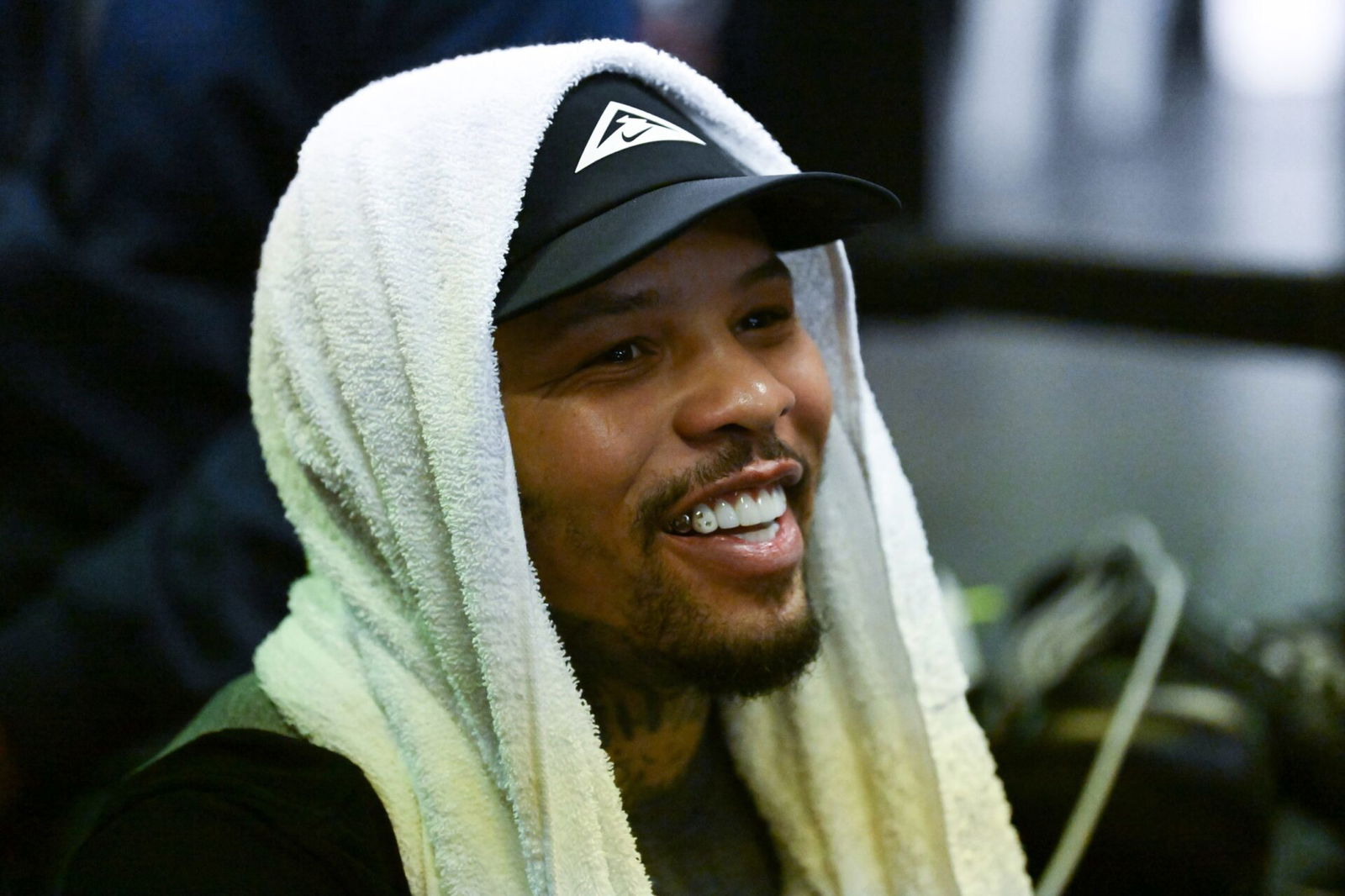
Boxer Gervonta “Tank” Davis missed a nice payday after a fight against Jake Paul was postponed after allegations of domestic violence from his girlfriend. But Tank was offered a boxing match by Bill Haney, the father of boxer Devin Haney, to take place in the New Year.
According to Boxing News, Haney Sr. made the offer in a recent online video targeting Tank. Both fighters are undefeated, making it an intriguing matchup of two champions. Tank’s record is 30-0-1, while Haney sports a record of 33-0.
Bill appears in the video at a car dealership, bragging that his son bought him a car. In the clip, he tells Tank’s boxing team that he has good news and bad news, and that he has an opportunity for his son to meet their fighter in the ring in 2026.
“Coach Calvin [Ford], Coach [Ellis], Team Tank Davis, I got some good news, and I got some bad news. The good news is Devin bought me another Mercedes. Another one. The bad news is the Grinch didn’t buy you guys one, but ‘Deebo’ is looking for him, and he’s on the list. So let’s see if in 2026 you can’t influence your man to be more like [Devin].”
ESPN reported that Devin recently captured the WBO welterweight title by beating Brian Norman Jr., marking Norman Jr.’s first defeat. (28-1). He won by unanimous decision on Nov. 23.
Tank, who currently holds the WBA lightweight title, should have been resting after a Nov. 14 exhibition match that was cancelled due to his former girlfriend, Courtney Rossel, filing a civil lawsuit against him, accusing him of battery, aggravated battery, false imprisonment, kidnapping, and intentional infliction of emotional distress.
When Devin won his match, he invited anyone to meet him in the ring.
“We’re taking on all comers,” the boxer said. “[Welterweight] is a weight class I was supposed to be at for a long time. My dad has been telling me I needed to move up for a long time. I’m here to stay at 147 for a long time.”
LaKeith Stanfield Replaces Jonathan Majors To Play Dennis Rodman In ’48 Hours In Vegas’
LaKeith Stanfield has landed the lead role in the upcoming Dennis Rodman-inspired film, two years after Jonathan Majors was dropped.
Lionsgate has revived the Dennis Rodman-inspired film 48 Hours in Vegas, casting LaKeith Stanfield as the NBA star after parting ways with Jonathan Majors.
Stanfield was announced as the new lead on Dec. 12, two years after Majors was removed from the project following misdemeanor assault and harassment convictions related to a domestic dispute, Deadline reports. After initially exiting the film, Lionsgate has returned, with Stanfield set to portray the former Chicago Bulls forward in the Rick Famuyiwa-directed project, co-written by Famuyiwa and Jordan VanDina.
“I’m genuinely excited to help create an exhilarating, joyful work that both honors and thoughtfully examines the legacy of Rodman and fellow trailblazers,” said Stanfield in a statement. “Those who moved to the beat of their own drum, undeterred by the obstacles placed before them, then and now.”
Inspired by the untold story of Dennis Rodman’s notorious Las Vegas trip during the 1998 NBA Finals, 48 Hours in Vegas will take audiences through two chaotic days in Sin City. Rodman took an extended, unauthorized vacation, partying with then-girlfriend Carmen Electra, models, and wrestlers—including an appearance with Hulk Hogan on WCW.
After missing practice, Michael Jordan personally flew to Vegas to bring him back, and Rodman returned to lead the Bulls despite the chaos. Though Coach Phil Jackson had approved a 48-hour break for him to decompress, the trip spiraled into a wild, extended spree.
“There’s only one Dennis Rodman. In 1998, there was nobody on Earth who’d be more fun — or maybe more dangerous-to party with,” Lionsgate’s Nathan Kahane said. “And yet that’s not even half of who he is. This movie takes you on an unforgettable ride with the myth, the legend, and the man Dennis is behind everything you think you know. You think you know anything about ‘The Worm?’ Just you wait!”
The film was initially announced in 2021, with Rodman attached as an executive producer. Other producers include Phil Lord, Chris Miller, and Aditya Sood from Lord Miller, with Ari Lubet and Lucy Kitada serving as executive producers. Nikki Baida will co-produce.
Ghanaian Influencer Accused Of Running $8M Scam Targeting Vulnerable Elderly
Suspicions were raised after Kumi, who also goes by the alias of Emmanuel Kojo Baah Obeng, began to flaunt luxury items online to his fans, having more than 100,000 followers on Instagram.
Prosecutors claim Ghanaian social media influencer, Abu Trica, “built trust” with his elderly victims while being accused of curating a romantic and lucrative scam that defrauded elderly Americans of more than $8 million, BBC reports.
Trica, whose real name is Frederick Kumi, allegedly used AI to create false online identities, targeting victims of the elderly community through social media platforms and dating sites. He faces charges of conspiracy to commit wire fraud and a money laundering conspiracy after earning his victims’ trust and extorting their money. ‘The perpetrators built trust through frequent, intimate conversations by phone, email, and messaging platforms,” with victims, prosecutors said.
“They then requested money or valuables under false pretences, such as urgent medical needs, travel expenses, or investment opportunities.”
Suspicions were raised after Kumi, who also goes by the alias Emmanuel Kojo Baah Obeng, began flaunting luxury items online to his more than 100,000 Instagram followers. According to Cleveland.com, the scammer alludes to being a successful businessman by posting pictures and videos of expensive cars and a grand residence in Swedru, Ghana. Law enforcement soon zeroed in on how his income came about.
His Dec. 11 arrest took place in Ghana but stood before a judge in Cleveland, Ohio, facing up to 20 years in prison, as prosecutors allege some of Kumi’s victims reside there. Trica allegedly worked with a group of scammers to host frequent and intimate conversations with victims, not just through social platforms but also on the phone, email, and messaging platforms.
The victims would then send their hard-earned money to Kumi and the scammers, who would claim they had urgent medical needs, needed funds to travel, or had investment opportunities.
American law enforcement has stepped up the crackdown against criminal networks operating in the United States and in West Africa that are actively scamming the elderly. One alleged Ghanaian fraudster, known as Dada Joe Remix, faced extradition to the U.S. in July 2025 after being accused of using romantic schemes to defraud vulnerable pockets. In early December, Oluwaseun Adekoya, a Nigerian fraudster, was sentenced to 20 years in prison for being the mastermind behind a nationwide bank fraud and $2 million money laundering conspiracy.
The trend of financial fraud against America’s elderly community can cost a pretty penny. Reports from the Federal Trade Commission (FTC) revealed that scams targeting adults 60 and older have reached $2.4 billion, a 26.3% increase from $1.9 billion in 2023.