


September 16, 2025
Sanders wanted to get drafted elsewhere to move up the slots for starting quarterback.
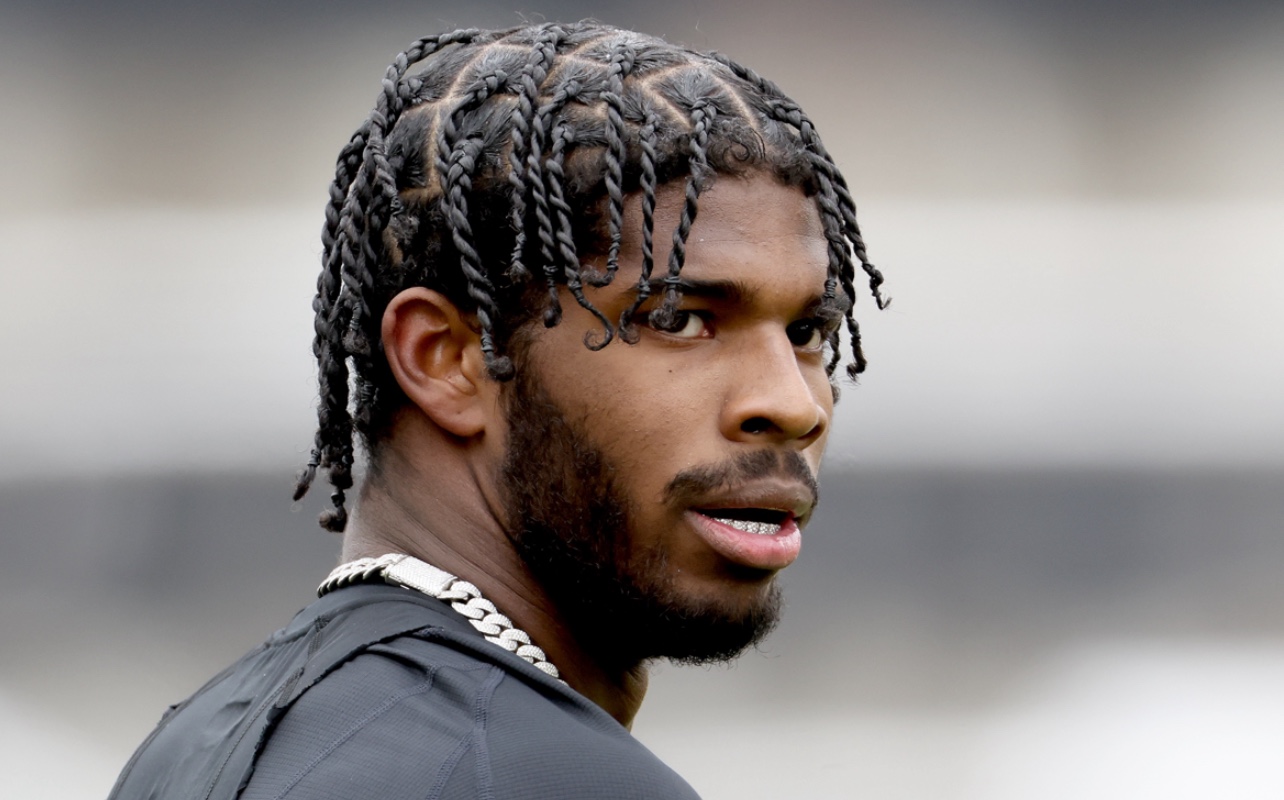
A new NFL Draft news leak revealed more insight into Shedeur Sanders’ controversial fifth-round selection.
As many suspected, the top-ranked quarterback was supposed to get picked up before his official 144th selection by the Cleveland Browns. However, the 23-year-old athlete reportedly stopped his own bag when another team had plans to choose him. NFL insider and journalist, Adam Schefter, dropped the shocking news.
Ravens planned to take Shedeur Sanders in the fifth round, but before Baltimore could turn in the card, the former Colorado star let it be known that he didn’t want to be on a roster with Lamar Jackson, where he would be a backup. https://t.co/v1om447zHN
— Adam Schefter (@AdamSchefter) September 14, 2025
The Baltimore Ravens reportedly had plans to bring Sanders to Charm City to fill out their quarterback slots. However, league sources told Schefter that Sanders asked the franchise to go another way.
The young QB allegedly did not want to sit as backup behind star quarterback Lamar Jackson. Jackson is already a two-time MVP with the Ravens and is in good health, making Sanders’ playing time with the franchise relatively limited.
Instead, Sanders wanted to play for a team with better opportunities to start as a quarterback. However, Sanders now sits on the third string for a team with four quarterbacks still on its roster.
The Browns already met the Ravens in an early-season matchup on Sept. 14, where Baltimore bested the team with a 41-17 win. Sanders was also approached about the draft leaks in a post-game interview. However, the former Colorado star remained quiet about what happened during the selection process.
“My response is I’m focused on the now,” he said, according to ESPN. “I don’t really talk about anything in the past, and whatever happened in the past, it is what it is. I’m more focused on now. I’m more focused on how this game that we just went and had, and figuring out how to move forward from now.”
Currently, Sanders serves as the third-string quarterback for the Browns as he continues to move up the franchise’s roster.
RELATED CONTENT: NOT PRESSED: Deion Sanders On Shilo’s Tampa Bay Release, ‘He’s Gonna Be Straight’

September 16, 2025
No president has fired a sitting Federal Reserve governor in the independent agency’s 112-year history.
Lisa Cook, the Federal Reserve governor whom President Donald Trump recently tried to fire, can keep her job for now. An appeals court ruled Cook can remain a governor on Sept. 15 ahead of a key vote on interest rates that begins Tuesday.
As CBS News reports, the U.S. Court of Appeals for the D.C. Circuit decided 2-1 in declining to grant the Trump administration’s emergency relief that would have allowed Trump to remove Cook. The court ruled that Cook’s due process rights were violated because the administration did not give her a formal opportunity to respond to the charges.
However, even with the appeals court ruling, this isn’t the end of the legal fight between the Trump administration and Cook. Trump is expected to turn to the Supreme Court in an unprecedented move to unseat Cook. Meanwhile, Cook is suing the administration to block her firing.
As the Associated Press reports, the Fed’s seven-member governing board was designed to be largely independent. No president has fired a sitting Fed governor in the agency’s 112-year history.
Trump moved to oust Cook from the Fed’s Board of Governors last month over allegations of mortgage fraud for claiming two properties as “primary residences” in July 2021, before joining the board. Such claims could lead to a lower mortgage rate and smaller down payment than if one of them were declared as a rental property or second home. Cook denies all wrongdoing.
According to the Federal Reserve website, Cook took office as a member of the Board of Governors of the Federal Reserve System on May 23, 2022, to fill an unexpired term that ended on Jan. 31, 2024. She was reappointed and sworn into the position on Sept. 13, 2023, for a term ending Jan. 21, 2038.
Before serving on the board, she was a professor of economics and international relations at Michigan State University. She served as the director of the American Economic Association Summer Training Program from 2018 to 2021 and also worked as a research associate at the National Bureau of Economic Research.
Currently, Cook is the only Black woman serving as a governor of the Federal Reserve.
RELATED CONTENT: ELEVATING YOUR EXCELLENCE: Jamauri Bogan Inspires As The Youngest Black Community Developer In Western Michigan

September 16, 2025
Your job could be at risk every time you click post.
Many employers are cracking down on individuals for publicly voicing their opinions on controversial matters. This makes knowing one’s rights to “free speech” as important as ever.
Several major companies from Delta Airlines to The Washington Post, have fired employees who voiced their feelings surrounding the death of Charlie Kirk. Kirk was fatally shot Sept. 10, leaving behind a legacy of anti-Black and hateful rhetoric that left some with little empathy toward his death.
However, expressing these negative emotions surrounding the slain man on the internet, who government officials have otherwise lifted up as a political martyr, has left these naysayers on the outs with their employers. While Americans do have the right to free speech, using this freedom gets tricky when it comes to the workplace.
11Alive spoke to a civil rights attorney from Atlanta, to explain how one should navigate publicizing their views, especially as it could trigger consequences in the workplace. While many assume their rights are upheld no matter the situation, the litigator actually confirmed the opposite.
“I get a lot of phone calls, ‘Hey this violates my first amendment right!” shared attorney Larry Pankey. “I go, ‘Well, that’s an easy one. You have no rights.'”
Pankey shared that the difference really depends on if one works in the public or private sector. For employees of a private company, what you say can be held against you.
“With a private employee, you really have no rights. A private employer is really in business of making money and if they feel your behavior online, on the weekend, or on your own time makes them look bad, they can choose to let you go and you will have no rights,” he said.
However, public sector employees do not fair much better with free speech. While they have a bit more leeway, government employers can easily decide that one’s statement disrupts their work.
“They provide what they call a balancing test. While you are allowed and you have rights to engage in the first amendment, if that right interferes with the governments ability to do its job, it will be outweighed possibly and the government’s right could take over. You could be punished or terminated,” explained Pankey.
For those unsure on how writing that post may impact their next check, Pankey emphasized looking through the employee handbook. He also encouraged a review on if this internet beef feels worth the potential firing.
“Remember your family and your livelihood. Is it really worth engaging with someone on the internet in an argument? If you truly value your job and you can’t afford to lose it, the best thing to say is nothing at all.”
RELATED CONTENT: Teachers Under Fire For Exercising Free Speech Rights

September 16, 2025
These Black writers have contributed to discussions on DEI.
Despite the upheaval of diversity, equity, and inclusion (DEI) initiatives in academic, corporate, government, and nonprofit sectors, the conversation around equality has not died down. It is a topical issue that currently troubles society and is driving headlines, boycotts, and lawsuits. However, the insightful knowledge that allowed Black people to understand and navigate race in these multiple settings remains fruitful even though DEI is dead. These Black writers who have contributed to discussions on DEI, race, and social justice used the literary form to reach communities and distill much-needed information.
BLACK ENTERPRISE highlights eight crucial books on race that still matter.
Audre Lorde’s Sister Outsider is a compilation of essays and speeches that delve into issues of racism, sexism, and homophobia while emphasizing the importance of unity and understanding among diverse populations. Though the book was published in 1984, its message holds significance today, considering the current state of the nation. Lorde draws from her encounters as a lesbian feminist in the United States to offer perspectives on navigating various aspects of identity and fostering connections across diverse backgrounds.
Journalist and speaker Ijeoma Oluo’s guide offers advice for addressing challenging, yet meaningful, conversations about race-related issues. Oluois published the book back in 2018, and it gained popularity as a resource following the racial justice movements of 2020. The book draws froOluo’s’s own encounters with race in the United States.
SaeeJones’s’ 2019 memoir tells the journey of a queer man growing up in the American South with raw honesty and emotion. Jones’ words beautifully weave together his experiences and highlight how personal struggles intersect with broader societal issues of inequality and resilience in the pursuit of justice.
Michelle Alexander’s 2010 examination of mass incarceration portrays imprisonment as a tool of racial dominance rather than merely punishment, particularly for crimes committed by African American individuals caught up in the United States legal system.
adrienne maree brown’s’ book We Will Not Cancel Us gets into the weeds of cancel culture and accountability within movements while emphasizing the importance of justice and compassion in our actions and decisions.
Isabel Wilkerson’s epic work dives into America’s hierarchy by exploring caste systems like those in the U.S., India, and Nazi Germany as examples to show how racism operates as a caste system and sheds light on issues of inequality in the United States.
Princeton professor Eddie S. Glaude Jr.’s 2020 work explores James Baldwin’s works as a means of understanding and addressing challenges related to race and justice.
The 1619 Project, authored by Nikole Hannah Jones, is an account that reframes history through the lens of slavery and its enduring impact. The project evolved into a published book in 2019 detailing the trajectory of American history from the year 1619 onward. Its core mission is to challenge narratives and underscore the pivotal contributions of Black Americans in molding the democratic fabric of the nation.
RELATED CONTENT: Elevating Your Excellence: Denene Millner Is A GOAT In The Literary Game

September 16, 2025
Teachers are under fire for exercising freedom of speech after the death of right-wing activist and white supremacist, Charlie Kirk.
Like many others, American teachers took to social media after Kirk was pronounced dead to give their opinions. Some denounced the violence, some celebrated, and others simply shared some of Kirk’s quotes. As a result, multiple educators have faced disciplinary action. Education Week reported on a few instances of alleged teacher misconduct. Punitive action has been doled out in at least 11 states, including Florida, Iowa, Massachusetts, Maryland, Michigan, North Carolina, Oklahoma, Pennsylvania, Oregon, South Carolina, and Texas.
Posts from Facebook, TikTok, and X have been brought to the attention of school districts by supporters of Kirk’s.
Florida teacher Kelly Brock Alvarez wrote a post that could be interpreted as condoning the shooter’s actions.
Alvarez, who goes by the name @KellySteelMagnolias on X, wrote: “This may not be the obituary we hoped to wake up to, but this is a close second for me.”
An X user, Florida State Sen. Jennifer Bradley, was offended by the post and contacted Clay County District School to report Alvarez. The Florida Voice reported on Clay County’s response. In a statement, the district denounced the post and made clear that the teacher’s behavior would be addressed, though no concrete details of the chastening could be made public.
A teacher in Florida?
— ThePersistence (@ScottPresler) September 11, 2025
Meet Kelly Brock-Sanchez.
She was hoping to wake up to an obituary. Well, this teacher at Ridgeview Elementary School is going to peacefully wake up to a lot of messages.
It would be a shame if everyone in Lakeside, FL, sees this.
CC: @GovRonDeSantis pic.twitter.com/H6iYQFYJvT
We’re aware of this post, and we want to assure you that the views expressed do not reflect the values of our school.
We do not condone the content of the post. This is now a personnel matter, and human resources is involved.
We cannot share specific details, but please know that we are addressing the situation very seriously.
Unfortunately, educators are not the only ones facing backlash for speaking ill of Kirk, his past comments, and his early demise. Journalists are also on the chopping block.
On Sep. 15, Karen Attiah, the last Black full-time opinion columnist at the Washington Post, was fired for exercising her right to free speech.
Attiah wrote about her termination on Substack. She made the motivations of the Washington Post clear — an attempt to silence a journalist speaking her truth.
“Last week, the Washington Post fired me. The reason? Speaking out against political violence, racial double standards, and America’s apathy toward guns.”
In the wake of Kirk’s death, he has become a figure of resistance and morality for many on the conservative right. Those in opposition who point out his words verbatim, which often denigrate marginalized communities, are publicly vilified. Some have denounced churches that did not preach about death. Others have spoken about Kirk reaching sainthood, though he was not Catholic and often advocated for actions that are the direct opposite.
So share with us ONE QUOTE from Charlie that shows him being "an unrepentant racist, transphobe, homophone, and misogynist"
— Kamalaugh (@Splendor_Candor) September 14, 2025
Asking for 75 million people
The saga will continue as multiple warring reports about the shooter’s motivations have circulated. There is still a lack of clarity. Yet, social media will continue to push contradictory stories, false narratives, and condemnation for any who disagrees.
RELATED CONTENT: Social Media Erupts After Black Servicemen Made To Honor Charlie Kirk In New Video
September 15, 2025
WeightWatchers has unveiled, "WeightWatchers for Menopause", its first program built specifically to support women through perimenopause to post-menopause.
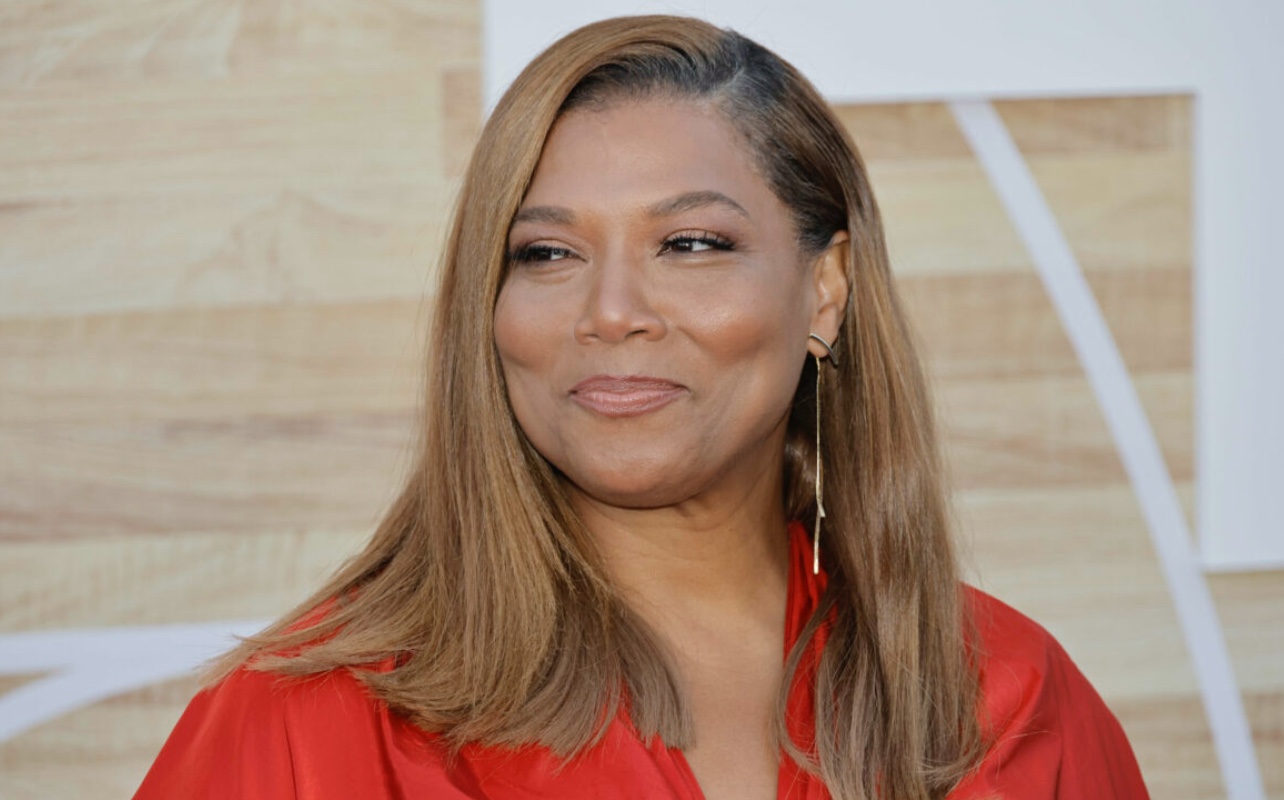
Dana “Queen Latifah” Owens is the new spokeswoman for WeightWatchers, and her latest campaign addresses more than just weight loss.
WeightWatchers has unveiled “WeightWatchers for Menopause,” its first program built specifically to support women through perimenopause to post-menopause. For its launch, WeightWatchers named Queen Latifah as its inaugural spokeswoman. The Queen brings not only her Hollywood pedigree but also personal experience with the condition to the role.
In the advertisement, Latifah references the symptoms of the condition, “Is it getting hot in here? Nah, girl, that’s just the menopause.”
In a press release, WeightWatchers discussed its decision to address an issue plaguing many women worldwide. Chief Executive Officer Tara Comonte expressed pride in the company’s direction.
“For more than six decades, WeightWatchers has evolved with science to meet the changing needs of our members,” Comonte said. “With this first-of-its-kind menopause program, we’re proud to deliver truly comprehensive care in a single plan, bringing together specialized medical expertise, science-backed nutrition, lifestyle tools, and a compassionate community. This program sets a new standard for the industry and women’s health, empowering millions to feel healthier, stronger, and more confident as they navigate menopause and beyond.”
At 55 years old, Queen Latifah is experiencing a tumultuous menopausal state. She says that, though the transition is new, it has given her insight that she would like to share. It’s also inspired her to share information with other women.
“Menopause has been a new journey for me — one that’s changed how I see and care for my body. It’s shown me how important it is for women to have support that truly understands this stage of life. That’s why I’m proud to be the spokesperson for WeightWatchers’ new program.”
Menopause is a period during which women, on average, 51 and over, experience multiple changes to the body due to a natural decline of hormones, according to the Mayo Clinic. As the body begins to cease production of fertile eggs, the symptoms can range from mild to extreme:
There are multiple ways to manage the symptoms of menopause, including hormone therapy and a change of diet. To that end, WeightWatchers and the Queen are doing their part to help women manage their weight and menopause.
RELATED CONTENT: Queen Latifah Shares How Her Queen Collective Creates Growth In Hollywood Through Inclusivity

September 15, 2025
'Now, I am the one being silenced—for doing my job," Karen Attiah wrote in a scathing Substack post on Sept. 15.
A Washington Post columnist said she was fired over social media posts on gun control and race following Charlie Kirk’s assassination.
In a scathing Substack post on Sept. 15, writer Karen Attiah criticized the Jeff Bezos-owned media outlet for firing the last Black full-time opinion columnist over her social media posts addressing political violence, following recent shootings in Utah, where Kirk was killed, and Colorado, where a teen opened fire at his high school, injuring two students before taking his own life.
“As a columnist, I used my voice to defend freedom and democracy, challenge power and reflect on culture and politics with honesty and conviction,” Attiah wrote. “Now, I am the one being silenced—for doing my job.”
Screenshots of Attiah’s Bluesky posts reveal her outrage over what she views as America’s complacency toward gun violence, particularly among white Americans, who offer “thoughts and prayers” instead of taking action after horrific shootings. She also highlighted her most widely shared thread on the political assassinations of Minnesota lawmaker Melissa Hortman and her husband, clarifying that the post was not about Kirk, “who was horribly murdered.”
“I pointed to the familiar pattern of America shrugging off gun deaths, and giving compassion for white men who commit and espouse political violence,” Attiah explained.
However, after 11 years at the Post, Attiah says she was fired after the outlet deemed her Bluesky posts as “unacceptable,” displaying “gross misconduct” and that they endangered the physical safety of colleagues, all allegations she says are “without evidence” and “completely false.”
“They rushed to fire me without even a conversation—claiming disparagement on race,” Attiah wrote. “This was not only a hasty overreach, but a violation of the very standards of journalistic fairness and rigor the Post claims to uphold.”
With the dismissal of the last Black full-time opinion columnist at the outlet in a diverse city, “Washington, D.C., no longer has a paper that reflects the people it serves,” Attiah said. She views her firing not only as an example of increasing silencing and censorship, but as “part of a broader purge of Black voices from academia, business, government, and media.”
RELATED CONTENT: Black People React To The Fatal Shooting Of Charlie Kirk
September 15, 2025
Meta is expanding the way it helps advertisers partner with content creators.
Meta is expanding the way it helps advertisers partner with content creators. The media company is releasing new tools to match content, including reels, with relevant Ad promotion.
The new suite of tools is designed to help brands connect with their core audience more efficiently. Each Meta platform will receive its own version of upgrades, according to Adweek.
Advertisers can now search for content creators through Meta’s Partnership Ads hub. Brands can search using keywords to identify creators whose audience aligns with their demographic market. Additionally, brands can filter using creator affinity scores. Meta released a statement noting how the new AI tools were developed to help simplify the brand creator collaboration process.
The company is also enhancing its analytics capabilities. Beyond basic follower counts, brands can examine engagement on a creator’s past content. The historical data can help determine whether videos, photo carousels, or reels, with the same style of content, are garnering engagement. The analysis of these metrics enables companies to save money on Ads by ensuring that content, creators, and audiences align.
As Meta continues to refine its Ad spaces, other social media platforms are moving full steam ahead with their consumer hubs. TikTok has its Creator Marketplace and YouTube maintains its BrandConnect. By emphasizing AI and precision search, Meta is betting that automation can solve what has traditionally been a time-intensive process of sourcing the right partners.
Finding creatives that closely align with a brand’s ideals and vision is a good thing for the bottom line. AI-driven matchmaking could narrow opportunities for voices outside mainstream trends. Marketers, however, are already signaling enthusiasm. In early tests, Meta reported brands using the upgraded Marketplace saw faster deal flow and higher engagement on creator-led ads.
With influencer marketing forecast to reach $24 billion globally in 2025, Meta’s new tools are positioned as a way to keep advertisers in the fold while promising creators more visibility in brand partnerships.
RELATED CONTENT: North Carolina Central University Launches 1st Of Its Kind Artificial Intelligence Institute