Elon Musk, Tennessee, pollution, super computer

Black Memphis Community Says Its Under Siege From Pollution Emitted By Elon Musk’s New Supercomputer

Although Musk has promised to limit the hazardous emissions, the way the facility is powered leaves no room for such limits to be applied, say local experts.


Elon Musk’s new $6 billion artificial intelligence supercomputer project in Memphis, Tennessee, is drawing concern from some residents and environmental advocates who say it reflects broader tensions between the tech industry’s rapid expansion and its impact on local communities.

According to The Huffington Post, residents and preservationists in southwest Memphis, where the facility—nicknamed “Colossus”—is located, have voiced worries that emissions from the site may be affecting both public health and the surrounding environment.

Although Musk, through his company, xAI, has promised to limit the hazardous emissions, the way the facility is powered leaves no room for such limits to be applied, say local experts.

The gas turbines, which largely power the facility, emit various nitrogen oxides and formaldehyde as byproducts, along with other substances that help to weaken the Earth’s already depleting ozone layer, and residents in the largely Black, largely working-class community of Boxtown, say that those pollutants are harming them much more immediately than the ozone layer.

Similar to reporting from Inside Climate News regarding a four million square foot data center slated for construction virtually in the backyards of Alabamians who had no say in its construction, Musk’s project was carried out without regard for Memphis’ residents and it relies heavily on a loophole for temporary turbines, which environmental groups allege does not apply to Musk’s company, and residents are increasingly upset about the lack of concern for their health and well-being.

As Sarah Gladney, a resident who lives three miles away from the sprawling facility and has a lung condition, told CNN, “Our health was never considered, the safety of our communities was never, ever considered.”

Memphis, like many other communities across the country—including a rural county in Alabama—faces challenges related to environmental protection following regulatory changes from the Trump administration, which eased pollution controls and shifted focus away from environmental justice issues. At the same time, there has been increased support for emerging technologies such as artificial intelligence, an area of particular interest for Elon Musk.

Memphis Mayor Paul Young has expressed support for Musk’s project, highlighting its potential economic benefits and tax revenue. However, some residents remain concerned about the environmental risks the development may pose to the community.

“What we are looking at is an opportunity to completely transform our economy,” Young told CNN. It’s “game changing.”

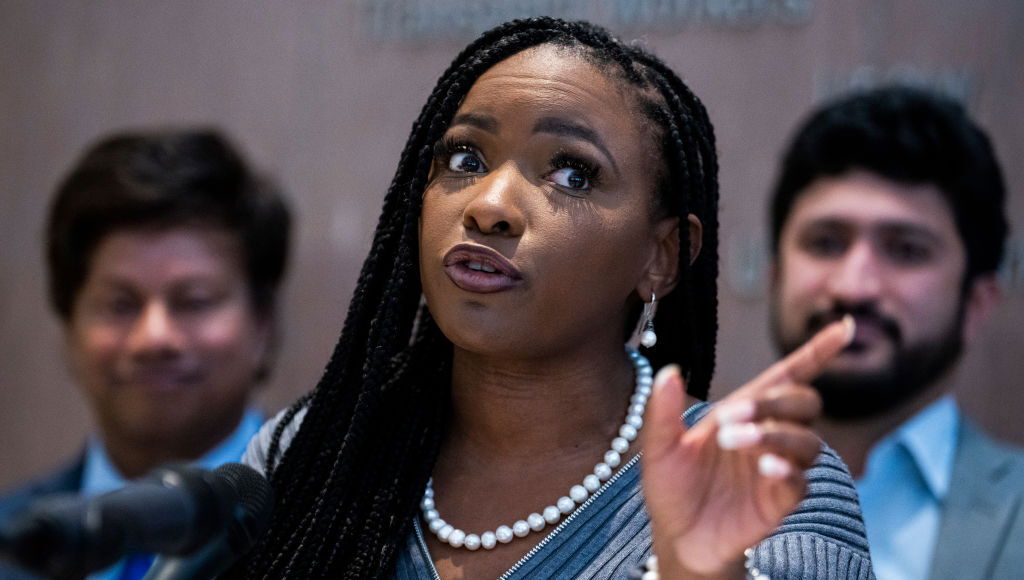
This characterization has attracted the ire of outspoken Tennessee State Rep. Justin Pearson, a Democrat who lives near the facility. Rep. Pearson was critical of both the lack of permit requirements for the facility and the proposed economic benefits for Memphis residents in his comments to CNN.

“It’s an actual gas plant in the middle of a neighborhood and you don’t need any permitting?” Rep. Pearson said. “Something has failed drastically and significantly with our system of checks and balances.”

He continued, “If you look at where these data centers are propping up, it’s always in poor communities,” according to the legislator, there remains “no hope” that the federal government will help protect them.

RELATED CONTENT: Memphis Petition Pushes Back On Elon Musk’s ‘Supercomputer’ Due To Health Concerns

black-owned wineries, wine,

Wine, Culture, And Community: Celebrate National Wine Day At A Black Winery

Black-owned wineries represent less than 1%.


May 25 is National Wine Day, a tribute to the multiple voices that create America’s wine narrative beyond its focus on premium wine varieties.

According to research, the wine industry supports the economy through its 11,500 wineries nationwide while generating an estimated $75.27 billion value in 2024. Black-owned wineries represent less than one percent of the total wineries in the country, with about 100 establishments, KCRA reports. BLACK ENTERPRISE looked at 10 Black wineries from California’s sun-kissed valleys to North Carolina’s rolling hills that produce outstanding wines while sharing stories of perseverance, cultural traditions, and innovative spirit. This guide presents 10 outstanding Black-owned wineries, which should be on your tasting journey because they deliver remarkable wines and compelling stories.

Brown Estate, Napa Valley, California

The Brown Estate, located in Napa Valley, California, belongs to the Brown Family and is famous for its Zinfandel production alongside multiple other wine varieties. The winery stands as Napa Valley’s first Black-owned estate winery, presenting visitors with more than two decades of winemaking experience. The downtown Napa tasting room allows visitors to experience the estate’s history while enjoying their wines.

Chapelton Vineyards, Washington, Texas

The historic town of Washington, Texas, hosts Chapelton Vineyards, which presents luxurious wine tastings, featuring wines from California, Uruguay, Argentina, and their vineyard production. The vineyard, which Kurt Lyn and Michelle Lyn co-own, has a distinctive combination of historic charm and premium wines that attract wine lovers.

Purple Corkscrew – Avondale Estates, Georgia

Purple Corkscrew operates from Avondale Estates, Georgia, under the ownership of Steffini Bethea. The establishment stands out with its extensive wine selection of more than 350 bottles while actively promoting Black-owned wine labels. The main attraction of Purple Corkscrew lies in its welcoming atmosphere and knowledgeable staff that provides a genuine wine expertise to customers of all wine knowledge levels, from beginners to experts.

Ebony Vineyards, Mooresville, North Carolina

Ebony Vineyards serve as a wine destination and cultural exploration site for visitors. Ebony Wine & Spirits operates this location, which honors the deep Black heritage of the area. Ebony Vineyards combines premium wines with cultural tourism initiatives for visitors. The wine tasting and tour activities allow visitors to experience a unique cultural wine celebration through these events. The vineyard welcomes both wine experts and beginners to experience. 

Abbey Creek Vineyard, North Plains, Oregon

Abbey Creek Vineyard operates as a hidden winery within Oregon’s North Plains region. Bertony Faustin established himself as Oregon’s first Black winemaker while bringing hip-hop culture to the entire wine industry. The wine tasting experience at this location defies traditional wine tasting expectations. When you enter, you understand that this place belongs to everyone who walks through its doors. Abbey Creek accepts visitors with open arms regardless of their wine knowledge. Great wine meets real community when you visit this place. 

Lashelle Wines, Woodinville, Washington

Lashelle Wines is a Black- and woman-owned winery where visitors can experience private wine tastings. The winery owned by Nicole Camp produces various wines, including Marsanne and Cabernet Sauvignon. A visit to Lashelle Wines supports a winery dedicated to promoting diversity in the wine industry.

Black Fire Winery, Tecumseh, Michigan

Black Fire Winery in Tecumseh, Michigan, welcomes visitors who enjoy quality beverages. Michael Wells operates this family-oriented establishment, which produces all their wines, ciders, and beers on-site. The atmosphere is relaxed while live music creates an environment that makes you want to spend your entire day there. 

Gotham Winery, New York, New York

Under Kwaw Amos’ ownership, Gotham Winery established itself as the initial Black-owned winery in New York State. Gotham Winery offers its customers rosé, riesling, pinot noir, and merlot wine selections. Wine enthusiasts should visit Gotham Winery to experience their contemporary approach to traditional winemaking methods.

Cyrenity Sips, Hatboro, Pennsylvania

Cyrenity Sips winery in Hatboro, Pennsylvania, produces small-batch wines that provide a distinctive wine-tasting experience. The winery run by Shakia Williams presents 16 permanent wine options, together with Cranberry and Gingerbread seasonal releases. The distinctive element of Cyrenity Sips is its personalized approach. The winery dedicates each wine label to loved ones, which makes the production process a heartfelt tribute to their community ties. The winery provides an intimate atmosphere where guests can taste wines that hold special meaning to the winery.

Boyd Cru Wines, Maryland

The Maryland winery Boyd Cru Wines operates under the ownership of the Boyd Family. The winery produces wines from local grapes, focusing on sustainable methods and innovative blending techniques. The winery stands as Maryland’s first and only Black-owned winery, which is a distinctive addition to the winemaking industry by promoting diversity.

RELATED CONTENT: The BLOC: A Black-Owned Company Helping Women Build Wealth in Real Estate

Georgia, white woman, Black boyfriend

White Woman Suspected Of Killing Black Boyfriend Will Not Face Charges In Georgia

The victim was also called out on social media for berating Black women before being killed by his white partner.


A grand jury in Waynesboro, Georgia, has decided not to charge a white woman deemed a suspect in the fatal shooting of her Black boyfriend.

The grand jury in Burke County decided to grant Hannah G. Cobb a “no bill.” This ruling means Cobb will not face charges for the killing of Telvin Osborne. Cobb was arrested in February for the shooting, but initially claimed she was either cleaning or clearing her 9 mm pistol when it went off, killing the 30-year-old. She faced a charge of felony involuntary manslaughter.

One twist in the incident is that Osborne was known to berate Black women on social media while praising white women.

District Attorney Jared Williams told News 12 on Cobb’s bypass of charges May 23. After news of Cobb’s “no bill” was released, the Burke County Sheriff’s Office also released a statement. According to WRDW, the agency warned of potential riots that could “further harm” the Waynesboro community.

“We are aware of rumors circulating on social media regarding potential rioting in Waynesboro tonight following the grand jury’s decision to issue a ‘no bill’ in the case involving Hannah Cobb and the death of Telvin Osborne,” stated the department. “It is important to understand that the grand jury is a legal body tasked with hearing all evidence presented in a case before reaching a decision. While we recognize that this outcome may be upsetting or unpopular to some, we strongly urge everyone to refrain from actions that could further harm our community.”

The case garnered national attention over conflicting reports of how the fatal shooting of Cobb’s Black boyfriend occurred. Although Cobb insisted during her 911 call that she tried clearing her gun when it went off, Sheriff Alfonzo Williams said there was no evidence or information about a person cleaning the weapon before the shooting occurred.

Social media also erupted about the case over Osborne’s previous public bashing of Black women. Social media users noted the irony of Osborne dying at the hands of his white girlfriend despite his fetishization.

Williams also stated that alcohol was involved in the incident, which happened after the two went out clubbing in Augusta. Cobb also asserted that she believed the gun’s safety was on.

However, Cobb’s family also proclaimed that the two’s relationship was tumultuous with cheating allegations. Cobb also confirmed that the two had argued that night leading up to Osborne’s death, with additional Ring camera footage recording the altercation.

The prosecution detailed a different story from what Cobb had initially claimed in the 911 call. After Cobb kicked Osborne out of the house, she claims he reappeared at the home and threatened her with a knife.

She says she called his mother to calm him down, but the two’s altercation escalated regardless. The prosecution claimed that Cobb locked herself in the bathroom and threatened to harm herself. However, when Osborne broke the door down, she fired the gun once at him. Authorities saw her applying pressure to the gunshot wound. He was later pronounced dead at the hospital.

Although Cobb could potentially face charges later, D.A. Williams released a statement suggesting that they will not pursue the matter.

“As the Grand Jury has spoken, the case is closed,” stated Williams.

RELATED CONTENT: Man, Who Openly Berated Black Women, Allegedly Killed By His White Girlfriend, The Internet Sounds Off

How Model-Turned-Entrepreneur Zaina Gohou Is Disrupting The $130B Chocolate Industry With One Bold Idea

How Model-Turned-Entrepreneur Zaina Gohou Is Disrupting The $130B Chocolate Industry With One Bold Idea

Zacao, a chocolate company created by Ivorian-German model Zaina Gohou, is helping to change the chocolate industry for the better.


Ivorian-German model Zaina Gohou is challenging the exploitative roots of the global chocolate industry with her new brand, Zacao. In a recent Teen Vogue op-ed, Gohou—whose grandfather was a cacao farmer—explains how her company sources beans directly from farmers in West Africa, aiming to eliminate the human rights abuses and environmental destruction that have long plagued the industry.

Despite the creation of the World Cocoa Foundation in 2000, a January 2023 Guardian report found that labor abuses—including child labor—remain deeply entrenched in cocoa supply chains, driven by capitalism’s dependence on cheap labor. Major corporations like Nestlé, Mars, and Hershey continue to profit while African farmers bear the brunt of the system.

The report found that the system leads to the exploitation of the labor of poor farmers and even children in West Africa to extract profit for large corporations like Nestle, Mars, and Hershey.

According to Bill Guyton, a former president of the World Cocoa Foundation who became a senior advisor to the Fine Chocolate Industry Association, the only way to stop the exploitation of the African farmers is to go to the source.

“In mainstream chocolate, you have a whole system set up that doesn’t want to change,” Guyton told The Guardian. “You’ve got governments and large companies involved, and making changes to that system would require a new way of trading, and a new way of compensating farmers.”

With Zacao, Gohou is attempting exactly that—creating a model rooted in equity, transparency, and rejecting the colonial legacy embedded in the chocolate trade.

Gohou, who insists that modeling was not a path she sought, was inspired to create change after the disconnect of seeing how people back home in West Africa who worked as cocoa farmers couldn’t afford to send their children to school or clean drinking water despite being directly responsible for producing the wealth of a $130 billion industry while she was offered chocolate as a treat by fashion brands.

The creation of Zacao required a bit of legwork for the model. Still, she refused to compromise on her standards: the chocolate must be clean, plant-based, and organic, produced with unrefined coconut sugar, and each step of the process would be produced transparently, minus any “bean-shifting.”

The chocolate is produced entirely in Ghana, which Gohou says often surprises people, but to her, it shouldn’t come as a surprise, given that Ghanaians have been making chocolate for generations.

“People are often surprised when they learn our premium chocolate is made in Ghana. But why shouldn’t it be? If champagne is made in France, why would chocolate not be made in Ghana or Côte d’Ivoire? Africa isn’t just a source of raw materials. Who better to make extraordinary chocolate than the people who’ve been cultivating these beans for generations,” Gohou wrote for Teen Vogue, closing with a rhetorical question.

As Gohou strives to create change within the chocolate industry itself, according to Zacao’s website, her company is already setting itself apart by partnering with more than 250 family-run farms in Ghana, paying each farmer $600 per ton of chocolate produced and in the process helping to create a source of highly skilled labor, nurturing the local economy and building economic prosperity for the workers at the company.

For Gohou, the end result and the real impact she wants to create are centered around the workers she wants to empower, closing her op-ed on a high and hopeful note, encouraging young entrepreneurs to follow her blueprint.

“When you’re creating something that genuinely helps people or the planet, your passion becomes your driving force, and people will want to see you succeed.” Gohou wrote. “I see a future where farmers are getting paid their fair share, can send their kids to school, have access to clean drinking water, and thrive because the local economy is growing. That’s the real impact I’m dreaming of.”

RELATED CONTENT: Black-Owned ‘Good Girl Chocolate’ Brand Expands To 150 Whole Foods Stores Across 20 States

at&t, dei, NAACP

AT&T Refuses To Follow Verizon In Rolling Back DEI Policies Amid Federal Pressure

AT&T's CEO John Stankey indicated that the company is not obligated to amend any policies to assuage the federal government's assault on DEI.


After Verizon capitulated to the Trump administration’s Federal Communications Commission’s demands regarding diversity, equity, and inclusion before its forthcoming $20 billion purchase of Frontier Communications, one of Verizon’s chief competitors, AT&T, signaled that it would make no such concessions.

As Yahoo Finance reports, AT&T’s CEO John Stankey indicated that the company is not obligated to amend any policies to assuage the federal government’s assault on diversity, equity, and inclusion.

“We don’t have to roll back anything. Our policies and our approach at AT&T have always been that we progress people on merit. That any employee that comes to work here should have an opportunity to grow their career, work on building their skills, have an opportunity to succeed and earn a living,” Stankey told the outlet in an interview.

Stankey continued, “And our goal is to make sure that every employee that walks through the door of AT&T feels like they belong here and it’s a good place for them to work. And I’m pretty confident that anybody who examines our practices and how we run the business is going to come to that same conclusion.”

Stankey also admitted that despite the bluster from the Trump administration regarding diversity, equity, and inclusion, the $5.75 billion deal to acquire Lumen Technologies in a bid to expand its fiber optic network does appeal to Trump’s stated goal of creating jobs for Americans.

To Stankey’s point about AT&T’s meritocracy, the company has featured several Black Americans as executives over the years, including Jerome B. Holland, Cynthia Marshall, William Kennard, Chuck Smith, and Michelle Jordan, the telecommunications company also has not backed down from celebrating Black History Month, unlike Google and several other companies.

In 2023, Jordan, AT&T’s Chief Diversity Officer, described her role in an interview with Ebony Magazine and the company’s broader commitment to diversity, equity, and inclusion.

“AT&T is committed to driving diversity, equity, and inclusion, not just within our organization but across the tech industry. One of the greatest barriers that must be overcome is the understanding that the industry’s struggle with diversity is oftentimes not a pipeline problem or a legacy problem—it’s the result of numerous gaps and longstanding inequities that collectively keep underrepresented talent from finding success. From getting diverse talent interested in technology as a career path to ensuring equitable access to programs, mentorship, and entry-level and advancement opportunities,” Jordan said.

As a nod to this commitment, in February, AT&T issued the 32nd edition of its Black History Month Digital Calendar, which the company described as “a symbol of our respect for the distinguished Black leaders who have shaped the world we live in,” and “Our digital calendar serves not just as a testament to the honorees’ accomplishments, but also as an engaging tool to educate, inspire, and celebrate their legacy.”

RELATED CONTENT: LeBron James’ Show ‘The Shop Uninterrupted’ Is Going On An HBCU Homecoming Tour

tariffs, price hikes, Walmart, shopping,

Tariff Fallout: Here Are The Companies Raising Prices Amid New Trade Policies

Companies from a variety of sectors from cars to apparel have already told customers to expect price hikes.


As Trump’s tariffs impact the U.S. and global economy, these companies have already prepared for the increased production costs with new prices.

Trump’s tariff demands have faced their own shifts, including fluctuating numbers to main production hubs like China. However, as the current U.S. administration remains adamant in the growing trade war, many Americans will now bear the burden of covering these costs.

Currently, Trump has imposed a 10% tax on imports, with 30% tariffs on goods imported from China. Now, America’s biggest retailers and companies, ranging from cars to toys, have announced price hikes to combat this new barrier.

Walmart has already shared price increases over the “too high” tariffs, especially on goods made in China. The retailer has initiated the new price changes, with many more noticeable hikes coming in the next few weeks. A Reuters report confirmed the retailer sourced 60% of its products from China in 2023.

“We will do our best to keep our prices as low as possible. But given the magnitude of the tariffs, even at the reduced levels announced this week, we aren’t able to absorb all the pressure given the reality of narrow retail margins,” Walmart CEO Douglas McMillon said in an earnings call, as reported by CNN.

Mattel, the owner of Barbie, also confirmed this month that the toy manufacturer expects to raise prices in light of the tariffs. Despite undergoing price changes due to the “current scenarios we are considering,” Chief Executive Ynon Kreiz hopes to keep 40% to 50% of products within a $20 or less range.

According to Yahoo Finance, the company earned over 5.4 billion in revenue in 2022, making it among the top toy companies in the world. However, Mattel has faced backlash from President Trump over its stance against tariffs on children’s products like toys and games. Trump has threatened to place “100% tariffs,” pricing Mattel out of the U.S. market. Despite the claims, no tariffs such as this have been enacted.

Best Buy also deemed price increases due to tariffs “highly likely.” While some electronics the retailer distributes remain exempt from the tariffs, customers should not expect this to last. Popular electronic devices, such as Nintendo Switch gaming consoles, have already delayed their release dates due to unclear tariff regulations.

Unsurprisingly, Chinese e-commerce hubs like Shein and Temu have also noted that price adjustments will take place. Although these companies were initially able to bypass tariffs over a “de minimis” exemption for goods less than $800, Trump’s recent retraction of that ruling has the companies leaning on customers to make up the cost difference.

“Due to recent changes in global trade rules and tariffs, our operating expenses have gone up. To keep offering the products you love without compromising on quality, we will be making price adjustments starting April 25, 2025,” Temu wrote in a notice similar to Shein’s announcement.

However, car companies like Ford and Subaru also face issues as imported cars and car parts now hold a 25% tariff. Ford expects to raise its prices by 1.5% over these price regulations. As for Subaru, it will change its pricing by an unknown margin due to “market conditions.”

Customers of household products and goods should also get ready to pay more at the register. Popular product makers like Procter & Gamble and Stanley Black & Decker expressed their intentions to raise prices over “inherent” inflation surrounding the tariffs. In the apparel sector, Adidas prepared customers for new price hikes despite the final number for the tariffs remaining unclear.

RELATED CONTENT: Analysts Feel Trump’s Tariffs Won’t ‘Make Manufacturing Jobs Great Again’ In The U.S.

Rev. Dr. William J. Barber II, ex-wife, alimony

Ex-Wife Of William Barber Claims NC Civil Rights Leader Used Nonprofit Funds To Pay Alimony

The former Mrs. Barber also deemed the funds in the nonprofit's bank accounts should be considered in their divorce litigation.


The ex-wife of Bishop William J. Barber II has accused the civil rights leader, known widely in North Carolina and across the United States, of misusing funds from his racial justice nonprofit to make alimony payments.

Rebecca Barber stated the allegations in court documents recently in Durham County. She suggested that Barber’s control of the nonprofit, Repairers of the Breach, helped him to pull the money.

“[Barber] maintains de facto control over the financial accounts associated with Repairers of the Breach, Inc., thereby suggesting that Repairers of the Breach, Inc., is being used as an instrumentality of [William Barber’s] personal financial affairs,” detailed the legal filing according to WRAL. “Repairers of the Breach, Inc., is functionally an alter ego of [William Barber] and may possess or control assets that are marital in nature or otherwise relevant to this Court’s equitable distribution determination.”

The estranged couple has engaged in ongoing divorce proceedings after officially ending their relationship last November. The at-odds duo continues to legally battle over dividing assets acquired in the marriage, including their property and alimony payments. They tried to resolve these matters during a mediation in April, but the talks failed.

The leader of the Greensboro-based organization called the woman’s claims “baseless.” Barber has also denied the misuse of funds, as stated by the community leader’s lawyer.

“Reverend Barber categorically denies [the allegations],” explained Barber’s attorney, Tamela Wallace. “We believe the claims were filed for the sole purpose of gaining a tactical advantage in his pending property division litigation with his former spouse. We look forward to having these false allegations addressed in the proper forum, which is the court of law.”

The former Mrs. Barber has made damaging claims against her ex-husband’s integrity with this accusation. The former North Carolina NAACP leader garnered fame by establishing the state’s “Moral Mondays” movement, becoming an advocate for racial equity in the U.S. Barber also delivered the prayer service at Joe Biden’s presidential inauguration in January 2021.

Furthermore, the divorcée claims that the millions of dollars reported in the nonprofit’s earnings warrant discussion in their divorce settlement. She also proclaimed that the organization funnels money to Barber to cover his expenses. The organization also dismissed these assertions.

“The governing board of Repairers of the Breach is aware of baseless accusations against our organization in a civil property dispute between our president, William J. Barber II, and his former spouse. We have the greatest confidence in Rev. Barber and our organization. We trust the court to quickly resolve this issue and have no further comment.”

Repairers of the Breach reportedly had $8.3 million in bank accounts in 2023, its last tax filing year reported. Barber’s ex-wife claims the group’s funds have become entangled with the marital couple’s personal accounts and are part of their marital assets. Her legal team now asks for a thorough examination of these funds for a potential portion granted to the woman.

RELATED CONTENT: Rev. Dr. Barber Arrested For Bringing The Word Of God Into The Capitol Rotunda

Minneapolis, George Floyd, George Floyd Square

Five Years Later: George Floyd’s Murder And The Creeping Tide Of Regression

Five years after Floyd’s tragic and preventable murder, the struggle for authentic accountability and equitable justice is far from concluded; indeed, in many respects, it feels like it is recommencing, with exigencies more pressing than ever.


Half a decade. Five years ago.

Five years have now passed since global consciousness was seared by the agonizing demise of George Floyd beneath disgraced former police officer Derek Chauvin’s knee on a Minneapolis street. May 25, 2020, remains a stark inscription in our shameful shared history, igniting a worldwide insurrection against racial inequity and law enforcement malfeasance that only a fundamental reckoning could fix. Yet, as this somber anniversary arrives, the initial fervor of outrage and the urgent calls for systemic overhaul have yielded mainly to a troubling stillness, a creeping tide of regression that leaves many to question if the very conditions leading to Floyd’s death are being tacitly allowed to re-emerge.

Floyd’s harrowing final moments, captured with unblinking fidelity by a bystander’s lens, starkly illuminated the ingrained biases of racialized policing for a global audience. His frightened plea, “I can’t breathe,” was a visceral truth, mobilizing millions into the streets across the United States and internationally. 

Cities grappled with fervent demands for police reform, genuine accountability, and a fundamental reimagining of the paradigms of public safety. Legislative proposals were drafted, law enforcement agencies scrutinized extant protocols, and corporations committed significant resources to the cause of racial equity. It was a period of profound collective trauma, undoubtedly. Yet, it also felt imbued with the potential for substantive transformation, a critical juncture to finally confront the deep-rooted systemic racism that has shadowed this nation since its inception.

However, as history consistently reminds us, the path to justice is rarely linear. The nascent impetus for comprehensive police reform at the federal level largely stalled, with legislative efforts failing to gain bipartisan traction. While some local reforms were enacted, many have been piecemeal or have faced significant resistance. The potent energy that galvanized the summer of 2020 has, in many ways, been met by a persistent counter-current, a discernible pushback against the very conceptualization of systemic racism and the demands for accountability.

This juncture compels us to examine the present moment and the unsettling influence of the incumbent administration in cultivating an atmosphere where the very precursors to another tragedy like Floyd’s feel alarmingly present. 

The discourse emanating from the apex of governmental authority often foregrounds a “tough on crime” and “law and order” narrative that, while ostensibly concerned with public welfare, frequently emboldens aggressive policing tactics and diminishes calls for accountability. When political leadership consistently disavows the reality of systemic racism, a recurrent motif in certain ideological viewpoints, it effectively lends credence to the very prejudices that underpin racial profiling and excessive force. This creates an environment where officers may feel less constrained by oversight and more empowered to act with impunity, knowing their actions will likely be defended rather than scrutinized. 

Consider the lexicon employed. When demonstrations advocating for racial equity are branded as “riots” or “anarchy,” and those articulating the need for accountability are dismissed as “radical” or “anti-police,” a clear signal is transmitted. This form of rhetoric not only demonizes legitimate dissent but also subtly, yet powerfully, reinforces the idea that concerns regarding police malfeasance are unwarranted. Such narratives can erode public trust and undermine the instrumentalities to ensure law enforcement accountability. This isn’t just about harsh words; it’s about setting a tone that can trickle down to everyday interactions between police and Black communities, increasing the likelihood of escalation and tragic outcomes.

Examining the current policy landscape reveals further cause for concern. The Trump administration’s recent decision to terminate endeavors aimed at securing federal oversight agreements for police departments in Minneapolis and Louisville, notwithstanding prior governmental findings of routine civil rights violations against Black people, constitutes a salient rollback of federal civil rights enforcement. The Justice Department is also concluding investigations and rescinding prior determinations of misconduct concerning six other police departments, characterizing these inquiries as “overreaching.” 

Assistant Attorney General Harmeet Dhillon articulated, “Federal micro-management of local police should be a rare exception, and not the norm,” thereby underscoring a laissez-faire approach that critics contend enfeebles accountability mechanisms.

Efforts to abrogate or resist federal superintendence of police departments, to fortify qualified immunity (which shields officers from civil lawsuits), or to appoint officials demonstrably skeptical of racial justice initiatives all contribute to the attenuation of accountability structures. When the federal government, which ideally would incentivize or mandate reforms, instead signals a detached posture or even a predilection for unfettered police authority, it creates a void where abuses can flourish. This pattern, evident in administrations prioritizing a “law and order” agenda, can effectively undo the fragile progress achieved in the wake of public clamor. For instance, reports from civil rights organizations have consistently underscored concerns regarding the federal government’s role in either fostering or impeding police reform efforts (e.g., American Civil Liberties Union, https://www.aclu.org/; NAACP Legal Defense and Educational Fund, https://www.naacpldf.org/).

The prevailing social ethos fostered by such an administration is also troubling. When racial grievances are consistently downplayed, when discourse concerning historical injustices is branded as divisive, and when the very existence of systemic racism is refuted, it cultivates a society less adept at comprehending, let alone precluding, racialized violence. This denial can precipitate a hardening of ideological positions, rendering empathy and genuine dialogue exceedingly arduous. It fosters an environment wherein the fundamental societal issues that precipitate incidents such as Floyd’s homicide are not redressed, but instead disregarded or even exacerbated. This is not to impute sole culpability for deeply entrenched societal problems to any singular administration, but rather to underscore the profound influence of political leadership on the conditions under which these problems either ameliorate or deteriorate.

A quinquennium after the murder of George Floyd, the visceral anguish of that fateful day persists, a stark memento of lives extinguished and justice still awaited. The widespread demonstrations of 2020 evinced a collective yearning for a divergent future wherein Black lives are genuinely valued and safeguarded. Yet, as we appraise the current political panorama, the behaviors and policies fostered by the Trump administration, including the abrogation of federal police oversight, generate grave concerns regarding the nation’s not-so-urgent commitment to averting another such tragedy. 

The penumbra of retrenchment casts a long shadow, necessitating unremitting vigilance, unwavering advocacy, and a renewed dedication to dismantling the very systems that permitted Floyd to perish, which continue to imperil Black lives. Five years after Floyd’s tragic and preventable murder, the struggle for authentic accountability and equitable justice is far from concluded; indeed, in many respects, it feels like it is recommencing, with exigencies more pressing than ever.

RELATED CONTENT: The Enduring Fire: Revisiting Malcolm X’s Vision For Black Liberation On What Would Have Been His 100th Birthday

Maryland Governor Wes Moore, Trump, Governors Association Dinner

Maryland Legislators Believe They Can Override Gov. Moore’s Veto Of Reparations Bill

The response to Moore's veto of the bill also stirred up civil rights groups, like the National Black Justice Collective.


Following Maryland Gov. Wes Moore’s veto of a bill that would have established a commission to study reparations, legislators in Maryland’s Black Caucus are still sure that they have the necessary votes to overturn Moore’s veto, which made national news and stirred up more conversations about reparations.

According to Maryland Matters, the bill would have created a commission to study federal, state, and local policies from 1877 until 1965, and both the post-Reconstruction era and Jim Crow eras which “led to economic disparities based on race, including housing, segregation and discrimination, redlining, restrictive covenants, and tax policies.”

Delegate Aletheia McCaskill (D-Baltimore County), who was instrumental in helping to pass both the Senate and House versions of the bill, told the outlet that the goal for the bill is still to have it become a law regardless of the governor’s veto.

“We’re not done in getting this bill into a law. That is the ultimately goal, no matter what hurdles are in front of us,” McCaskill said.

Although McCaskill certainly seems confident in the chances of the bill becoming law, legislators in other states worry that if Maryland, which has Black people in power in key positions, is struggling to pass a bill establishing a reparations commission, their states, which don’t have that luxury, will likely suffer setbacks.

“Gov. Moore needs to realize that he’s not only impacting Maryland, but he’s impacting South Carolina and many other states with the veto,” Rep. John King (D-SC) told Maryland Matters.

King, who called on the South Carolina Democratic Party to cancel an invitation it extended to Gov. Moore, also explained that move, telling the outlet, “I will still support [the] governor, if he decided to run for president,” however, he maintained that in light of the reparations veto, despite there being no similar legislation in the works in his state, “I don’t think the timing is right for him to come to South Carolina.”

As WBAL reported, Baltimore Mayor Brandon Scott, also a Democrat, voiced his support for federal reparations shortly after Moore’s veto. While he did not want to speak for the Speaker and the Senate president, he did speak to the historical record of the lasting impact of slavery on Black Americans.

“Whether the speaker and the Senate president go for override, that’s up for them to determine, not for me. I’ve never done that, even for a bill of mine that was vetoed in the past. I won’t do that to them. But what I will say is that this country has to acknowledge that the impacts of slavery still are present today, and for me, I think that conversation should be had at the federal level,” Scott said.

The response to Moore’s veto of the bill has also stirred up civil rights groups, like the National Black Justice Collective and its CEO and Executive Director, Dr. David Johns, who issued a statement expressing his disappointment with the veto.

“Governor Wes Moore’s veto of Maryland’s reparations bill is not only deeply disappointing — it is a painful rejection of the very communities that helped make his historic election possible,” Dr. Johns said. “As the first Black governor of Maryland, Gov. Moore had an opportunity to lead with moral clarity, political courage, and historical awareness. Instead, his decision represents a dangerous step backward in the long and necessary march toward racial justice.”

Dr. Johns continued, framing the veto as “more than an abandonment — it’s a betrayal of generational efforts to pursue truth, healing, and repair.” Before continuing his explanation, “Black Marylanders deserve more than platitudes about ‘action’ while the very process required to define what justice looks like is being blocked. This isn’t just about another study. This is about honoring lived experiences, understanding harm, and crafting a path forward rooted in community input and historical accountability.”

RELATED CONTENT: Maryland Gov. Wes Moore Vetoes Reparations Bill, Igniting Debates

Philadelphia, DEI, anti-equality

Indiana University Closes DEI Office To Comply With Federal Mandates

The change echoes across all nine of IU’s campuses.


Indiana University has shut down its diversity, equity, and inclusion office in response to new federal mandates that harshly target programs and entities that continue to uphold DEI-aligned policy. IU’s DEI office closed its doors May 22, according to IU Today.

The change echoes across all nine of IU’s campuses, which are being urged to follow in the footsteps of the university due to recent federal policies. 

The announcement stated that all campuses have been instructed to comply with President Donald Trump’s push to eliminate DEI nationwide.

The university said in its May 22 statement, “As Indiana University prioritizes initiatives to provide students with universal access to resources, programs, and services that support their success, it is also taking steps to ensure the university is fully compliant with state and federal laws and guidance regarding diversity, equity and inclusion.”

IU alleged that it would continue to ensure all students are supported adequately to succeed both in their classrooms and post-graduation, but did not detail how it would compensate for the hole left by the closing of the DEI office. 

IU continued in the statement, “The university continues to update and enhance student success initiatives. This includes efforts related to academic advising, engagement, and student well-being, among other efforts to make a robust array of resources available to all students.”

The Office of the Vice President for Diversity, Equity, and Inclusion at Indiana University previously offered students a wide range of services. The DEI office provided scholarships and on-campus resources and helped to retain diversity on campus. 

The IU stated, “To further ensure compliance with state and federal guidance, the Office of the Vice President for Diversity, Equity, and Inclusion will sunset, effective today. The university is also directing campuses, schools, and units to take necessary steps to ensure compliance with state and federal policies and guidance.”

They additionally announced that the university’s Office of Institutional Equity would transition into the Office of Civil Rights Compliance.

“Where necessary, the university will communicate directly with relevant students, faculty, staff, and other stakeholders to provide additional information and support. IU will continue to affirm its fundamental goal of ensuring every student is equipped to thrive in the classroom and after graduation.”

The DEI office closed on May 22, but a timeline for the dissolution of its more widespread services was not outlined. 

Academic advising for individuals affected will continue to be provided, and the student programs in the office will be shifted to different offices. 

RELATED CONTENT: University Of Alabama Gets Civil Complaint After Scholarship For Black Students Deemed Discriminatory

×