NBC Sports To Debut ‘On the Rise: JuJu Watkins’ Docuseries Later This Month
The six-episode docuseries starts on Saturday, Nov. 23.
College basketball phenom JuJu Watkins will be featured in a six-episode docuseries to debut on NBC and the Peacock network, NBC Sports announced.
The first two episodes of On the Rise: JuJu Watkins will air Saturday, Nov. 23, at 3:00 p.m. ET/Noon PT on NBC and Peacock. Watkins became the all-time leading scoring freshman in Division I history with 920 points.
Also, in her rookie season at the University of Southern California, she took the Trojans to the Elite Eight for the first time in 30 years.
More history for JuJu Watkins as she becomes the first women’s college hooper to star in and executive produce her own show.
“On the Rise: JuJu Watkins” premieres Nov. 23 and captures how the @USCWBB star’s powerful bonds with family and her Watts community fuel her relentless… pic.twitter.com/0iX9Kibsln
The series is being done with UNINTERRUPTED, 4.4. Forty Media, and State Farm. The docuseries will focus on the basketball player’s life on and off the court and feature her family and friends.
“JuJu can set the standard for excellence on and off the court, and it’s amazing to see her begin to maximize the opportunities in front of her with strategy and expertise, even at this young age,” said founder and CEO of KLUTCH Sports Group Rich Paul in a written statement. “This documentary series captures her incredible journey to this point, showcasing her extraordinary talent, unwavering work ethic, and the vital role of community in her success.”
The series will debut before No. 3 USC plays No. 6 Notre Dame at 4 p.m. on Nov. 23. The docuseries and games will be seen on NBC and Peacock.
The other episodes will be released exclusively on Peacock for the remainder of the season and can be viewed on the NBC Sports FAST Channel, which is available on Peacock and all major FAST channel distributors.
Recently, Watkins reportedly signed the “richest shoe endorsement deals in women’s basketball.”
Black Voters Matter Co-Founder Puts Democrats Blaming VP Harris ‘On Notice’ After Election Loss
Political consultant LaTosha Brown warns Democrats to 'keep VP Harris' name out of your mouth.'
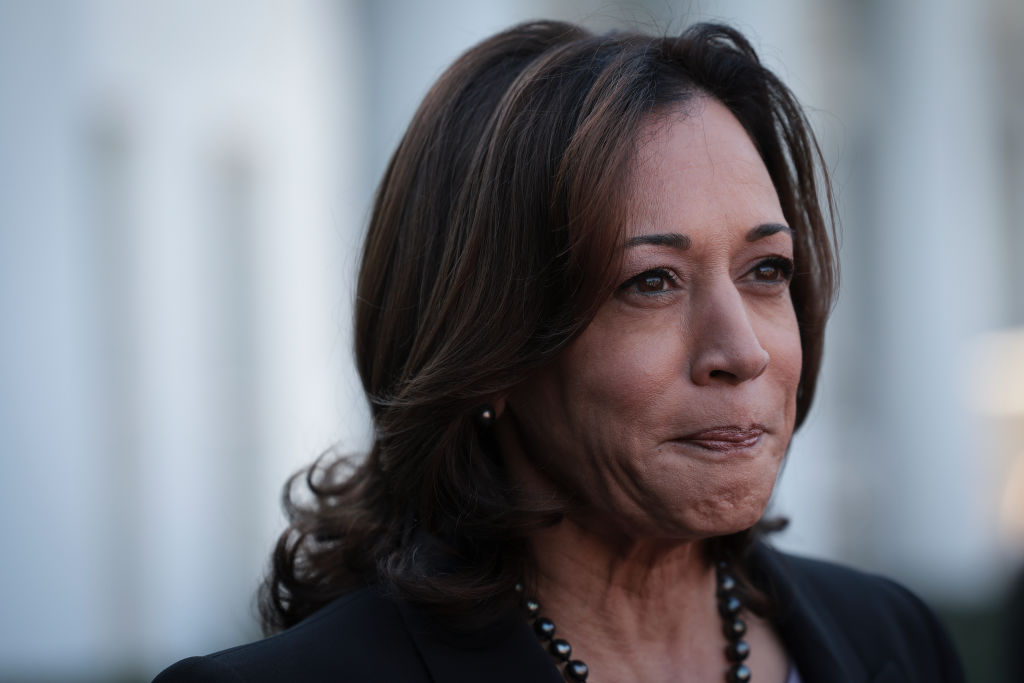
Black Voters Matter co-founder LaTosha Brown took to social media on Monday with a fiery message directed at Democrats who have outwardly placed blame on Vice President Kamala Harris for her loss to President-elect Donald Trump.
“If Dems want to maintain Black women’s support you better keep VP Harris’ name out of your mouth other than saying to her, ”Thank you!” Brown tweeted. “She understood the assignment and ran an excellent campaign. She was outstanding.”
If Dems want to maintain Black women’s support you better keep VP Harris’ name out of your mouth other than saying to her,”Thank you!”
She understood the assignment and ran an excellent campaign. She was outstanding.
VP Harris will not bear the burden nor take the blame for…
Harris should not be made to “bear the burden or take the blame” for the nation’s entrenched racism, Brown said, which played a substantial role in her election loss to Trump. As a biracial woman of Black and Indian descent, Harris faced steep challenges in winning over red and swing states to become America’s first female president.
Brown, who mobilized her Black Voters Matter organization to impact Alabama’s 2017 U.S. Senate special election and the 2020–21 Georgia state elections, redirected her focus to former Speaker of the House Nancy Pelosi, addressing recent public criticisms Pelosi made regarding the election turnout.
“While Nancy Pelosi talking about candidate scenarios, perhaps she should figure out how to use her influence as a white woman to organize other white women and better understand how to end racism,” Brown said. “I suggest that she starts with her own internalized thinking and actions first.”
Brown reposted a screenshot of her tweet on Instagram and provided additional context.
“We tired, but this ain’t hardly over! Putting everyone on notice. We are tired,” she wrote in her caption. “What we have now is……CLARITY! Thank you, Kamala Harris. We see you, appreciate you, and love you.”
Last week, Pelosi seemingly placed blame on President Joe Biden for the election loss. “Had the president gotten out sooner, there may have been other candidates in the race,” Pelosi told the New York Times on Thursday. “Kamala, I think, still would have won, but she may have been stronger, having taken her case to the public sooner.”
“The anticipation was that, if the president were to step aside, that there would be an open primary,” Pelosi continued.
Cryptocurrency Is Surging In The Wake Of Trump’s Election
With Elon Musk in his ear, the cryptocurrency industry is likely to receive favorable policy proposals in the next iteration of the Trump Administration
According to Fast Company, although neither political party fully trusts cryptocurrency, Trump has positioned himself as the cryptocurrency president.
The Republican Party has fallen in line with Trump as he has fully embraced the digital currencies.
In a video he posted to social media in August, Trump promised that the United States would be the crypto capital of the world.
“This afternoon, I’m laying out my plan to ensure that the United States will be the crypto capital of the planet. They want to choke you. They want to choke you out of business. We’re not going to let that happen,” Trump said in the video.
The “they” is unclear, but with Elon Musk in his ear, the cryptocurrency industry is likely to receive favorable policy proposals in the next iteration of the Trump administration.
The market seems to suggest that an incoming president and one of his key advisors’ strong backing for crypto are good developments for cryptocurrency investors.
Indeed, according to Susannah Streeter, the head of money and markets at investment analysis company Hargreaves Lansdown, the market is experiencing “euphoria” post-election.
“His (Trump’s) pledge to go all in on crypto has sent Bitcoin to fresh heady heights,” Streeter said in a research note released on Nov. 11.
Streeter continued, “He’s made an about-turn on supporting the industry and is now vowing to turn the U.S. into the crypto capital of the world. Bitcoin speculators are betting on a more clement regulatory environment and have expectations that the authorities may build up a reserve crypto fund, helping lift ongoing demand.”
In a previous research note, Streeter also noted that “Investors should only dabble in crypto with money that they can be prepared to lose. Because we’ve seen these wild swings in the past.”
According to The Associated Press, Trump has also promised to remove Gary Gensler, the head of the Securities and Exchange Commission.
Gensler has been critical of cryptocurrency in his role, leading the government to crack down on cryptocurrency and calling for more oversight of the incredibly volatile digital currencies.
In October, Gensler criticized the cryptocurrency field in general during a discussion at the New York University School of Law.
“We’re trying to enforce the laws at hand…This is a field with a lot of fraudsters, a lot of grifters, a lot of scams,” Gensler said.
“It’s plausible that Trump’s administration might explore leveraging blockchain technology to enhance transparency and efficiency in government operations, especially with Elon Musk as an adviser,” Ledford said. “There could also be initiatives aimed at promoting the adoption of cryptocurrencies to stimulate economic growth and attract tech-driven investments.”
However, Ledford also has reservations about how far Trump will go in favor of digital currencies.
“I don’t personally believe anything Trump says, however, and blockchains do allow the creation of rules that everyone must follow, which I don’t think Trump would specifically like in a government he runs.”
Ledford noted that cryptocurrency is becoming more mainstream, which should help legitimize it as more technology guardrails are erected.
“Major companies are integrating crypto payments, and advancements in blockchain technology are making transactions more secure and efficient. Additionally, regulatory frameworks are evolving, which could provide more stability and legitimacy to the crypto market.”
Fuze Fund To Uplift Underrepresented Entrepreneurs With $30M Venture Capital Fund
This is what advocacy looks like!
Fuze Fund, a Black-owned venture capital firm, has launched a $30 million fund called Fuze Venture Growth Fund I, LP, in hopes of bridging the equity gap among starting entrepreneurs, according to a press release.
The platform is dedicated to providing capital, strategic support, and resources to heighten minority-, veteran-, and women-led startups, following the approval of the U.S. Securities and Exchange Commission. At the start of entering a subscription journey, the company has opened the door for accredited investors to join in, not just with financial contributions but to add to a growing system that uplifts founders with mentorship in hopes of obtaining long-term success.
“At Fuze Fund, we’re driven by the belief that innovation knows no boundaries. Yet, we’ve seen far too many talented founders from underrepresented communities being sidelined due to a lack of access to funding,” Fuze Fund’s founder and managing partner, Dr. T.J. Breeden, said. “Our goal is simple: to ignite potential. We’re not just backing startups—we’re investing in people, in communities, and in the next generation of game-changing ideas.”
Breeden worked as the leader of Emerging Entrepreneurs, Inc., a non-profit that provides startup training in underrepresented communities with veteran and minority populations.
“While leading Emerging Entrepreneurs, Inc., I saw firsthand how difficult it was for underrepresented founders to access the funding and support they needed to succeed,” Breeden explained of his time at Syracuse University. “Though a few years passed, and I went on to complete my doctoral studies at the University of Illinois Urbana-Champaign, the hope of one day launching a fund never left me. Less than four months after defending my dissertation, in the fall of 2021 and in the midst of the pandemic, Fuze Fund and its flagship venture fund were formed.”
Studies show that minority founders received only 1.1% of venture capital funding in 2022. That percentage dropped to just 1% in 2023.
For the founder, providing capital is just the first step, as there is a whole ecosystem to transform. “Our focus is to create a comprehensive ecosystem where diverse founders have the guidance, resources, and partnerships they need to navigate and scale growth with confidence,” Breeden said.
Now part of the “U.S. Speaker Program,” sponsored by the U.S. Department of State’s Bureau of Education and Cultural Affairs, Breeden hopes to extend his program to U.S. embassies and consulates around the world. The goal would be to work with leaders, officials, and subject matter experts in hopes of starting the conversation on topics concerning business owners.
Bernice Burgos Claims She Made $70K A Night While Working As Bartender
Burgos revealed her strategy of undercharging for liquor bottles up front, enticing a heavier tip at the end of the night.
Bernice Burgos claims she made big bucks as a bartender in New York. She went on the Joe Budden podcast to explain how she made up to $70K a night in the profession.
The influencer and reality star appeared on a recent episode of the podcast. During the conversation, Burgos discussed how much income she made while bartending. She stated that she only bartended for three years and used the lofty checks to start her own business and buy a home. X user Victor Baez reposted footage of the episode.
Bernice Burgos reveals that as a bartender in New York, on her worst nights she would make $30,000, and she did it for 3 years📍
“I only bartended for three years. I only said three years I was gonna be in here, start my clothing line, and I was out—buy my house and do what I gotta do, and that’s what I did,” Burgos said on the podcast.
According to Burgos, she made heavy profits even on slower nights. The “The Impact: New York” star earned $30K on a below-average evening. However, her highest nightly earnings reached $70K.
Burgos revealed she did it by undercharging for liquor bottles up front, enticing a heavier tip at the end of the night.
“I make sure I give you the bottles for $250. The bottles cost $350. So I’m gonna hustle,” she explained. “You don’t gotta tip me. You don’t gotta give me the tip right there…You tip me later down the line, like throwing money. So I was smart, you know? I just built a relationship with the people in there.”
However, Burgos assured viewers that it was not the sex appeal she was selling. “I don’t do too much,” she asserted. “I used to be covered with a whole body suit on.”
While Burgos’ strategy yielded positive results, the show’s host said her drinks left much to be desired.
“I ain’t gonna hold you. Respectfully, Bernice made the worst drinks,” said Budden. “N****s was just at that bar because look at Bernice.”
Viewers can see more of the special episode on Joe Budden’s Patreon.
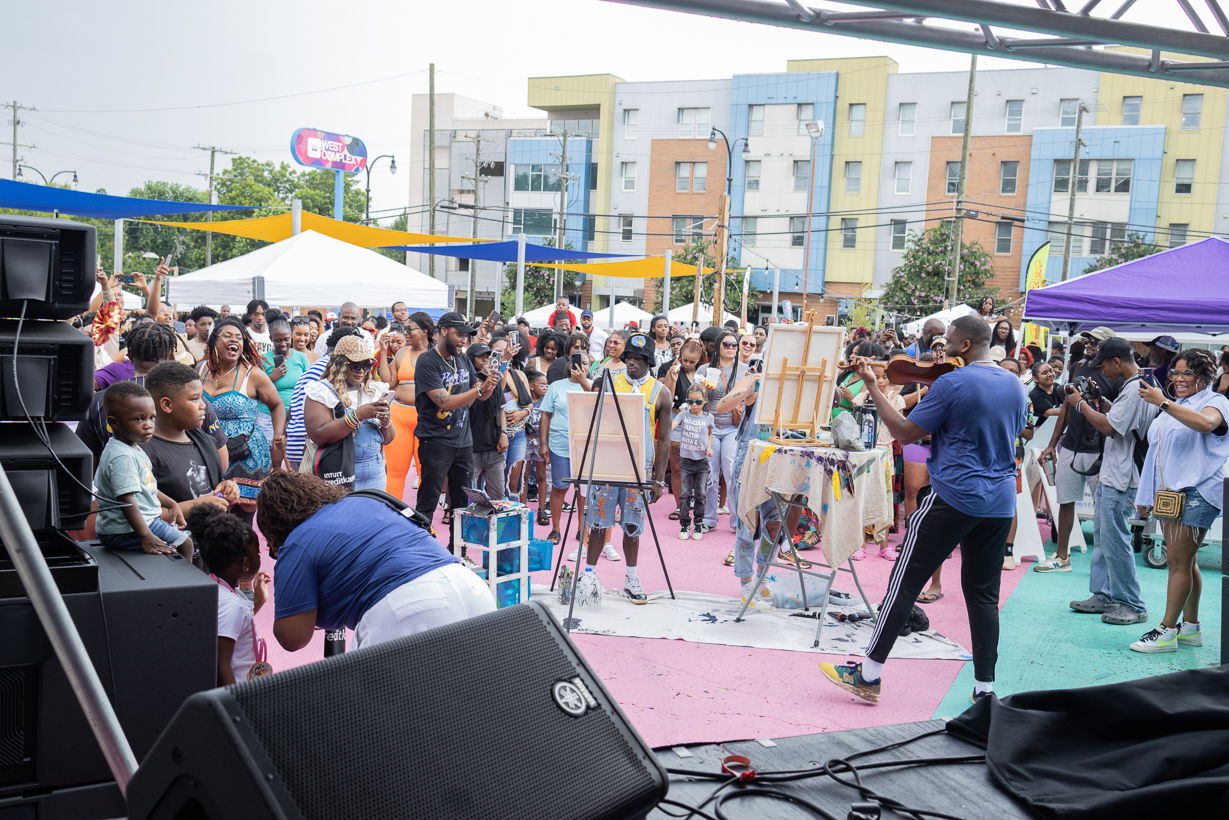
Community event in Charlotte's Historic West End (Photo courtesy of Winston Robinson)
The Revitalization of Charlotte’s Historic West End
An historic Black community in Charlotte, North Carolina, is undergoing a dramatic transformation.
During the first half of the 20th century, African Americans established neighborhoods like Biddleville and Greenville, which quickly developed into a thriving cultural and economic hub. This area, now known as the West End, blossomed into a beacon for Black-owned businesses and is home to Johnson C. Smith University, one of the oldest HBCUs in the country. However, beginning in the 1960s, urban renewal and the development of Interstates 277 and 77 razed these neighborhoods or cut them off from the rest of the city, reports Charlotte Magazine. Subsequently, the area faced decades of disinvestment, systemic disparities, and the pressure of gentrification, forcing some long-time residents to be displaced.
Today, Black Charlotteans, activists, and entrepreneurs are leading a concerted effort to restore West End’s commercial area along Beatties Ford Road to the center of Black business and opportunity that it once was.
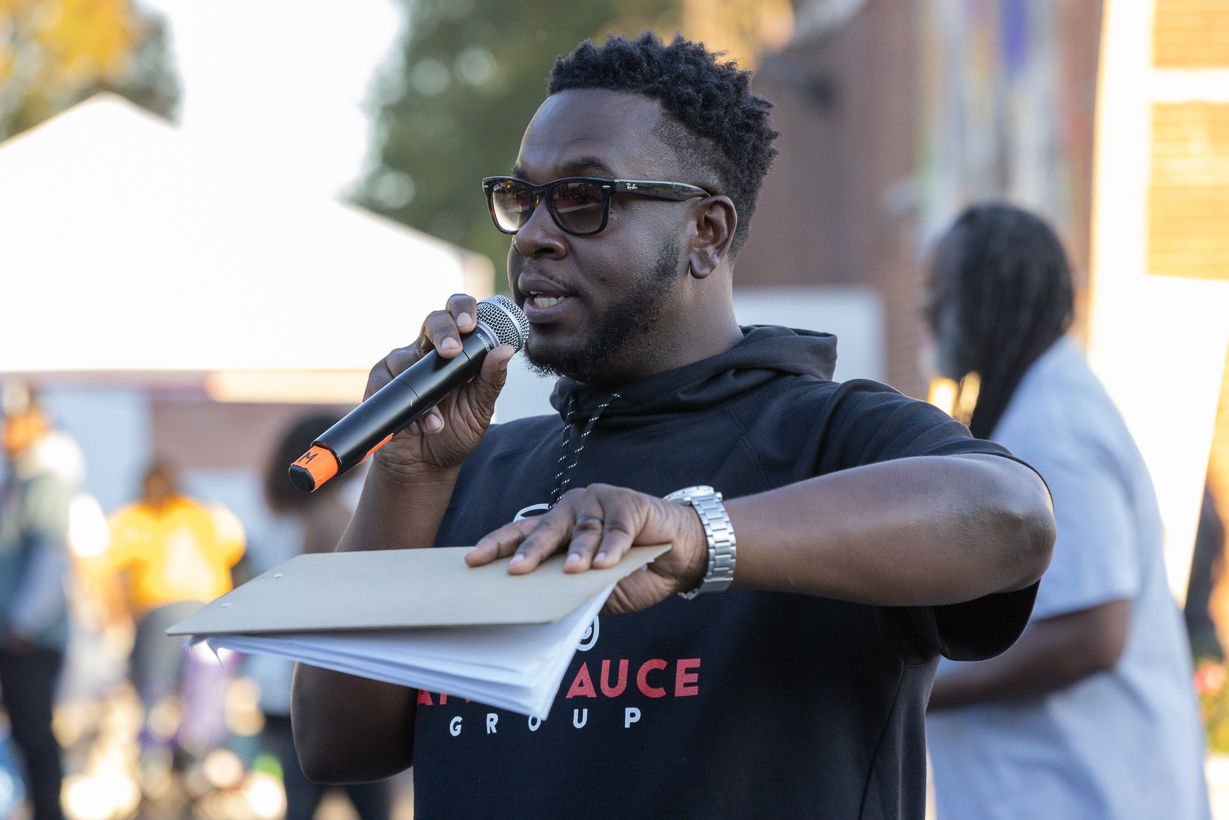
Source: Winston Robinson, founder of the Applesauce Group (Photo courtesy of Winston Robinson)
“The people who built this community did so with insurmountable odds,” Winston Robinson, a Charlotte native and community leader who resides in the historic community, tells BLACK ENTERPRISE. “The Westside is my home,” he says, referring to the name that natives and older Charlotte locals call the area. “West End,” he explains, recently gained popularity over the last decade from a branding campaign.
In 2020, Robinson founded the Applesauce Group, a nonprofit dedicated to organizing community events in the West End and providing residents with access to resources and economic empowerment.
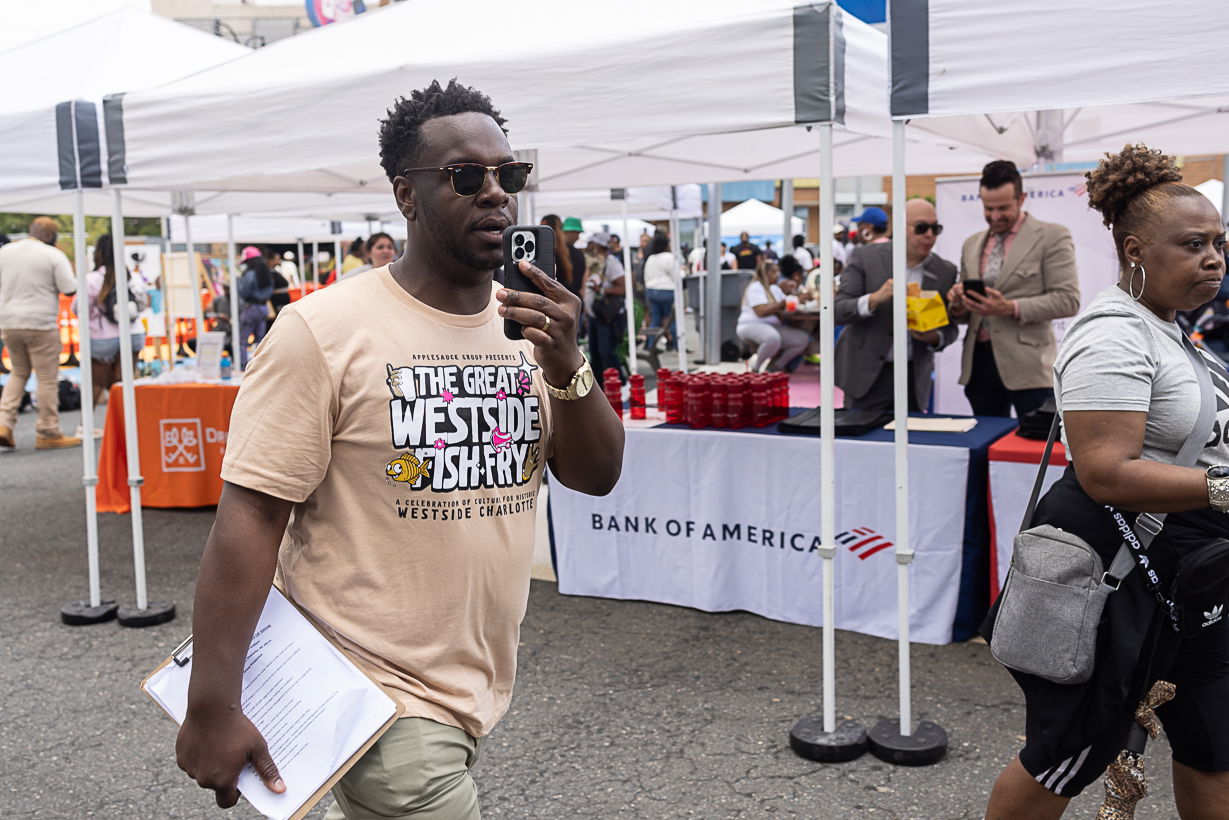
Source: Winston Robinson, founder of the Applesauce Group. (Photo courtesy of Winston Robinson)
“This isn’t some relic of the past being revived—it’s a living, breathing community with ongoing vitality. Our work, through events like ‘A Vibe Called Fresh’ and ‘The Great Westside Fish Fry,’ is about creating moments where people can connect to that cultural richness, where Black joy is celebrated, and where the community can see its own greatness reflected,” he says. “We’re not just part of the revitalization—we’re here to keep the story going.”
In addition to preserving the history, Robinson and other community advocates are dedicated to amplifying the voices of those who live and work along the Beatties Ford Road corridor, a historically Black community north of uptown and anchored by Johnson C. Smith University.
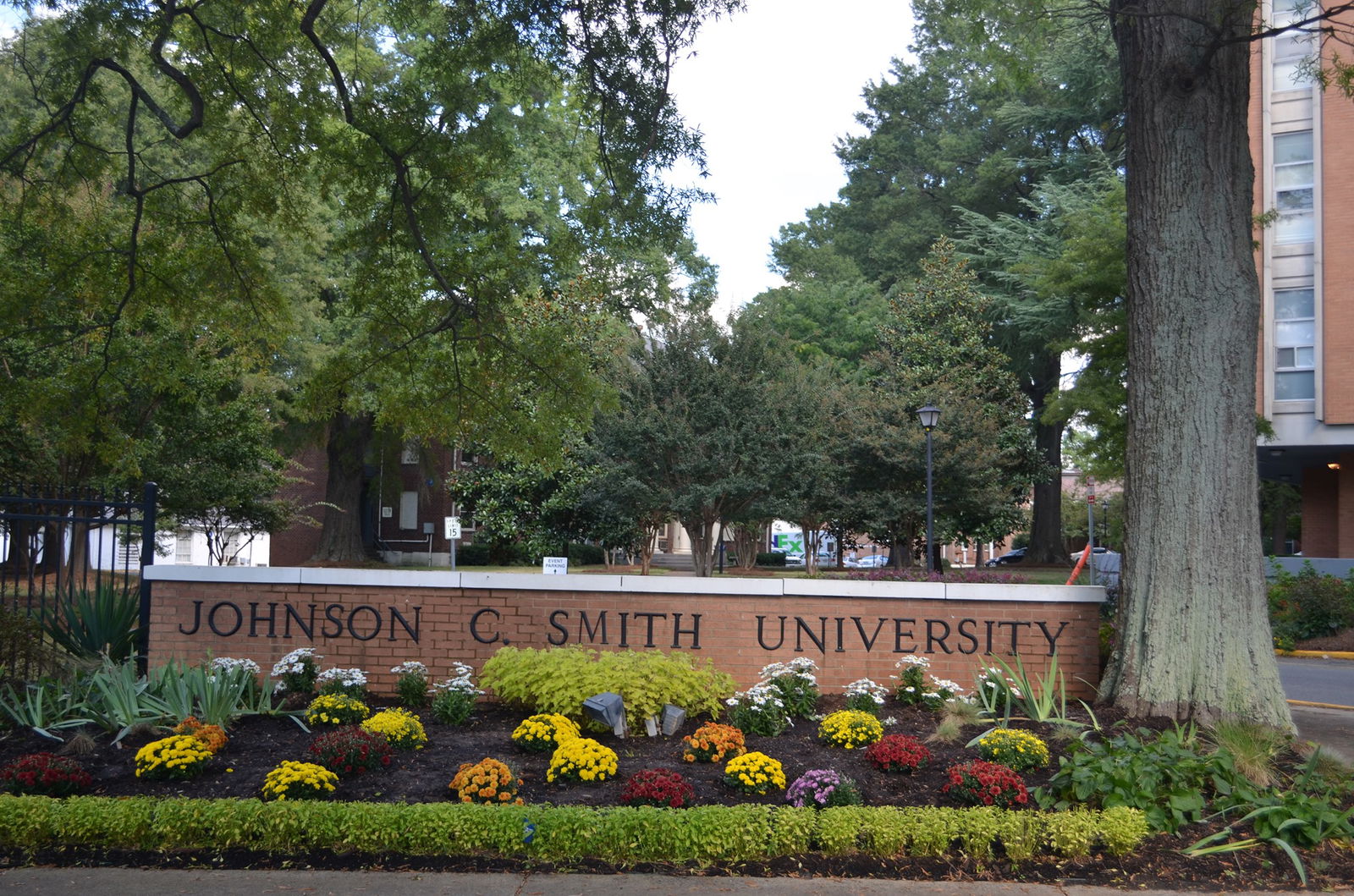
Source: Johnson C. Smith University (Photo: Facebook.com/jcsuniversity)
“The work I do there feels more like duty or stewardship. I owe so much to the legacy of this community, and my contribution is the small tax I pay for having the privilege of calling it home,” he says. “The work we do with Applesauce Group is about sparking energy and telling the story of us, the Westside, the people who make the historic Beatties Ford corridor special.”
Preserving the West End Legacy
The West End’s strategic location—adjacent to uptown Charlotte and near the expanding rail lines—has made it a hotbed for investment and real estate development. Major projects, including mixed-use buildings, new housing, and tech-driven startups, have begun to change the landscape. While the booming commercial and residential growth could bring significant economic opportunities, activists and advocacy groups are rallying to ensure that Black residents are not only preserved in this transformation but positioned to benefit from it. Organizations like the West End Business Development Association are advocating for targeted programs that give Black-owned businesses priority in leasing opportunities as well as grants and incentives to spur new ventures.
“There’s a vast lack of resourcing, a lack of nurturing,” Robinson says. Yet, many original structures remain in the neighborhood, preserving authenticity in the community. “A lot of the elements on the Westside have remained the same for decades. However, that also attributes to the charm.”
One of the landmark sites in West End includes The Excelsior Club, a former Black nightclub dating back to 1944. Meanwhile, notable figures like J. Charles Jones and Dorothy Counts call the community home.
Source: Dianna Ward, co-owner of Charlotte NC Tours, LLC, and founder of Sankofa Partners, LLC
Dianna Ward, a serial entrepreneur and real estate investor who grew up in the West End, is also dedicated to preserving the community’s rich legacy. In addition to being the founder and CEO of Charlotte NC Tours, she is fueling capital commercial properties and empowering other Black entrepreneurs. In 2019, she purchased and redeveloped a building on Rozzelles Ferry Road near Johnson C. Smith University that houses Rita’s Italian Ice and Jet’s Pizza, two popular Black-owned shops. She and her business partners have also revitalized a string of buildings along Beatties Ford Road.
Furthermore, multiple resident-led organizations, with the support of contributors like the Knight Foundation, are working to prevent residential displacement. Ward pointed to Alesha Brown, Esq., a civil rights attorney who’s played a pivotal role in protecting Black locals—many of whom are elderly and living on a fixed income—from displacement and predatory property investors. Through her nonprofit, For The Struggle, she is helping to reduce the rate of gentrification across Charlotte.
“[Alesha] stepped in and started [telling] people [to] stop selling your houses, put them in a trust, create generational wealth,” Ward tells BE. “In this neighborhood, there is some gentrification, but it’s slowed [down] because these forces are working together to help people realize they’re sitting on gold mines.”
Despite the growth and development in Charlotte, Ward says plenty of Black businesses are thriving in the West End.
“There are some people who’ve been there for 25 to 30 years doing business,” she says. Not only do they own businesses, but they also live, contribute, and pray in the community as well. “They own their businesses there, they go to church there, they know the people that they serve.”
“My friend, Bernetta Powell, owns West End Seafood. You can go there, you can get some of the best fried fish you will ever eat,” she says. “Once you take one bite, you’re going to want sit down and finish it right there. She’s been open for 25 years. She owns her building. She is a successful West End story. We need to celebrate her.”
Ward also highlighted Pauline’s Tea Barowned by a Black woman who has two locations on the West Side.
“Pauline’s tea bar. We’re gonna go have tea at a tea bar, a Black female-owned tea bar. She has two locations. That’s on the west side. Go have tea. Her grandmother grew tea, so she decided to open a tea bar.”
She continues, “There’s a woman named Cherise who owns Archive Coffee. It is a Black-female-owned coffee shop and bookstore.” Located in the Beatties Ford Rd corridor, is a popular cultural hub dedicated to preserving and showcasing the history, art, and storytelling of Black people.
“You can already come and get one of the most beautiful wedding dresses you’ll ever wear at Mackin’s Bridal Boutique owned by two women, one of which went to Johnson C. Smith University and the other one studied design in London.”
Ward also noted the nightlight attractions, pointing to the Members Only Social Club and West End Tavern. That’s “a hotspot for young people.” Also, she notes, activist J’Tanya Adams, founder of Historic West End Partners, owns a building that includes a popular jazz club.
The Future of the West End
Source: Community event in Charlotte’s Historic West End. (Photo courtesy of Winston Robinson)
Ward envisions a very bright future for the West End and projects that it will continue to grow into a bustling community.
“It’s going to be fabulous. You’re going to want to come and experience the entertainment that’s going to be taking place on the historic West End. You’re going to want to come over and walk on JCSU’s campus and experience the historic buildings that aren’t necessarily standing anywhere else in Charlotte,” she said. “We’ve got historic buildings still standing—a nice collection of historic buildings still standing on the Johnson C. Smith campus,” she notes.
Nevertheless, as development continues, the fight for equitable access to wealth in the Historic West End remains critical. Black Charlotteans, who have long contributed to the city’s cultural and economic fabric, must be at the center of its rebirth.
“The Westside isn’t just a place on the map; it’s a space where history, pride, and culture intersect. This isn’t some relic of the past being revived—it’s a living, breathing community with ongoing vitality,” says Robinson.
“We’re not just part of the revitalization—we’re here to keep the story going.”
Discover more of Charlotte’s vibrant neighborhoods and start planning your trip at charlottesgotalot.com
Editors’ Note: This article was updated on November 22. A previous version referenced Charlotte’s Historic West End as the “’Black Wall Street’” of Queen City.”
That moniker was more notably associated with McDowell St. in the former Brooklyn community located in uptown Charlotte and disbanded via Urban Renewal in the 1960s. Beatties Ford Rd. (the primary thoroughfare on the Westside) is often referred to as “The River Nile” to long-time Black residents throughout Charlotte to metaphorically represent the long stretch that sustains Black life.
Top industry leaders issued concerns about why their company has pushed the back-to-office mandate. Jamie Dimon of JPMorgan Chase feels that remote workplaces have limitations on spontaneous ideas, along with making it challenging to manage a team. An Amazon executive mentioned in-person work projects more seamless learning and teaching after Amazon’s return-to-office announcement. Former Google CEO Eric Schmidt went a step further to claim that remote work was the reason behind the company’s AI development.
Other companies see it differently. An internal analysis from Pinterest, a pinboard social media platform, revealed that flexibility is the name of the game. In 2023, the company’s flexible work policy resulted in a boost in productivity, garnered heightened collaborative efforts, and an overall enhancement of well-being. Their approach also attracted a new generation of a diverse talent pool. “So while some leaders insist that remote work is stifling innovation, collaboration, and productivity, hard evidence shows the opposite,” Doniel Sutton, Pinterest’s Chief People Officer, said.
A study from Stanford University found flexibility within remote work can boost productivity by 13%. The data was backed up by reports from Global Workplace Analytics, showing reports that over two-thirds of companies saw increased productivity from remote workers.
Data from Scoop also found remote work companies outperform in-office companies by an average of 16%. Leading business management consulting firm McKinsey & Company listed flexibility as one of the top three motivators behind potential employee job search.
Following the slowdown of the COVID-19 pandemic, corporations struggled to find ways to incorporate a hybrid transition, especially tech companies. Salesforce mandated employees to come back to the office at least four days a week, while other tech giants like Apple used the excuse of a beautiful empty office in Cupertino as the reason for back-to-the-office policies, according to The Verge.
It was announced in early November 2024 that the team at The Washington Post will be sentenced back to the office starting in June 2025. In a memo from chief executive William Lewis, he claims the team is “really good when we are working together in person.” As the new policy resonates the same as Amazon, as the post is owned by creator Jeff Bezos, the change was met with instant pushback.
The Washington Post Guild, an employee union, labeled the policy as “inflexible and outdated.” “Guild leadership sees this for what it is: a change that stands to further disrupt our work rather than to improve our productivity or collaboration,” the group said in a statement. The move may add to the already existing turmoil at the publication after Bezos blocked an endorsement of Vice President Kamala Harris during the 2024 presidential election cycle. The decision resulted in resignations from award-winning journalists and the termination of thousands of paid subscriptions.
Snoop Dogg Leads Martha Stewart In The Art Of Negotiation
Snoop Dogg sets the tone for business - Martha Stewart follows.
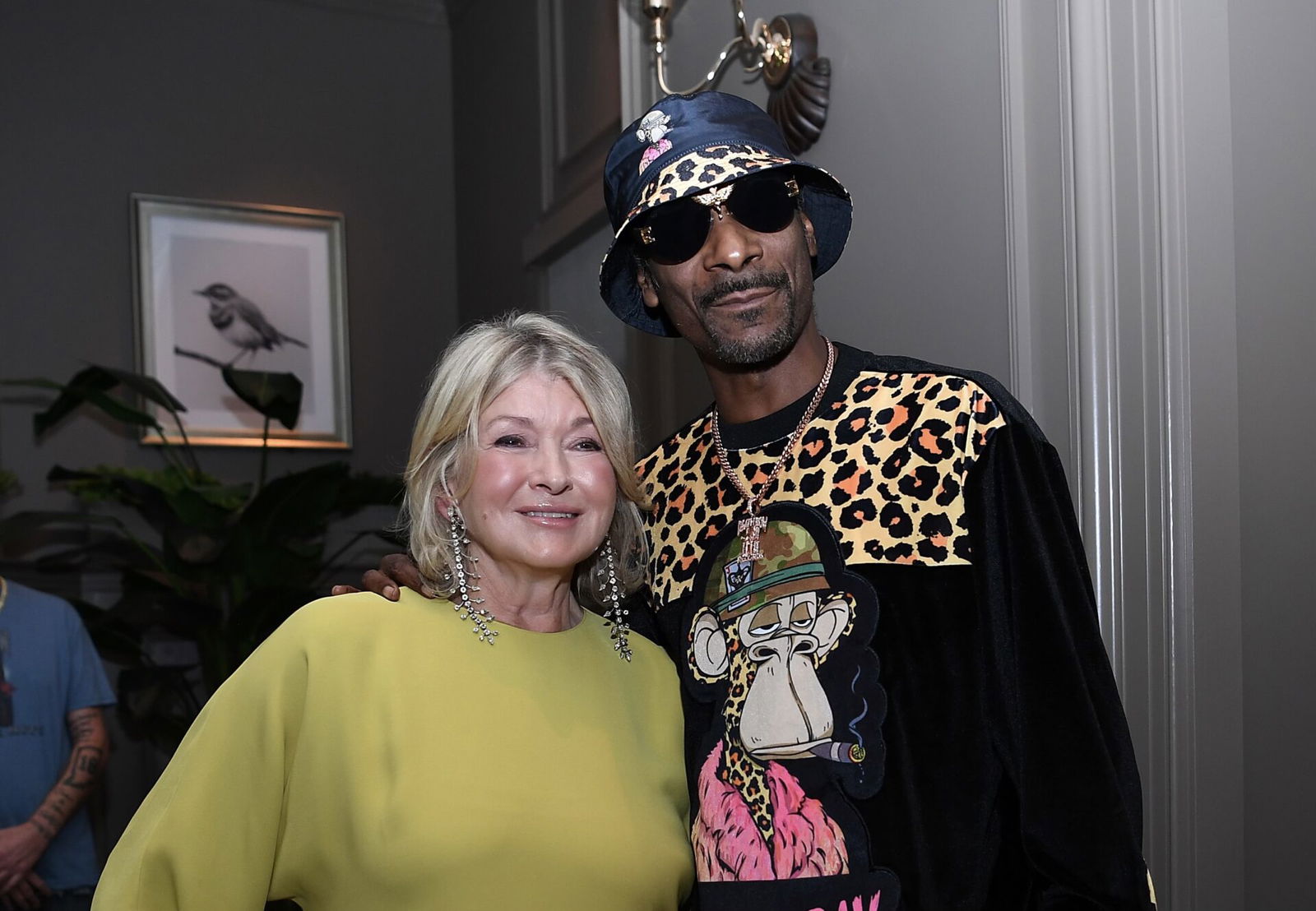
Martha Stewart and Snoop Dogg have been the ultimate odd couple for the last few years. Recently, Stewart spoke to People and revealed the “Drop It Like It’s Hot” rapper also advises her on business negotiations.
The Martha Stewart Living host praised Snoop’s business acumen and his positive personal attributes.
“He is curious, he is a great student, he is a phenomenal negotiator (he’s taught me a lot), he’s tough, and he is ultra sweet,” Stewart said.
She told the Wall Street Journal how Snoop often leads the way when it comes to negotiating terms for their joint business ventures.
“We do a lot of work together, and I wait for him to negotiate the contract, then I go and follow him.”
While Steward finds Snoop a valuable asset in business and friendship, Snoop spoke about their willingness to pass opportunities to one another. One example is Snoop’s Skechers partnership, which happened, in part, due to Stewart bypassing Snoop’s team and showing him the value of working with the brand.
“It’s been numerous calls where she would call me and be like, ‘Snoop, I was trying to get you to do a deal with Skechers, but your people was in the middle. They didn’t want to do it.’ I’m like, ‘For real?’ She’s like, ‘Yeah, you should fuck with them. Look at my shoes.'”
“On the flip side of that, I got the 19 Crimes wine deal, red wine, we popping off. Boom, boom, boom. ‘Hey Martha, what’s happening? You ain’t got no wine deal. You want to come on over here and play with us?'”
The odd pair appear to have formed a genuine relationship. They were spotted at the 2024 Paris Olympics supporting American athletes and even took a little time to horseback ride.
Snoop Dogg has come a long way since the early days of his rap career. The musician is a full-fledged businessman nearly 30 years after his rap debut.
BLACK ENTERPRISE reported on Snoop laying to rest a tumultuous time in his life and career when his criminal case for the murder of a 20-year-old gang member was sealed.
Snoop was charged with voluntary manslaughter in 1993. The charges loomed over his head until his 1996 acquittal. The record has been open to the public for the last 30 years, but Snoop will no longer have to worry about his legacy in posterity.
“With the record now sealed, it will be concealed from public access, and in most cases, the defendant will receive their fingerprints, booking photos, and DNA samples back, according to the New York State Unified Court System.”