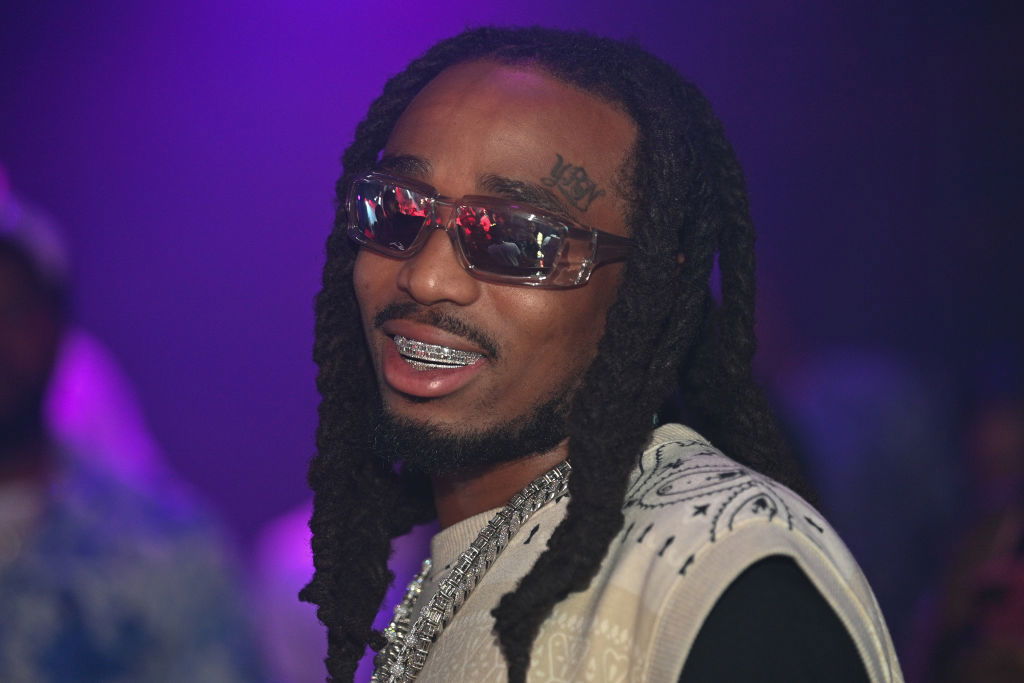
Quavo Sinks His Teeth Into A ‘$100K Glizzy’ In France
C’est délicieux! Former Migos member Quavo was recently in France, and while there, he dined on a very expensive meal.
Quavo, born Quavious Keyate Marshall, took several bites out of a supposedly six-figure delicacy–though Americans might beg to differ. Quavo took a bite out of what he described as a “one hundred thousand dollar glizzy,” another name for a hot dog or frankfurter.
The video was posted on DJ Akademiks’ Instagram page. He labeled it “Quavo eating a hotdog with gold flakes in France.”
HotHipHop said Quavo’s “glizzy” was topped with “some shimmering gold flakes.” Whether it cost $100,000, only Quavo knows.
Stateside, with the death of his fellow Migos member and nephew Takeoff still on his mind, the Grammy-nominated recording artist appeared on a panel during the Congressional Black Caucus Legislative Conference in Washington, D.C., Sept. 20, 2023.
He joined Sen. Raphael Warnock (D-GA), Rep. Lucy McBath, the mother of gun violence victim Jordan Davis, and Community Justice Action Fund Executive Director Greg Jackson. The panel spoke about how gun violence can be battled with the help of powerful advocacy and community intervention strategies.
After Takeoff was killed in Texas last year, Quavo started a nonprofit organization, The Rocket Foundation. According to the website, the foundation was created “to honor the life and legacy of Kirsnick Khari Ball (known to many as “Takeoff”); the Rocket Foundation has been established to support programs that are saving lives through proven, community-based solutions to prevent gun violence.”
Black Menswear Gathers Over 250 Black Men In Empowering FlashMob In Dallas
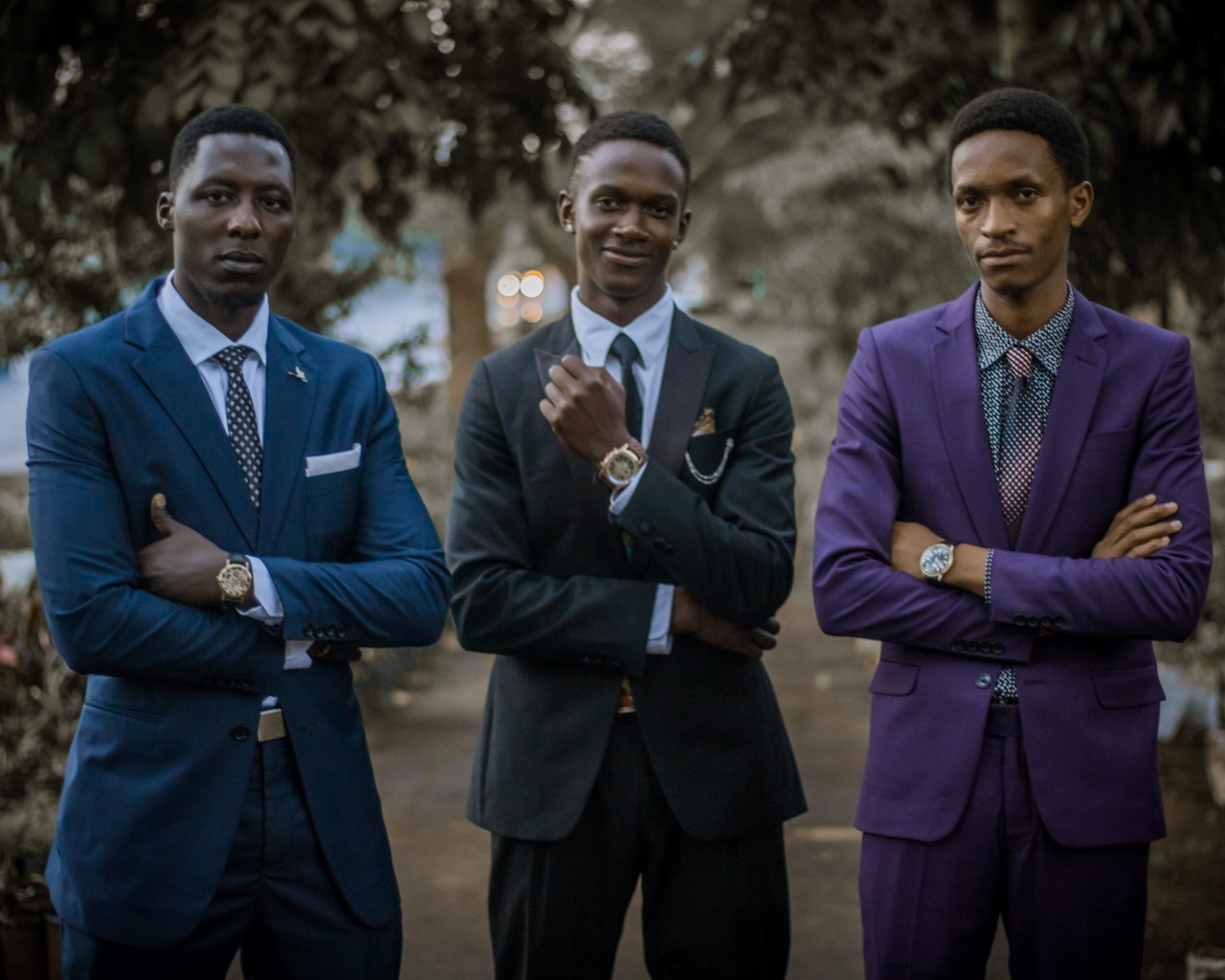
In a powerful display of unity and style, over 250 Black men gathered at the American Airlines Center Plaza Sept. 23 to participate in a gathering dubbed FlashMob and orchestrated by Dallas-based Black Menswear.
This cultural impact agency connects global brands with African American men, and this event was more than just a photogenic moment; it was a movement to showcase the often-understated excellence of Black men, Dallas’s 97.9 The Beat reported.
Black Menswear CEO and Founder NeAndre Broussard highlighted the significance of having the FlashMob in Dallas for this impactful moment.
“The first FlashMob was held in 2017 in Las Colinas, and now we returned to the city where it all began — even bigger and more intentional than before. With the newly gained support of the Dallas Mavericks organization, we believe that Black Menswear will be able to reach more audiences and create even more impact for the community that we love and serve.”
One of the significant features of this event was a suit drive conducted in partnership with the Dallas Mavericks and its mascot, Champ. The suit drive aimed to collect new and gently used suits, belts, ties, shoes, and accessories for local youth, which will be donated to the Mark Cuban Heroes Center for its ongoing SuitUp Experiences.
Sean Reed, director of Corporate Social Responsibility with the Dallas Mavericks, expressed the importance of supporting organizations like Black Menswear.
“It is important for the Dallas Mavericks to support and partner with organizations that combat inequities, challenge the status quo, and drive change,” Reed said.
“Too many children of color have grown up with limited positive representation in the news and media. So, this is a perfect opportunity to combat that and spread positive images of Black Men.”
Black Menswear, an international traveling collective of Black men, is dedicated to changing society’s perception of Black men and promoting positivity within the Black community. Their mission revolves around challenging negative stereotypes and showcasing Black men in a more positive light, countering the often unfavorable portrayal in mainstream media. The collective comprises a diverse group, including celebrities, social media influencers, professionals, educators, mentors, and more.
Attorney Ben Crump To Represent Tennessee State University Against State Government
According to the Tennessean, Tennessee State University (TSU), a historically-Black university, is owed $2 billion in back pay following years of underfunding. Leading this pursuit is civil rights attorney Ben Crump, who visited the university to speak to staff and students about the situation.
This September, U.S. Secretary of Education Miguel Cardona and U.S. Secretary of Agriculture Thomas Vilsack sent a letter requesting that 16 state governments account for the underfunding of several HBCUs years after the Second Morrill Act of 1890. This act provided federal land grants to institutions amid segregation.
However, funding to HBCUs compared to predominantly-white institutions has historically been disproportionate, with Black universities bearing the brunt of it, according to Nashville Scene.
“Tennessee State University has been able to make remarkable strides and would be much stronger and better positioned to serve its students, your state, and the nation if made whole with respect to this funding gap,” read the letter.
“This is really about the lives of Black people in America and trying to understand that there’s a huge wealth gap between Black Americans and white Americans. And education is a great equalizer to bridge that wealth gap,” he said at a town hall meeting Oct. 3.
“We really sincerely hope that the Tennessee legislature is going to rectify this historic deficit.”
With these financial deficits, many Tennessee State University students and alums feel swindled. Despite the Biden administration’s concerted effort to address such disparities, the state’s failure to allocate these demanded funds could lead to legal action.
Executive Coach Ingrid Wallace Shares Insights On How Coaching Can Help Your Career
The coaching industry is expected to grow at a compound annual growth rate of 7.6% and will be worth an estimated $27.5 billion by 2026, according to analysis conducted by business consulting firm Grand View Research.
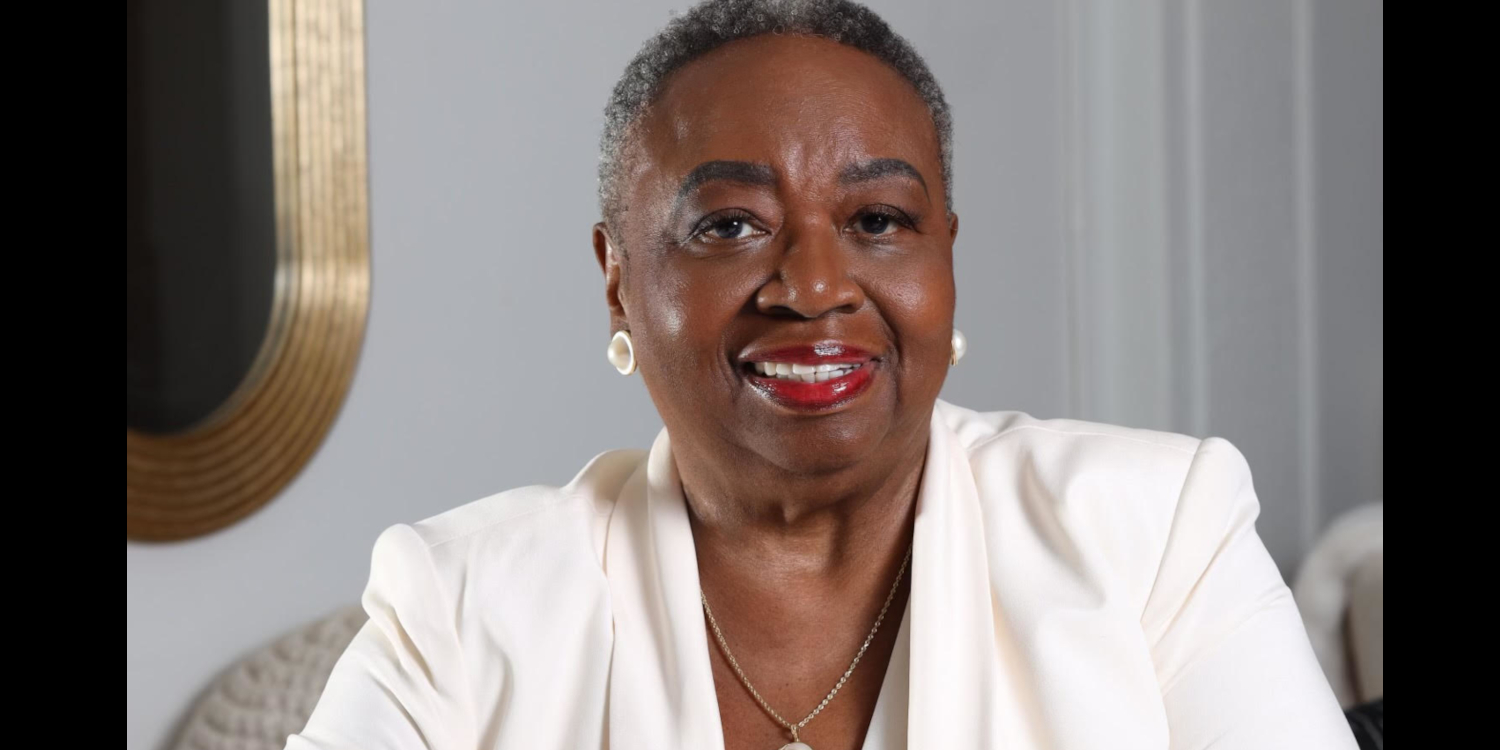
One person on the front lines of coaching is Ingrid Wallace. An experienced executive coach and DEI consultant, she has worked with leading organizations such as Disney, Enterprise Rent-A-Car, General Motors, Ford, and Chrysler. Wallace believes that her job as an executive coach is simple: To help clients focus, gain clarity, and confidently navigate professional journeys.
She sat down with BLACK ENTERPRISE to discuss how she became an executive coach, why leaders need a coach, and how to select an executive coach.
Prerequisite To Promotion
Findings from a study entitled Being Black In Corporate America: An Intersectional Exploration, conducted by the National Opinion Research Center at the University of Chicago, show that only 3.2% of executives and senior manager-level employees are African American. One thing that could help change this is preparing Black executives to be promoted.
“I was suffocating inside corporate America for nine years,” says Wallace, who began her career at Blue Cross Blue Shield, teaching anatomy, physiology, and medical terminology. “The class I was teaching was a prerequisite to promotion, but the company was not sending African Americans to this class!”
Wallace decided to teach this class at 7:00 a.m. and 5:30 p.m. to help individuals prepare for promotion.
“For eight years, I helped roughly 700 people get promoted that may not have got a promotion otherwise,” she says.
“My program did not get purchased by the major Black companies of that time,” chuckles Wallace.
She decided to find out how to get her program to Black employees, and she discovered it was in downtown Chicago at the U.S. Postal Service.
“There were 25,000 employees there, and they accepted my program,” remembers Wallace. “I conducted keynotes with the U.S. Postal Service for many years and soon became the first person to sell and conduct a training for the Walt Disney Company.”
This successful program led Wallace to secure consulting contracts with companies like General Motors, Enterprise Rent-A-Car, and McDonald’s.
Maximizing Potential
Enhancing leadership can sometimes be challenging to comprehend when seeking practical approaches. The initial move toward enhancement lies in a simple definition. Getting individuals aligned and moving in the same direction toward a desired outcome is leadership.
“My job as an executive coach is to help leaders focus, see things more clearly, and perhaps see further down the road than they would have with my coaching,” says Wallace.
“I closely listen to leaders and allow them to develop a plan to navigate challenges by choosing the right words and actions that create value.”
How To Select A Coach
Executive coaching is similar to gauging traffic, Wallace notes. You have to gauge the speed and merge with a leader to figure out where he is going, the direction taken, and how to help them on their path or take a slightly different route if needed.
“Find an executive coach willing to sit on the same side of the desk as you, as opposed to the other side,” suggests Wallace. “A coach needs to be on the journey with you, so find an executive coach you trust to be on that journey with you. A coach doesn’t have to do what you do but has to give you the tools to do what you want to do!”
Atlanta Data Firm Launches Marketplace That Tracks Black Spending On Businesses and Political Campaigns
A new website is helping consumers see minority and Black spending in different lanes, Atlanta News First reports. After finding that Black consumers spend $1.7 trillion, Atlanta-based data firm FotM Global, Inc. created a way to track Black spending to help close the racial wealth gap and provide more power for the community.
Our Money United is a Black business and voter marketplace built to search for companies and candidates based on different criteria, including race, religion, ethnicity, and LGBTQ+ views. The custom search can go as deep as finding companies that take a stance on pro-life vs. pro-choice and gun control.
Currently on a six-month pilot run in Atlanta, the website has only been active for a few weeks. Founder and CEO Charles Walker Jr. and his team keep track of the data before launching it in other states. The platform has already garnered a partnership with the Atlanta Black Chamber, the National Action Network, and the Rice Center to help identify local businesses who want to join in.
Walker, Jr. says the website can change the game for customers. “You change the dynamics,” he said.
“Corporations spend tons of money with lobbyists, and they impact policy. If we used our money to support companies that supported us, then we could change the world.”
More and more Black business leaders are taking it upon themselves to keep track of who and what major corporations are spending with the Black community. In July 2020, Kezia M. Williams, CEO of The Black upStart, started My Black Receipt, encouraging customers to spend money with Black businesses and upload purchase receipts, according to Because of Them We Can. With the goal to help “quantify how Black consumers and allies buy from Black-owned businesses as a collective,” the company exceeded its goal of uploading more than 18,000 receipts.
The next step for FotM is partnering with Reach TV in hopes of running campaigns on televisions housed in over 90 airports across the U.S. Walker says this is a major step toward getting the platform focused on Black spending to the community.
“We have the credibility, and now we’re talking to the community,” he said.
“We’re giving them an opportunity to be heard by using their dollars. To vote with their wallets, period. That’s the only change we have.”
Family Of African Ph.D. Student Slain In Russia Searching For Answers, Suspect Denies His Affiliation With White Supremacy Group
The family and loved ones of Gabonese-born doctoral student François Ndjelassili have been searching for answers following his untimely death in Yekaterinburg, Russia. Now, the family of Daniil Fomin, the man allegedly responsible for Ndjelassili’s murder, has denied his affiliation with a Russian white supremacist group, The Moscow Times reports.
The Ural Federal University student was reportedly approached by three men who called him a “negro” before being stabbed outside a Burger King by two men in August 2023, according to Atlanta Black Star. Ndjelassili was said to be flirting with a woman when the men who accompanied her began to harass him. After the altercation spilled outside the fast food chain, Fomin allegedly stabbed Ndjelassili in the armpit.
Diana Akue, a friend of the former doctoral economics student, was present during the incident and has spent the last few months grappling with what she believes to be a race-based killing.
“We are all very scared, but we are at the same time angry,” she said. “As we’re not in our country, all we can do is just to be careful. But we are very scared because of what happened.”
“Our Ural colleague Danya Fomin has run into trouble … A lawyer needs to be found as quickly as possible, but Daniil’s family doesn’t have the money. Therefore, I consider it our duty to help him collect the needed amount,” a post from the channel read.
Fomin’s family vehemently denied his association with the group and expressed that they’d been covering his legal fees. However, for the more than 34,000 students from African countries currently studying in Russia, the potential ramifications of a hate crime against one of their community members has rattled them with fear.
“If it’s true the killer was really from that white supremacist group, then who knows what could happen after the court ruling? These guys could get very upset about it,” Akue said.
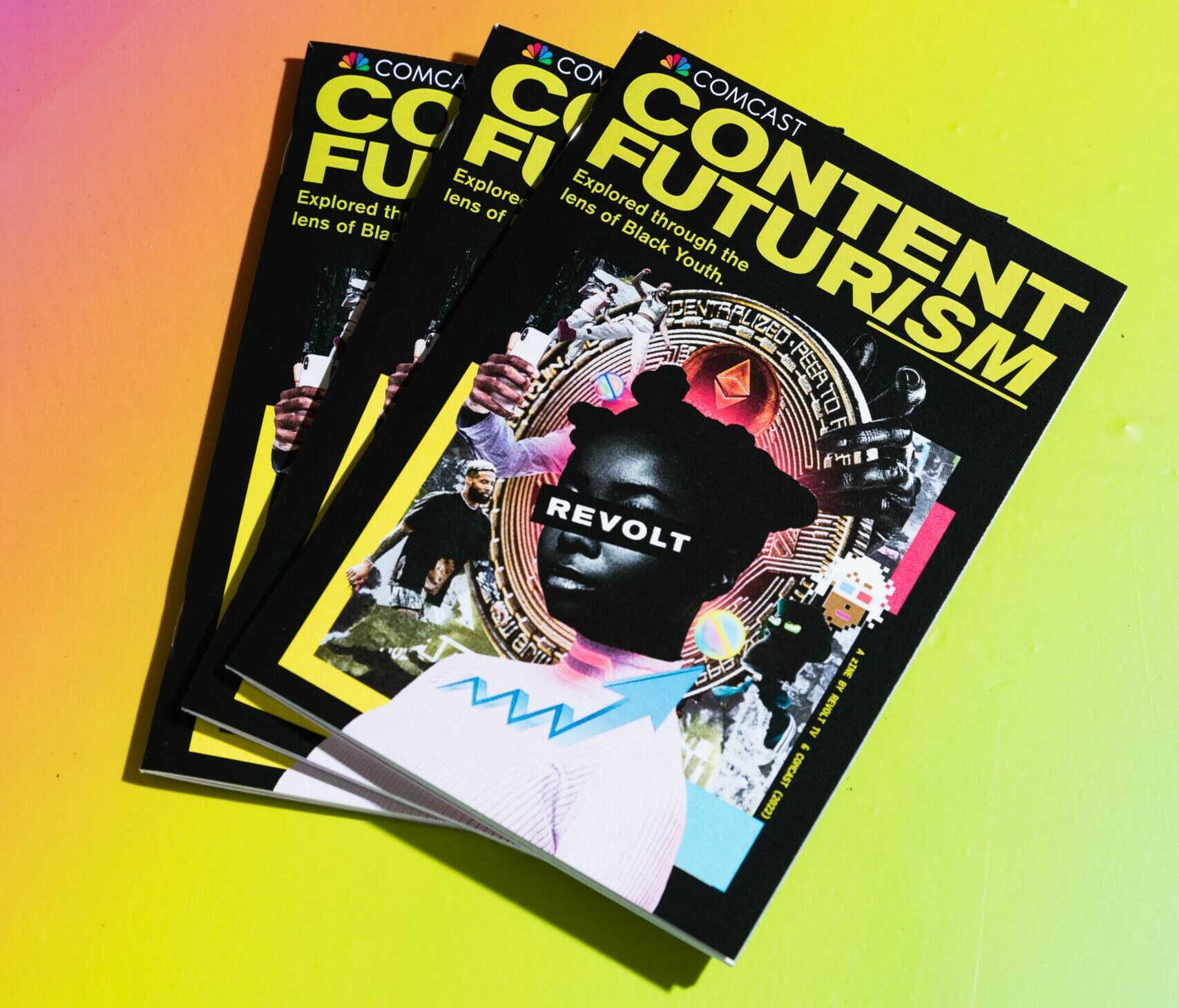
Shaping Tomorrow’s Media Landscape: ‘Content Futurism’ Zine Explores the Vision of Black Youth
The media landscape is evolving at a breathtaking pace, driven by the intersection of creativity and technology. To uncover the future of content through the eyes of today’s Black youth, REVOLT has joined forces with Comcast for a dynamic collaboration to unveil their groundbreaking research study, the “Content Futurism” Zine. This project is an extraordinary exploration of the future of content, viewed through the unique lens of Black youth, going beyond the conventional boundaries of media analysis to offer a fresh perspective on the shaping of tomorrow’s media landscape.
The “Content Futurism” Zine offers insights into five major categories that reveal the role young Black creators play in cultural evolution:
· Niche Is the New Normal: From anime to gaming, Black youth are embracing unique interests that shape their identity.
· Afrofuturpreneurism: Black entrepreneurs are spearheading businesses and brands at unprecedented rates, recognizing their economic power.
· Generative Tech Reshapes the Creator Economy: Breakthroughs in technology open new opportunities for Black creators.
· The Rise of Personalized Content: Algorithms deliver targeted content, allowing Black youth to create their own universes.
· Beauty in the Mundane: Black youth value simplicity and authenticity in content consumption.
As Detavio Samuels, CEO of REVOLT, aptly stated, “Black youth aren’t just setting trends, they ARE the future. It’s high time the media stops playing catch-up and starts tuning into the frequencies of these young Black visionaries. If you’re not paying attention now, you’re already living in the past. It’s not just a movement; it’s an evolution. And it’s happening now.”
The genesis of this partnership can be traced to a mutual commitment shared by both REVOLT and Comcast: to delve into the future through the distinctive perspective of young Black creators and visionaries. Aligning perfectly with REVOLT’s broader mission of celebrating diversity and providing a platform for Black creators of all kinds, the collaboration signifies a dedication to recognizing the influence of Black culture on global trends, not as an afterthought but as the driving force behind them.
As the media and cultural landscape undergo rapid transformation, both organizations recognize the opportunity to magnify the voices and viewpoints of Black youth. With the report finding that 1 in 3 Black youth identify with niche subcultures such as anime, it’s evident that Black creators play a significant role in shaping contemporary culture, yet their contributions are frequently underestimated. This shared dedication of both brands led to the creation of the “Content Futurism” Zine—a tangible embodiment of their commitment to empowering and celebrating the creativity of young Black talent. The “Content Futurism” Zine delves deep into the cultural shifts and emerging trends that are redefining the world of content. It represents a collaborative effort to amplify the voices and perspectives of young Black creators and innovators who often get overlooked in today’s society.
Andre Woolery, head of branded content at REVOLT, expressed his enthusiasm for this unique project, saying, “We are thrilled to officially unveil our ‘Content Futurism’ Zine, where we explore the boundless possibilities that lie at the intersection of creativity and technology.”
But “Content Futurism” is not your typical research study. It represents a departure from traditional data reports by embracing a multifaceted approach that goes beyond quantifiable insights. To gather these insights, the project employed various methodologies, including in-person interviews conducted through the REVOLT Insights Lab, a nationwide survey of 500 Black youth, ongoing dialogues with the mobile chat community REVOLT Nation, and social listening. REVOLT’s creative agency, #000000, and Comcast engaged in conversations with a select group of Black youth. Their insights provided valuable perspectives on how developing interests are molding the future of content in the fast-growing media landscape.
Lynzie Riebling, REVOLT’s vice president of insights, highlighted their unique approach, saying, “This partnership allowed us to combine REVOLT’s expertise in innovative research approaches with Comcast’s broad reach and industry knowledge to conduct a comprehensive study that dives deep into the cultural shifts and emerging trends that are shaping the content landscape. We’re not just predicting trends; we’re championing underrepresented voices.”
However, what truly sets this study apart is its incorporation of art and storytelling as essential components. Six emerging Black artists were brought on board to visually bring the data to life and give depth and authenticity to the findings. Their creative interpretations add depth and ensure that the voices and perspectives often marginalized in traditional research methods are amplified and celebrated.
The “Content Futurism” Zine is a powerful testament to the significance of diversity and creativity in shaping the media landscape. This groundbreaking study promises to reshape the media landscape by acknowledging and celebrating the pivotal role that Black youth play in shaping the future of content. By providing a platform for underrepresented voices and emerging talents, REVOLT and Comcast are leading the way toward a more inclusive and innovative future for media.
Book Reveals Dr. Dre Nearly Quit Music While Creating Classic Album ‘The Chronic’
Famed music producer Dr. Dre was on the cusp of quitting music while making his classic album TheChronic, according to an excerpt from the book The Streets Win: 50 Years of Hip-Hop Greatness, released on Oct. 3.
According to Rock the Bells, legendary hip-hop recording artist LL Cool Jcoauthored the new tome, which contains stories from esteemed hip-hop artists who have made their mark over the past 50 years of hip-hop. The book contains anecdotes from MC Lyte, Grandmaster Flash, Big Daddy Kane, Slick Rick, KRS-One, Nas, and many others. One that stands out is the story of Andre Young, aka Dr. Dre, almost giving up his career in the early 1990s due to issues he was facing at that time.
This moment took place while he was just getting started on his solo project The Chronic and was fighting with N.W.A member Eazy-E and his former manager, Jerry Heller. Dre had already exited the famed group, having been the second person to leave after Ice Cube left in a dispute over money. Cube broke out with a successful project, AmeriKKKa’s Most Wanted, and Dre was prepping to become a solo success as well.
“In 1992, I had just bought a new house. Eazy-E and Jerry Heller were trying to starve me out and refused to pay the money they owed me. I was driving on the 101 freeway headed to the studio and, on that drive, I was thinking about quitting. I had been working on music for ‘The Chronic’ for at least a month, and everything I was doing either sounded like what I had already done or not as good as what I had already done. I started second-guessing my ability and whether music was what I was supposed to be doing, but I pushed those doubts aside and persevered,” Dre recalled, according to The Streets Win.
Dre goes on to explain that after that brief moment of wanting to give up, his creative juices started flowing and he went on to create what we as hip-hop fans consider one of the best albums of all time.
“A week later, I started making the best music I had ever made. That moment was crucial to helping me solidify my determination to be a success. It also confirmed that I possessed everything I needed, and all I had to do was stay patient and persistent. If I had listened to that little thing that told me to quit, my entire life would be different now,” he recalled.
Lucky for hip-hop fans and enthusiasts around the world, Dre kept on that path to become one of the most successful music producers and hip-hop entrepreneurs of our time.
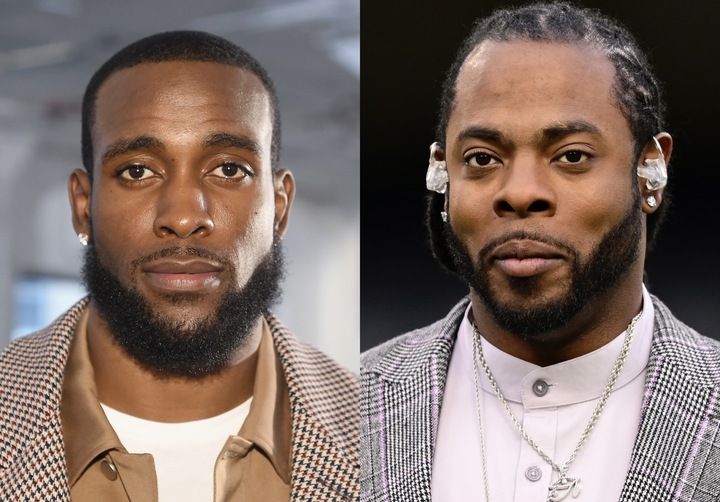
Former Seattle Seahawks Teammates Richard Sherman And Kam Chancellor Open Legion Sports Bar
Two former Seattle Seahawks defensive backs have opened the Legion Sports Bar in the Bellevue section of Washington on Oct. 3.
KIRO7 reported that Richard Sherman and Kam Chancellor signed a lease for the former Pearl Seafood & Oyster Bar in Lincoln Square North earlier this summer. The two men spent months building out the space and hiring staff for the bar.
“We chose Bellevue to be a part of its growing restaurant dining district and its central location to so many community activities and events,” the former Seattle defensive backs said when they announced the new space over the summer, according to KIRO.
The restaurant’s Facebook page says the bar will be reservation-only until Oct. 13. According to the PugetSound Business Journal, Legion Sports Bar is an upscale sports bar featuring creative cocktails.
Executive chef Reginald Jacob Howell and assistant chef Kaneshia Brooks have put together a soul food menu for the restaurant, which is currently hiring for all positions.
Sherman, a five-time pro bowler and three-time all-pro, and Chancellor, a four-time pro bowler, were teammates on the Seattle Seahawks from 2011 through 2017 as part of the Legion of Boom defense under head coach Pete Carroll. The Legion of Boom defense was a physically dominant, hard-hitting defense that carried an unspectacular offense to back-to-back Super Bowl appearances
The two men won NFC Championships with Seattle in 2014 and 2015 and Super Bowl XLVIII against the Denver Broncos. They returned to the Super Bowl in 2015 but lost 28-24 to the New England Patriots.
Sherman is known for several iconic moments, including his postgame interview after he made the game-winning play to beat the San Francisco 49ers in the 2014 NFC Championship game.
Sherman is currently a host of the FS1 show “Undisputed,” along with former Dallas Cowboys receivers Keyshawn Johnson and Michael Irvin, and Skip Bayless.
Meta To Bring Celebrity-Inspired AI Chatbots To Its Platform
Meta has developed a partnership with Microsoft’s search engine Bing which allows them to create a search function for their AI chatbots that will mimic celebrities such as Snoop Dogg, Tom Brady, and Chris Paul.
According to Variety, the company announced the partnership at the Meta Connect 2023 confab on Sept 25. Meta CEO Mark Zuckerberg said at the conference that he wanted the company’s chatbots to have personality.
“This isn’t just gonna be about answering queries,” Zuckerberg explained. “This is about entertainment and about helping you do things to connect with the people around you.”
For now, at least, the chatbots will not have an audio function, but that capability will likely arrive in 2024. The celebrity AIs arrive on Facebook, Instagram, and WhatsApp on Oct. 4 in beta, and there are plans to add more celebrity characters including Bear Grylls, Josh Richards, and Chloe Kim. The celebrities are not, however, appearing as themselves but as characters that are loosely based on aspects of their personalities. UFC star Israel Adesanya, for example, appears as Luiz, a hotshot MMA prospect who can back up his big talk, while Dwyane Wade appears as Victor, an Ironman triathlete who motivates you to be your best self.
Meta publicized its Llama 2 model as open source, but it’s not quite an open source. According to The Verge, Llama 2 has licensing restrictions that keep it from being a truly open-source platform. But it is free to use, which has helped it rapidly proliferate across the tech industry.
Similar to Chat GPT’s model, it is a large language model, one that Meta has used users’ public posts on Facebook and Instagram to train. More controversially, Meta pulled from thousands of books without the authors’ consent to train its models, prompting protests and outrage from the literary community. As reported by The Hollywood Reporter, on Sept. 10 a group of writers sued Meta, accusing the company of copyright infringement.
The protests are similar to the complaints from artists over Midjourney, which, coincidentally, can be used by Meta’s AI chatbots via a command. The lawsuit claims that “Much of the material in Meta’s training dataset, however, comes from copyrighted works—including works written by Plaintiffs—that were copied by Meta without consent, without credit, and without compensation.”
Meta last attempted chatbots in 2022, and that attempt was also marred by controversy. Not long after the company released its BlenderBot3 AI chatbot, the chatbot began mimicking claims that Donald Trump won the 2022 presidential election, as well as anti-Semitic conspiracy theories.
According to Mashable, these occurrences happened because the chatbot was hearing, or rather being fed, these talking points directly from users, which it regurgitated in conversation with various reporters. Notably, the chatbot called its own boss, Zuckerberg, “creepy.”
Because the way that Meta is training the chatbot largely eliminates direct contact with the public from its dataset, the probability of this outcome reoccurring is low. However, the way Meta and the field of artificial intelligence approach building datasets invites questions surrounding ethics. These questions are unlikely to go away anytime soon.