Trump Cancels Upstate New York Citizenship Ceremonies, Citing Unmet Requirements
The Trump administration is canceling citizenship ceremonies across Upstate New York, citing unmet eligibility requirements.
The Trump administration canceled several citizenship ceremonies at county courts across Upstate New York, citing failure to meet legal requirements for conducting the naturalization events.
After reports emerged that the federal government was canceling naturalization ceremonies across New York counties without explanation, a spokesperson provided some insight into why the Trump administration is no longer allowing county courts or state supreme court justices to oversee citizenship ceremonies.
“After reviewing the jurisdiction of certain New York county courts under the Immigration and Nationality Act, we have determined that these courts do not meet the statutory requirements to conduct naturalization ceremonies,” a spokesperson told Syracuse’s WSYR-TV. “As a result, U.S.C.I.S. will transition from judicial to administrative ceremonies to ensure compliance with the law.”
Typically, judges preside over naturalization ceremonies in courthouses, while USCIS handles administrative ceremonies at regional offices. However, many judges in Upstate New York were recently instructed to stop without explanation.
Onondaga County Clerk Emily Bersani confirmed that her planned Nov. 19 ceremony was canceled with no reason given and said she has not received any updates on 2026 ceremonies, including the annual New Americans Day at the New York State Fair.
Hudson Valley Rep. Mike Lawler sent a letter this week to Joseph Edlow, director of U.S. Citizenship and Immigration Services (USCIS), urging the agency to reverse the ceremony cancellations.
“My wife is an immigrant – one of the happiest days of our lives is when she attended a Naturalization Ceremony and became an American citizen,” Lawler wrote in the letter to Edlow. “Stealing that same joy from other to be-citizens is wrong, plain and simple.”
The impact of the change on naturalization ceremonies usually held in federal courtrooms, such as at the Federal Building in downtown Syracuse, remains unclear. The Northern District of New York still lists several upcoming ceremonies on its website, and a district spokesperson confirmed they are still scheduled to take place.
Nursing Degrees Are No Longer Considered ‘Professional’ Per Department Of Education
The shift can greatly impact how much up-in-coming nurses can borrow as they prepare to enter a field facing historic shortages.
The U.S. Department of Education (DOE) states that nursing programs will no longer be classified as professional degree programs, which will impact funding for thousands.
The shift can greatly impact how much up-and-coming nurses can borrow as they prepare to enter a field facing historic shortages. The DOE’s definition of a professional degree matters greatly when seeking access to federal funding. As the One Big Beautiful Bill becomes law, new funding mandates have been put into place to govern higher education. A professional degree classification determines eligibility for the $200,000 borrowing limit set aside for skilled students.
Under the new criteria, fields like medicine, pharmacy, dentistry, optometry, law, veterinary medicine, osteopathic medicine, podiatry, chiropractic training, theology, and clinical psychology still qualify as professional programs.
However, programs for physician assistants, nurse practitioners, physical therapists, and audiologists are no longer considered “professional’ fields of study. Nursing programs were also left off the official list.
The DOE says the categorization is not new, the Austin American-Statesman reported.
“The Department has had a consistent definition of what constitutes a professional degree for decades, and the consensus-based language aligns with this historical precedent,” said Ellen Keast, Education Department press secretary for higher education, in an email. “The committee, which included institutions of higher education, agreed on the definition that we will put forward in a proposed rule.”
Keast added that nursing “was never meant to be included,” a point the department is now clarifying publicly.
The ruling arrives as the cost of nursing school continues to rise. According to NurseJournal.org, tuition varies widely depending on degree type and location. Yet many programs rely on federal loan structures that may shift as a result of the new definition.
Jennifer Mensik Kennedy, president of the American Nurses Association, said the change carries many implications, many of them negative, for students and the general public.
“At a time when healthcare in our country faces a historic nurse shortage and rising demands, limiting nurses’ access to funding for graduate education threatens the very foundation of patient care,” Mensik Kennedy said in a statement.
The American Nurses Association reports that more than 260,000 students are enrolled in entry-level BSN programs, and about 42,000 are enrolled in ADN programs. These students may now face loan limits of $20,500 a year for graduate study, while professional programs retain access to $50,000 a year.
After Latest WNBA Salary Proposal, Players Are Not Really Feeling It
With a little more than a week left in the collective bargaining agreement, the players are seeking a bigger percentage of the league's revenue
After reports of the WNBA’s latest collective bargaining agreement (CBA) proposal increased substantially, players reportedly are not moved by the offer, with a little more than a week left in the current CBA, which expires Nov. 30 after a month-long extension.
According to ESPN, the Women’s National Basketball Players Association (WNBPA) is still looking for more in the most recent agreement offer. Although the league has proposed that the minimum salary would start at more than $220,000, with a maximum of more than $1.1 million, it does not align with the goal of players earning more throughout the life of the proposed arrangement.
The WNBPA feels that the current fixed salary system does not fit what would benefit the players. They would prefer one that would almost mirror their NBA counterparts’ revenue sharing. They want salaries based on basketball-related income (BRI).
In a statement, the WNBA said the proposal includes “significant guaranteed salary cap increases and substantial uncapped revenue sharing that enables player salaries to grow as the league’s business grows.”
However, in response, WNBPA Executive Director Terri Jackson told ESPN in October in a written statement:
“When the players opted out a year ago, they made it clear they wanted a salary system that values their labor and allows them to grow with the business they are very clearly driving. The league’s response has been to run out the clock, put lipstick on a pig, and retread a system that isn’t tied to any part of the business and intentionally undervalues the players.
Yahoo Sports reported that the players want a model similar to the NBA’s, in which the salary cap is a fixed percentage of basketball-related income, which was 44.74% in 2025.
Market Watch reported that WNBA players receive 9.3% of their income from the league, a substantially lower percentage than the NBA.
Napheesa Collier, vice president of the WNBPA, had already stated previously that the players were seeking “two main points” in the new CBA: increased revenue sharing and salary structures.
Thousands Of Unpaid Air Traffic Controllers During Shutdown Left Out Of Trump’s ‘Perfect Attendance’ Bonus
Thousands of air traffic controllers who worked without pay during the government shutdown are being excluded from Trump's "perfect attendance" bonus.
Thousands of air traffic controllers who worked without pay during the government shutdown are speaking out after being excluded from Trump’s $10,000 “perfect attendance” bonus.
On Nov. 20, the National Air Traffic Controllers Association announced that only 776 of the more than 10,000 controllers who worked unpaid during the record shutdown will receive the $10,000 bonus, The New York Post reported. Of those, only 331 are union members, with the association assuming the remaining bonuses are going to managers.
While the union expressed gratitude for those being recognized, it voiced concern that thousands of workers who consistently showed up during the shutdown without pay were left out.
“We are concerned that thousands of air traffic controllers who consistently reported for duty during the shutdown, ensuring the safe transport of passengers and cargo across the nation, while working without pay and uncertain of when they would receive compensation, were excluded from this recognition. More than 311 of these dedicated professionals were instrumental in keeping America moving,” the union said in a statement.
As what became the longest government shutdown in American history stretched past one month, some air traffic controllers began calling out due to financial strain, causing delays at airports nationwide and forcing flight reductions at 40 busy hubs. Trump proposed $10,000 bonuses for those who stayed on the job and suggested docking pay for absences.
While the FAA hasn’t announced any penalties, Homeland Security Secretary Kristi Noem recently held a press conference where she awarded $10,000 bonuses to a handful of TSA officers who worked without pay. The controllers’ union hopes to work with Transportation Secretary Sean Duffy to ensure all controllers who served during the shutdown are recognized.
Democratic Rep. Rick Larsen, a ranking member of the House Transportation and Infrastructure Committee, has questioned why many who kept flights running weren’t included in the bonuses.
“For the Trump administration to not give a bonus to every single one of these hardworking women and men is wrong; they all deserve a bonus and back pay,” Larsen said.
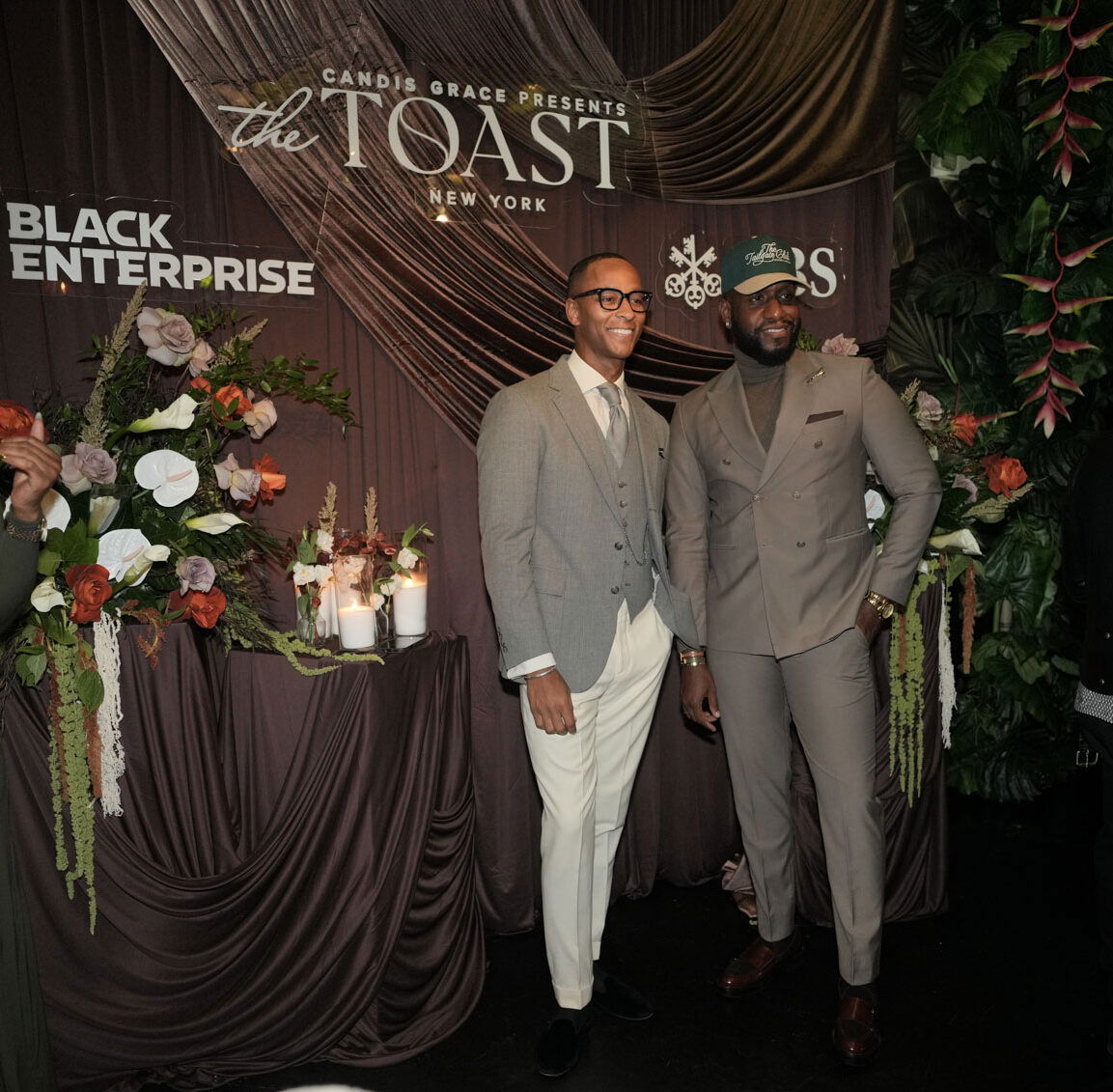
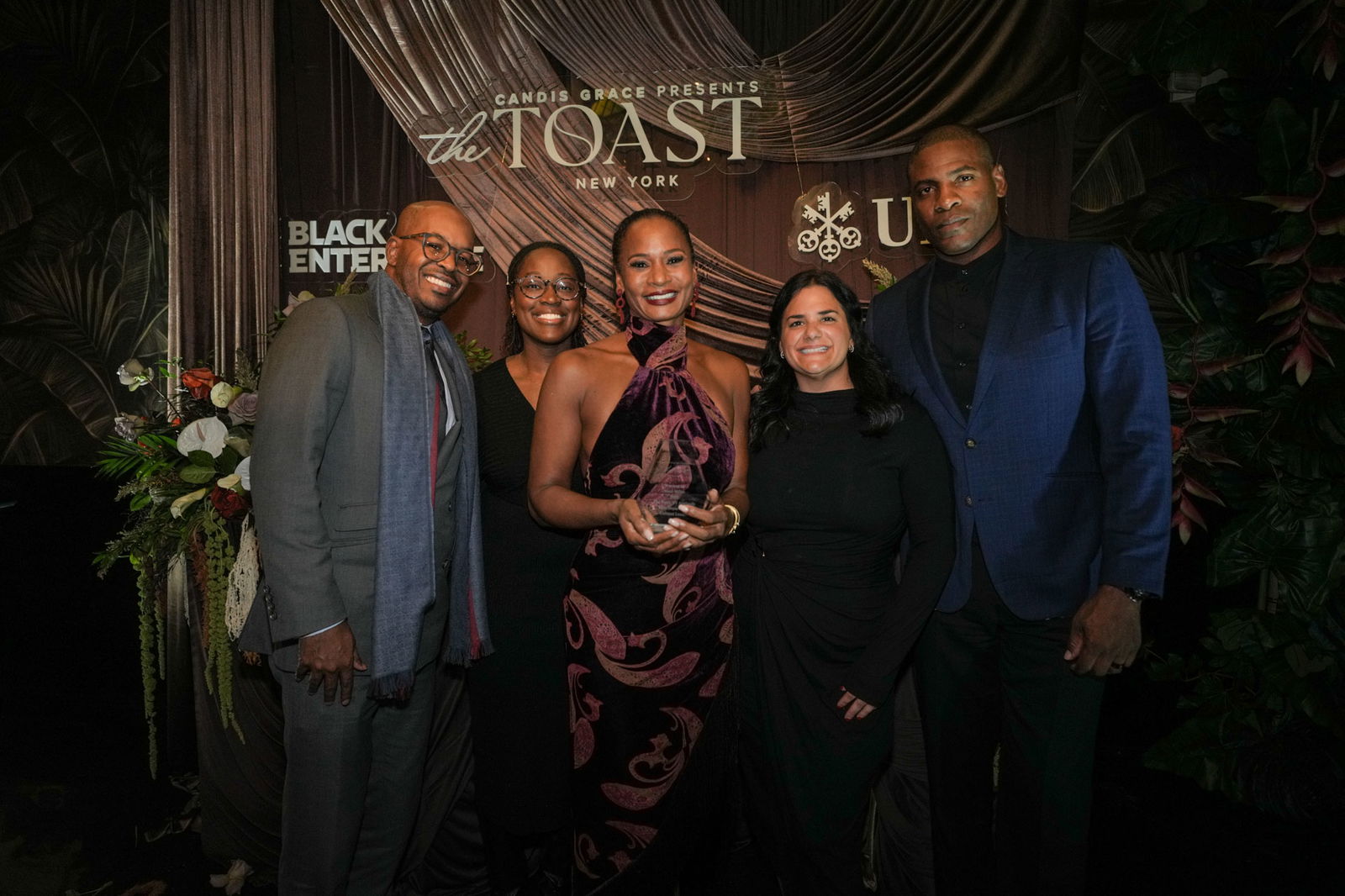
L-R: Cari Champion, Bevy Smith, Carlos King, and Candis Grace attend Candis Grace presents "The Toast, New York" on November 06, 2025 in New York City. (Photo credit: Tito G)
Candis Grace and UBS Honor Black Cultural Powerhouses At ‘The Toast, New York’
The exclusive dinner experience celebrated culture, excellence, and legacy
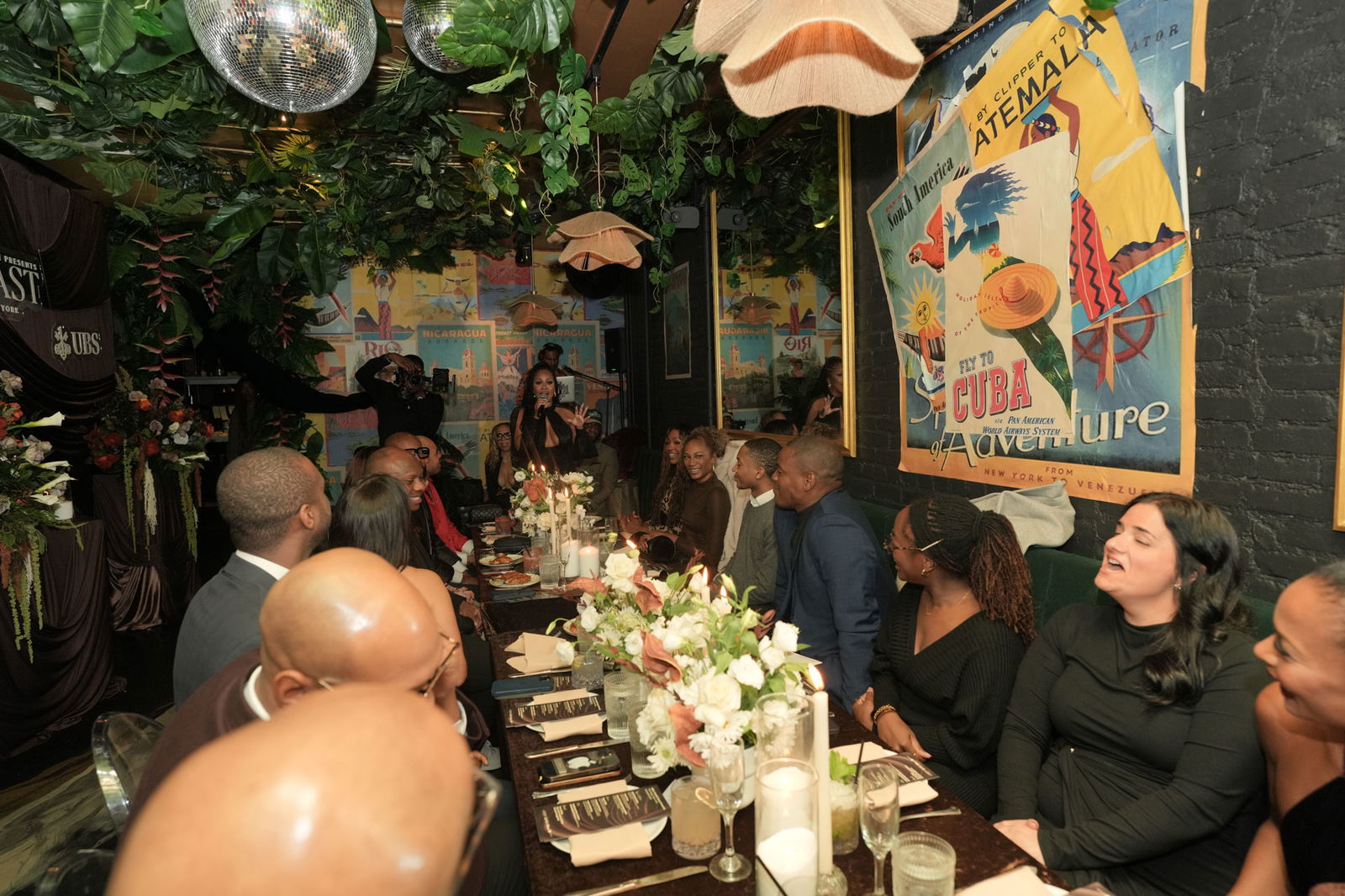
Earlier this month, creatives, tastemakers, and industry leaders gathered at “The Toast, New York,” an exclusive, intimate dinner experience presented by Candis Grace celebrating culture, excellence, and legacy.
Held at The Chica & Don in downtown Manhattan on Nov. 6, guests were treated to modern Latin American cuisine paired with drinks provided by Black-owned spirit brands like Sean “Jay-Z” Carter’s D’usse, Kevin Hart’s Gran Coramino, and Ja Rule’s Amber & Opal.
Source: Cari Champion and Candis Grace at Candis Grace presents “The Toast, New York” (Photo credit: Tito G)
Presented by entrepreneur Candis Grace in partnership with UBS, “The Toast, New York” honored three trailblazers making significant strides in their respective industries: Carlos King, the CEO of Kingdom Reign Entertainment and an acclaimed reality TV show producer, sports broadcast journalist Cari Champion, and Santi Miller, Head of Diverse Wealth Initiatives at UBS.
“I was at ESPN for 10 years, and now I’m at CNN, and I am unapologetic in the fact that my agenda is for Black and brown people [and] for women,” said Champion, a former anchor on ESPN’s First Take, while accepting The Champion of Women in Sports Award. “It’s costly and sometimes scary, but I know that when it is all said and done, if you look in the history books, I’m doing it for the right reasons.”
Source: Carlos King and Candis Grace at Candis Grace presents “The Toast, New York” in New York City. (Photo credit: Tito G)
“It is not every day that I get celebrated because, being behind the scenes, it’s our job to celebrate others, said King, while receiving the Cultural Storyteller Award.
Former NFL player Wale Ogunleye, who currently serves as Executive Director, Head of Sports and Entertainment at UBS, presented Miller with The Legacy Builder Award.
“With the current state of politics that we’re in, it’s super interesting to say words like ‘diversity’ and all these other things. But, that being said, UBS decided in January to continue to forge ahead with our diversity initiatives led by Santi,” said the former Miami Dolphins MVP. “I’ve had the honor of working with Santi this year, as she’s been a great partner to me in the sports entertainment business. Her work focuses on expanding the firm’s presence in diverse markets and ensuring that UBS shows up in ways that are authentic, relevant, and deeply connected to communities it serves.”
Source: Santi Miller is honored at “The Toast, New York” in New York City. (Photo credit: Tito G)
During her acceptance speech, Miller shared how her upbringing and feeling ostracized at times influenced her commitment to empowering diverse communities.
“I was born in Vietnam, and I was always the other,” she said. “I thought about it, I was like, why is this so important? Why am I so passionate about diversity? Why do I care about it? And it really is about taking this sense of being an other. And every single person in this room has been an other. I know you have it. The higher you climb, the lonelier it gets. And, guess what? The dots get smaller and the target gets bigger,” she continued.
In addition to recognizing these cultural pioneers, “The Toast, New York” brought together a collective of notable activists, authors, and reality stars in an atmosphere that embraced community, collaboration, and Black excellence. Noted attendees included Roc Nation veteran and music business executive Lenny S. Santiago, Real Housewives of Miami star Guerdy Abraira, media personality Bevy Smith, former VIBE Editor-in-Chief Datwon Thomas, and social justice advocate Tamika D. Mallory.
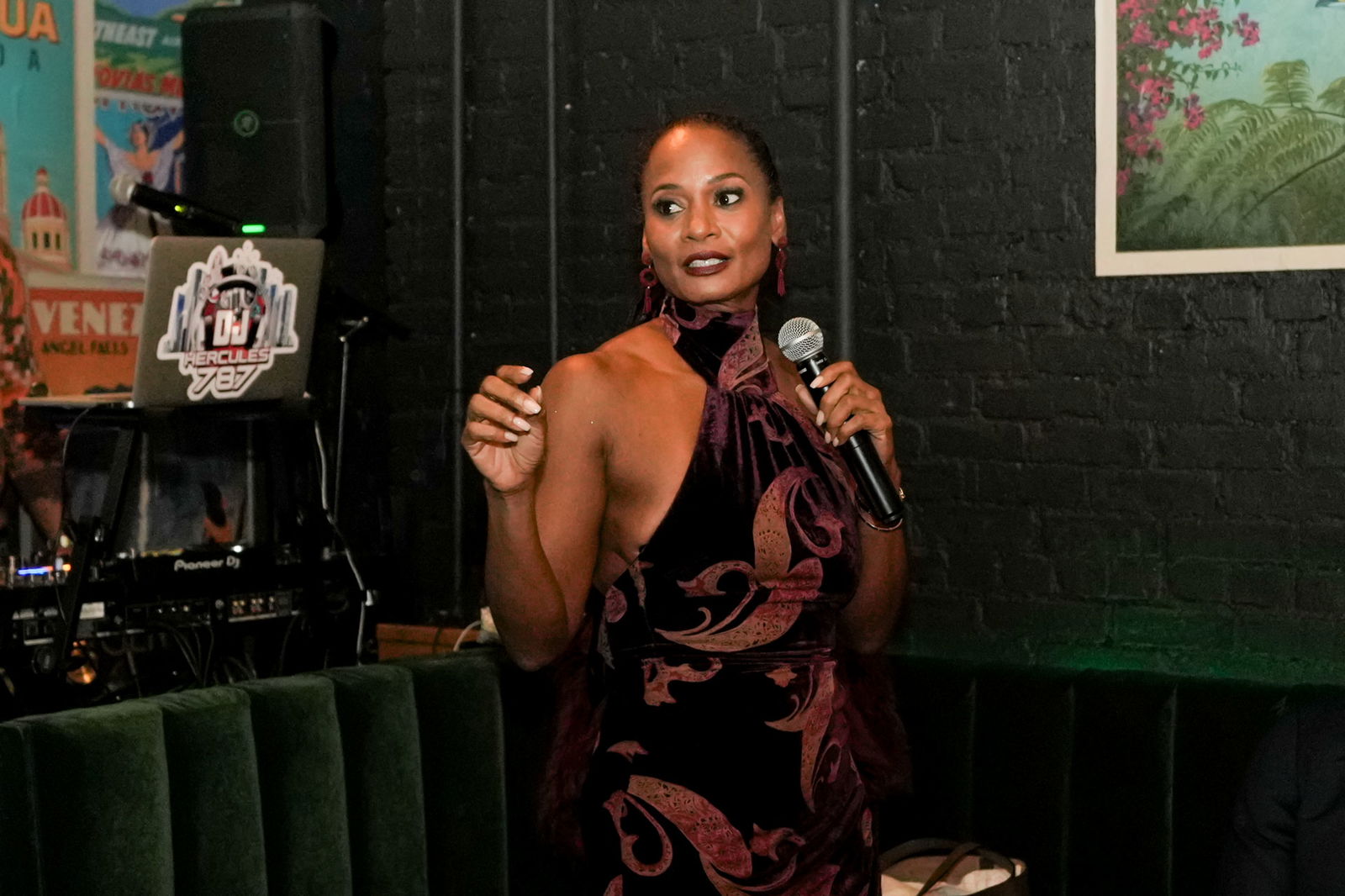
Source: Candis Grace addresses attendees at Candis Grace presents “The Toast, New York” (Photo credit: Tito G)
“This event was an idea to celebrate my friends that probably were really behind the scenes, but really making the moves, because that’s how I was always in my career,” said Grace, the founder and CEO of The Brand Group, a marketing, brand partnerships, and public relations agency based in Los Angeles.
“I was an [event] promoter –- the only woman promoter in Hollywood for a long time in my career. So, I don’t like anything stuffy,” she told guests. “I like it to feel really unorthodox, beautiful, sexy, and vibey, so everybody can have fun. So, that’s why [this] is not a stuffy awards.”
Source: Nick Arrington, star of Bravo’s “Summer House Martha’s Vineyard,” and Jeffrey Morneau, founder of Jeffrey Morneau Atelier, attend “The Toast, New York” (Photo credit: Tito G)
Jeffrey Morneau, the founder of Jeffrey Morneau Atelier, a luxury brand specializing in event planning, bespoke design, and elevated catering experiences, said partnering with Grace to produce an event that celebrates Black excellence was a joy.
“[Candis’] vision and commitment to uplifting our community made this collaboration especially meaningful, he said in a statement. “Together, we’re creating an experience that celebrates excellence, and I couldn’t be more proud,” he said.
Candis launched The Brand Group nearly two decades ago and has worked with the likes of the National Basketball Players Association, United Nations, Kevin Hart, Netflix, Doritos, and UBS, which she praised for supporting her annual events.
Source: Santi Miller, UBS Head of Diverse Wealth Initiatives at UBS, and Wale Ogunleye, UBS Executive Director and Head of Sports and Entertainment, with UBS employees (Photo credit: Tito G)
“UBS has been an invaluable partner throughout this incredible journey from ‘Toast to Black Hollywood‘ and now to ‘The Toast, New York.” Their continued commitment and belief in our vision have been instrumental, and we deeply value the partnership we’ve built together,” she said in a statement.
Grace also acknowledged the support of BLACK ENTERPRISE, which served as a media partner at the event and honored her with the 2024 Business Disruptor Award.
“Black Enterprise has been an integral part of my journey from the very beginning. They’ve not only championed ‘The Toast, New York,’ but they’ve been there to celebrate every milestone and event throughout my career,” she said. “Their support and commitment to uplifting our community means everything to me, and I’m incredibly grateful to have them as partners in this work.”
The Virginia HBCU has seen a 46 percent jump in undergraduate students since 2022, according to the university. The surge pushes total enrollment to more than 4,600 students, its biggest in more than a decade.
University President Darrell K. Williams called the growth “intentional.”
“Our responsibility extends beyond our campus,” said President Darrell K. Williams in a news release. “Workforce development allows us to serve the broader community with the same intentionality we give our students. When we strengthen the region’s talent pipeline, we strengthen the future of Hampton Roads.”
Hampton also boasts a retention rate of around 93% from fall to spring.
Many HBCUs are facing declining enrollment due to reduced federal student grant programs and rising tuition costs.
“Colleges and universities already collectively experienced a 15% decline in enrollment between 2010 and 2021, the most recent year for which figures are available, according to the National Center for Education Statistics (NCES). That includes a drop-off of more than 350,000 during the first year of the pandemic alone, and it means there are already 2.7 million fewer students than there were at the start of the last decade.”
However, Hampton has seemingly adopted a winning strategy.
“We must position every student to feel they belong from day one,” Williams, an Hampton alumnus, said in the release.
In the press release, the HBCU cites programs for first-generation students, data-driven outreach, and expanded financial support as key elements of their renewed recruitment model. Students arriving this year represent more than 40 states and multiple countries, according to university data.
Along with student outreach, Hampton is investing in campus infrastructure, including—
More than 20 renovated residence halls and classrooms, including simulation labs and upgraded study spaces.
New academic programs in artificial intelligence, engineering, environmental science, and aviation management.
Dining transformations, including the reopening of The Grill, the beloved student gathering spot; the addition of the Milk & Honey restaurant franchise; the introduction of robotic food delivery.
The university’s board-approved “Elevating Hampton Excellence” plan lays out a 5-year roadmap for infrastructure, research growth, and community impact, hoping to maintain and increase retention rates.
‘RHOP’s’ Wendy And Eddie Osefo Accused of Fraud As Prosecutors Seek Records Citing Aliases And Credit Card Misuse
Maryland prosecutors allege the couple used aliases and dozens of credit cards.
New details have emerged in the fraud case involving Real Housewives of Potomac star Dr. Wendy Osefo and her husband, Eddie Osefo.
Maryland prosecutors have moved to obtain additional financial records. The pair, arrested on Oct. 9 and who face multiple fraud-related charges, are accused of using an extensive array of credit cards and aliases to obscure their identities, according to new filings reported by People.
Prosecutors told the court that the Osefos hold “approximately 40 credit and/or debit cards, some of which are believed to be in company names” and others tied to the aliases “Pam Oliver” and “Eddie Hennessy.” They argued that these alleged pseudonyms and corporate accounts were a “deliberate attempt to mask their identity.”
The state also pushed for access to broader financial documentation, writing that they expect such material “to show a pattern of excessive spending, supporting motive in this case.”
“Insurance fraud is a financial crime, and in that, the amount of debt owed by the Osefos, jointly, individually and by the businesses that they own, is highly relevant to their motive,” the prosecutors said.
Attorneys for the couple called the probe a “fishing expedition,” with Eddie Osefo’s lawyer, Joseph Murtha, saying that prosecutors are “looking for something they haven’t figured out after 18 months of investigating.”
The couple is scheduled to return to court on Dec. 2.
“At the outset, Police failed to properly investigate the initial burglary despite clear indications of a break-in, displaying clear bias against the Osefo family,” the Osefos said in a statement released through their legal team. They also accused investigators of remaining unresponsive for more than a year, and of subjecting them to scrutiny not applied to other public figures.
“We believe it is deeply unjust for the Sheriff’s Office and Office of the State’s Attorney for Carroll County to publicly expose confidential financial information about Eddie and Wendy Osefo,” the statement continued, calling the release of personal details an act that “serves no lawful purpose.”
According to the statment, “the Osefos have never used an alias on any financial application; this allegation is false and misleading” and that the alternate names were used only for package delivery “to safeguard the identity of very public figures.”
The couple has been charged with 16 counts—seven of them felonies.
Man Accused Of Setting Woman On Fire on Chicago Train Faces Federal Terrorism Charge
Prosecutors say the attack on the CTA Blue Line was deliberate and targeted, leaving a 26-year-old woman hospitalized in critical condition.
Federal authorities have charged a Chicago man with carrying out a terrorist attack after he allegedly doused a woman with gasoline and set her on fire aboard a CTA Blue Line train earlier this week.
According to an affidavit from the Bureau of Alcohol, Tobacco, Firearms and Explosives, investigators say 50-year-old Lawrence Reed was seated at the back of a train car Monday night when he approached a 26-year-old woman who was sitting ahead of him. After removing the cap from a plastic bottle, Reed “doused the woman with what was believed to be gasoline,” the affidavit states.
Surveillance footage captured him at a gas station roughly half an hour earlier, filling a small container with fuel.
When the woman tried to move away, Reed allegedly ignited the bottle and approached her again, setting her on fire. Witnesses said the train car erupted into chaos as passengers scrambled to escape the flames.
The woman managed to stumble off the train at a downtown station, collapsing on the platform. She was rushed to the hospital with extensive burns to her head and body and remains in critical condition. Police have not released her name.
According to CNN, Reed, who fled the scene, was arrested Tuesday morning. Investigators said he was wearing the same clothing seen on surveillance video and “made incriminating statements about the attack.” In federal court on Wednesday, Reed repeatedly disrupted the hearing, shouting, “I plead guilty!” while insisting he wanted to represent himself and at one point claiming he was a Chinese citizen, according to local reporters.
Prosecutors say Reed committed the assault “with the intent to cause death and serious bodily injury” on a public transit system, a charge that carries a potential life sentence. Federal documents also note that during an argument with the victim on the train, Reed allegedly yelled, “burn alive, b****!” before lighting her on fire.
Reed’s extensive arrest history has raised questions about how he remained free. For now, it is unclear whether state charges will follow.
The attack drew comparisons to the recent fatal stabbing on a commuter train in Charlotte, where federal prosecutors charged a man with killing 23-year-old Ukrainian refugee Iryna Zarutska. Among those who making a connections was U.S. Transportation Secretary Sean Duffy.
A criminal on a Chicago L set a 26-year-old woman on fire, and now she is in the hospital with severe burns.
This horrific attack is EXACTLY why we need communities to take safety seriously. Blue cities cannot allow another Iryna Zarutska to happen.
The Chicago Transit Authority said it is cooperating fully with investigators and emphasized that its security strategy includes surveillance cameras throughout the system.
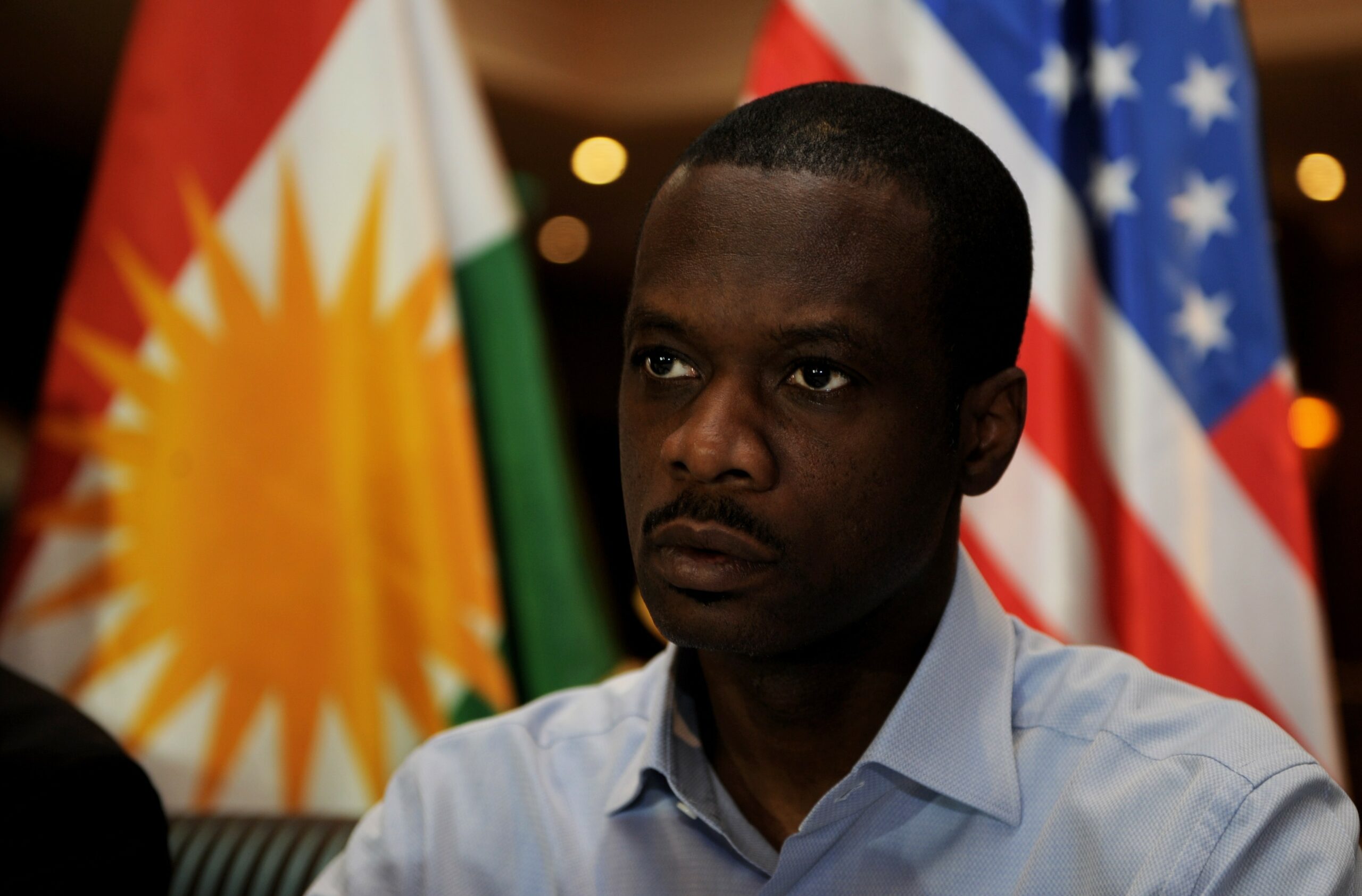
Fugees Member Pras Sentenced To 14 Years In Federal Prison
In 2023, the recording artist was found guilty on 10 charges, including witness tampering, conspiracy, and failing to register as an agent of a foreign government, China.
Fugees group member, Prakazrel “Pras” Michel, was sentenced to 14 years in federal prison on Nov. 20, after the recording artist was found guilty on 10 counts, including witness tampering, conspiracy, and failing to register as an agent of a foreign government in 2023.
According to The Associated Press, U.S. District Judge Colleen Kollar-Kotelly gave him the 14-year sentence after federal prosecutors requested that he be given a life sentence because he “betrayed his country for money” and “lied unapologetically and unrelentingly to carry out his schemes.”
Pras’s attorney, Peter Zeidenberg, told the court that his client should be given a three-year prison sentence, as a life sentence would be an “absurdly high” punishment, especially when compared to what is given to deadly terrorists and drug cartel leaders.
🚨 BREAKING: Fugees star Pras Michel has been sentenced to 14 years for funneling foreign money into Barack Obama’s 2012 campaign.
Prosecutors say he took over $120 million from Malaysian billionaire Jho Low, used straw donors to pass it along, and later tried to shut down a DOJ… pic.twitter.com/gqsGaddWI6
The “Ghetto Superstar” rapper, who did not speak at the hearing, will appeal the decision, Zeidenberg stated. He feels that his client’s sentence is “completely disproportionate to the offense.”
Pras’s representative, Erica Dumas, released a written statement to Billboard.
“Pras has spent his career breaking barriers and defying expectations. While today marks a difficult moment, it is not the end of his story or his legacy. He is profoundly grateful for the continued support of those who believe in him as he prepares for what lies ahead.”
On Oct. 30, a federal judge ordered the Brooklyn native to surrender more than $64 million to the U.S. government.
In 2019, Pras was arrested and charged after being accused of funneling money from fugitive Malaysian financier Jho Low, who is purported to be the mastermind of a billion-dollar 1MDB embezzlement scheme, in a lobbying campaign aimed at persuading the Trump administration (during his first presidency) to drop its investigation into the financier.
The rapper was also accused of secretly funneling Low’s money to President Barack Obama’s 2012 presidential campaign, and trying to influence an extradition case on behalf of China.
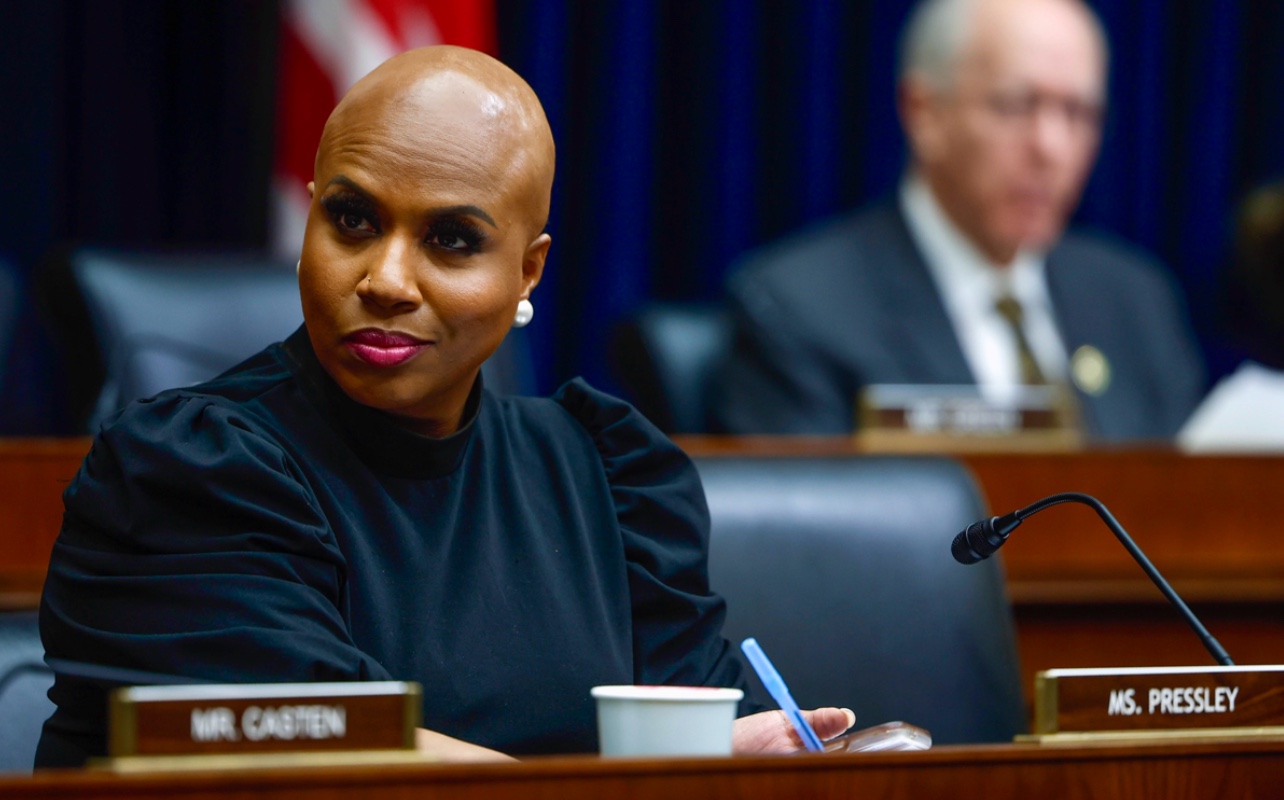
Rep. Ayanna Pressley Pushing For Action To Address Unemployment Rate For Black Women
According to the report, the unemployment rate for Black women is 7.5%. Rep. Pressley, who sits on the House Financial Services Committee, is calling on the Federal Reserve to take action.
According to the report, the unemployment rate for Black women is 7.5%. Rep. Pressley, who sits on the House Financial Services Committee, is calling on the Federal Reserve to take action.
“These numbers are damning and confirm what we’ve long known to be true: under Donald J. Trump, Black women continue to face a crisis of disproportionately high unemployment,” said Pressley.
Pressley added that Trump’s “reckless mass firings,” along with a growing affordability crisis, and relentless attacks on diversity, equity, inclusion, and accessibility initiatives, have hurt Black women in the workforce.
“As the primary breadwinners for many households, Black women are the backbones of our families and our economy,” said Pressley. “Their systematic pushout not only has dangerous consequences for Black women, Black families, Black futures. It is also a glaring red flag for the entire U.S. economy.”
A Weakening Economy, Experts Warn Amid Jobs Report Release
A little more than a month after its scheduled release date of Oct. 3, the Bureau of Labor Statistics’ (BLS) September jobs report was released after the most extended government shutdown in history. According to the report, 119,000 jobs were added in September, but experts warn that the numbers are a little more complex than that and reveal a slowdown in the labor market.
The unemployment rate jumped to 4.4% in September, up from 4.3% and the pace of wage growth slowed. Then, companies such as Amazon, General Motors, IBM, Microsoft, and others announced plans to lay off tens of thousands of employees.
Experts at the Center for American Progress say the uncertainty brought on by President Donald Trump’s tariff policies, the “slash-and-burn” of the federal government, and historic cuts to healthcare and social services have led to a hiring slowdown and layoffs.
Rep. Ayanna Pressley Calls On The Fed To Intervene On Behalf Of Black Women
In a letter addressed to Federal Reserve Chairman Jerome Powell, Pressley asked for the Fed to take immediate action.
“The U.S. Federal Reserve has a statutory mandate to promote maximum employment, and that must be true for all people, regardless of race and gender,” Pressley wrote.
According to the congresswoman, 6.7% of Black women faced unemployment in August 2025, a figure above the national average of 4.3%.
“This disparity should not go overlooked as unemployment of Black women is a key metric of the health of the U.S. economy,” she said.
The congresswoman noted that Black women are more likely than any other demographic group to be enrolled in higher education. Black women also represent the fastest-growing group of entrepreneurs and are disproportionately the breadwinners for their families.