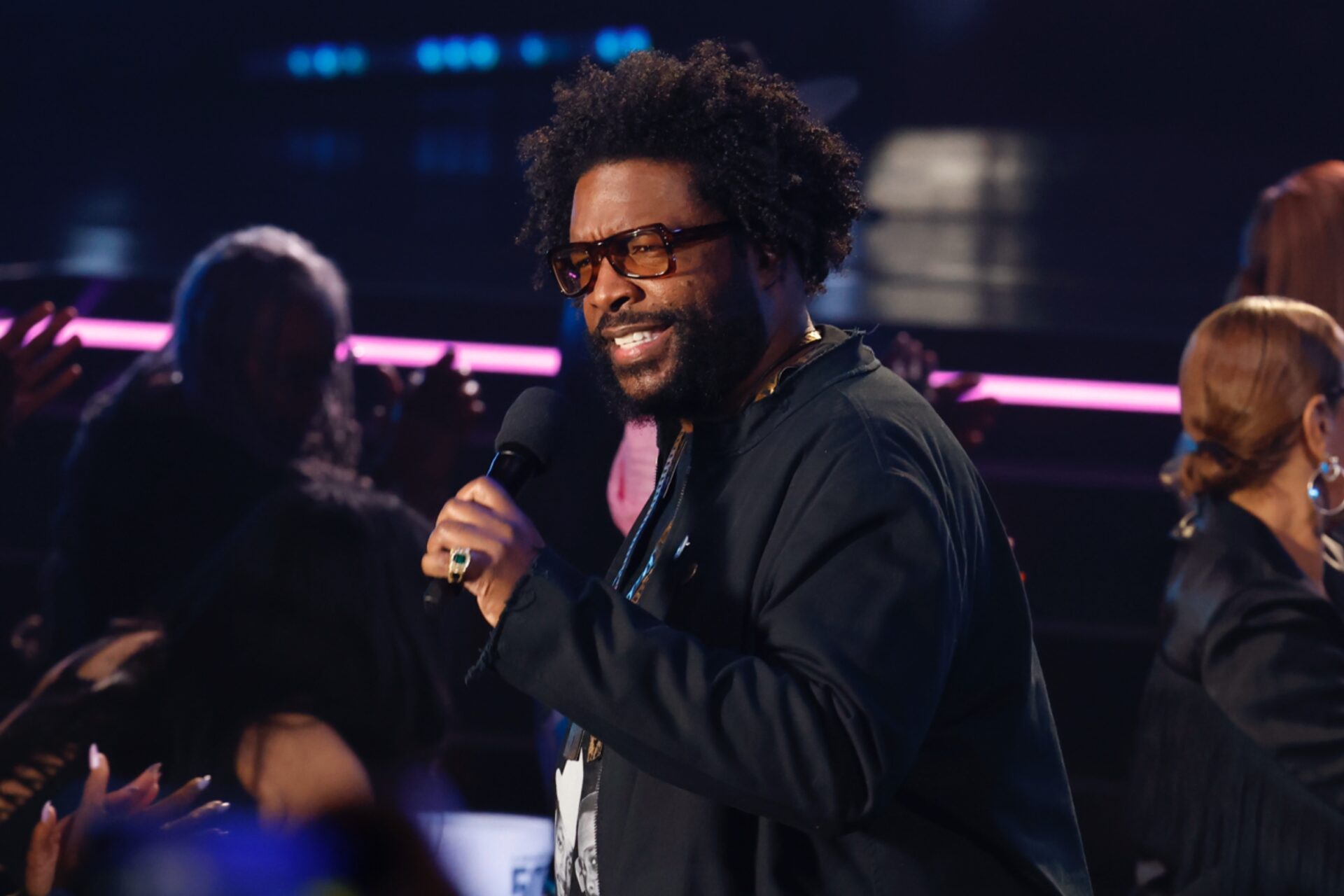
Lizzo, sampling lawsuit

Lizzo To Portray Sister Rosetta Tharpe In Upcoming Biopic, ‘Rosetta’

'I want to make Sister Rosetta Tharpe a household name as big as Elvis. When people talk about rock ‘n’ roll, it begins with her,' said Lizzo.


Recording artist Lizzo is set to make her movie debut in Amazon MGM Studios’ music biopic, “Rosetta,” the “Godmother of Rock and Roll,” Sister Rosetta Tharpe, and she discusses how she wants to make her a household name.

In an exclusive interview with Paper, the Grammy Award-winning musician shared her excitement about the upcoming project, in which she will star. She wants to incorporate her musical skills as a classically trained flutist, and she stated that she is learning to play the guitar for the role.

In the discussion, she informs the media outlet that she was approached about acting and is taking the opportunity to also produce the biopic outside of playing the lead role in the project.

“I’ve been approached about acting. I’ve gotten the opportunity to produce and star in the Sister Rosetta Tharpe film.”

She stated that she is excited for the chance to portray the rock and roll legend, as Tharpe “deserves to be canonized.”

“Rosetta” will also be her first major film role. Although she may receive accolades if she does a great job with her portrayal, she is not doing it for awards. She is hoping that, with her role in making this happen and her portrayal of Tharpe, she can help make her as big a name as Elvis.

“This is my first major film role, a starring role. It’s early days, but I’m learning guitar right now. She was the greatest guitar player of all time — I mean, she literally invented the electric guitar. I’m not doing it because I want an Oscar. I’m doing it, and I said this about The Big Girls Show. I’m not doing it to win an Emmy. I want to make Sister Rosetta Tharpe a household name as big as Elvis. When people talk about rock ‘n’ roll, it begins with her.”

RELATED CONTENT: Inquiring Minds! Lizzo Gets To The Bottom Of The ‘Awkward’ Jason Lee & Beyoncé Interaction At Roc Nation Brunch

Hitman Howie Tee, Hip Hop, Mickey Factz, NYU

Pioneer Producer Hitman Howie Tee Dies At 61—Hip-Hop Heavyweights Reflect On His Lasting Legacy

He worked with artists like Special Ed, Chubb Rock, The Real Roxanne, U.T.F.O, and Color Me Badd.


Legendary music producer Howard Thompson, known to hip-hop fans as Hitman Howie Tee, has recently died.

According to AllHipHop, the Brooklyn-bred producer, who was born in England to Jamaican parents, was a pioneering music producer who recorded songs for the likes of other hip-hop pioneers, including Special Ed, Chubb Rock, The Real Roxanne, and U.T.F.O. No details were revealed on how he died. He was 61.

The music producer was also a DJ and a member of the hip-hop group, CDIII, which released two songs for Prelude Records, “Get Tough (1983)” and “Success (1984).” He soon began working with U.T.F.O.’s Kangol Kid and started working with a group, Whistle, who had a Top 20 Billboard R&B hit, “(Nothing Serious) Just Buggin’ (1986).”

After producing several records with Chubb Rock in 1987, “Rock N’ Roll Dude” and 1988, “DJ Innovator” and “I Feel Good,” he made a big splash with Chubb and another artist named Special Ed between 1989 and 1990 when both dropped classic singles like Special Ed’s “I Got It Made,” “Think About It,” “I’m The Magnificent” and “The Mission,” while Chubb released “Ya Bad Chubbs,” “Stop That Train,” and “Treat ‘Em Right.”

Thompson worked with a number of artists and scored one of his biggest hits, which landed on the New Jack City soundtrack, Color Me Badd’s “I Wanna Sex You Up,” in 1991.

BLACK ENTERPRISE was able to speak to some of Hitman Howie Tee’s longtime friends, and they had some things to say about the music producer.

Special Ed, who benefited immediately under the tutelage of Hitman Howie Tee, was very grateful for the opportunity afforded him by the producer.

“Howie Tee was one of the most generous and kind people that I know. He gave me a chance when I was too young to take a chance in this industry. I have always conducted myself in a way that would make him proud to be affiliated with me. When we were recording the album, he was expecting his oldest daughter, Nastasia, and that was always special to me. She is the same age as the album, ‘Youngest in Charge.’ With all the personalities and egos in the music industry, it was refreshing to work with someone as humble as Howie. He taught me how to produce music and use all kinds of equipment together to make songs. He was not just a producer, but a big brother and a mentor as well as an inspiration.”

Producer Pete Rock acknowledged Howie Tee for opening the door for fellow DJs and producers like him to make a career.

“He was a mentor to me since CDIII and opened up doors for new producers to shine. Thank you, Howie.”

DJ Wiz, original DJ for the hip-hop group Kid N’ Play, gave his thoughts on the influence of the hit-making producer.

“Howie Tee is one of the most influential DJ/producers of all time. His excellent song production created some of the most classic hits that stand the test of time. Howie was one of the best technical DJs skill-wise. He was underrated and deserves more acknowledgement from the hip-hop culture and community.”

Fellow Brooklynite, DJ Scratch, legendary DJ from EPMD, had this to say about his longtime friend and influencer.

“Howie Tee was Brooklyn’s first hip-hop super producer. Also, one of the greatest scratching DJs of all time. Howie was the template of what DJ Clark Kent & I wanted to become: DJs that can also produce hits. We looked up to him, we studied him & wound up meeting & becoming great friends with him. Til this day, you cannot play a classic Hip Hop event without playing something produced by Howie Tee. ‘I Got It Made’ by Special Ed, ‘Treat Em’ Right’ by Chubb Rock & the list goes on & on & on. God Bless Howie Tee & His Family.”

RELATED CONTENT: City High’s Robbie Pardlo Dies At 46

Rep. Billy Long, Laura Loomer

Illinois Rep. Danny Davis Won’t Seek 16th Term In Congress

'We’re not going to go away, but the time has come,' said Davis.


The Democrat’s Illinois representative, Danny Davis, has recently announced that this will be his last term in office.

According to The Associated Press, Davis will not be seeking reelection to Congress in the next election cycle. He represents a district that encompasses downtown Chicago, including large sections of the city’s South and West Sides, as well as inner-ring suburbs. Davis has been the district’s duly elected representative since 1996.

The 83-year-old politician has been a mainstay, having served 15 terms in office. He sits on the House Committee on Ways and Means.

“We’re not going to go away,” Davis told the media at a recent press conference where he was joined by his wife, local pastors, and congressmen on Chicago’s West Side. “But the time has come.”

Davis is just the latest politician to announce plans not to run for the same office in the next Illinois election. Other Illinois politicians had previously stated their intentions of withdrawing their names from upcoming elections.

Rep. Jan Schakowsky said she won’t be seeking a 15th term in the House, while Sen. Dick Durbin, the Senate’s No. 2 Democrat, is forgoing a sixth term in 2026. Reps. Raja Krishnamoorthi and Robin Kelly are giving up their seats to make a run for one in the Senate.

Davis says that he wants to place younger heads into positions of doing well in upcoming elections, “who can grow into leadership.” He promises to campaign for younger politicians in 2026. He wants to ensure that “tyrants like Donald Trump” don’t eliminate the efforts he and others have made over the years with their attempts to take away the things that they have fought for over the years.

“There are efforts right now underway to try to diminish Medicare, Medicaid,” he said. “If those programs are seriously diminished, thousands and thousands and thousands of people will not have access to healthcare.”

RELATED CONTENT: Congressman John Conyers Jr.: ‘I Am Retiring Today’

Martha's vineyard film festival, Michelle Obama

Martha’s Vineyard African American Film Fest Draws Michelle Obama, Rep. Crockett, And Cultural Changemakers

The Martha's Vineyard African American Film Festival will feature a Who's Who of Black star power.


The Martha’s Vineyard African American Film Festival, which runs through Aug. 9, will feature a virtual who’s who of Black star power, from political heavyweights like former first lady turned podcast host Michelle Obama and Reps. Jasmine Crockett and Ayanna Pressley to auteurs like Spike Lee. The festival kicked off on July 31.

According to WROR, across the nine days of the festival, film premieres, podcasts, talk shows, fireside chats, and panel discussions are planned. It is also fitting that, on the 23rd annual film festival, a documentary film featuring basketball legend Michael Jordan was among the festival’s opening proceedings.

According to Deadline, “Unraveling George,” a documentary about civil rights leader, entrepreneur, and Hall of Fame coach George Raveling, premiered on Aug. 1.

The film, which was executive produced by another Hall of Famer, TNT Sports analyst Charles Barkley, is narrated by the film’s producer, Marlon Wayans, who portrayed Raveling in the 2023 film “Air.”

That film, a biopic, chronicled how Jordan ended up signing with Nike, a fledgling shoe company, in 1984, and changed the landscape of pop culture as well as Nike’s trajectory in the decades that followed.

As Michael Jeffery Jordan himself says in the trailer for the documentary film, “George Raveling is a mentor, a friend, and a confidant, and I would not be Michael Jordan without him.”

Additionally, the film festival will play host to a live episode of Michelle Obama’s podcast, “IMO,” on Aug. 9. Obama hosts the podcast alongside her brother, Craig Robinson. Joining the brother and sister for the special episode is multi-hyphenate star Teyana Taylor, whose latest film, “One Battle After Another,” heads to theaters on Sept. 26.

On Aug. 1, Spike Lee presented additional scenes from “Highest 2 Lowest,” his highly anticipated reinterpretation of the classic Akira Kurosawa film “High and Low,” which stars Denzel Washington and A$AP Rocky. Alongside the film’s director, stars LaChanze, John Douglas Thompson, and Ilfenesh Hadera discussed the film.

On Aug. 5, Warner Bros. will present its keynote event, “Spotlight on Excellence: An EGOT Winner and Daytime Host, Jennifer Hudson,” a 60-minute discussion and Q&A session with Hudson, which will be moderated by People Magazine’s editor, Janine Rubenstein, and will discuss Hudson’s experience while creating “The Jennifer Hudson Show.”

On Aug. 7, U.S. Reps. Ayanna Pressley and Jasmine Crockett will join Rev. Al Sharpton for a fireside chat discussion focusing on “the power of joy as a political act, cultural anchor, and driving force behind justice, storytelling, and community transformation.”

The film festival will close with the second half of a discussion of a two-part documentary, presented by HBO Max, “Seen & Heard Part 2,” which highlights the importance and impact of Black creatives in the TV industry and features interviews with Tyler Perry, Oprah Winfrey, Tracee Ellis Ross, and Shonda Rhimes.

The discussion will be led by actress and executive producer of the film, Issa Rae, as well as its directors, Giselle Bailey and Phil Bertelsen, and producer Montrel McKay. Rae premiered the second half of the documentary earlier this year at Austin’s SXSW (South by South West) Conference and Festival, where she noted that the dearth of Black-led shows is part of a vicious cycle.

“We wanted to make a comprehensive history and showcase, with evidence, that this is how they built the success of their networks on our backs, and we almost don’t have anything to show for it as a result. It’s tragic, and history repeats itself,” Rae said at SXSW.

RELATED CONTENT: A Celebration Of Black Film And Excellence On Martha’s Vineyard

Sterling SHarpe , Hall of Fame, NFL

Sterling Sharpe’s Hall Of Fame Induction Makes NFL History With Brother Shannon

The three-time first-team All-Pro and five-time Pro Bowl wide receiver was inducted 30 years after retiring.


History was made this weekend when Green Bay Packers legend, Sterling Sharpe, joined his brother Shannon, already inducted, into the Pro Football Hall of Fame. The Sharpes are the first and only brothers to be inducted into the Hall of Fame.

Almost 35 years after the brothers faced each other in the 1991 AFC Championship game, when Shannon suited up for the Denver Broncos and Sterling for the Packers, they were no longer opponents on the football field, but instead shared the stage as Pro Football Hall of Fame members. Shannon was inducted into the Hall in 2011, where he praised his brother, Sterling, during the ceremony. Sterling was able to return the favor, 14 years later, on Aug. 2.

The Green Bay Packers celebrated Sterling’s accomplishment as his younger brother spoke of his influence on him and his football career.

Sterling told the audience, “Everything I did athletically, everything, I did for an audience of one. I didn’t want this person to look outside our own dinner table to find a role model.”

When Shannon won his first Super Bowl, he gave the ring to Sterling, who stated that it is “the most precious gift I’ve ever received.” He then presented Shannon with his newly given gold jacket.

“The last time I was here, you said you were the only pro football player in the Hall of Fame that could say this, that you were the second-best player in your own family. Well, I agree with that statement.” Yet, he added, “It would be my extreme pleasure for you to be the only player in the Pro Football Hall of Fame with two gold jackets.”

Sterling did not have a long career like his brother’s due to a neck injury, forcing him into retirement. He spent his whole career (seven seasons) with the Green Bay Packers as a three-time first-team All-Pro and five-time Pro Bowl wide receiver. In his last season on the field, he caught a league-high 18 touchdowns in 1994.

While playing in the NFL, Sterling averaged 85 catches and 1,162 yards. During his seven years in the league, he had 65 touchdowns. He led the league in receptions three times and in touchdown catches twice. Sterling is one of six players in the Super Bowl era to win the receiving “triple crown,” when he led the NFL in catches (108), receiving yards (1,461), and receiving TDs (13) in 1992. He became the first player to have consecutive seasons with 100-plus receptions. The 108 in 1992 was a single-season NFL record, which he topped the following year when he caught 112 catches.

He may have gotten to the Hall of Fame sooner if his career hadn’t been cut short.

RELATED CONTENT: Shannon Sharpe Sacked by ESPN Days Before Brother’s Hall Of Fame Induction

Demond Wilson, ‘Sanford And Son’

Muhammad Ali’s Younger Brother, Rahaman Ali, Dies At 82

The former boxer died on Aug. 1; no details on the cause of death have been revealed.


Former boxer and brother of heavyweight legend Muhammad Ali, Rahaman Ali, has passed away at the age of 82.

The Muhammad Ali Center announced that the younger brother of the former boxing champion died on Aug. 1. No details were released on the cause of death. He recently celebrated his 82nd birthday on July 18.

“You can’t tell Muhammad’s story without mentioning Rahaman,” DeVone Holt, president and CEO of the Muhammad Ali Center, said in a written statement. “He was one of the most constant sources of support for Muhammad during this career, and their relationship was a true example of what it means to be ‘my brother’s keeper.’”

Rahaman followed in the career path of his older brother and boxed professionally from 1964 to 1972. After he stopped boxing, he stayed in the life by continuing to train with Muhammad and often traveled with his brother. The former pugilist wrote two books in recent years. In 2014, his first book was titled “That’s Muhammad Ali’s Brother! My Life on the Undercard.” It was an autobiography co-authored by boxing writer and columnist H. Ron Brashear. His second title was a biography about Muhammad Ali, “My Brother, Muhammad Ali – The Definitive Biography.” The book was released in 2019.

Rahaman was born Rudolph Arnett Clay on July 18, 1943, to Cassius Marcellus Clay Sr. and Odessa Grady Clay (Muhammad Ali was named after his father, Cassius, before changing his name after converting to the Muslim faith).

In 2014, Rahaman started a company with his partner, Ron Brashear, called RockBrash Promotions. The company was established to share insider knowledge of the sport through books, entertainment, and special events. Although his illness was not disclosed, the social media account of the company asked its followers to keep him in prayer on July 28.

RELATED CONTENT: Why Muhammad Ali Will Always Be The Greatest
Howard University, student, accounts

Howard University Faces Questions After Sending Student Accounts To Collections

The university is explaining the issue as a technical problem caused by switching to a new payment system.


Howard University is facing criticism after sending approximately 1,000 students a notification stating that they had a few weeks to pay thousands of dollars in tuition or risk having their accounts sent to a collection agency and possibly having their degrees withheld. The university is explaining the issue as a technical problem caused by switching to a new payment system, but some students say the university has not responded to their attempts to contact them.

According to The Washington Post, in June, some students affected by the error caused by the new payment system received emails informing them that they had until the end of that month to make payment arrangements. University administrators also placed a block on their accounts, meaning that they couldn’t register for classes until payment or payment arrangements had been made.

“Right now, it says I owe that $57,540-something, like I owe the whole thing,” Alissa Jones, a first-generation student at Howard, told NBC 4. “If you have any type of hold, you can not register for class, but with these, obsessive amounts of money that they’re saying we owe, it’s almost like, that’s not one semester’s worth of tuition, at all. That money has been there, but where? And why are we just now finding out about it?”

She concluded, “I don’t really have any next steps; I’ve been praying; I have a lot of faith. Hopefully, it works out in my favor.”

“To prevent your account from being sent to collections, payment arrangements must be made,” at least one email obtained by the Post informed students.

In other emails, Howard University set up non-negotiable payment plans, requiring students to pay a fixed amount over 12 months.

The Washington Post spoke with at least six students who believed they were up to date on their bill from the university, only to find out that they were thousands of dollars in debt with only a few weeks to make payments.

Some of those students reported that they had been unsuccessful in their attempts to contact the school’s Bursar office, which handles financial affairs for the students at the school.

This pushed some students, like Taliana Singleton, to pressure the university into addressing the issue by leveraging the only thing that universities care about: their public perception.

To that end, when the university published social media posts purporting to treat their students with love and unity, she took the chance to put the institution on blast in the comments section.

“Howard University is always so concerned with their online image,” Singleton wrote in a comment on the university’s Instagram story. “They pay more attention to their Instagram than the students. Let’s give them something to pay attention to.” After her comment, the count of comments on that story rose from eight to more than 180.

“We just want to make it a better place for the freshmen coming in,” she told the Washington Post, regarding the nascent “Who’s Howard is it?” movement that she and other students have formed to bring attention to the issue. “We are forcing the administration to pay attention to its students.”

According to Howard’s Chief Communications Officer, Lydia Sermons, whom the movement has said it wants removed from her post, the university is working with students to fix the issue.

“We recognize the challenges our students are facing and continue to offer our support,” Sermons stated. “We are working actively to improve communication, expand payment options, and provide timely support through the Bursar and Financial Aid Offices. Students who enroll in payment plans or submit formal resolution requests remain in good standing and are not referred to collections.”

She continued, “A definitive time for sending accounts to collections has not been determined. Our focus is on exhausting all efforts for account resolutions.”

Despite the assertions of Sermons, students like Makiah Goodman, who owes approximately $5,400 to the university, are calling for the university to do more than extend its deadline for students to Aug. 8.

Goodman told the Washington Post that the university lost one of her checks and has not been transparent with her when she has asked them for clarification.

“They just shrugged and said there was nothing they could do,” Goodman told the outlet. “Then I saw all these miscellaneous fees and charges on my account. I asked why, but there are no viable explanations. It’s very disheartening.”

Other students have used the fundraising platform GoFundMe to bring attention to their plight, while the “Who’s Howard is it?” student group has been encouraging students to call the university’s student affairs office and the president of the university in an attempt to “inconvenience the very leaders and offices that inconvenience students daily through their inadequate leadership, poor communication, and lack of accountability.”

To that end, they created a phone bank script that calls on the administration to be transparent and to create a policy that appoints two student representatives on every hiring committee for the university’s senior roles.

“We expect leadership to stop ignoring students’ lived realities,” the script demands, “and to start aligning their actions with Howard’s mission of truth, service, and collective uplift.”

RELATED CONTENT: Gucci Mane Refuses to Perform At Howard U, Protests With Students Over Grotesque Living Conditions

voter ID bill, Rep. Bryan Steil

Supreme Court May Gut Key Voting Rights Protections. Experts Warn Black Electoral Power Is On The Line

The high court’s review of Louisiana’s redistricting case could dismantle decades of hard-won gains under the Voting Rights Act.


After the Supreme Court signaled on Oct. 1 that it would seek to probe whether or not states violate the Constitution when they attempt to remedy violations of the Voting Rights Act by adding an additional majority-minority district to make sure that Black voters and voters of color have an equal chance to elect the candidate of their choice, election law experts began to sound the alarm regarding what the Supreme Court could do to bring about the end of the Voting Rights Act.

As one expert, Rick Hasen, of the UCLA School of Law, wrote in his blog, he believes that the Supreme Court is taking “a big, and dangerous, step toward knocking down” a key component of the Voting Rights Act of 1965.

According to CNN, the case, which will test whether or not the State of Louisiana’s “intentional creation of a second majority-minority congressional district violates the Fourteenth or Fifteenth Amendments to the U. S. Constitution,” is regarded as one of the most important appeals the court will issue rulings on over the back half of the judiciary calendar.

The case has been decided differently by two federal courts; one ruled that the state violated the Constitution by drawing only one majority-Black district out of the six that currently comprise the state. When it tried to remedy that problem by drawing another majority-Black district, another federal court said that it violated the Constitution by relying too much on race to meet that court’s demands, which seems to directly contradict language in Section 2 of the VRA.

The Voting Rights Act of 1965 is by itself responsible for granting Black Americans widespread access to the ballot box after being functionally disenfranchised for the better part of a century by racist poll literacy tests, grandfather clauses, and poll taxes.

Justice Clarence Thomas has made no secret of his disdain for the Voting Rights Act, and other conservative justices, as well as Justice Amy Coney Barrett, have at various points argued for a so-called “race-neutral” approach to redistricting.

Indeed, as Jamaal Lockings, a Dorot Fellow at the Alliance for Justice, argued in his analysis, the gains that Black voters had made before the Supreme Court hobbled the VRA in 2013 were erased by 2020, when Southern states, those states with a history of disenfranchising Black voters, saw white turnout numbers more than 15% higher than Black turnout numbers.

RELATED CONTENT: Judges Trash Louisiana Congressional Map With Second-Majority Black District

Tracee Ellis Ross, Tracee travels, roku, original series, ross

New Roku Show Spotlights Tracee Ellis Ross As Solo Travel Queen. And Black Women Are Embracing The Movement

Tracee Ellis Ross is redefining what it means to travel solo, using her new docuseries to showcase the power, freedom, and personal growth that come with exploring the world alone.


Actor and entrepreneur Tracee Ellis Ross is embracing life on her terms—and she’s encouraging others to do the same, especially when it comes to travel. In her new three-part docuseries, “Solo Traveling with Tracee Ellis Ross,” now streaming on the Roku Channel, Ross takes viewers along as she explores Morocco, Mexico, and Spain—alone. The series highlights not just scenic adventures but the personal growth and confidence that come from venturing solo.

Ross, known for her roles in “Black-ish” and “Girlfriends,” has long been unapologetically open about being single and child-free. For her, solo travel isn’t a second option—it’s a lifestyle.

“What I find is that I gain a muscle strength around being uncomfortable,” Ross told The Associated Press. “It’s like when a baseball player swings with two bats, and then by the time they get to the one bat, it feels lighter.”

She said her solo travel journey began in her 20s, and over time, it’s taught her coping skills that have extended into everyday life.

“When you get back into your regular day life and uncomfortable things happen, I have muscle memory to know how to walk through this on my own.”

Ross encourages others to ease into solo travel by starting with simple outings. “Start by going to dinner by yourself,” she said. “And if you feel nervous about doing that, go to dinner by yourself on a Tuesday night at 6 o’clock and work your way up to going to dinner by yourself on a Saturday or Friday night at 8 o’clock.”

She also stresses the importance of safety, especially for marginalized or vulnerable travelers. “You might not feel vulnerable, but depending on where you’re going, it might leave you vulnerable,” Ross explained.

“If you are a Black woman, if you are a woman, if you are LGBTQIA, if you are non-binary, if you are differently abled—that might leave you vulnerable in a foreign place.”

When it comes to destination planning, Ross is meticulous. She prefers staying at resorts for safety and ease and does thorough research beforehand—everything from airport layouts to climate expectations. “Knowing what to expect won’t just lead to feeling prepared and comfortable in general, but feeling prepared and comfortable by yourself,” she said.

In “Solo Traveling,” Ross proves that adventure, clarity, and empowerment can all be found in your own company, with the right mindset and a good plan, and fans of the show agree.

Social media users have praised Ross and the showrunners for how informative, well-produced, and relatable “Solo Traveling” really is.

One viewer tweeted, “Solo traveling with tracee ellis ross is such a great series to watch. It reminds you that you must go after your life and not wait on anyone. I love that because this is the season I’m in, allowing this new chapter to unfold & be gentle with myself. Do everything you LOVE!”

Another posted, “Watching the first episode of Solo Traveling with Tracee Ellis Ross and it’s making me feel emotional at how relatable it is. So resonant.”

https://twitter.com/deevenchyx/status/1948879402273509401?s=19
https://twitter.com/kortthegoat/status/1950189669737541814?s=19

RELATED CONTENT: The Stars of ‘Girlfriends’ Reunite In Commercial For Tracee Ellis Ross’ Pattern Beauty Line

South Carolina, school, Black Education

Community Bands Together To Preserve South Carolina Landmark Of Black Education History

Residents of Pelzer, South Carolina, have spent nearly a decade fighting to reclaim the land where the historic Chapman Grove School once stood.


According to Fox Carolina, residents of Pelzer, South Carolina, have spent nearly a decade fighting to reclaim the land where the historic Chapman Grove School once stood. Named after local Black professor John Chapman, the Rosenwald School has long been in disrepair; however, the community has now successfully regained control of the property.

Rosenwald Schools were a network of over 5,000 schools, shops, and teacher homes built primarily for African American children in the South during the early 20th century.

In 2024, ironically, the same year that the Julius Rosenwald Schools National Historical Act was proposed in the U.S. House and a similar act was later proposed in the Senate, officials in Greenville County tried to sell the land, which was formally controlled by the Chapman Grove Community Club, to a developer. Members of Pelzer’s Black community were not having it and reformed the club, which had disbanded by the time the park ceded to the county and the club ceased to exist in 1990, to keep control of the land.

According to Charles Cureton, the grandson of John Chapman, “The contract was very clear. It was written that way. The architect from the early ’70s made it clear that if it wasn’t a park, it had to be reverted back.”

Although the land has now been preserved, the building is another story. Only a few of the school’s buildings, like the cannery, where, as its name suggests, students learned how to preserve food, and the dormitory, where teachers and students from out of town lived at one point, are still standing at the site.

Greenville County Councilman Rick Bradley, a resident of the city for the past 45 years, expressed surprise that portions of the school were still on the tract of land, as reported by Fox Carolina.

“I had no idea that was there!” Bradley said. “I knew New Pleasantburg Church was there, and I knew those buildings were there; and I’ve been here 45 years—two miles from there.”

Between 1912 and 1932, more than 5,300 school buildings were constructed in Black communities across the American South through a collaboration between Julius Rosenwald, a noted philanthropist and the CEO of Sears, Roebuck & Co., and civil rights activist Booker T. Washington.

However, after the landmark Brown v. Board of Education decision ensured a path to desegregation, many of these schools in Black communities eventually became obsolete.

As Dallas Holocaust and Human Rights Museum President and CEO Mary Pat Higgins told NBC 5 DFW, the schools are a reminder of the indignity of Jim Crow.

“So this was a time of Jim Crow laws in the South. Separate but equal was the rule of the law, and almost always, that was not equal…Just imagine what our country might be like today if those students hadn’t been educated. Some of the students that attended those schools were people like Maya Angelou and civil rights leaders Medgar Evers and John Lewis,” Higgins said.

According to The Children’s Defense Fund, although Rosenwald funded the schools, the impetus for establishing a school in the community rested with the Black residents themselves in these rural areas. Those residents would often fundraise for the public funds required for the schools by selling chicken dinners, penny drives, or by putting back some of their money or cotton crop if they were sharecropping, to help support the school.

Although the schools were relatively short-lived, they set the standard for the modern construction of public and private schools with their simple, clean design, which often afforded plenty of natural light via the large windows incorporated in their design.

Once built, they also functioned as a third space for Black communities. But, like the building in Pelzer, many of these buildings were either abandoned, demolished, or repurposed for use as Head Start classrooms or other community gathering spaces.

In a 2024 press release, Alan Spears, Senior Director of Cultural Resources at the National Parks Conservation Association, called for a national park site commemorating the work of Rosenwald, Washington, and Black communities across the American South.

“It is long past time for a national park site that tells this story of Jewish and Black leaders coming together to make our country a better place.” Spears said. “Across fifteen Southern states, Rosenwald schools provided Black Americans with a quality education at a time when separate but equal was the law of the land. These schools were the beating heart of their communities, helping equip a new generation of Black scholars, entrepreneurs, and future civil rights activists with the tools they needed to succeed in a country where the odds were stacked against them.”

RELATED CONTENT: Graduates Fight To Keep Legacy Of Historic Rosenwald Schools Alive

×