About 24% of AI interviews conducted through recruiting software company Ribbon take place between 10 p.m. and 2 a.m. local time, according to company data. The figure rises to 35% among Ribbon’s manufacturing clients. More than 500 companies use the service.
Hiring platform Greenhouse is seeing a similar pattern. The company told WIRED that roughly 15% to 20% of candidates using its voice agent schedule interviews at night.
The shift highlights one potential advantage of automated interviews: flexibility. Parents, hourly employees, shift workers, and people who cannot leave their current jobs during the day can interview when their schedules allow.
“This is a genuinely new option for people,” Ribbon Co-Founder Arsham Ghahramani told the outlet, noting that some applicants have limited opportunities to interview during conventional working hours.
But job seekers remain wary of AI’s growing role in hiring.
Greenhouse’s 2026 Candidate AI Interview Report, which surveyed 2,950 active job seekers, found 63% had been interviewed by an AI agent. Thirty-eight percent of U.S. candidates said they had withdrawn from a hiring process because it included an AI interview, while another 12% said they would withdraw if one were required.
Transparency remains a major concern. Greenhouse found 70% of U.S. candidates were not clearly told before their interview that AI would evaluate them. Another 38% wanted confirmation that a person would review AI-generated results before employment decisions were made. Research suggests automated interviews could also help some candidates advance.
A 2026 field experiment by researchers Brian Jabarian and Luca Henkel randomly assigned 70,000 job applicants to interviews conducted by either human recruiters or AI voice agents, according to WIRED. Applicants interviewed by AI were 12% more likely to receive job offers. Human recruiters evaluated interviews and made the hiring decisions in both groups.
The findings come as employers increasingly turn to AI to screen large applicant pools. While automated interviews can give workers greater control over when they interview, candidate resistance suggests employers also face pressure to clearly explain how the technology is being used and where humans remain involved in hiring decisions.
BLACK ENTERPRISE Is 56 Years Old: Our Tribute To The Visionary
In reading this special issue, readers discovered the story of a determined man prepared to win against the odds
“Lacking Capital, managerial and technical knowledge, and crippled by prejudice, the minority businessman has been effectively kept out of the American marketplace. We want to help change this.”
With that charge, BLACK ENTERPRISE hit the newsstands in August 1970.
That monthly publication evolved into a multimedia conglomerate that fueled the aspirations of generations of African American men and women.
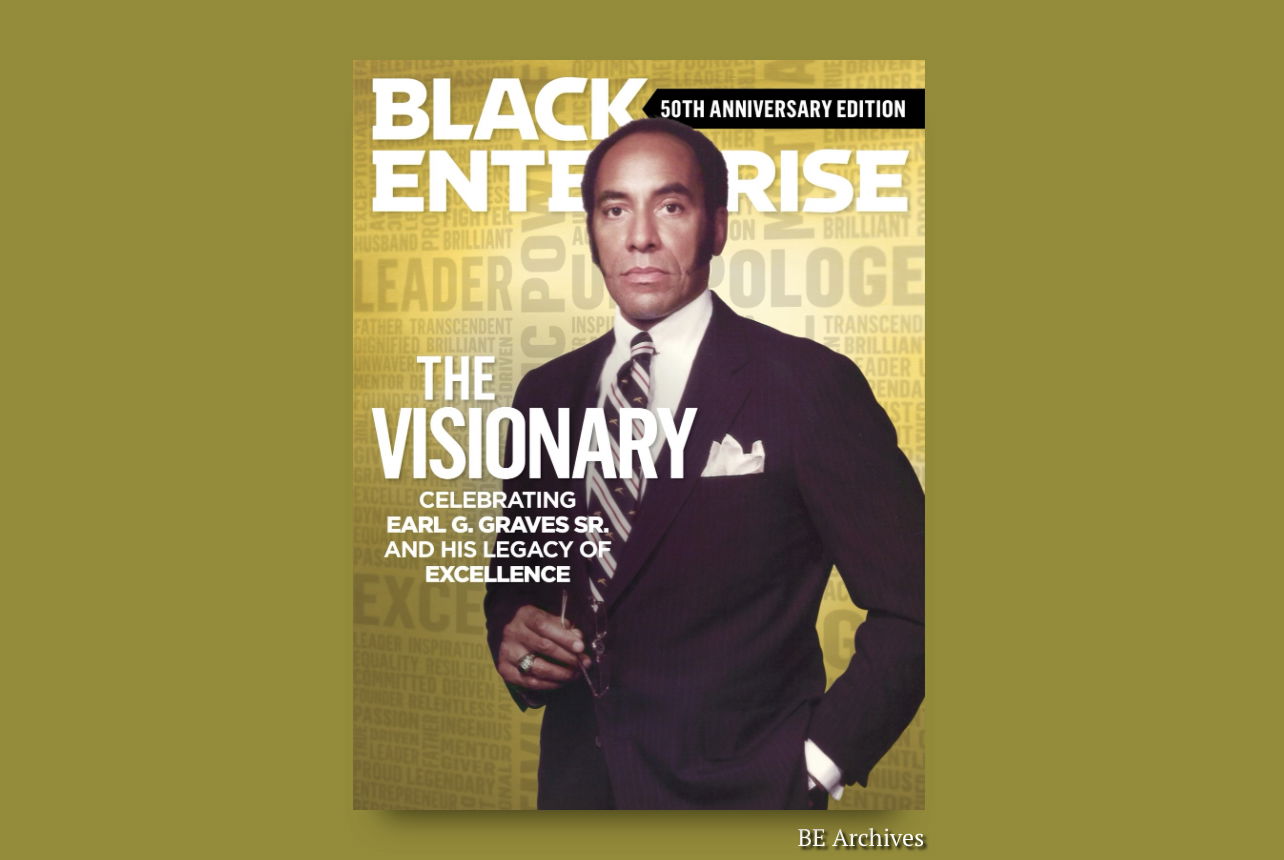
For the 50th Anniversary of BLACK ENTERPRISE, our editors fittingly celebrated the golden anniversary with a special salute to “The Visionary” — our late founder and publisher, Earl G. Graves, Sr.
In the issue, we wrote the following:
“He was a tireless change agent driven by a mission to make African Americans full participants in the economic mainstream as successful captains of industry, executives of immeasurable influence and multigenerational wealth builders. At the same time, he was the connector who served as the link between Black America and corporate America; he was our advocate who kept institutional leaders — whether they were the CEO of a major corporation or president of the United States — accountable for furthering access in any and all arenas of American society.”
His platform: BLACK ENTERPRISE. Throughout five decades, it served as a tool to record and guide every milestone tied to Black empowerment in this nation, while making history of its own with an array of franchises that drove Black advancement and the progression of the company.
In 1973, BE unveiled the Top 100 — an annual listing of the nation’s largest Black-owned companies — the annual barometer for Black business development, in its June issue
In 1986, the company established the Professional Networking Forums series, which served as its entree into the events space
in 1997, BE went digital with BlackEnterprise.com (originally called BE Online) as a destination on the World Wide Web for Black business news and resources
In 2000, BE launched the Black Wealth initiative to spur financial empowerment, home ownership, and stock market participation among African Americans
in 2003, the company made its first foray into television with the Black Business Report, which spawned a series of broadcast properties to provide other vehicles for business and financial information
These offerings and the evolution of others continued to meet the needs of different segments of the BE audience on the platforms of their choice.
On the pages of our special anniversary issue, the last regular print magazine, as well as the commemorative digital edition, we gave a full measure of the icon and the vehicle that inspired and uplifted millions of Blacks across the globe.
It was a deeply personal issue, sharing Earl Graves, Sr.’s amazing journey and his impact on business, corporate America, politics, and wealth creation through his own words; commentaries and remembrances of the nation’s most powerful business leaders; and a touching “Letter To My Dad” written by his son and the current CEO of BLACK ENTERPRISE, Earl “Butch” Graves, Jr., who offered reflections on his father’s leadership as well as his most important roles as a husband of 52 years to his best friend, closest confidant, and the love of his life, Barbara Graves; a demanding and supportive father to his three sons, Butch, Johnny, and Michael; and a loving grandfather to eight grandchildren. Butch Graves wrote the following about his father: “You met directly with more than eight presidents in your lifetime, yet were equally engaged with your interactions of everyday people. You were as excited to share our family Christmas card with the skycaps at American Airlines as you were with its CEO.”
In reading this special issue, readers discovered the story of a determined man prepared to win against the odds — and his drive to show legions of African Americans how to chart their own path to wealth, power, and success.
Nolan Wells’ Family Speaks To The National Association Of Black Journalists In Atlanta
The family is demanding a full federal investigation.
The family of 18-year-old Nolan Wells is calling for a federal review of the investigation into his death, more than a month after he disappeared during a Fourth of July boating trip in Mississippi, according to WLOX.
Wells’ parents, Christine and Elmore Wonsley, joined civil rights attorney Ben Crump, the Rev. Al Sharpton, and U.S. Rep. Lucy McBath on Aug. 13 at the National Association of Black Journalists convention in Atlanta. The group discussed the case during a panel moderated by journalist Tiffany Cross before holding a news conference.
Wells was reported missing after he failed to return from a July 4 boating trip with friends. His body was found on July 6 in waters near Horn Island off Mississippi’s Gulf Coast.
The Congressional Black Caucus is also seeking federal scrutiny. In a letter sent Aug.12, caucus Chair Yvette Clarke and other members urged Attorney General Todd Blanche and FBI Director Kash Patel to launch an independent review. McBath said federal officials were given seven days to respond.
“We are demanding a full federal investigation,” McBath said. “We want to make sure that every stone is turned because his life matters.”
Wells’ parents have questioned the circumstances surrounding his disappearance and the authorities’ initial response. Christine Wonsley said she contacted multiple law enforcement agencies while trying to report her son missing, but was redirected because of jurisdictional questions.
An independent autopsy commissioned by the family classified Wells’ cause and manner of death as undetermined. The office of District Attorney Angel Myers McIlrath has said the state autopsy report will be withheld until a grand jury reviews it.
Crump’s team and the district attorney’s office have also discussed jointly examining Wells’ cellphone. Attorney Liza Park said the family’s forensic team is waiting for prosecutors to establish a time and location for the examination.
The Jackson County Sheriff’s Office told the outlet the investigation remains open and ongoing. Crump’s team is conducting a separate investigation.
“We want truth. We want transparency,” Crump said.
Sharpton said the family would accept the findings if the investigation provides clear answers.
“If the truth comes out and it is clear, then we will accept the truth,” Sharpton said. “That is all we are asking.”
Wells would have turned 19 on Aug. 19. His family plans to hold a national prayer rally that day at Greater St. John AME Church in Biloxi, Mississippi.
“We just want the truth,” Elmore Wonsley said. “We just want to know what any other parent would want to know.”
Senate Passes ‘The Common Cents Act’ To End Penny Production
The goal is to revamp the nickel
The U.S. Senate has passed legislation that could formally end penny production, establish nationwide rules for rounding cash transactions, and eventually change how nickels are made, The Hill reports.
The Senate passed the Common Cents Act unanimously on Aug. 7. The House previously approved its own version of the legislation. The chambers must approve identical legislation before the measure can advance to President Donald Trump.
For consumers and businesses, the legislation could bring clarity to cash transactions as pennies become increasingly scarce. The bill would allow businesses to round cash purchases to the nearest five cents while leaving credit, debit, and other electronic transactions unchanged.
For example, a $19.82 cash purchase could be rounded down to $19.80, while a $19.83 purchase could be rounded up to $19.85.
The federal framework could also address inconsistencies created by state and local laws that restrict businesses from rounding transactions.
The legislation would formally end production of pennies for general circulation. The U.S. Mint produced its final circulating penny in 2025, although special collectible pennies were released in 2026 to commemorate the nation’s 250th anniversary. Existing pennies would remain legal tender.
The outlet reported that more than 300 billion pennies are estimated to remain in circulation or held by consumers.
The Common Cents Act also takes aim at the rising cost of producing nickels.
According to U.S. Mint figures cited by The Hill, producing a nickel cost 13.31 cents in fiscal year 2025, down from 13.78 cents in fiscal 2024. The nickel has cost more than its 5-cent face value to produce for 20 consecutive years.
Nickels are made primarily of copper, which has contributed to their elevated production costs. Under the legislation, the Treasury Department would be authorized to test a less expensive composition using zinc and nickel.
Any alternative would have to reduce production costs while creating minimal problems for vending machines and other equipment designed to accept coins.
The legislation would not eliminate the nickel. Both nickels and existing pennies would remain legal tender even if the measure becomes law.
Before Selling Her Business, Mahisha Dellinger Combed Out A Small Part Of An Estimated $4B Natural Haircare Industry
For Black Business Month, we celebrate a former mogul in the natural haircare industry.
Mahisha Dellinger is the founder and former CEO of CURLS Beauty Brands, a business BLACK ENTERPRISE has introduced to its audience many times since she started it more than 20 years ago. And as BE recognizes Black Business Month, we’re excerpting a Beyond the Hype episode featuring Dellinger, who talks about her entrepreneurial journey. No longer affiliated with the company she sold, Dellinger’s story is still a lesson for young entrepreneurs.
Mahisha Dellinger’s products have a journey of their own
Starting her business through e-commerce, Dellinger’s products have since appeared in major retail outlets such as Target, Walmart, CVS, Walgreens, and Kroger’s. Her advice to young people wanting to take entrepreneurial ventures comes from her own experience. Go after something you’re passionate about. But do your due diligence to make sure what you think is a good business is actually a sustainable one.
Record-Breaking 31K People Hit Up ‘Invest Fest’ 2026 After Controversy With The City Of Atlanta
Serena Williams and Mayor Andre Dickens Lead Cultural Wealth Summit
Invest Fest 2026 wrapped up its sixth annual conference at the Georgia World Congress Center, drawing a record-breaking crowd of more than 31,000 attendees, according to a post-event press release shared with BLACK ENTERPRISE. The numbers are impressive after public discourse around support from the city of Atlanta.
The three-day summit, which was founded by Earn Your Leisure Co-Founders Rashad Bilal and Troy Millings and Matt “The Mortgage Guy” Garland, transformed into a global convergence point for generational wealth, venture capital, artificial intelligence, and urban policy.
Invest Fest demonstrates how economic empowerment and Black entrepreneurship intersect with contemporary entertainment. Programming encompassed stock portfolios, real estate acquisition, estate planning, crypto assets, and AI deployment.
Serena Williams And Key Cultural Figures Transform Invest Fest 2026
Tennis titan and venture capitalist Serena Williams made history as the event’s first female headliner, shifting the convention’s scope toward institutional venture capital and generational wealth. Williams spoke on the sacrifice required for elite performance and emphasized that peak success demands singular focus, sparking extensive discourse across digital platforms.
Financial support was directly allocated to early-stage founders during the Invest Fest Pitch Competition, where industry figures including Dr. Paul Judge, Master P, La La Anthony, and Angela Simmons evaluated startups. Groundwork Health and Path Intelligence each secured $125,000, distributing $250,000 in direct seed capital to foster scalable financial education and tech enterprise. AI entrepreneur Alicia Lyttle showcased autonomous digital agents on stage, training attendees to utilize machine learning to scale financial education and business infrastructure.
The summit also recontextualized media success into long-term equity. Hip-hop icon T.I. detailed how his early corporate ownership decisions secured generational wealth for his family, while Porsha Williams shared how her venture, Go Naked Hair, establishes long-term autonomy beyond reality television.
Former Atlanta Mayor and Georgia gubernatorial candidate Keisha Lance Bottoms addressed civic equity, while TIAA President and CEO Thasunda Brown Duckett, BET President Louis Carr, and Morgan & Morgan Founder John Morgan provided executive insights on institutional leadership.
Atlanta Mayor Andre Dickens And Earn Your Leisure Had An On-Stage Reconciliation
Prior to the event, a public debate emerged after Bilal and Millings questioned the degree of municipal backing provided by Atlanta during an appearance on The Breakfast Club. Mayor Andre Dickens addressed the critique publicly, sparking discussions regarding city engagement with minority-led enterprises.
The dispute reached a constructive resolution on Aug. 8 when Mayor Dickens joined the Earn Your Leisure founders on the main stage. Emphasizing the guiding ethos to “Build Bridges, Not Walls,” Dickens and the founders outlined strategic alignment for Invest Fest 2027, reframing public debate into a model for partnerships that advance financial education and economic development for Atlanta residents.
Mother-Daughter Duo Put A Southern Spin On Afternoon Tea In Atlanta
Social media has been crucial to tea house's visibility.
When Brittany Campos returned from afternoon tea at The Berkeley in London, she brought home more than memories. The experience confirmed an idea she had been considering since her 2019 wedding, when the cost of hosting a bridal shower tea made her wonder whether she would be better off putting that money toward a business of her own.
“Before I spend that kind of money, I’d rather invest in my own business,” Campos recalled.
She saw room in Atlanta for a tea house that felt luxurious without simply copying the British tradition. When she shared the vision with her mother, Rita Campos, the idea gained a distinctly Southern point of view.
“We need to put a Southern spin on it—maybe something a little modern, with still traditional touches,” Rita remembered telling her daughter. “We didn’t want to change it too much, but we also wanted it to be relatable to the clients that are now in Atlanta.”
The result was The Dirty Tea, a Black woman-owned tea house in Atlanta’s Virginia-Highland neighborhood that opened in 2023. Inside, tiered trays and ornate china meet Southern banana pudding, tequila-spiked tea cocktails and the kind of warm, attentive service both women consider nonnegotiable.
The concept may photograph beautifully, but getting the doors open was anything but effortless.
Betting on Themselves
Neither Rita nor Brittany had owned a restaurant before The Dirty Tea. Rita brought years of experience in luxury retail and sales for Fortune 500 companies. Brittany had worked in luxury retail and hospitality before taking time to travel. Both understood high-end customer service, but they had to learn the mechanics of building a business in real time.
It took roughly two years to transform the space. The pair gutted it, navigated architectural plans and city approvals, hired professionals and absorbed costs they had never anticipated. They did it without taking out a loan.
“We did not borrow one dollar with this space,” Brittany said.
The decision gave them complete ownership of their vision, but it also placed their personal capital at risk. Looking back, Rita said they would approach financing differently for their next location. Still, the sacrifice helped establish the business as a first for their family: a lasting brick-and-mortar enterprise built from the ground up.
“I’ve never run a business before, and that’s what I’m most proud of,” Brittany said. “Not only did we open a business and we’re still here, but we’re the first in our family to really have a standing brick-and-mortar.”
Without a formal mentor guiding them, they assembled expertise around themselves. Their servers knew service. Their financial adviser helped them understand the numbers. Their kitchen staff brought culinary experience—meanwhile, mother and daughter learned by doing—and, sometimes, by making expensive mistakes.
“Instead of making millions of dollars for other companies, let’s try to do something on our own,” Rita said of her decision to join Brittany.
A Modern Tea With Southern Flavor
The Dirty Tea is designed to reward a closer look. Tables are set with different china patterns rather than a single matching collection. One setting might feature gold details while another has butterflies or florals. Guests often stop to photograph tables other than their own, already imagining what their next visit might look like.
That was Rita’s idea.
“If I came in to have tea and I had a great experience, and I’m looking at the table next to me, I’m like, ‘Oh, I know every time I come, I’m going to get a different set of china,’” she said.
The collection has grown large enough to require a storage unit. Every delicate piece is washed by hand.
The menu is similarly attentive to tradition without being constrained by it. There are familiar tea sandwiches—chicken salad, smoked salmon and cucumber—but the cucumber sandwich comes with a house-made spread. Rita prepares family recipes such as Southern banana pudding and cheesecake, and the team tests seasonal dishes with private-party guests before deciding whether to add them to the menu.
“We’re really big on the food tasting good,” Rita said. “If it’s not good, we’re not going to serve it.”
That standard pushes back against the notion that afternoon tea is more about presentation than flavor. The women have experimented with turkey clubs, turkey-cranberry sandwiches, pasta salad and lighter summer selections. During a previous nighttime concept, Dirty Tea After Dark, they served meatballs, deviled eggs and truffle fries. Brittany hopes to revive a nightlife experience with cocktails and an even stronger Atlanta influence.
“I’m almost ready to put a chicken wing on a tower,” she joked. “That’s what makes us different. We’re modern-day afternoon tea.”
Cocktails offer another playful entry point. The business name eventually revealed an unexpected double meaning: A “dirty” chai is chai tea with espresso. The tea house built on that connection with a signature Dirty Chai espresso martini made with tequila. Other customer favorites are a peach Paloma and a deceptively strong lemon drop mojito.
The name itself, however, came from a mother-daughter disagreement during the stressful build-out. After Brittany dismissed one of her mother’s ideas and walked away, Rita called her back.
“I said, ‘You know what? We should name it The Dirty Tea.’ She said, ‘Why?’ I said, ‘Because of your dirty mouth.’”
Brittany called back moments later. She liked it.
Boundaries, Balance and Legacy
Their differences have become part of the company’s operating system. Brittany describes herself as structured and “a little more militant.” Rita is the natural host, quick to prioritize the guest experience—even when that means giving something away.
“I always joke with her and tell her that I run a business and she runs a charity,” Brittany said.
Rita credits her daughter with teaching her discipline and focus. Brittany, in turn, is learning from her mother when to relax the rules and read the room. One keeps an eye on operations; the other makes sure a tea sandwich never becomes more important than a relationship with a customer.
The same philosophy protects their relationship away from the dining room. Brittany briefly moved in with Rita while they were preparing to open, but eventually realized that living and working together erased too many boundaries.
“I love you, but I cannot work with you and live with you,” she told her mother.
They can laugh about it now, but both are clear about what matters most. Rita, who said building the business with her daughter has been her most fulfilling work, refuses to let money or disagreements divide them.
“My love for her supersedes all of that,” she said. “We made a point not to be a statistic where you can’t work with family.”
That bond became even more important when both women experienced the end of long-term relationships around the same time in 2024. They kept the tea house running while holding each other up through heartbreak. For Rita, the company is now inseparable from the legacy she wants to leave her daughter: proof of what they were able to build together.
Turning Customer Feedback Into Growth
Social media has been crucial to The Dirty Tea’s visibility. Brittany manages the accounts and says influencers began reaching out before she could execute the paid strategy other restaurateurs had recommended. Some guests received complimentary experiences, while others booked and paid on their own.
But an Instagram-ready room only helps if the experience lives up to the post. The owners say they hold staff accountable for service, respond to online reviews and invite guests to share criticism directly. Early feedback led to changes, including additions to the table and adjustments to the menu.
“Everything negative is not bad,” Brittany said.
The same responsiveness shapes pricing. The weekday Mini Tea was priced at $45 at the time of the interview, while weekend packages ranged from $85 to about $110, depending on the experience. Rita and Brittany said they watch the economy and booking patterns, adjusting select prices while protecting the quality of their ingredients and service.
Their next ambition is a second location, with Nashville at the top of their list. The city’s growing population and bachelorette tourism make it a natural fit, and this time they would enter the process knowing the true costs of architectural plans, permitting, construction and staffing.
If investment arrived tomorrow, Brittany said, they would “immediately lock in a second location.”
For now, The Dirty Tea stands as evidence of what can happen when an idea survives the long distance between inspiration and opening day. Rita hopes other Black women who enter the space see not only the polished tables but also the persistence behind them.
“It can be done,” she said. “You just have to start.”
Brittany agreed, adding that starting also requires patience, planning, capital and sacrifice.
“Five years have passed already,” she said. “Imagine if we wouldn’t have started.”
WNBA Target Of Political Grandstand As Florida Attorney General Threatens Criminal Charges On Flagrant Fouls
The Women's National Basketball Players Association responded firmly to external political involvement.
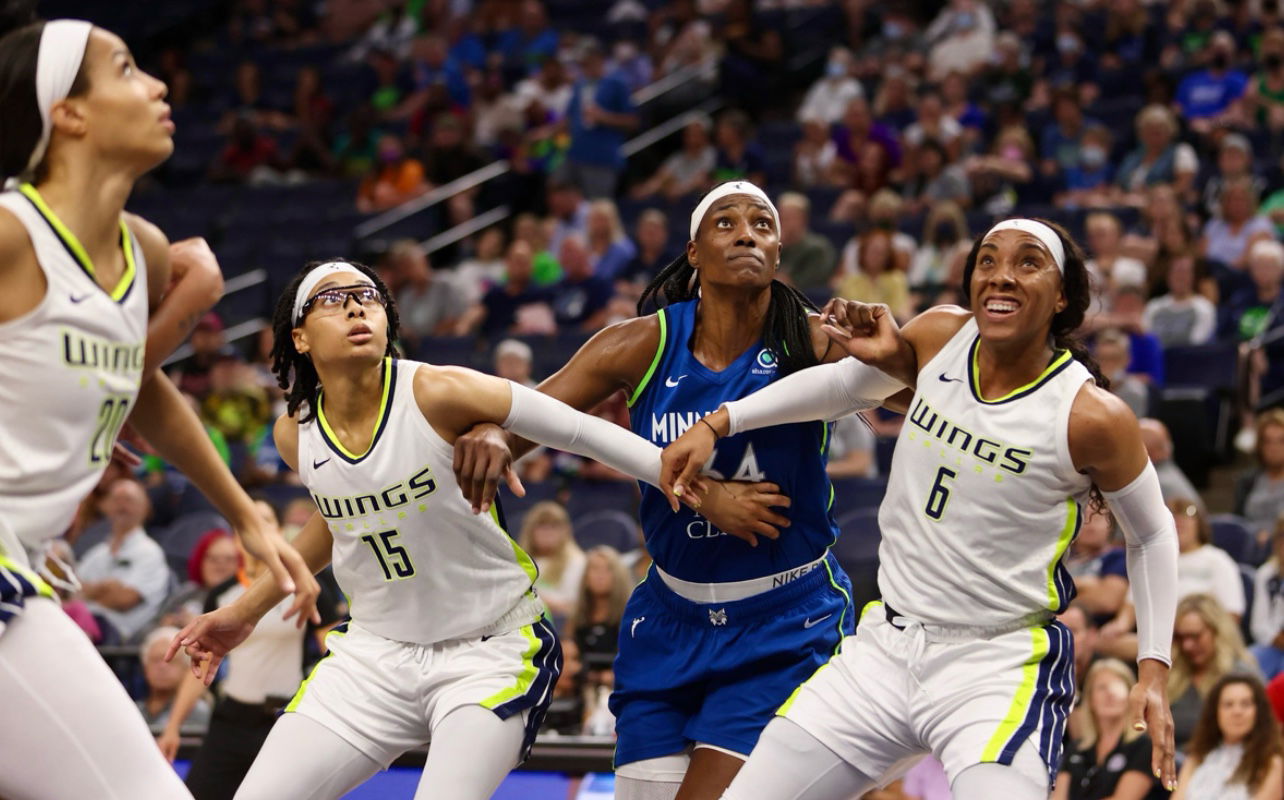
Florida Attorney General James Uthmeier has faced strong criticism from sports analysts and corporate leaders after threatening criminal prosecution of Women’s National Basketball Association (WNBA) players for standard on-court fouls. His social media statements, made after a hard foul during a nationally televised game on Aug. 8, mark a significant escalation in political actions targeting a league made up mainly of Black women.
The WNBA knows better than to play games down here in Florida, because I’ll be charging people with assault. https://t.co/wryaIdyFz3
The controversy began during a game between the Chicago Sky and Indiana Fever when Sky guard DiJonai Carrington received a Flagrant 2 foul for contact with Fever forward Sophie Cunningham’s head and neck during a fast break. According to The Associated Press, Carrington was immediately ejected and fined $1,000 by the league. After the game, Carrington posted “WHITE PRIVILEGE” on social media, sparking widespread media commentary and renewed discussion about racial double standards in sports reporting.
She later clarified, stating, “I want people to understand that my reaction comes from seeing how Black women are disproportionately penalized in these situations. My intent was never to hurt anyone, but the consequences and public reaction speak volumes about the ongoing inequities we face on and off the court.”
Performative Politics Without a Franchise
Instead of letting league officials and standard athletic governance handle the play, Uthmeier seized the opportunity to insert state power into professional sports.
“The WNBA knows better than to play games down here in Florida,” Uthmeier posted on X, adding, “Because I’ll be charging people with assault.”
He later clarified his threat to specify “assault and battery.” As Yahoo Sports noted, Uthmeier’s legal posturing lacks practical authority since Florida has not hosted a WNBA team since the Orlando Miracle and Miami Sol folded in 2002. Critics view the attorney general’s comments as an alarming attempt to exploit the legal system for partisan theater at the expense of professional Black female athletes.
The event led to different reactions from the coaches and players. Stephanie White, head coach of the Indiana Fever, admitted that the call was serious but rejected the idea that there had been malicious intent.
“I don’t believe that DiJonai deliberately came out and hit her across the neck as she did, but the incident did take place, and I thought it was the correct decision,” White stated in her press conference after the game.
Exploiting Eligibility Rules Through Political Stunts
Uthmeier expanded his public comments to criticize the WNBA’s collective bargaining agreement (CBA), specifically the league’s player eligibility definitions. His remarks coincided with a publicity effort by former NBA players Enes Kanter Freedom and Royce White, who announced plans to declare for the 2027 WNBA Draft to highlight language in the CBA that defines players as women without specifying gender identity criteria.
According to an internal memo acquired by the news organizations, WNBA Commissioner Cathy Engelbert told the team executives that the rules regarding player eligibility are the result of collective bargaining and that a task force would look into making long-term policy changes.
The Women’s National Basketball Players Association (WNBPA) responded firmly to external political involvement, emphasizing inclusion and player protection while rejecting attempts by politicians to use the union for publicity. Union representatives stated that while difficult conversations will continue within the sport, players “will not be used as political pawns.”
Afroman, whose legal name is Joseph Foreman, appeared at the Bitcoin 2026 conference in Las Vegas after emerging as a free-speech figure following his court battle with seven law enforcement officers, according to the outlet.
The dispute dates to an August 2022 raid on Foreman’s home in Winchester, Ohio. Officers searched the property as part of an investigation involving suspected drug trafficking and kidnapping. No charges were filed against Foreman.
Foreman later used home security footage of the raid in songs, music videos, and social media posts that mocked the officers. Seven Adams County sheriff’s deputies sued him, alleging defamation and invasion of privacy and seeking nearly $4 million in damages.
A jury ruled in Foreman’s favor in March, rejecting the deputies’ claims. The case also generated viral attention for the rapper, whose courtroom appearances and music about the raid circulated widely online.
That newfound attention ultimately brought Foreman to Bitcoin 2026. Craig Deutsch, the conference’s programming director, told the outlet that Foreman’s legal victory and defense of his right to make music about the raid aligned with the event’s focus on individual liberty.
Foreman’s relationship with Bitcoin, however, remains limited. He said he previously purchased the cryptocurrency but lost the keys needed to access it.
Still, his appearance created another opportunity to capitalize on renewed interest in his career. Scarce City, a bitcoin auction marketplace, sold memorabilia associated with Foreman, according to the outlet. The American flag suit he wore during his trial sold for about $4,000, while a used ashtray fetched roughly $230 in bitcoin.
The moment illustrates how Foreman has transformed a years-long legal dispute into new attention for his music, personal brand, and business opportunities.
His victory also continues to shape his public image beyond entertainment. Foreman, who previously pursued a presidential bid in 2024, announced during the conference that he plans to run for president again in 2028.
Jackson State University Partners With Mark Cuban Foundation To Offer Free AI Boot Camp For High School Students
The initiative brings AI instruction directly to Jackson students at no cost.
Jackson State University is expanding access to artificial intelligence education for local high school students through a free AI boot camp designed to prepare young people for a technology-driven future, The Clarion Ledger reports.
The historically Black university’s College of Business will host the Mark Cuban Foundation AI Bootcamp this fall for Jackson Public Schools students in grades 9-12. The program will give students hands-on experience with generative AI while exploring how the technology is being used across industries.
The boot camp will be held over three Saturdays — Oct. 31, Nov. 7, and Nov. 14 — with technology, transportation, and meals provided at no cost. Applications are open through Sept. 30.
Entrepreneur Mark Cuban, founder of the Mark Cuban Foundation, said the program is intended to make AI education accessible to students regardless of their financial circumstances.
“It’s more critical than ever that we ensure our students are prepared when they apply for schools or jobs in the future,” Cuban said in a statement. “This bootcamp will offer an avenue to explore this fascinating field to any student, no matter their means.”
Students will learn about real-world uses of AI in healthcare, business, computer science, sports, arts, and entertainment. Participants will also complete a capstone project that allows them to apply skills developed during the program.
For Jackson State, the partnership represents another opportunity for the HBCU to connect emerging technology with students in the surrounding community.
“We’re opening doors for young people to explore technology and innovation in ways that can truly change their futures,” Alisa Mosely, JSU’s senior director for AI initiatives, said in a statement.
JSU President Denise Jones Gregory said expanding access to emerging technology is also an issue of educational equity.
“At Jackson State University, we believe access to emerging technology should never be determined by zip code or circumstance,” Gregory said in a statement.
The initiative brings AI instruction directly to Jackson students at no cost as schools and employers increasingly incorporate the technology into education and the workplace.