Howard Alum’s New AI Platform Connects Restaurants, Influencers, And Diners
A Howard University alum is behind the pioneering AI-powered platform linking food influencers, restaurants, and diners.
A new Black-woman-owned AI-powered app is poised to disrupt the $40 billion restaurant marketing industry by connecting restaurants, creators, and diners in one place.
Charlotte-based startup Troodie is pioneering as the first AI-powered social commerce platform linking influencer content directly to real-world diner behavior. Launched during National Black Business Month by creator Taylor Davis, a Howard University and Cornell MBA alum, Troodie sets itself apart by identifying which marketing efforts truly bring customers through the door, a first of its kind.
“I’m so excited to finally introduce Troodie to the world. We built Troodie for travelers and foodies (Troodies) who love to explore new places through food,” Davis told Black Business. “Unlike solutions where reviews are generic or bookmarked restaurants get lost, Troodie makes discovery more personal, easy to filter, and collaborative.”
In today’s social media-driven market, restaurants spend billions on advertising and influencer campaigns, often without knowing the true ROI. Troodie bridges that gap by connecting creator content to real customer visits, offering sales-based attribution, first-party diner data, and a curated marketplace that matches restaurants with influencers based on audience fit and performance.
“For restaurants, it means being discovered by the right diners at the right moment, turning authentic word-of-mouth into measurable traffic and sales,” Davis said. “One of my favorite features is how users can join Communities and share and curate recommendations together. It truly brings the joy of connection through food and travel into one place.”
The HBCU alum was intentional about basing the startup in Charlotte, viewing the city as a thriving hub for food innovation, tech growth, and entrepreneurial energy.
“Charlotte offers the perfect mix of a vibrant dining scene, a growing tech ecosystem, and a community that supports innovation — especially from Black founders,” Davis said.
Troodie launched with over 70 restaurants and 30 creators connecting through a dynamic ecosystem where restaurants can track which promotions drive paying customers, and creators can monetize their influence through measurable results rather than likes or followers. Diners can easily organize and revisit trusted recommendations. As TikTok and Instagram become go-to sources for discovering local restaurants, Troodie aims to streamline the experience in a single platform.
20-Years After Hurricane Katrina, Trymaine Lee Highlights ‘Hope In High Water’
Hurricane Katrina made landfall Aug. 29, 2005. Twenty years later Trymaine Lee's new documentary tells the story of the city's resilience.
Hurricane Katrina made landfall on Aug. 29, 2005. It remains one of the largest and deadliest natural disasters to hit the United States. Twenty years later, Pulitzer Prize winner Trymaine Lee continues to report on the lasting effects of the storm with his new documentary, Hope in High Water: A People’s Recovery Twenty Years After Hurricane Katrina.
Once a New Orleans resident and local reporter, Lee was in the thick of the storm. As the streets filled with water, he reported. As thousands of people were herded into the convention center and Superdome, he reported. Lee continues to tell the story of the people of the Gulf Coast 20 years later. Lee spoke withBLACK ENTERPRISEabout Hope in High Water, his forthcoming book, and the resilience of people.
BE: You first reported on Hurricane Katrina as part of the Times-Picayune newsroom. Two decades later, what struck you most when you returned to New Orleans and the Mississippi Gulf Coast?
How much progress remained? There are so many spaces in this city that have yet to be filled 20 years later. Folks are still grappling to put the pieces of their lives back together again.
What stuck with me in an even deeper way is the resolve of people, despite losing everything. Folks are finding ways to step up for their community. They find ways to heal themselves.
BE: The documentary focuses on health, education, food access, and environmental survival. Why were these particular areas chosen to frame the story of recovery?
I think in this film, we go from birth, maternal health care, and then move through how we experience life after we’re born — through education, through policing, through the carceral system. What it means to have access to food security. And then what it means to fight and preserve land from industry and erosion, but also for the next generation, because we are deeply tied to the land. With our bare hands, our blood, our sweat, we are part of this.
So, in telling the bigger story of how Black folks, Black New Orleanians, experience all these things, it made sense to travel through those circles with people who are doing amazing, important work to help heal their communities.
BE: Which do you believe is the most immediate issue?
I really think that food security is probably one of the most pressing issues in this country, and it’s an obscenity that we have hungry children in America.
BE: This project is backed by the W.K. Kellogg Foundation. What role do you think partnerships like that play in amplifying stories of resilience? I think the best role for organizations like Kellogg and other funders in philanthropy is to resource communities and individuals who have the answers to the problems that folks are experiencing in their communities.
Everything that we need is already inside us. There are people on the ground in communities who understand the issues intimately. So, the fact that the Kellogg Foundation pours so much money into places like New Orleans and people who have the tools to fix the problems, I think that changes everything.
BE: Land is a major theme in the documentary. Is there any specific place where reclamation is possible? There are groups like the Mississippi Center for Justice, it was featured in Hope In High Water, who are working to help arm people with legal tools to fight for their land.
In Mississippi, we spoke with some folks from a community called Turkey Creek, who formed this community in the aftermath of slavery. And there are still generations of folks from those original inhabitants who are still living there and committed to fighting for that land, who found novel ways, like getting their communities listed on the Historic Register, to make sure that it’s protected.
BE: Tell BE readers about your upcoming book, A Thousand Ways to Die: The True Cost of Violence on Black Life in America? Truly my life’s work. It took ten years in the making. I almost died in the writing of this book. I’m telling my family story of how gun violence has shaped our experience as a way to walk side by side and speak to how gun violence has shaped the Black American experience. And so, telling the story of this — covering centuries of how guns have shaped my own family but also Black America. It is truly my life’s work. And it’s also about love.
Hope in High Water: A People’s Recovery Twenty Years After Hurricane Katrina is available to stream on Peacock.
New York Student Caters To Black Students With ‘Hello Beauty’ Vending Machines
Chantel Francis is transforming how Black college students access beauty and self-care products with 'Hello Beauty' vending machines.
Chantel Francis is transforming how Black and brown college students access beauty and self-care products. Francis owns a slew of beauty supply vending machines. Her company, Hello Beauty, is now expanding across State University of New York campuses.
The Bronx-born founder thought of the idea during her time as a student at SUNY Brockport. Francis earned a Bachelor of Applied Science in 2024. She recalled frequent frustration over the limited availability of beauty items on campus.
“As a college student, I often felt that my campus didn’t have what I needed when it came to beauty and personal care,” she told AfroTech. “It wasn’t inclusive, and finding the right products meant going off-campus and driving long distances. That’s when I thought, ‘What if we had a vending machine?’”
This concept laid the foundation for Hello Beauty.
Her vision came to life after she won a campus pitch competition similar to Shark Tank. The competition was held through the school’s Small Business Development Center and awarded the entrepreneur with $2,500 to start her company. The center provided Francis with the resources and confidence to launch her first vending machine in January 2025 at SUNY Brockport. That machine stocked essentials including durags, bonnets, hairspray, skincare products, and Vaseline. The specific products targeted the needs of the Black population on campus.
“What started as a vision to make beauty and self-care products more accessible to students on campus is now becoming a reality. To the SUNY Morrisville community, thank you for welcoming Hello Beauty with open arms.” She added that the mission is only beginning. “Our mission is to expand across all SUNY Networks, creating spaces where every student feels seen, supported, and celebrated,” she said.
Hello Beauty provides comfort for the Black and brown community, some of whom are transplants to the area. According to Francis, Hello Beauty’s offerings let the underserved student body know they are seen.
“Since launching the machine, I’ve received so many texts from current students saying things like, ‘This is what I really needed.’ ‘Thank you!’ ‘I’m so grateful for this.’ I can’t provide everything, but with this, it gives the basics to feel a sense of comfortability.”
Venus Williams Pulls Off First New York US Open Doubles Victory In Over 10 Years
'That felt amazing because I never really played with a partner — outside of Serena, obviously — who had that kind of mentality, so it was really fun.'
Venus Williams emerged victorious in her latest doubles match at the U.S. Open, winning for the first time in more than a decade, partnered with someone other than Serena Williams.
According to The Associated Press, Venus and Leylah Fernandez connected to beat the sixth-seeded pair of Lyudmyla Kichenok and Ellen Perez 7-6 (4), 6-3. Although she has won 14 major championships with her sibling, she insists that Fernandez is “the best partner I ever played with — outside of Serena.”
“Our energy really matched each other in terms of determination, in terms of not giving up, in terms of really still just focused and dialed in in every single thing,” Venus said after the match. “That felt amazing because I never really played with a partner — outside of Serena, obviously — who had that kind of mentality, so it was really fun.”
Surprisingly, Venus claimed she is not comfortable playing doubles despite playing all those years with Serena.
“It’s an area that I’m not that comfortable in, being on a doubles court, but I think you get to some point in the match where you stop thinking about it,” Venus admitted. “When push comes to shove, I’ll do what I have to, but I’m a singles player, so of course, when I walk out there, I actually tell myself just to play singles and try that method. I try not to be something that I’m not.”
This was Venus’ first doubles victory in New York City in over 10 years since winning a match in 2014, when she and her sister made it to the quarterfinals.
Venus is coming off not playing on the tour for over a year when she returned to the court in July. During the DC Open, she became the oldest player to win a singles match on the Women’s Tennis Association (WTA )Tour since Martina Navratilova won a Wimbledon match in 2004. Before stepping back on the tennis court earlier this year, the last time Williams played on a tennis court was in March 2024, when she lost an opening-round match against Diana Shnaider at the Miami Open. Her last victory before the match in July, as a singles player, was a victory in 2023 against Veronika Kudermetova in the opening round of the Cincinnati Open.
The 45-year-old tennis player and the 22-year-old Fernandez will play against Ulrikke Eikeri and Eri Hozumi in the second.
“I actually feel great,” Williams said. “With some luck, we’ll stay, maybe win another round and just keep getting better.”
Gilbert Family Foundation Boosts Support Of Detroit-Based Black Businesses With $4M Investment
While some cities known for their wealth of Black-owned business have struggled to stay afloat, Detroit has pushed through -- even amid President Donald Trump’s anti-DEI policies.
The Gilbert Family Foundation is living up to its mission of having “belief that major change is possible when we work together” by investing over $4 million in Detroit-area Black-owned businesses through a grant partnership with Black Leaders Detroit (BLD) and the Michigan Black Business Alliance (MBBA), AfroTech reports.
To celebrate National Black Business Month, the grants will assist numerous businesses with diverse backgrounds in efforts to expand access to capital, technical assistance, and business coaching. The Foundation’s investment will provide a $2.1 million grant to BLD to help develop a no-interest lending program, similar to The Building Fund, which provides up to $150,000 to Black real estate developers involved in residential projects in the city.
The Foundation’s Vice President of Detroit Community Initiatives, Darnell Adams, says moves like this keep the Motor City’s small business community moving. “Detroit’s continued growth hinges on a strong small business community throughout the city,” Adams said. “These investments will ensure Detroit developers, entrepreneurs, and small businesses have the resources and opportunities needed to shape the future of our city and state.”
While some cities known for their wealth of Black-owned businesses have struggled to stay afloat, Detroit has pushed through — even amid President Donald Trump’s anti-DEI policies. And it’s because of groups like MBBA. Since its inception, the organization has been dedicated to helping businesses grow in a positive direction, with nearly 50,000 Black-owned businesses calling the Great Lakes area home.
By working with the Gilbert Family, they can keep that dedication alive. “It’s a belief in the ingenuity and resilience of our entrepreneurs. This investment will be the spark that helps business owners, especially our second-stage entrepreneurs, turn their dreams into sustainable, thriving realities,” MBBA President and CEO Charity Dean said, according to Crain’s Detroit Business.
“These are the entrepreneurs who are ready to scale, hire, and expand their impact, and with this support, they will. We couldn’t be more excited to continue this journey together.”
Dean labels the Gilbert Family Foundation as “a pillar of support” that has been in place for a few years. The new investment surpasses the $1 million invested by the Foundation in 2023 as part of a wider 10-year pledge of $500 million with the Rocket Community Fund, aimed at strengthening Detroit neighborhoods.
To date, roughly $232 million has been committed.
Before that, in 2021, the Foundation assisted in the launch of Detroit’s Apple Developer Academy, a 10-month program created in partnership with tech conglomerate Apple and Michigan State University, at no cost. Recently, the program graduated over 125 students, equipping them with the real-world skills to excel in careers such as Swift coding, AI, UX design, marketing, and project management.
YES! Tulsa Tech Week Aims To Rebuild Black Wall Street
Tulsa Tech Week is a six-day gathering, Sept. 22-27, founded by Tariqua “Tai” Nehisi. All are welcome to attend at no cost.
Tulsa is preparing to host its second annual Tulsa Tech Week. The event is a six-day gathering, Sept. 22-27, founded by Tariqua “Tai” Nehisi. All are welcome at no cost. Tulsa Tech Week is a citywide festival featuring over 50 partners hosting multiple sessions, panels, and networking opportunities. Organizers describe it as an accessible way to bring together founders, engineers, students, and investors in a single place.
In an interview with AFROTech, Nehisi spoke about what led the New York native to move to Oklahoma and build in the city.
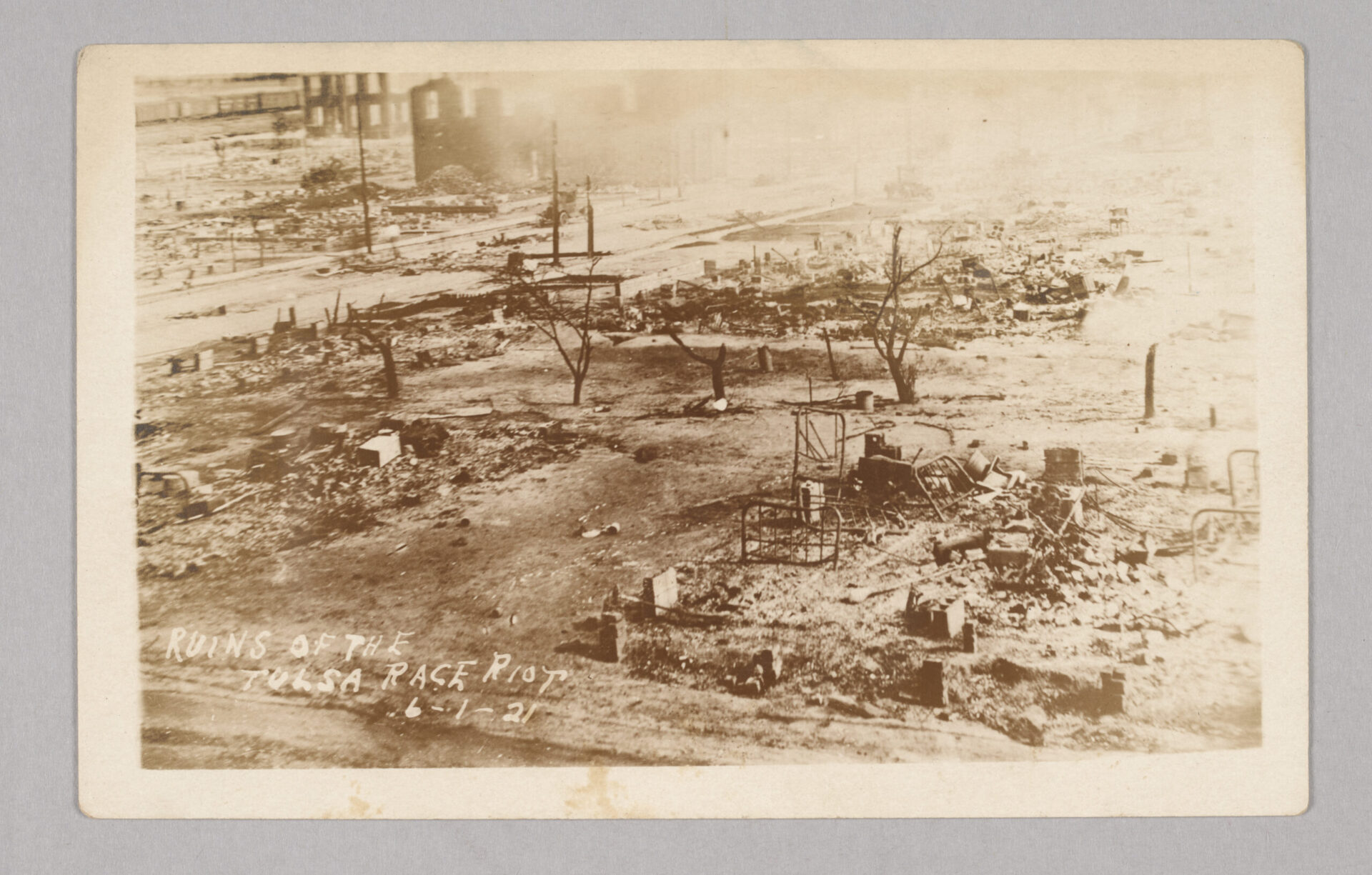
“I made a decision to move here at least for the year and see what Tulsa looked like. And in moving here, I arrived at a time when a concerted effort was underway to support the rebuilding of Black Wall Street through a technical lens, with Black- and brown-focused tech companies. And I got into an accelerator to accelerate my business, and that’s how everything really started,” Nehisi said.
Participants can choose from “attendee paths” tailored to specific career paths. These include founders, hackers, STEAM scholars, and investors. Each path provides programming that will deepen industry knowledge. Following programming for specific paths also allows attendees the opportunity to network with others in their field.
Community engagement is also at the center of the programming. Startup Grind Tulsa will host a Walk & Talk networking event at the city’s Gathering Place Park on September 24. The event will also provide visibility for local vendors at its open market.
The Oklahoma Small Business Exchange will host a State of Technology Roundtable during the week, bringing together local and national voices to discuss the challenges facing small businesses in a rapidly changing tech economy.
Nehisi is working to not only rebuild Tulsa’s economic community but to expand it. Tulsa Tech Week is described as an inclusive space, with programming designed to attract diverse communities and spotlight underrepresented entrepreneurs.
With Tulsa’s growing reputation as a destination for remote workers and startups, Tech Week has been framed as more than a conference but a citywide showcase of how technology and culture intersect in Oklahoma.
Patrick Braxton Wins Alabama Town Mayoral Election After Once Being Locked Out Of Town Hall
Mayor Braxton celebrates his victory and hopes it eliminates any “doubts people had hanging in their heads on if people want me” saying, “it feels good the second time.”
Patrick Braxton, the mayor of Newbern, Alabama, proved racism will never win, but he can after securing victory in the election in a town that once locked him out of the town hall, NBC News reports.
Braxton received 66 votes to his opponent’s 26 after a dispute over control of the town government, just 40 miles west of Selma, drew national attention in 2021. Once refusing to let the incumbent serve, Braxton says “the people came out and spoke and voted” in the election that took place Aug. 26 — the town’s first since the 1960s, approximately. Instead of official elections, town officials held “hand-me-down” positions, as each mayor was responsible for appointing a successor, who in turn appointed council members.
A lawsuit filed by Braxton and Newbern’s Black residents claims the results listed an overwhelmingly white government in a town where Black people outnumber white residents 2-1.
Braxton’s story started when the volunteer firefighter announced his plan to run for the nonpartisan position of mayor in 2020. Since he was the only candidate, Braxton automatically became the mayor-elect without an election. Thanks to the “hand-me-down” rule, he followed suit and appointed a new town council. However, shortly after, the town faced accusations of racism after the locks on the town hall were changed, in addition to Braxton being denied access to the town’s financial accounts.
In his litigation, he accused outgoing council members of holding a secret meeting to set up a special election and “fraudulently reappointed themselves as the town council.” “I didn’t get a chance to serve but one year out of the five years,” Braxton said after finally occupying the office in 2024, after settling in the legal battle.
Officials denied wrongdoing, claiming Braxton’s claim to be mayor was “invalid” without any proof showing otherwise.
The settlement agreement included a promise to hold a mayoral election in 2025, where Braxton successfully won against white auctioneer and realtor Laird Cole, according to AL.
Madison Hollon, program manager of political campaigns for the SPLC Action Fund, who endorsed Braxton, called his victory “a turning point” for the small town of Newbern that is home to 133 people, a library, the town hall, a mercantile, and a flashing caution light. “Mayor Braxton’s election represents a turning point for Newbern, restoring democratic governance, ensuring fair representation, and reaffirming that every resident has a voice in their local government,” Hollon said.
Mayor Braxton celebrates his victory and hopes it eliminates any “doubts people had hanging in their heads on if people want me,” saying, “it feels good the second time.”
Nigeria Bans Raw Shea Nut Exports For Six Months To Boost Global Supply
Nigeria issues a temporary ban on the export of raw shea nut to boost profits.
Nigeria has imposed a six-month ban on raw shea nut exports to strengthen its position as a global supplier of the key cosmetic ingredient.
Nigeria’s Vice President Kashim Shettima announced the six-month ban on Aug. 26, emphasizing it aims to increase income and jobs for rural farmers, not to spark a trade war, the Associated Press reports. The policy will be reviewed following the six-month ban.
“The ban will transform Nigeria from an exporter of raw shea nut to a global supplier of refined shea butter, oil, and other derivatives,” Shettima said at the State House in the capital of Abuja.
The ban is not an “anti-trade policy but a pro-value addition policy designed to secure raw materials for our processing factories,” he added.
Raw shea nuts, when processed, produce shea butter, a key ingredient in lotions, shampoos, conditioners, and moisturizers. Nigeria joins other West African nations, including Burkina Faso, Mali, Togo, the Ivory Coast, and Ghana, which have restricted or banned shea nut exports over the past two years.
“It is one of the most important bases for skincare, especially now that a lot of people are tilting toward nontoxic skincare,” said Zainab Bashir, an Abuja-based dermatologist.
It’s a strategic power move in response to Nigeria producing 40% of the world’s raw shea nuts yet accounting for only 1% of the $6.5 billion global shea products market, Shettima explained. The measure aims to boost profits, the BBC reports, as Nigeria loses out by producing relatively little shea butter locally.
“The ban seems to suggest that the government has identified a supply-gap issue, but an export ban does little actually to lock in current in-country production solely for Nigerian processors,” said Ikemesit Effiong, a partner at SBM Intelligence, a Lagos-based risk advisory firm.
The move follows the opening of one of Africa’s largest shea butter processing plants in northern Niger state. Nigeria’s export ban could generate $300 million in the short term and $3 billion by 2027, according to officials.
”It is about industrialization, rural transformation, gender empowerment and expanding Nigeria’s global trade footprint,” Shettima said.
The decision appears to be the direct opposite of President Bola Tinubu’s long-standing free-market approach, which has involved removing subsidies on essential commodities like fuel and electricity.
Illinois Man Allegedly Forced Abortion Pills Inside His Pregnant Girlfriend
An Illinois man faces homicide charges after police said he forced abortion pills inside his pregnant girlfriend, causing her to miscarry.
An Illinois man is facing homicide charges after allegedly forcing abortion pills on his pregnant girlfriend without her consent, leading to a miscarriage.
Emerson Evans, 31, of Normal, Illinois, was arrested Aug. 22 after authorities responded to a Bloomington home around 7 p.m. and found a pregnant woman experiencing a medical emergency, the New York Post reports. Authorities ultimately determined Evans had given the woman abortion pills without her consent to induce a miscarriage.
“We are again saddened by the alleged criminal actions that resulted in harm to others. It is my hope the mother involved in the matter fully recovers and has the resources and support of this strong community in the future,” Bloomington Police Chief Jamal Simington said in a statement. “The officers and detectives worked diligently and honorably through this very tough investigation.”
The woman, identified as Evans’ girlfriend, was seven weeks pregnant at the time.
While it is unclear if Evans was the father, police allege he forcibly inserted four Mifepristone pills into her vagina without her consent. Only one pill is needed to be taken orally as the first step in a medical abortion. The woman suffered severe complications and ultimately miscarried, police said.
Evans allegedly told police that he “made the decision” for his girlfriend to have the abortion.
“Frankly, the number of pills demonstrates a lack of knowledge or consent,” Judge Amy McFarland said at the court hearing. Evans sought to “effectuate his beliefs of what should occur in the absence of consent. That involved taking a life. That is the broader threat,” McFarland added.
Evans was charged with two counts of intentional homicide of an unborn child and remains held in custody ahead of his Sept. 12 arraignment. While abortion is legal in Illinois, the charge of intentional homicide of an unborn child carries a minimum sentence of 20 years per count.
Everythang NOLA: Hurricane Katrina Survivor Launches Black-Owned Cafe in Atlanta
It's been 20 years since Keisha Mackie relocated to Atlanta from New Orleans after Hurricane Katrina. Her Everythang Nola Cafe in Atlanta pays homage to a city she will forever love.
Inside Everythang NOLA Café, you may find a brass band one day and a Mardi Gras Indian the next. Sometimes, staff at the Atlanta eatery will host crawfish boils when they’re in season, and they participate in the celebratory street processions known as Second Lines. The café’s owner, Keisha Mackie, proves that even when you take a girl out of New Orleans, you can never take NOLA out of her heart.
“I often hear from people who come into my shop that it feels like home,” she tells BLACK ENTERPRISE. “We really try to bring as much of our culture here.”
Everythang NOLA Café is a love letter to her home. You can hear in the way she dotes on the city’s hospitable culture and cuisine that New Orleans is a city she cares deeply about, but did not have the chance to say goodbye to properly. Mackie was one of tens of thousands of people who evacuated as Hurricane Katrina’s threat became imminent.
Hurricane Katrina: A Storm That Felt Different
Mackie, who hails from the city’s Ninth Ward, says the urgency of getting people to evacuate New Orleans felt different than any other storm she lived through.
“I didn’t want to leave at all, because we normally don’t leave,” she recalls. “In the past, we would ride out the storm, but I decided to leave at the very last minute. I was seven months pregnant.”
Her instinct to evacuate was right. By the time she packed up her car and left with her two oldest children, state leaders had declared a state of emergency, and the interstates were completely shut down. She got out just in time, but so many others were not as lucky.
Hurricane Katrina: One of the Deadliest Natural Disasters in the United States
To date, Hurricane Katrina is one of the deadliest natural disasters in the United States. The storm’s powerful storm surge and winds, combined with the catastrophic failure of the city’s levee system, caused a majority of the city to flood.
Data from the National Oceanic and Atmospheric Administration (NOAA) reveal that Hurricane Katrina is the costliest hurricane to ever hit the United States, surpassing Hurricane Andrew from 1992. Additionally, Katrina is one of the five deadliest hurricanes to have ever struck the United States. In all, Hurricane Katrina was responsible for 1,833 fatalities and approximately $108 billion in damage.
According to the Data Center, the storm displaced approximately 1.5 million people from Louisiana, Mississippi, and Alabama in 2005. It was the largest internal displacement in U.S. history since the Dust Bowl. While some returned home quickly, a significant number, estimated at up to 600,000 households, were still displaced a month later, and thousands, like Mackie, never returned to their homes.
Everythang NOLA: Rebuilding In Atlanta After Hurricane Katrina
Returning to New Orleans was not an option for Mackie and her family because redeveloping the city was a mountainous task.
“What we were seeing as far as rebuilding was very slow. It was depressing to witness,” she recalls.
Her father was living in Atlanta, and she felt it was the right time to make a change. In addition to the support, she credits successful Black residents in Atlanta for motivating and encouraging her to rebuild her life in a new city.
When her favorite restaurant, where she could find the iconic New Orleans sno-ball (not to be confused with a snow-cone), closed in Decatur, she knew it was time to make her lifelong dream of opening a New Orleans-inspired café a reality. Mackie officially launched the restaurant in 2019, where people could find the very foods that draw millions of people to New Orleans each year.
Displaced Again, But Not Deterred
Unfortunately, there have been some setbacks. It’s been 20 years since Mackie, then pregnant, moved to Atlanta, and she has recently found herself displaced once again. The original café location recently closed after a change in building ownership. Ironically, as she prepares to commemorate 20 years since relocating to Atlanta due to the hurricane, she was recently displaced from the building.
Luckily, Everythang Nola Café has a new home inside Atlanta’s first Black-owned food hall on the Southwest side of the city. She’s now raising money to help with a smooth transition to the new building because it’s been shut down for several months
Some things will stay the same: New Orleans’ character and heart will be etched into the walls and energy. Mackie is also planning to expand the menu to feature other iconic dishes from the Big Easy, such as Po’ Boys and homemade beignets. Long-term, she would love to host chefs from New Orleans a few times a year.
As she prepares to reopen the café in a new location by the fall, she remains undeterred. From her experience, that is one of the good things she says Hurricane Katrina taught her.
“Having a business and being an entrepreneur is not for the weak. So if you’re not strong and willing to keep going, you won’t make it,” says Mackie. “I think for me, enduring all of those things New Orleans has made me extremely resilient and focused, which has helped me in my entrepreneurial journey. I’m very, very grateful for that.”
The new location for Everythang NOLA Café is 1332 Metropolitan Parkway in Atlanta.