Dawn Staley To Appear On CBS’ New ‘WNBA Tip-Off’ Show
Staley will join CBS' 'WNBA Tip Off' pregame show as an analyst with host Sarah Kustok and former WNBA star Renee Montgomery.
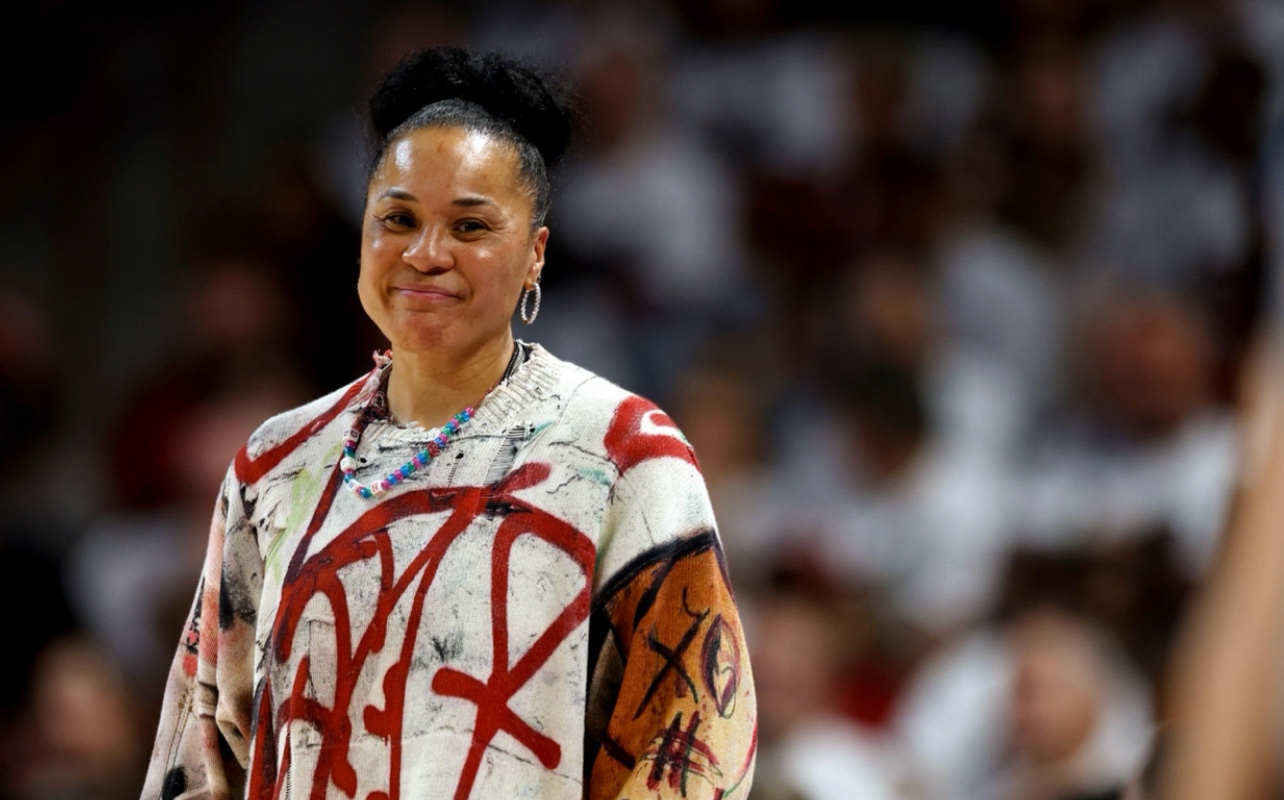
South Carolina Gamecocks women’s basketball coach Dawn Staley is joining CBS’s new WNBA pregame show, “WNBA Tip-Off,” as an analyst.
The former USA Women’s National Team head coach will provide insight from a studio ahead of WNBA matchups that will follow after the program. According to Gamecock Central, Staley will be accompanied at the table by host Sarah Kustok and former WNBA player Renee Montgomery.
Staley’s WNBA career began back in 1999 when she was drafted by the Charlotte Sting as the ninth overall pick. Her coaching career launched in 2000 at Temple while still an active player. Staley played in the WNBA until she retired in 2006 with the Houston Comets. Now, acclaimed as one of the top coaches in women’s basketball, she will bring her expertise in basketball to her new role on CBS. However, the on-air role is nothing new to the six-time All-Star player who appeared on NBC in 2024 to cover women’s basketball at the Paris Olympics.
Fans of Staley gave their opinions about the newly set “WNBA Tip-Off” analyst and Gamecocks coach. One person wrote on the March Madness Women’s Basketball Facebook page that there was “no one better qualified.” While many fans are eager to hear what she has to say about the games, others are interested in seeing what drip the basketball legend will pull up to the studio. A second commenter noted that Staley would bring not only her “basketball acumen,” but also her “fashion sense” to the CBS pregame show. According to Women’s Wear Daily, the coach has made headlines several times after stepping out on the court in designer labels like Louis Vuitton, Gucci, R13, Balenciaga, and more.
Catch Staley on “WNBA Tip-Off,” debuting this Saturday at 7:30 P.M. ET on CBS, followed by a face-off between Indiana and Chicago at 8:00 P.M. ET. Upcoming airings have already been scheduled: July 12, Golden State vs. Las Vegas at 3:00 P.M.; Aug. 9, Chicago vs. Indiana at 7:30 P.M.; and Aug. 16, New York vs. Minnesota. Staley, Kustok, and Montgomery are reportedly not scheduled to travel to games for coverage.
More Than A Ring: Inside The NY Liberty’s Championship Bling And Its New York Swagger
The New York Liberty’s 2025 championship rings have been revealed and are the full package, thoughtful, innovative, and fly.
The New York Liberty’s 2025 championship rings have been revealed and are the full package, thoughtful, innovative, and fly.
The championship bling was designed by renowned jeweler Jason of Beverly Hills and designers Dynasty and Soull Ogun. Dynasty and Soull are the founders of L’Enchanteur. Ahead of the unveiling ceremony, BK Magazine spoke to the sisters about the meaning behind each carat.
Dynasty and Soull are New York natives, which made the commission a personal one for the women. As a former high school and college basketball player, Dynasty once “aspired to play for the Liberty.” The opportunity to have a role in honoring the franchise’s first championship win is a dream for the designer.
Ring Face
In the center of the square face is the Liberty’s torch emblem set with six pavé and emerald-cut white diamonds. The diamonds are an ode to Clara and Jo Wu Tsai, the franchise owners for the past six years. The letters “NY” are crafted with 11 black diamonds on either side of the torch. Each diamond represents one of the team’s 2024 playoff wins. Each black diamond is 0.32 carats, reflecting the Liberty’s 32 regular-season victories—the highest winning record in franchise history.
Face Twist
While most championship rings do not go beyond face value, this beauty has a twist, literally. If twisted, the face of the ring reveals a pair of earrings. The gold “NY” set is also a creation of Dynasty and Soull. Furthermore, engravings of the team’s motto, “We all we got! We all we need!” anchor the diamond crown “NY” earrings. The interior also includes engravings for each series in the playoffs, including: the 2-0 blowout against the Atlanta Dream, the 3-1 win against the Las Vegas Aces, and the final 3-2 victory over the Minnesota Lynx.
“We hid some earrings in there, so that the players would get this little special razzle-dazzle in the ring that they can also wear more continuously. Not everyone is going to wear their ring every day, but they might wear these earrings every day and have a piece of that championship with them all the time,” Soul said.
One side of the ring is pretty standard, imagery of the 2024 WNBA Finals championship trophy. A single diamond sits above the trophy, signifying the franchise’s first title. The other tells the story of the rough-and-tumble city from which the team is rooted. While New York is known as the Concrete Jungle, the opposing corner embodies that raw, unbreakable edge. The graphic of a leaf emerging from cracks in concrete, designed by Soull, represents the city’s and team’s resilience and growth. The budding leaf is set with 28 Paraíba tourmalines.
Soull spoke about the number of gems and the significance of the colors, “Liberty color is a seafoam green, and one of the stones that I had suggested was something called Paraíba.”
She continued, “It’s really sassy. It’s beautiful, and sometimes more valuable than a diamond. I wanted to introduce rare stones into the design of the ring. Numerology was also incorporated into the design process. The number of diamonds represents the number of wins that season.”
Inside the ring’s shank, a player’s jersey and roster number are engraved, further personalizing each piece. Clara Wu Tsai, governor and an owner of the New York Liberty, emphasized that the ring “reflects the tenacity, determination, and greatness of this team and of New York City itself.”
Jason Arasheben, founder and CEO of Jason of Beverly Hills, echoed this sentiment, stating, “This wasn’t just a ring—it was a responsibility.”
The collaboration with Dynasty and Soull Ogun allowed for a piece that merges excellent craftsmanship with artistic vision rooted in Brooklyn. The championship rings were unveiled May 17 at the Liberty’s season opener. The team went on to defeat the Las Vegas Liberty 92-78.
The Apollo Theater Celebrates Clive Davis, Teyana Taylor, and the late Richard Parsons at Annual Spring Benefit
The star-studded evening raised $5 million for the World Famous Apollo Theater
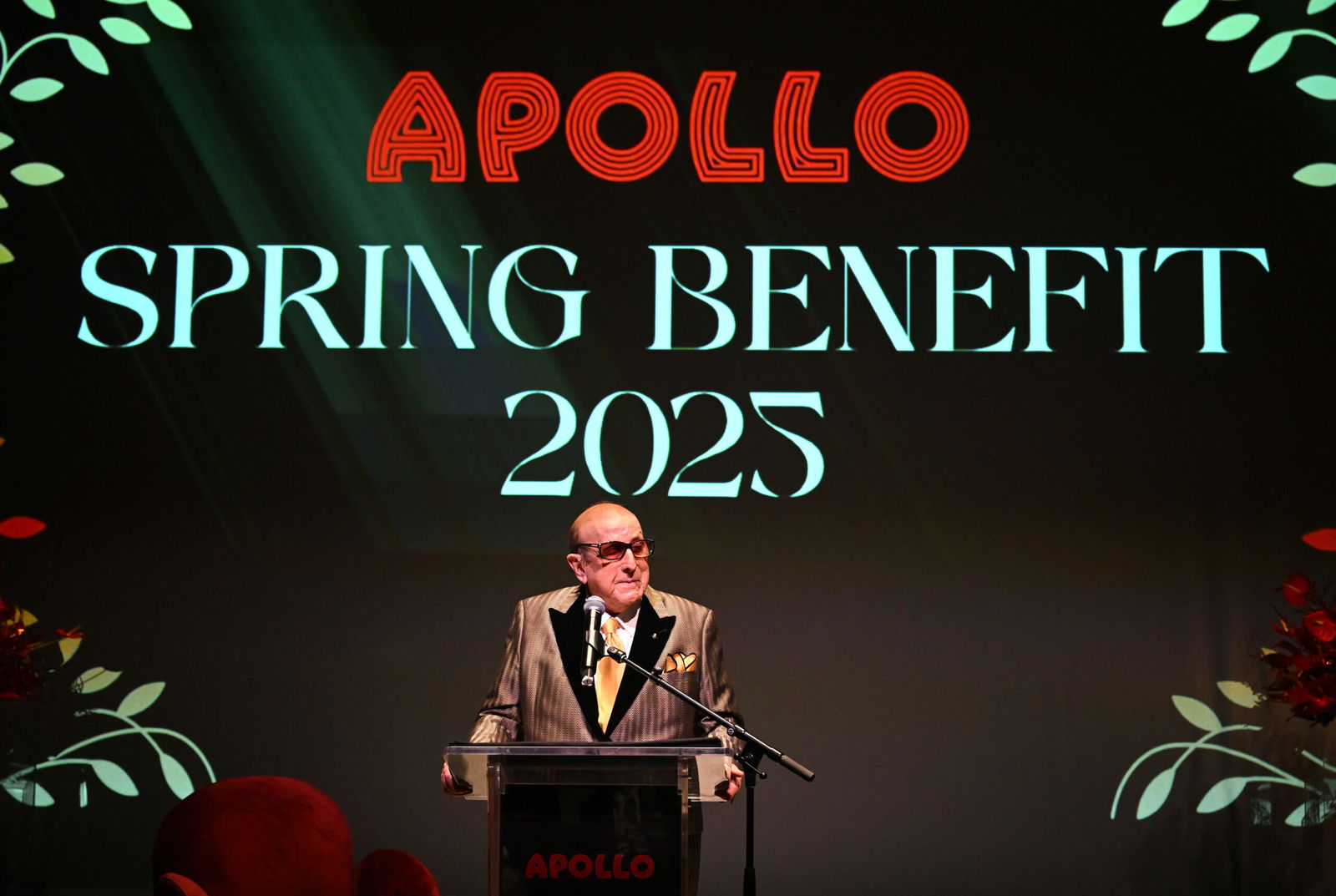
Celebrities, executives, and some of Harlem’s finest convened at The Apollo Theater’s Spring 2025 Benefit on Wednesday to celebrate legendary music executive Clive Davis and multihyphenate entertainer Teyana Taylor. A tribute was also held for late Apollo Theater Chairman Richard “Dick” Parsons, a corporate titan who served as chairman and CEO of both Citigroup and Time Warner.
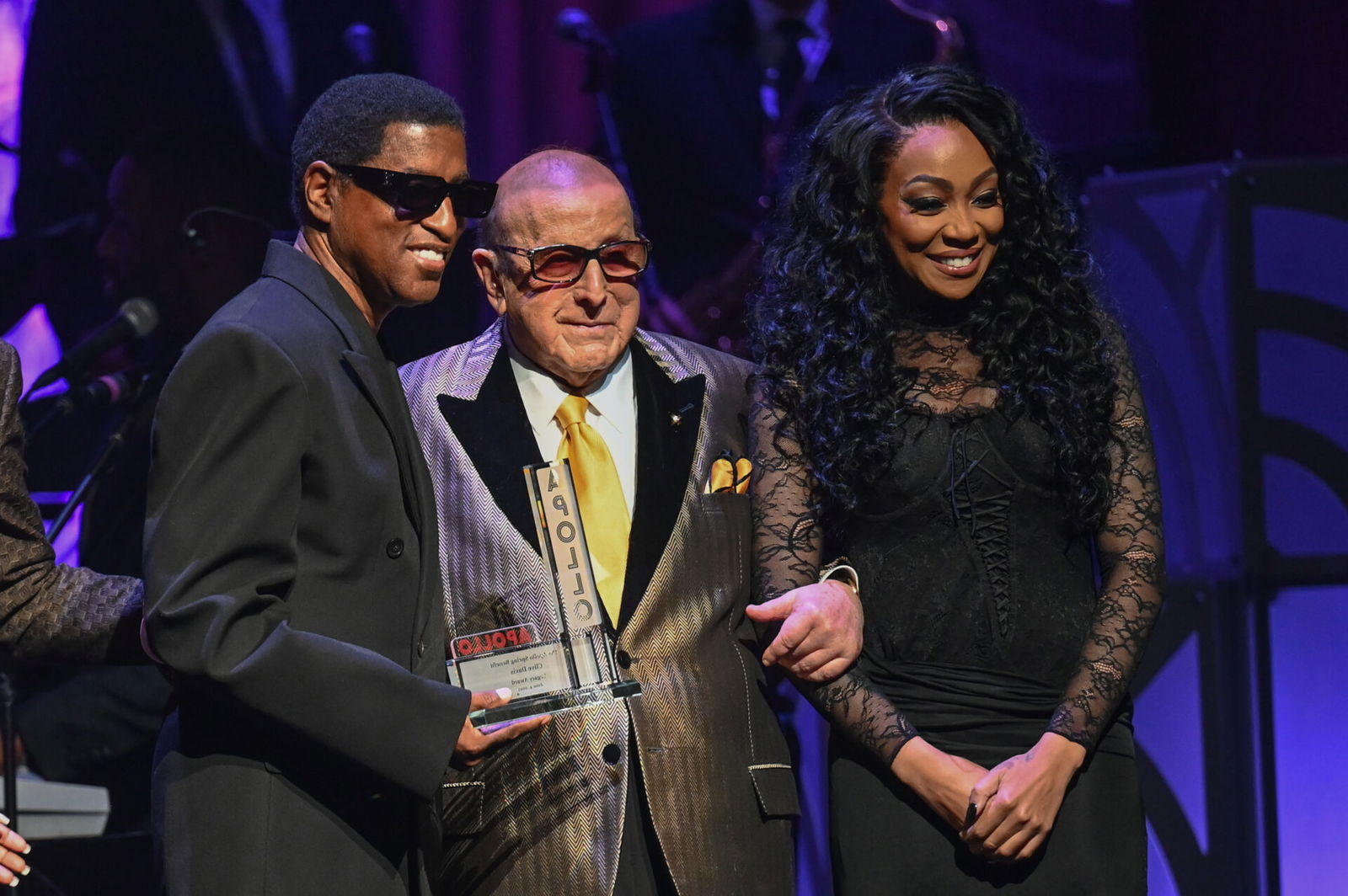
The evening began with a pre-ceremony to honor Davis’ induction into the historic theater’s Walk of Fame. Later, the iconic record producer was honored with the Legacy Award for his colossal contributions to Black music and culture. The award was presented by Monica, who signed to Davis’ J Records in 2000, and Kenny “Babyface” Edmonds, with whom Davis and L.A. Reid cofounded LaFace Records.
Source: Clive Davis is inducted into The Apollo’s Walk of Fame at The 2025 Apollo Spring Benefit (Photo credit: Shahar Azran/Ivan Piedra/Denise Stephanie for The Apollo).
“Black music is an essential part of American popular culture. There is no single institution that has done more to champion the truth of Black music than the Apollo Theater,” said Davis in his acceptance speech about the New York City landmark. For nearly 100 years, the cultural cornerstone has served as a centerpiece of Black music, culture, and artistry in the heart of Harlem.
Davis launched his storied career as an attorney before being recruited as assistant counsel at Columbia Records at the age of 28. He quickly rose through the ranks and was appointed president of the record label five years later. During his stint, the Brooklyn native signed several African American performers and acts, including Earth, Wind, and Fire, the Chambers Brothers, and Sly and the Family Stone.
After leaving Columbia in 1973, Davis launched Artista Records and then J Records — two labels that signed and helped revitalize the careers of Luther Vandross, Aretha Franklin, and Dionne Warwick. Davis, however, is perhaps best known for discovering and signing music icon Whitney Houston. Under his guidance, Houston became one of the bestselling and most lauded music artists of all time.
“Whitney and I were family. I think of her every day,” Davis told BLACK ENTERPRISE on the red carpet. “There was no one like her. What most people didn’t know is that she was a student of music. She knew the arrangers of producers. She had an instinctive, individual feel for song,” he said. “You should hear the demo of ‘I Want to Dance with Somebody,’ or any of the songs – ‘Saving All My Love for You’ or the original ‘The Greatest Love of All.’ She felt it. She put it in her soul, and with an unmatchable voice, she gave it, and it became a classic,” he recalled. “This is one of those special moments. And I miss not sharing it with her.”
Source: Photo credit: Shahar Azran/Ivan Piedra/Denise Stephanie for The Apollo
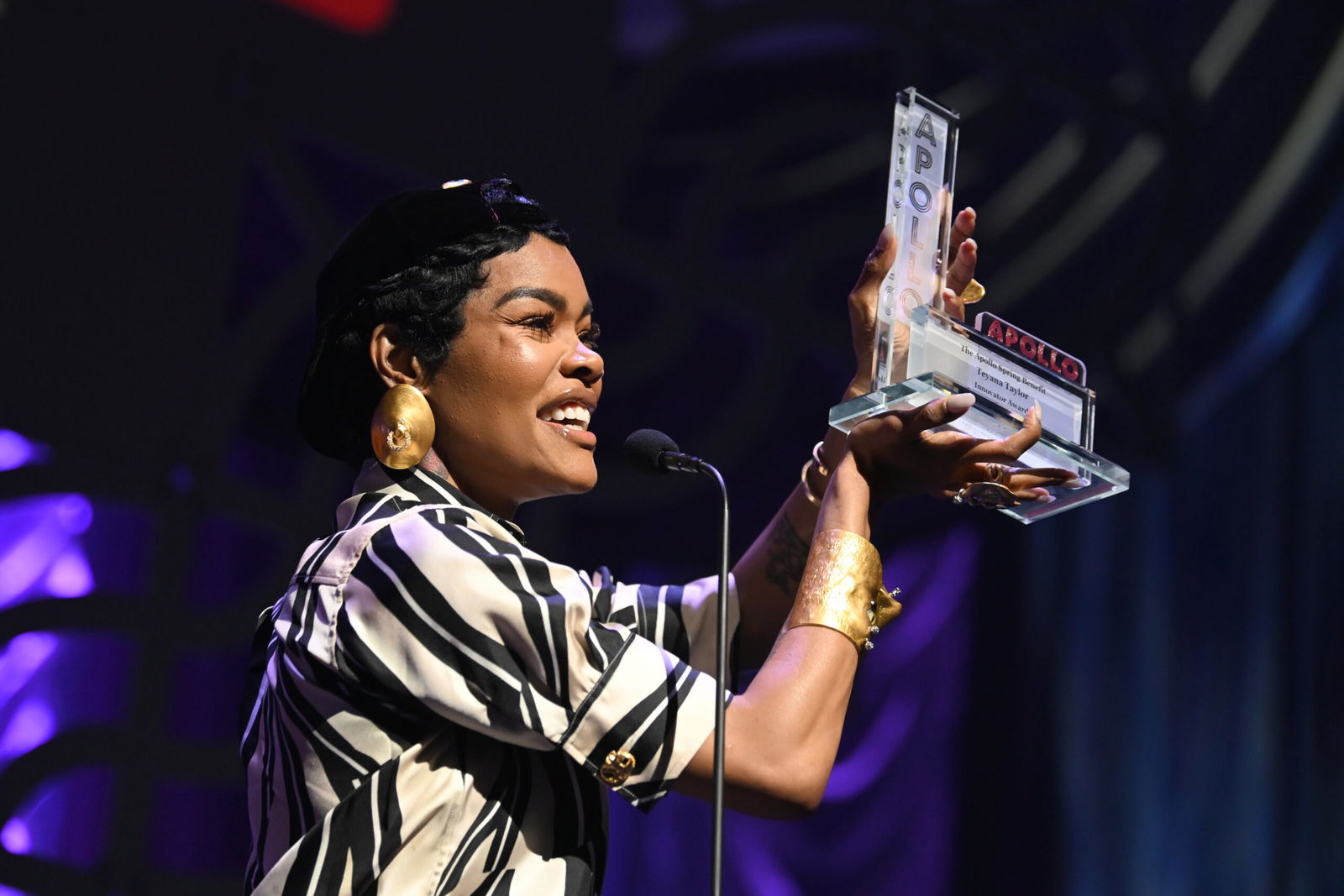
Notable Harlem fashion designer Dapper Dan and talk show host and actress Sherri Shepherd presented the Innovator Award to Taylor, a Harlem-born singer, songwriter, actress, and choreographer. While accepting the award, she reflected on her first performance at the historic theater when she was just eight years old.
“I remember…performing with this group called The Sunshine Girls. And we used to be like, ‘we’re The Sunshine Girls and we’re on the mic, giving it to you the way you like. Y’all better not boo us because we’re only eight!,” she shared.
“It’s so amazing to be here tonight and still feel nervous and still feel the jitters. This is such an iconic stage. I’m just so grateful,” Taylor added. “Eight-year-old me never would have thought I’d be back on this stage being honored.”
Musical performances throughout the evening included Broadway legend Shoshana Bean, Deborah Cox, Method Man, and Busta Rhymes, as well as a moving tribute to Apollo benefactor Parsons presented by the Rev. Al Sharpton.
Before the awards presentation, Apollo President and CEO Michelle Ebanks revealed that the benefit had raised a whopping $3.2 million. She was then joined on stage by Charles Phillips, Chair of The Apollo Board of Directors, who announced an additional $2.5 million contribution from Bloomberg Philanthropies.
The gala marked the famed institution’s 91st anniversary and its final event before it undergoes renovations. The new theater promises to include a new café, expanded lobby, improved balcony seating, and an updated marquee.
Sherrese Clarke, the founder and CEO of HarbourView Equity Partners, a premier sponsor of the event, praised the theater and Apollo Executive Producer Kamilah Forbes for carrying its legacy of cultivating and empowering Black artists.
“The Apollo Theater represents the very essence of what we invest in at HarbourView—authentic cultural expression that shapes generations,” Clarke told BE. “Under Kamilah Forbes’ visionary leadership, the Apollo continues to be a launching pad for groundbreaking artists and stories. We’re honored to support an institution that has always understood the power of giving artists ownership of their narratives.”
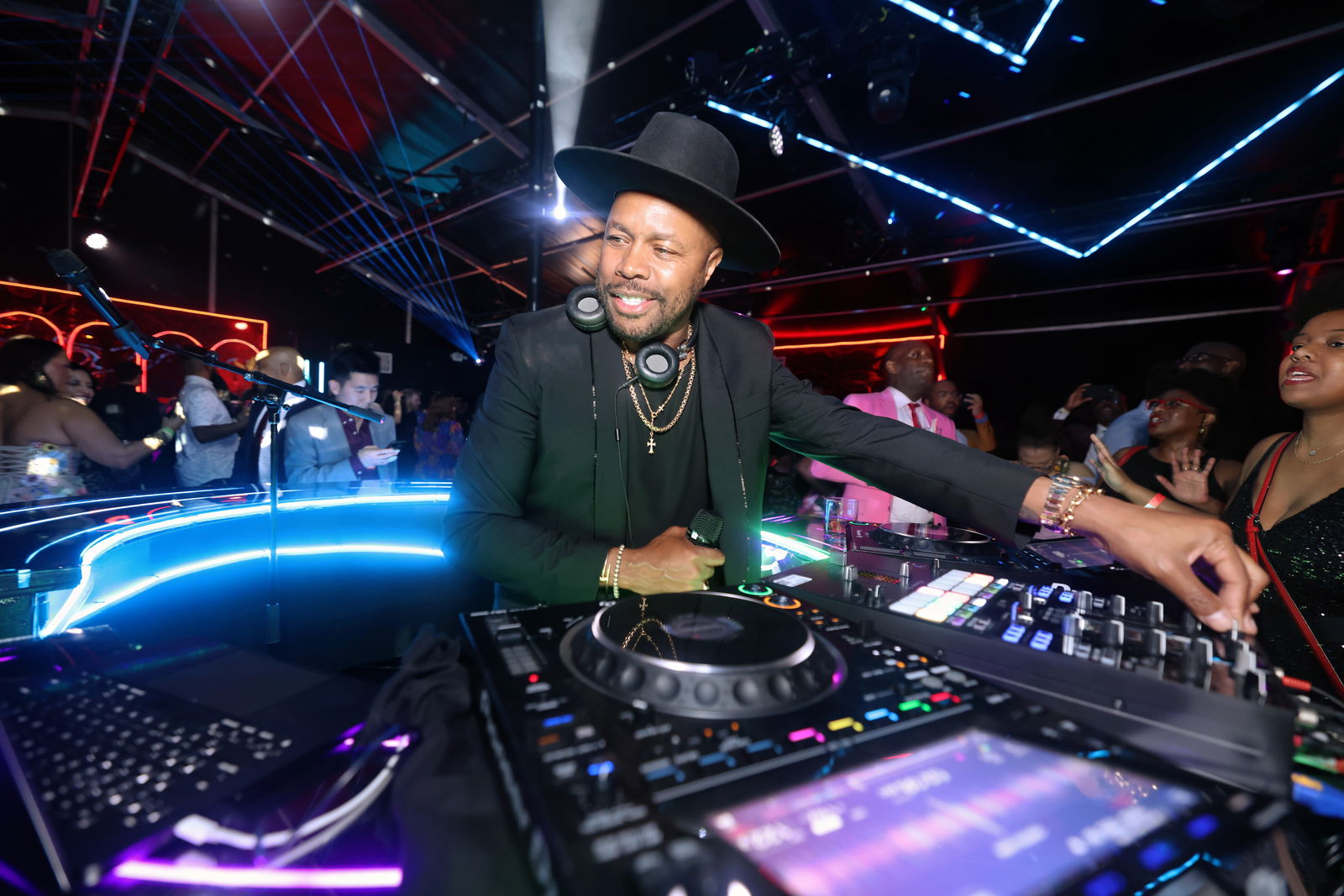
Source: D-nice DJ’s the after party following The 2025 Apollo Spring Benefit (Photo credit: Shahar Azran/Ivan Piedra/Denise Stephanie for The Apollo)
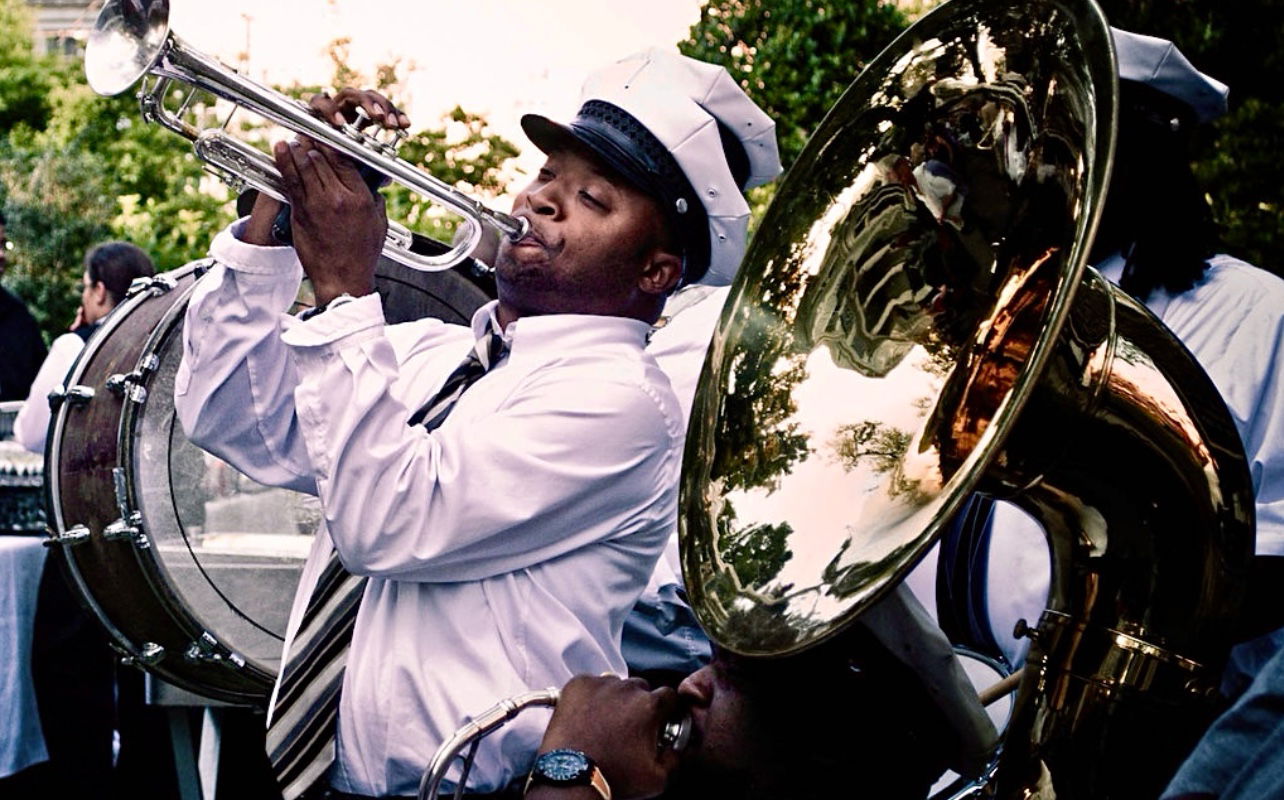
After the show, The Marching Cobras led guests to the after-party, where the celebration continued with signature cocktails and heavy hors d’oeuvres. Harlem-born DJ and artist D-Nice set the vibe, spinning classics and prompting impromptu performances from Deborah Cox and Melisa Morgan.
Black Sommelier’s Nonprofit Welcomes, Elevates, Amplifies Minorities In Wine Industry
Wine Unify awards minorities with funding support, educational resources and networking opportunities to succeed in the wine industry.
Alicia Towns Franken, executive director of Wine Unify, is taking action to amplify diversity in the industry.
The sommelier and her team are addressing an ongoing conversation and welcoming people of color into the industry. “It was time,” she told Food & Wine. “If we were going to see change, we had to design it ourselves.” That’s exactly what the entrepreneur did in 2020 when she launched Wine Unify alongside sommelier and winery executive DLynn Proctor and Masters of Wine Mary Margaret McCamic and Martin Reyes.
The Chicago native is on a mission to open doors and elevate minorities both financially and intellectually in the profession. According to its official website, Wine Unify’s initiatives are built to welcome aspiring professionals to the industry, elevate and support existing industry professionals, and amplify their diverse voices.
“It was built upon the belief that access and opportunity in the world of wine can change a life, a career, and ultimately an industry.”
In its first year of operation, the organization surpassed its founding goal of awarding ten recipients for its Welcome Awards. After garnering an outpouring of support from several organizations, Wine Unify was able to grant 20 awards. The Welcome Awards are the nonprofit’s gesture to provide minorities with exposure through educational classes, group mentorship, and gift certificates to purchase wines for study and leisure.
The nonprofit’s “Welcome” initiative offers its Welcome Awards through the Napa Valley Wine Academy. Award recipients are officially granted access to the community through virtual meetings, happy hours and mentorship opportunities. The organization’s mentorship team consists of several members, led by Towns Franken.
Professionals of color who have already established themselves in the industry are invited to apply for an “Elevate” Initiative Award. Recipients are supported with funding to participate in advanced-level classes, one-on-one mentorship from industry professionals of color, and higher learning tools, such as the Coravin system.
“If we don’t know something, we know someone who does,” Towns Franken says. “Whether it’s a heads-up on a job opportunity or an internship, this network and community that we have created is amazing. It’s joyous work.”
Wine Unify emphasizes its “Amplify” initiative to celebrate the successes of its minority community actively. Towns Franken and her team promote the work of its recipients while extending opportunities to network with others with like-minded missions. Towns Franken said their initiatives are “a win-win for recipients and the industry.” Wine Unify remains committed to its mission to elevate professionals of color despite recent attacks on DEI.
“We definitively declared that we believe in diversity and equity and inclusion, and we were not going to change those words,” said Towns Franken.
The Wine Unify team has distributed over $350,000 in awards to 165 recipients across 37 states. Sponsors include Total Wine & More, Coravin, Gabriel-Glas, and the Napa Valley Wine Academy.
Black Music Month Is In Full Effect With These Black Music Festivals
It's Black Music Month, y'all!
It’s Black Music Month, y’all! June is when we celebrate Black artists who’ve shaped music from jazz to hip-hop. More than just soaking up awesome tunes, Black Music Month honors the roots and rhythms that have defined American music since its inception. Festivals are popping up and showcasing dope performances, community vibes, and cultural storytelling. Get into this list of seven can’t-miss festivals across seven states where you can immerse yourself in Black music and culture this summer.
Durag Fest – Charlotte, North Carolina
Heads up! Durag Fest is hitting Charlotte the weekend of June 21-22. This epic two-day celebration is happening at Camp North End. Expect dope music, thought-provoking panels, and a marketplace where local creators and entrepreneurs will be showing off their goods.
South Georgia Gospel Music Festival – Valdosta, Georgia
Don’t miss the South Georgia Gospel Music Festival on June 8. It’s totally free and right in the heart of downtown Valdosta. Festival-goers will hear great gospel tunes while supporting local causes.
Capital Jazz Fest – Columbia, Maryland
Get ready, Capital Jazz Fest is hitting Columbia, Maryland, from June 6-8. The Merriweather Post Pavilion will host this annual jazz event that’s been running for years and drawing music lovers from across the country. You’ll get to soak up three days of jazz, soul, and R&B from notable performers. The festival is not all music; it includes craft and food vendors, too.
Black Music Fest – Houston, Delaware
Mark your calendar for June 7! The Black Music Fest in Delaware is gonna be turnt up, G & R Recreation Campground is hosting this can’t-miss jam with everything from hip-hop to smooth jazz. The lineup is packed with soul, and the vibes will be unforgettable.
Miles Davis Jazz Festival – Alton, Illinois
The Miles Davis Jazz Fest hits 20 next year. Grab an earful on June 7 at Post Commons in Alton, Illinois. Alton celebrates its hometown jazz legend at the Miles Davis Festival. Attendees will catch some great local acts like Chris Jarden and Saman Swanson, bringing those R&B vibes, too.
Levitt AMP Baton Rouge Music Series – Baton Rouge, Louisiana
The Levitt AMP music series is hitting Baton Rouge for Black Music Month and offering free concerts! They’re showcasing the rich blues heritage and importance of Black artists in music at Scotlandville Plaza on Saturdays through June 22. The music series is a great nod to Baton Rouge’s blues roots and highlights how Black artists have shaped music history. Definitely worth checking out if you’re in the area!
Saratoga Jazz Festival – Saratoga Springs, New York
Why hit up this jazz fest? It’s basically THE jazz hotspot in the Northeast. On June 28-29, at the Saratoga Performing Arts Center, jazz lovers will catch acts like Gary Clark Jr. and Trombone Shorty tearing up the stage. Plus, attendees can grab some good food between sets.
Beyond the NFL: Michael Vick, DeSean Jackson Lead HBCUs To Lincoln Financial Field
Vick will be coaching Norfolk State University, and Jackson is coaching Delaware State University
Lincoln Financial Field, home of the NFL’s Philadelphia Eagles, will host a match between two former players, now college football head coaches, and their respective teams in October.
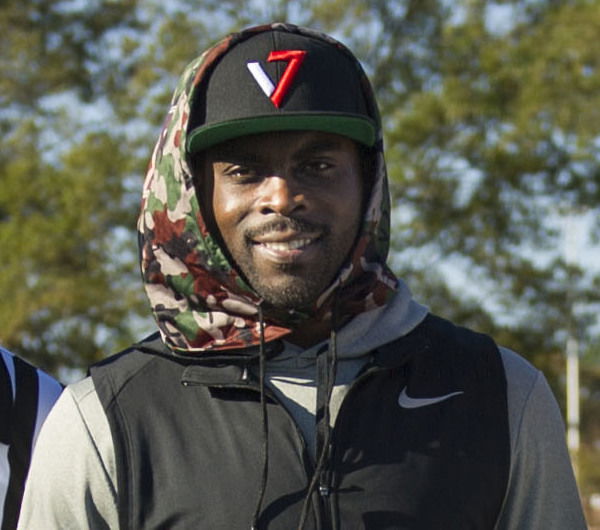
The Eagles announced that Michael Vick, now head coach at Norfolk State University, and DeSean Jackson, who is leading Delaware State University, will face each other October 30. Both men are embarking on their first year as college head coaches at their respective Historically Black Colleges and Universities (HBCUs).
In November 2024, Vick announced that he had been hired as the football head coach at Norfolk State. Within a week of Vick’s announcement, Jackson was brought in to lead the Delaware State team.
“We are thrilled to host two of the most prestigious HBCUs in the country at Lincoln Financial Field on Thursday, October 30,” said Frank Gumienny, Chief Operating Officer, Philadelphia Eagles, in a written statement. “Led by first-year head coaches and all-time Eagles greats, DeSean Jackson and Michael Vick are blazing new trails in their respective careers that we are all so incredibly proud of. Lincoln Financial Field is excited to serve as the host venue for this highly anticipated HBCU matchup. We look forward to shining a much-deserved spotlight on the Delaware State and Norfolk State football programs.”
There will be events surrounding the much-anticipated games that should benefit students from both universities. There will be extensive resources available to students, including career readiness, work-based learning opportunities, and networking opportunities. Students will have opportunities to interact with both former Eagles players.
“This is a tremendous opportunity for our student-athletes to play in a world-class venue on a world-class stage,” Vick said. “Coach Jackson and I made so many unforgettable memories together at Lincoln Financial Field – this stadium holds special meaning in my NFL career. I am thrilled to be a part of this historic moment and want to thank the Philadelphia Eagles, Norfolk State, and Delaware State for their collaboration to make this happen.”
“I came to Delaware State University to start a new phase of my career with a unique institution that cares about its students and is helping to transform their futures. I know Coach Vick feels the same way at Norfolk,” Jackson said.
“A part of that transformation is opening our students and scholar athletes up to a whole new set of experiences at the highest level. For our teams to be playing in Philly, at the Linc, on the field Coach Vick and I called home for many years will be special for our players, our coaching staffs, our alumni and fans, and for HBCU culture around the country.”
Tickets for the contest will be available for sale June 17 at 10 a.m. at Ticketmaster.com.
André 3000 Welcomes Newborns To The World With A Surprise Concert
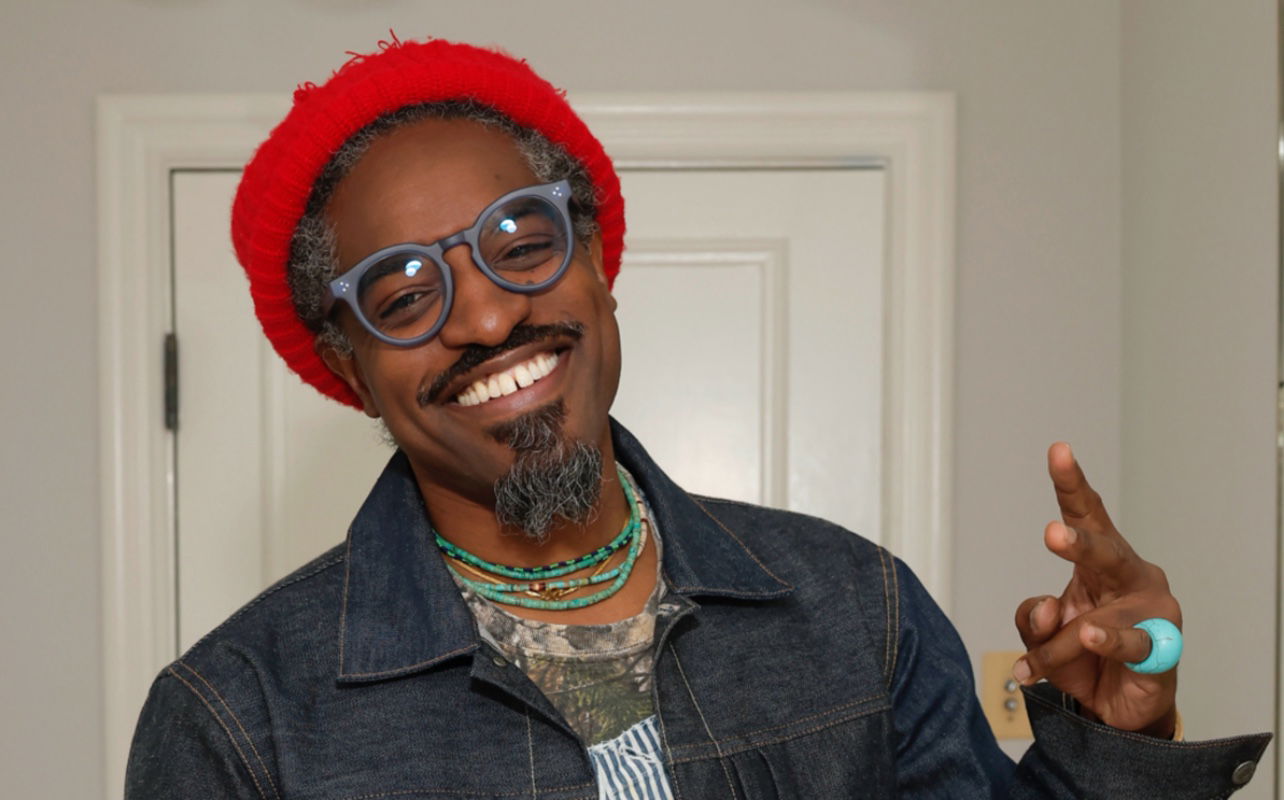
OutKast’s André 3000 surprised some newborns and their mothers with an impromptu concert at Atlanta’s Grady Hospital. The rapper and musician played the flute and then posed for photos with fans.
Grady Hospital shared a photo of the artist posing with the mothers and babies on social media.
“Grady moms and babies were treated to their pop-up flute concert by the legendary André Benjamin – right here in our halls. Sounded like serenity in the key of #ATL,” the post said.
“This is the most Atlanta thing I’ve ever seen,” one commenter wrote.
Days earlier, the rapper, whose real name is André Benjamin, surprised fans with apop-up concert in a parking lot near Metro-Mart on Metropolitan Parkway. The musician performed songs from his 2023 instrumental flute album, New Blue Sun.
Big Boi, one-half of the OutKast duo, along with other members of the rap collective Dungeon Family, were also present for the impromptu performance.
Big Boi, whose real name is Antwan Patton, posted a photo of the duo with the caption “Saxxx & Stacks.”
Fans filled the comments section with requests for a reunion tour. In an interview with The Guardian, Benjamin discussed his friendship with Patton and the future of the hip-hop duo he co-founded three decades ago.
“Like all relationships, it’s a chemistry thing. Sometimes, you need a new formula to keep things fresh. He’s been one of my closest friends since before we made our first raps. I can’t rule out anything or predict what will happen in the future. I don’t know where the ride is taking me.”
The longtime friends and bandmates will gather in November for their induction into the Rock & Roll Hall of Fame, alongside other iconic figures such as Salt-N-Pepa and DJ Spinderella.
Earlier this year, André 3000 attended the Met Gala wearing an eye-catching backpack modeled after a Steinway Model S baby grand piano. The 30-pound piece was made from foam and plywood. This show-stopping accessory served as an announcement. On his way to the Met Gala, the multi-hyphenate musician released his latest musical project, 7 Piano Sketches.
Where will Three Stacks appear next? Will he play the flute or the piano, or will he drop some bars? We’re not sure — but we know it’ll be magical.
6 College Majors That Prepare Students to Succeed In An AI-Driven Job Market
AI might replace some jobs, but that doesn’t necessarily mean doom for job seekers.
The rise of artificial intelligence is reshaping the job market. According to a report released by the World Economic Forum, experts expect it to replace approximately 85 millionjobs this year. In contrast, AI will create new career opportunities for those equipped with the skills to work in this evolving job market.
An analysis from Forbesexamined employment data, salary projections, and industry trends to identify six college majors that combine human skills with technical literacy, helping college grads stand out in an AI-driven market.
Human-Computer Interaction
Human-Computer Interaction (HCI) is a field that blends psychology and computer science to explore how humans interact with technology and design systems that are both user-friendly and efficient.
College Factual projected that HCI careers would grow by 9.3% from 2016 to 2026. North Carolina A&T, Spelman College, and Morehouse College are among the top-ranked HBCU computer science programs, all of which offer coursework related to Human-Computer Interaction (HCI). Students can earn a master’s degree in Human-Computer Interaction (HCI) from the Georgia Institute of Technology.
Cognitive Science
Cognitive science is the intersection of psychology, philosophy, neuroscience, and computer science. Students in this field will learn how to understand how both human and artificial intelligence process information.
This major prepares students for careers in AI ethics, human-AI collaboration, and cognitive enhancement technologies. Career paths in this field include AI Ethics Specialist, Cognitive Analyst, User Researcher, and Human Factors Consultant. Very few colleges offer a dedicated degree in cognitive science. Hence, combining majors is ideal for entering this field, such as a major in psychology and a minor in computer science. Howard University offers a Bachelor of Science in Psychology with a focus on cognitive, developmental, and neuropsychology.
Communication Studies
Communication majors acquire skills that AI cannot replicate, such as interpreting social cues and resolving conflicts. These abilities are increasingly vital in an AI-driven world.
By melding traditional communication skills with digital literacy, Communication majors who grasp data analysis, social media algorithms, and content strategy can achieve top-earning positions in marketing, public relations, and corporate communications.
Notable Historically Black Colleges and Universities (HBCUs) for communication programs include Clark Atlanta University, Prairie View A&M University, Hampton University, and Howard University.
Public Health
Public health professionals can utilize AI tools to track disease and health trends, enabling them to make informed strategic decisions, such as allocating funds or other resources to address public health concerns. The field requires an understanding of social systems, cultural sensitivity, and ethical decision-making, which AI cannot replicate. Public Health careers include epidemiologist, biostatistician, and health policy analyst. FAMU, Morgan State, and Xavier University all offer master of public health (MPH) degrees.
Education Technology
As the use of technology increases, there is a rising demand for educators who can blend traditional teaching methods with modern technology.
With a nationwide shortage of qualified teachers, particularly in STEM fields and special education, many states are offering loan forgiveness, signing bonuses, and fast-track certification programs to attract new college graduates.
Education Technology careers include learning experience designer, curriculum developer, and corporate training manager.
HBCUs that offer programs in education technology include Howard University, Florida A&M University, North Carolina A&T State University, and Spelman College.
Entrepreneurship
AI-era entrepreneurs are more likely to thrive if they understand the technology’s strengths and limitations while simultaneously assessing clients’ needs. Business owners can utilize AI tools for marketing, data collection, and streamlining customer needs.
What does registration for the Women of Power Summit include?
Registration for the Summit includes all sessions and activities on our agenda, including any noted meal functions. It includes access to the activations in our Sponsor Showcase and the opportunity to sign up for one-on-one executive and financial coaching. It also includes access to the community of attendees through our BE Events app. It does not include travel or lodging.
What about travel and lodging?
Our programming begins midday on Wednesday and continues through Saturday evening. So you will want to book your travel Wednesday morning and Sunday morning. We have a room block only at the host hotel, the Bellagio. Please book your room early if you want to stay on site with us.
Are there any scholarships or financial assistance options available for attending the Women of Power Summit?
Many of our attendees are sponsored by their employer as part of their professional development. We have a customizable letter to help you get your company to support your attendance. It’s available here.
What should I pack for the Summit?
The dress code for our opening Legacy Gala is “red carpet ready,” meaning cocktail to formal attire. For our Saturday afternoon Crowning Glory Celebration, the dress code is all white with touches of gold. For our daily sessions, we encourage attendees to wear whatever makes them feel powerful and professional; for most attendees, that’s “fashionable business.” You should also pack outfits for our workouts, as well as options for Girls Night Out. And don’t forget to pack some flats!
How can I stay informed about updates and announcements leading up to next year’s Women of Power Summit?
The Women of Power Summit is open to everyone who wants to connect, learn and lead. We welcome women and men, allies and business leaders from all industries and backgrounds. This event brings together professionals for inspiring sessions, networking opportunities, and meaningful conversations that drive growth and collaboration.