50 Cent Is Willing To Block Diddy From A Trump Pardon In Never-Ending Beef
50 Cent says he wants the President to know how Diddy allegedly feels about him before the potential pardon.
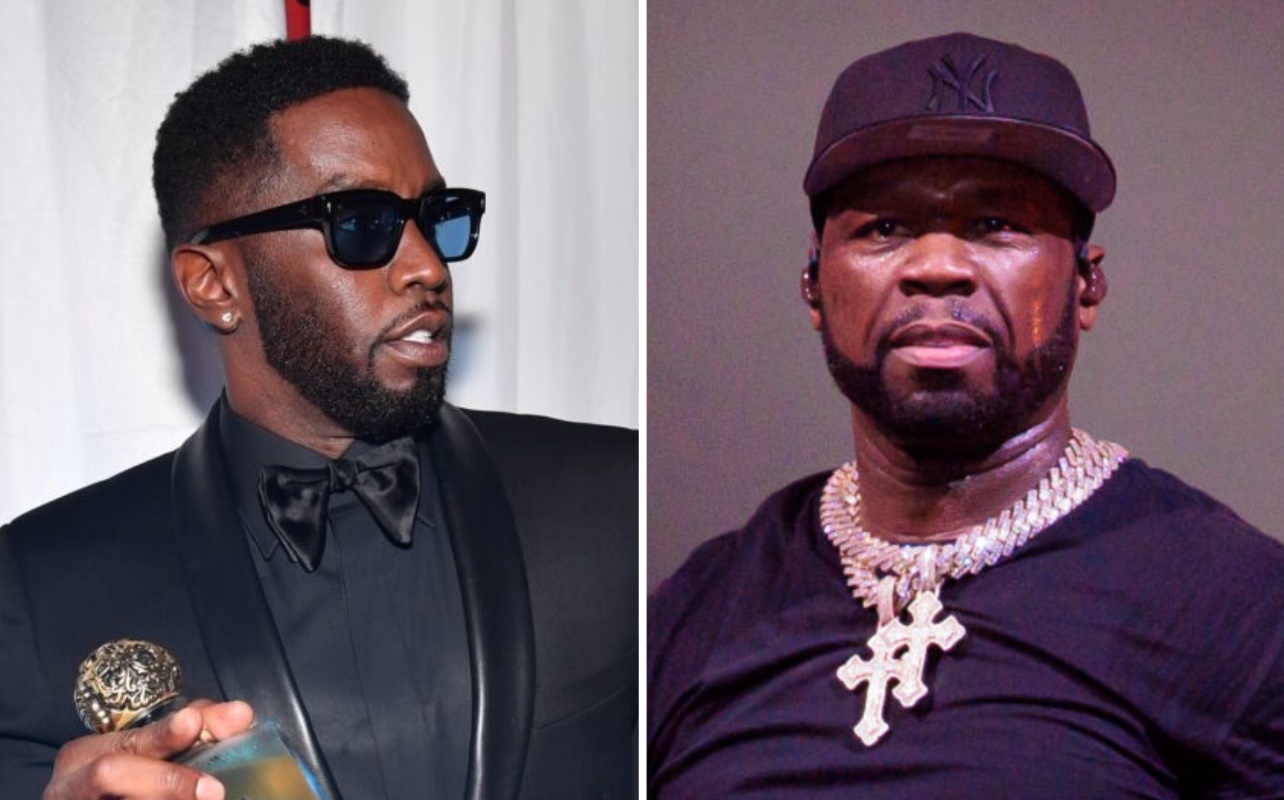
50 Cent will stop at nothing to make Sean “Diddy” Combs suffer as his beef with the disgraced media mogul continues on. The rapper recently shared that he would try to speak with Trump to prevent a pardon of Diddy’s charges.
50 Cent took to social media to share another bout of thoughts surrounding his long-time, and currently incarcerated, adversary. The television producer revealed that he would intervene in Trump’s potential pardon of Diddy after the president stated he would “look at the facts” in his federal case.
In the since-deleted post, 50 Cent proposed his own chat with Trump to make sure he knows how Combs allegedly feels about him. He claimed that Diddy said “really bad things” about the conservative leader, and that this information must factor into Trump’s decision to take action.
He also noted the President’s pattern of cutting ties with people who disrespect his leadership.
“Donald doesn’t take well to disrespect, and doesn’t forget who chooses to go against him,” he mentioned, as reported by USA Today.
50 Cent deleted the post shortly after several news sources reported on it, but followed up to state that he would not directly thwart Diddy’s freedom. However, he did note that he is more than willing to make sure Trump has the full picture of the Bad Boys Records’ founder.
“I didn’t say I would Nuke anything,” assured 50 Cent. “I simply said I will make sure Trump is aware.”
The 55-year-old currently faces charges of sex trafficking, racketeering conspiracy, forced labor, and kidnapping, among others. Diddy’s trial has already led to a media frenzy, event circulating in political press rooms May 30. Trump could also issue a preemptive pardon, ending the heavily publicized trial.
Contrary to 50 Cent’s belief, the president asserted that he would be willing to pardon anyone regardless of their feelings toward him.
“If I think somebody was mistreated, whether they like me or don’t like me, it wouldn’t have any impact,” claimed Trump.
In the meantime, Diddy’s trial has commenced its fourth week with its current witness, Diddy’s former assistant under the pseudonym of “Mia,” continuing on the stand.
Roots Picnic Faces Backlash From Attendees After Storms Cause Delays And Long Lines
Heavy overnight rain led to the concert to delay its start times by a few hours.
The 2025 Roots Picnic left fans with a not-so-desirable experience. Attendees shared their own frustrations after overnight storms caused entry delays and long lines.
While the Philadelphia-based event sought to open its gates at noon, subsequent pushbacks led to the crowd getting antsy. Although set as an all-day affair from May 30 to June 1, heavy rain the previous day led to a delay in opening the grounds.
After spending hours with no guarantee on when they would enter, those in line began to protest. According to ThePhiladelphia Inquirer, chants of “let me in” echoed down the lines before the gates finally opened around 3:30pm.
By the time some attendees got into the festival grounds at the Mann Center, the day had already neared its end. This first-day issue left many ticketholders feeling disrespected by the concert organizers and the lack of communication.
“The way the event was handled was really disrespectful to the people in attendance who spent their money,” wrote attendee Khalifa White, via email, Sunday morning. “Everyone deserves a refund & additional compensation for hours in line with no access to a bathroom & no resources for disabled attendees.”
However, Questlove, drummer for the Roots, took to social media as the backlash began to spread like its own storm. He revealed that the concert organizers had nearly cancelled the first day’s festivities due to unsafe conditions caused by the downpour.
“Aight—— I know today wasn’t “ideal” for The Roots Picnic in this 18th year of 2025. (This year has been particularly challenging to say the least),” began Questlove, noting how transformation plans take roughly two weeks to complete ahead of the concert. “We nearly canceled The Picnic because conditions were unsafe for everyone involved.”
Despite the “significant damage” caused by the overnight rains, the Roots Picnic’s leadership decided to push back the schedule to ensure the first day could go on.
He continued, “Ultimately, we chose to take extra time to repair the site to ensure safety for all ticket holders, which is why there was a 3hr delay. (Yes I got numerous messages from attendees, family, everyone in the tristate) but we prioritized caution above all else.”
However, concertgoers still believe better communication and accommodation could have lessened the blow of the delays. Frustrated ticketholders also noted the lack of consideration for those with disabilities or out-of-state attendees.
“People here pay so much, at least give us water or communicate better,” shared VIP ticketholder Uraina Dunmore, who travelled to the event from Washington, D.C. “You have people with medical conditions, allergies … and they don’t know nothing.”
The Roots Picnic also released its own statement apologizing for people’s experience with the delays, but emphasized that its focus remains on making the experience safe for everyone involved.
“We would like to say sorry,” shared the event organizers. “Please understand safety will always be our number 1 priority. We worked hard to make sure every artist still got on stage and extended the festival hours so all could perform without violating city noise curfew … today is a new day and we will do better.”
The two-day music event, however, continued forth as the weather issue cooled down. However, upset attendees still aim to seek refunds for their distress.
Working in a flat organization can feel like a life sentence with no possibility of parole
Hi Fairygodmentor,
I work in a flat organization with little room for promotion. How do I continue growing professionally? – Stuck but Striving
Dear Stuck but Striving,
Whew! Working in a flat organization can feel like a life sentence with no possibility of parole. Each day feels like a scene from the film Groundhog Day where nothing changes except for your growing frustration at what you feel is a stalled-out career.
Before you run out of the office screaming at the top of your lungs (yes, I’ve been there and visualized myself doing the same thing many times), I want to share some survival techniques that will help you boost your brand and your spirits to keep you motivated to grow your career.
1. Have an intrapreneurial mindset. Look for projects or solutions that need your attention that can add value to the organization.
2. Find projects that scare you. I was once voluntold to head an imitative I knew nothing about. But as I threw myself into the project, I became the subject matter expert and spokesperson for rolling the initiative out. It was a huge success because I build a support system with the clients the initiative would be impacting.
3. Get on their calendar! Hold standing 1-on-1 meetings with your supervisor or mentor. Keep your career development top of mind. These people can be integral in being your biggest supporters in mentioning your name in rooms you’re not in.
4. Find a sponsor! They can help co-sign and/or help bubble up your ideas to the right people.
5. Volunteer to speak as the Point of Contact (POC) or Subject Matter Expert (SME) at meetings, conferences, etc.
6. Mentor others. I found that by mentoring others, I was helping others grow their careers in the process.
7. Team up. Create your own squad. There’s strength in numbers. And your squad will lift you up while you climb. Plus, you can help each other get your names out there to the right people.
8. Show up: Whether the project is successful or not.
9. Check in. Follow up regularly with stakeholders and clients to discuss a project’s status and completion and any lessons learned.
10. Be visible, stay visible. Visibility advertises your brand. Share vision and big picture ideas that drive results. This is the time to share your shine.
I believe that by creating the change you want to see in your organization doesn’t have to be an official title. Doing these things kept me in the mix and engaged, and I added value to the organization. I know you can do the same. Keep blooming where you’re planted, Stuck but Striving.
You got this!
Yours truly,
Your Fairygodmentor®
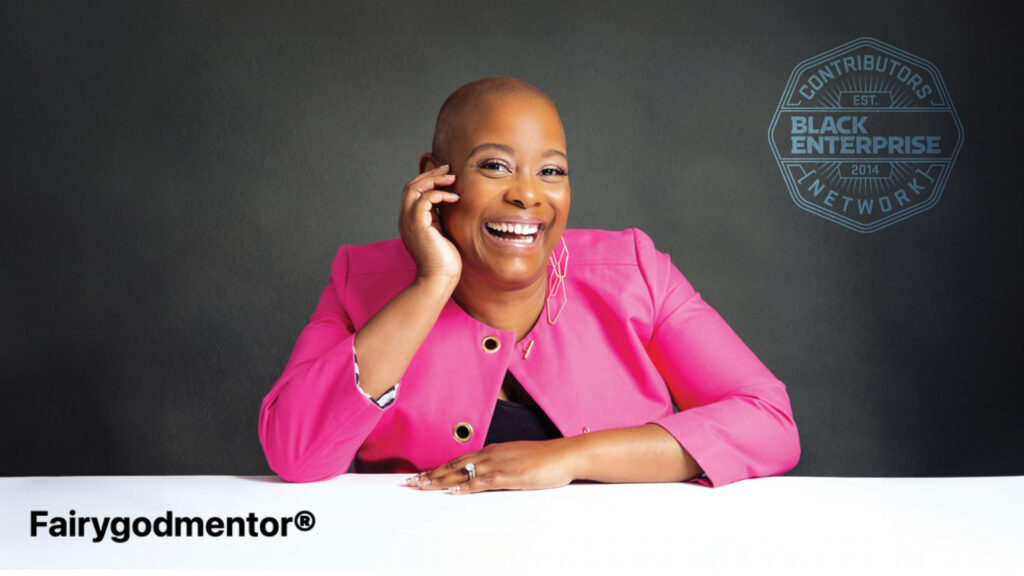
About Joyel Crawford:
(Photo: Kirten White Photography/BE)
I’m Joyel Crawford is an award-winning career and leadership development professional and founder of Crawford Leadership Strategies, a consultancy that empowers results-driven leaders through coaching, training, and facilitation. She’s the best-selling author of Show Your Ask: Using Your Voice to Advocate for Yourself and Your Career.
Have a question for Your Fairygodmentor®?
Submit your career and leadership questions, whether it’s about navigating a micromanager, setting boundaries, negotiating for a raise, or handling burnout. Ask Your Fairygodmentor® today!
Photo by Tima Miroshnichenko: https://www.pexels.com/photo/baseball-bat-and-balls-on-a-bench-5184684/
Negro Leagues Baseball Museum Honors Black Managers With New Exhibit
'Leaders & Innovators' spotlights Black managers who led teams in the Negro Leagues.
Bob Kendrick, president of the Negro Leagues Baseball Museum and a key figure behind MLB The Show video game’s Storylines mode, has unveiled a new exhibit, “Leaders & Innovators,” spotlighting the Black managers who led teams in the Negro Leagues.
In a February press release announcing the exhibit, the Negro Leagues Baseball Museum noted that while legendary figures like Rube Foster — the architect of the Negro Leagues — and Buck O’Neil — a mentor to Kendrick and key figure in the museum’s founding — were remarkable managers, both were inducted into Major League Baseball’s Hall of Fame as contributors rather than for their managerial achievements. The exhibit runs from April 25 through the end of the World Series.
According to Andscape, Kendrick’s new exhibit, unveiled on May 24, is an effort to address what Kendrick believes was an oversight when Major League Baseball integrated the statistics of the Negro Leagues in a long overdue but anticipated move, which led to the enshrining of Bob Gibson, Oscar Charleston, and others among baseball’s all-time stat kings.
“In the Negro Leagues, we used to run an entire baseball enterprise,” Kendrick told the outlet. “You had these brilliant tacticians who just never got an opportunity in the majors. The focus has always been on the players. But those managerial minds, those executives in the Negro Leagues, they didn’t get an opportunity to move into Major League Baseball.”
Kendrick’s point is underscored by the fact that Major League Baseball didn’t see its first Black manager until April 8, 1975, when Frank Robinson took the helm. Fittingly, it was the same franchise — then known as the Cleveland Indians — that had broken the American League’s color barrier nearly three decades earlier by signing Larry Doby in 1947.
According to two of the foremost experts in Black baseball, Phil Dixon and Larry Lester, by that time, it was clear that Black players could play, but some of the old stereotypes that still surface in today’s discussions about Black quarterbacks for example, were still present. There were, incredibly, still questions about whether or not Black players would make good managers, despite Negro Leagues players doing it, sometimes while also playing, for decades.
“Everybody knew guys like Frank Robinson could play,” Dixon told the outlet. “They’d been playing successfully for a long time. But could they lead? They managed in the Negro Leagues, but they just couldn’t get that manager’s job in the majors.”
Lester appeared to concur with Dixon’s estimation of events, remarking how often he is met with questions of wins and losses where it concerns Black managers or administrators pre-integration.
“Baseball is statistically driven,” Lester told Andscape. “When I try to promote their cases, I hear: ‘What was his won/loss record?’ People want to look at numbers, but numbers don’t tell you everything.”
It is this landscape that Kendrick and the Negro Leagues Baseball Museum’s exhibit is placing into relief with the exhibit honoring Black baseball managers, who still find themselves underrepresented and disadvantaged some 50 years after Robinson’s historic debut.
“There are a lot of Black coaches I’ve been around in the game that had coaching experience — had managerial experience [at other levels], not just coaching experience — and aren’t interviewed, aren’t even in the final three, but you just keep scratching your head,” Granderson told Global Sports Matters in 2022.
Granderson continued, “You’ll see it’s not record-wise, because you’ll see other managers with bad records get another managerial job. It’s not experience, because you’ll see someone that had a similar amount of experience get another managerial job. To echo the point, it’s not off-field issues, [because] you’ll see managers who have had scandals and issues get another managerial job that are not Black.”
As Kendrick stated in the press release, “It was 28 years after Jackie Robinson’s breaking of the color barrier before Frank Robinson broke through as the major’s first Black manager when there were a plethora of great baseball strategists, tacticians and superb leaders who were never given a chance to assume those roles. This is our opportunity to shine a brighter light on them with hopes that this heightened awareness will eventually lead to Negro League managers being inducted into the Hall of Fame and that it will serve as a tool of inspiration for more people of color to pursue managerial roles in our game.”
Prairie View A&M Robotics Team Finishes Strong In National Competition
Prairie View A&M, the school's Drone Competition Team, participated in the 2025 Raytheon Autonomous Vehicle Challenge.
According to a May 30 press release issued by Prairie View A&M, the school’s Drone Competition Team placed fourth in the 2025 Raytheon Autonomous Vehicle Challenge, which is a national competition that top engineering students from across the country participate in.
In this particular challenge, which took place on April 11, student teams were asked to build and operate self-driving drones which could identify and communicate a landing zone to an autonomous vehicle which was supposed to deliver a package into the designated zone.
Prairie View’s team made it to the finals of the challenge, where they competed against nine other colleges, with a team composed solely of first time participants in the challenge.
“This accomplishment reflects the caliber of our students, the strength of our academic programs, and the value of hands-on, experiential learning,” Dr. Pamela Obiomon, who is the dean of the Roy G. Perry College of Engineering, said in the press release. “Their success is a win for all of PVAMU and a shining example of our mission in action.”
The students, team lead Jacob Range, a senior in the mechanical engineering program; Khoa Tran, a junior in the electrical engineering program; Fawaz Abdulwahab, a junior in the computer engineering program; London Williams, a junior in the mechanical engineering program; Jyeshuah Swain, a freshman in the computer engineering program; David Falekulo, a freshman in the computer science program; and Isaiah Maxwell, a sophomore in the mechanical engineering program; all worked for months preparing for the competition, which has a military application, which is appropriate, given Raytheon’s status as a military contractor with the Department of Defense.
In the challenge, the students were tasked with delivering aid to injured soldiers on a battlefield and had to design drones capable of surveying a 30×30 area, locating a visual marker which indicated the landing zone, and communicating those coordinates to a separate ground vehicle for delivery of the package.
“We spent countless late nights troubleshooting and refining every detail,” Tran said in the press release. “It paid off in the end — we’re proud of what we accomplished and excited for what’s to come.”
According to Jonathan Tamplin, a senior principal systems engineer at Raytheon, who assisted the student team as a mentor throughout the semester, “There were moments when things didn’t look promising, but the team pushed through. Their incredible perseverance and determination shone through.”
Although the students are aware of Raytheon’s dealings with the military, some of them, like Range, would like this technology to be used for other applications, like disaster relief efforts.
“I learned so much about project management and team coordination,” Range said in the press release. “I am also excited about the possibility of this technology being used in the future to expand outside of just military use but also being used during events such as natural disasters to be able to deliver aid to those that would not be able to be reached otherwise.”
Elevating Your Excellence: Earl ‘Butch’ Graves Jr. Leads Black Enterprise’s 55-Year Charge With Unwavering Vision
Under Graves’s astute stewardship, Black Enterprise has augmented its sphere of influence considerably.
Earl “Butch” Graves Jr. presides over BLACK ENTERPRISE as it commemorates its 55th anniversary, a significant milestone underscoring the brand’s unwavering commitment to amplifying Black achievement and excellence.
As Chief Executive Officer since 2006, Graves has adroitly navigated the company’s metamorphosis from a singular print publication into a dynamic multimedia enterprise, reaching a vast and engaged audience across diverse digital, auditory, and experiential platforms.
“‘Excellence is an indelible part of who we are as Black people. It’s how previous generations propelled us to our current standing, despite whatever formidable obstacles we faced,” Graves states with conviction.
He underscores the intrinsic symbiosis between the BLACK ENTERPRISE name and its core tenet: “BE also epitomizes Black Excellence. And I reiterate: it’s non-negotiable, from 1970—when my father Earl Graves Sr. inaugurated Black Enterprise—as it is today.” This foundational principle continues to inform the company’s editorial imperatives and overarching business strategies.
Under the astute stewardship of Butch Graves Jr., BLACK ENTERPRISE has significantly expanded its influence. What began as a magazine in 1970 has evolved into a comprehensive multimedia platform, offering digital content on BlackEnterprise.com, engaging video productions, insightful podcasts, a vibrant social media presence, targeted email dispatches, and impactful live and virtual convenings. BLACK ENTERPRISE endures, built upon the foundational principles and insightful vision of Black esteem established by Earl Graves Sr. 55 years ago. As the company honors its founder’s early innovation and five decades of exemplary leadership, its focus remains on the future, celebrating the unfolding of Black excellence across the diaspora through initiatives like BE Global, engaging conversations via various podcasts, and groundbreaking editorial covering the state of Black business, culture, and excellence.
His multifaceted contributions have garnered significant accolades across diverse spheres. Graves was inducted into the American Advertising Federation (AAF) Hall of Achievement in 2002, bestowed with the Jack Avrett Volunteer Spirit Award from the Boy Scouts of America in 2006, and honored with the NCAA Silver Anniversary Award in 2009.
Graves also dedicates his time and expertise by serving on the board of directors of AutoZone and on the boards of numerous nonprofit organizations, championing the importance of education and athletics, informed by his extensive tenure as an AAU head basketball coach for over 15 years.
“Black people are increasing in population, growing in influence, and most importantly, committed to elevating the bar of excellence. Black excellence is not a fleeting anomaly; Black excellence is the established norm. The future of our country depends on it. We, as Black people, must embrace it. And we at Black Enterprise will always invest in and celebrate it. Because vindicating excellence is precisely what we do,” Graves affirmed with conviction.
Trump Addresses Diddy Pardon Question—Says Rap Mogul ‘Used To Like Me’
'I haven’t spoken to him in years,” Trump said. “He used to really like me a lot, but I think when I ran for politics, that relationship busted up, from what I read.'
When Fox News reporter Peter Doocy asked President Donald Trump about a potential pardon for Sean “Diddy” Combs on May 30, in true Trump fashion, he made the question about himself.
According to The Huffington Post, Trump replied to the question as he typically does, by launching into a rambling explanation that doesn’t immediately answer the question that he was asked.
“I haven’t spoken to him in years,” Trump told Doocy. “He used to really like me a lot, but I think when I ran for politics, that relationship busted up, from what I read. I don’t know, he didn’t tell me that. But I’d read some…nasty statements in the paper all of a sudden.”
Trump continued, “You know, it’s different. You become a much different person when you run for politics and you do what’s right. I could do other things and I’m sure he’d like me, and I’m sure other people would like me, but it wouldn’t be as good for our country. It’s not a popularity contest, so I don’t know. I would certainly look at the facts. If I think somebody was mistreated, whether they like me or don’t like me, it wouldn’t have any impact on me.”
According to the Department of Justice, Combs is currently facing charges of racketeering conspiracy, sex trafficking, and transportation to engage in prostitution.
As it relates to the eight-week trial, NBC News reports that the testimony of Combs’ former employees may unveil the criminal enterprise required to secure a conviction under the federal racketeering conspiracy charge.
As Mark Chutkow, a defense attorney who handled racketeering cases as a federal prosecutor in Detroit told the outlet, Combs’ former global brand director Capricorn Clark’s “testimony is certainly helpful in painting a sinister image of Combs, of his manipulation and his coercion, his control and his violence, which will be beneficial to the prosecution down the line in terms of gaining the jury’s sympathies that this guy was up to no good and needs to be put away, or at least held accountable.”
He continued, “You do have these elements of extortion and coercion and fear and intimidation also at play, which you see in gangs and you see in the Mafia and other criminal organizations, and so I think that you don’t necessarily have to have co-conspirators and accomplices that are completely voluntary in their commitment to the organization.”
Although racketeering charges are somewhat complex, attorney Rachel Maimin, a former federal prosecutor, indicated that prosecutors often only have to prove the charge with one witness or circumstantial evidence.
“I don’t know if they’ve met all of the elements of racketeering yet, but prosecutors are showing that Diddy used employees from his business and organization to carry out criminal activities,” Maimin told the outlet. “They’re linking the crimes to his business.”
According to Rolling Stone, the lengthy trial, which is approaching its halfway point, is expected to conclude by the Fourth of July. If found guilty, the 55-year-old Combs faces the prospect of spending anywhere from 15 years to life behind bars, but if he were to receive a pardon, his federal sentence would cease to exist.
Per their previous reporting, several of Combs’ associates are getting closer to Trump administration officials, hoping to get clemency pleas to Trump. Per an anonymous source close to these preliminary discussions, Combs would do anything, even appeal to Trump, to avoid going to prison.
“He’s willing to do anything to get out of jail,” a source who has known Combs for a decade told Rolling Stone in May. “He’s always been this way. He’s always going to do what he has to do to get out of a situation.”
Rihanna’s Father, Ronald Fenty, Dies At Age 70 Due To Illness
Rihanna had bouts of estrangement from her father before reconciling in recent years.
Rihanna’s father, Ronald Fenty, has died at age 70 in Los Angeles.
TMZ confirmed the news May 31, with sources sharing that he died from an undisclosed illness. The tabloid also released photos of Rihanna’s brother, Rajad Fenty, leaving Cedars-Sinai Medical Center days before the news broke. Rihanna was also allegedly in the vehicle, yet no photographs of her visit were released.
Fenty shared three children with his ex, Monica Braithwaite, with Robyn “Rihanna” Fenty being the only girl. However, the couple split up in 2002 when Rihanna was 14. Furthermore, Rihanna had an estranged relationship with her father as she rose in her music career.
The Fenty Beauty founder became a global superstar in R&B and pop music. Although the late Fenty and his daughter had a tumultuous relationship throughout her life, the duo made amends in recent years.
The doting grandfather previously expressed his excitement about his daughter’s growing family with A$AP Rocky. Rihanna now has two children, sons Riot and Rza, with the Harlem rapper, and another one on the way.
“I’m so happy that I jumped for joy. I’m still so excited,” he told Page Six in 2022. “Rihanna always said that she wanted children; she loves kids. She always takes care of her cousins’ kids… she’s going to be a good mom.”
Rihanna takes immense pride in her surname, using it for her beauty and fashion empire. Her two mainstay brands, Fenty Beauty and Savage X Fenty, hold the title. However, the name had been a previous point of contention between Rihanna and her father. She sued her parent back in 2019 over the use of their family name for fraudulent business dealings. The singer, however, later dropped the case.
Now, the Fenty family is grieving the loss of its patriarch. Rihanna has yet to make a public statement on her father’s death.