Black Relationship Expert Launches New Podcast, Aims To Connect 1M People
She has launched The Real Connect Podcast — a platform designed to help people nurture authentic relationships and create a thriving global community of 1 million subscribers rooted in intentional connection – both romantic and platonic.
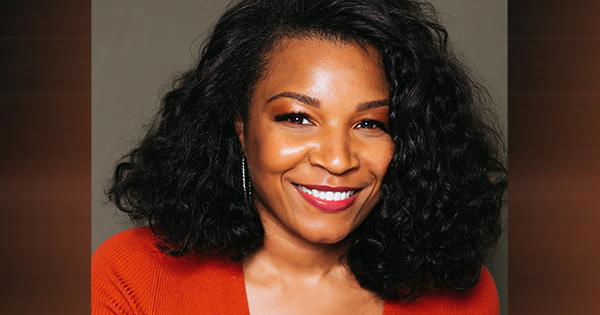
In today’s fast-paced world, where relationships often feel transactional, Tamika Carlton is on a mission to inspire deeper, more meaningful connections. She has launched The Real Connect Podcast — a platform designed to help people nurture authentic relationships and create a thriving global community of 1 million subscribers rooted in intentional connection -– both romantic and platonic.
A Mission Rooted In Impact
Tamika believes relationships are at the core of a fulfilling life. “Strong relationships don’t just happen — they’re built. It’s about being present, creating shared experiences, and showing up for people in ways that matter. When we take the time to connect meaningfully, we create a ripple effect that improves not just our lives but the lives of those around us,” she says.
Research supports her mission. According to a 2024 study by the American Psychological Association, individuals with strong social support networks are 50% more likely to experience better mental health outcomes.
Through The Real Connect Podcast, Tamika shares personal stories, expert insights, and practical tools to help listeners navigate challenges, strengthen connections, and build fulfilling relationships—both romantic and platonic.
Practical Tips for Stronger Connections
Listeners can expect actionable takeaways in every episode. Tamika offers these simple steps to start building better relationships:
1. Assess Your Connections: Reflect on whether your relationships add value to your life. Focus on those that bring mutual growth and joy.
2. Be Present: Turn off distractions during conversations to show that you value the other person’s time and perspective.
3. Focus on Shared Goals: Relationships thrive when you work together toward something meaningful— whether personal growth, a shared project, or a mutual cause.
A Call to Action: Join the Movement
The launch of The Real Connect Podcast marks the beginning of Tamika’s vision to create a global network of people connected through intentional relationships.
“This isn’t just about numbers,” Tamika explains. “It’s about building a community where people truly support each other, invest in their connections, and see the impact ripple through families, workplaces, and communities.”
The first three episodes of The Real Connect Podcast are already available. Join the conversation and take the first step toward stronger, more meaningful connections. Listen and subscribe here: https://open.spotify.com/show/0PnxPVcDa4Yng9o3lralbc.
Black Entrepreneur Launches Academy That Offers Free Courses To 90,000 Haitians
'Witnessing the struggles of young Haitians to access quality education was heartbreaking,' Mike Bellot says.
Amid Haiti’s ongoing economic and political instability, where gang violence has shuttered many universities, Haitian entrepreneur Mike Bellot is revolutionizing education. His platform, Kaw Academy, has reached 90,000 users within just a few months, offering free courses in Creole. It also empowers Haitians, both in the country and the diaspora, with practical skills in digital marketing, e-commerce, project management, and IT.
Bellot, a former professor at Université Notre Dame, knows the harsh realities of Haiti’s turmoil. In 2021, he was kidnapped, a traumatic event that forced him to flee to the United States. Determined to continue his education despite these challenges, Bellot transitioned his in-person university courses to online classes via Zoom. This experience cemented his resolve to build a platform that provides accessible, high-quality education for all Haitians, regardless of economic status or location.
“Witnessing the struggles of young Haitians to access quality education was heartbreaking,” Bellot recalls. “I knew we had to provide them with the tools and knowledge to build a better future.”
One inspiring testimony comes from Jephte Jean, who shares, “I was unemployed and struggling to provide for my family. Kaw Academy’s e-commerce and Amazon course equipped me with the skills to launch an online business on Amazon. I learned to source products from China and successfully sell them to the U.S. market. This newfound income has transformed my life, allowing me to support my children and build a brighter future for our family. I am incredibly grateful for the opportunity and highly recommend this program to anyone seeking to improve their economic situation.”
Supported by global giants like Google and Microsoft, Kaw Academy’s courses break language and economic barriers. In partnership with Google, the platform offers six professional certification courses, including IT Support, Project Management, Cybersecurity, Marketing, and E-commerce. “Google’s support has been invaluable,” says Bellot. “Their resources allow us to offer high-quality, industry-relevant courses that prepare learners for the global job market.”
Kaw Academy’s faculty includes renowned Haitian professionals such as economist Etzer Emile, entrepreneur Marc Alain Boucicault, project management expert Evadie Marie Daniel, and Digicel Chairman Marteen Boute. This elite roster ensures learners receive instruction from experts in their fields.
However, challenges persist. “Maintaining infrastructure and ensuring long-term sustainability requires continuous effort,” Bellot explains. To meet these demands, Kaw Academy is pursuing funding from NGOs and philanthropic organizations to complement its support from Google and Microsoft.
The platform’s impact transcends borders, empowering the Haitian diaspora with critical skills and connecting them to opportunities in their countries of residence. Bellot envisions Kaw Academy as a model for other countries facing similar challenges, demonstrating how technology and innovation can overcome adversity and unlock human potential.
“This is just the beginning,” Bellot says. “Our goal is to empower millions of Haitians with the skills to thrive in the 21st century and contribute to rebuilding their nation.”
For more information, visit the official website for Kawa Academy’s platform at KawAcademy.com. Those interested can support Kaw Academy in transforming education in Haiti by donating to keep the courses free and accessible.
This news was first reported by BlackBusiness.com.
Researchers Say Using AI Too Much Will Deteriorate Cognitive Abilities
Relying too heavily on AI could destroy critical thinking skills, researchers say.
A new study isn’t warning about the risk of artificial intelligence replacing humans at work but of the potential danger that using AI too much can have on one’s cognitive abilities.
A new study published on Feb. 10 by researchers from Microsoft and Carnegie Mellon University revealed the risks of increased human reliance on AI tools for task completion, warning that it could lead to a society deficient in critical thinking when it matters most.
The study analyzed 319 knowledge workers—individuals whose jobs involve handling data or information—and found that the more workers used AI to complete a task, the more likely they were to relinquish control.
Many of the participants reported a “perceived enaction of critical thinking” when they felt they could rely on the artificial intelligence tool, which highlights the risk of society becoming too comfortable with relying heavily on AI. This tendency was especially evident in lower-stakes tasks, where people were less critical.
While it’s natural for individuals to disengage during simple tasks, researchers cautioned that this pattern could lead to long-term dependence and a decline in independent problem-solving skills. Workers who had less confidence in AI’s ability to complete a task were more actively engaged in critical thinking. As a result, they reported greater confidence in their ability to assess artificial intelligence-generated outputs and to make independent improvements.
Researchers also discovered that users with access to generative AI tools tended to produce “a less diverse set of outcomes for the same task” compared to those working without AI. Since AI tools operate solely on the information they are given, output is limited by their training data. As a result, researchers suggest this could indicate a “deterioration of critical thinking” among workers using AI.
The findings emphasize that while AI can be a valuable tool for productivity, excessive dependence on it may weaken an individual’s ability to effectively complete tasks independently. Over-reliance on AI may cause workers to lose the “muscle memory” developed from completing tasks on their own.
For those concerned about being replaced by AI in the workplace, excessive reliance on it could be making that worry a reality.
Dorothy Phillips Becomes First Black Woman President Of The American Chemical Society
Dorothy Phillips is continuing her legacy of first by becoming the first Black woman President of the American Chemical Society.
Dorothy Phillips is continuing her legacy of firsts by becoming the first Black woman to lead the American Chemical Society.
Nearly 60 years after becoming the first Black woman to earn an undergraduate degree from Vanderbilt University, Phillips has been named the first Black woman president of the American Chemical Society. Her promotion comes after serving nine years on the Society’s board of directors and as president-elect in 2024.
“I had a vision of what I would want to bring into the spotlight (as president),” Phillips told the Midland Daily News.
With “inclusion and belonging” as one of the American Chemical Society’s core values, Phillips champions this principle while emphasizing lifelong learning as a key focus during her presidency.
“My theme is building chemistry careers inclusively. So, I want to help ACS to continue to embrace and engage its industry members. But the big thing is to be a catalyst for young people and aspiring scientists,” Phillips said.
“If you can move the needle a little bit, I think that’s important. More and more young people can go into a two-year program and work in STEM. Young people who can’t afford college, there is an avenue for them in the sciences,” she added.
Inclusion has been a central theme throughout Phillips’ life and career. Her family was among the first Black families to settle in Centennial Park, Nashville, Tennessee. Her brother, a student at Fisk University, took part in the historic Nashville sit-ins, which played a pivotal role in desegregating lunch counters and other public facilities in the city.
During her college years, Phillips made history at Vanderbilt University as the first Black woman to earn an undergraduate degree. She broke barriers again by becoming the first Black woman to receive a Ph.D. in chemistry from the University of Cincinnati. In 1974, after she and her husband accepted positions at Dow headquarters, they moved to Midland, Michigan, where they played a key role in founding the Midland Black Coalition to support Black families in the community.
“Midland was just starting to diversify its community,” Phillips said. “So the Midland Black Coalition offered an opportunity for those families to get together and support each other. The number was so small that my children were just not seeing any other Black people unless we were intentional about it.”
“It was a way to bring the culture that we embraced to Midland,” she added.
Phillips became a charter member of Midland’s Mu Alpha Omega chapter of the Alpha Kappa Alpha sorority when it was established in 1978. In 1983, her family relocated to Boston after her husband joined Corning Medical. She then began working at Waters, where she built a 29-year career before retiring in 2013.
Phillips’ background aligns seamlessly with the American Chemical Society’s commitment to diversity, equity, and inclusion, which expanded in 2020 to include Respect (DEIR). Reflecting on her life and career journey, Phillips expresses gratitude for her accomplishments and the opportunity to witness her efforts come to life within an organization that remains dedicated to supporting inclusion, even as such values come under attack.
“What comes to mind now is I am blessed. This is not a life I could have dreamed,” she said.
“The fact (is) I have walked a path with God that has led me to this point, (so) I have to be there for other young people to let them know they can achieve against all odds. So I feel blessed.”
Super Bowl Expectations For NOLA’S Small And Black-Owned Businesses Fall Short Of Goal Line
'When you see the big hoopla and all the stuff going on, you would think it would be bigger.'
New Orleans’ Super Bowl LIX was expected to bring in wins not just for the Eagles or Chiefs but for some of The Big Easy’s small and Black-owned businesses.
Prior to the biggest game of the football season, the NFL listed more than 120 local businesses on the official New Orleans visitor guide to ramp up support across the city. But expectations were busted as fans and celebrities flooded in, especially in the iconic French Quarters.
2 Phat Vegans restaurant owner Corey Mathis thought his business would cash out in a huge way because of the Super Bowl, but the foot traffic wasn’t all that. Despite welcoming tourists, food delivery orders, and New England Patriots defensive end Deatrich Wise Jr., business was slow. Mathis’ business was one of several left off of the NFL’s list.
“A lot of people don’t go out and blow all their money out on the first night,” Mathis said. “When you see the big hoopla and all the stuff going on, you would think it would be bigger.”
With the city’s hotel capacity reaching 100%, Mathis and other business owners were dismayed that fans failed to disperse around the neighborhood. French Market merchant Dana Tharp sells T-shirts and hoodies and figured fans would flood her shop. Instead, she said it was locals that showed out more.
“If I was selling NFL gear, I would have done real good. But not my own stuff,” Tharp said. “This is a Super Bowl crowd, so they spent most of their time at Super Bowl events.”
“It took away a little bit of the French Quarter vibe, you know, to see all those soldiers on every corner,” French Quarter employee Harley Field said. “It was just a different vibe, and I don’t know if it impacted visitors if they saw it or what they thought about it, but for me, it was a little bit jarring.”
Traffic was another concern—and a deterrent. Between detours and closures, cars stood still for hours. Rhonda Findley, co-owner of Pop City, said her business did much better pop icon when Taylor Swift (girlfriend of Kansas City Chiefs star Travis Kelce) held a three-day tour stop in NOLA.
Findley is hoping that the concerns of business owners will be heard by city leaders before the next major event.
“It’s not just, ‘Let’s get them into the Superdome and get them out,’” she said. “We need to get them into the Superdome, on Magazine Street, walking the streets of the French Quarter from Canal Street all the way to Esplanade, and everywhere else where they can really experience New Orleans.”
A $2.7B Deficit Could Impact Students Who Receive Pell Grants
Pell Grants are federal aid available to low-income families that demonstrate financial need when applying on the Free Application for Federal Student Aid website.
According toCNBC, nearly 75% of all undergraduates receive some form of financial aid, and 40% of college students rely on Pell Grants. These grants are federal aid available to low-income families that demonstrate financial need when applying on the Free Application for Federal Student Aid website.
New numbers from the Congressional Budget Office in January show an estimated $2.7 billion funding shortfall for the 2025 fiscal year.
“If program funding is not shored up, students could face eligibility or funding cuts for the first time in more than a decade,” Michele Zampini, senior director of college affordability at The Institute for College Access and Success, told CNBC. “We are back in the danger zone.”
The simplified FASFA, which launched in 2023, was supposed to expand Pell Grant eligibility in an effort to provide more financial support to low- and middle-income families. However, the number of Pell Grant recipients has declined significantly over the last decade. They during the 2011-12 academic year when an estimated 9.4 million students were awarded grants. According to CNBC, the number dropped by more than 32%, with only 6.4 million students receiving Pell Grants.
But data from the Department of Education shows more students are eligible to receive Pell Grants this year. As of Dec. 31, more than 9.3 million applicants were eligible.
While Pell Grants saw a decline and has operated in a deficit before, this year’s shortfall could be worse for students since the changes to grant eligibility increased the number of eligible students starting in 2024-25.
Advocates now worry that if Congress does not provide supplemental funding, something it has done in the past, the U.S. Department of Education will be forced to cut the eligibility or the average grant.
4 Steps to Overcoming Customer Skepticism In Today’s Economy
Source: Entrepreneurs, startups, and small business owners can win in business by preparing for the worst.
Entrepreneurs, startups, and small business owners face a common challenge: skeptical buyers. Today’s customers question everything—quality, price, packaging, service, and whether they can get a better deal elsewhere. This hesitation isn’t personal; it’s how modern consumers have been conditioned to think.
So, how do you win them over?
The answer lies in preparation—not just for success but for objections, doubts, and worst-case scenarios.
This mindset shift goes against the common advice to “stay positive,” but as any seasoned entrepreneur or salesperson knows, optimism alone won’t close deals. Instead, the key is anticipating problems before they arise and planning to handle them effectively.
Lessons from the Court: How NBA Coaches Prepare for Battle
If the game is your “scout,” that means you are on whiteboard duty. Each locker room is outfitted with a dry-erase board to write down the important game plan points of that night’s opponent. Ideally, the whiteboard is a condensed written version of what was already communicated throughout the day at the shootaround or walk-through. Rather than simply focusing on how to win, coaching staffs develop contingency plans for every possible obstacle:
A plan for taking an early lead
A strategy for coming back if they fall behind
Backup options for player rotations
A response plan in case a key player gets injured
This approach ensures the team is never caught off guard. The same principle applies in business: If you prepare for objections and challenges before they arise, you’ll be ready to respond confidently and convert more potential customers into buyers.
Why Preparing for the Worst Puts You in Control
Many entrepreneurs make the mistake of assuming that their passion and belief in their product will be enough to persuade customers. But emotions don’t drive buying decisions alone—logic, trust, and confidence back the emotional decision.
Your customers are coming into the sales process armed with skepticism. They’re thinking:
“Is this product or service really worth the price?”
“Will it actually work for me?”
“Can I get this somewhere else for cheaper?”
“What if it doesn’t deliver the results I expect?”
If you’re not ready to address these concerns, you risk losing the sale. But if you proactively tackle objections head-on, you not only build trust but also demonstrate that you truly understand your customer’s concerns.
Action Steps: How to Prepare for Objections Like a Pro
To turn hesitant prospects into confident buyers, follow this step-by-step plan:
1. Write Down Every Reason a Customers Might Say No
Think of all the objections you’ve heard (or expect to hear) about your product or service. These might include:
“It’s too expensive.”
“I’m not sure it will work for me.”
“I need to think about it.”
“I’ve never heard of your brand before.”
2. List All the Things That Could Go Wrong
Imagine worst-case scenarios, both in your business and in the customer experience. What if:
A shipment is delayed?
A product malfunctions?
A customer leaves a negative review?
By preparing solutions in advance, you can reassure potential customers instead of scrambling to fix problems after they arise.
3. Anticipate Every Question, Concern, or Objection
Put yourself in your customers’ shoes and brainstorm every possible question they might have. Then, craft strong, reassuring responses. For example:
Concern: “Is your product really worth the price?”
Response: “Absolutely. Here’s why: [Insert value proposition, social proof, or a guarantee].”
Concern: “What if I don’t like it?”
Response: “We offer a [return policy/money-back guarantee/trial period] so you can try it risk-free.”
4. Build Confidence by Addressing Objections Upfront
Instead of waiting for customers to bring up objections, tackle them head-on in your marketing, sales conversations, and website copy. This not only removes doubt but also positions you as a business that understands and respects its customers’ concerns.
For example, if your price is higher than competitors, don’t shy away from it. Instead, explain why: ✔️ “Yes, our price is higher, but here’s what you’re getting that others don’t offer…”
By taking control of the narrative, you shift the focus from cost to value.
The Payoff: More Sales, More Confidence, and a Stronger Business
When you prepare for objections before they happen, three powerful things occur:
You close more sales because you address customer’s concerns proactively.
You build customer trust by demonstrating confidence and transparency.
You gain a competitive edge by being ready when competitors aren’t.
The best entrepreneurs don’t just hope for success—they prepare for challenges and overcome them with strategy and confidence.
So, the next time you’re facing a skeptical customer, don’t fear their objections—embrace them, address them, and turn hesitation into commitment. That’s how winning in business truly happens.
Dave Chappelle To Receive President’s Award At 56th NAACP Image Awards for Being A ‘Powerful Voice Of Social Consciousness
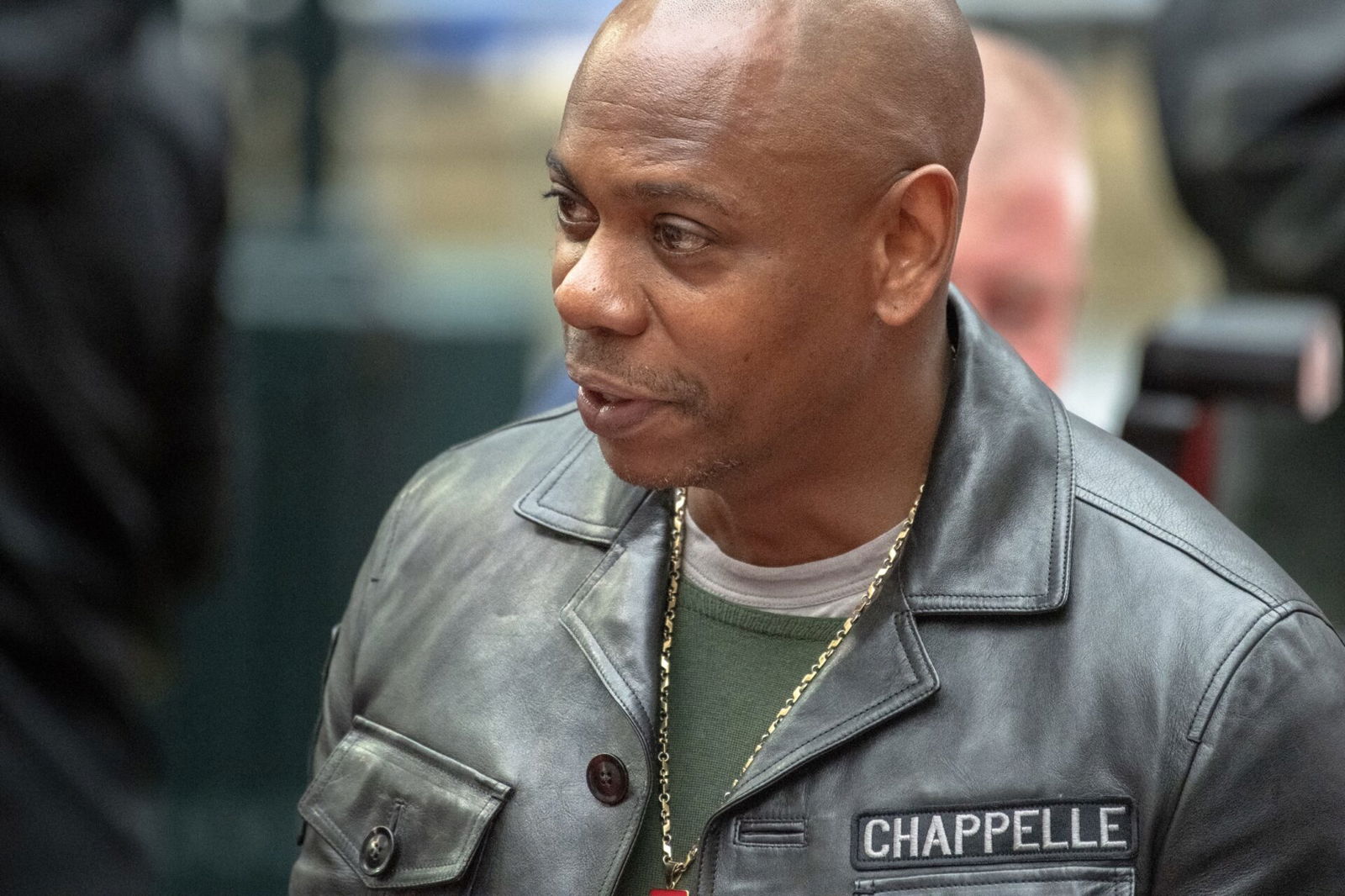
Dave Chappelle will be honored with the President's Award at the 56th NAACP Image Awards.
Dave Chappelle will receive the prestigious President’s Award at the 56th NAACP Image Awards in recognition of his role as a “driver of progress” through his impactful comedy.
On Feb.11, the NAACP announced the celebrated Emmy and Grammy Award-winning comedian as this year’s President’s Award recipient. He joins past honorees such as Usher, Rihanna, LeBron James, Muhammad Ali, and Jay-Z.
“The President’s Award honors an unwavering dedication to community, and throughout his distinguished career, Dave Chappelle has consistently been recognized as a powerful voice of social consciousness,” said NAACP President and CEO Derrick Johnson in a press release.
“Through his unique ability to transform complex political issues into thought-provoking humor, Dave has solidified his place as one of the most impactful voices of our time. His work sparks conversations that compel people to examine their own beliefs, proving that in an age where open dialogue is increasingly rare, comedy can be both a powerful truth-teller and a driver of progress.”
Widely regarded as one of the greatest comedians of all time, Chappelle has earned numerous prestigious honors, including the 2019 Mark Twain Prize for American Humor, five Emmy Awards, and six Grammy Awards for Best Comedy Album, most recently winning in 2025 for The Dreamer. He recently hosted SNL for the fourth time last month, breaking his record by delivering a 17-minute opening monologue.
Other past recipients of the President’s Award include Gabrielle Union-Wade, Dwyane Wade, Kerry Washington, Spike Lee, Jesse Jackson, Colin Powell, Condoleezza Rice, and Ms. Lauryn Hill. The 56th NAACP Image Awards celebrates Black excellence and resilience by honoring influential Black figures across various fields and extends support to the Altadena, Pacific Palisades, and Pasadena communities impacted by recent wildfires.
In collaboration with LA County, BET Media Group, NAACP, JSSK, and WME, along with local organizations like Community Aid Dena, Altadena Heritage, and WalkGood LA, the Altadena Community Preservation Fund has been launched to protect homeowners from displacement and preserve the community’s cultural heritage.
Husband-And-Wife Team Join Brooklyn Robot Foundry To Create More Equitable STEAM Spaces
'It has taken some time to differentiate ourselves from th competition..."
Richard and Denise Marie Snow are determined to make a difference in underrepresented communities.
Richard, who is the Diversity Institute Chair at the International Franchise Association (IFA) and co-host of the Smart Start Now Podcast with his wife, Denise, has made it his life’s work to ensure that there is more representation in all spaces through creating more opportunities for people of color.
The dynamic husband-and-wife team has joined with Brooklyn Robot Foundry as franchisees, recognizing the importance of creating a more diverse STEAM industry where children from all backgrounds and economic statuses can envision themselves.
Residing in New Jersey, the Snows opened their first Foundry location in Philadelphia, strategically focusing their efforts on serving neighborhoods nobody else would consider. BLACK ENTERPRISE spoke with the couple to learn more about their dedication to fostering inclusivity in the spaces they operate within and why they’ve chosen Brooklyn Robot Foundry as the vehicle to achieve that.
BLACK ENTERPRISE: Richard, you have been part of the franchise industry for many years in funding and as part of the Black Franchise Leadership Council. What about the Brooklyn Robot Foundry (BRF) made you and Denise want to become franchisees?
RICHARD SNOW: Denise and I were drawn to becoming franchisees with BRF first because the company aligned with our passion and vision within the children’s enrichment and education sector. We saw immense potential in the youth enrichment industry, being a vast and growing market with significant spending from parents aiming to enhance their children’s skills and interests.
While evaluating other franchise opportunities in the industry, we realized that there was a gap in high-quality programming for children that incorporated hands-on STEAM education (Science, Technology, Engineering, Art, and Math), where kids could develop resilience through trial and error, alongside intentional social development. BRF stood out to us because it seamlessly integrated all these crucial elements into its curriculum, setting it apart from its competitors.
Moreover, beyond the program offerings, what truly captured our hearts was the culture fostered by BRF and its CEO, Jenny Young. The genuine care and dedication shown for the franchisees and leadership toward children’s enrichment deeply resonated with us. It was evident that there was a strong emphasis on social entrepreneurship, focusing not just on business success but also on the holistic development of children of all abilities. This culture of nurturing growth in children through robotics while building a legacy for our own families made us feel that BRF was the perfect fit for us as aspiring franchisees.
BE: Was there anything that surprised you about becoming a franchisee, especially being so knowledgeable about the industry?
R. SNOW: Yes—navigating the labor market. Finding qualified and dedicated talent proved to be a significant challenge initially. The entire process, from reviewing resumes to conducting interviews, took much longer than we had anticipated, and this unexpected hurdle was a valuable learning experience for us. Additionally, introducing a new brand in a large STEM market presented another challenge. Greater Philadelphia has millions of children and families with some access to STEM programming.
DENISE SNOW: We learned that a lot of programs do not allow children to take home the science projects they were working on. With our hands-on robotics classes and camps, the children in our care get to keep every robot they build with us. It has taken some time to differentiate ourselves from the competition in a way that partners can see the impact our programs can deliver for program retention and student success.
By forging strong community partnerships and implementing an aggressive marketing strategy, we’ve begun to transform this challenge into an opportunity. Our partners and parents have seen a stark difference between us and our competitors, which has added tremendous value to our brand. We have built amazing relationships with organizations, leaders, and families who have become enthusiastic believers in the high-quality robotics programs we offer at Brooklyn Robot Foundry.
Strong Commitment to DEI
BE: As an advocate for increasing the number of Black franchise owners, what is it about BRF that makes it a good fit for Black entrepreneurs looking to get into franchising?
D. SNOW: There are a few key points to consider. From the very beginning, BRF has shown a strong commitment to equity and inclusion within its business model. This is significant because it creates an environment where Black entrepreneurs feel supported and valued. When we lean into our background and experiences as Black women or Black men in America, our corporate team does not flinch or flake when we highlight these different perspectives. Jenny and the BRF corporate team embrace our differences, and we work to use that to our competitive advantage.
R. SNOW: During my time as the chair of the Black Franchise Leadership Council, we collaborated with Brooklyn Robot Foundry to establish the Frandowment competition. This initiative was specifically designed to provide minority entrepreneurs with the opportunity to attain ownership within the franchise system. It’s worth noting that BRF continues to run this program annually, underscoring their dedication to ensuring that talented minority entrepreneurs, who may lack the necessary financial resources, have a path to becoming franchisees through sweat equity.
For me, the implementation of these programs and initiatives at BRF spoke volumes about how franchisees were viewed by the company. It wasn’t just about being another unit or a number; it was about being recognized as an individual with the potential to make a difference in their community through this brand. BRF’s emphasis on recognizing and empowering franchisees as individuals made me believe that this was a culture and a company where Black entrepreneurs could not only fit in, but also grow and succeed.
Growing and Advising
BE: What are your expansion plans for the business?
R. SNOW: Currently, we have 32 zip codes divided into two territories—one covering Philly West and the other covering Philly East. Additionally, we are planning to bring BRF to South Jersey as our next territory in 2025-2026. This strategic move allows us to expand the reach of our award-winning S.T.E.A.M robotics program, offering children in South Jersey the same educational opportunities that we are providing in Philadelphia.
BE: What advice do you have for black entrepreneurs considering entering the franchise space, particularly in the sector of children’s education?
R. SNOW:
Pick Your Passion: There is money to be made in franchising. Pick a franchise that radiates with purpose. The hard work doesn’t feel like a chore when you pick your passion!
Industry Landscape: It is crucial to understand the overall industry landscape in which your brand will operate. By doing so, you can identify emerging brands that offer better profit margins and position yourself to compete successfully within a competitive market.
Financial Performance: Understanding your financial performance, costs of service, and cash flow is essential for the success of your franchise business. Be diligent in monitoring these aspects to ensure sustainable growth.
Talent Acquisition: The labor market can be challenging, especially when it comes to finding and retaining great talent. Create a company culture that resonates with your employees and makes them passionate about their work.
Operational Infrastructure: Build strong operational infrastructure by going slow to go fast. Take the time to understand your market, cultivate relationships, and establish efficient operational processes. This way, when your customer base grows, you will be well-equipped to provide excellent service and foster customer loyalty.
Super Bowl Champ Jalen Hurts Stays in $2K Apartment Despite $255M Contract
The Super Bowl MVP has yet to break his millions on properties near his workplace of Philadelphia.
Jalen Hurts may be a Super Bowl Champion, but that doesn’t change his lifestyle. The Philadelphia Eagles quarterback shockingly lives quite modestly, foregoing the typical millionaire abode for a simple $2K apartment.
This news made headlines, considering Hurts’ pockets remain fully stacked. The premiere athlete signed a $255M deal with the Eagles in 2023, becoming the highest-paid player in the NFL at the time. While many would think he’d fork over some cash for a sprawling estate, Hurts has other plans with his millions in tow.
The Sunreported that Hurts rents an apartment in Cherry Hill, New Jersey. The apartment is a 20-minute drive from Philadelphia, and its modest rent makes sense to the quarterback.
“I didn’t buy a house or anything like that when I got drafted because it was just me,” explained Hurts about the housing decision in 2021. “I didn’t need this big place just for myself…I just got me a little apartment. You know, something smooth that’ll last me for the time being.”
However, it is no longer just Hurts, as the athlete proposed to his college sweetheart, Bry Burrows, last September. Despite this, the 26-year-old is reportedly still using the rental during the football season.
Meanwhile, the NFL star still invested in some real estate properties in his hometown of Humble, Texas. He first bought a home registered under his father’s name, Averion Sr., for $215,000. While the home boasts three bedrooms, it does not compare to his next purchase fitting for a millionaire’s budget.
Hurts also bought a $6 million Texas mansion. The property, which is 6,000 square feet and sits on a 10-acre lot, has six large bedrooms and bathrooms. It also features a massive swimming pool and two garages, one detached and accommodating four cars.
Furthermore, Hurts decided to splurge and buy the house next door for $2.68 million. While it is unclear what his plans are for the additional home, the cost was a drop in the bucket for the Super Bowl MVP. More recently, he bought a fourth property in Houston, registered under his mother’s name.
Although Hurts makes an average of $51 million a year, his practical spending habits are a valuable asset of their own.