The Youngest Black Woman To Obtain A Pilot’s License At 17-Years-Old Continues Studies At HBCU
Freeland now studies finance while still being able to hit the skies with multiple passengers.
Kamora Freeland first made news last year when she became the youngest Black woman to obtain her pilot’s license at 17.
The accomplishment trailblazer is continuing her studies at an Atlanta HBCU famed for its all-women student body. Freeland started Spelman College as a sophomore, securing enough college credits to qualify as a second-year student.
On attending college, Freeland called it a “whirlwind of emotions” but hopes to discover more about herself in the experience.
“Starting college as a sophomore has been a whirlwind of emotions—exciting, overwhelming, and liberating all at once,” Freeland told the Advance/SILive.com. “It’s like stepping into a whole new world where you’re figuring out who you are, balancing independence, and navigating friendships, academics, and late-night study sessions.”
After obtaining her pilot’s license last year, Freeland knows her path is a bit untraditional. Although she originally wanted to explore the ocean, her knack for the skies began after a flight lesson in 2021.
“I earned my pilot license before I got a driver’s license,” she jokingly told the New York Post last March.
The Staten Island teen reigns as the youngest pilot in New York and remains one of the youngest in history to receive a pilot’s license.
It’s amazing,” said Freeland, who graduated from high school last year. “I never wanted to be a pilot, but after my first flight, I was like, ‘Wow! I could do this for a living.’ ”
Since last February, Freeland has been legally qualified to fly a plane carrying up to 12 passengers.
She also told the Post, “I love flying, and I have a passion for it. Plus, pilots can make up to $700,000, so that caught my attention, too. The next step is to become a commercial airline pilot.”
However, Freeland currently majors in finance with a minor in entrepreneurship at the HBCU. Whether or not she will continue on the commercial airline pilot route remains unknown, but with her pilot experience already started, Freeland can still hit the skies as she feels.
Following Google, Apple Updates Its Map To ‘Gulf Of America’
Not all users will see the new name.
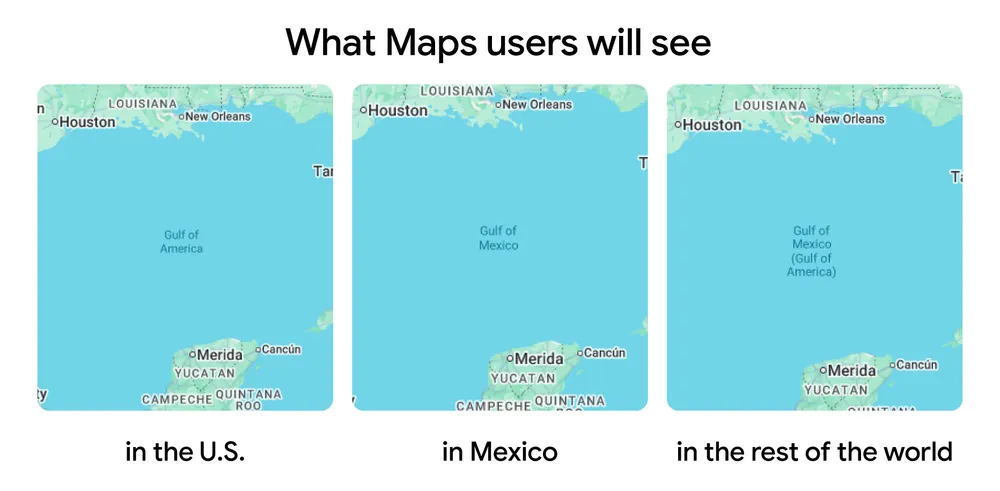
Apple Maps has complied with Donald Trump’s executive order to rename the Gulf of Mexico the Gulf of America, updating its navigation system and implementing the change on all U.S. versions of the platform.
Google announced its intent to follow the Trump administration’s executive order in a Jan. 27 post on X, explaining that the change was due to “longstanding practices” that require the company to follow government updates.
to “long standing practices” for the company to follow government updates.
We’ve received a few questions about naming within Google Maps. We have a longstanding practice of applying name changes when they have been updated in official government sources.
The change will also not be honored worldwide. Mexican Google users will still see “Gulf of Mexico,” U.S. users will see “Gulf of America,” and all other global users will see both names.
The name change is part of the Trump administration’s campaign to “Restore U.S. Names That Honor American Greatness.” According to the executive order, the Trump administration has also renamed Denali Mount McKinley, which negates President Barack Obama’s efforts to restore American geography names closer to their original Indigenous names.
The administration even declared Feb. 9 Gulf of America Day. Mexican President Claudia Sheinbaum has objected to the name change.
Questions have arisen about the administration’s legal ability to change the name of one of the world’s bodies of water. The Gulf of Mexico is a split territory where the United States can only claim 12 nautical miles. Sheinbaum asserted that the rest of the territory, as dictated by the United Nations Convention on the Law of the Sea, is Mexico’s sovereign territory.
In the executive order, the administration acknowledged that renaming involves Congress’ participation. Yet, the government will proceed with the new name while seeking the proper approval to update the changes in federal documents.
“Where Congressional action is required to establish a renaming in public law, following Board approval on renaming, the Board shall provide guidance to all relevant Federal agencies to use the Board-approved name in the interim in federal documents and achieve consistency across the federal government,” Section 2 (d) of the order states.
Former Jackson State Basketball Player Angel Jackson First HBCU Student To Sign With Athletes Unlimited
She was was selected 36th overall in the 2024 WNBA Draft by the Las Vegas Aces.
Women’s basketball player Angel Jackson, who used to play for the Jackson State University Tigers, is the first HBCU player to sign with Athletes Unlimited Pro Basketball.
According to Andscape, Jackson, who was drafted in 2024 by the WNBA’s Las Vegas Aces but failed to make any team’s roster, will now play in a women’s pro league this season. When she was selected by the Aces, Jackson was the second player from an HBCU to be drafted into the league.
“🔥 Share some love for Angel in the comments! 🫶🏾 In a groundbreaking move for representation, Angel Jackson, a former star at Jackson State University, has signed with Athletes Unlimited Pro Basketball. This accomplishment makes her the first player from a historically Black college or university to compete in the league’s four-season history. 🏀🙌🏾 #hbcu #hbcubuzz #hbcunews”
Athletes Unlimited, a five-on-five basketball league, is in its fourth season. The league, which began Feb. 5, plays 24 games over four weeks. The games are being played in Nashville, Tenn.
“I’ve been keeping up with AU for the past couple of years. I’ve been seeing the best of the best compete at AU, so it’s been a great experience just to know that I‘m going to be a part of it this year,” Jackson said. “I’m really ready to get after it and really just [show] my talents a little bit more.”
Athletes Unlimited operates in an unorthodox way. Players earn points while playing the games based on team wins and individual performances. The players with the most points at the end of each week will serve as team captains for the next week and pick their teams.
After being cut from the Aces, Jackson spent time overseas playing in Italy before signing with AU.
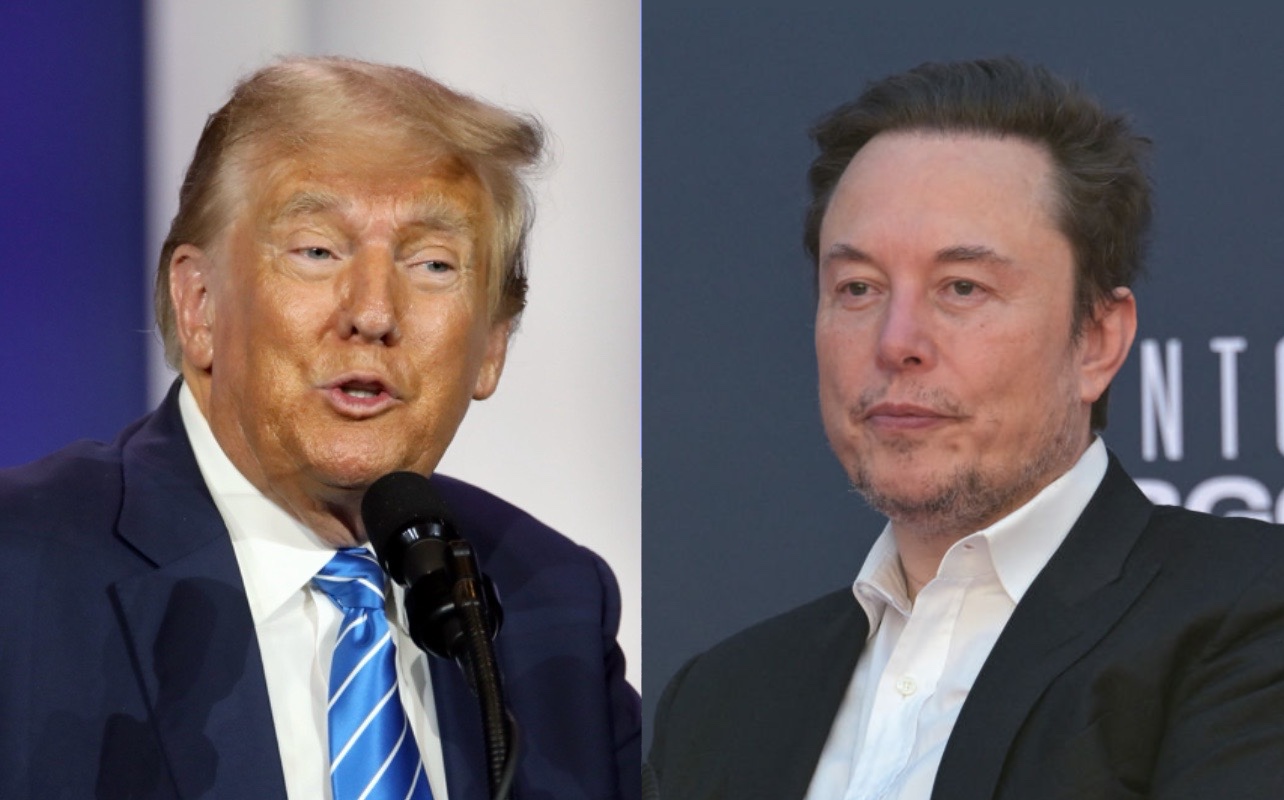
Standing beside President Donald Trump and sporting a black “Make America Great Again” hat on Feb. 11, Musk gave reporters insight on why his Department of Government Efficiency (DOGE) is looking into Social Security, stating there are persons well past livable ages receiving the benefits.
“There‘s crazy things, like the cross-examination of social security. We’ve got people who are 150 years old. Now, do you know anyone that’s 150?” Musk said. “They should be on the Guinness Book of World Records. So you know, that’s a case where I think they are probably dead. That’s my guess, so they should be very famous. It’s one of the two.”
Elon Musk says there are people older than 150 yrs old collecting Social Security: “I think they're probably dead, is my guess, or they should be very famous, one of the two.” pic.twitter.com/rFWj3V7zkG
Before the press conference, Musk took to X to call out fraud claims in federal entitlements such as Medicare, Medicaid, Welfare, Disability and Social Security.
At this point, I am 100% certain that the magnitude of the fraud in federal entitlements (Social Security, Medicare, Medicaid, Welfare, Disability, etc) exceeds the combined sum of every private scam you’ve ever heard by FAR.
The official Social Security Administration website states people need “an SSN [Social Security number] to work, collect Social Security benefits, and receive certain government services.”
After Musk claimed moves like this are what the American people voted for, House Democrats issued a clarifying statement.
“No one voted for eliminating the Department of Education to pay for tax cuts for billionaires. No one voted for cuts to Social Security so that Tesla can continue to pay $0 in federal taxes,” the statement read, posted on X.
A$AP Rocky’s Attorneys Rests In Case Alleging Rapper Shot At Former Friend, A$AP Relli
Rapper declines to testify
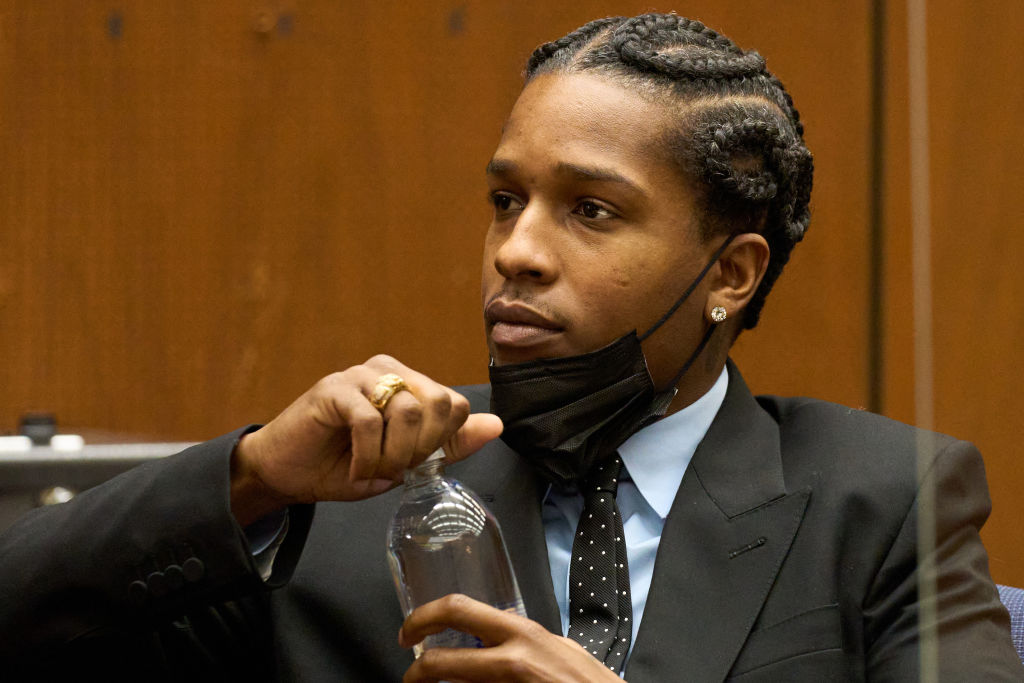
The case against Rakim Mayers, professionally known as A$AP Rocky, is ending. The Harlem rapper decided not to testify on his own behalf, and his attorneys rested their defense against the charges.
According to ABC News, the defense team, led by former Donald Trump attorney Joe Tacopina, rested their defense in the case that alleges that A$AP Rocky shot at his former friend and A$AP Mob group member, A$AP Relli, in Hollywood on Nov. 6, 2021. Los Angeles prosecutors charged the “Live. Love. ASAP” recording artist with two felony counts of assault with a semiautomatic firearm for allegedly firing at the former A$AP Mob member.
Rocky pleaded not guilty to the two felony counts, and before the trial started, Rocky reportedly rejected a last-minute plea deal from prosecutors that would have placed him in prison for six months. He would have also received a suspended seven-year sentence plus three years of probation. Prosecutors wanted him to enter a guilty plea for one of the two felony counts of assault with a semiautomatic firearm.
If Rocky is convicted, he’s looking at a prison sentence of up to 24 years.
The defense and prosecution will deliver their closing arguments on Thursday, Feb. 13.
During the trial, Relli claimed that Rocky shot at him two times during the incident.
“[Rocky] turned around, and then it was, like, BOOM! The whole thing was like a movie; he kind of like pointed down and he shot the first shot.”
Relly stated his hand was “grazed” by the first bullet and felt “hot.”
Rocky asserts that he didn’t use a gun but a starter pistol, as confirmed by another A$AP Mob member, A$AP Twelvyy. He testified that he witnessed Rocky carrying the prop on “several occasions.”
“He walked around with a prop, like a starter pistol,” Twelvyy told the courtroom on Friday, Feb. 7. “I seen it on several occasions.”
Days After Laying Off More Than 1K Employees, Workday Announces New System For AI Agents
The layoffs occurred nearly a week prior to the announcement of their new AI system.
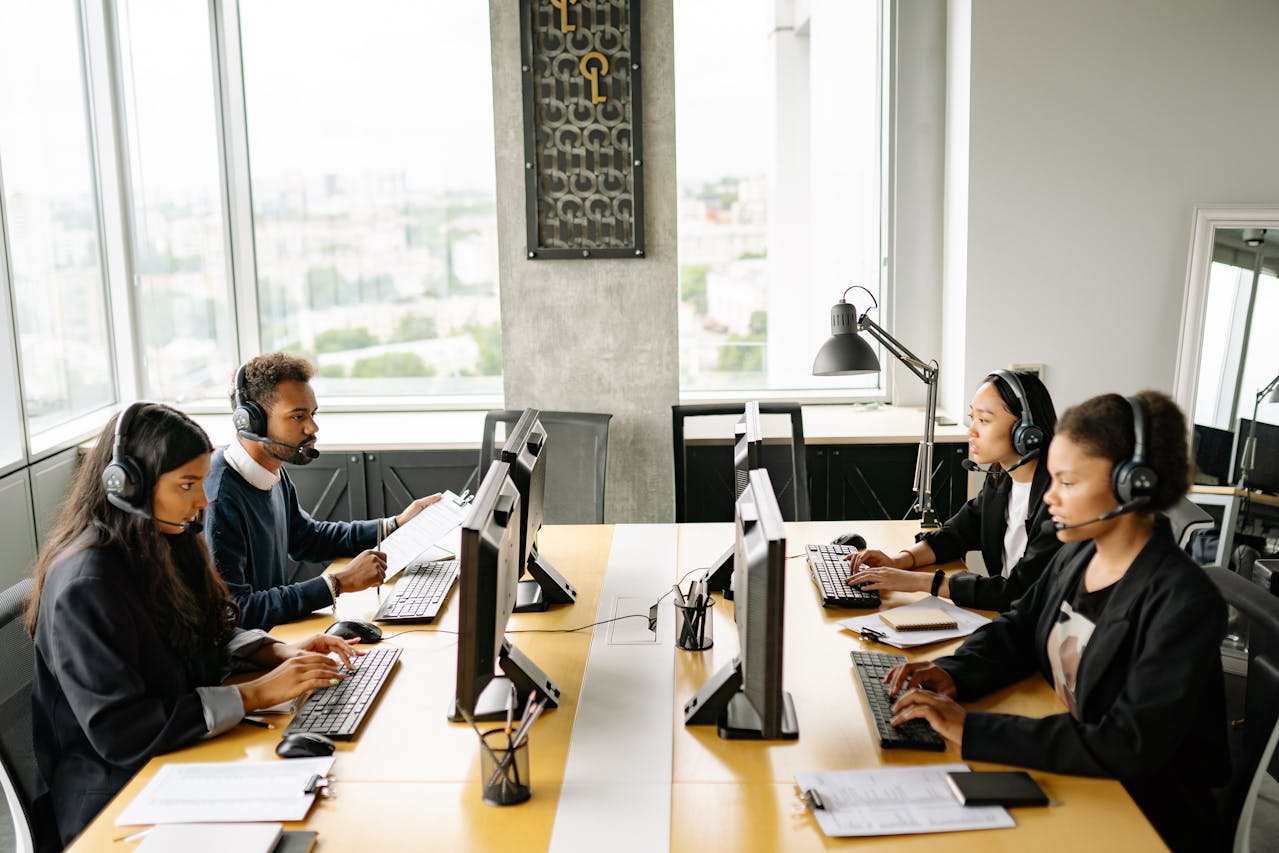
After laying off around 1,750 employees last week, HR software maker Workday has announced a new system to deploy artificial intelligence (AI) agents.
Workday will launch its Agent System of Record on Feb. 11, as confirmed in a news release. The system will manage all of Workday’s artificial agents within Workday and third-party platforms. Workday serves multiple companies with a software program that oversees their finance and HR management.
This new system aims to help businesses optimize their digital workforce. It ensures the efficiency and growth of AI incorporation. Given the increased use of AI in companies’ operations, Workday hopes to manage these new technologies as they advance.
The news comes after Workday reduced its workforce by approximately 8.5%. The layoffs come amid a push toward more AI integration, sparking concerns about job availability and security in an advancing society.
However, Aneel Bhusri, executive chair and co-founder of Workday, also emphasized that tomorrow’s workforce still depends on human participation.
“The workforce of the future will include both humans and AI agents, and businesses that don’t learn to manage this incredibly complex reality will quickly fall behind,” Bhusri said. We believe no company in the world is better positioned than Workday to usher in this new era of workforce management in a trusted, ethical way.”
He added, “Our deep understanding of human skills and roles naturally extends to managing digital labor. The future is here, and just like with the transition to the cloud, we’re ready to help our customers get there first.”
The AI System seeks to “unlock the full potential” of these nonhuman agents. This includes aiding in centralized management, streamlined agent onboarding, and secure and compliant deployment. Moreover, this rollout of AI agents has a new set of autonomous skills to perform new tasks. These agents will also analyze contracts, pinpoint invalid payroll data, and aid in financial auditing and policy information.
Workday also received support from other companies’ leadership regarding the potential and excitement of its AI programming. Accenture CEO Julie Sweet emphasized that the system will transform businesses in this “new landscape.”
“We believe the enterprise reinvention in the Gen AI era will create a seamless working experience between people and agents,” explained Sweet. “The agent lifecycle should be fully managed. We need them to be trained. They have to follow our compliance policies. They need to understand our values, and they need to be monitored for performance. That’s why it’o exciting to see what Workday is doing to help companies manage in this new landscape.”
Trump’s Reckless Renaming Of Landmarks Reflects Broader Failures And Unchecked White Male Privilege
White men, who overwhelmingly benefit from the privilege Trump seeks to preserve, must confront the consequences of their support.
The renaming of the Gulf of Mexico to the “Gulf of America” isn’t just another performative stunt by President Donald Trump—it’s a glaring symbol of his ineptitude as a leader and the broader failure of white men to hold their so-called savior accountable. This executive order, like many of Trump’s actions, reflects a leader who prioritizes ego and nationalist theatrics over meaningful governance, leaving a trail of chaos that others must clean up.
As absurd as the name change sounds, the ramifications are far-reaching. Trump’s decision to rename the Gulf—alongside reverting Denali to Mount McKinley—highlights his administration’s dangerous penchant for prioritizing personal and partisan preferences over historical and cultural respect. These moves weren’t about governance or policy; they were about rewriting history to fit a narrow, outdated vision of America, one rooted in white male supremacy and exclusion.
A President’s Legacy of Narcissism
Trump’s first term as president was marked by decisions that often bordered on the absurd, but the renaming of landmarks shows how he weaponized trivialities to distract from larger failures. Declaring the Gulf of Mexico the “Gulf of America” is a deliberate erasure of the region’s historical and cultural significance, especially given its ties to Mexico and other nations. Mexican President Claudia Sheinbaum Pardo’s quip about renaming the United States “Mexican America” was a sharp reminder of Trump’s lack of foresight.
Sheinbaum’s comment underscores the global disdain for Trump’s leadership. The decision to rename the Gulf unilaterally flouts international norms, where geographic features are named in consultation with neighboring nations. It exemplifies Trump’s inability to grasp the complexity of diplomacy, reducing nuanced matters to playground-level antics.
White Men and Their Savior Complex
Perhaps the most troubling aspect of this episode is not Trump himself but the enablers—primarily white men—who continue to shield him from accountability. Despite a presidency marked by scandals, impeachments, and countless policy blunders, Trump retains an unyielding base of support. Why? Because his brand of chaos is rooted in a mythology that white men have clung to for centuries: the idea of an unshakable, all-knowing patriarch who will restore their version of America.
But Trump isn’t their savior—he’s their reckoning. His actions reflect the worst impulses of unchecked privilege: rewriting history to suit personal narratives, disregarding dissenting voices, and punishing those who refuse to comply. His attack on the press during the renaming debacle, particularly his treatment of the Associated Press (AP), is a chilling reminder of how fragile democracy becomes when truth is under siege.
The White House barring AP journalists from an event for refusing to adopt the “Gulf of America” name wasn’t just an attack on one news outlet; it was an attack on press freedom. It reveals a dangerous precedent where dissent is punished, and propaganda is rewarded.
The Press as a Check on Power
The AP’s refusal to align its editorial standards with Trump’s decree is a crucial act of resistance in an era where truth itself is contested. As AP Executive Editor Julie Pace noted, the organization informs billions daily with factual, nonpartisan journalism. By standing firm against Trump’s demand, the AP reaffirmed the essential role of the press in holding power accountable.
However, the backlash against Trump’s attacks on journalism can’t end with news organizations. The public—and especially white men, who overwhelmingly supported Trump—must reckon with their role in enabling this behavior.
Denali and the Politics of Renaming
Trump’s decision to revert Denali to Mount McKinley is yet another example of his disregard for cultural respect and historical accuracy. Denali, long recognized by Alaskans and Indigenous communities, reflects a rich history that predates McKinley’s presidency. By prioritizing McKinley—a president whose expansionist policies often marginalized nonwhite populations—Trump reinforced a narrative of white superiority while erasing Indigenous voices.
Trump’s rhetoric around McKinley’s “territorial gains” also speaks volumes about his understanding of leadership. By equating conquest with greatness, Trump revealed his archaic worldview, one that glorifies domination over cooperation.
A Call for Accountability
The renaming fiasco is a microcosm of Trump’s broader failures: impulsive decisions, a lack of consultation, and a deep disconnect from the people he claims to serve. But the burden of accountability doesn’t rest solely on Trump’s shoulders.
White men, who overwhelmingly benefit from the privilege Trump seeks to preserve, must confront the consequences of their support. It’s not enough to laugh off these decisions as Trump being Trump. The Gulf of America is more than a name—it’s a symbol of how far the nation has strayed from truth, equity, and respect for history.
This reckoning is long overdue. As America faces unprecedented challenges—from climate change to racial inequality—leaders must rise to the occasion with vision and empathy. Trump’s antics only serve as distractions, and his enablers perpetuate the cycles of dysfunction.
Moving Forward
The Gulf of Mexico will remain the Gulf of Mexico in the hearts of many, just as Denali remains Denali to those who honor its true history. But the scars left by Trump’s decisions are real, and they demand action.
As Americans, we must reject the whitewashed narratives that Trump and his supporters peddle. We must demand leaders who respect history, value truth, and govern with integrity. And we must hold ourselves accountable for the ways we enable the dysfunction that Trump embodies.
The Gulf of America may exist on maps, but it will never replace the Gulf of Mexico. Likewise, Trump’s version of America—a land of renaming, erasing, and oppressing—will never define the nation’s true legacy. It’s time to reclaim that legacy and ensure it reflects the diversity, resilience, and truth that make America great.
This Black-Owned Bookstore Is A Safe Space For All And A First In Its Community
Sadie’s Books and Beverages, is the first Black-owned bookstore in Orange County, New York.
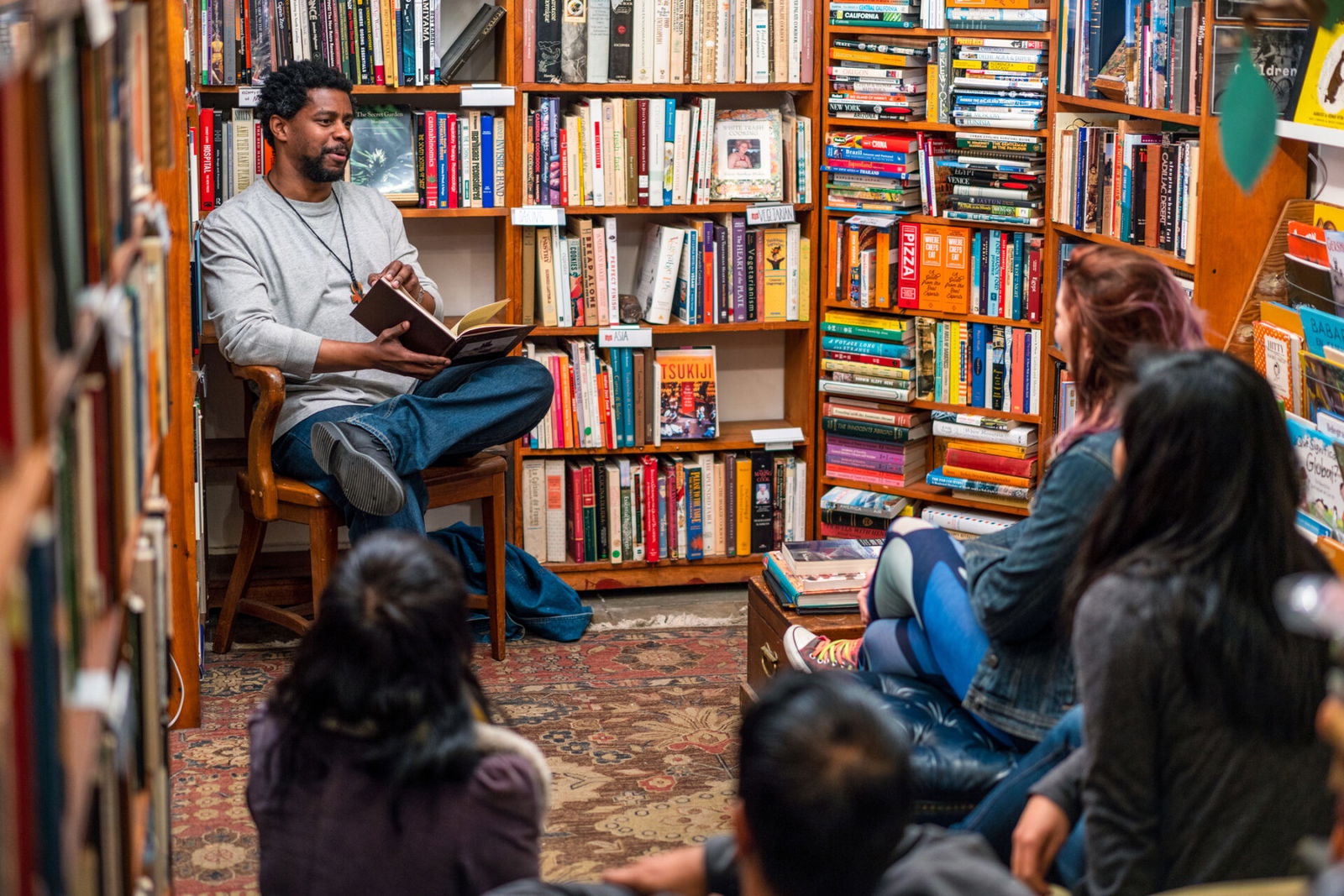
The first Black-owned bookstore in Orange County, New York, is more than just a space for book lovers—it has evolved into a vibrant community hub for professionals, students, and those in search of inspiration and tranquility.
Launched in 2022, Sadie’s Books and Beverages has quickly become a safe space for community members in Orange County, located in southeastern New York, and beyond. Frequent visitors include entrepreneurs, authors, and even mental health specialists.
“Sadie’s is like grandma’s hands,” frequent visitor Cecilia Calloway told News 12 Brooklyn.
Sadie’s strives to offer more than books and related items.
“We call ourselves a ‘bookseum,'” Sadie’s Books and Beverages owner Yaa Yaa Whaley-Williams said. “The real premise of opening and vision for the space was not just reimaging a community center but reimaging a classroom in a space that could be a resource for the community.”
“It really has been like an extreme passion project turned into a grassroots community movement,” she added.
Local entrepreneurs are able to use Sadie’s as a platform to elevate their businesses, connect with supporters, and engage with like-minded individuals.
“I have a website but people like to come, and feel and touch. It has been great because brick-and-mortar are really hard to acquire and maintain,” said Patricia Davis, owner of Lolly’s Handmade.
“We actually have a mental health workshop that we are going to hold in this space because of the feel of the space,” Stacy-Ann Bailey, the founder of Your Strength LLC, said.
Sadie’s has transformed into a thriving community hub, fostering lasting connections and bringing positivity to the Hudson Valley region.
“It keeps us together, it keeps us educated. You can learn everything pretty much about our own culture,” said president of the NAACP Middletown branch, Danielle Matthews.
With Sadie’s gaining recognition during Black History Month, Whaley-Williams hopes her bookstore serves as a reminder that Black excellence and Black history matter more than 28 days.
“Black history is a mindset and a lifestyle, not just a month so let’s embrace this vibe all year long,” she said.
Black art offers a unique and powerful perspective for storytelling, cultural expression, and social change that occurs in Black lives.
Art is integral to the Black experience, especially in Black history. Black art offers a unique and powerful perspective for storytelling, cultural expression, and social change that occurs in Black lives. Black galleries are a major conduit between Black creatives, collectors and the community. Supporting Black art galleries is vital in amplifying the voices, experiences, and legacies of Black artists. Black galleries preserve and highlight the richness of Black art and the depth of Black artists. To celebrate Black History Month, check out BLACK ENTERPRISE’s picks of nine Black galleries that amplify Black art.
ZuCot Art Gallery, founded by Troy Taylor in 2009, is located in Atlanta’s Castleberry Hill section. It is one of the largest African American-owned fine art galleries in the Southeast. The gallery showcases original works by emerging and seasoned African American artists such as Charly Palmer, Jamaal Barber, and Kimmey Cantrell. ZuCot visitors will experience Black contemporary art, thought-provoking art exhibitions, and engaging cultural programming.
Located in Atlanta, Hammonds House Museum is a historic art museum dedicated to showcasing the work of African American artists. The former residence of Dr. Otis Hammond was purchased by the Fulton county board of commission under the leadership of Micheal Lomax. Hammonds House opened its doors in 1988, in close proximity to Atlanta University Center, and has been a staple in the community since. The museum promotes African American art through exhibitions, educational programs, and community events.
Welancora Gallery, founded in 2002 by Ivy N. Jones, is located in Bedford-Stuyvesant, Brooklyn. The gallery showcases the work of artists across the African Diaspora, focusing on both emerging and established talent, and placing their works with individual collectors and institutions.
Stella Jones Gallery, founded by Stella Jones in 1996, located in the heart of New Orleans. The gallery features a generous collection of African American art, highlighting both up-and-coming and well-known artists. Stella Jones shows a wide variety of paintings, sculptures, and mixed-media works that reflect the African American experience, including works by Elizabeth Catlett, Steve Prince, Kevin Cole, and Louis Delsarte.
Chicago’s Anthony Gallery was launched in 2019 by Easy Otabor. The gallery is known for highlighting notable and emerging artists and promoting talks around representation and empowerment in the arts industry. A visit to Anthony gallery provides art lovers an opportunity to experience and support works that reflect Black identity.
Rick Garzon founded Residency art gallery in 2016. Located in Inglewood, California, this Black-owned contemporary art space fosters community discourse through its art shows and events. The gallery’s mission is to celebrate culture and identity in South Central, Los Angeles. Gallery visitors can take in art and absorb the local creative scene.
M. Hanks Gallery, founded by Eric Hanks in 1988, is located in Fullerton, California. The gallery showcases works from the 19th century to the present. M. Hanks offers an opportunity to examine important collections and encourages cultural connection. It provides a space for community conversation, investment in Black art, and appreciation of underrepresented artists.
Richard Beavers Gallery resides in the epicenter of Brooklyn, New York, in Bedford-Stuyvesant. Beavers established the Brooklyn gallery in 2017 before following up with a SoHo location The gallery represents some of Black arts’ heavy-hitter, like Leroy Campbell, Phyllis Stephens and Frank Morrison and innovative emerging artists.
Saquon Barkley Invests In Financial Startup Company, Ramp
The running back stars in the company's first Super Bowl commercial
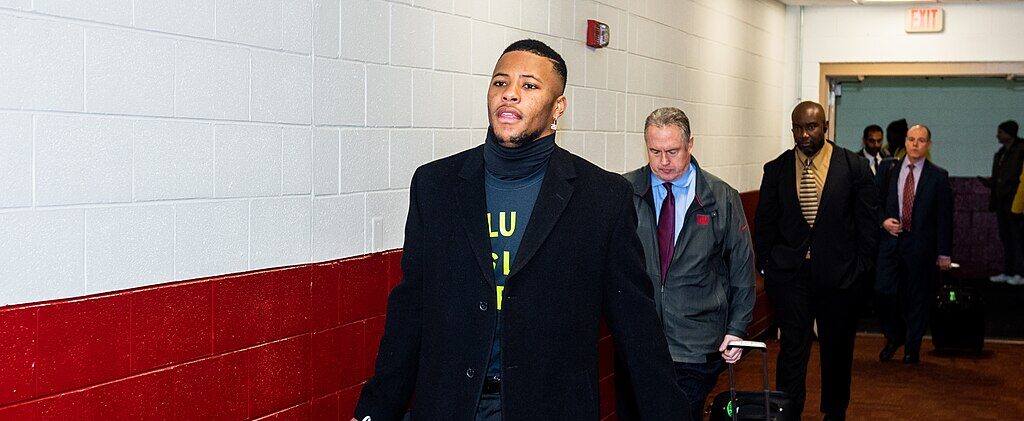
Super Bowl champion running back Saquon Barkley has invested in a financial operations platform named Ramp.
The announcement was recently made that Barkley, who just broke an NFL rushing season record, that the football player invested in the company and starred in the company’s first Super Bowl commercial. Ramp bills itself as a financial operations platform designed to save companies time and money.
“I’ve always believed a winning mindset applies to every part of life. If you want to dominate, you don’t switch off when the clock hits zero, and I demand that same intensity in my business ventures,” said Barkley in a written statement. “Ramp shares my obsession with speed and efficiency, helping teams move faster, spend smarter, and stay a step ahead of the competition. They’re a partner I want in my corner.”
Barkley is an astute investor who invests in startup companies after reading “Zero to One” years ago. His investment in Ramp was suggested through mutual investor connections. The company is an all-in-one solution that helps businesses by combining payments, corporate cards, vendor management, procurement, travel booking, and automated bookkeeping with built-in intelligence. Ramp, which was started in 2019, has over 30,000 customers who have saved $2 billion and 20 million hours by working with the financial startup.
“True partnership requires skin in the game,” said Barkley. “That’s why I invested in Ramp. I saw firsthand how they’re powering American businesses to cut costs and achieve a higher level of performance. That’s the kind of impact I want to be part of.”
Barkley just celebrated a Super Bowl victory over the Kansas City Chiefs while helping his team win the coveted Vince Lombardi trophy on his 28th birthday on Feb. 9.
“Seeing Saquon put his team’s playoff run ahead of an individual all-time rushing record was a masterclass in leadership,” said Eric Glyman, CEO and co-founder of Ramp. “Ramp lives by the same playbook. We put our customers’ long-term success first, helping them spend less –- even if that sometimes comes at the cost of our own short-term profit. It’s this long-term orientation that’s led us to grow faster than nearly anyone while delivering over $2 billion in savings for our customers. Our shared commitment to long-term value creation made Saquon a natural partner. We’re both in it for the long game.”