Beyonce, Unreleased music, jury trial
(Photo: Getty Images)

Federal Judge Temporarily Blocks Trump’s Funding Freeze

At least 22 Democratic attorneys general filed a lawsuit seeking to block the federal funding freeze.


A federal judge has temporarily blocked President Donald Trump’s freeze on federal funding.

The order comes after the Trump administration sent a memo on Jan. 27, ordering federal agencies to pause federal financial assistance, which would let the Trump administration review if the aid was consistent with his policies.

But chaos immediately broke out. States, schools, and health organizations confused. Experts warned the funding freeze could affect trillions of dollars Congress already approved. While the memo explicitly stated that Medicare and Social Security benefits would not be affected, many states reported these benefits were.

U.S. District Judge Loren L. AliKhan temporarily blocked the funding freeze minutes before it was scheduled to take effect at 5 p.m. ET Tuesday.

According to the Associated Press, the judge’s decision comes after a lawsuit was filed by nonprofit groups that receive the federal money. Alikahn issued a temporary administrative stay until Monday afternoon.

At least 22 Democratic attorneys generals from dozens of states filed a lawsuit seeking to block the federal funding freeze.

As organizations nationwide grapple with navigating the looming freeze, Democrats argue the president has no right to stop spending appropriated by Congress.

“There is no question this policy is reckless, dangerous, illegal, and unconstitutional,” said New York Attorney General Letitia James.

“Trump’s actions would wreak havoc in red and blue communities everywhere,” said Senator Patty Murray of Washington, the top Democrat on the Senate Appropriations Committee. “We are talking about our small towns, cities, and school districts.”

Meals on Wheels, an organization that receives federal money to deliver food to senior citizens, is worried about being cut off.

“The lack of clarity and uncertainty right now is creating chaos,” Jenny Young, spokesperson for the organization, told the AP. “Seniors may panic not knowing where their next meals will come from.”

The Trump administration wants agencies to complete a “comprehensive analysis of all their federal assistance programs.” Doing so ensures that “programs, projects, and activities” comply with the President’s executive orders.

“The use of federal resources to advance Marxist equity, transgenderism, and green new deal social engineering policies is a waste of taxpayer dollars that does not improve the day-to-day lives of those we serve,” Matthew Vaeth, the acting director of the Office of Management and Budget, said in a memo.

RELATED CONTENT: OPINION: Former President Barack Obama Booed At Trump’s Inauguration: A New Low For Republican Decorum
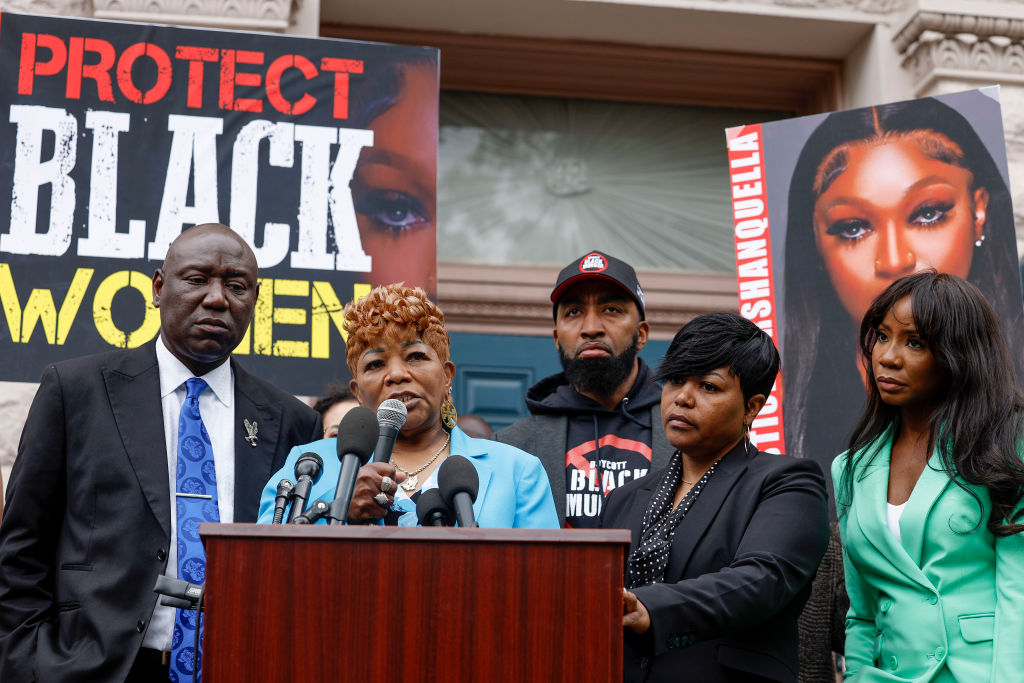

Shanquella Robinson, mother, Sallamondra Robinson
Photo by Anna Moneymaker/Getty Images

‘Cabo 6’ Traveler Denies Wrongdoing In Shanquella Robinson’s Death After Viral Fight In Mexico

Nazeer Wiggins stated in federal court that none of his conduct led to Robinson's death.


A travelmate of Shanquella Robinson, the woman who died while in Mexico with friends, has denied any allegations of wrongdoing.

The deceased 25-year-old’s family sued all ‘Cabo Six” travelers and the FBI in October 2024 after no one faced lasting charges for her death. One of the defendants, Nazeer Wiggins, claimed in federal court that he played no direct role in Robinson’s death.

“The plaintiff’s complaint fails to provide factual allegations identifying any specific acts or omissions by the defendant that directly caused the plaintiff harm,” Wiggins wrote, according to WSOC-TV.

“The plaintiff relies on conclusory or speculative statements without factual support. For instance, the complaint lacks allegations that tie the defendant’s alleged presence or actions to the harm suffered by the plaintiff.”

Wiggins also stated that there was no direct correlation between his actions on the trip and Robinson’s “alleged injuries.”

Robinson’s story made headlines after the woman mysteriously died while on the trip in 2022. At first, her family heard that she died of alcohol poisoning. However, footage of a fight between Robinson and another woman in their hotel room was later released. Moreover, her Mexican death certificate exposed her cause of death as a broken neck and spine.

Despite investigations launched by both Mexico’s attorney general and the FBI, none of the travel companions faced jail time after U.S. officials could not confirm the fatal injuries. An independent autopsy by the Mecklenburg County Medical Examiner in Robinson’s home state of North Carolina could also not determine a cause of death.

Sallamondra Robinson, Shanquella’s mother, then filed a civil suit to get justice for her late daughter. According to the filing, the grieving mother has experienced anxiety and depression, among other mental health issues, since the death. However, a U.S. attorney had recently filed a motion for the lawsuit’s dismissal in January.

According to her attorney, the lawsuit is not just for Robinson but for other U.S. citizens like her who deserve justice when traveling abroad.

“This lawsuit is not just about seeking justice for Shanquella Robinson; it’s about holding accountable those who were entrusted with the duty to investigate, act, and protect the interests of U.S. citizens abroad,” explained attorney Sue-Ann Robinson, unrelated to Shanquella.

“The heartbreaking details of Shanquella’s death and the subsequent mishandling by federal authorities only add to the family’s grief, and they deserve both full transparency and justice.”

The Robinson family has sued for compensatory and punitive damages. While also naming the U.S. Department of State as a defendant, they claimed multiple counts of wrongful death, battery, negligence, conspiracy, and emotional distress.

RELATED CONTENT: ‘Red Flags Everywhere’ According to Shanquella Robinson’s Family Attorney

Trump Administration Offers Federal Employees 8 Months Pay To Resign

Two million federal civilian employees have until Feb. 6 to make a decision.


The Trump administration is offering financial incentives for federal full-time workers to resign. 

In a memo sent out on Tuesday, at least 2 million federal civilian employees have until Feb. 6 to decide whether or not to take part in the “deferred resignation program.” If so, federal employees can remain on payroll through Sept. 30.

Trump and his administration are offering the deal as part of plans to shrink and reform the U.S. government drastically. Employees excluded from the deal are civilian employees working in immigration, national security-related positions, and U.S. Postal Service employees, Reuters reports.

There are an estimated 2.3 million U.S. civilian employees, excluding the Postal Service, working in veterans’ health care and inspecting agriculture, to name a few.

The administration warned in the memo that most agencies would likely be downsized and restructured, a signal of layoffs.

“At this time, we cannot give you full assurance regarding the certainty of your position or agency, but should your position be eliminated, you will be treated with dignity,” the email said. “The reform of the federal workforce will be significant.”

There could be a potential fight brewing, as many of these federal employees are represented by unions.

The National Treasury Employees Union, representing about 150,000 federal workers, warned members that “the email is designed to entice or scare you into resigning” and urged members not to resign.

Senator Tim Kaine (D-VA) criticized the buyout, calling the proposal a “fake offer.” Kaine said Trump has no authority to offer it and warned employees that they may not get the promised payout.

“He’s tricked hundreds of people with that offer,” Kaine said on the Senate floor Tuesday. “If you accept that offer and resign, he’ll stiff you just like he stiffed the contractors. He doesn’t have any authority to do this. Do not be fooled by this guy.”

However, according to the Trump administration’s memo, the federal government plans to use furloughs and to reclassify a number of federal employees to “at will status.” If this happens, it will allow the employer, in this case, the federal government, to cut staff without prior notice or justification.

According to the BBC, the Trump administration expects at least 10% of employees to accept the offer.

RELATED CONTENT: 5 Books That Point Out Racist Systems As We Return To A Really Racist Administration 

Costco, DEI
(Photo: Kena Betancur/VIEWpress)

19 GOP Attorneys General Pressure Costco To Drop DEI Initiatives

Costco's board of directors said its 'commitment to an enterprise rooted in respect and inclusion is appropriate and necessary.'


Nineteen state Republican attorneys general are heightening the pressure against Costco Wholesale to abolish its diversity, equity, and inclusion (DEI) policies, claiming concerns of legal risk and discrimination, USA Today reports. 

In a letter to Costco president and CEO Ron Vachris, the officials, co-led by Texas AG Ken Paxton and Iowa’s Brenna Bird, accused the company of violating merit-based principles and federal law by standing firm with its policies.

Costco has 30 days to notify the states of its decision to repeal its DEI policies or provide the reasoning behind keeping them. 

Costco is one of the few businesses that has refused to dial back on DEI policies at the hands of Republican tactics and pressure. Corporations such as Amazon, Meta, Target, and Boeing are just a few that either altogether scrapped their DEI goals or modified initiatives. Some even ended participation in the Human Rights Campaign Foundation’s corporate equity index.

Hours after Donald Trump was sworn in as the 47th President, he signed an executive order to dismantle programs at the federal level. 

According to Fox News, the order pressures private-sector companies to jump on board with federal civil rights laws and stop “discriminatory” practices. Publicly traded companies, large nonprofits, foundations with significant assets, bar and medical associations, and higher education institutions with substantial endowments risk becoming targets of DEI investigations.

“It’s time to ditch DEI. While other companies right the ship and abandon their illegal, woke policies, Costco has doubled down,” Bird said in a statement. “I’m putting Costco on notice to do the right thing and eliminate discriminatory DEI. No American should be denied an opportunity because they don’t fit the woke mold.” 

Kansas Attorney General Kris Kobach said he intends to “enforce the law vigorously” against Costco, claiming “racial discrimination is both immoral and illegal.” 

However, Costco has the support of several civil rights leaders who celebrate the company’s willingness to continue its DEI policies. On Jan 25, Rev. Al Sharpton and members of the National Action Network formed a “buy-in” at a Costco in Harlem, NY, to highlight the company’s commitment to DEI. 

Costco’s board said in a statement of its “commitment to an enterprise rooted in respect and inclusion is appropriate and necessary,” the Associated Press reported. “The report requested by this proposal would not provide meaningful additional information.” 

Additional Republican attorney generals in support of Costco abandoning its DEI policies are Alabama, Arkansas, Georgia, Idaho, Kentucky, Ohio, Oklahoma, South Carolina, South Dakota, Tennessee, Virginia, Louisiana, Missouri, Montana, Nebraska, and North Dakota.

RELATED CONTENT: FDA Finally Revokes FD&C Red No. 3 For Food And Drugs

Olympics, Team USA, Brittney Griner
(Photo: Christian Petersen/Getty Images)

WNBA’s Brittney Griner Signs Deal With Atlanta Dream


WNBA basketball player Brittney Griner will play for the Atlanta Dream in the upcoming season.

In a video clip posted on her Instagram account, she announced to the world that she had signed with the WNBA team after playing with the Phoenix Mercury. She played with Mercury for over a decade since she was drafted by the team in 2013. It was her first time in free agency, and she stated that the decision was a hard one, but she is looking forward to rebranding herself with her new team.

In the video, she is seen with several WNBA players on a boat during a fishing expedition. She backtracks as she introduces them to let the world know she has moved on from Phoenix and is hanging out with her new Dream teammates.

“It was a hard decision since you’re leaving what you know, what I’ve known for my whole career. But there’s also the exciting factor of like, OK, this is a rebrand now. I get to show them something different,” Griner said in the clip. “I was able to find where I wanted to go. And honestly, what led me to that decision ultimately was the team, the players, as individuals, and then also my family.”


View this post on Instagram


A post shared by BG (@brittneyyevettegriner)

Basketball insider Shams Charania initially reported the news on his social media account on Jan. 28.

Arizona Sports reported that the 34-year-old is the leader in rebounds (2,322), blocks (812), and shooting percentage (56.2%) for her former team. Griner played for Baylor and was the No. 1 pick in the 2013 WNBA Draft.

RELATED CONTENT: FDA Finally Revokes FD&C Red No. 3 For Food And Drugs

Businesses, Entrepreneurs
(Photo: Getty Images)

ShopTheHood Founder Blasts Critics More Concerned With Company’s Name Than Mission

'It's OK, don't like the name, but please support a Black-owned business in your community. They need you.'


ShopTheHood prides itself on helping shoppers find the best Black-owned deals and steals, but Shauna, the site’s founder, believes people aren’t focusing on that.

“I talk about supporting Black-owned businesses, and you don’t like my name,” she said in a Jan. 18 Instagram video. “I built out an entire Black-owned buying guide that’s free, but you don’t like my name.”

Highlights of her website and social media posts flash behind her.

“Our buying guide also includes every Black-owned bookstore in the United States, but you don’t like my name,” she said.

“We even built out an eight-and-a-way section in our buying guide so that people know who not to shop with because many of those businesses stole content from Four Essentials and ran them as ads on Instagram, but you don’t like my name,” the shop owner added.

“Our jewelry section boasts over 50 different jewelry brands listing items from $30 to over $30,000. Just tap on the name, it’ll take you right to their website, but you don’t like my name.

“While funding now is at an all-time low for many Black-owned businesses, and people are trying to find creative ways to fund their businesses, you don’t like my name,” she said.

“It’s OK, don’t like the name, but please support a Black-owned business in your community. They need you.”

She left viewers with a call to action in the caption.

“Make sure you don’t get distracted with nonessential things. Just support a Black Owned Business in your community,” Shauna wrote.

RELATED CONTENT: FDA Finally Revokes FD&C Red No. 3 For Food And Drugs

paycheck disruption, financial hardship
Photo by Nicola Barts/Pexels

Freezing Federal Grants And Loans Creates Economic And Social Risks For Black Americans

The economic and social costs of this federal shutdown will disproportionately affect Black Americans


Written by William Michael Cunningham

The freezing of federal grants and loans by the Trump administration creates immediate and significant economic and social risks for Black Americans. Black communities, which are already disproportionately reliant on Medicaid, federal housing assistance, education programs, and other social services, are poised to bear the brunt of this sweeping shutdown. Here’s an analysis of the potential economic impact:

Economic Impact of the Federal Shutdown on Black Americans

  1. Medicaid Blockage
    Medicaid is critical to Black Americans, as it provides health insurance for nearly 1 in 3 Black adults and over half of Black children. The shutdown of state Medicaid portals and delays in federal payments will directly impact:
    • Access to Healthcare: Delayed Medicaid reimbursements to providers may lead to service interruptions. For Black communities, which already face healthcare disparities, this could exacerbate chronic conditions, reduce access to necessary treatments, and increase long-term health costs. Job Loss in Healthcare: Hospitals and clinics reliant on Medicaid reimbursements—often located in underserved communities—may face layoffs, furloughs, or closure. This could worsen already high unemployment rates among Black workers. Estimated Impact: A delay in Medicaid reimbursements could affect over 20 million Black Americans who rely on the program and could lead to billions of dollars in lost healthcare funding.
  2. Pause on Federal Grants and Loans
    • Small Businesses: Black-owned businesses often rely on federal programs such as SBA loans and grants. A halt in funding could create cash flow crises, lead to business closures, and disrupt employment in communities where these businesses serve as anchors. Housing and Urban Development (HUD): Federal housing assistance programs, including Section 8, are essential for millions of Black families. A funding freeze could result in evictions and increased homelessness, further destabilizing already vulnerable households.
    Estimated Impact: The interruption of federal loans and grants could impact tens of thousands of Black-owned businesses and millions of families, resulting in economic losses exceeding $10 billion over the duration of the shutdown.
  3. Early Childhood Education and Nutrition
    • Programs like Head Start and reduced-price school meal programs, which disproportionately serve Black children, may face funding shortages. Interruptions in these services will reduce access to early education and adequate nutrition, worsening long-term socioeconomic inequities.
    Estimated Impact: Approximately 30% of Head Start participants are Black children. A disruption could cost tens of thousands of children crucial developmental resources.
  4. Labor Market Impacts
    • The firing of key personnel at the National Labor Relations Board (NLRB) and the disruption of workers’ rights enforcement will likely harm low-wage workers in industries with high Black representation, such as healthcare, retail, and food services. Workers may lose protections against unfair practices or the ability to unionize, further compounding wage inequities.
    Estimated Impact: Reduced NLRB protections could weaken job security and wage growth for millions of Black workers, adding to the economic toll of the shutdown.

Call to Action for Black Communities

This situation demands a swift and unified response from Black community leaders, policymakers, and organizations:

  • Legal Challenges: Support lawsuits filed by states and advocacy groups challenging the federal spending freeze.
  • Advocacy: Mobilize grassroots campaigns to pressure Congress and state governments to protect vital services.
  • Emergency Aid: Advocate for the establishment of state or local emergency funds to provide temporary support to affected households and businesses.
  • Awareness: Educate community members about available resources during the funding freeze, such as food banks, local health programs, and emergency rental assistance.

Conclusion

The economic and social costs of this federal shutdown will disproportionately affect Black Americans, deepening disparities in healthcare, housing, education, and employment. While the full impact will depend on the duration of the freeze, even a short-term halt could lead to devastating outcomes for millions. Immediate collective action and advocacy are necessary to mitigate the harm and ensure that Black communities can weather this crisis.

RELATED CONTENT: Trump Freezes All Federal Loans And Grants: What’s At Risk?

Knoxville, Black-Owned Restaurant
Photo by Luis Alvarez/Getty Images

These Cities Have The Most Black-Owned Businesses

While Black Americans represent nearly 14% of the nation’s population, only 3.3% of businesses in the United States are Black-owned. 


While Black Americans represent nearly 14% of the nation’s population, only 3.3% are considered Black-owned businesses. When it comes to where a majority of these businesses are, all roads point to the South, according to a report from Truck Info.

“Black-owned businesses in the South exceed national averages,” the report reads. “For example, Hinesville, Georgia, has five times as many Black-owned businesses as would be expected based on population alone.”

With conversations about eliminating diversity, equity, and inclusion (DEI) initiatives dominating the news cycle, as many companies decide to cut back amid the Trump administration’s priority of cracking down on these kinds of initiatives, this new report shows there is still a long way to go for representation. 

Here is a list of the top 10 metro areas in the South with the highest concentration of Black-owned businesses, according to the Truck Info data.

Hinesville, GA

  • Percentage Black-owned: 18.2%
  • Black Population: 37.5%
  • Total number of Black-owned firms: 157

 Atlanta-Sandy Springs-Roswell, GA

  • Percentage Black-owned: 11.3%
  • Black Population: 34.3%
  • Total number of Black-owned firms: 13,766

 Fayetteville, NC

  • Percentage Black-owned: 10%
  • Black Population: 32.6%
  • Total number of Black-owned firms: 480

 Virginia Beach-Chesapeake-Norfolk, VA-NC

  • Percentage Black-owned: 9.4%
  • Black Population: 30%
  • Total number of Black-owned firms: 2,632

 Memphis, TN-MS-AR

  • Percentage Black-owned: 9.3%
  • Black Population: 47.5%
  • Total number of Black-owned firms: 1,606

Washington-Arlington-Alexandria, DC-VA-MD-WV

  • Percentage Black-owned: 9.2%
  • Black Population: 25%
  • Total number of Black-owned firms: 10,486

 Jackson, MS

  • Percentage Black-owned: 8.2%
  • Black Population: 49.8%
  • Total number of Black-owned firms: 865

Sumter, SC

  • Percentage Black-owned: 7.9%
  • Black Population: 45.8%
  • Total number of Black-owned firms: 112

Richmond, VA

  • Percentage Black-owned: 7.6%
  • Black Population: 28.9%
  • Total number of Black-owned firms: 1,805

Augusta-Richmond County, GA-SC

  • Percentage Black-owned: 7.6%
  • Black Population: 35%
  • Total number of Black-owned firms: 638

Analyzing Black-owned Business Data

The District of Columbia, Maryland, and Georgia have approximately 50% more Black-owned businesses than other states. Transportation is the most popular industry for Black entrepreneurs. Black business owners comprise nearly 8% of the transportation and warehousing industries, more than twice the national average.

Other popular industries include healthcare, social services, administrative support, and entertainment.

RELATED CONTENT: Black Franchise Leadership Council Closed Out 2024 With ‘Generational Wealth Through Franchising’ Webinar

Grenada
(Photo: Pexels)

Grenada Prepares ‘Citizenship By Invitation’ Program To Entice Wealthy Investors

The first round of invites go out Feb. 1.


The Caribbean nation of Grenada is launching a “citizenship by invitation” program in an effort to attract a select group of wealthy investors for entrepreneurial opportunities, Fortune reports.

The program will be the first of its kind, securing “hand-picked investors” for innovative businesses as European countries wind down on visa programs. Similar programs require those interested to invest hundreds of thousands of dollars before securing an expedited residency or citizenship.

Grenada is doing things differently.

“The concept of ‘citizenship by invitation’ is set to revolutionize the way that investment is channeled into communities,” a statement read. “It will empower governments such as Grenada to tailor their citizenship programs and attract hand-picked investors with the talent, experience, and capital to make an impact.”

Investors “who will bring the most value to the Caribbean Island” will be officially invited after being nominated and vetted by global citizenship financial advisory services firm Forbes Global Talent and Arton Capital, the program designers, through a partnership with Grenada’s government.

Selected persons will be required to make a non-refundable donation to the nation or an existing business. With the first round of invites being sent out Feb. 1, the second option would be donating to real estate investment programs.

Arton Capital president Armand Arton thinks the process is an “extremely efficient and smooth process in comparison to other investment migration programs worldwide. We think this model is a valuable way for countries to attract the investment and expertise they require,” he said, according to NY Carib News

Popular vacation countries like Spain and Portugal have placed limitations on their programs as a result of rising housing costs for locals, which has heightened the housing crisis in each country. In early January 2025, Spain’s Prime Minister Pedro Sánchez announced a proposed plan to embed a tax of up to 100% on homes purchased by outside buyers. Another reason for the program limits is the concern of illegal money laundering. 

After becoming citizens of Grenada, the selected investors will constitute the Global Citizen Council and advise the country’s government with best practices on “how to drive innovation” in different industries. Grenada’s Prime Minister Dickon Mitchell will host the annual two-day advising session, giving investors access to a private plane

“The people of Grenada are set to welcome a new wave of investment and innovation to our shores,” the prime minister said.

affordable housing, Washington State, Program, Historical Housing Discrimination, housing discrimination, property taxes, South Fulton, foreclosure
(Photo: iStock)

NYC Housing Group Exposes Property Tax Disparities Between Wealthy And Low-Income Areas

New York City is being criticized for its slow action in addressing property tax breaks that disproportionately impact low-income communities.


A housing organization is criticizing New York City landlords in upscale, predominantly white neighborhoods, accusing them of profiting from property tax breaks at the expense of struggling minority communities.

Tax Equity Now New York (TENNY) filed a new motion in Manhattan court on Jan. 23 to push for a landmark ruling the group won against the city last March, NY Post reports. TENNY challenged NYC’s current assessment ratio for property taxes, arguing it discriminates against minorities in low-income neighborhoods by unfairly inflating their property values for tax purposes, forcing them to bear a disproportionate tax burden.

Meanwhile, landlords in wealthier and trendier areas of the city continue to pay less than their fair share of taxes while the city stalls on reforming the tax assessment ratio—a formula that determines property taxes—according to a coalition of homeowners, renters, and civil rights advocates.

“We are flabbergasted and disappointed that the city has not lowered the assessment ratio for homeowners in New York City to ensure uniformity despite the Court of Appeals decision that the city’s assessments are not lawful,” said Martha Stark, TENNY’s policy director, in a statement.

Lawyers for TENNY filed a new motion arguing that the city’s proposed 2025/2026 assessment roll continues to assign higher property values in lower-income areas like Jamaica, Queens, and the South Bronx, compared to similar properties in upscale predominantly white neighborhoods such as Park Slope, Brooklyn, and parts of Manhattan.

“Areas of New York City, which have historically appreciated at lower rates—which generally have lower valued homes and where minority groups disproportionately live—are dramatically overassessed and overtaxed,” TENNY’s motion states.

Stark points out that the city’s unequal property tax system only exacerbates the city’s affordability crisis.

“Despite the City’s expressed desire to make the city more affordable for hardworking homeowners and renters, they are ignoring their ability to do just that in the area where they have the most control: the property tax,” Stark said.

TENNY’s lawyers are urging the court to resolve the issue by Feb. 20, the deadline set by the New York City Charter for notifying property owners about any increases in their assessments for the year. The group maintains that the court’s ruling was meant to address the inequity before new tax bills are sent out.

However, if a decision isn’t reached by that date, TENNY argues, the current system will violate the law by relying on improper assessments for hundreds of thousands of homeowners. A City Hall representative argues that implementing a new property tax system would make it challenging to fund city services.

“TENNY’s position would harm the very taxpayers they claim they are trying to protect — particularly working-class New Yorkers — and create negative fiscal impacts that would jeopardize the city’s ability to provide crucial services,” the representative said after the new motion was filed.

The City Hall rep also reiterated the local government’s commitment to working on a legislative solution.

“The Adams administration is committed to working toward reform with our legislative partners to create a fairer and more equitable property tax system that considers the needs of every New Yorker,” the representative added.

RELATED CONTENT: Could Rent-Controlled Apartments Offset Rising Costs For Renters In 2025?

×