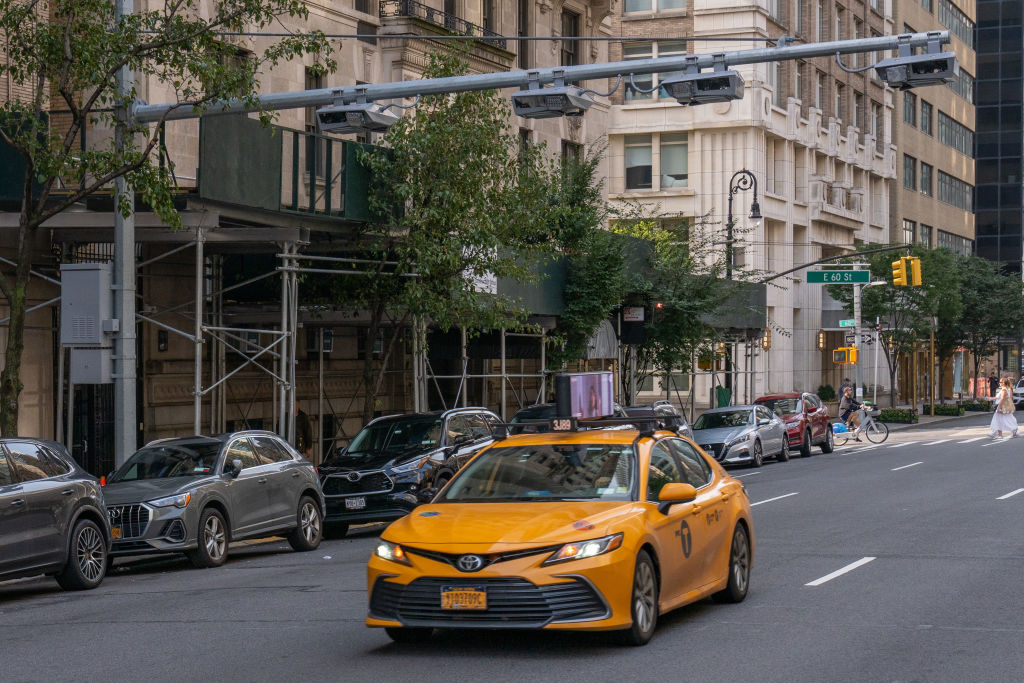
After implementing “congestion pricing” for vehicle travel into the busiest sections of Manhattan, New York’s MTA (Metropolitan Transportation Authority) is claiming that charging folks to enter certain areas is “working,” according to figures for the first week.
According to The New York Post, although the agency is trying to make people feel they’ve made the right move to add more financial burdens to those affected by it, critics don’t believe them. Officials from the MTA have stated in their first report that travel times on the bridges that connect the outer boroughs to Manhattan, south of 61st Street, was down by as much as 40% during the first week. They also claim that car traffic south of 61st Street fell by 16% from October and 7.5% from the same time in January 2024. That amounts to 273,000 fewer cars for the first week of congestion pricing in comparison to last year’s numbers.
The transit agency stated that “anecdotal reports” show traffic is moving better in the congestion zone due to the $9 price point for cars (trucks and larger vehicles pay more based on several different factors). They said more people are taking public transportation, as ridership has increased.
“I think it’s obvious to everybody here that it has been a very good week here in New York,” MTA Deputy Chief of Policy and External Relations Juliette Michaelson told reporters on Monday. “Just look out the window. There is less traffic and quicker streets. I think everybody can see it.”
Critics do not believe what the MTA is touting.
“The MTA math is more than fuzzy — it’s fugazi,” City Councilwoman Joann Ariola (R-Queens) said. “I believe in their mathematical skills as much as I believed in their timeline for the Second Avenue subway.”
Susan Lee, who runs New Yorkers Against Congestion Taxes, also had a differing opinion.
“January is usually the slowest month of the year,” said Lee, who lives in the Tribeca section of Manhattan. “While some areas experience less traffic, others have seen higher than average congestion due to drivers avoiding paying the congestion pricing tax. The MTA should be careful what they’re celebrating.”
And there is another factor that the MTA may not have included when reporting these numbers.
The city just weathered some snow and below-freezing temperatures during the same time, which may have had an effect on people not leaving their homes. So far, this has been the coldest January in recent years.
UNSPECIFIED LOCATION AND DATE: (EDITORS NOTE: Best quality available) In this handout provided by Hennepin County Sheriff’s Office, former Minneapolis police officer Tou Thao poses for a mugshot after being charged with aiding and abetting second-degree murder in the death of George Floyd. The death sparked riots and protests in cities throughout the country after Floyd, a black man, was killed in police custody in Minneapolis on May 25. (Photo by Hennepin County Sheriff’s Office via Getty Images)
Officer Convicted In George Floyd Murder Released From Prison
Minneapolis police officer convicted of aiding and abetting murder of George Floyd to be released from federal prison.
Minneapolis police officer J. Alexander Kueng, convicted in the killing of George Floyd, is set to be released on Jan. 15.
Kueng, 31, was charged with aiding and abetting second-degree manslaughter for his role in Floyd’s death. Video and eyewitness testimony showed Kueng kneeling on Floyd’s back while his accomplice Derek Chauvin kneeled on Floyd’s neck, cutting off his ability to breathe. Kueng was also charged with violating Floyd’s civil rights in his role as a law enforcement officer.
After pleading guilty, Kueng was sentenced to a 3½-year state sentence, which ran concurrently with his three-year federal sentence. The former officer began serving his time in 2022 at FCI Elkton in Lisbon, Ohio, Star Tribune reported.
Kueng did not serve the full 3½-year sentence. According to a spokesperson for the Federal Bureau of Prisons, this is not unusual. The representative explained that the “First Step Act and other factors” determine parole eligibility.
Tou Thao, another officer convicted of aiding in Floyd’s death, is still serving his five-year sentence for the May 25, 2020, murder. Thao prevented bystanders from intervening as Chauvin and Thomas Lane held Floyd down for nearly 9½ minutes. He reportedly will be released in 2025.
The main perpetrator of the crime, Chauvin, was convicted of murder and manslaughter, and sentenced to 22 years for the state charge and 21 years for federal civil rights violations. He is serving both sentences concurrently.
In November 2024, Derek Chauvin filed a motion to have his charges vacated. The convicted murderer argues that his guilty plea was made without knowledge of theories presented by pathologist Dr. William Schaetzel.
Schaetzel claims that Floyd’s death was caused by a high level of catecholamines, a neurohormone linked to stress, in combination with a fight-or-flight response or Takotsubo myocarditis, a heart condition, as previously reported by BLACK ENTERPRISE.
Chauvin’s attorneys were granted permission in December 2024 to examine Floyd’s heart tissue in support of Schaetzel’s claims.
“The discovery that Mr. Chauvin seeks could support Dr. Schaetzel’s opinion of how Mr. Floyd died, the Court finds that there is good cause to allow Mr. Chauvin to take the discovery that he seeks,” U.S. District Judge Paul Magnuson ruled.
For now, Chauvin remains incarcerated in a Texas prison.
“Cash poor” means having wealth in assets but insufficient liquid money available for spending and saving.
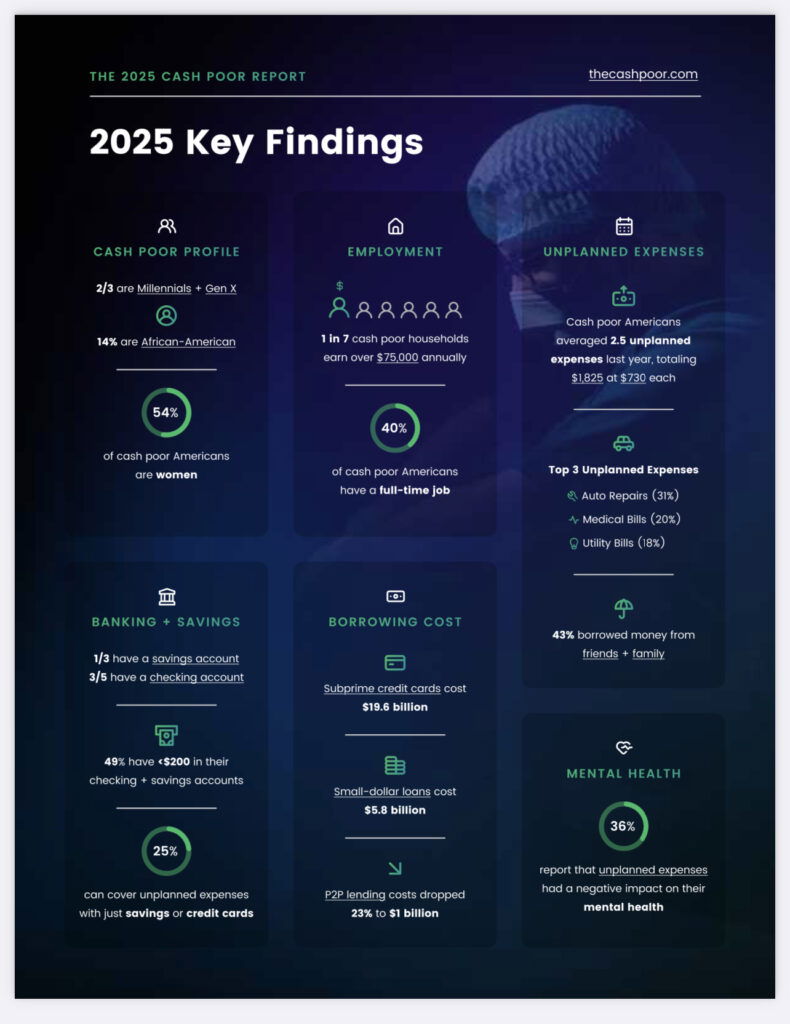
A troubling report has revealed that borrowing costs for cash-poor Americans living paycheck to paycheck are significantly higher than they expect to pay back. SoLo’s 2025 Cash Poor Report shows Americans paid more than $39 billion in fees beyond the advertised Annual Percentage Rate when borrowing money from some financial institutions to cover unplanned expenses.
According to Experian, being “cash poor” means having wealth in assets but insufficient liquid money available for spending and saving. SoLo, the only Black-owned fintech certified B Corp in the U.S. and Canada, says the figures in its report revealed a 32% increase from 2023.
What’s even more alarming in the report is that cash-poor consumers aren’t just the working class. They also represent middle-class Americans with college degrees, people who own homes, and those who consider themselves investors. Cash-poor consumers include Americans who have six-figure incomes.
“One in seven cash-poor Americans makes over $75,000 a year,” the report from SoLo reads. “Troubling trends show that nearly half of Americans living paycheck to paycheck have less than $200 In their checking and savings accounts.”
SoLo analysts, in partnership with Opinium Research, Pace University, the Global Black Economic Forum, Aspen Institute, Financial Security Program, and the Independent Women’s Forum, surveyed 2,000 American adults spanning Gen Z, millennials, Gen X, boomers, and the Silent Generation. Their data compared fees as a percentage of a $1,000 loan.
The Best and Worst Options For Cash Poor Americans, According to Report
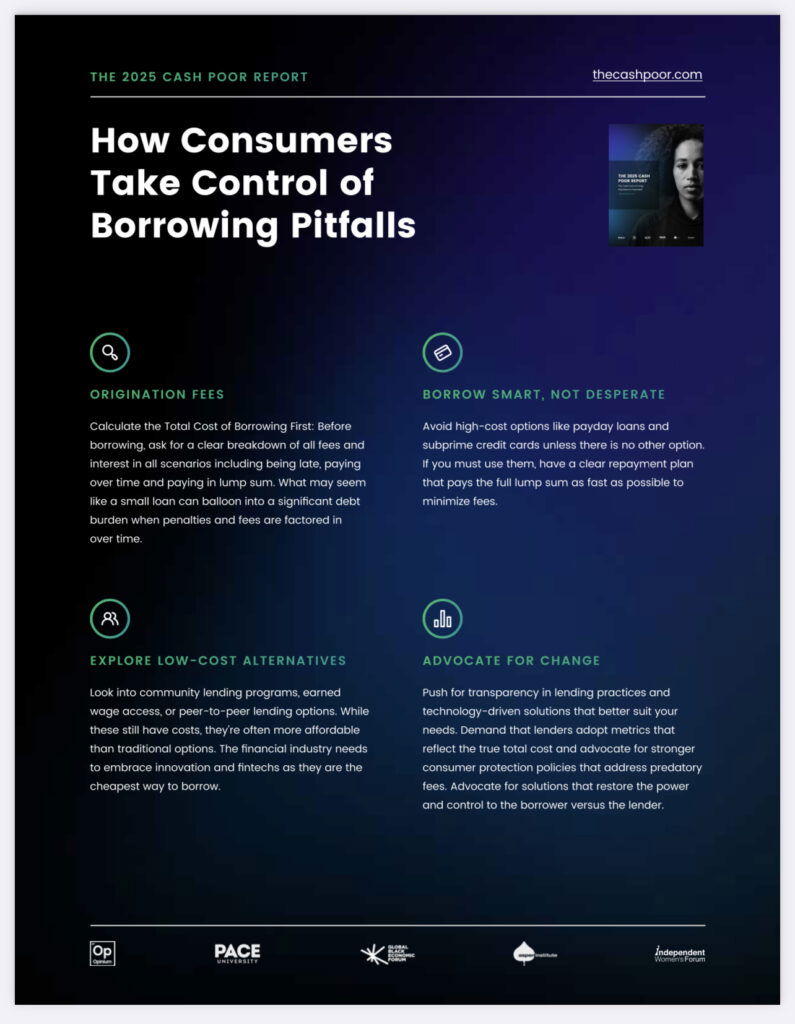
According to the report, the APR rate does not include late fees, origination fees, subscription fees, transaction fees, or other expenses that create what analysts call “debt traps” for consumers in a financial crisis.
The data shows that subprime credit cards are the most expensive option for unplanned expenses. The average cost increased to 48%, up from 41% in 2023. Because of high total fees, penalties, and monthly maintenance fees, the maximum fees can reach 90% of the principal borrowed.
Courtesy of SoLoCourtesy of SoLoCourtesy of SoLo
“These cards account for $19.6 billion in aggregate borrowing costs in 2024, marking an $8 billion increase from last year,” according to the report.
Payday loans have the highest minimum borrowing cost among all options. Maximum costs reach 67% due to origination fees, late fees, and penalties. According to the report, aggregate costs for payday loans increased to $6.7 billion in 2024 from $6.2 billion in 2023.
Bank small-dollar loans are a relatively new offering that emerged last year. It had the third-highest costs, just behind subprime credit cards and payday loans. However, there are significant barriers to entry.
“They averaged a 25% borrowing cost this year, with a minimum fee of 12%, largely due to mandatory account balance and deposit requirements,” the report says.
Aggregate costs for bank small-dollar loans are estimated at $5.8 billion in 2024.
Earned wage access solutions offered one of the lowest average borrowing costs this past year at 13%. However, fees can rise to 26% due to optional tipping and transaction charges.
Aggregate borrowing costs for payroll advances increased to $3.8 billion in 2024, up from $3.2 billion in 2023.
Peer-to-peer loans, or P2P loans, like those offered by SoLo, remained the most affordable option regarding aggregate borrowing costs. They totaled just $1 billion in 2024, down from $1.3 billion in 2023.
Borrowing can be free for disciplined users who pay on time, but average costs due to tips and late fees can reach up to 17%.
“Being cash-poor is a way of life for most Americans,” said Rodney Williams, president and co-founder of SoLo, who says this way of life creates vulnerability in managing variable and unplanned expenses.
“The vulnerability is not the time for a lack of options but rather an opportunity for innovation and competition. We want Congress and regulators to embrace innovation and allow more convenient and accessible frameworks given the same playing field as traditional financial institutions,” he adds.
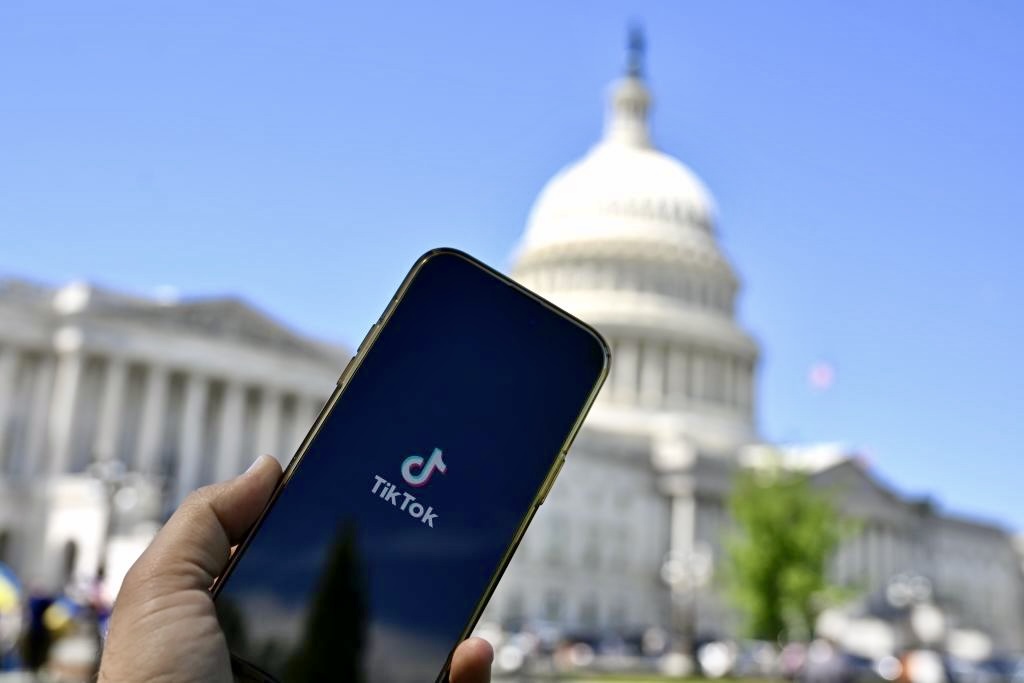
Millions of TikTok ‘Refugees’ Are Moving Over To The Chinese App ‘RedNote’
The actual name of the Chinese-owned app is Xiaohongshu, which translates to Little Red Book in English. Americans have shortened it to RedNote.
As the ban on TikTok looms, creators have been scrambling to find an alternative. Many are finding a new home in RedNote. The actual name of the Chinese-owned app is Xiaohongshu, which translates to Little Red Book in English. Americans have shortened it to RedNote.
According to CNN, the app has been under the radar of Americans since it was created in 2012. However, it now ranks number one in the App Store. Lemon8, another Chinese social media app owned by TikTok’s owner ByteDance, ranks number two.
The app is one of China’s largest social media platforms with over 300 million users, CNN reported. It has been used as an Instagram alternative in China, where users share lifestyle tips, including travel, makeup, and fashion.
Americans are gravitating to the app as TikTok faces a shutdown if it fails to find a buyer. One reason why content creators are using it is an act of defiance over the U.S. leader’s controversial decision to control what many perceive as an assault on their First Amendment rights when they decided to ban TikTok.
“It was a bit of a spite thing. I also wanted to be one of the first people over there,” Christina Shuler, owner of Glam Farmhouse, told Time. “Hopefully I can be part of the crowd that maybe can change how our government views this whole situation.”
Chinese Users Welcoming ‘TikTok Refugees’ To RedNote
As more people migrate to RedNote, Chinese users are welcoming Americans who are finding a new home for the social media platform. Some users have reportedly gone the extra mile to help what they call “TikTok refugees” navigate the app.
Interestingly enough, while Xiaohongshu was not created for English speakers, TikTok is banned in China and inaccessible. Like other U.S. social media platforms banned, such as Facebook and YouTube, China has made a TikTok sister app, Douyin, that people use.
As more people migrate to RedNote, Chinese users are welcoming Americans who are finding a new home for the social media platform. Some users have reportedly gone the extra mile to help what they call “TikTok refugees” navigate the app.
Last year, Congress passed a bill that forces ByteDance to either sell TikTok by Jan. 19 or face a ban in the U.S. TikTok has since taken the argument that this bill violates freedom of speech to the Supreme Court. Still, the high court expressed skepticism about the company’s legal arguments.
ByteDance has doubled down on its position of not selling, which means the ban will likely go into effect Sunday.
Former Mayor Sharelle Scales-Preston Becomes First Black Women On Board Of Supervisors In Contra Costa County
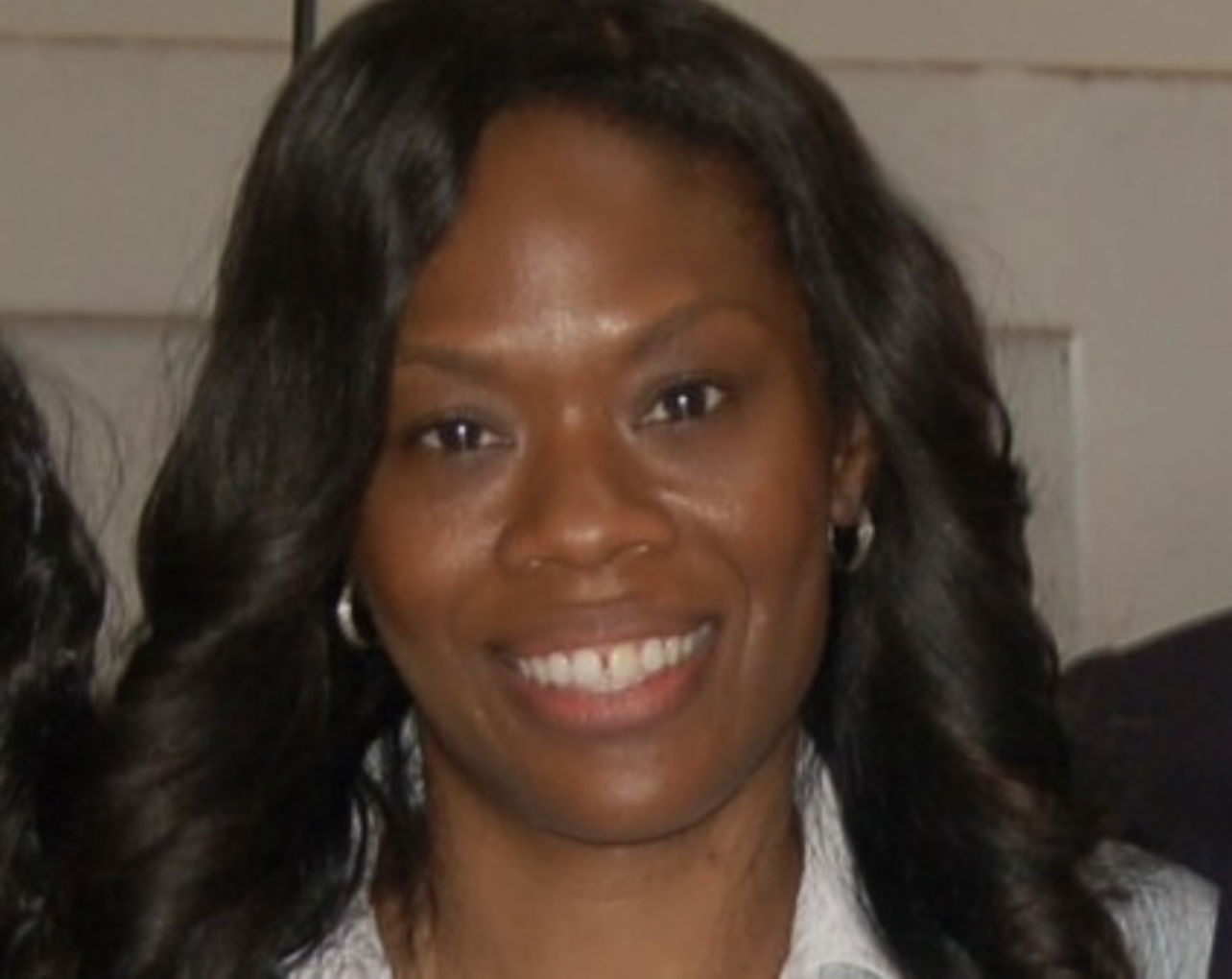
Shanelle Scales-Preston made history after being elected to the board in November.
Shanelle Scales-Preston, former mayor of Pittsburg, California, now serves as the first Black women on the Board of Supervisors in Contra Costa County.
CBS Newsconfirmed Scales-Preston took the oath of office on Jan. 14 to lead District 5 after winning the November election. She replaced her now-retired predecessor, Federal Glover, for the position. Her district also encompasses parts of the East Bay Area, including Alhambra Valley, north Concord, as well as surrounding neighborhoods.
Scales-Preston released a statement on her historic appointment, noting it as an opportunity for “building bridges” for their constituents. Scales-Preston also became the second person of color elected to the board.
“This moment is about building bridges — bridges to equity, community safety, economic opportunity, and a brighter future for all,” Scales-Preston said in a statement.
“Together, we will strive to ensure that every voice is heard, every neighborhood thrives, and every family has the opportunity to succeed.”
According to her profile on Contra Costa’s website, Scales-Preston is a dedicated and seasoned civil servant. Previously, she won the election to the Pittsburg City Council, starting the role in 2018 before becoming the city’s mayor in 2023. Since these experiences, she has championed equitable programs to benefit residents of all backgrounds.
Her passions lie in youth programs and the improvement of city services in California. Growing up in Pittsburg, she found inspiration from her union family, also comprising of two factory-working parents.
Through her upbringing, she witnessed the importance and advocacy of civic involvement for a community’s progress. Scales-Preston hopes to lend these experiences in her latest work for the people across multiple parts of Contra Costa County.
Scales-Preston continues living in her hometown with her husband and two sons. The mother still plays an active role in the local community thorough the Pittsburg Reads initiative. Furthermore, she holds the position as chair of the board for Marin Clean Energy (MCE), a local electricity provider.
As she sparks a new wave of diversity for Contra Costa’s leadership, Scales-Preston’s mission remains grounded in helping all residents through bureaucratic challenges.
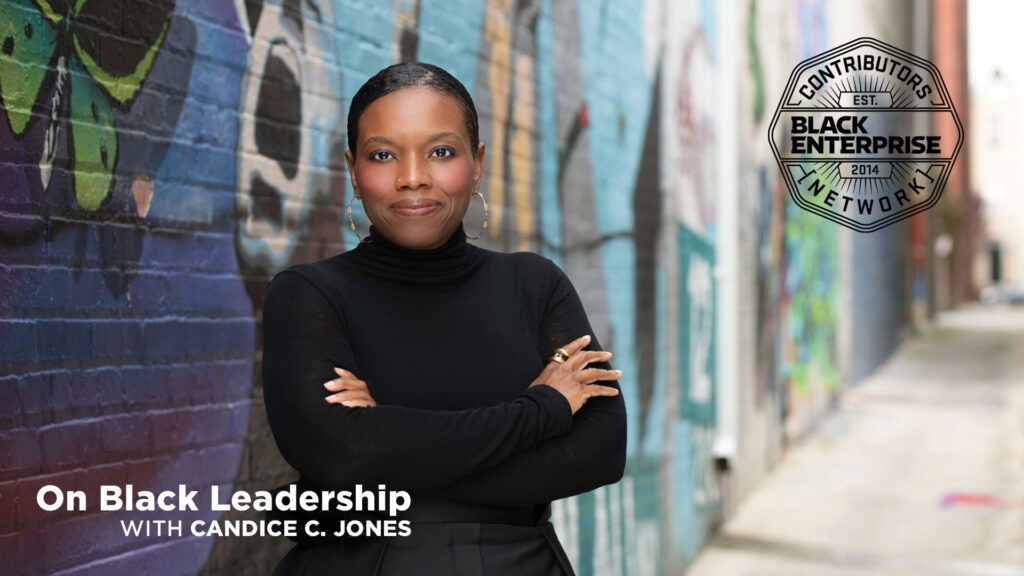
On Black Leadership: A Conversation With Kim Taylor-Thompson On Carving Her Own Path
Kim Taylor-Thompson is a Black women in Leadership
By Candice C. Jones
This column is for Black women in leadership because very little in the public dialogue reflects that experience. We must find and cultivate relationships with people whose methods, manner, and success we want to emulate. Kim Taylor-Thompson is one of those people for me.
She went from Riverton Houses in Harlem — the child of the great jazz and Civil Rights legend Billy Taylor — to Yale Law School. She was the first tenure-tracked Black woman at Stanford. She ran the D.C. Public Defender Service, taught leadership strategy to Fortune 500 companies and government agencies, and moderates the occasional Socratic dialogue.
I recently had the privilege to reflect on Black women’s leadership with Kim. She spoke about finding her path, the culture shock of stepping into white institutions, and the importance of restorative spaces. We also happened to connect shortly after the election, which made the discussion of Black women’s leadership all the more timely.
HOW BLACK WOMEN ARE PERCEIVED
Candice C. Jones: We are in a moment in history where the leadership of Black women is part of our national discourse. What is that bringing up for you?
Kim Taylor-Thompson: If we learned anything from the election, it is that this country essentially dismisses the voices of Black women. There are things to be learned from that. We have to stop ceding our voice to others, be clear about who we are, and not drift toward the center. There’s a real need to disrupt and transform. The more we avoid that, the more likely it is our voices will be dismissed, the issues we care about will be lost and people will suffer.
FINDING A PATH
You are a pioneer in justice reform. Your family background is more music royalty than law. What led you to law?
I had no musical talent! What I did have was an example from my dad. He used his music in ways that were rebellious and empowering. He considered jazz a uniquely Black American gift to the world. He wanted people to hear it, see it, and embrace it for free. His goal was to be in and of the Black community — to help it channel its pain, its pride, its passion — and to understand its history through music.
I had to find another way to do that. Growing up, I’d watched folks who looked like me get in trouble. They would turn to somebody who didn’t look like them or understand their life experience. I thought they deserved to have someone representing them who had a wealth of education and experience, coupled with an intimate understanding of what it’s like to be in their communities.
CULTURE SHOCK
You went from Harlem to Yale, Yale to D.C.,and then teaching law at Stanford. Were there culture shocks along the way?
Culture shocks were everywhere. While I was in Harlem, my parents took me out of a school that was predominantly Black and put me into a school downtown where I was the third Black student to attend. I was in third grade and felt like a specimen. It was alienating. I learned to come home to the comfort and warmth of my parents to help me navigate that. They taught me at an early age that you need to remember to be yourself, even in those settings.
THE NEED FOR RESTORATIVE SPACE
I hear a theme of finding spaces where you could be your authentic self.
You don’t make it through living in a country where you’re marginalized withoutrestoring yourself by one—being reminded that you are not crazy and two—learning that there are people who have your back no matter what.
Whatever hits you take in the world — your friends, family, and community will remind you that you have this strength, beauty, power, and voice that cannot be taken away from you. You cannot function without a core group of people reminding you who you are in those moments when you forget.
LEADERSHIP STYLE
How would you describe your leadership “style”?
I think my leadership style is inclusive.I’ve been in situations where folks who looked like me were not invited to the table, or if they were, they were silenced. I want to get different perspectives, because that allows you to check your judgment, come up with better alternatives, and to see around corners. Other people’s perspectives extend your vision.
INSPIRATION
Who inspired you as a leader?
I wasn’t exposed to a lot of women leaders or Black women leaders early on. Leadership books didn’t exist, so I went to Malcom X, George Jackson, Claude McKay, Dee Brown, W.E.B. DuBois, folks that helped me understand how to have a voice in a culture looking to silence it. They helped me realize I had a place, and I had perspective that was important.
MENTORS
I’ve been lucky to have you as a mentor. Who mentored you?
Charles Ogletree was this amazing strategic thinker — always rooted in Black communities, in how we use our voice and how we understand our history. Most people would describe him as smart, talented, and really nice, but if you did something harmful to communities he cared about, he was also a devastating opponent. I watched that and said, “OK, it doesn’t have to be loud, but it can be decisive, and this is a line you do not cross.”
Randolph Stone pushed me into the leadership role of [D.C.] public defender. I didn’t want it, but he helped me see how my experience with individual clients could inform policy in ways people weren’t allowing it to be informed.
Jerry Lopez recruited me to Stanford. There were so few people of color on the faculty. I watched him in faculty meetings take on the angry-person-of-color role. He said, “Yeah, I’m doing that for you. You can’t hold that role, as much as you want to. You’re not tenured. It will hurt you, so let me take the blows.” Jerry taught me thatas leaders, we’re sometimes the ones who have to take the arrows so others can develop and get themselves established.
BOUNDARIES
There’s a lot of debate about what you have to tolerate as a leader.
At Stanford, I was the first woman of color on the tenure track, and the students of color wanted me to talk about why it was important for the institution to be desegregated.
I got pulled aside by a white woman who said she didn’t like the way I criticized Stanford in public. She said, “That’s not the way we do things.” I said, “I’m not going to change who I am just because I’m here.” She thought she could school me. You have to check that.
ADVICE FOR EMERGING LEADERS
What advice would you give to an emerging leader who is working to find her footing?
Surround yourself with people who can be a sounding board and help you hone your thinking. Make sure you have people working with you who have your back, who give you candid feedback on what you’re doing and what’s going on around you. Remember who you are. There’s something unique about your voice and your perspective, and something critical about your way of moving issues forward.
ON HOPE
What’s giving you hope right now?
You—also, family and other young leaders who are saying, “I’m not just going to sit here and let this plan unfold that hurts my communities.” There are enough people who are angry, particularly Black women, that we might see some changes. So that gives me hope.
Candice C. Jones joined the Public Welfare Foundation in Washington, D.C., as its president and CEO in 2017. Previously, she served as Senior Advisor at Chicago CRED, an organization that focuses on gun violence in Chicago.
Candice received her J.D. from New York University School of Law. To learn more aboutCandice’s background and work, find her on LinkedIn.
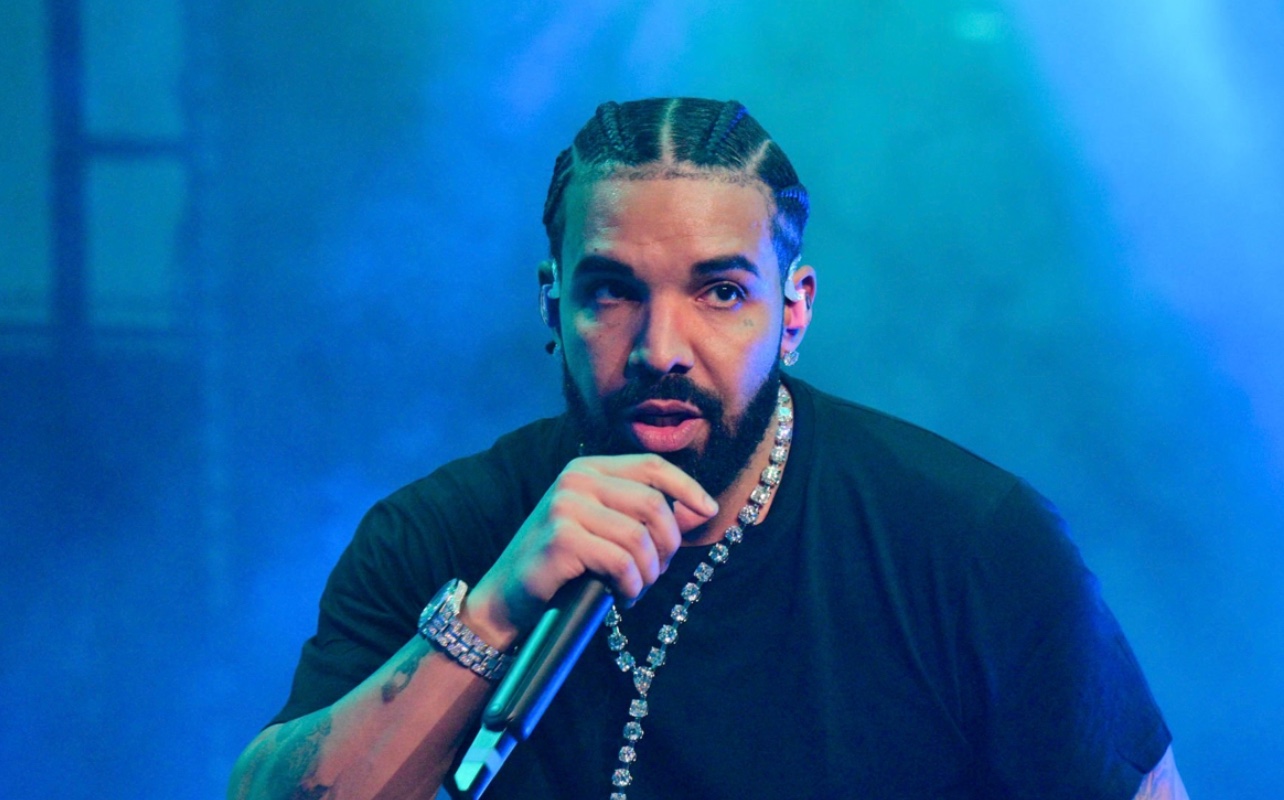
Drake Backs Off Legal Action Against Universal Music Group, Spotify
The rapper decides not to go forward with planned litigation against the two companies
Canadian rapper Drake has had a change of heart and has withdrawn the legal action he took against Universal Music Group and Spotify in November 2024.
According to Music Business Worldwide, the “Thank Me Later” rapper filed new paperwork withdrawing the initial filing in a Manhattan courtroom Tuesday, Jan. 14. In the filing, Drake’s company Frozen Moments LLC said it would withdraw the action “without costs to any party.”
Attorneys for Drake wrote: “Please take notice that petitioner and movant Frozen Moments, LLC, by its attorneys Willkie Farr & Gallagher LLP, hereby withdraws its order to show cause seeking pre-action disclosure and preservation of certain documents and communications from respondent UMG Recordings, Inc. and pre-action disclosure of certain documents and communications from respondent Spotify USA Inc., with exhibits originally filed in New York Supreme Court On November 25, 2024.”
“Please take further notice that petitioner hereby voluntarily discontinues this special proceeding as to all respondents without costs to any party.”
On Nov. 25, 2024, Drake accused Universal Music Group and Spotify of working together to artificially inflate his rival, Kendrick Lamar’s hit diss record, “Not Like Us.” Drake accused UMG of launching an illegal “scheme” that used several factors to manipulate numbers, including bots, payola, and other methods to make Lamar’s song successful.
“UMG did not rely on chance or even ordinary business practices,” the original paperwork stated. “It instead launched a campaign to manipulate and saturate the streaming services and airwaves.
The record label has not responded to the latest action, but Spotify remarked that the accusations made by Drake were false and there was no collaboration with UMG to inflate the number of plays of the song. The streaming giant also took issue with the action Drake took and stated, “This subversion of the normal judicial process should be rejected.”
Drake’s attorneys said they had conferred with both UMG and Spotify and had “no objection” to this action being dismissed, but UMG “reserved its position” about whether it would challenge the move.
Jennira Roundtree Fatally Stabbed While Protecting Daughter In Brawl With 20 Women, Suspect Arrested
A Staten Island mother tragically lost her life while protecting her 12-year-old daughter during a violent altercation involving 20 women and girls.
A Staten Island mom was stabbed to death while trying to protect her 12-year-old daughter during a violent altercation involving 20 women and girls.
Jennira Roundtree, 43, died after succumbing to knife wounds to the heart and lungs and being slashed in the stomach with an umbrella during a chaotic brawl outside the family’s NYCHA building on Jan. 7, The Oakland Press reports. The fight, which erupted around 7:35 p.m. Tuesday at the West Brighton Houses on Henderson Ave. near Broadway, involved 20 women and girls who had reportedly been targeting Roundtree’s daughter.
“The mother went outside in defense of her daughter,” a police source told the Daily News. “One person approached and stabbed her.”
On Monday, Jasmin Thompson, 20, was arrested and charged with second-degree murder, manslaughter, assault, and criminal possession of a weapon. The suspect claims she was acting in self-defense when attacking Roundtree.
Friends of Roundtree’s daughter had come into the building to summon Roundtree’s older daughter. The sister and their mother intervened, with Roundtree losing her life in the process.
“Some girls come in to fight with the little girl, and some friends, they go upstairs, and then the sister was coming,” the 30-year-old neighbor said. “I don’t know where her mom came from. Maybe she was outside [already].”
“When I see the sister fighting I said, ‘Let me go downstairs’ because I know those kids. There were a lot of people fighting,” the neighbor added.
By the time the neighbor got downstairs, Roundtree was already injured on the ground.
“The police took her,” she said. “When they carried her, I saw she had a lot of blood. I heard her say, ‘I can’t breathe!’ That’s the only thing she said.”
Medics transported Roundtree to Richmond University Medical Center, but she succumbed to her injuries. Authorities confirmed that the knife used in the fatal attack was recovered at the scene.
“This neighborhood was important to her because she wanted different for all the kids coming up,” her friend said. “And she was trying to make a difference, and she was.”
Back To The Grind: Transform Your Return To Office Experience With These 6 Tips!
Transitioning back to office is a big deal.
Hey Fairygodmentor,
Our whole office has been mandated to return to work full time. It will be the first time I’ll be back in the office full time in 5 years. My whole routine is different! I actually felt better, safer, at home. I didn’t have to deal with all of the inner office politics. What survival tips can you share that will keep me sane?
Yours truly,
Returning to the Office in Protest
Dear Returning to the Office in Protest,
First of all, I want to take a moment to acknowledge how you’re feeling. It’s completely valid to feel nervous about returning to the office after so long, especially when working from home offered you so much comfort and psychological safety. Transitioning back is a big deal, so I’m going to set you up with some strategies not just to survive but to thrive.
Reframe Your Mindset:
We can’t always control what happens to us, but we can control how we respond. While the mandate to return to the office might not be your choice, you do have control over how you approach this change. Instead of focusing on what you’re losing, think about what you might gain. Ask yourself, “What’s the gift?” Could this be an opportunity to reconnect with colleagues, build stronger relationships, or even reclaim your space as an office rock star with this newly added visibility?
Protect Your Peace:
Office politicscan be draining, so it’s important to stay grounded. Set clear boundaries with your coworkers and politely disengage from gossip or drama. When someone tries to pull you into negativity, redirect the conversation or excuse yourself. Remember, you’re there to work—not to play referee in office squabbles.Be like Mary J Blige, you “don’t need no hateration, holleration in this dancery.”
Work What Works For You:
Your home routine might not translate perfectly to office life, but you can adapt. You’ve done it before. It’s time to do it again. This time, it’s “You at Work 2.0.” What could make you feel like you’re at home? Bring pieces of your home comfort into the workplace. Whether it’s a playlist, a favorite snack, or aphoto of family or friends, these little touches can make the office feel a bit more like your space.
Set Return To Office Goals:
Take a pause for the cause and identify what success looks like for you in this new chapter. Maybe it’s learning a new skill, fostering better communication with your team, not rolling your eyes every time Richard cracks one of his corny jokes, or simply adjusting to being back. Celebrate small wins along the way—they’ll keep you motivated.
Advocate for Yourself:
If there are parts of remote work that have truly improved your productivity or well-being, have an honest conversation with your manager. Show Your Ask! This doesn’t have to be an all-or-nothing situation; perhaps you can negotiate a hybrid schedule, register for childcare or aftercare support, or flexible hours that meet both your needs and the company’s goals.
Prioritize Self-Care:
Your mental health is just as important as your job. Everyone needs a woosah moment from time to time to keep the work/life flowing. Schedule regular breaks, go for walks, or practice mindfulness to decompress. If things get overwhelming, don’t hesitate to reach out to HR or an employee assistance program for support.
Remember, this transition isn’t about returning to the old you—it’s about embracing the evolved version of yourself. You’ve grown, adapted, and proven that you can thrive in a variety of settings. Bring that same resilient energy into the office, and you’ll do just fine.
Here’s to staying sane and fabulous!
You got this!
Yours truly,
Your Fairygodmentor®
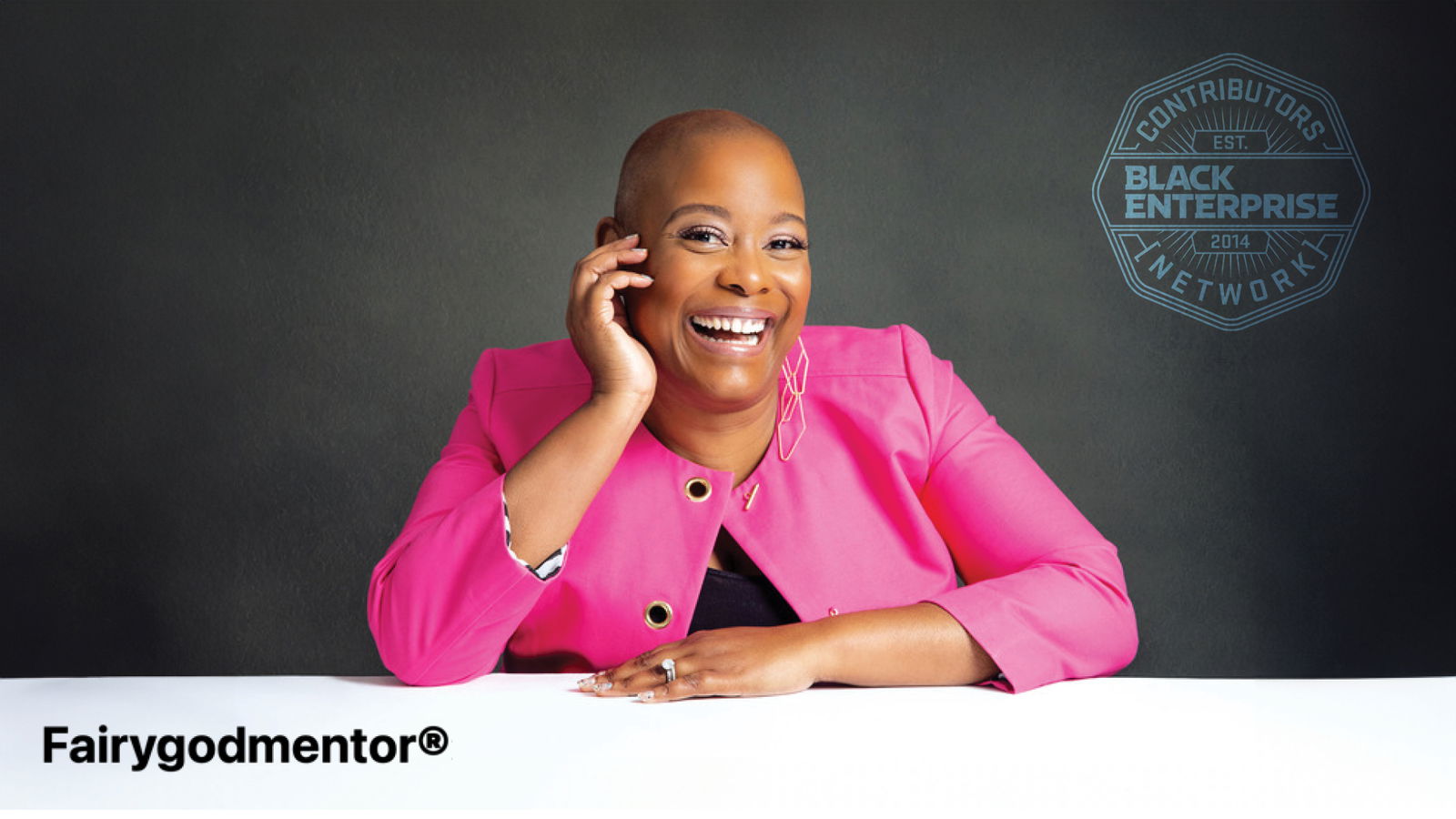
(Image courtesy of Kirsten White Photography)
Joyel Crawford is an award-winning career and leadership development professional and the founder of Crawford Leadership Strategies, a consultancy that develops empowered, results-driven leaders through engaging leadership development coaching, training, and facilitation. She is also the author of the best-selling book and audiobook “Show Your Ask: Using Your Voice to Advocate for Yourself and Your Career.”
Have a question about handling a micromanager, are you having difficulty navigating spaces because of your hair, is work stressing you out, do you need support coaching poor performance or are you wondering how to negotiate and get the job offer you desire effectively? Do you have any questions about career and leadership development?
The Weeknd Cancels Rose Bowl Show And Postpones New Album ‘Out Of Respect And Concern’ for LA Residents
The Weeknd and Beyoncé are postponing releases and announcements to show respect for LA residents affected by the ongoing wildfires.
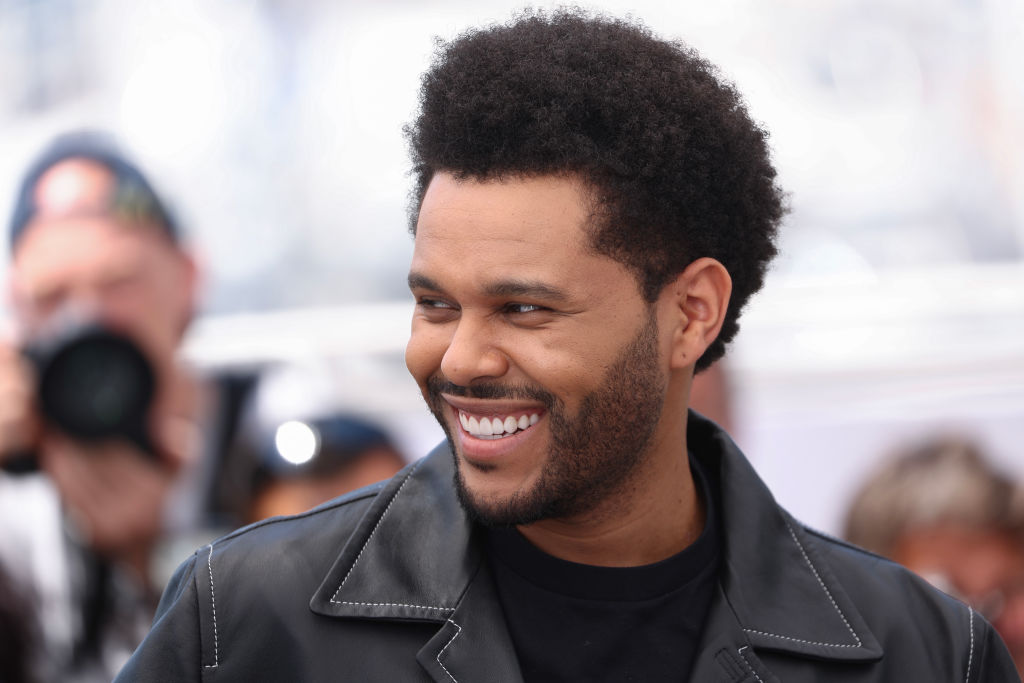
The Weeknd has postponed the release of his new album and canceled his scheduled show at the Rose Bowl in Los Angeles due to the ongoing wildfires devastating Southern California.
The Grammy-winning singer was set to release his Hurry Up Tomorrow album Jan. 24, but Jan. 13, The Weeknd, real name Abel Tesfaye, took to Instagram to announce that the album’s release would be postponed, along with the cancellation of a one-off performance at the Rose Bowl in Los Angeles Jan. 25, citing “respect and concern for the people of LA County” amid the ongoing wildfires.
“This city has always been a profound source of inspiration for me, and my thoughts are with everyone impacted during this difficult time,” the singer wrote in a statement.
“My focus remains on supporting the recovery of these communities and aiding its incredible people as they rebuild.”
The album’s new release date will be on Jan. 31. It will be the sixth studio album and the final part of a trilogy, alongside After Hours and Dawn FM. It’s also expected to be the last album under his stage name, The Guardian reported.
“As the Weeknd, I’ve said everything I can say,” The Weeknd told W magazine in 2023. “I’ll still make music, maybe as Abel, maybe as the Weeknd. But I still want to kill the Weeknd. And I will. Eventually. I’m definitely trying to shed that skin and be reborn.”
Beyoncé joined The Weeknd in delaying major projects amid the L.A. wildfires. On Tuesday, the “Cuff It” singer delayed an announcement she had planned for Jan. 14.
“I continue to pray for healing and rebuilding for the families suffering from trauma and loss,” she said in a statement. “We are so blessed to have brave first responders who continue to work tirelessly to protect the Los Angeles community.”
The Grammy-winning artist called on her fans to join her BeyGood Foundation in supporting wildfire victims after the organization donated $2.5 million to relief efforts. Her statement comes ahead of the Grammy Awards, still scheduled for Feb. 2, despite major record labels canceling their Grammy Week events.