The Notorious B.I.G. x Timberland Collection To Be Released Late September
Timberland is releasing a collaborative effort with the estate of Christopher Wallace.
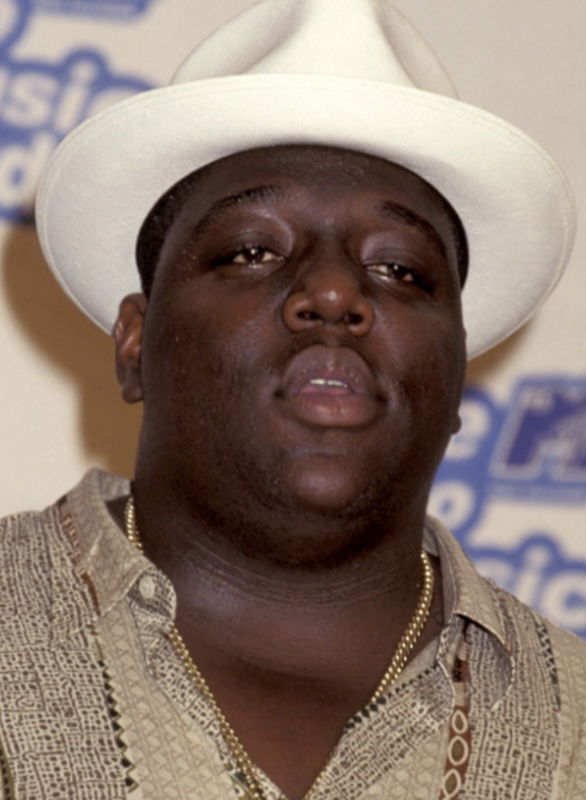
Timberland, the unofficial hip-hop footwear of the 1990s, is releasing a collaborative effort with the estate of Christopher Wallace to celebrate the 30th anniversary of The Notorious B.I.G.’s debut album, Ready to Die.
According to Footwear News, Timberland plans to release two colorways, wheat and black, to celebrate the late rapper’s first album, released on Bad Boy Records in 1994. Word of the announcement comes about 30 years after the album’s release, which was on Sept. 13, 1994.
Aptly titled, The Notorious B.I.G. x Timberland 6-Inch Premium Waterproof Boots collection is a replica of the “Timbs” many hip-hop fans wore over the years when the boot was extremely popular among people who listened to and absorbed hip-hop. Fans of the company and the Brooklyn rapper will appreciate the “The Notorious B.I.G.” insignia embedded on the leather heel collar that uses the same typeface seen on the classic album, two hangtags, one in black and gold with a king’s crown emblem and another showing the Ready to Die album cover in leather. There is even a stamping of the baby who appeared on the album cover.
For hip-hop fans, or more specifically, Biggie fans who would like to purchase the boots, they will be available on Sept. 27. They will retail for $210, and the wheat color ones will be offered in grade school sizing for $120.
This year is also the 30th anniversary of Biggie’s first release, “Juicy,” off the Ready to Die album. The lyrical genius was inducted into the Rock and Roll Hall of Fame in 2020. Earlier this year, the Library of Congress inducted Ready To Die into the National Recording Registry.
Wendy Williams Lawsuit Wants All Profits From Lifetime Documentary To Fund Medical Care
Wendy Williams' legal team wants all proceeds from the Lifetime documentary to cover her medical care.
Wendy Williams’ legal team is after Lifetime for the revealing documentary into her health and finances and believes she is owed compensation.
A legal complaint against Lifetime’s parent company, A+E Networks, was revised on Monday to request all profits from the project be directed toward Williams’s medical care. According to The Hollywood Reporter, the lawsuit accuses the network of taking advantage of Williams’ declining mental and physical health and paying her a mere $82,000 while others “likely earned millions.”
“This is a paltry sum for the use of highly invasive, humiliating footage that portrayed her in the confusing throes of dementia, while Defendants, who have profited on the streaming of the program, have likely already earned millions,” the complaint filed on Sept. 16 in New York County Supreme Court states.
The project chronicled her life over the course of a year, capturing her decline as she grappled with family issues, fame, and unrestrained alcohol consumption. Many revelations were made by Williams, who admitted her financial struggles onscreen.
“I have no money, and I’m going to tell you something,” Williams said. “… If it happens to me, it could happen to you.”
The documentary cites Williams, her son, Kevin Hunter Jr., and her jeweler-turned-former manager, Will Selby, as executive producers.
The lawsuit was first filed by Williams’ temporary guardian, Sabrina Morrissey, in March, arguing that the contract the company arranged to film the documentary was allegedly invalid since Williams lacked the legal and mental capacity to consent to her participation at the time. Producers had promised the documentary would be “positive and beneficial” to her image, but instead, it offered the public an unfiltered look into her health, leading to the official announcement of Williams’ diagnoses of frontotemporal dementia and aphasia.
The complaint criticizes the filmmakers for depicting Williams as a “laughingstock and drunkard, implicitly blaming her for her own suffering” by including unflattering footage, such as images of her nearly bald and without her wig.
Morrissey “was stunned and appalled by this, as [Williams] insists on wearing her wig for all meetings, and she would never, ever have consented and allowed herself to be filmed for the public without her wig for public consumption,” the complaint states.
Robert Kaplan has joined Williams’ legal team alongside Ellen Holloman. Together, they revised the filing that calls out Williams’ former manager, Will Selby, for facilitating the ex-talk show host’s involvement in the documentary on claims that he would have creative control.
The revised complaint calls out the defendants for how they allegedly “viciously and shamelessly exploited Wendy Williams for their own profit while she was obviously incapacitated and suffering from dementia,” Kaplan said in a statement.
In addition to A+E Networks, the lawsuit names Lifetime Entertainment Services, Creature Films, and producer Mark Ford as defendants in the case, alongside A&E and EOne Productions. Morrissey accuses EOne of drafting a one-sided on-camera talent agreement after having already filmed a “disheveled” Williams.
“This agreement was submitted after W.W.H. had already been filmed by Defendants while she was clearly disheveled, not mentally present, and confused,” the filing states. “No person who witnessed W.W.H. in these circumstances could possibly have believed that she was capable of consenting to an agreement to film or to the filming itself.”
The controversial documentary premiered in February to blockbuster ratings for Lifetime. The network cites it as its biggest nonfiction debut in two years. The documentary featured footage from seven months of Williams’ decline in recent years up until her admission to a health facility for cognitive issues last year.
Target, Big-Box Stores Hire Holiday Workers, But Small Businesses Still Feel Pinched
However, in contrast to Big Box stores like Target and Walmart, who have increased hiring for the holidays, small businesses feel as though they are being pinched.
According to Reuters, the majority of hires are expected to staff its stores. The company is also hiring workers at distribution centers and other supply chain support locations. In addition to Target, other chains looking to hire for the holiday season, like Bath & Body Works, kept their numbers essentially unchanged from their 2023 seasonal hiring patterns.
Target, however, is not the only large retail company looking to accentuate its value to consumers as it begins hiring and marketing campaigns with an eye toward the holiday season.
Walmart, which hired 40,000 holiday workers in 2023, told Reuters its plans to stick to the same hiring numbers the chain used last year for the 2024 holiday season. It will start offering holiday deals, as will the home electronics-focused big box store Best Buy, which has exclusive deals for their members set for Sept. 27-29.
The holiday season is important for retailers, and according to Experian Marketing, overall consumer trends from 2023 bode well for companies in 2024. According to its analysis, Cyber Week, the five-day period between Thanksgiving and Cyber Monday and the week before Christmas, supplied the highest weekly sales between 2021 and 2023.
Customers have also started returning to stores instead of spending most of their time shopping online. According to Experian Marketing’s analysis, 84% of holiday shopping was done in-store at discount stores, 78% was done in-store at department stores, and 64% was done online for office, electronic, and games stores.
“With the inflationary issues companies are dealing with through the year, it puts on more pressure—businesses are in catch-up mode. Part of the challenge is that a lot of the data put out at the macro level blends companies of all sizes,” Sarah Jordan, chief marketing officer at Constant Contact, told Fast Company. “When you zero in on how that impacts small businesses, despite what you might be seeing in the macro economy, small companies are still feeling the pinch.”
Reports from Affirm and Constant Contact also showed that Americans feel at least as confident in their ability to manage expenses in 2024 as they did in 2023 and that 78% of consumers planned to shop at a new small business in the 2024 holiday season.
“Despite the tones of apprehension and fear, the trends are positive. The fact that they plan to focus on spending at small businesses is really positive,” Jordan said. “That’s a real focus [for consumers], especially after COVID.”
Alicia Keys, Swizz Beats Host Opening Night Gala In ATL For ‘Giants’ Art Collection
Alicia Keys and Swizz Beats bring The Dean Collection to Atlanta.
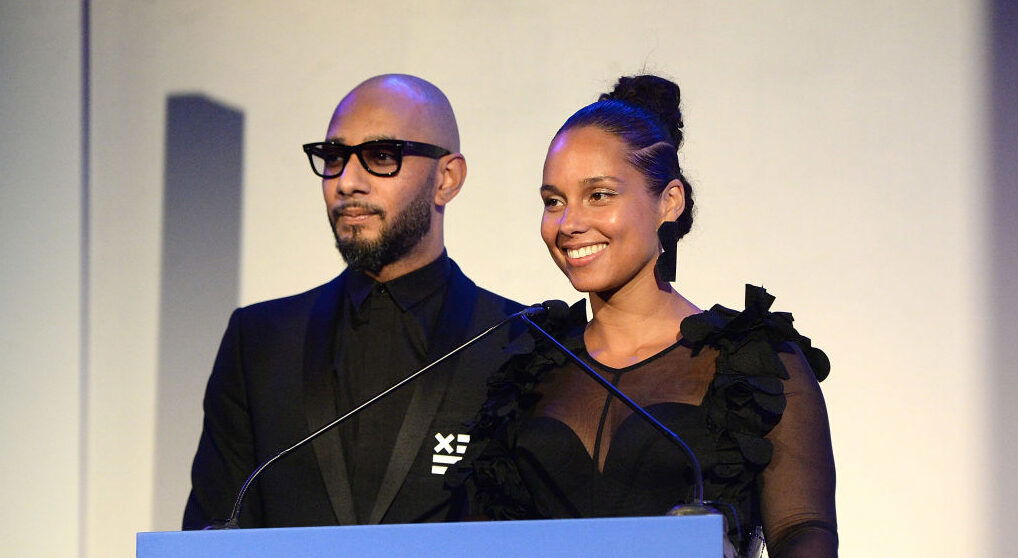
Alicia Keys and Swizz Beats were in Atlanta on Sept. 13 to host a “fly” opening night gala of their traveling art collection.
The famous multifaceted couple hosted an upscale soiree for the debut of “Giants: Art from the Dean Collection of Swizz Beatz and Alica Keys” at Atlanta’s High Museum of Art. It was a “Come as you are, but be fly” type of event, Variety reports, where guests wore everything from suits and gowns to sleeveless suit jackets, hoodies, Timbs, and even a cape for one attendee.
The event celebrated the launch of Keys and Swizz’s five-month residency in Atlanta following The Dean Collection’s debut at the Brooklyn Museum in New York City earlier this year. Attendees included some of Atlanta’s finest, like Lil Baby and Killer Mike, mega-producer Jermaine Dupri, The-Dream, Sean Garrett, Mike Will Made It, DJ/former MTV VJ Ed Lover, and Roc Nation executive Lenny Santiago.
The exhibit features over 100 pieces that showcase the celebrity couple’s wide-ranging passions, from their early acquisitions of albums, musical equipment, and BMX bikes. The collection represents their philosophy: “By the artist, for the artist, with the people.”
“This is a representation of breaking out of all boxes — busting through all ceilings,” Keys told the audience. “Knowing we are completely unlimited, free to fly.”
“Thank you to our ancestors for bringing us here today. We’re standing on their shoulders. Without them, we couldn’t even be standing here,” she added.
The exhibition also highlights the influence and legacy of legendary artists while expanding the traditional industry norms. The collection’s artists or “giants” include Barkley L. Hendricks, Esther Mahlangu, Gordon Parks, Hank Willis Thomas, Qualeasha Wood, Deana Lawson, Mickalene Thomas, Amy Sherald, and Titus Kaphar.
Together, these works explore various interpretations of the term “giants” and embody the spirit of the Deans, whose creative energy permeates the exhibition. The collection will be on display at the High Museum until Jan. 19, 2025, before it continues its tour to various cities around the world through 2030.
Retired Senior Gets Part-Time Job To Cover Bills As Black Retirees Face Poverty
Janette Campbell thought she'd be traveling the world, but, like other retired Americans, she's working part-time to cover living expenses.
Retired teacher Janette Campbell, 74, is working a part-time job to pay her bills after she realized her fixed retirement income wasn’t enough to make ends meet.
The senior retired from her position at 62 years old with expectations of taking care of her grandchildren and traveling the world. However, Campbell is currently employed at United HomeCare, where she handles emails, calls, and promotional material for the home health and community care nonprofit. “I couldn’t afford to pay my mortgage,” she told CBS Chicago. “…I didn’t want to be left out in the street homeless.”
Campbell’s situation is an example of what over half of Americans ages 50 and older worry about as they approach retirement stage — having enough money to cover living expenses, according to a study by the American Association of Retired Persons (AARP). “Among adults yet to retire, one in five have absolutely no retirement savings,” said AARP Senior VP of Research Indira Venkat. The organization revealed that one in four adults 50 and older expect never to retire, something Venkat said is a result of inflation, the price of housing, and a rise in debt levels.
For Black retirees, Social Security is relied on heavily for retirement income compared to their white counterparts, and Blacks are more than twice as likely to face poverty. AARP reported this is due to Black workers being paid less, which results in less savings, experiencing higher rates of unemployment, receiving less workplace retirement benefits, the gap in homeownership rates for Black families, and more.
In May, Indeed Influxreleased new data from a survey of 1,000 US seniors between 62 and 85, revealing the senior population resulting in “un-retirement.” The online marketplace found that one-third of retirees take one or more temporary job shifts every week, while 42% of non-retired seniors consider “layering on temporary work.”
Moneywise suggests retired seniors consider part-time work as an option for financial stability. Retirees should update their job skills and seek employment that isn’t taxing on the body. Tax incentives are like the Retirement Savings Contributions Credit (Saver’s Credit), catch-up contributions for individuals ages 50 and older, and more are available. If none of the options are a fit, seniors may consider investing in real estate or reducing living expenses, like downsizing on housing and transportation. As previously covered by BLACK ENTERPRISE, experts revealed that, on average, an American in their 50s headed toward retirement should have over $200,000 in their 401(K) accounts.
Vice President Kamala Harris Tells NABJ That She Is Working Hard To ‘Earn’ The Black Vote In November
Polls show 26% of Black men 50 and under said they will be supporting Trump in November.
Vice President Kamala Harris spoke to reporters with the National Association of Black Journalists (NABJ) and said she is committed to “earning” the support of Black voters, Fox News reports.
During the panel discussion on Sept. 17, also known as National Voter Registration Day, in Philadelphia, one reporter pointed out that a number of young Black men support Donald Trump due to his economic plan. The reporter then asked Harris how she felt about the Black male voter’s viewpoint and how her economic policy may assist in changing it.
She started her response by expressing concern over the narrative of Black men “being in anyone’s pocket.” “Black men are like any other voting group. You’ve gotta earn their vote. So, I’m working to earn the vote, not assuming I’m going to have it because I am Black,” Harris said.
“But because of the policies and perspective that I have understands what we must do to recognize the needs of all communities. And I intend to be the president for all people.”
"Black men are like any other voting group. You've gotta earn their vote. So, I'm working to earn the vote, not assuming I'm going to have it because I am Black."
— Kamala Harris at the NABJ on economic policies aimed at supporting Black men pic.twitter.com/nhY4lo1f9C
A poll from Reuters found that Black men under 50 strongly support Trump. While 49% of those voters said they supported Harris, 26% of Black men 50 and under said Trump has their vote. However, Rev. Dr. Wendell Anthony, president of the Detroit NAACP branch, thinks the support is somewhat exaggerated. “Black men are not going to vote for Trump in numbers. They just ain’t going to do that. And I’ve heard it,” Anthony said.
“l’ve heard him talking about we got a great increase, the Black men are going to vote for (Trump). That’s why he’s using the gold gym shoes. And I think, and see that’s insulting that you think you can get me by sending me some gold gym shoes, red bottom and a T- shirt with your picture on it behind prison walls.”
Harris’s thoughts on the Black vote are slightly different than when President Joe Biden made seemingly indifferent comments on The Breakfast Club during the 2020 election cycle. “If you have a problem figuring out whether you’re for me or Trump, then you ain’t Black,” Biden once said.
Economic development and the Black vote were not the only topics discussed during the panel. Harris spoke about abortion, support for Israel, gun control, and Trump’s continuous rhetoric. The Vice President slammed the remarks from Trump and his vice presidential running mate, Sen. J.D. Vance, who fomented racially charged rhetoric toward the Haitian migrants in Springfield, Ohio, accusing them of eating neighborhood pets. “It’s harmful, and it’s hateful and grounded in some age-old stuff that we should not have the tolerance for,” Harris said.
“We’ve got to say that you cannot be entrusted with standing behind the seal of the president of the United States of America, engaging in that hateful rhetoric that, as usual, is designed to divide us as a country.”
After Trump allegedly faced a second assassination attempt, according to the Associated Press, the former President placed the blame on Harris, Biden, and Democratic allies. Harris admitted that she briefly spoke with her political opponent to express gratitude about his safety but said he needs to be very careful with his words and wants voters to know that the four-time indicted businessman “can’t have that microphone again.” “When you have that kind of microphone in front of you, you really ought to understand at a deep level that your words have meaning,” Harris said, without a mention of Trump’s name.
“Let’s turn the page and chart a new way forward and say you can’t have that microphone again.”
Georgia Governor Signs Executive Order Allowing In-State Schools To Pay Athletes
Kemp’s order both goes against NCAA rules and forbids either that governing body or any conference that the schools inside of Georgia belong to from levying punishment against the schools for paying players via NIL agreements.
According to ESPN, Kemp’s order both goes against NCAA rules and forbids either that governing body or any conference that the schools inside of Georgia belong to from levying punishment against the schools for paying players via NIL agreements.
There is already a similar resolution in the NCAA v. House settlement, but those rules, once agreed upon and finalized, would not go into effect until the beginning of the next academic year, while Kemp’s executive order has immediate effect. A similar law was passed in July 2024 by Virginia’s Legislature, giving that state’s universities the ability to directly pay its athletes without fear of NCAA punishment.
According to ESPN’s sources, neither the University of Georgia nor Georgia Tech, two of the state’s flagship universities, have any plans to pay players immediately. Georgia Athletic Director Josh Brooks and Georgia Tech Athletic Director J Batt released a joint statement thanking Gov. Kemp for basically giving them a leg up in recruiting but made no overtures about paying players at this time.
“We extend our sincere gratitude to Governor Brian Kemp for his leadership today,” the athletic directors told ESPN. “In the absence of nationwide name, image, and likeness regulation, this executive order helps our institutions with the necessary tools to fully support our student-athletes in their pursuit of NIL opportunities, remain competitive with our peers, and secure the long-term success of our athletics programs.”
Georgia and Virginia’s laws effectively mean that schools in the two states could start paying players immediately and without a cap on the figure, unlike the proposed antitrust settlement, which would cap NIL payments at a little over $20 million in year one and increase year over year. Were schools in those states to start paying their players, the only recourse for the NCAA would be another court battle.
The NCAA, the Power Five conferences (SEC, ACC, BIG 12, PAC 12, BIG 10), and lawyers for the plaintiffs in three antitrust cases have asked a federal judge in California to approve a settlement including nearly $2.8 billion in damages, but on Sept. 5, U.S. District Judge Claudia Wilken indicated that she would not approve the current settlement.
According to the outlet, Wilken has an issue with the NCAA’s proposed regulations, calling them “quite strict,” and wondered if the agreement would cause athletes to lose payments they have already received from NIL collectives. The parties, that is, Judge Wilken and the lawyers, agreed that the lawyers would return with a fix for the deal by Sept. 26.
Gen-Z And Millennials Venture Into ‘Co-Homeownership’ To Ease Costs
The latest generation of adults have leaned into co-homeownership as a way to break into the housing market.
As the housing market becomes more expensive, aspiring Gen-Z and millennial homeowners are finding new ways to reduce their costs.
The latest generation of adults have embraced co-homeownership as a way to break into the housing market. CBS News spoke to some first-time homebuyers about what led to their decision to embark on the journey with friends or family.
“We bought our first property at 26,” shared Kwame Nkrumah, a person under 30 who bought a home with his friend Gilbert Nyantakyi in New York City.
“Very big risk that we took, but it felt good doing it with a partner. We mitigated a lot of risk.”
Nyantakyi added, “I would not be a homeowner in 2024 had we not co-bought.”
Given high interest rates and inflation, the housing market has not progressed much since reaching a record low of 63.1% in 2020. According to Bankrate, this rate for younger adults under 35 has also declined. Only 39% of those in that age group currently own a home.
White people remain at the helm of homeownership, with a rate of 74%. On the other hand, only 45.7% of Black people also hold this status. However, as the shift toward untraditional homeownership grows, so does the possibility to take part.
A new survey obtained by CBS also revealed that around 15% of homeowners split the purchase with a non-romantic partner. With this in mind, other companies have followed suit to streamline the process. Real estate startup Nestment seeks to be the go-to platform for potential co-homeowners.
Since its launch in 2021, they have assisted in drafting agreements for all parties involved. The company ensures the homes and each individual’s interest in the property remain protected.
“For the past 50 years, property prices have way outpaced wage growth, and that’s created an incredibly large gap,” shared Nestment’s Founder Niles Lichtenstein.
Individuals continue to work around higher prices and pursue their co-homeownership dreams, forming a new and attainable housing landscape for all.
Black Women Are More Likely To Die Of Breast Cancer Even If When Treatable, Here’s Why
Previous studies found that Black women are 40% more likely to die from breast cancer
Black women have a higher risk of dying from breast cancer than white women no matter what stage, even if it’s treatable, new research finds.
The study, published by the Journal of Clinical Oncology, found the increased survival risk for Black women ranges between 17% to 50%, depending on the type of breast cancer.
Researchers examined data from 18 studies published between 2009 and 2022, analyzing 228,885 breast cancer cases. According to the research, 34,262 of the women identified as Black.
“These findings underscore a stark reality in our healthcare system: Black women are facing higher risks of death from breast cancer compared to their white counterparts across all types of the disease. This disparity isn’t just about biology,” said co-author Paulette Chandler in a news release. Chandler is the associate epidemiologist in the Division of Preventive Medicine at Brigham and Women’s Hospital.
Previous studies found that Black women are 40% more likely to die from breast cancer than white women, and up until now, researchers weren’t sure if the disparity existed across all types of cancer, UPI reports.
The publication notes that researchers found the disparity is partially attributed to systematic racism, such as social and economic inequality, delays in diagnosis, and inadequate access to timely cancer treatment.
“Our findings demonstrate that multiple, interacting factors contribute to disparities in breast cancer survival between Black and white women,” said Senior Researcher Erica Warner, a cancer epidemiologist at Massachusetts General Hospital, in a hospital news release.
“To achieve equity, intervention is necessary at multiple levels — from community to healthcare systems and individual healthcare providers, to patients themselves learning about their disease and what their expectations should be for their care.”
A recent study published in JAMA Network Open suggests that Black women should begin screening for breast cancer at an earlier age than other racial and ethnic groups. While the age for most women is around 50, Black women should get screened at 42 and, in some cases, earlier if there are other risk factors such as personal history of diabetes or family history.
I Gave Zoë Kravitz Her Flowers For ‘Blink Twice,’ Because She Deserved Them
Do not expect this movie to be mindful, demure, or cutesy.
Zoë Kravitz did her big one on the film Blink Twice. The psychological thriller is a directorial first for the multi-talented daughter of Lenny Kravitz and Lilakoi Moon (formerly Lisa Bonet) and is not for the faint at heart, particularly as it relates to women navigating a depraved world. Do not expect this movie to be mindful, demure, or cutesy. It is very much the antithesis. It is very arresting, very uncanny, very disturbing.
Kravitz delivers a mindfuck that is urgent and a sign of the times. She invites viewers on an intoxicating journey that will sober TF outta folks by the time the movie ends—after clutching our pearls, gasping, wincing, and squirming in our seats for one hour and 42 minutes. Those who might take stranger danger and women’s issues not-so seriously might exit this cautionary tale as believers.
“I wanted to see a story that explored what might happen if women stop playing by the rules,” Kravitz shared in production notes.
“What if Eve WOKE UP and realized—the Garden of Eden is uh, kinda bullshit. And wait, actually, this place suuuucks. And wait, Adam, you also kinda suck?”
I caught up with Zoë Kravitz to discuss this concept and the origins of Blink Twice, directing for the first time, and to give her a few well-deserved flowers.
The Dope actress explores the risk in throwing caution to the wind and highlights trust as liability for women. Kravitz forces the audience to examine the ways desire and vulnerability act as a gateway for women to be preyed upon and pairs such serial moments with a killer soundtrack. The integration of 1970s banger “Young Hearts Run Free” by Candi Stanton is indeed a nod to the Age of Aquarius or rather the throwback nature of the film (think love, drugs, and hippies). The use of each song heightens each instance or hints at plot shifts toward something ominous. For example, when Rufus and Chaka Khan’s “Ain’t Nobody” drops, the women characters band together like the Sirens in Greek mythology to distract the male predators and subsequently go to war with them to save their lives. In the midst of their battle to stay alive, “I’m That Girl” by Beyoncé plays in the background. By the way, the Black girl does not get killed off in the beginning. She survives.
While there won’t be much ado on spoilers, I’d be remiss to not mention how Kravitz toys with memory and rememory at the intersection of trauma, forgiving, and forgetting. “Forgetting is a gift” is a line and resounding theme that is intricately woven into the fabric of the film that she masterfully flips on its head. Kravitz plants questions that remain with audiences well beyond the movie’s conclusion. Moviegoers will definitely trouble themselves with how society negotiates depravity, harm, restorative justice.
Blink Twice is a trigger. It is beautiful, brazen, and necessary.