Black Boys, Maryland, graves, investigation

Forgotten Cemetery For Black Boys In Maryland Detention Center Finally Unearthed To Public

The cemetery housed boys who were detained at the House of Reformation and Instruction for Colored Children.


Deep in Prince George’s County, Maryland, lies a wooded area that holds a forgotten history.

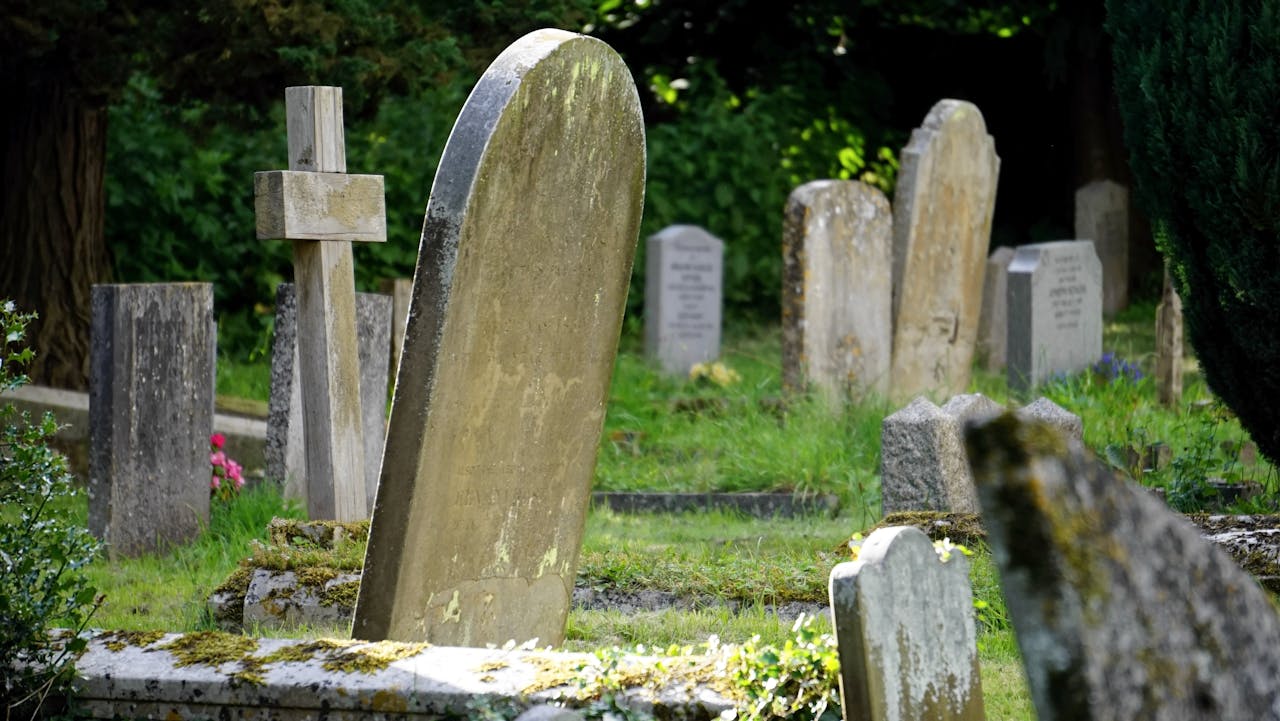
Rows of cinder blocks guard the area that hosts a cemetery for hundreds of detained Black boys. The boys were detained at the House of Reformation and Instruction for Colored Children, a juvenile detention facility that had a reputation for neglect and abuse.

According to the Washington Post, the Black boys died during the late 19th to early 20th centuries. Until now, these grave sites have gone undetected by the general public.

Presently, Maryland lawmakers are working to reclaim the area and the remains buried there. The politicians, many of whom are part of the Legislative Black Caucus, noted the degradation of the cemetery in comparison to the veterans’ cemetery right next door. They now call for new efforts to revitalize the area and pay respects to its deceased.

“There is no reason to disrespect anyone,” said state Sen. Michael Jackson (D-Prince George’s, Charles, and Calvert), per WTOP. “We have a lot of work to do, folks.”

Caucus members also hope to lead new legislation that will provide funding for the rejuvenation efforts. The state’s Department of Juvenile Services has already applied for a $31,000 grant to the African American Heritage Preservation Program, which would oversee the cemetery’s restoration.

Alongside restoration, the lawmakers aim to open an investigation into the young boys’ deaths. The department’s chief of staff, Marc Schindler, described the facility’s conditions as “scandalous.” Schindler worked with a genealogist to conduct research, uncovering the sites and the facility’s history.

“It’s hard to find the words to describe how sad and outrageous it is,” said Schindler. “But we just don’t know how many more are here.”

The Black children’s time at the House of Reformation also paled in comparison to their white counterparts. A matter of “community pride,” lawmakers across Maryland also hope to redeem this cemetery site and many other forgotten cemeteries in its domain.

“We have a tremendous amount of neglected cemeteries here in the state of Maryland,” added Del. Gary Simmons (D-Anne Arundel). “We have all kind of different methods that we generate funds for the state. This is about community pride. We’ll get it done.”

If approved, the grant money will pave the way for more funding toward the recovery of the cemetery on a state-wide level.

“Our history is our power and everyone shares responsibility in preserving and uplifting the countless stories of our state that have often gone unrecognized and unheralded,” said David Turner, the Maryland governor’s communications director. “We look forward to working with the General Assembly, our state agencies, local leaders, and community advocates on this project.”

RELATED CONTENT: Neglected And Desecrated: A Call To Preserve America’s Black Cemeteries

Melvin Edwards, Sculptor, Black Resistance, Dies

Belva Davis, Trailblazing Bay Area Reporter, Dies at 92

The Bay Area news icon, first Black woman on West Coast TV, leaves behind a legacy of courage and trailblazing reporting.


Belva Davis, the first Black woman to work as a television reporter on the West Coast, has died at age 92. Her long career transformed local journalism, creating opportunities for countless reporters who followed in her footsteps.

As reported by The Guardian, Davis was born in Monroe, Louisiana, in 1932, the oldest of four children in a family living through the hardships of the Depression and segregation. Her family later moved to California’s East Bay as part of the Second Great Migration during World War II. Without the advantage of a college degree, Davis entered journalism through perseverance and determination, eventually becoming a leading presence on television screens across the Bay Area.

She worked at KPIX, KRON, and later KQED, where she anchored KQED Newsroom and This Week in Northern California. She remained on the air until her retirement in 2012.

“Belva’s passing is a great loss for the Bay Area and KQED,” said Michael Isip, the station’s president and CEO. “For half a century she covered the region’s most indelible stories with courage, integrity, grace and humanity. Along the way she fearlessly broke down barriers and opened doors for a generation of reporters.”

Notorious attorney Ben Crump took to X to give his condolences and pay his respects to her legacy.

Carla Marinucci, a longtime political journalist who frequently appeared on Davis’s program, remembered her as both a role model and supporter. “She took many of us under her wing. An entire generation of us, myself included, have Belva to thank for breaking down barriers and for giving us a hand,” Marinucci said.

Over the decades, Davis reported on landmark moments such as the assassination of Harvey Milk, the HIV/AIDS epidemic, and major political campaigns. Her interviews included conversations with public figures like Muhammad Ali, Coretta Scott King, Fidel Castro, and, later, Vice President Kamala Harris.

Oakland Congresswoman Barbara Lee reflected on her legacy: “She opened doors that had long been closed, proving through her talent and perseverance that our voices belonged on the airwaves. She made it possible for a new generation of journalists to see themselves in all forms of media and to know they had a place in shaping public conversation.”

Her memoir, “Never in My Wildest Dreams: A Black Woman’s Life in Journalism,” described her resilience in the face of racism and sexism. Recalling the hostility she encountered at the 1964 Republican National Convention, she wrote, “I could feel the hair rising on the back of my neck as I looked into faces turned scarlet and sweaty by heat and hostility.”

Davis received eight regional Emmy Awards and lifetime achievement recognition from the National Association of Black Journalists and American Women in Radio and Television. She is survived by her husband, Bill Moore, a pioneering Black cameraman, as well as her two children, Darolyn and Steven, from a previous marriage.

Looking back on her work, Davis once wrote, “I wanted to broadcast the reality of my community to those who could not otherwise imagine it.” For generations of viewers and young reporters, she accomplished exactly that.

RELATED CONTENT: BlackPast Founder, Dr. Quintard Taylor, Dies At Age 76, Leaving Legacy Of Uplifting Black History

Former Child Star From ‘Space Jam’ Says Rare Autoimmune Disease Forced Him To Quit Acting

Former Child Star From ‘Space Jam’ Says Rare Autoimmune Disease Forced Him To Quit Acting

Hammond revealed his health struggles as he works on a reunion documentary for "Soul Food."


Brandon Hammond, the child star known for his roles in “Space Jam” and “Waiting to Exhale,” has a serious reason for why he left the spotlight after the ’90s.

Hammond revealed how his health issues got in the way of his burgeoning acting career. Hammond had begun to make a name for himself in Hollywood with roles in top films, also including “Menace II Society” and “Mars Attacks!”

However, his career came to an abrupt halt upon hearing about his rare diagnosis. The 41-year-old told People about how he learned he had Castleman disease, an autoimmune disorder. He’s shedding light on his struggles behind the camera as he prepares for his comeback.

“I was diagnosed with this super, super rare, autoimmune condition called Castleman disease,” he said. “I had all these chest pains, and my eye was flushed out red, just all types of physiological things were happening to me that we could not explain.”

At the time of his health scare, Hammond was basking in the success of the 1997 classic film, “Soul Food.” Hammond played the film’s protagonist, 11-year-old Ahmad, in the family drama.

Now, he’s getting real about his internal struggles. Around the film’s initial release, Hammond kept experiencing intense, mysterious chest pains, leading him to discover the illness.

“And then I had a biopsy because they were seeing that my lymph nodes were swollen. And that’s when I got this diagnosis for this thing called Castleman’s disease. I had never heard of it before, but apparently, it’s super rare in children and it’s super rare in Black people. So when you talk about rare, I’m the rarest exception to that rule,” detailed the actor.

Just as Hammond began to make a name for himself in the entertainment industry, he had to take a step back to focus on his health. However, he shied away from explaining what happened to curious and concerned fans.

A lot of people don’t know that because people have asked, ‘Hey, what happened? Why’d you stop acting?’ And I used to give these really kind of vague answers and responses because I wasn’t ready to talk about it,” he shared.

He said his agent also told him to keep quiet about the disease, alluding that it could jeopardize his career.

“I was kind of told not to talk about it,” added Hammond. “Of course, in hindsight, I regret that, right? But I was just following what I was told to do. My agents told me to keep it under wraps.”

While originally told to keep his health concerns quiet, Hammond is now ready to reappear in the spotlight. His documentary, “Sunday Dinner: The Soul Food Reunion,” is already in the works. He not only hopes to share his story, but also reminisce on the classic film that co-starred Vivica A. Fox, Nia Long, and Vanessa Williams.

“[I felt] ‘Soul Food’ deserves that type of recognition for what it means to the culture. It deserves to be given its flowers… This documentary, the feelings that you got while watching the film, and I’m talking about happy, joy, sad, angry, laughter, all of that, I want to encapsulate all that.”

RELATED CONTENT: Child Actor In ‘Belly’ Is Trying To Get Life Together After Lengthy Prison Term

First Black Chief Deputy, Georgia, Sheriff

1st Black Chief Deputy Named In Georgia Sheriff’s Office In Nearly 300 Years

The Chatham County Sheriff’s Office in Savannah, GA, named McArthur Holmes as its first Black chief deputy in nearly 300 years.


The Chatham County Sheriff’s Office (CCSO) in Savannah, Georgia, named McArthur Holmes as its first Black chief deputy in nearly 300 years. Sheriff Richard Coleman, the county’s first Black sheriff, made the appointment.

“Some things in life happen just in time, right on time, or all in time,” Coleman said in a press release. “Chief Deputy Holmes’ promotion is a testament to his unwavering dedication, integrity, and commitment to serving the citizens of Chatham County. We are proud of this moment and look forward to his leadership in this new role,” Coleman noted

Holmes expressed his gratitude for his new role at his Sept. 23 pinning ceremony.

“The lord has been good to me,” Holmes said. 

The new chief deputy also noted that he and Coleman pledged to work side-by-side to make the sheriff’s department the best it can be.

The CCSO took to its Facebook page to welcome Holmes into his new role.

“Join me in celebrating a historic moment as we congratulate Chief Deputy McArthur Holmes on becoming the first African-American Chief Deputy…..Congratulations, Chief Holmes, we are proud of your achievement and look forward to your leadership and continued dedication.”

The veteran law enforcement officer brings over 40  years of experience to his new role. Holmes spent 25 years of his career in jail management, including a decade as jail administrator before retiring in 2013. In that role, he oversaw a multimillion-dollar renovation project. A Savannah State University graduate, he also championed mental health advocacy for incarcerated people, working to ensure they received proper medical care rather than being placed in jail. 

Last month, the sheriff’s department promoted Major Nicole Scott-Bond, a Black woman, to Lieutenant Colonel, making her the highest-ranking female deputy in the agency’s history.

Founded in 1732, the Chatham County Sheriff’s Office is the oldest sheriff’s department in the state and one of the oldest law enforcement agencies in the U.S.

RELATED CONTENT: Dallas Honors 1st Black Police Officer 128 Years After He Was Murdered 2 Months Into The Job

marine, retire

Longest-Serving Active-Duty Marine Ends 42-Year Career

Lt. Col. Rhonda C. Martin joined the Marines when she was just 19.


When Lt. Col. Rhonda C. Martin was just 19, she accidentally stepped into a Marine Corps recruiting office while on her way to apply for the Peace Corps. According to a service press release last week, that chance decision turned into a distinguished 42-year military career—making her the longest-serving active-duty Marine. Martin is set to retire at the end of this month.

She began her journey as an administrative specialist before rising to the role of drill instructor, at a time when women were still not allowed to wear the Marine Corps’ iconic campaign cover. In 1996, she earned her commission as an officer and was later deployed several times, including in support of Operation Enduring Freedom.

Reflecting on her career, Martin highlighted the progress she witnessed — and contributed to — in opening doors for women Marines. “To say that I came in and saw so much progress for Marines, and especially female Marines, over my time … it hits me really hard,” she said.

Her service spanned from the mid-1980s, when women were first allowed to qualify with the M16A2 rifle, to the Pentagon’s landmark decision more than two decades later to lift the ban on women serving in direct combat roles. “It’ll be tough, but I’ve had 42 years of doing what I love, and I’m leaving at a time when the Marine Corps is stronger than ever,” Martin said.

Colleagues praised her leadership and steady presence in difficult times. She was credited with boosting morale and keeping calm after a Marine helicopter crash in Nepal in 2015 claimed the lives of the pilots, crew, and two combat cameramen. “When she came to us, we had a source of positive energy,” recalled Lt. Col. Cassandra Stanton, who served alongside her.

Martin now serves as assistant chief of staff for Manpower at Quantico, Virginia, and will be honored at a retirement ceremony next week. Her official retirement date is Jan. 1, 2026. Looking ahead, she plans to pursue a doctorate degree. Instead of traditional gifts or flowers, Martin has asked that donations be made to Marine Corps education foundations “so service members and their families have additional opportunities to pursue educational goals, advancing their careers and elevating their lives,” according to the release.

RELATED CONTENT: Harlem Hellfighters Awarded Congressional Gold Medal Amid Ongoing U.S. History Debate

FBI,ICE,Bears, Charles Tillman

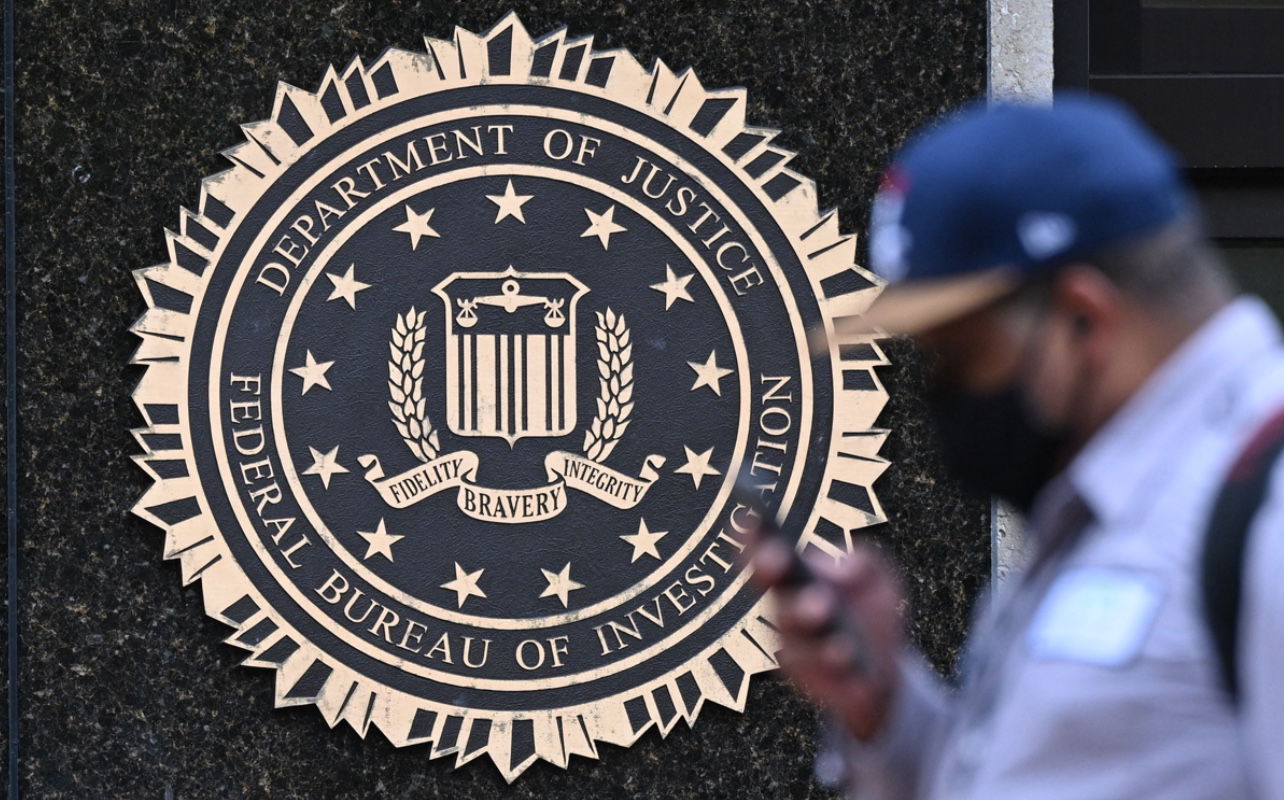
Trump’s FBI Reportedly Fires Agents Who Knelt During George Floyd Protests

The Trump administration's FBI has reportedly fired approximately 20 agents who kneeled during a 2020 protest of the murder of George Floyd.


According to The Associated Press, the FBI has fired agents who were photographed kneeling during a racial justice protest after the 2020 murder of George Floyd by Minneapolis Police Department officer Derek Chauvin. Per two of the three sources the AP spoke to with knowledge of the situation, the number of agents fired is approximately 20.

As the AP reported, last spring, the officers had been reassigned, but the anonymous sources indicated that the individuals who were captured angered some within the Bureau. Some agents also interpreted it as a potential de-escalation technique.

According to a statement released by the FBI Agents Association, a nonprofit advocacy group representing FBI employees, the number of agents fired included individuals who had served in the military and were thus entitled to additional protections. The association also called for Congress to investigate the firings and indicated that Trump’s embattled FBI Director, Kash Patel, is blatantly disregarding the rights of the employees of the FBI.

https://twitter.com/JudiciaryDems/status/1967971630111658107?s=19

“As Director Patel has repeatedly stated, nobody is above the law,” the agents’ association stated. “But rather than providing these agents with fair treatment and due process, Patel chose to again violate the law by ignoring these agents’ constitutional and legal rights instead of following the requisite process.”

The FBIAA continued, “Leaders uphold the law — they don’t repeatedly break it. They respect due process, rather than hide from it. Patel’s dangerous new pattern of actions are weakening the Bureau because they eliminate valuable expertise and damage trust between leadership and the workforce, and make it harder to recruit and retain skilled agents — ultimately putting our nation at greater risk.”

Patel has brushed off accusations from recently ousted agents and top executives, including Steve Jensen, Brian Driscoll, and Spencer Evans, who allege in a lawsuit against Patel and Attorney General Pam Bondi that Patel had the understanding that it was “likely illegal” to fire agents because of cases they worked but insisted he was powerless because he was working on orders from both the White House and the Justice Department.

To that end, as CNN reports, the Justice Department stated that it will review the conduct of 1,500 agents, including those who worked on cases that displeased the current administration — cases involving Donald Trump and his political allies.

Notably, the response on social media has been one of alarm, with some juxtaposing the firing of these agents with a complete lack of consequences for the Trump administration’s border czar, Tom Homan, who allegedly accepted a $50,000 bribe from FBI agents in an undercover sting in 2024.

According to NBC News, Homan allegedly promised he could help win government contracts for a fee, but the White House has denied that this occurred.

According to a letter sent by Democrats on the Senate Homeland Security and Governmental Affairs Committee to Attorney General Pam Bondi, the stench of corruption is emanating from the Trump administration and, in particular, the White House.

“The fact that the incoming Trump Administration reportedly closed this investigation prematurely raises further concerns that the Administration is weaponizing our system of justice to protect the president’s friends and to persecute his political foes. It is critical that the American people be able to trust that the influence of White House and other government officials has not been bought, and that contracts will be awarded to companies based on merit, not to those willing to pay bribes,” the letter stated.

RELATED CONTENT: ‘The View’ Addresses Jimmy Kimmel Suspension As FCC Chair Threatens To ‘Look Into’ Show: ‘No One Silences Us’

corporate boards, Trump, white men

White Men Bosses Are So Back, Thanks To The Trump Administration

According to a new report, corporate boards are again dominated by white men.


The Trump administration has been a boon for white men who direct S&P 500 companies, according to newly available data from research firm ISS-Corporate, as reported by Axios. According to the data, the percentages of women and ethnic minority groups leading those companies have decreased by nine percentage points and 24 percentage points, respectively.

Trump’s aggressive stance on eliminating diversity, equity, and inclusion at the federal level has led to a domino effect in the business and tech worlds, leading companies like Meta, Disney, and Target to either recast or end their DEI positions and departments to avoid the scrutiny of an overzealous and increasingly authoritarian federal government.

According to Bloomberg, recruiters have told them that efforts in prior years to broaden the net of qualified individuals to fill those positions have fallen by the wayside in favor of the “male, stale and pale” leader that had fallen out of favor during the post-George Floyd DEI emergence of 2020.

Per Robert Travis, a managing partner at executive recruiter Boyden who works on director searches, “What was grossly underappreciated five years ago — a candidate that was male, stale and pale — is now very much at the table to be considered against any and all other candidates.”

How companies explain this move is that they are looking for candidates with previous experience running companies or big business units, which basically means they are prioritizing white men, and among that group, they especially value current or former CEOs, which, again, tend to be white men.

Although the directors and recruiters whom they interviewed pointed out that the Trump administration isn’t technically guiding what they do, the atmosphere surrounding DEI has absolutely been transformed.

According to Ellen Zane, who is on the nomination and governance committee at Boston Scientific Corp. and is the former chief of the Tufts Medical Center in Boston, the changed atmosphere is undeniable.

“There were large shareholders that would absolutely, positively ding a company if they disagreed with how you had fulfilled your diversity goals,” Zane told Bloomberg. “Then all of a sudden, it completely changed.”

As Joan Williams, a law professor and the founding director of the Equality Action Center at UC Law San Francisco, told The Guardian in March, “We all want a meritocracy, but too often we don’t have them. There is one group in professional workplaces where over 90% believe they are working in meritocracies-–and that’s white men. Every other group has significantly less confidence that they are working in meritocracies because they feel that they are being held to a different standard. We did 22 DEI experiments inside companies. One company was horrified to find that they were hiring white men who had lower ratings than women and people of color who weren’t hired,” Williams said.

Akilah Cadet, the author of “White Supremacy Is All Around,” noted that although the brief period between 2020 and 2023 was good for her professionally, once companies decided to move on, her prospects dried up as quickly as they had appeared.

“The amount of money I made starting May 2020 until about 2023-–I’ve never made so much money in my entire life. I’ve laid off my staff. I have a much smaller team. I’m being punished as a result of people no longer wanting to care about people they should have been caring about in the first place,” Cadet reflected.

She continued, “Imagine that you were working for a company where you had tools in place, access to an executive coach, a programme that got you into a leadership track. These individuals had support and were told they were valued. Heterosexual, non-disabled, cisgendered white men and women have always had that [validation] in the workplace. And it will still be there after the attack on DEI, but it won’t be for people who don’t identify as those groups. That’s the bigger unfortunate thing that’s happening here: ‘You mattered––and guess what? I’m going to remind you that you don’t matter again.’”

RELATED CONTENT: Former DEI Exec, Celeste Warren, Launches Consulting Firm As New Book Reveals ‘The Truth About Equity’

Kandi Burruss, Broadway, & Juliet

Kandi Burruss Turned Parenting Into A Contract Lesson For Daughter

Kandi Burruss made daughter sign contract for an Xbox and toys.


For many kids, earning an Xbox or a new gadget comes with a simple ask: “Do your chores, get your grades.” But for Kandi Burruss, the formula was more formal.

In an interview with People, the singer, entrepreneur, and “Real Housewives of Atlanta” alum shared that she made her daughter, Riley Burruss, sign contracts before she could receive toys.

Burruss said the contracts helped teach responsibility and accountability from a young age. For example, she told Riley she could get an Xbox 360 only if she committed to doing swim team for a full year. The contract was not just symbolic; it included high stakes for a child, according to Riley. 

“I don’t think a lot of people know this, but my mom used to make me sign contracts!” Riley said. “I wanted an Xbox 360, and my mom said I could get one if I did swim team for the full year, and she made me sign a contract that said if I quit, she could throw it away.”

Riley, who graduated from NYU in 2024 and now stars on the Bravo series “Next Gen NYC,” laughed when recounting the experience.

Mama Joyce, Kandi’s mother, confirmed that structure has long been a family value. She called young Kandi “very, very smart.” Additionally, she recalled that the hardest discipline was sending her to her room — she’d just read. The multigenerational thread of intellect, accountability, and dedication is clearly strong in the Burruss family.

Still, Kandi’s sharp business instincts don’t stop at parenting. In her multidecade career as a writer, songwriter, and producer, she has demonstrated foresight in the music world. Starting her career as one-fourth of the popular singing group Escape, Burruss could have stayed stagnant. Instead, she chose to expand her talent, making her a wildly successful songwriter. A talent that keeps her paid today. In July, BLACK ENTERPRISE reported on Kandi’s continued royalty collection. 

During an Instagram Live session, a fan asked the multihyphenate if she is paid when Beyoncé performs “Bills, Bills, Bills” on the Cowboy Carter Tour. Responding in the affirmative, “Yeah, I do actually,” she went on to explain how her publishing works.

Kandi’s accolades are long. As the owner of sex toy and lifestyle company Bedroom Kandi, producer of “Othello,” starring Denzel Washington, and owner of the Old Lady Gang restaurant, Burruss knows contracts. Burruss has fashioned contracts, expectations, and systems that reward performance. She is clearly passing those lessons along to Riley.

RELATED CONTENT: Kandi Burruss Sets Broadway Box Office Records With ‘Othello,’ ‘We’re Making Our Shows The Destination’

Georgia GOP, Chris Carr, Black Voters, Social Issues

The NAACP Activates Virginia Residents To Increase Voter Turn Out

The NAACP has announced a $500,000 voter mobilization campaign in Virginia.


The NAACP has announced a $500,000 voter mobilization campaign in the state of Virginia.

The campaign aims to turn out 300,000 voters ahead of the Nov. 4 election. A series of town halls and phone banking sessions will kick off the effort across the state. This six-week campaign includes targeted mailers, radio ads, digital outreach, emails, text messages, and direct calls.

Outside of physical assets, the campaign is focusing on college campuses. Campus activations will take place at Virginia State, Virginia Union, Virginia Commonwealth, Hampton University, University of Virginia, Old Dominion, and George Mason. The NAACP hopes to register over 2,000 student voters and verify registrations.

In a statement, Rev. Cozy Bailey, president of the NAACP Virginia State Conference, stressed the importance of participation at all levels of government. 

“From the school board to the White House, every election counts. And we must show up at the ballot box to make our voices heard,” Bailey said.

 The NAACP’s National Director for Mobilization, Amari Fennoy, framed the campaign as a defense of democracy and local power. 

“There’s so much at stake in Virginia — from public safety to criminal justice, from women’s health to voting rights,” Fennoy stated. “We are building power block by block, person by person, student by student.”

The NAACP describes this as the first of three major town halls planned through early October, marking the public launch of the campaign. According to the statement, media and community partners are invited to take part in sessions scheduled for Sept. 30 and Oct. 2.

Virginia’s turnout campaign comes as the state prepares for competitive legislative races and local ballot measures. Ballot measures will determine outcomes for education funding, reproductive health access, and criminal justice reforms. The NAACP states its investment is a counter to restrictive voting policies seen in nearby states. By interjecting the organization into these immediate political battles, the organization is making clear that this campaign is designed not only to increase participation but also to defend the accessibility of the ballot in a closely watched swing state.

RELATED CONTENT: Virginia High School Name Change Violates The Constitution Due To ‘Confederate Ties’

packaged food, south africa

South Africa Becomes Africa’s Largest Supplier Of Packaged Foods With $18.5B In Sales

South Africa has emerged as the leading force in Africa’s fast-growing packaged foods market.


With $18.5 billion in 2024 sales, South Africa leads Africa’s packaged food industry, commanding a significant share of the continent’s rapidly growing food market.

South Africa continues to dominate Africa’s packaged food industry thanks to its strong supply chains, a well-organized retail sector, and rising consumer demand, Business Insider Africa reports. With nearly $20 billion in sales in 2024, it far outpaces regional peers, Nigeria, the continent’s most populous nation, at $4.7 billion, and Kenya at $5.1 billion.

Packaged foods are also thriving in North Africa, with Morocco reaching $11.5 billion and Egypt $11.2 billion in sales. These numbers highlight the region’s emerging market potential and the growing gap between Africa’s mature and developing consumer markets.

South Africa also shines on a global scale, surpassing Thailand’s $17 billion in sales and trailing only Saudi Arabia, which leads at $25 billion. Key to the country’s edge is its organized supply chain and concentrated supermarket sector that allows food companies to pair mass-market reach with value-added strategies.

However, the growth in packaged food consumption carries health risks.

A 2024 study found that low-income South African adults get, on average, 40% of their calories from ultra-processed foods. Meanwhile, only 7% meet the World Health Organization’s daily fruit and vegetable guidelines, and just 19% reach the recommended fiber intake.

“South Africa is facing a rising tide of obesity and non-communicable diseases that is driven in part by the proliferation of ultra-processed products,” said Tamryn Frank, Ph.D., researcher, and dietitian at the School of Public Health at the University of the Western Cape in South Africa and the study’s first author. “Consuming these ultra-processed products is associated with numerous health risks, such as obesity, diabetes, heart disease, certain cancers, and increased risk of early death. This puts a strain on our already burdened health care system.”

These circumstances create a delicate balance for South Africa to curb consumption of ultra-processed, unhealthy foods while ensuring low-income populations have enough to eat. Efforts include a Health Promotion Levy on sugary drinks, which prompted the beverage industry to cut sugar content and led to declines in purchases and consumption of taxed drinks.

Additionally, the National Department of Health released a draft front-of-package warning label regulation, developed using scientific evidence from focus groups and randomized controlled trials, to clearly inform consumers about products high in sugar, saturated fat, salt, or containing non-sugar sweeteners.

RELATED CONTENT: Walmart Will Open First Branded Stores In South Africa, Bringing U.S. Retailer To The Continent

×