Chance the Rapper, Chicago, New Year's Eve

Chance The Rapper To Headline New Year’s Rockin’ Eve In Chicago

New York City hosted the event for more than 50 years before Chicago got the nod.


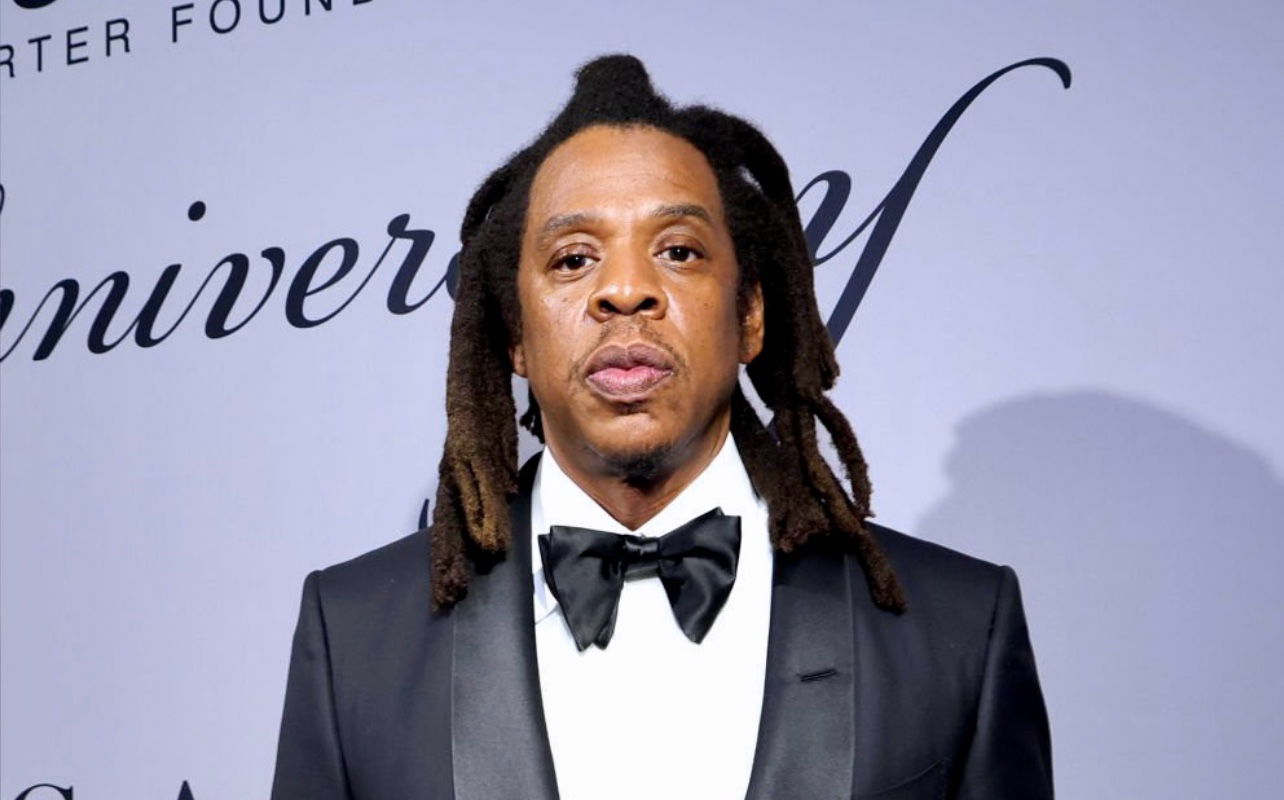
Chance the Rapper is set to represent his city as the headliner for the Chicago debut of Dick Clark’s New Year’s Rockin’ Eve with Ryan Seacrest, which, for the first time ever, will ring in midnight live from the Windy City.

“I feel like there’s a huge responsibility when you’re showing off a city anyway,” he told ABC 7 Chicago. “And so we’ve been on a bunch of production calls, trying to make sure that there’s just like moments for all parts of Chicago to shine, to get to introduce this global city to the world. And also, like I said, I just want to have fun. I’m gonna be lit. It’s gonna be a great time.”

Chance the Rapper will be joined by a lineup of Chicago music heavyweights, including DJ Mike Dunn, DJ Mike P, J. Ivy, and Shemekia Copeland, performing on the main stage at the corner of West Wacker Drive and North Franklin Street in the Loop, starting at 9 p.m.

“I think our Chicago performers and our crowd out there is going to be excited. It’s the world stage, all the cameras pointed at Chicago,” Chance said.

Beyond the music, Chicago will showcase its beauty and charm with a custom audio-visual display projected from ART on THE MART starting at 7 p.m. CT (8 p.m. ET). Between performing and co-hosting alongside Seacrest, Chance the Rapper is set to keep busy all night. Chance The Rapper’s performance will be at 9 p.m. CT (10 p.m. ET)

“I’m going to have my host hat on most of the night. I’m going to be interacting with my other co-host and just showing the city to the world,” he said. “But at the end of the night, I’m going to be performing the song called ‘No More Old Men.’ I truly believe it’s probably the most important song that I’ve written. I think it encapsulates childhood in a way that I haven’t really been able to get across and also manhood in a way that I don’t think it expressed a lot in music.”

Before Chicago got the nod, Times Square was the regular spot for New Year’s Rockin’ Eve since 1972.

RELATED CONTENT: What Are You Doing New Year’s Eve? Check Out These Turn-ups

SNAP restrictions

SNAP Ban On Candy, Soda, And ‘Junk Foods’ Goes Into Effect Jan. 1

The first five state bans will impact about 1.4 million people.


The New Year is bringing new restrictions and bans for Americans living in five states who receive Supplemental Nutrition Assistance Program (SNAP) benefits. Starting Jan. 1, 2026, people living in Indiana, Iowa, Nebraska, Utah, and West Virginia will not be able to purchase soda, candy, or other “junk food” items.

These states are the first five of at least 18 states that have enacted waivers prohibiting certain foods for SNAP recipients. According to the Associated Press, it’s part of a push by Health Secretary Robert F. Kennedy Jr. and Agriculture Secretary Brooke Rollins to eliminate what they deem as unhealthy foods from those who receive benefits on the federal program.

“We cannot continue a system that forces taxpayers to fund programs that make people sick and then pay a second time to treat the illnesses those very programs help create,” Kennedy said in a statement in December.

In Kennedy’s Make America Healthy Again initiative, the health secretary, who has no formal medical or public health training, says this effort will help reduce chronic diseases such as obesity and diabetes associated with sweetened drinks and foods.

But industry experts, including retail and health policy leaders, say banning certain foods will not solve these problems.

“Broadening restrictions essentially tells these families they can’t be trusted to make their own food choices, which is both demeaning and, according to the evidence, ineffective at improving nutrition behaviors,” said Kate Bauer, associate professor of Nutritional Sciences at the University of Michigan School of Public Health, in a statement. “We all deserve dignity.”

Even more concerning is that a report from the National Grocers Association and other trade groups estimates the restrictions would cost U.S. retailers $1.6 billion initially and an additional $759 million every year after.

The first five state waivers will impact about 1.4 million people. Utah and West Virginia will reportedly ban SNAP benefits from being used to buy soda and other soft drinks. Recipients in Nebraska will prohibit the sale of soda and energy drinks. In Indiana, soft drinks and candy cannot be purchased.

Iowa has the most restrictive rules. SNAP restrictions target taxable foods, including soda, candy, and certain prepared foods. Since 2008, under the Food and Nutrition Act of 2008, SNAP benefits could be used for “any food or food product intended for human consumption.” The only exceptions were alcohol, ready-to-eat hot foods, and tobacco.

The new ban will last for at least two years. States will have the option to extend them for an additional three. Each state will be required to assess the impact of the changes.

RELATED CONTENT: Trump Administration Threatens To Withhold SNAP Benefits From Blue States That Fail To Release Immigration Data

New Year's Eve, black-eyed peas

Good Fortune On A Plate: Inside Black New Year’s Food Traditions

Here's the tradition that lies behind signature soul food dishes served on New Year's Eve.


Black-eyed peas, collard greens, tender pork, and cornbread are typical staples in Black households on New Year’s Eve and day. But when was the last time you stopped to think about why?

On New Year’s Eve, cultures around the world follow traditions filled with symbolism and superstition, all in the hopes of welcoming good luck in the new year ahead, according to CNN. People of Spanish descent might eat 12 grapes at midnight; in Japanese culture, Toshikoshi Soba noodles are eaten for long life; and lentils in Italy represent coins.

But for millions of African Americans, cooking black-eyed peas, prosperity greens, and other soul food staples isn’t just about luck; it’s a celebration of resilience, heritage, and triumph that’s been passed down for generations.

The tradition is thought to have roots in the South, tracing back to Africa and the West Indies people who brought these recipes during enslavement. Enslaved cooks transformed scraps and less desirable cuts of meat discarded by masters into flavorful dishes that have since become soul food staples—each carrying deep meaning, especially when served for the New Year.

Black-eyed peas are a New Year’s Eve staple in many Black households. Symbolizing luck and prosperity, they’re often served in Hoppin’ John—a mix of black-eyed peas, rice, and sometimes pork—believed to bring financial fortune in the year ahead.

Leafy greens—like collard, mustard, or turnip—often accompany black-eyed peas and pork, symbolizing money, wealth, and good fortune. They are simmered slowly with ham hocks, smoked turkey, or bacon. Tradition holds that the darker and more abundant the greens, the greater the luck for prosperity in the coming year.

Cornbread is a staple at any soul food meal, but on New Year’s Eve, it takes on extra significance—symbolizing gold and wealth. It’s usually baked, fried, or made into muffins, and often served alongside greens and black-eyed peas to create a full “luck plate.” Other popular sides include cabbage, symbolizing prosperity and financial gain, usually boiled or sautéed with other greens. Sweet potatoes or yams, which represent nourishment, abundance, and sweetness in life, are often served candied, mashed, or baked.

Pork is a popular protein in many Black households on New Year’s Eve, symbolizing progress and forward movement—pigs naturally root forward while foraging. Chitlins (the small intestines of pig), ham, pork chops, or roast pork are regular presences during the holiday, carrying this symbolic meaning into the new year.

Fish, served fried, baked, or in stews, is another popular choice on New Year’s Eve, often replacing pork for those seeking abundance and fertility in the year ahead. Its scales are said to symbolize coins.

The tradition of good luck extends to desserts and drinks, with sweet potato pie, peach cobbler, and fruitcakes symbolizing sweetness for the year ahead. Champagne or sparkling cider is often served at midnight to toast new beginnings and celebration. Some families have their own traditions, like eating greens at the stroke of midnight or hiding a lucky coin in a cake.

The true beauty is in these rituals, passed down through generations and cherished over time.

RELATED CONTENT: Sip, Celebrate, Support: Black Champagne Brands To Celebrate The Holidays

u.s. dollar, decline

Why The U.S. Dollar No Longer Gives Americans A Bang For Their Buck

Tariffs, rising prices, and global competition are squeezing Americans’ buying power.


The value of the U.S. dollar is starting to separate from its famous “bang for your buck” mantra. There are several reasons why. 

Compared with its global competitors, the American dollar fell short in 2025, declining 10% on the Dollar Index, which measures its value against other foreign currencies, Business Insider reports. There are several reasons that serve as catalysts for the dollar’s depreciation, including the Federal Reserve’s decision to cut interest rates, which makes the dollar less attractive to investors. 

Then there are President Donald Trump’s tariff wars, which have put specific markets in turmoil and put a damper on consumers’ pockets. Trump once took a contradictory stance on the weaker dollar, claiming the country would make more money as it declined.

“When we have a strong dollar, one thing happens: It sounds good,” he said during a July press conference. “But you don’t do any tourism. You can’t sell tractors, you can’t sell trucks, you can’t sell anything.” 

He was right: a declining dollar means prices will continue to rise. In November 2025, prices were up 2.7%. While it was under experts’ expectations, consumers were left with less buying power.

According to Wired, in 2026, the real competition for the dollar will be technology—specifically, alternative payment systems structured to bypass dollar-based channels. There seems to be a race to create the best systems around the world. mBridge is described as a project where central banks in China, Hong Kong, Thailand, and the United Arab Emirates work with the Bank for International Settlements in an effort to build a system that will permit countries to pay each other almost instantly by using their own digital versions of national currencies. 

Another budding system is BRICS pay, allowing BRICS+ countries like Brazil, Russia, India, China, and South Africa to send money to each other for trade and investment purposes directly in their own currencies. The systems are thought to make trading faster, cheaper, and less dependent on the dollar.

The moves could also make traveling abroad more expensive for Americans.

RELATED CONTENT: The U.S. Dollar Takes A Dip On Election Day

Mayor Karen Bass, LA, ICE agents, Latino, DHS

L.A. Mayor Karen Bass Calls Rise In Latino Border Patrol Agents ‘Sad,’ DHS Accuses Her Of Race-Baiting

Federal data show that more than half of agents on the southern border are Hispanic.


The Department of Homeland Security (DHS) is criticizing Los Angeles Mayor Karen Bass after she commented on reports of a rise in Latino hires among U.S. Border Patrol agents.

On Dec. 29, DHS spokesperson Tricia McLaughlin addressed Mayor Bass’s recent CNN interview with Wolf Blitzer, in which Bass described the reported increase in Latino recruitment among U.S. Border Patrol agents as “sad.” According to McLaughlin, Bass’s comments “only reveal how detached she is from reality and how averse she is to the rule of law and public safety,” and accused her of “race-baiting for media clicks,” Newsweek reports.

Bass, who recently announced her re-election bid, made the remarks on Dec. 26 during an appearance on Wolf Blitzer’s The Situation Room, expressing concern over the growing number of Latinos joining the Border Patrol.

“Well, in a way, I think it’s sad,” Bass responded after Blizter asked for a reaction to David Culver’s CNN report about the Latino hiring increase. “I think that those Border Patrol agents are going to have a difficult time when they’re out in the field, and they see what actually happens in real life, separate from their training. But I do understand that their primary incentive is financial. I think it just speaks to the financial situation that millions of Americans find themselves in. And I definitely am concerned about that report.”

@nypost

Los Angeles Democratic Mayor Karen Bass expressed disappointment and concern with Hispanics joining Border Patrol — arguing they’re only doing it for the paycheck. More details at the link in bio.

♬ original sound – New York Post | News

For his report, Culver spoke with 20-year-old Border Patrol recruit Juan Peralta, who said friends back home were surprised by his decision to join and would ask, “How do you feel about arresting your own kind?”

“And how do you answer that when you hear that?” Culver asked.

Peralta responded, “They didn‘t come in the right way. So, they aren‘t my kind.”

CBP reports that applications have risen 70% compared to last year, and federal data shows that more than half of agents on the southern border are Hispanic.

RELATED CONTENT: Reporter Unveils Secret Partnership Between TSA, ICE To Align With Trump’s Anti-Immigration Policies

Tupac, Biggie

These Black Celebs Earned Street Cred With Naming Ceremonies In Their Hoods


Having your name displayed on a street sign is not just any old recognition; it represents a legacy left behind for generations to come. In cities throughout the U.S., Black celebrities who have made contributions in cultural advancement or philanthropy have been honored by having streets named after them. 

From legends to icons, here are 15 Black celebrities who have been commemorated with the renaming of streets in their respective communities.

Nipsey Hussle

The late rapper and community advocate Nipsey Hussle was honored by having a square named after him at the intersection of Crenshaw Boulevard and West Slauson Avenue in South Los Angeles for his contributions to the community through his business ownership of Marathon Clothing and his involvement in projects and activism.

Muhammad Ali

Muhammad Ali Boulevard honors the boxing legend and activist from Louisville’s Walnut Street area, which was officially renamed in 1978 to honor his sporting accomplishments and community contributions.

Prince

The legendary Prince has been honored with a street sign in his hometown of Minneapolis. First Avenue nightclub now features the Prince Rogers Nelson Way sign, unveiled in June 2022, to celebrate his legacy as an artist and his strong ties to the club’s music scene.

Aretha Franklin

Aretha Franklin, the “Queen of Soul,” was celebrated when Aretha Franklin Way was named in her honor in Detroit, after her passing. The street naming commemorates Franklin’s significant contributions to the world of performing arts and the music industry, and reflects a deep sense of gratitude from her hometown. 

The Notorious B.I.G. 

The Notorious B.I.G., born Christopher Wallace, is named on a corner block in Bedford-Stuyvesant, Brooklyn. The renaming ceremony was held in June 2019. It recognized his cultural impact and Brooklyn roots.

Missy Elliott

Missy Elliott Boulevard was recently dedicated in Portsmouth, Virginia, in honor of the acclaimed hip-hop artist and producer. Virginia’s McLean Street area is where Elliot grew up and developed her music career before achieving impact and global recognition. The street spans between Airline Boulevard and Greenwood Drive and was officially renamed in 2022. 

Ray Charles

Ray Charles, the well-known singer and pianist from Albany, Georgia, received recognition with the unveiling of a sculpture and plaza dedicated to him in Downtown Albany in December 2007. Ray Charles Plaza is a tribute to his influence and his impact on the city.  

Ella Fitzgerald

Ella Fitzgerald received an acknowledgment in the form of a bronze statue in Yonkers, New York, near a local Metro-North station on Buena Vista Avenue. The jazz legend was honored for her community roots and contributions. 

Stevie Wonder

Back in 2016, Music legend Stevie Wonder was commemorated with a section of road named in his honor. Stevie Wonder Avenue is a roadway in Detroit’s Hitsville area near his childhood home in Michigan.  

Tupac Shakur

In Oakland, California, lies a section of MacArthur Boulevard now known as Tupac Shakur Way, in honor of the deceased rapper and actor. Tupac Shakur had strong ties to the area from his time living there in the 1990s. The special renaming event took place in November 2023 to celebrate his lasting influence and artistic contributions to the community.

Tina Turner

Renowned singer Tina Turner, who was born Anna Mae Bullock in Nutbush, Tennessee, was commemorated with a portion of State Route 19 known as Tina Turner Highway. The stretch of road runs from Brownsville to Nutbush in Haywood County, Tennessee. The Tennessee legislature chose this corridor to honor Turner’s accomplishments and the significance of her hometown in her songs, such as “Nutbush City Limits.”

James Brown

James Brown, the “Godfather of Soul,” has had an impact on the music industry that extends beyond his stage performances. This is evident through the various public acknowledgments honoring him, such as James Brown Boulevard in Augusta, Georgia. Multiple arenas and local sites nationwide commemorate his legacy.

Bob Marley

Bob Marley made an impact on the world stage with his reggae music and his cultural significance to Caribbean communities. In July 2006, Bob Marley Boulevard on Church Avenue in Brooklyn was established to pay tribute to Marley’s legacy and influence, which continue to resonate to this day.


Jackie Robinson

Jackie Robinson, the historical figure in baseball, served as the inspiration for renaming the Interboro Parkway to Jackie Robinson Parkway in New York City’s Queens and Brooklyn boroughs in 1997. The stretch of parkway commemorates Robinson’s groundbreaking accomplishments in breaking baseball’s color barrier 50 years prior and honors his significant contributions to both baseball and civil rights.

Bernie Mac

Bernie Mac made a lasting impact on the entertainment world as an actor and comedian. To honor his legacy and ties to the Englewood community in Chicago, a section of West Street at Sangamon has been dedicated as Bernie Mac Street. This gesture is a tribute to his contributions to entertainment and to his strong connections to the neighborhood where he was raised. The street-naming event took place in February 2012, allowing locals to celebrate Mac’s life and accomplishments.

RELATED CONTENT: Arise, Sir Idris: King Charles III Awards Knighthood To Idris Elba In New Year Honors

richard smallwood, gospel music

Acclaimed Gospel Recording Artist Richard Smallwood Dies

He died of complications of kidney failure at a nursing home in Sandy Spring, Md.


Grammy-nominated gospel singer-songwriter Richard Smallwood died Dec. 30 from complications of kidney failure. He was 77.

“We are saddened to announce the passing of world-renowned artist, songwriter, and musician Richard Smallwood,” read an announcement on his Facebook page. “The family asks that you respect our privacy during this difficult time, while helping to celebrate the legacy he leaves behind and the gifts he unselfishly shared with the world.”

According to People, Smallwood died at a nursing home in Sandy Spring, Md. He had been diagnosed with “mild dementia and a variety of other health issues” in recent years, forcing him to stop recording music, according to a release. 

Born in Atlanta and raised in Washington, D.C., Smallwood began playing piano by ear at age five and started his own gospel group at 11 at Union Temple Baptist Church, where his stepfather was the pastor.

In a career spanning more than 50 years, Smallwood made a name for himself as a composer, gospel singer, and songwriter. He was nominated for eight Grammys and won three Dove Awards plus multiple Stellar Gospel Music Awards.

He was a student of R&B legend Roberta Flack in high school, while she was building her own singing career. Smallwood attended Howard University, where he became a member of the school’s first gospel group, the Celestials. He also taught music at the University of Maryland before he started his group, the Richard Smallwood Singers, in 1977.

The group, which included Dottie Jones, Jackie Ruffin, and Darlene Simmons, topped Billboard’s Spiritual albums chart with its second offering, Psalms in 1984.

Several artists, including Whitney Houston, Boyz II Men, and Destiny’s Child, later covered Smallwood’s songs. His popularity rose again after he founded the choir Vision following the disbanding of the Smallwood Singers in the 1990s. His last album, Anthology, was released in 2015.

Smallwood is survived by his brothers, sisters, nieces, nephews, and godchildren.

RELATED CONTENT: Elevate Your Excellence: Dr. Marta Moreno Vega Is The Architect Of Afro-Latin Cultural Equity

Carmen de Lavallade

Carmen de Lavallade, Mother Of American Modern Dance, Dies At 94

She was an actress and choreographer who moved between ballet, modern dance, film, and television.


Carmen de Lavallade, the brilliant and vibrant modern dancer and choreographer, known for her frequent collaborations with Alvin Ailey, died Monday, Dec. 29. She was 94. 

The announcement was made on Facebook by the Alvin Ailey American Dance Theater, where she served as a principal guest performer for many years. She was a high school classmate of the renowned dancer.

“We honor and give thanks for her extraordinary life, boundless artistry, and the generations she shaped through her work, her wisdom, and her presence,” the announcement read in part.

In 2018 de Lavallade was honored by BLACK ENTERPRISE with a Legacy Award at the Women of Power Summit.

de Lavallade began her career, which spanned seven decades, with the racially integrated Lester Horton troupe in Los Angeles. She then moved to New York City with Ailey, where she would be known for the gravitational pull she drew from audience members while performing. Her range spanned acting and choreography, and she worked in ballet, modern dance, film, and television. She also performed on the concert stage and as a nightclub act, according to The Washington Post.  

Her inspiration came from watching her cousin, Janet Collins, a rare African-American ballerina in the late 1940s and 50s, who became the first Black principal dancer of the Metropolitan Opera.

de Lavallade performed as prima ballerina between 1955 and 1958 in Aida and Samson and Delilah at the Met. 

She made her Broadway debut in 1954, alongside Ailey, in the Truman Capote-Harold Arlen musical House of Flowers, where she met her husband and frequent collaborator Geoffrey Holder, according to Theater Mania

Her work caught the attention of several rising Black stars at the time, including iconic actress Lena Horne, who, after seeing her dance, helped her secure roles and perform in popular dance sequences in movies such as Demetrius and the Gladiators and the all-Black musical Carmen Jones.

One of her most famous performances came when Ailey put de Lavallade at the center of one of his signature works, Revelations, in 1960. The piece, still performed today, showcases Black perseverance over time between slavery and the 20th century through dance and movement. 

“My role is to give joy,” she would say.

Dance critic P.W. Manchester once described de Lavallade’s performance in Salome as “an altogether remarkable conception, passionate, childishly capricious, lascivious, with a sheer physical beauty that compels a fascinated attention from the moment of her entry.”

de Lavallade’s career took her to high places, such as performing as a guest artist with American Ballet Theatre and teaching at the Yale School of Drama as a choreographer and performer-in-residence. She also received various awards and honors, including an honorary Doctor of Fine Arts from Julliard in 2008, the Dance USA Award in 2010, and a Kennedy Center Honor in 2017.

Her son, Leo Holder, survives her.

RELATED CONTENT: Stop Thinking And Just Do It, Says Dance Legend Carmen de Lavallade

motion, dismiss, reposession

Not So Fast! Judge Order Trump Administration To Keep CFPB Funding After Defunding Attempts 

A law dated 2010 ordered the bureau to receive funding from the Fed while the administration argued since the Fed was operating at a loss, there was a lack of funding for CFPB.


After the Trump administration tried to declare the Consumer Financial Protection Bureau (CFPB) an illegal cash stream, a federal judge ordered them to find funding for the agency after ruling that funding can’t lapse, ABC News reports. 

The Dec. 30 ruling came just days before the bureau’s funds were expected to deplete, leaving no money to pay employees. While the Federal Reserve has been operating at a loss, Judge Amy Berman Jackson ruled that the CFPB can continue to receive funds from the agency, despite the White House’s argument that the CFPB’s funding mechanism is invalid.

“It appears that defendants’ new understanding of ‘combined earnings’ is an unsupported and transparent attempt to starve the CPFB of funding and yet another attempt to achieve the very end the Court’s injunction was put in place to prevent,” the judge wrote. 

The CFPB hasn’t been able to operate properly since President Donald Trump took over the White House in January 2025, with employees banned from doing almost any tasks — except for dialing back work done under the Biden administration and Trump’s first term. 

Dismantling the agency has been a goal of White House Budget Director Russell T. Vought, the agency’s acting director, and Project 2025 curator. During an appearance on “The Charlie Kirk Show” podcast, he doubled down on his objectives. “We want to put it out — and we will be successful probably within the next two, three months,” Vought said, according to The New York Times

A law passed in 2010 ordered the bureau to receive funding from the Fed, while the administration argued that, since the Fed was operating at a loss, there was insufficient financing for the CFPB. The bureau has requested and received over $1 billion from the Fed since 2022, but in 2025, Vought refused to request any funding.

The National Treasury Employees Union, which represents CFPB employees, has been fighting for its constituents. It sued Vought in early 2025 and won a court order to stop mass layoffs. However, in a November-dated notice, the consumer bureau characterized its supervision department as “the weaponized arm” of the agency under its Biden-era director.

As a result, he ordered the agency to close its offices and left the agency short of funds to pay its roughly 1,400 workers. Agency changes implemented by Vought have sparked widespread backlash, especially from employees. After the bureau announced that it would require financial examiners to recite a “humility pledge” to companies before beginning a review in November, the staff union released a statement, calling the pledge “creepy” and “disrespectful.”

RELATED CONTENT: Arise, Sir Idris: King Charles III Awards Knighthood To Idris Elba In New Year Honors

ibrahim-traore-du burkina faso

Burkina Faso, Mali Ban U.S. Citizens In Response To Trump Administration Travel Bans

There are now 19 countries, plus Palestine, on Trump’s full travel ban list. Most of the countries listed in the full travel ban are African and Arab.


Burkina Faso and Mali have announced reciprocal visa bans on United States citizens, just weeks after President Donald Trump added the two nations to his growing list of countries subject to travel bans. In response, leaders from the two nations shared separate letters late Tuesday, announcing plans to apply similar measures to Americans.

“In accordance with the principle of reciprocity, the Ministry of Foreign Affairs and International Cooperation informs the national and international public opinion that, with immediate effect, the Government of the Republic of Mali will apply the same conditions and requirements to US nationals as those imposed on Malian citizens,” a statement from leaders read on Facebook.

Burkina Faso officials echoed the same sentiment. Leaders said they would be applying “equivalent visa measures to citizens of the United States of America,” emphasizing that it “remains committed to mutual respect, the sovereign equality of States, and the principle of reciprocity in its international relations.”

Burkina Faso, Mali Implement Reciprocal Travel Bans Following Trump’s Decision

Both announcements follow Trump’s decision to add seven more countries to a complete travel ban list. Burkina Faso and Mali are following a move from Niger. The West African country also announced that it would “completely and permanently prohibit the issuance of visas to all U.S. citizens.”

Trump said the changes were introduced to meet U.S. “foreign policy, national security, and counterterrorism objectives.” In his guidance, Trump said he imposed a full travel ban on Burkina Faso nationals after the U.S. Department of State found that “terrorist organizations continue to plan and conduct terrorist activities throughout” the West African country. The guidance also alleges that people from Burkina Faso often overstay their visas, and country leaders have historically refused to accept back nationals deported from the U.S.

For Mali, Trump said the State Department found “armed conflict between the Malian government and armed groups is common throughout the country. The president also accuses terrorist organizations of running “freely” in certain areas of Mali.

There are now 19 countries, plus Palestine, on Trump’s full travel ban list. Most of the countries listed in the full travel ban are African and Arab locales.

RELATED CONTENT: The Postmark Trap: New USPS Rules Could Trigger IRS Penalties & Missed Deadlines

×